
AI导购

Search documents
从“满足需求”到“创造需求”,大湾区消费市场有新意
Xin Lang Cai Jing· 2025-12-27 05:18
Group 1 - The core viewpoint of the articles highlights the vibrant consumption market in the Guangdong-Hong Kong-Macao Greater Bay Area, driven by various initiatives such as "national subsidies + provincial subsidies + municipal subsidies" to stimulate large-scale consumption and the influx of global brands due to "first-store economy" and "first-release economy" [1][2] - Four major trends in consumption are identified: the extension of digital consumption into AI-guided shopping and the metaverse; the rise of domestic brands favored by consumers; the growth of cross-border consumption driven by visa-free and duty-free policies; and the prominence of immediate consumption needs, with community-based and convenient services becoming mainstream [1] - The Greater Bay Area is leveraging technology, cultural and sports integration, and emotional value exploration to transform consumption from merely "meeting demand" to "creating demand," injecting new vitality into the market [2] Group 2 - The Greater Bay Area's consumption market benefits from three main advantages: a favorable climate and location, a strong industrial base providing high-cost performance goods, and a friendly and comprehensive service system [2] - Future growth points in consumption are expected to arise from health and wellness tourism driven by climate and industry, as well as new consumption models that integrate cultural tourism with multiple industries [2] - The Greater Bay Area is poised to lead a profound transformation in consumption, evolving from "functional satisfaction" to "value resonance," creating a more internationally influential, culturally rich, and sustainable consumption landscape [2]

美股前瞻 | 三大股指期货齐跌 比特币下挫 零售与云计算领军者业绩成本周焦点
智通财经网· 2025-12-01 12:06
Market Overview - US stock index futures are all down ahead of the market opening on December 1, with Dow futures down 0.44%, S&P 500 futures down 0.60%, and Nasdaq futures down 0.73% [1] - European indices also show declines, with Germany's DAX down 1.33%, UK's FTSE 100 down 0.09%, France's CAC40 down 0.75%, and the Euro Stoxx 50 down 0.56% [2][3] - WTI crude oil prices increased by 1.23% to $59.27 per barrel, while Brent crude rose by 1.20% to $63.13 per barrel [3][4] Economic and Market Sentiment - The Federal Reserve has entered a quiet period, with focus shifting to retail and cloud computing earnings as December begins [5] - The Nasdaq Composite ended a seven-month streak of gains in November, while the S&P 500 is just 1% away from its all-time high [5] - There is an 87.6% probability that the Fed will cut rates by 25 basis points in December, according to traders [5] Company News - Tesla's registration numbers in France and Denmark halved in November compared to the previous year, with a 58% drop in France and a 49% drop in Denmark, indicating challenges in the European market [9] - Micron Technology plans to invest approximately $9.6 billion to build a new factory in Hiroshima, Japan, to produce high-bandwidth memory chips, supported by a subsidy from the Japanese government [10] - Disney's "Zootopia 2" premiered in China, grossing $272 million, making it the second-highest opening for an imported film in Chinese history [10] - Amazon and Google are launching a joint multi-cloud network service to meet the growing demand for reliable connections [11] - UnitedHealth is selling its remaining Latin American business, Banmedica, for about $1 billion, marking a complete exit from the region [11] - NIO delivered 36,275 vehicles in November, a 76.3% year-over-year increase, while XPeng and Li Auto also reported significant delivery numbers [12]

百姓关注丨预售比现货贵,价格相关投诉超85%
Ren Min Ri Bao· 2025-12-01 05:50
Core Insights - This year's "Double 11" promotional event saw an early start and extended duration, with platforms focusing on AI-driven sales and instant retail, shifting from traffic competition to quality competition centered on user value [1] - Consumer complaints primarily revolved around pricing issues and the transparency of promotional rules, with over 13,000 complaints recorded during the event [1][2] Group 1: Consumer Complaints - Complaints related to pricing accounted for 85.6% of total complaints, highlighting issues such as "prepaid deposit betrayal," "current stock cheaper than pre-sale," and "automatic price increases" [2] - Many consumers expressed frustration over the lack of clarity in promotional rules, with some reporting that the final price paid was higher than the displayed price due to uncommunicated conditions [2] Group 2: Emerging Consumer Trends - There was a significant increase in complaints regarding smart technology and virtual goods, with complaints about smart products rising by 72.6% compared to last year, primarily due to discrepancies between advertised features and actual performance [3] - Complaints in the health product category grew by 36.2%, mainly concerning issues like drug quality and misleading claims about health products [3]
让AI帮忙购物,靠谱吗?
Sou Hu Cai Jing· 2025-11-14 05:21
Core Insights - The article discusses the integration of AI features in e-commerce platforms during the recent Double Eleven shopping festival, highlighting consumer preferences for AI-assisted shopping tools [2][3] - A survey indicates that a significant percentage of consumers are interested in using AI for price comparison, product understanding, and personalized recommendations [2][3] Price Comparison Performance - Three AI models (DeepSeek, Doubao, and Tongyi Qianwen) were tested for their ability to find the best prices for a specific product, with Tongyi Qianwen and Doubao providing more comprehensive recommendations compared to DeepSeek [3][4] - Tongyi Qianwen demonstrated a financial perspective by explaining market dynamics and optimal purchasing times, while Doubao focused on detailed product comparisons and promotional offers [4][6] Purchase Recommendations - The article provides specific product recommendations based on different consumer needs, such as the best vacuum cleaners for various household scenarios [8][10] - Recommendations include the Ecovacs T80S for general cleaning, the Yunji J5 Max for mopping, and the Roborock P20 for powerful suction [8][10][12] Consumer Understanding and Decision-Making - AI models were evaluated on their ability to address consumer confusion regarding product choices, with Tongyi Qianwen effectively categorizing household needs and suggesting appropriate products [14][15] - Doubao provided insights into maintenance costs and noise levels, which are often overlooked by other models [19][21] Comprehensive Shopping Lists - The AI models were tasked with creating detailed shopping lists for specific scenarios, such as pet supplies, showcasing their ability to generate thorough and actionable purchasing guides [23][25] - DeepSeek's shopping list included unique items not mentioned by other models, indicating a broader understanding of consumer needs [25][28] Limitations and Consumer Trust Issues - The article notes that while AI shopping assistants show promise, they also face challenges such as inaccuracies in data and a lack of consumer trust due to inconsistent product recommendations [33][34] - Many consumers remain skeptical about AI's ability to provide reliable information, which hinders widespread adoption [36][37] Conclusion - The overall sentiment is that while AI can enhance the shopping experience, it must improve in understanding consumer needs and providing trustworthy recommendations to truly serve as a valuable shopping companion [45][46]

褪去狂热与躁动,从从容容的“双11”折射理性消费新阶段
Mei Ri Jing Ji Xin Wen· 2025-11-11 14:10
Core Insights - The "Double 11" shopping festival has evolved from a one-day sales explosion to a month-long shopping event, reflecting a shift towards rational consumption and a structural adjustment in the consumer market [1][2][4] - The rise of service-oriented consumption is evident, with consumers increasingly valuing experiences and emotional value in products, as shown by significant percentages of consumers purchasing services during this year's event [2][4] - Technological innovation, particularly in AI, is transforming the e-commerce landscape, enhancing user experience and operational efficiency for merchants [3][4] Group 1: Evolution of "Double 11" - The festival has transitioned to a more stable and innovative phase, moving away from its initial frenzy to a more mature celebration of consumption [1] - The duration of the event has been extended to nearly a month, diluting the sense of urgency and ritual associated with the original one-day sales [1][4] - This change reflects a fundamental shift in consumer behavior from impulsive buying to a more calculated approach focused on quality and price [1][2] Group 2: Shift in Consumer Behavior - The consumer market is transitioning from a "goods society" to a "service society," with a notable increase in service-oriented purchases during "Double 11" [2] - Research indicates that 27.1% of consumers ordered home services, 26.2% tried automotive services, and 20.0% booked travel-related services online [2] - This structural transformation in consumption demands higher efficiency and experience from platforms, creating opportunities for technological advancements [2][4] Group 3: Technological Innovation - Alibaba has integrated its AI model into online shopping applications, significantly improving search and product recommendation capabilities [3] - JD's JoyAI model saw a 3.2 times increase in usage during "Double 11" compared to the previous major shopping event, indicating widespread adoption of AI across various consumer experience and logistics areas [3] - The introduction of AI-driven roles such as AI store managers and data analysts is reshaping merchant operations and enhancing competitive dynamics in the industry [3][4] Group 4: Future Directions - The competition in the e-commerce sector has entered a new phase characterized by a blend of "far-field and near-field" strategies, with instant retail breaking traditional boundaries [4] - Over 37,000 brands and 400,000 stores participated in this year's event, showcasing the integration of online and offline shopping experiences [4] - The future of "Double 11" lies in creating a sustainable ecosystem that prioritizes value creation over mere traffic generation, emphasizing trust, efficiency, and value resonance [4]


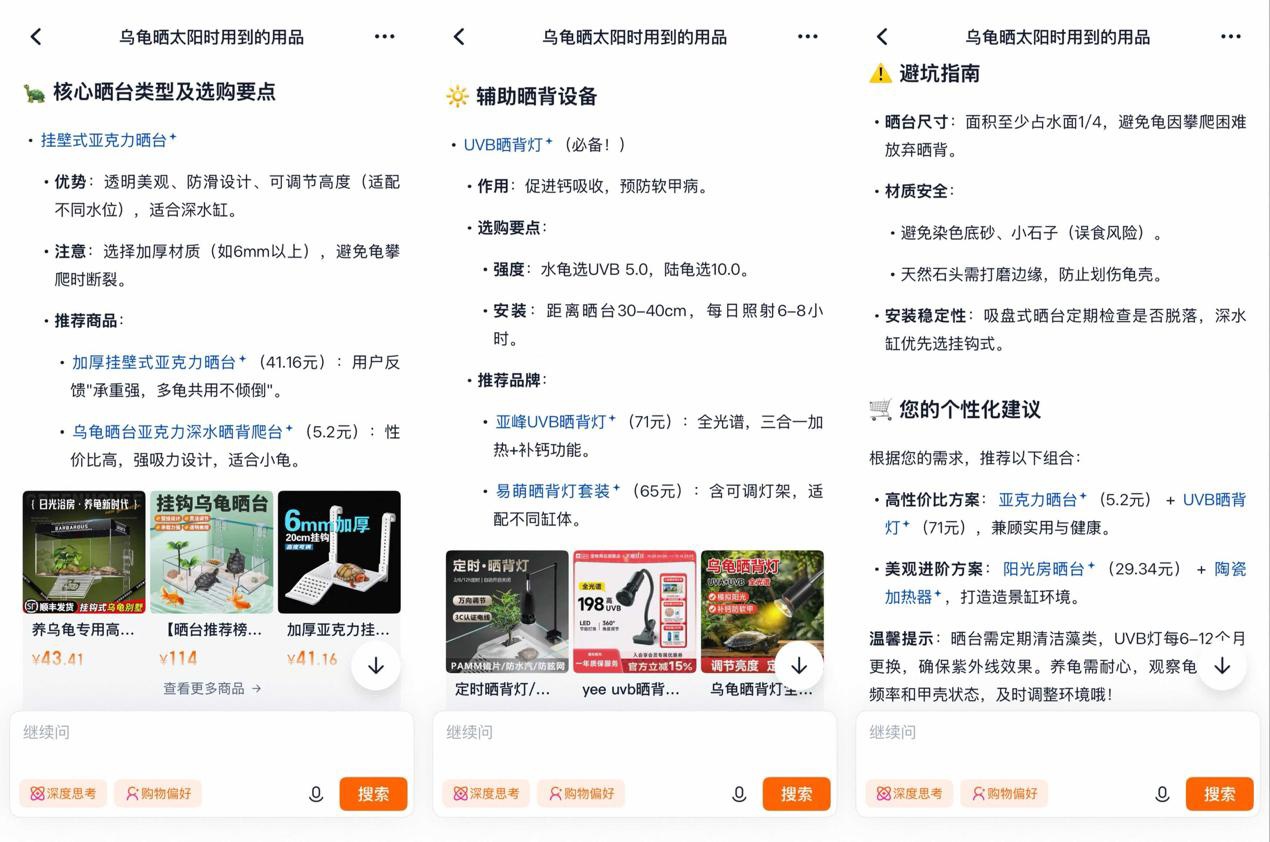
双11AI导购来帮忙: 淘宝“AI万能搜”解决5000万个消费需求,生成两百万份购物清单
Yang Guang Wang· 2025-11-08 11:34
Core Insights - Taobao has launched multiple AI shopping applications this year to enhance the shopping experience during major sales events, with "AI万能搜" addressing nearly 50 million consumer needs and "AI清单" providing around 2 million personalized shopping lists [1] - The first fully AI-integrated Double 11 event saw an increase in consumers utilizing AI for shopping strategies and product selection, effectively solving traditional shopping dilemmas [1] - The "AI万能搜" feature has specifically addressed approximately 400,000 pet-related inquiries, indicating a growing consumer focus on pet health and quality of life [1] AI Applications - Taobao introduced six AI shopping applications for the Double 11 event, including AI万能搜, AI帮我挑, 拍立淘, AI清单, AI试衣, and AI Summary, targeting various consumer pain points to make shopping more efficient [16] - "AI万能搜" has facilitated over 60,000 inquiries related to celebrity-endorsed products, showcasing its capability to categorize and recommend items based on user preferences [1][5] - The "AI清单" feature generates personalized shopping lists based on user insights, addressing specific needs such as baby care and pet cleaning products [5] Consumer Behavior - The rise in AI-assisted shopping reflects a shift in consumer behavior, with users increasingly relying on technology to navigate product choices and enhance their shopping experience [1] - Pet owners are particularly active in seeking advice and products related to pet care, with discussions around pet-related inquiries surpassing those in the mother and baby category by 82% [1] - Users are also interested in fashion recommendations, with AI providing outfit suggestions based on previously purchased items, indicating a trend towards personalized fashion advice [1][5]
这个双11的AI电商:热闹在入口,但核心是基建
3 6 Ke· 2025-10-31 02:43
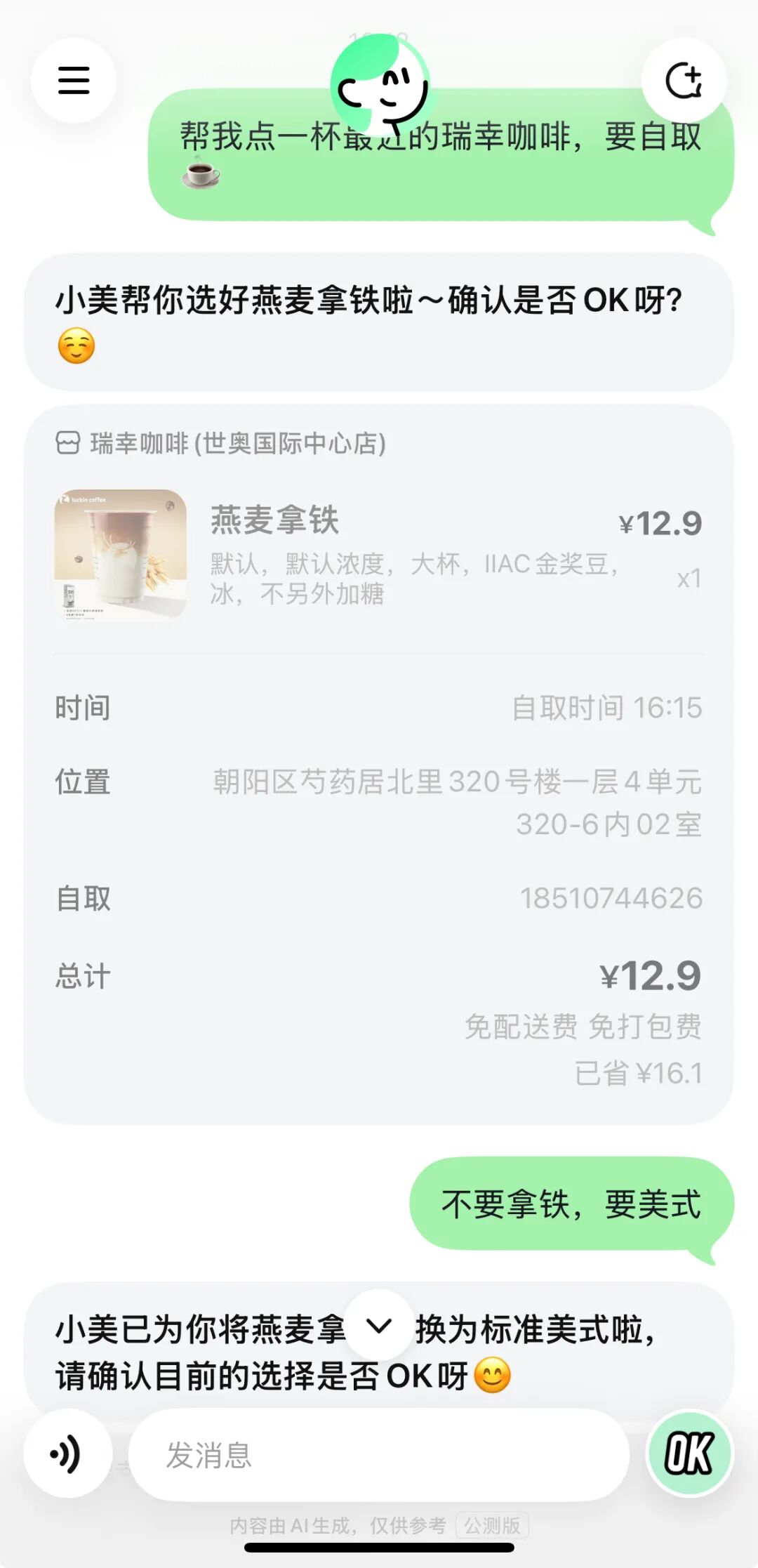
Core Insights - The article discusses the challenges and developments in AI-driven e-commerce, highlighting the gap between conceptualizing AI shopping experiences and their practical implementation [6][7][22] - It emphasizes the competition between general AI assistants and specialized e-commerce platforms for consumer demand understanding and information distribution [6][8][22] Group 1: AI Shopping Experience - The AI assistant "Doubao" struggles to provide a seamless shopping experience, often failing to include direct purchase links in its recommendations [1][2] - In contrast, Meituan's "Xiaomei" offers a more interactive experience, allowing users to place orders directly, showcasing a more advanced execution capability [2][6] - The current AI shopping experience is still in its infancy, with many platforms lacking the necessary infrastructure to support effective AI interactions [6][8] Group 2: Infrastructure Development - E-commerce platforms are focusing on enhancing their infrastructure to better integrate AI capabilities, which is crucial for improving user experience and operational efficiency [7][14] - Both Taobao and JD.com are investing in upgrading their search and recommendation systems to better understand consumer needs and product information [14][15] - The integration of large models with traditional systems is seen as essential for achieving significant improvements in search relevance and user engagement [15][17] Group 3: Competitive Landscape - The article notes that the competition for consumer entry points between AI assistants and e-commerce platforms has not yet fully materialized, as both sides are still preparing [8][9] - OpenAI's collaborations with various platforms indicate a shift towards integrating AI into the shopping experience, but the effectiveness of these initiatives remains limited [9][10] - The future of AI assistants in e-commerce will likely involve a struggle for control over consumer demand understanding, with platforms seeking to enhance their data communication with AI [22][23]
淘宝京东AI导购实测:谁才是最懂你的购物搭子?
3 6 Ke· 2025-10-29 10:50
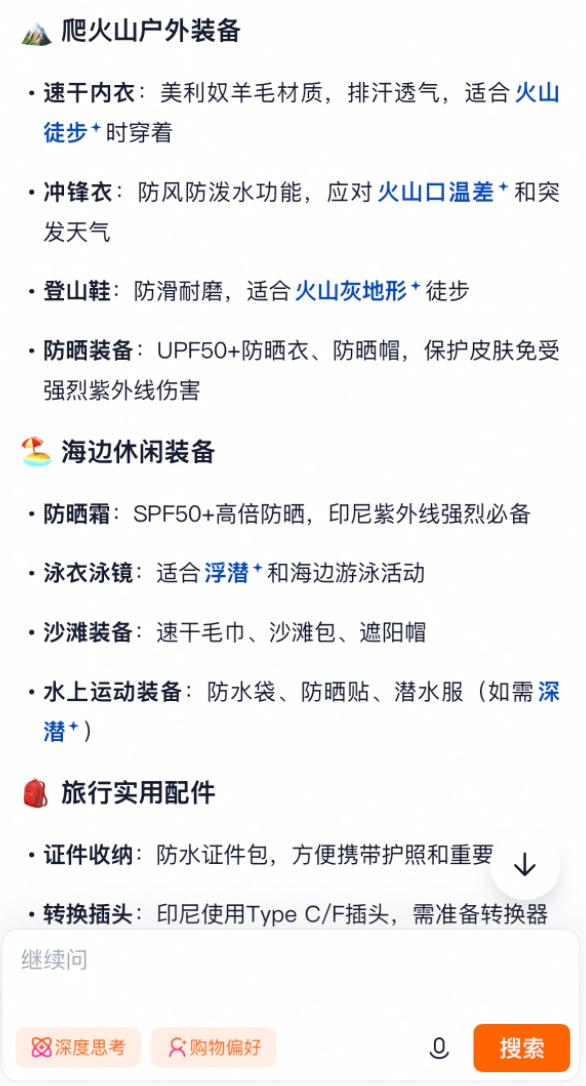
Core Viewpoint - The article discusses the integration of AI technologies in e-commerce platforms during the Double Eleven shopping festival, highlighting how AI is transforming the shopping experience through features like intelligent search and personalized recommendations [1]. Group 1: AI Features in E-commerce - Major e-commerce platforms have launched AI shopping features, such as Taobao's "AI Universal Search" and JD's "Jingyan AI Assistant," which enhance the search, comparison, and decision-making processes for consumers [1]. - Taobao's "AI Universal Search" functions similarly to a "Taobao version of DeepSeek," providing detailed travel packing lists and product recommendations based on user queries [2][6]. - The AI can categorize products effectively, distinguishing between different types of down jackets and providing comprehensive details about each option, thus streamlining the shopping process [6][14]. Group 2: User Experience and Limitations - The AI's ability to tailor recommendations based on user preferences is evident, as it can track recent browsing and purchasing habits to enhance the relevance of suggestions [9][10]. - Despite its advantages, the AI still exhibits limitations, such as providing inaccurate pricing information and failing to include purchase links, which can lead to confusion for users [11][14]. - Users are encouraged to maintain their judgment when using AI tools, especially for significant purchases, and to use AI as a reference rather than relying solely on its recommendations [15]. Group 3: Comparison of AI Tools - JD's "Jingyan AI Assistant" offers a more standardized experience with less personalization compared to Taobao, providing specific product recommendations but lacking the conversational feel of a knowledgeable assistant [25][31]. - JD's AI features include price trend analysis and consumer review summaries, which provide more actionable insights than simple star ratings, enhancing the decision-making process for users [31]. - Upcoming features in JD's app, such as "Aigou," aim to improve the user experience by allowing natural language interactions to generate tailored product solutions based on user descriptions [32].
今年双11,AI终于忙了,但打工人也慌了
Sou Hu Cai Jing· 2025-10-28 08:52
Core Insights - The article discusses the evolution of AI in e-commerce during the Double 11 shopping festival, highlighting its integration into various aspects of the shopping experience and the operational efficiency it brings to businesses [1][2][3]. Group 1: AI Integration in E-commerce - This year's Double 11 is characterized as the first fully realized AI-driven event, with major e-commerce platforms showcasing a comprehensive range of AI tools for both consumers and businesses [2][3]. - Tmall's president defined this year's event as a milestone for AI's full deployment, offering six AI shopping assistant products for consumers and extensive AI tools for businesses across the entire e-commerce chain [2][3]. - JD.com introduced a new AI architecture called "Oxygen" and showcased its ambitious "embodied intelligence" through a large-scale deployment of smart devices during the event [2]. Group 2: Consumer Experience with AI - Consumers are increasingly using AI tools for shopping, with over one-third of respondents in a recent Adobe survey indicating they utilize AI for product research and finding deals [8]. - Despite the convenience AI offers, there are concerns regarding the accuracy of AI-generated recommendations and the potential for privacy issues, with 43% of surveyed consumers uncomfortable with companies using AI to analyze personal data [9][10]. - Users like "洋葱" and "迪迪" have reported mixed experiences, with some finding AI helpful for budgeting and product comparisons, while others faced inaccuracies in discount predictions [4][5][7][9]. Group 3: Impact on E-commerce Workers - E-commerce workers have experienced a shift in their roles due to AI, with some reporting reduced workloads while also feeling increased pressure from higher performance expectations [11][13]. - The introduction of AI in marketing and customer service has streamlined operations, allowing fewer employees to manage larger tasks, but it has also raised concerns about job security and the potential for replacement by AI [11][12]. - Workers in advertising have noted that while AI has automated many processes, it has also led to a lack of transparency in campaign management, complicating accountability when issues arise [13][17]. Group 4: Challenges Ahead for AI in E-commerce - Despite the advancements, the article emphasizes that the full commercialization of AI in e-commerce is still a long-term goal, with ongoing challenges in user experience and technology integration [18][20]. - The need for continuous improvement in AI tools and the establishment of trust between consumers and AI systems are critical for future success [10][21]. - Research indicates that traditional e-commerce channels still outperform new AI-driven platforms in terms of conversion rates and user engagement, suggesting that the path to widespread adoption of AI in e-commerce remains complex [20][21].
三大外卖平台试点取消骑手超时罚款;小米入局短剧丨科技风向标
2 1 Shi Ji Jing Ji Bao Dao· 2025-10-17 05:16
Group 1: Delivery and Restaurant Industry - JD.com has initiated a pilot program in 25 cities to eliminate penalties for delivery riders exceeding order time, replacing it with a "service score" management system [2] - Meituan's CEO stated that the average dining price has dropped to levels seen a decade ago, indicating a shift towards high cost-performance in the restaurant industry [2] - Ele.me is also testing a new service score system to replace the previous penalty for delivery delays, aiming to promote a more rewarding work environment for riders [2] Group 2: Automotive Industry - Lei Jun, CEO of Xiaomi, emphasized the need for collaboration in the smart connected vehicle industry to resist negative online practices and focus on innovation and safety [3] Group 3: Technology and AI - ByteDance's Volcano Engine has released updates to its Doubao model series, with usage increasing from 120 billion tokens in May 2024 to over 30 trillion tokens by September 2024 [4] - Samsung announced plans to mass-produce its HBM4E memory chip by 2027, achieving a data transfer speed of 3.25TB/s [8] Group 4: Robotics and Automation - Zhi Yuan Robotics launched its new industrial-grade interactive robot, the G2, which has already secured several hundred million yuan in orders [6] - Zhaofeng Co. signed a strategic cooperation agreement with Neura Robotics to collaborate on humanoid robots and key components [7] Group 5: E-commerce and Retail - Tmall's Double 11 pre-sale saw significant growth, with 35 brands achieving over 100 million yuan in sales within the first hour [5] - Dong Yuhui's live streaming event generated over 300 million yuan in sales during the Double 11 shopping festival [7] Group 6: Semiconductor Industry - TSMC reported a record net profit of 452.3 billion NTD for Q3, with a revenue increase of 30.3% year-on-year [16] - Chip manufacturer Xinlian plans to invest 1.8 billion yuan in its subsidiary to support the development of integrated circuit projects [10] Group 7: Mergers and Acquisitions - Huada Technology announced plans to acquire 100% of Huayi Microelectronics to enhance its capabilities in power device packaging and testing [12] - Kailong High-Tech is establishing a new subsidiary to expand its robotics production and applications market [13]