
消费品以旧换新

Search documents
8月商用车销32万辆增超16% 重卡破9万大涨47% 客车全面上扬
第一商用车网· 2025-09-11 11:30
Core Viewpoint - The overall macroeconomic environment in China continues to expand, with the automotive industry showing strong growth in production and sales, supported by government policies aimed at boosting consumption and investment [1][23]. Group 1: Automotive Production and Sales - In August, China's automotive production and sales reached 2.815 million and 2.857 million units respectively, with month-on-month growth of 8.7% and 10.1%, and year-on-year growth of 13% and 16.4% [1]. - From January to August, cumulative automotive production and sales totaled 21.051 million and 21.128 million units, reflecting year-on-year growth of 12.7% and 12.6% [1]. Group 2: Commercial Vehicle Performance - In August, commercial vehicle production and sales were 315,000 and 316,000 units, with month-on-month growth of 5.9% and 3.4%, and year-on-year growth of 16.4% and 16.3% [2]. - Cumulative commercial vehicle production and sales from January to August reached 2.713 million and 2.744 million units, with year-on-year growth of 7.1% and 5.2% [4]. Group 3: Truck Sales - In August, truck production and sales were 270,000 and 272,000 units, with month-on-month growth of 6.3% and 2.7%, and year-on-year growth of 16% and 17.1% [5]. - Heavy-duty truck sales reached 92,000 units in August, showing a significant year-on-year increase of 46.7% [5]. Group 4: Bus Sales - In August, bus production and sales were both 45,000 units, with month-on-month growth of 3.4% and 7.4%, and year-on-year growth of 18.7% and 11.6% [9]. - From January to August, bus production and sales totaled 350,000 and 351,000 units, with year-on-year growth of 11.3% and 10% [11]. Group 5: Domestic and Export Trends - In August, domestic sales of commercial vehicles reached 238,000 units, with year-on-year growth of 19.9% [13]. - Commercial vehicle exports in August were 78,000 units, reflecting month-on-month growth of 3.3% and year-on-year growth of 6.6% [17]. - From January to August, commercial vehicle exports totaled 656,000 units, with year-on-year growth of 9.7% [19]. Group 6: New Energy Vehicle Insights - In August, domestic sales of new energy commercial vehicles reached 66,000 units, with year-on-year growth of 58.6% [20]. - From January to August, new energy commercial vehicle domestic sales totaled 481,000 units, reflecting a year-on-year increase of 59% [20]. - New energy commercial vehicle exports in August were 4,000 units, with year-on-year growth of 9.5% [24].


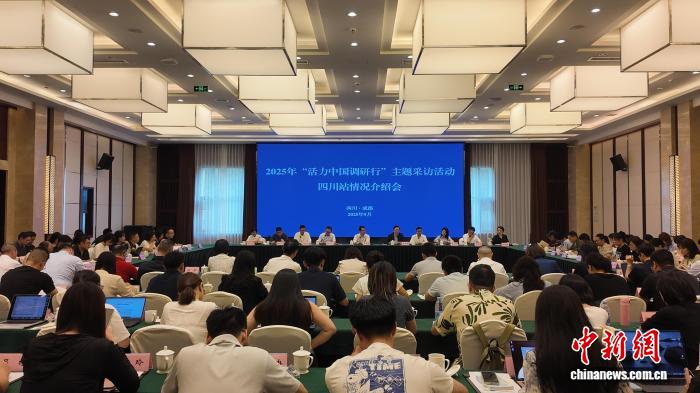
(活力中国调研行)四川加力扩围消费品以旧换新 拉动消费近1100亿元
Zhong Guo Xin Wen Wang· 2025-09-01 07:06
Group 1 - Sichuan has implemented a robust "old for new" consumption policy, resulting in the replacement of 13 million items (vehicles, appliances, etc.) and generating nearly 110 billion yuan in consumption by the end of August [1][2] - The province's consumption market is valued at 2.8 trillion yuan, serving a population of nearly 400 million in surrounding areas, showcasing its strong commercial foundation and unique consumer culture [2] - Sichuan's government has introduced various policies to stimulate consumption, including the "Three Products and One Creation" initiative and support for Chengdu to become an international consumption center [2][3] Group 2 - In the first seven months of 2025, Sichuan's automobile sales increased by 4.9%, ranking third among major economic provinces, while sales in the automotive and smart watch manufacturing sectors grew by 36.2% and 109.3%, respectively [3] - Notable growth was observed in home furnishing companies, with sales from brands like Jiumu and Quanyou increasing by over 20% year-on-year [3]
股指期货将震荡整理,白银期货再创上市以来新高,震荡偏强,黄金、铜、镍、豆粕期货将偏强震荡,玻璃、纯碱期货将震荡偏弱,螺纹钢、铁矿石、焦煤、原油期货将偏弱震荡
Guo Tai Jun An Qi Huo· 2025-09-01 05:46
Group 1: Report Industry Investment Rating - Not provided in the given content Group 2: Core Viewpoints of the Report - Through macro - fundamental and technical analysis, the report predicts the trends of various futures on September 1st, 2025, including股指期货 (shock consolidation), 白银期货 (shock - strong and hitting a new high), etc. [2][3] - The A - share market has shown positive trends recently, with major indices rising in August. Multiple factors are expected to support its long - term positive development, and sectors such as technology, consumption, and dividend assets are favored [22][23][27] - The prices of international commodities are affected by various factors such as supply - demand relationships, economic data, and policies. For example, US crude oil production hitting a new high has pressured oil prices [17] Group 3: Summary by Related Catalogs 1. Futures Market Forecast (1) Stock Index Futures - On September 1st, 2025, 股指期货 will shock and consolidate and accumulate strength for an upward attack. Specific contracts have corresponding support and resistance levels. For example, IF2509 has resistance at 4550 and 4600 points and support at 4500 and 4475 points [2] - In September 2025, IF, IH, IC, and IM main contracts are expected to be shock - strong [30][31] (2) Bond Futures - On September 1st, 2025, the ten - year treasury bond futures main contract T2512 will likely have a wide - range shock, with support at 107.66 and 107.53 yuan and resistance at 107.91 and 108.04 yuan. The thirty - year treasury bond futures main contract TL2512 will also likely have a wide - range shock, with support at 116.0 and 115.3 yuan and resistance at 116.8 and 117.4 yuan [2][3] (3) Precious Metal Futures - On September 1st, 2025, the gold futures main contract AU2510 will likely be strong - shock and attack resistance levels of 794.9 and 796.3 yuan/gram, with support at 785.4 and 783.6 yuan/gram. The silver futures main contract AG2510 will likely be shock - strong, attack resistance levels of 9650 and 9700 yuan/kg, and hit a new high since listing, with support at 9386 and 9347 yuan/kg [2][3] (4) Base Metal Futures - On September 1st, 2025, copper, zinc, and nickel futures will likely be strong - shock; aluminum, alumina, tin, and industrial silicon futures will likely be weak - shock; and lead futures' trend is not specifically mentioned in this part of the prediction [3][4] (5) Energy and Chemical Futures - On September 1st, 2025, crude oil, glass, and soda ash futures will likely be weak - shock; PTA, PVC, and methanol futures will also likely be weak - shock [6][7] (6) Agricultural Product Futures - On September 1st, 2025, soybean meal futures will likely be strong - shock; soybean oil, palm oil, and cotton futures will likely be weak - shock [7] 2. Macro - Information and Trading Tips - The State Council held a meeting to study element market - oriented reform pilot projects, deploy county - level high - school revitalization, and review relevant medical plans [8] - Multiple departments have introduced policies to promote employment, support private enterprises, and develop inclusive childcare services [8][9] - The economic data shows that the business revenue of state - owned enterprises is flat, and the manufacturing and non - manufacturing PMIs have rebounded [9] - International events include Sino - US economic and trade exchanges, and the development of Sino - Russian economic cooperation [9][11] 3. A - Share Market Analysis - On August 29th, the A - share market had most major indices rising, with 3300 stocks falling, and some sectors such as lithium - battery, rare - earth, and CRO concepts leading the gains [22] - In August, the Shanghai Composite Index rose 7.97%, the Shenzhen Component Index rose 15.32%, and the ChiNext Index rose 24.13% [23] - In the future, the A - share market is expected to maintain a long - term positive trend, supported by factors such as policy support and economic improvement [27] 4. International Stock and Bond Markets - On August 29th, US stocks closed down due to factors such as technology stock corrections, tariff concerns, and inflation data. European stocks also closed down, affected by geopolitical risks and other factors [29][30] - On August 29th, US bond yields showed different trends, with long - term yields rising and short - term yields fluctuating greatly [56]
宝城期货资讯早班车-20250901
Bao Cheng Qi Huo· 2025-09-01 03:40
1. Report Industry Investment Rating - Goldman Sachs maintains an "Overweight" stance on Chinese stocks; Standard Chartered Bank maintains an "Overweight" rating on Chinese stocks in its "2025 H2 Global Market Outlook" [38] 2. Core Viewpoints of the Report - China's economic sentiment generally continues to expand, with the official manufacturing PMI, non - manufacturing PMI, and composite PMI in August showing month - on - month increases [2][20] - The overseas business of futures companies is accelerating development, driven by policy support and the concentrated overseas expansion of Chinese enterprises [3] - The bond market is expected to have limited adjustment space and may continue to consolidate in the short term [26] - The A - share market may show a phased shock consolidation feature in September, with market hotspots in a rotation state [38] 3. Summary by Directory 3.1 Macro Data Overview - In Q2 2025, GDP at constant prices increased by 5.2% year - on - year, slightly lower than the previous quarter [1] - In August 2025, the manufacturing PMI was 49.4%, up 0.1 percentage points from the previous month; the non - manufacturing business activity PMI was 50.3%, up 0.2 percentage points [1][2][20] - In July 2025, M1 and M2 increased by 5.6% and 8.8% year - on - year respectively, showing an upward trend [1] 3.2 Commodity Investment Reference 3.2.1 Comprehensive - Personal consumer loan interest subsidies will be available from September 1st, with multiple banks promoting related products [2] - Many domestic commodity futures showed inventory changes on August 29th, with some increasing and some decreasing [4][5] - China and the US held economic and trade talks, emphasizing cooperation and the management of differences [6] 3.2.2 Metals - As of mid - August 2025, the price of electrolytic copper increased by 0.94% month - on - month [7] - London's basic metals generally rose on August 29th, with domestic copper demand expected to improve [7] - International precious metal futures generally closed higher due to weak US economic data [8] 3.2.3 Coal, Coke, Steel and Minerals - In H1 2025, the coking industry faced difficulties, with most listed coke companies reporting losses [9] - As of mid - August 2025, the prices of most coal products increased, while the price of rebar decreased slightly [9] 3.2.4 Energy and Chemicals - China is promoting policies to support private enterprises in major projects and consumer replacement [11][12] - China has achieved large - scale thermal recovery of offshore heavy oil, with production hitting a record high [12] - As of mid - August 2025, the prices of most oil and gas products decreased [12] 3.2.5 Agricultural Products - As of mid - August 2025, the prices of most agricultural products increased [14][15] - China is strengthening the management of crop varieties and protecting permanent basic farmland [15] - A batch of Russian rapeseed oil was imported into Chengdu, marking a new breakthrough in international grain and oil trade [16] 3.3 Financial News Compilation 3.3.1 Open Market - This week, 22.731 trillion yuan of reverse repurchases will mature, and 1 trillion yuan of 91 - day repurchase agreements will mature on Friday [18] - On August 29th, the central bank conducted 782.9 billion yuan of 7 - day reverse repurchases, resulting in a net investment of 421.7 billion yuan [19] 3.3.2 Important News - The economic sentiment in China continues to expand, and policies are being promoted to support private enterprises and consumer replacement [20] - The sales of TOP100 real estate enterprises from January to August decreased by 13.3% year - on - year, and the market may recover moderately in September [22] - Many small and medium - sized banks have recently cut deposit rates [23] 3.3.3 Bond Market Summary - The bond market was generally strong, with yields of major interest - rate bonds in the inter - bank market declining slightly [26] - Most Vanke bonds rose, and the CSI Convertible Bond Index fell [26] 3.3.4 Foreign Exchange Market - The on - shore RMB rose against the US dollar, while the US dollar index fell slightly [29][30] 3.3.5 Research Report Highlights - After Powell's speech, the market's expectation of a Fed rate cut in September increased [31] - The Trump administration may interfere with the Fed's personnel, potentially leading to monetary easing [31] 3.3.6 Today's Reminder - On September 1st, 121 bonds will be listed, 64 bonds will be issued, 82 bonds will be paid, and 604 bonds will have principal and interest repaid [33][34] 3.4 Stock Market News - Next week, 29 A - shares will be lifted from lock - up, with a total market value of 18.877 billion yuan [35] - In H1 2025, Shanghai - listed companies' revenues decreased slightly, while profits increased [35] - As of the end of August, the scale of Shanghai ETFs exceeded 3.7 trillion yuan, with significant capital inflows [36]
新世界: 新世界2025年半年度报告
Zheng Quan Zhi Xing· 2025-08-29 16:18
Core Viewpoint - The semi-annual report of Shanghai New World Co., Ltd. for 2025 indicates a slight decline in revenue and profit, reflecting challenges in the retail and pharmaceutical sectors, while the company continues to adapt to market changes and consumer trends [1][2][5]. Company Overview and Financial Indicators - The company reported a total revenue of approximately 528.06 million yuan for the first half of 2025, a decrease of 2.28% compared to the same period last year [2]. - The total profit for the period was approximately 54.83 million yuan, down by 3.09% year-on-year [2]. - The net profit attributable to shareholders was approximately 45.47 million yuan, reflecting a decrease of 2.29% compared to the previous year [2]. - The net cash flow from operating activities saw a significant decline of 88.61%, amounting to approximately 10.52 million yuan [2]. - The total assets of the company were approximately 5.66 billion yuan, a decrease of 1.32% from the end of the previous year [2]. Business Operations and Market Environment - The company operates in the retail sector, primarily through its department store, New World City, and its pharmaceutical subsidiary, Shanghai Cai Tongde Pharmaceutical Co., Ltd., which offers a wide range of traditional Chinese medicine and health products [3][4]. - The retail environment in Shanghai has shown signs of recovery, with the city's total retail sales reaching approximately 826.04 billion yuan in the first half of 2025, a year-on-year increase of 1.7% [4]. - The company is focusing on enhancing consumer experiences by integrating cultural and entertainment elements into its retail offerings, aiming to attract a diverse customer base [6][8]. Strategic Initiatives and Future Outlook - The company is actively implementing strategies to adapt to changing consumer preferences, including the development of new consumption scenarios such as cultural tourism and entertainment [6][8]. - The pharmaceutical sector is expected to benefit from government policies aimed at promoting traditional Chinese medicine, which may enhance the company's competitive position in the market [4][5]. - The hotel segment is also poised for growth as international tourism begins to recover, with the company leveraging marketing strategies to attract more visitors [6][8].

省人大常委会督办推进消费品以旧换新重点处理代表建议
Xin Hua Ri Bao· 2025-08-28 21:36
Core Viewpoint - The meeting held on August 27 in Nanjing focused on promoting the "old for new" consumption policy, emphasizing the need for effective implementation and collaboration among various departments to enhance consumer expectations and drive new growth points in consumption [1] Group 1 - The provincial government and relevant departments have made significant progress in handling representative suggestions related to the "old for new" consumption policy [1] - There is a call for a multi-faceted approach to stimulate new growth points in consumption while ensuring policy stability and effectively guiding consumer expectations [1] - The importance of accelerating industrial transformation and upgrading towards "new" and "green" development is highlighted to amplify the synergistic effects of the "old for new" consumption policy [1] Group 2 - Systematic promotion of consumption-related work is essential, focusing on demand, supply, income, and expectations to create a collaborative effort [1] - Strengthening livelihood guarantees and continuously improving consumer expectations are critical for enhancing the overall consumption experience [1] - The need for policy evaluation to ensure effective implementation of the "old for new" consumption initiative and optimizing government services to benefit both enterprises and consumers is emphasized [1]
7月规模以上工业生产保持稳定增长
Zhong Guo Zheng Quan Bao· 2025-08-27 20:17
Core Insights - In July, the profits of large-scale industrial enterprises in China decreased by 1.5% year-on-year, but the decline narrowed by 2.8 percentage points compared to June, marking a continuous two-month contraction [1] - High-tech manufacturing profits turned from a 0.9% decline in June to an 18.9% increase in July, significantly contributing to the overall profit recovery of large-scale industrial enterprises [1][2] - The operating income of large-scale industrial enterprises grew by 0.9% year-on-year in July, with a cumulative growth of 2.3% from January to July, creating favorable conditions for profit recovery [1] Industrial Performance - Medium and small enterprises showed significant profit improvement in July, with profits rising by 1.8% and 0.5% respectively, compared to declines of 7.8% and 9.7% in June [2] - Private enterprises experienced a profit increase of 2.6% in July, surpassing the national average by 4.1 percentage points [2] - The gross profit margin for enterprises improved, with a shift from a 1.3% decline in June to a 0.1% increase in July [2] Manufacturing Sector Growth - Manufacturing profits increased by 6.8% year-on-year in July, accelerating by 5.4 percentage points compared to June, contributing significantly to the overall profit recovery [2][3] - The raw materials manufacturing sector saw profits rebound from a 5.0% decline in June to a 36.9% increase in July, with the steel and petroleum processing industries turning profitable [2] - High-tech manufacturing profits surged by 18.9% in July, with notable growth in aerospace (40.9%), integrated circuits (176.1%), and semiconductor devices (104.5%) [2][3] Policy Impact - The implementation of "two new" policies has led to significant profit growth in related industries, with equipment manufacturing sectors experiencing increases of 87.9% and 15.3% [3] - The "old-for-new" policy in consumer goods has driven profits in computer manufacturing and smart drone production to grow by 124.2% and 100.0% respectively [3] - The manufacturing sector is experiencing a divergence in profit growth rates across upstream, midstream, and downstream segments, with upstream raw materials benefiting from price increases and downstream consumer goods seeing reduced profit declines [3]
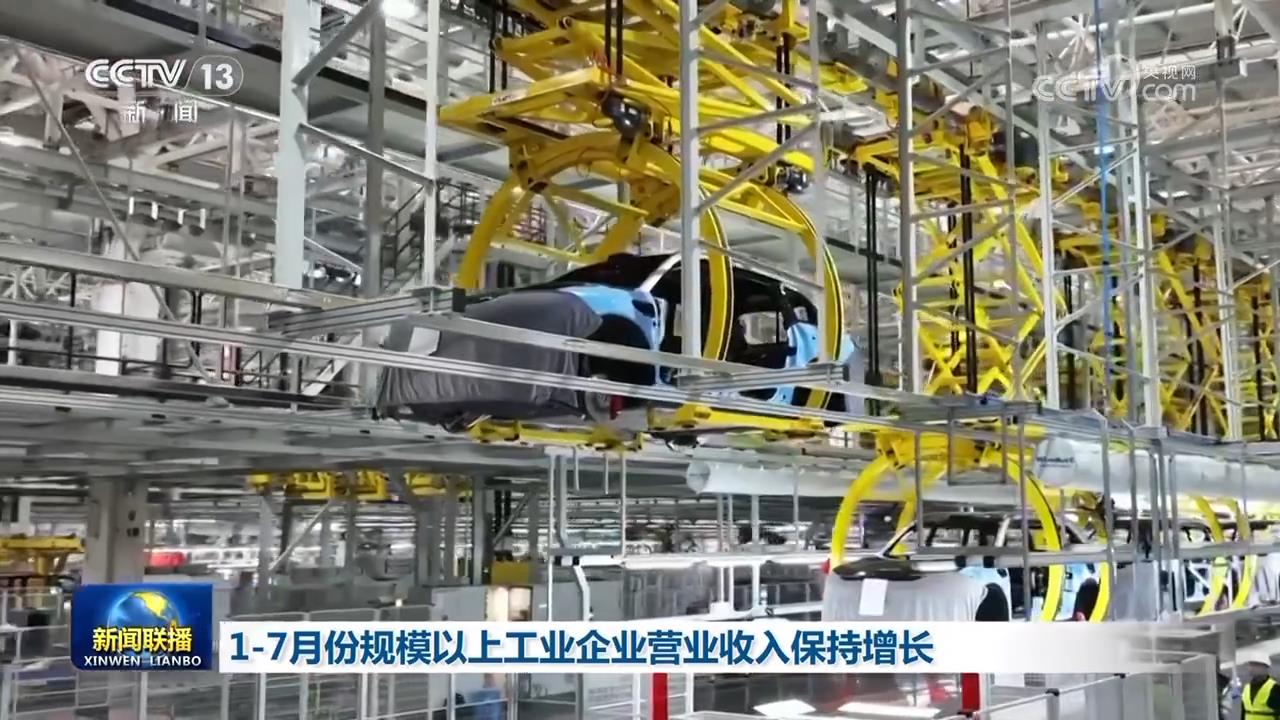
1—7月份规模以上工业企业营业收入保持增长
Yang Shi Wang· 2025-08-27 12:33
Core Insights - The National Bureau of Statistics reported that from January to July, the total profit of large-scale industrial enterprises reached 40,203.5 billion yuan, while operating revenue was 78.07 trillion yuan, reflecting a year-on-year growth of 2.3%, which creates favorable conditions for profit recovery [1] Group 1: Industrial Performance - The manufacturing sector experienced rapid profit growth, with a year-on-year increase of 6.8% in July, accelerating by 5.4 percentage points compared to June [1] - High-tech manufacturing profits grew by 18.9%, significantly contributing to the recovery of profits in large-scale industries [1] Group 2: Sector-Specific Growth - Industries related to large-scale equipment updates and the "old-for-new" consumption policy saw profit increases exceeding 50%, particularly in the manufacturing of computer peripheral devices and sensors [1]
国家统计局:7月份计算机整机制造行业利润增长124.2%
Zheng Quan Shi Bao Wang· 2025-08-27 01:43
Core Viewpoint - In July, industrial production above designated size maintained stable growth, contributing to a reasonable recovery in price levels and continuous restoration of corporate profitability due to the gradual implementation of a series of policies [1] Industry Performance - The manufacturing of electronic and electrical machinery specialized equipment saw a profit increase of 87.9% year-on-year [1] - General component manufacturing experienced a profit growth of 15.3% year-on-year [1] - The specialized equipment manufacturing for food, beverages, tobacco, and feed production recorded a profit rise of 11.3% year-on-year [1] Consumer Goods Sector - The "old for new" policy in consumer goods led to a profit increase of 124.2% in computer complete machine manufacturing [1] - The manufacturing of intelligent unmanned aerial vehicles saw a profit growth of 100.0% [1] - Household cleaning and hygiene electrical appliances manufacturing experienced a profit increase of 29.7% [1] Related Industries - Profit in computer peripheral equipment manufacturing grew by 57.0% [1] - Sensitive components and sensors manufacturing saw a profit increase of 51.9% [1]
赛特新材(688398):Q2业绩继续承压 以旧换新+新能效标准保障下游需求
Xin Lang Cai Jing· 2025-08-26 12:35
Core Viewpoint - The company reported steady revenue growth in the first half of the year, but profit performance was poor, with a significant decline in net profit and non-recurring net profit compared to the previous year [1][3]. Group 1: Financial Performance - In the first half of the year, the company achieved revenue of 469 million and net profit attributable to shareholders of 12 million, representing a year-on-year change of +3.7% and -77.66% respectively [1]. - The second quarter saw revenue of 223 million and net profit of 2 million, with year-on-year changes of -2.51% and -90.81% respectively [1]. - The company's gross profit margin decreased to 23.9%, down 9.57 percentage points year-on-year, with the second quarter gross profit margin at 22.55%, down 9.86 percentage points [3]. - The net profit margin for the first half of the year was 2.58%, a decrease of 9.4 percentage points year-on-year [3]. Group 2: Cost and Expense Analysis - The decline in profitability was attributed to several factors, including a decrease in the selling price of vacuum insulation panels, an increase in direct material costs due to rising raw material prices, and higher management expenses due to increased salaries and depreciation [1][3]. - The company’s operating cash flow net amount was 31 million, a decrease of 28 million year-on-year, primarily due to reduced tax refunds and increased cash payments to employees [3]. Group 3: Product and Market Development - The company achieved record high sales volume for its core product, vacuum insulation panels, generating revenue of 452 million, a year-on-year increase of 1.78% [2]. - The company is actively expanding into new applications for vacuum insulation panels in sectors such as new energy battery storage and high-temperature equipment insulation, with ongoing research and development efforts [2]. Group 4: Market Outlook and Ratings - The company maintains a "buy" rating, supported by government initiatives to promote consumer goods replacement and new energy efficiency standards expected to boost market demand [4]. - The company has adjusted its profit forecasts for 2025-2027, lowering the expected net profit attributable to shareholders to 70 million, 120 million, and 180 million respectively, from previous estimates of 140 million, 180 million, and 240 million [4].
