
科技赋能

Search documents
从“苗苗酸汤”看锅圈“三产融合”的助农新范式
Tai Mei Ti A P P· 2025-09-23 09:24
Core Insights - The article discusses the modernization and industrialization of the traditional Miao sour soup, highlighting the successful integration of technology and agricultural practices to enhance production efficiency and support local farmers [2][3][7]. Group 1: Industry Development - The Miao sour soup industry in Taijiang County has become a key economic driver, supported by national policies and local government initiatives [2]. - The collaboration between Guoquan and the Chinese Academy of Agricultural Sciences has led to the establishment of the Miao sour soup factory, which began production in May 2023 with an annual capacity of 12,000 tons [3][7]. - The total output value of the sour soup industry in Qiandongnan Prefecture has exceeded 2.5 billion yuan, with an annual production capacity of 160,000 tons [7][8]. Group 2: Agricultural Integration - The "order planting" model has been implemented to alleviate farmers' concerns about market access, allowing them to focus on cultivation while ensuring stable supply for the company [4][6]. - In Ge Yi Town, a core supplier of raw materials, the area under chili cultivation has reached 500 acres, with a recent procurement agreement resulting in the purchase of 6 tons of fresh chili within a month [4][6]. - The project has connected over 21,000 acres of farmland across nine townships, with farmers achieving an average income increase of over 4,000 yuan per acre [6][12]. Group 3: Technological Innovation - The fermentation cycle for Miao sour soup has been reduced from nearly a year to approximately 7 days through the use of a composite bacterial agent and modern production techniques [8][10]. - The production process has shifted from relying on sensory evaluation to data-driven methods, enhancing consistency and safety in the final product [10][12]. - The company ensures food safety by employing high-temperature sterilization methods, achieving a shelf life of over 9 months without preservatives or additives [12].

科技赋能·川蜀丰歌丨运竹出山 无人机显身手
Xin Hua Wang· 2025-09-23 08:02
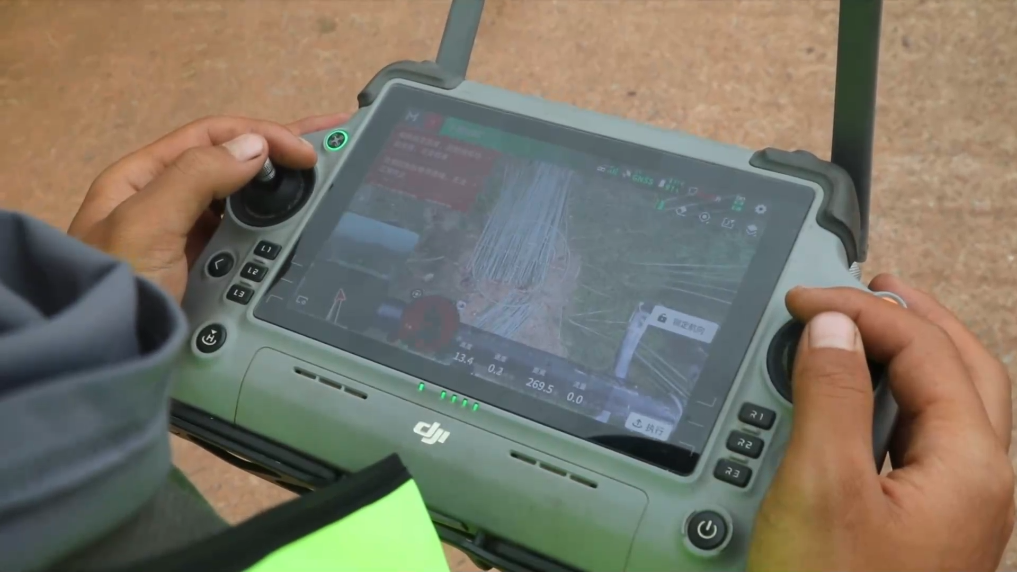
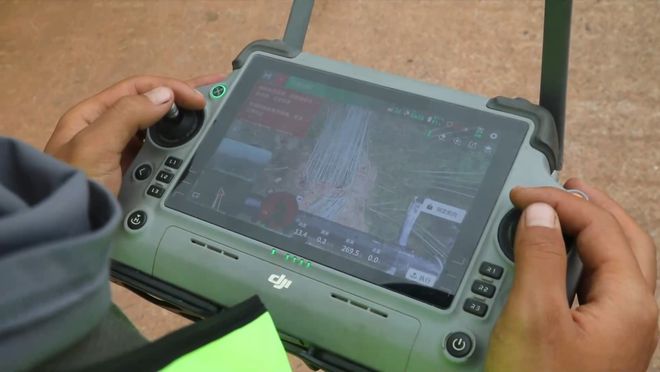
记者:刘海、萧永航、杨华 画面来源:合江融媒 新华社音视频部制作 【纠错】 【责任编辑:薛涛】 地处四川泸州的合江县竹木资源丰富,但竹子大多生长在大山深处,过去,采伐后运输出山主要依靠人背马驮,效率低,成本高。 在四川省港投集团所属四川交运旗下省低空经济公司的支持下,如今,这里的竹子出山有了无人机,提高了运输效率,降低了综合成本。 ...
科技赋能·川蜀丰歌|运竹出山 无人机显身手
Xin Hua She· 2025-09-23 07:10
Core Viewpoint - The introduction of drones for transporting bamboo in Hejiang County, Sichuan, has significantly improved efficiency and reduced costs in the bamboo industry [2][4]. Group 1: Industry Overview - Hejiang County is rich in bamboo resources, but traditional transportation methods were inefficient and costly, relying on manual labor and pack animals [2]. - The support from Sichuan Port Investment Group and its subsidiary, Sichuan Transportation, has facilitated the use of drones for bamboo transportation [4]. Group 2: Technological Impact - The implementation of drone technology has enhanced the transportation efficiency of bamboo from mountainous areas, addressing previous logistical challenges [4]. - The use of drones has led to a reduction in overall transportation costs, benefiting the local bamboo industry [4].
5项成果入选“山东好成果”,31家院士工作站落地!泰安科技发展再提速
Qi Lu Wan Bao Wang· 2025-09-22 15:02
Group 1 - The core focus of the news is the introduction of the third "Hundred Experts in Tai'an" event and the ongoing efforts of the Tai'an government in promoting technological cooperation and innovation [1] - The Tai'an Science and Technology Bureau has been actively working on five key areas: empowering new industrialization, strengthening enterprise innovation, optimizing innovation platforms, attracting talent, and enhancing technology transfer systems [2] - Significant progress has been made in technology innovation, with the establishment of key laboratories and innovation centers, and a notable increase in technology transfer loans, which reached 1.274 billion yuan, marking a 74% year-on-year growth [2] Group 2 - The number of high-tech enterprises in Tai'an has surpassed 1,000, and the number of technology-based small and medium-sized enterprises has reached 1,511 [2] - The implementation of the "Double Ten Project" has led to the initiation of 51 projects, the development of 69 new products, and the establishment of 62 new production lines [2] - The "Hundred Experts in Tai'an" initiative aims to connect local enterprises with domestic and international academic resources, resulting in the establishment of 9 provincial international cooperation bases and 31 academic workstations [2]
2025华灿点亮乡村论坛在京举办 科技与设计共绘乡村振兴新图景
Bei Jing Shang Bao· 2025-09-22 06:36
Group 1 - The "2025 Huacan Lights Up Rural Forum" was held in Beijing, focusing on "Technology Empowering Agriculture, Design Lighting Up Villages," aiming to integrate rural revitalization resources and promote collaboration between the two sides of the Taiwan Strait [1] - The forum is part of the 28th Beijing-Taipei Technology Forum series and has been held for five consecutive years, providing a platform for youth and technology resources to connect with rural needs [1] - Key themes discussed included the importance of technology and design in rural revitalization, showcasing successful cases of cross-strait cooperation in modernizing agriculture and rural development [1][2] Group 2 - Presentations highlighted the integration of science and art in rural revitalization, with examples from Beijing University of Aeronautics and Astronautics and Taiwan University of the Arts focusing on local cultural value and brand reconstruction [2] - Discussions on technology empowerment included the application of artificial intelligence in crop breeding, big data innovations in agriculture, and training programs for professional farmers in Pinggu District [2] - A signing ceremony took place between Pinggu farmers and the "Bay Bay Big Market" e-commerce platform, linking Taiwanese youth's platform directly with Pinggu agricultural product sales [2]
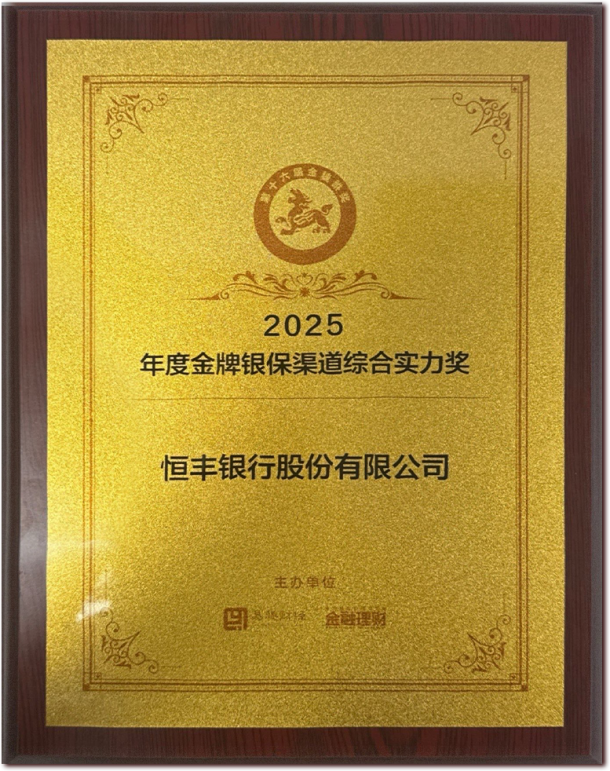
恒丰银行荣获2025年度金牌银保渠道综合实力奖
Qi Lu Wan Bao· 2025-09-22 03:15
Group 1 - The "2025 Golden Pi Xiu Award" ceremony was held in Beijing, where Hengfeng Bank won the "2025 Gold Medal Comprehensive Strength Award for Insurance and Banking Channels," reflecting high recognition from clients and the industry for its performance in the insurance and banking channel operations [1] - The award has been held for sixteen consecutive years, showcasing significant industry credibility and influence, with the evaluation process involving data research, online voting, and expert reviews focusing on comprehensive strength, team, products, and services [1] Group 2 - Under the "reporting and banking integration" policy and the resonance of the interest rate cycle, the domestic insurance and banking channel development model has successfully transitioned from a "scale-oriented" approach to a "value reconstruction" strategy [3] - Hengfeng Bank adheres to the new concept of "precise adaptation" and "collaborative win-win" in insurance and banking cooperation, actively promoting high-quality business development around channel collaboration, technological empowerment, and team building [3] Group 3 - The business has experienced rapid growth, with potential fully released through mechanism optimization, resource allocation, and model innovation, achieving explosive growth in agency insurance business, with multiple core indicators reaching record highs, ranking first among national joint-stock banks in year-on-year growth as of the end of August this year [4] - The bank emphasizes channel construction and ecological win-win strategies, deepening partnerships with a focus on "complementary advantages, resource sharing, and win-win development," enhancing professional training, optimizing product structure, and deepening customer rights to create a "1+1>2" aggregation effect [4] - Hengfeng Bank is advancing technological empowerment by promoting online and offline integration, developing digital channels such as mobile banking apps and intelligent advisory services, facilitating online customer flow and initial screening, while offline customer managers handle and manage the business, forming a closed-loop sales model [4] - The bank is enhancing team building and overall capabilities through systematic training, internalizing high-quality external training resources, and creating a virtuous cycle of team development, significantly improving professional capabilities and customer service levels [4] - In the future, Hengfeng Bank will deepen its customer-centric philosophy, adhere to value orientation, leverage technological innovation, strengthen compliance, and enhance the precision and added value of insurance and banking services through digital means, contributing to the construction of a strong financial nation [4]
曲阜:点燃科技智慧引擎 赋能建筑垃圾治理
Qi Lu Wan Bao Wang· 2025-09-21 03:31
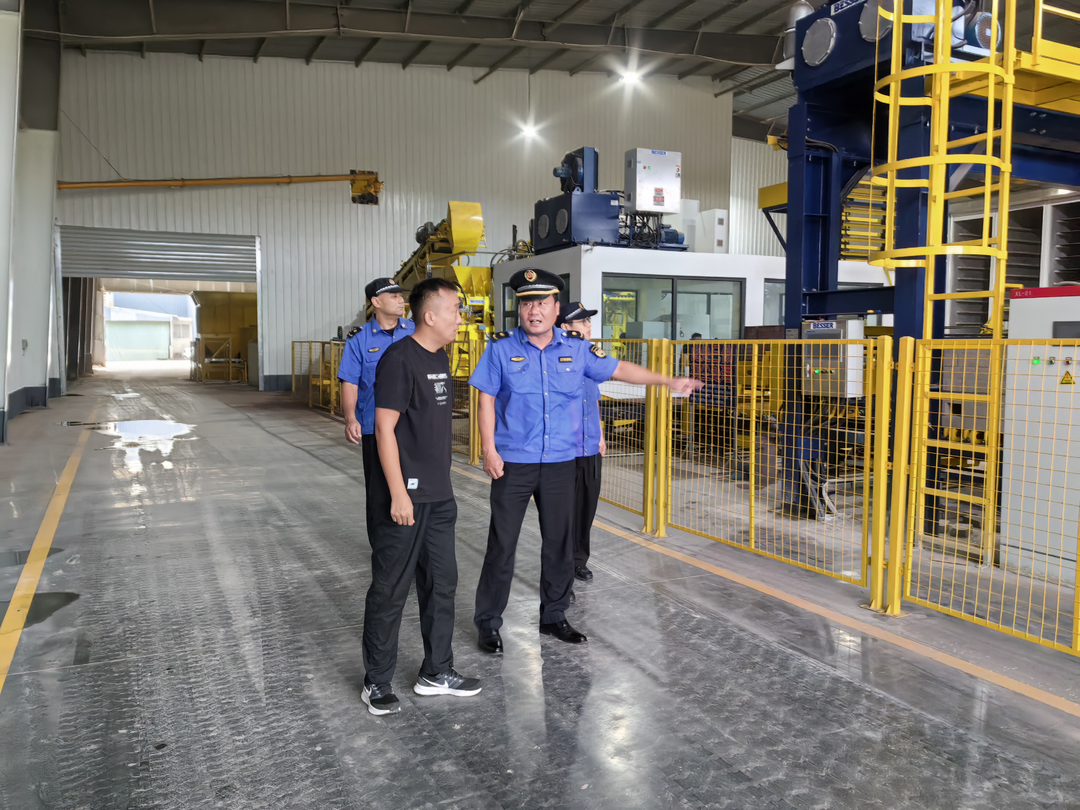
Core Viewpoint - Qufu City is enhancing its urban management through innovative thinking and technology, focusing on building waste management to improve the city's environment and livability [3][5]. Group 1: Building Waste Management Initiatives - Qufu City has implemented a comprehensive management service system for construction waste, addressing pollution and enhancing urban management efficiency [3]. - The city has established a registration and review system for construction waste disposal, ensuring that 13 transportation companies and over 50 vehicles comply with regulations [4]. - A total of 24 ongoing projects have completed waste classification disposal plans, and 54 residential communities have set up temporary storage points for renovation waste [4]. Group 2: Technological Integration - Over 50 construction waste transport vehicles have been upgraded with BeiDou positioning and blind spot monitoring systems, integrated into a digital urban management platform for real-time monitoring [4]. - This technological approach has improved the safety and efficiency of waste transport, preventing illegal dumping and ensuring compliance with designated routes [4]. Group 3: Resource Utilization Projects - Qufu City is advancing construction waste resource utilization projects, with one facility already operational, producing 400 tons of recycled aggregate and 200 cubic meters of precast concrete daily, generating a revenue of 100,000 yuan [4]. - Another project under construction is expected to process 300,000 tons of construction waste and 160,000 tons of renovation waste annually, increasing the resource utilization rate [4][5]. Group 4: Future Directions - Qufu City plans to continue enhancing its construction waste management efforts to further improve urban environmental quality, aiming for a cleaner and more beautiful city [5].
科技赋能促振兴 现代农业绘出好“丰”景
Xin Hua She· 2025-09-21 03:30
Core Insights - The article highlights the integration of technology in agriculture across various regions in China, emphasizing its role in stabilizing production and increasing income for farmers [1] Group 1: Technological Advancements in Agriculture - In Lin'an District, Hangzhou, drones are utilized for transporting walnuts, significantly reducing the time from thirty minutes to five or six minutes for transporting the harvest [1] - Shanxi Province is enhancing its potato and sweet potato industries through technological empowerment, addressing production challenges and contributing to rural revitalization [1] - In Hebi City, Henan Province, 214,200 acres of peanuts are in the maturation phase, with local agricultural technicians providing guidance on field management to ensure quality and yield through fertilization, green pest control, and water-saving irrigation [1] Group 2: Shift in Agricultural Practices - The application of advanced technologies such as drones, breeding innovations, smart irrigation, and artificial intelligence is transforming farmers' practices from relying on weather conditions to informed agricultural decisions [1] - The widespread adoption of these technologies is contributing to stable production and increased output, thereby injecting strong momentum into rural revitalization efforts [1]
百余位行业大咖齐聚!2025·青岛创投风投大会26日启幕
Qi Lu Wan Bao Wang· 2025-09-20 14:36
Core Viewpoint - The 2025 Qingdao Venture Capital and Private Equity Conference aims to enhance the financing channels for technology-based startups and promote high-quality economic development in Qingdao through various activities and discussions on financial innovation and trends [3][12]. Event Overview - The conference will be held on September 26 at the Qingdao International Conference Center, featuring both online and offline participation with approximately 1,000 attendees [4][5]. - The event will include opening speeches, project unveiling and signing, keynote speeches, roundtable discussions, thematic forums, and capital investment and technology project roadshows [4][10]. Historical Context - The Qingdao Venture Capital and Private Equity Conference has been successfully held six times since 2019, significantly enhancing its influence and support from national regulatory bodies and industry leaders [3][12]. - As of July 2025, the number of private fund managers and the scale of managed funds in Qingdao have increased to 1.5, 5.7, and 3.3 times their levels at the end of 2018, respectively [3]. Conference Highlights - The conference will transition from focusing solely on venture capital to encompassing the broader financial industry, emphasizing financial openness and technological empowerment [5]. - A strong lineup of influential guests, including former government officials and leaders from renowned financial institutions, will participate in discussions [6]. Key Discussion Topics - The conference will address current industry hot topics such as macroeconomics, industrial upgrades, mergers and acquisitions, artificial intelligence, and ESG financial reforms [7][8]. - Specific forums will focus on financial openness, green finance innovation, and the integration of technology and finance [8][9]. Expected Outcomes - The conference is expected to facilitate the establishment of quality projects in Qingdao and attract more investment institutions to set up branches or funds in the city [12]. - It aims to promote the transformation and upgrading of traditional industries and accelerate the conversion of technological innovations into practical applications [13][14]. - The event will enhance Qingdao's reputation in the venture capital and private equity sector, attracting talent, technology, and capital [14].

荒漠戈壁中如何探索一条高品质林果种植之路
Jing Ji Ri Bao· 2025-09-20 00:48
Core Insights - Xinjiang has become a significant hub for China's forestry and fruit industry, with a stable area of 21.1 million acres in 2024, accounting for approximately 13% of the national total, and over 80% of the area dedicated to specialty fruits in southern Xinjiang [1] Group 1: Industry Growth and Development - The Akesu region has a total area of 4.5 million acres for specialty fruits, with a yield of 2.8088 million tons in 2024, representing a 7% increase from the previous year [1] - The Xinjiang government allocated 109 million yuan to enhance the quality and efficiency of the fruit industry, focusing on the establishment of 55 demonstration parks for the fruit industry chain [1] Group 2: Quality Improvement and Market Expansion - The "Akesu Ice Sugar Heart Apple" is being positioned not only for household consumption but also as an ingredient for trendy coffee, indicating a shift towards quality-driven market strategies [2] - The average yield per acre for apple orchards has stabilized at around 3 tons, with a significant increase in the rate of quality fruit due to improved cultivation techniques [2] Group 3: Technological Empowerment - The 224th regiment of the Xinjiang Production and Construction Corps has developed a standardized management system for jujube orchards, achieving an average yield of 1,500 kg per acre [3] - The regiment has implemented a combination of drainage systems and organic farming practices to combat soil salinization, successfully treating 124,100 acres of saline-alkali land [3] Group 4: Efficient Distribution Channels - The distribution of Kuerle fragrant pears has become highly efficient, with nearly 90% of the harvest pre-ordered, and a network of sales points established in over 300 cities across China [4][5] - The international market for Kuerle fragrant pears is expanding, with exports to over 20 countries and regions, facilitated by customs facilities that streamline the export process [5]