
中特估

Search documents
国有大行股开年持续上行 研究机构:关注高股息策略
Xin Hua Wang· 2025-08-12 05:47
2024年第一周,多只国有大行股连续多日上涨,其中农业银行A股还创出历史新高。 回顾2023年,银行股普遍表现一般,但一些低估值的国有大行股全年走势稳健,部分银行股去年累计涨 幅超过30%,远远跑赢大盘。 近期,一些券商发布的2024年投资策略报告中提出,作为能够提供稳健分红的高股息品种,银行板块较 高的股息率已成为较强防御属性的投资选择。不过,对于业绩预期,这些机构也提及,银行板块未来大 概率仍将"负重前行"。 3只大行股去年涨幅超30% 上周,几只国有大行股连续上涨,直至上周五股价才小幅回落。值得一提的是,上周四和上周五,农业 银行A股股价盘中两度触及3.78元/股,创下上市以来的历史新高,A股及港股总市值达1.28万亿元。 整体来看,2023年银行指数跑赢沪深300指数10个百分点,在30个行业中位居第14位。分阶段看,2023 年一季度,银行股因疫情防控政策优化获得阶段性上涨,随后受息差新低等因素影响有所下跌;进入二 季度,4月至5月初,银行板块受"中特估"概念催化,多只国有大行股触及阶段性高点,一些低估值股份 行亦快速上涨;但板块高景气度并未持续,5月受宏观数据等因素影响,银行股再次震荡下跌。到了 ...





国泰海通|建筑二十年20讲-深度研究系列电话会
国泰海通证券研究· 2025-08-12 03:26
Group 1: Macro Overview - The article discusses the importance of market trends and historical analysis in identifying investment opportunities, emphasizing the role of leading companies in shaping market dynamics [4]. - It highlights a comprehensive review of historical market cycles, providing insights into potential upward trends and key stock selections [4]. - The analysis includes a focus on fiscal policies and their impact on infrastructure trends and profit patterns in the stock market [4]. Group 2: Industry Insights - The article provides an in-depth analysis of major infrastructure projects in Central and Western China, including regions like Xinjiang, Tibet, and Sichuan, indicating significant investment opportunities [4]. - It discusses the reevaluation of mineral resources such as copper, cobalt, nickel, gold, and coal, suggesting a potential shift in market valuations for these commodities [4]. - The article also covers the performance and valuation trends of leading companies in the decoration and landscaping sectors, offering insights into optimal buying and selling points [4]. Group 3: Company Analysis - The article features a detailed examination of China Huadian Corporation, highlighting its leadership in the marine economy and hydrogen energy business [4]. - It analyzes China State Construction Engineering Corporation, noting its undervaluation and high dividend yield in the context of the real estate market's seasonal trends [4]. - The report discusses China National Chemical Corporation's ongoing breakthroughs and global expansion strategies, indicating growth potential in its business operations [4]. Group 4: Technological Transformation - The article outlines the advancements in sectors such as renewable energy storage, controlled nuclear fusion, and deep-sea industries, emphasizing the transformative impact on related companies [4]. - It summarizes the progress in data center operations, robotics, and quantum technologies, indicating significant developments in these high-tech industries [4]. - The analysis includes a review of the low-altitude economy, AI applications, and smart transportation systems, highlighting their performance and business implications [4].




47页|2025年央国企(A股)上市公司市值战略研究报告
Sou Hu Cai Jing· 2025-08-11 09:00
央国企在2024年的整体表现呈现出积极态势。其股价持续跑赢市场,估值虽仍处低位,但已显改善迹象。这一趋势与"中特估"概念的提出以及相关政策的密 集出台密切相关,推动了估值逐步从"价值洼地"向"价值重塑"转变。截至2025年7月17日,央企100指数自2021年初上涨4.72个百分点,超过同期大盘28.13个 百分点。长期来看,央国企上市公司在资本市场中的定位正逐步形成稳定的"价值锚点"。 市值管理的核心在于"做价值涨预期",这包括价值创造、价值塑造、价值经营、预期传播、预期稳定和预期释放六个方面。企业需通过提升盈利能力、优化 资本结构、加强信息披露等手段,增强市场对其内在价值的认可。 在价值管理层面,尽管价值创造面临一定压力,但获现能力的提升成为关键。价值塑造方面,外部因素对企业的推动作用大于内部突破。价值经营则表现出 明显主动性,体现在并购活动活跃、回购行为增多、增持力度增强以及股权激励方式的调整上。 预期管理方面,传播效果持续向好,但预期稳定的基础仍需进一步夯实。预期释放总体乐观,但不同企业之间的差异有所扩大。央国企在市值管理方面的实 践已取得一定成效,但仍存在改进空间。 当前正值市值管理的重要窗口期,企 ...
国电南瑞上周获融资净卖出28868.89万元,居两市第6位
Jin Rong Jie· 2025-08-11 01:15
Core Viewpoint - Guodian NARI Technology Co., Ltd. has experienced significant financing activity, with a net financing outflow of 288.69 million yuan last week, ranking sixth in the market, indicating potential investor concerns or profit-taking behavior [1] Financing Activity - Last week, Guodian NARI had a financing buy amount of 290 million yuan and a repayment amount of 578 million yuan [1] - Over the past five days, the main capital inflow was 96.75 million yuan, with a price increase of 2.94% [1] - In the last ten days, the main capital outflow was 257 million yuan, with a price decrease of 3.1% [1] Company Overview - Guodian NARI Technology Co., Ltd. was established in 2001 and is located in Nanjing, primarily engaged in software and information technology services [2] - The company has a registered capital of 803.21 million yuan and a paid-in capital of 69 million yuan [1] - The legal representative of the company is Zheng Zongqiang [1] Investment and Intellectual Property - The company has made investments in 42 enterprises and participated in 5,000 bidding projects [2] - Guodian NARI holds 13 trademark registrations and 5,000 patent registrations, along with 181 administrative licenses [2]

香港交易所(00388):复苏动能强劲,聚焦成长与红利主线
First Shanghai Securities· 2025-08-08 07:50
Investment Rating - The report maintains a "Buy" rating for Hong Kong Exchanges and Clearing Limited (388) with a target price of HKD 500.0, representing a potential upside of 15.8% from the previous closing price [5][32]. Core Insights - The Hong Kong financial market is experiencing a robust recovery, with multiple indicators reaching historical highs. The average daily trading volume for the Hong Kong Stock Exchange (HKEX) in the first half of 2025 reached HKD 240.2 billion, a significant increase of 118% year-on-year, marking the highest level since 2010 [3][8]. - The market capitalization of the Hong Kong market increased to HKD 42.7 trillion by the end of June 2025, reflecting a 33% year-on-year growth, driven by the recovery of Chinese mainland economic conditions and the optimization of listing regulations by HKEX [4][15]. - The report highlights the strong performance of various market segments, including a 195% year-on-year increase in the average daily trading volume of the Stock Connect program, indicating a significant rise in participation from mainland investors [10][15]. Summary by Sections Market Performance - The average daily trading volume for HKEX reached HKD 240.2 billion in the first half of 2025, up from HKD 110.4 billion in the same period of 2024, marking a 118% increase [8]. - The Stock Connect program's average daily trading volume was HKD 110.96 billion, a 195% increase year-on-year, showcasing enhanced participation from mainland investors [10][15]. - The derivatives market also showed strong growth, with average daily trading volume for futures and options increasing by 11% year-on-year, and the trading volume for RMB currency futures rising by 43% [3][10]. Market Capitalization and New Listings - As of June 30, 2025, the total market capitalization of Hong Kong reached HKD 42.7 trillion, a 33% increase from HKD 32.1 trillion a year earlier [4][15]. - In the first half of 2025, HKEX processed over 200 listing applications, with new stock financing totaling USD 14.1 billion, a staggering 695% increase year-on-year [4][15]. Financial Projections - The report forecasts total revenue for HKEX to reach HKD 26.1 billion in 2025, reflecting a year-on-year growth of 16.7% [7]. - Net profit is projected to be HKD 15.2 billion in 2025, with a growth rate of 16.6% [7]. - The report anticipates a diluted earnings per share of HKD 12.0 for 2025, representing a 16.6% increase from the previous year [7]. Regulatory Environment - HKEX announced a series of optimized listing rules effective August 4, 2025, aimed at lowering barriers to entry and enhancing market competitiveness [22]. - The new regulations include reducing the minimum public float requirement from 15% to 10%, which is expected to attract more quality companies to list in Hong Kong [25][22]. Investment Themes - The report emphasizes two main investment themes: growth driven by technology and stable dividend yields from undervalued state-owned enterprises [26][27]. - It highlights opportunities in the AI sector, electric vehicles, and innovative pharmaceuticals, alongside a focus on undervalued state-owned enterprises benefiting from policy support [26][27].

中国联通涨0.19%,成交额9.74亿元,今日主力净流入-4594.21万
Xin Lang Cai Jing· 2025-08-07 07:14
Core Viewpoint - China Unicom is focusing on enhancing its cloud services and digital infrastructure to support the national digital economy strategy, with significant revenue growth in cloud products and data centers [2][9]. Financial Performance - For the first quarter of 2025, China Unicom reported a revenue of RMB 1,033.54 billion, a year-on-year increase of 3.88%, and a net profit attributable to shareholders of RMB 26.06 billion, up 6.50% year-on-year [9]. - The company has distributed a total of RMB 355.36 billion in dividends since its A-share listing, with RMB 124.27 billion in the last three years [10]. Business Strategy - The company aims to integrate cloud and network services, creating a comprehensive and secure computing network to meet diverse digital demands, positioning itself as a key player in the digital economy [2][8]. - China Unicom is actively participating in the national "East Data West Computing" project, enhancing its service capabilities in data centers and cloud computing [2][3]. Market Activity - On August 7, China Unicom's stock rose by 0.19%, with a trading volume of RMB 9.74 billion and a market capitalization of RMB 1,672.65 billion [1]. - The stock has seen a net outflow of RMB 46.06 million from major investors, indicating a reduction in holdings over the past few days [4][5]. Shareholder Information - As of March 31, 2025, the number of shareholders increased to 592,600, with an average of 51,921 shares held per shareholder, reflecting a decrease of 10.64% [9]. - Major shareholders include Hong Kong Central Clearing Limited and various ETFs, with some increasing and others decreasing their holdings [10].

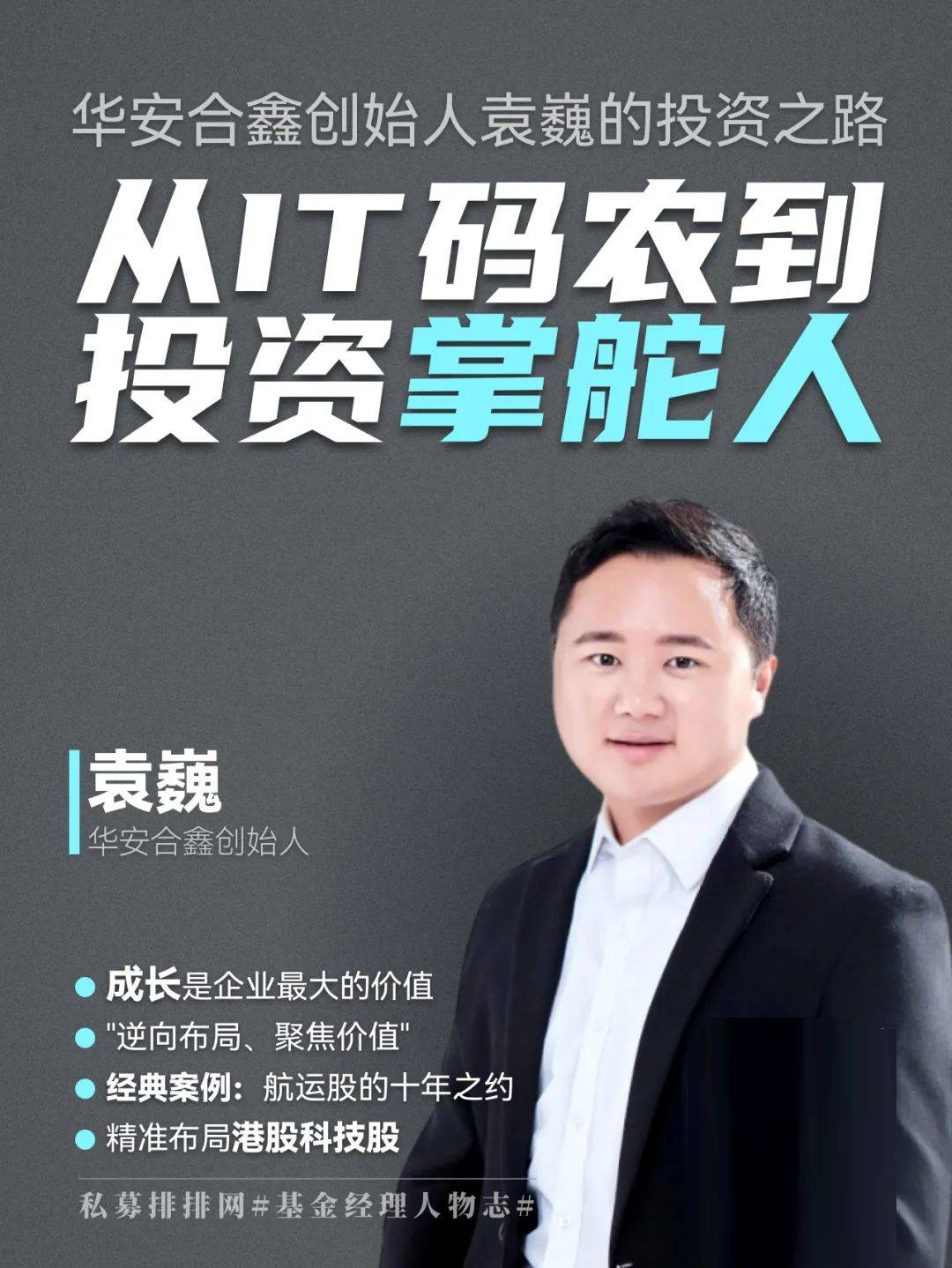
从IT码农到投资掌舵人:华安合鑫创始人袁巍的投资之路
Sou Hu Cai Jing· 2025-08-06 09:48
Group 1 - The article introduces Yuan Wei, a prominent fund manager and founder of Huaan Hexin, detailing his journey from a programmer at Microsoft to a successful investor in the private equity sector [4][11]. - Yuan Wei's investment philosophy emphasizes the importance of fundamental analysis, focusing on companies with strong growth potential and competitive advantages [12][13]. - The article highlights Yuan Wei's successful investment strategies, including his notable investments in the mobile internet sector and shipping stocks, which yielded significant returns [9][10][15]. Group 2 - Yuan Wei's transition from public to private equity was driven by his belief in the greater potential of the private fund industry, especially during market uptrends [11][21]. - The investment approach of Huaan Hexin is characterized by a focus on value and contrarian strategies, allowing the firm to identify undervalued companies in various sectors [21][24]. - The article discusses the firm's resilience during challenging market conditions, showcasing its ability to outperform benchmarks despite adverse environments [24][26]. Group 3 - Yuan Wei's investment methodology is encapsulated in his "three no principles": not chasing hot trends, not fearing undervaluation, and not giving up easily [25]. - The article concludes with a reflection on Yuan Wei's investment journey, emphasizing his commitment to understanding the essence of stocks and maintaining a disciplined investment approach [26].
中金公司涨1.34%,成交额8.57亿元,后市是否有机会?
Xin Lang Cai Jing· 2025-08-05 08:03
Core Viewpoint - The company, China International Capital Corporation (CICC), is experiencing positive performance indicators, including a projected significant increase in net profit for the first quarter of 2025, driven by its core business segments and market positioning [2][3]. Company Overview - CICC is a state-owned enterprise controlled by Central Huijin Investment Ltd, with a registered capital of RMB 350 million for its wholly-owned subsidiary, CICC Futures Co., Ltd [2][3]. - The company was established on July 31, 1995, and listed on November 2, 2020, with its main business activities including investment banking, equity sales and trading, fixed income, commodities, wealth management, and investment management [7]. Financial Performance - For the period from January 1 to March 31, 2025, CICC expects a net profit between RMB 1.858 billion and RMB 2.106 billion, representing a growth of 50% to 70% compared to the previous year's net profit of RMB 1.239 billion [3]. - The company reported a year-on-year increase of 64.85% in net profit for the first quarter of 2025, amounting to RMB 2.042 billion [8]. Shareholder and Market Activity - As of March 31, 2025, CICC had 139,600 shareholders, a decrease of 9.70% from the previous period, with an average of 21,000 circulating shares per shareholder, an increase of 10.77% [8]. - The company has distributed a total of RMB 4.489 billion in dividends since its A-share listing, with RMB 3.620 billion distributed over the last three years [9]. Institutional Holdings - As of March 31, 2025, the top ten circulating shareholders include Hong Kong Central Clearing Limited and various ETFs, with notable increases in holdings from some institutional investors [10].

中特估概念5日主力净流入2.06亿元,农业银行、中国银行居前
Sou Hu Cai Jing· 2025-08-05 07:51
序号代码名称最新价涨跌幅主力净流入主力净占比1601288农业银行6.542.352.64亿元8.27%2601988中国 银行5.651.252.36亿元13.11%3601857中国石油8.591.421.44亿元12.37%4601398工商银行7.761.041.42亿元 5.41%5601319中国人保8.42.561.03亿元14.56%6601881中国银河17.472.529681.66万元8.43%7002415海康 威视29.332.668626.70万元2.75%8601728中国电信7.410.148247.08万元12.85%9600050中国联通 5.381.137563.42万元5.43%10601328交通银行7.771.447023.60万元4.98% 来源:金融界 8月5日,中特估概念上涨0.67%,今日主力资金流入2.06亿元,概念股62只上涨,13只下跌。 主力资金净流入居前的分别为农业银行(2.64亿元)、中国银行(2.36亿元)、中国石油(1.44亿 元)、工商银行(1.42亿元)、中国人保(1.03亿元)。 ...


中国石油上周获融资净买入6078.30万元,居两市第147位
Sou Hu Cai Jing· 2025-08-04 20:41
Core Viewpoint - China Petroleum has seen significant financing activity, with a net buy of 60.783 million yuan last week, indicating investor interest despite recent outflows [1] Financing Activity - Last week, China Petroleum had a financing buy amount of 512 million yuan and a repayment amount of 452 million yuan [1] - The company ranked 147th in net financing buy across the market [1] Capital Flow - Over the past 5 days, the main capital outflow from China Petroleum was 256 million yuan, with a price drop of 3.4% [1] - In the last 10 days, the total outflow reached 720 million yuan, with a decline of 5.11% [1] Company Profile - China Petroleum and Natural Gas Corporation was established in 1999 and is based in Beijing, primarily engaged in oil and gas extraction [1] - The registered capital of the company is 18.302 billion yuan, with a paid-in capital of 16 billion yuan [1] - The legal representative of the company is Dai Houliang [1] Investment and Intellectual Property - The company has invested in 1,285 enterprises and participated in 445 bidding projects [1] - It holds 38 trademark registrations and 5,000 patents, along with 168 administrative licenses [1]