AI大模型

Search documents
GEO概念股爆火!多家公司紧急提示!
Zheng Quan Ri Bao Zhi Sheng· 2026-01-13 13:20
Group 1 - The core viewpoint of the articles highlights the rising interest in the GEO (Generative Search Engine Optimization) concept, driven by advancements in AI large models, which is reshaping content marketing and advertising strategies in the media sector [1][2][3] - GEO is defined as the use of generative AI technology to create content that closely matches user intent, enhancing its ranking and citation rate in AI searches, and is seen as a new form of content marketing distinct from traditional SEO [1][2] - Analysts from Dongfang Securities and Pacific Securities predict that the GEO market is in its early stages but is expected to experience rapid growth, potentially transforming advertising from one-time traffic payments to long-term AI information operations [1][2] Group 2 - Several companies, including Yingli Media and People's Daily, have clarified their positions regarding GEO business, stating that their current operations do not include GEO and that their business models have not yet matured, leading to uncertainties in market recognition and profitability [2][3] - Yingli Media reported a stock price increase of 97.54% from December 30, 2025, to January 13, 2026, indicating significant volatility and potential risks associated with the recent surge in stock prices [2] - Experts warn that the current hype around GEO carries high risks, as many companies have not established a viable business model or generated actual revenue from GEO, and the reliance on AI model recommendations may lead to rapid obsolescence of existing optimization strategies [3][4]


智谱与MiniMax上市:AI大模型“告别草莽”
Sou Hu Cai Jing· 2026-01-13 13:13
Core Insights - The article discusses the transition of the AI large model industry from a phase of intense competition to a period focused on commercial validation, highlighting the distinct paths taken by two companies, Zhiyu and MiniMax, as they went public in the Hong Kong market [2][17]. Group 1: Business Models and Strategies - Zhiyu adopts a "MaaS" (Model as a Service) approach, focusing on becoming a foundational infrastructure for various industries, emphasizing stability and long-term value [3][5]. - MiniMax, on the other hand, pursues a global C-end strategy, leveraging product innovation and market speed to establish a competitive edge, with a significant portion of its revenue coming from overseas markets [3][5][27]. - Both companies' paths reflect their strategic judgments regarding different stages of AI commercialization, with no absolute superiority between the two approaches [4][6]. Group 2: Financial Performance - Zhiyu's revenue grew from 57.4 million yuan in 2022 to 312.4 million yuan in 2024, with a compound annual growth rate of 130%, and a projected revenue of 738 million yuan in 2025 [7][8]. - MiniMax's revenue surged from 3.5 million USD in 2023 to 30.5 million USD in 2024, marking a year-on-year growth rate of 782.2% [8]. - Both companies face significant losses, with Zhiyu accumulating over 6.2 billion yuan in losses from 2022 to mid-2025, and MiniMax's losses reaching approximately 9.3 billion yuan during the same period [9][10]. Group 3: Industry Trends and Market Dynamics - The successful IPOs of Zhiyu and MiniMax signify a shift in the AI large model industry, moving away from the "parameter competition" era towards a more rational investment landscape [17][21]. - The market is witnessing a clear differentiation among AI companies, with some exiting direct competition in favor of niche markets, while others, like Zhiyu and MiniMax, demonstrate viable business models and growth potential [18][22]. - Major internet companies are entering the AI space, altering the competitive landscape with their resources and strategies, which creates a disparity in competition between established giants and startups [23][24]. Group 4: Future Outlook - The article concludes that the paths of Zhiyu and MiniMax illustrate the diverse possibilities within the AI industry, with both companies facing similar challenges of high operational costs and the need for sustainable profitability [29][30]. - The successful listings of these companies mark a new beginning in the AI competition, emphasizing the importance of technological assets and ecosystem potential in valuation [30][31].


目标取代AirPods,OpenAI新硬件正式曝光
3 6 Ke· 2026-01-13 12:09
Core Insights - OpenAI is developing an AI headset codenamed "Sweetpea," which is designed to replace AirPods and redefine personal interaction in the AI era [2][4] - The headset will feature a unique pebble-shaped design made of metal, housing advanced technology for AI computations, including a 2nm chip for local AI processing [4][6] - OpenAI aims to ship 40-50 million units in the first year post-launch, indicating strong confidence in market potential [4][6] Product Development - The "Sweetpea" headset is being designed by Jony Ive, former Chief Design Officer at Apple, and is intended to provide a new form of interaction without relying on screens [4][6] - The device will utilize built-in microphones and cameras for environmental awareness, aiming to offer proactive AI services rather than reactive responses [6][7] Market Context - The AI headset market is experiencing rapid growth, with a projected increase in global market size from $217 million in 2025 to $680 million by 2031, reflecting a compound annual growth rate of 20.99% [6] - In Q1 2025, online sales of AI headsets in China are expected to surge by 960.4% year-over-year, surpassing total sales for 2024 [6] Competitive Landscape - The AI headset market has three main camps: innovative design-focused companies, established hardware manufacturers like Huawei and Apple, and traditional acoustic firms enhancing their products with AI capabilities [7] - The key competitive advantage in the AI headset market is the ability to provide "active intelligence," moving beyond passive command-response systems [7][8] Challenges - Privacy concerns are a significant challenge due to continuous environmental sensing and data collection, necessitating a balance between user experience and privacy protection [8] - Technical challenges include achieving a balance between battery life and performance, ensuring smooth multi-device collaboration, and maintaining interaction accuracy in noisy environments [8] - OpenAI faces supply chain integration challenges, particularly in scaling production to meet its ambitious shipping targets, despite partnering with Foxconn for capacity assurance [8][9]

杭州六小龙,排队IPO
混沌学园· 2026-01-13 12:01
Core Viewpoint - The article discusses the current status and future prospects of the "Hangzhou Six Little Dragons," a group of six technology companies that have gained significant attention and are now preparing for IPOs amidst intense competition and market pressures [2][3][4]. Group 1: Company Status and IPO Progress - Four out of the six companies are preparing for IPOs: Yushu Technology, Qunhe Technology, Yundong Technology, and Qiangnao Technology [2][8]. - Yushu Technology has achieved annual revenue exceeding 1 billion yuan and has been profitable for five consecutive years, with a significant order volume [13][14]. - Qiangnao Technology recently completed a financing round of approximately 2 billion yuan, positioning itself as a leading player in the brain-computer interface sector [10][11]. - Yundong Technology has seen its revenue double in 2024 and is also preparing for an IPO [16][17]. - Qunhe Technology has established itself as a leader in the space design software market, with a significant market share and a stable revenue model [18][38]. Group 2: Financial Performance and Market Position - Game Science has generated over 9 billion yuan in revenue from its flagship game, demonstrating strong cash flow and market demand [19][20]. - DeepSeek, the parent company of DeepSeek, reported a revenue of 5 billion yuan, showcasing its financial strength and market potential [22]. - Yushu Technology's competitive pricing strategy has contributed to its leading market share in the quadruped robot segment, with over 60% of the global market [45][46]. - Qiangnao Technology aims to make advanced prosthetics affordable, significantly reducing the price of its products compared to imported alternatives [56]. Group 3: Innovations and Product Developments - Game Science is expanding its IP commercialization efforts, launching new products and establishing a flagship store to enhance brand presence [20][27]. - DeepSeek has introduced innovative models that improve efficiency in AI training and inference, positioning itself as a cost-effective solution in the AI landscape [29][33]. - Qunhe Technology has developed spatial language models that enable direct generation of interactive 3D designs, marking a significant advancement in spatial intelligence [38][40]. - Yushu Technology has launched new robotic products, including the Unitree H2 humanoid robot, showcasing advancements in robotics technology [44][45]. Group 4: Industry Challenges and Competitive Landscape - The technology sector is experiencing intense competition, particularly in the fields of robotics and AI, with numerous new entrants emerging [58][61]. - The article highlights the need for companies to innovate continuously and adapt to market pressures to survive in a rapidly evolving industry [65]. - The competition is not only about technology but also about the ability to create sustainable business models and long-term value [65][73].

2025智能网联新能源汽车十大年度事件 | 精进2025——汽车行业10个十大年度盘点(七)
Jing Ji Guan Cha Wang· 2026-01-13 10:48
Core Insights - The automotive industry in China has made significant progress in 2025, driven by a series of proactive policies that have boosted consumption and improved the competitive environment [2] - The "2025 Progress Report" by Automotive Vertical Media highlights ten key annual reviews in the automotive sector, marking the sixth consecutive year of such reporting [2] Group 1: Key Events in Smart Connected New Energy Vehicles - The issuance of the first L3 special license plate in China marks the beginning of commercialized L3-level autonomous driving, with the first vehicle, Deep Blue SL03, officially licensed for road use [4][5] - The world's first flying car production line has been established in Guangzhou, with the first "land aircraft" successfully produced, indicating a significant step towards commercial production in the low-altitude economy [7][8] - Solid-state battery production is accelerating, with multiple companies announcing timelines for mass production, including CATL and Toyota, which are expected to enhance battery performance and safety [8][9] Group 2: AI Integration and Industry Transformation - Generative AI and large model technologies have been deeply integrated into the automotive industry, enhancing manufacturing efficiency and product competitiveness across the entire supply chain [10][12] - The adoption of AI technologies is reshaping the automotive industry's research and development logic, manufacturing models, and service ecosystems, driving the sector towards a higher quality of intelligent transformation [12] Group 3: Global Market Expansion and Competitiveness - Chinese automotive solutions have gained global recognition, with partnerships established with major international brands like BMW and collaborations with various multinational automakers, indicating a shift towards "China solutions" in the global market [13][14] - BYD has become the world's largest manufacturer of pure electric vehicles, surpassing Tesla in sales, reflecting the competitive strength of Chinese brands in the global electric vehicle market [19][20] Group 4: Safety Standards and Regulations - The introduction of new mandatory national standards for electric vehicle batteries emphasizes safety, requiring batteries to not catch fire or explode under thermal runaway conditions, effective from July 2026 [17][18] - The implementation of dynamic monitoring safety standards for new energy vehicles marks a transition to proactive safety management, enhancing consumer protection and industry accountability [21][22] Group 5: Charging Technology Advancements - The competition in ultra-fast charging technology has reached the "megawatt" level, with several companies launching solutions that enable rapid charging capabilities, significantly improving user experience in electric vehicles [15][16] - The advancements in charging technology are expected to reshape the competitive landscape of the electric vehicle market, facilitating broader adoption and integration of electric vehicles into everyday use [16] Group 6: IPO Trends in Autonomous Driving - The surge of IPOs among autonomous driving companies signifies a shift from capital cultivation to market validation, with major players like Pony.ai and Hesai Technology entering the public market [23][24] - The rise of end-to-end autonomous driving solutions is expected to accelerate the mass production of high-level autonomous vehicles, enhancing the industry's growth trajectory [24]



泄密被小米辞退仅4个月,王腾高调官宣喜讯,没给雷军留一丝体面
Sou Hu Cai Jing· 2026-01-13 09:21
Core Viewpoint - Wang Teng, once seen as a successor at Xiaomi, was dismissed for leaking company secrets and conflicts of interest, but has quickly announced the establishment of a new company focused on sleep health products within four months of his departure [1][15][30]. Group 1: Background and Dismissal - Wang Teng was considered a key figure at Xiaomi, with his recruitment personally overseen by CEO Lei Jun during a second interview in 2016 [5][7]. - He achieved significant success with the Redmi brand, particularly with the K40 series, which became a bestseller in the mid-range market [11][13]. - His dismissal on September 8, 2025, was shocking to many, attributed to leaking company secrets and conflicts of interest [15][13]. Group 2: Post-Dismissal Developments - Following his dismissal, Wang Teng expressed gratitude towards Lei Jun and indicated he would continue to support Xiaomi [16]. - He faced speculation about his next steps, with rumors suggesting he might join another tech company or continue in the mobile industry [22]. - On October 1, 2025, he hinted at considering entrepreneurial projects, leading to discussions about his future endeavors [25]. Group 3: New Company Formation - On January 8, 2026, Wang Teng announced the formation of his new company, "Today Yi Xiu," which focuses on developing sleep health products [30][32]. - The company was registered with a capital of 1 million yuan and established on January 6, 2026 [33]. - Wang Teng's background in biological information and experience in technology products positions him well for this new venture, especially in the growing market for AI-driven health solutions [36][38]. Group 4: Team Composition and Market Position - The initial team for Wang Teng's new company includes members from major firms like Xiaomi and Huawei, indicating his strong industry connections [40][42]. - His ability to quickly assemble a capable team and define a clear direction for the company reflects his strategic planning and leadership skills [32][46]. - The rapid transition from dismissal to entrepreneurship has sparked discussions about his potential impact in the health tech sector, with many expressing optimism about his future success [50].

王小川:百川智能预计2027年启动IPO
Jin Rong Jie· 2026-01-13 08:47
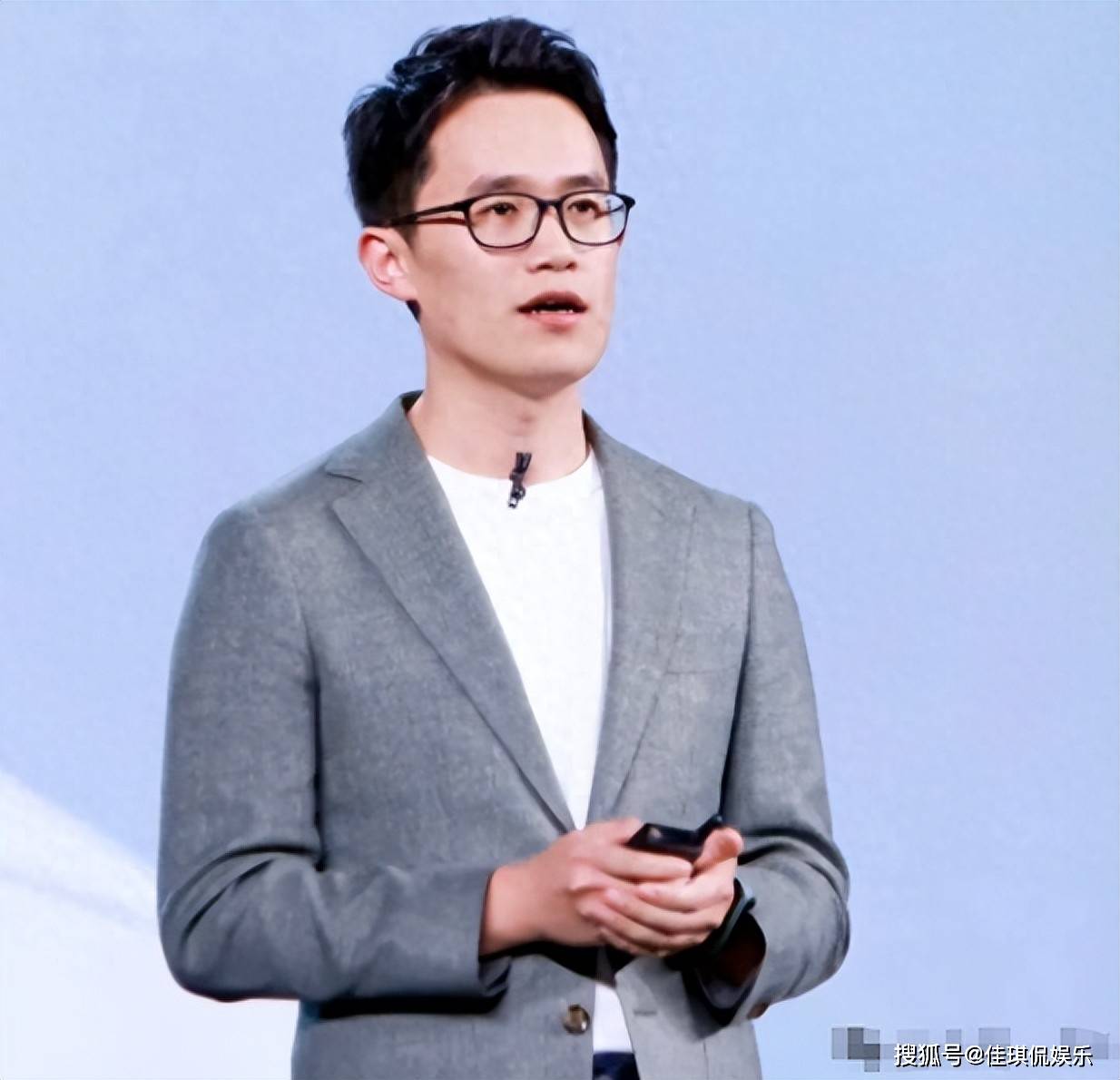
责任编辑:钟离 1月13日,百川智能创始人兼CEO王小川表示,公司预计将于2027年启动IPO上市。谈及近期备受关注 的AI大模型企业上市,王小川表示,"他们主要还是踩在通用模型技术红利和政策支持的基础上,但目 前他们的市值和商业化能力并不匹配,但AI医疗今天也是大模型竞争中的一个范式,虽然它的成熟会 晚一点,在后面我们的路径,肯定也是奔着上市去的。 财经频道更多独家策划、专家专栏,免费查阅>> ...
大模型独角兽:从持续亏损到市值千亿,押注未来逻辑何在?
3 6 Ke· 2026-01-13 07:25
Core Insights - The article discusses the rapid development of generative AI and highlights OpenAI as a leading player in the global market, with 748 registered generative AI companies in China [1] - The emergence of the "Six Little Tigers" in the AI model sector, including MiniMax and Zhiyuan AI, has attracted significant capital investment, indicating strong market interest [4] - The AI market is experiencing rapid growth, with both consumer (C-end) and enterprise (B-end) sectors showing robust development, driven by advancements in AI model technology [4][6] Company Performance - Zhiyuan AI's revenue grew from 57.4 million yuan in 2022 to 312 million yuan in 2024, marking a fivefold increase, with a 325% year-on-year growth in the first half of 2025 [5] - MiniMax's revenue surged from 3.46 million USD in 2023 to 30.52 million USD in 2024, nearly a ninefold increase, reflecting the commercial potential of AI model technology [5] - Both companies have achieved significant market valuations, with MiniMax reaching a peak market cap of over 150 billion HKD and Zhiyuan AI surpassing 110 billion HKD [6] Market Trends - The AI model sector is witnessing a wave of innovation across various industries, leading to a new round of industrial intelligence transformation [6] - Despite the growth, there are concerns about the sustainability of profitability, as many companies, including the "Six Little Tigers," face challenges similar to the previous "AI Four Dragons" due to ongoing losses [7][8] - The high costs associated with AI infrastructure and the need for substantial investment in computing power are significant barriers to achieving profitability in the AI model industry [9][10] Investment Landscape - The article raises concerns about the potential for an AI bubble, as companies with substantial losses are achieving high market valuations, which may not be sustainable [10][11] - The historical context of the "AI Four Dragons" serves as a cautionary tale for current AI model companies, emphasizing the importance of technology implementation and revenue generation to ensure long-term viability [11]
2026年合肥高新区首批高质量项目签约 总投资超100亿元
Xin Lang Cai Jing· 2026-01-13 06:22
Core Insights - Hefei High-tech Zone has made significant progress in promoting the "Industrial Pioneer Zone" construction, with 16 high-quality projects signed and a total investment of 10.67 billion yuan, marking a strong start for the first quarter's investment attraction efforts [1][2] Group 1: Project Highlights - The projects align with national strategic directions and technological development trends, covering key industries such as semiconductor materials and new energy, as well as cutting-edge fields like quantum technology, commercial aerospace, and AI large models [1] - In the semiconductor sector, two major projects worth 1 billion yuan each have been launched, including a power module packaging and testing project expected to generate an annual output value of 1.5 billion yuan and tax revenue of 100 million yuan [1] - The semiconductor defect detection equipment industrial park project aims to overcome the domestic bottleneck in wafer defect detection equipment, promoting self-controllable industrial chains [1] Group 2: AI and Innovation - The Sila Science Computing Center and regional headquarters project will deploy high-performance computing resources focusing on AI foundational models and material simulations, promoting the integration of "artificial intelligence + scientific research" [1] - The Qingting Acoustic R&D production base project aims to produce 1 million directional sound module products annually, leveraging innovative directional sound technology to drive advancements in consumer electronics and smart automotive sectors [1] Group 3: Future Plans - Hefei High-tech Zone will continue to optimize the business environment and enhance project service capabilities, aiming to improve enterprise satisfaction and contribute significantly to the city's high-quality development [2]
物流机器人市场洞察,全球生产商排名及市场份额
QYResearch· 2026-01-13 02:44
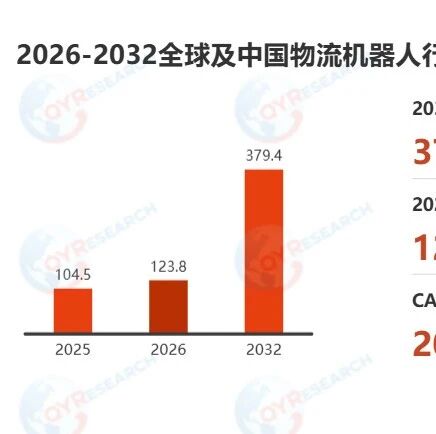
Core Viewpoint - The logistics robot industry is experiencing rapid growth driven by the need for automation and efficiency in supply chains, supported by government policies and structural demand from various sectors such as e-commerce, fast-moving consumer goods, and pharmaceuticals [1][2]. Group 1: Market Dynamics - The logistics robot market is in a high growth phase, with a projected market size of $32.02 billion by 2031 and a compound annual growth rate (CAGR) of 20.1% [3]. - The demand for warehouse automation is structurally expanding, with e-commerce, fast-moving consumer goods, and pharmaceuticals being the core drivers [1][2]. - The market is characterized by a shift from single-point equipment purchases to full-process intelligent deployments, transforming logistics robots into strategic assets for supply chains [2]. Group 2: Product and Application Segmentation - Automated Guided Vehicles (AGVs) and Autonomous Mobile Robots (AMRs) dominate the market, holding approximately 61.8% of the market share [7]. - The primary application area for logistics robots is warehousing and distribution, accounting for about 36.1% of the demand [9]. Group 3: Challenges and Trends - The logistics robot industry faces challenges such as increasing safety and compliance requirements, which necessitate higher investments in algorithms and risk control [2]. - There is a trend towards "deep verticalization" and "scene granularity" in downstream demand, with manufacturing industries pushing for flexible production and logistics upgrades [2]. Group 4: Supply Chain and Component Insights - Key components in the logistics robot supply chain include sensors, controllers, precision reducers, and lightweight structural parts, with a notable shift towards domestic production for stability and cost competitiveness [3]. - The industry is moving towards green manufacturing and low-carbon supply chains, enhancing the energy efficiency and carbon footprint of logistics robots [3].