
数字经济

Search documents
“算力上天”引领新一轮科技革命
Xin Lang Cai Jing· 2026-02-04 04:02
Core Insights - The article discusses the development of space computing, which involves deploying data processing capabilities in space through satellite constellations, marking a significant shift in data handling and technology paradigms [3][5][7]. Group 1: Space Computing Overview - Space computing aims to move data centers to Earth’s orbit, allowing satellites to perform AI training, inference, and large-scale data computation directly in space [3][5]. - The goal is to enable real-time data processing, intelligent analysis, and autonomous decision-making at the source of data collection in space [3][5]. Group 2: Challenges of Ground-Based Data Centers - Ground-based data centers face physical limits and increasing energy consumption, with a projected annual growth rate of about 20% in electricity usage from 2024 to 2030 [5]. - The need for high-performance computing is constrained by communication latency, requiring proximity in deployment to maintain efficiency [5][6]. Group 3: Advantages of Space Computing - The space environment offers abundant energy supply, high cooling efficiency, and flexible deployment options, making it a favorable setting for computing [6]. - Space computing allows for efficient data utilization, processing data in orbit and only transmitting results back to Earth, significantly enhancing data value [6]. Group 4: Economic and Industrial Implications - The deployment of space computing is expected to create a new industrial chain and commercial ecosystem, benefiting sectors like digital economy, low-altitude economy, and emergency safety [7][8]. - The market potential for satellite internet and related services is estimated to reach 126 billion yuan [7]. Group 5: Strategic Importance - Space computing is viewed as a strategic asset in global technology competition, with implications for national security and economic development [10][11]. - The development of space computing is not just a technological endeavor but also a means to secure a competitive edge in the next generation of space information infrastructure [10][12]. Group 6: China's Initiatives - China is actively pursuing space computing, with plans to establish a large-scale data center in orbit by 2035, following a three-phase development strategy [15][16]. - Beijing is leading these efforts, forming a collaborative innovation platform to integrate resources from commercial aerospace and artificial intelligence sectors [16][17]. Group 7: Global Competition - Major tech companies are investing in space computing initiatives, indicating a growing interest in establishing computing capabilities in space [13][14]. - The competition for satellite frequency and orbital resources is intensifying, with countries racing to secure their positions in space [11][12].


习言道|支持拉美和加勒比国家维护自身主权、安全、发展利益
Xin Lang Cai Jing· 2026-02-04 04:01
Group 1 - The core viewpoint of the meeting between Chinese President Xi Jinping and Uruguayan President Luis Lacalle Pou emphasizes the importance of mutual support for each other's core interests and major concerns, as well as enhancing friendly exchanges at all levels [4][11][12] - Both countries aim to strengthen development strategy alignment and deepen cooperation in various sectors including trade, finance, agriculture, infrastructure, and information communication, while exploring potential in green development and digital economy [6][7] - The meeting highlights the significance of cultural, educational, sports, media, and local exchanges to facilitate personnel interactions and promote mutual understanding between the peoples of China and Uruguay [9][12] Group 2 - Xi Jinping expressed China's commitment to supporting Uruguay's presidency of the "Group of 77 and China" and enhancing solidarity and cooperation among Global South countries, advocating for a multipolar world and inclusive economic globalization [11][12] - The Chinese side emphasizes the importance of China-Latin America relations and supports Latin American and Caribbean countries in maintaining their sovereignty, security, and development interests [12]
泰国商业部制定4大经济战略转型“世界连接点”
Shang Wu Bu Wang Zhan· 2026-02-04 02:08
据泰媒报道,近日,泰国商业部部长素帕琪在接受访问时透露,达沃斯世界经济论坛后,她与团队制定 了4大核心经济战略,旨在以"值得全球信赖的中间人"角色,将"世界贸易秩序重整"的挑战转化为机 遇,将重点包括推动数字经济、绿色经济和人工智能,并加速年内的FTA和DEFA谈判,使泰国成为全 球供应链的可持续连接点。 ...
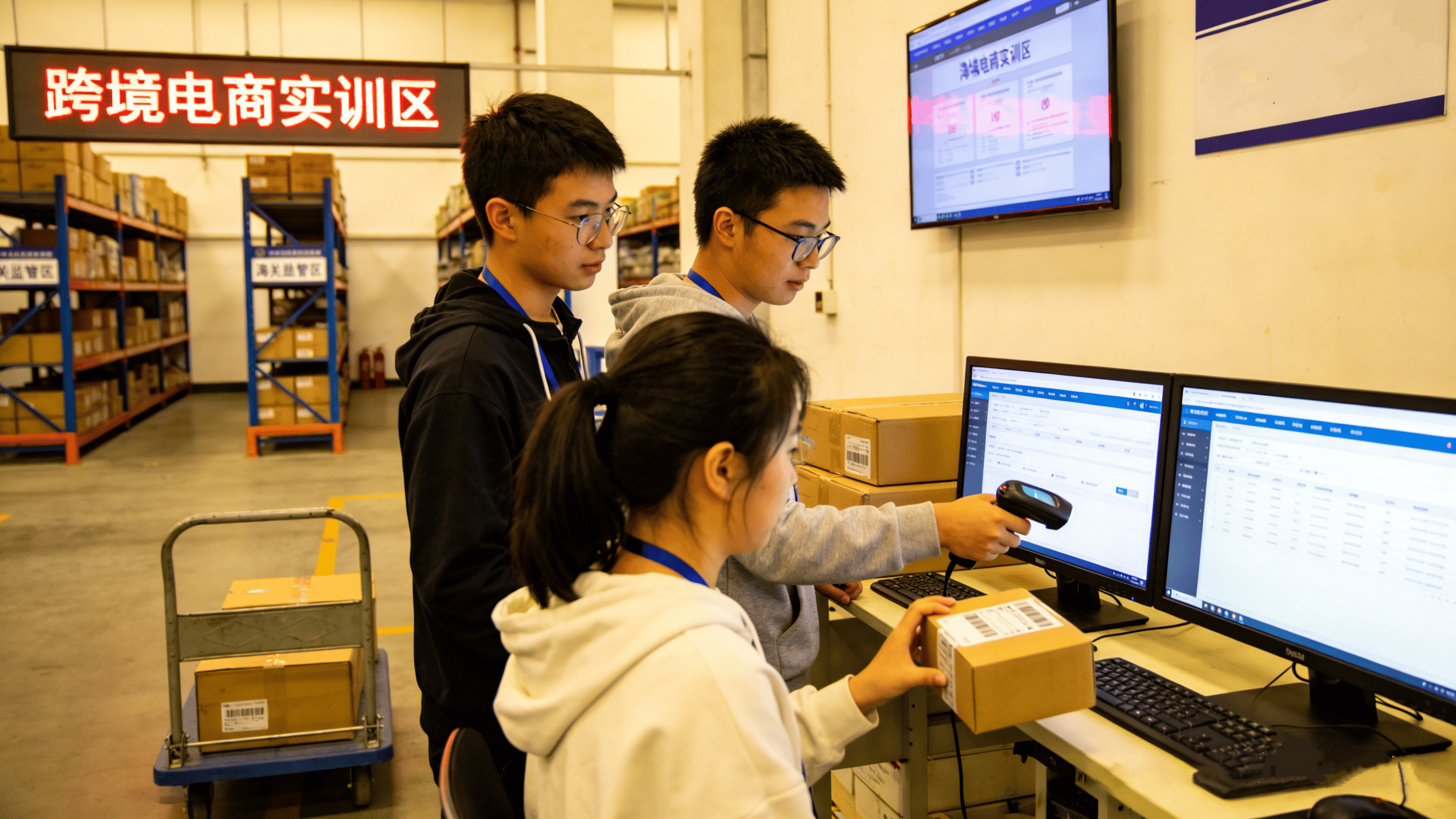
AI、直播、互联网、跨境……走在时代前沿的专业——电子商务
Sou Hu Cai Jing· 2026-02-04 01:43
Group 1 - The core viewpoint emphasizes the growth of cross-border e-commerce as a new engine for regional economic development, particularly in the context of the China-ASEAN Free Trade Area [2] - The vocational education system in Guangxi is focusing on integrating industry and education, collaborating with leading e-commerce companies to enhance practical learning experiences for students [2] - The curriculum includes essential skills such as online store operations, new media promotion, e-commerce design, business data analysis, and live-streaming e-commerce, allowing students to obtain industry certifications alongside their education [2] Group 2 - The job market for e-commerce graduates is highly favorable, with 80% of e-commerce companies reporting a talent shortage and an anticipated demand for 5 million professionals in the next five years [4] - Graduates can pursue high-paying positions in cross-border e-commerce operations or leverage regional advantages to start their own businesses, promoting Guangxi's unique products through e-commerce platforms [4] - The electronic commerce program is positioned to align with the digital economy and cross-border trade, providing students with opportunities to succeed in the evolving market landscape [5]
中电联发布电力供需形势分析预测报告 今年全国全社会用电量将增5%~6%
Zhong Guo Dian Li Bao· 2026-02-04 01:35
Core Viewpoint - The China Electricity Council (CEC) forecasts that by 2025, China's total electricity consumption will exceed 10 trillion kilowatt-hours, marking a historic milestone, with a projected growth of 5% to 6% in 2026, driven by the expansion of renewable energy capacity and a balanced supply-demand situation [1][2][7]. Group 1: Electricity Consumption Growth - In 2025, China's total electricity consumption is expected to reach 10.37 trillion kilowatt-hours, maintaining its position as the world's largest electricity consumer [2]. - The second industry will account for 6.64 trillion kilowatt-hours, representing 64% of total consumption, contributing 47.5% to the growth [2][3]. - The third industry will see a growth of 8.2%, with a contribution rate of 30.7%, driven by sectors like charging services and internet-related services [3][10]. Group 2: Renewable Energy Expansion - By the end of 2025, China's total installed power generation capacity is projected to reach 3.89 billion kilowatts, with non-fossil energy sources accounting for 61.7% of this capacity [4][5]. - Wind and solar power will constitute over 80% of the newly added generation capacity, with a total of 4.47 trillion kilowatt-hours of non-fossil energy generation expected, representing 42.9% of total generation [5][6]. - In 2026, solar power generation capacity is anticipated to surpass coal power for the first time, with non-fossil energy sources expected to account for 63% of total installed capacity [7][8]. Group 3: Infrastructure and Investment - Investment in power grid construction is projected to reach 639.5 billion yuan in 2025, with significant growth in both direct current and alternating current projects [5][6]. - Cross-regional and cross-provincial electricity transmission is expected to grow, with cross-regional transmission reaching 998.4 billion kilowatt-hours, a 7.9% increase [6]. - The "14th Five-Year Plan" emphasizes the construction of a modern energy system, with a focus on enhancing electricity supply security and grid intelligence [6][10].
华商基金童立:2026年关注科技与新质生产力 国内科技产业链表现或更具弹性
Xin Lang Cai Jing· 2026-02-04 01:07
Core Viewpoint - The A-share market has shown active performance with a continuous increase in profitability, and the products managed by Tong Li of Huashang Fund ranked in the top 20% of their peers in 2025 [1][17]. Group 1: Performance and Management - As of the end of 2025, all products managed by Tong Li ranked in the top one-third over the past 3 and 5 years, providing a good holding experience for investors [1][17]. - Tong Li has been with Huashang Fund since 2011, serving in various roles and currently as the Research Director and General Manager of the Research and Development Department [1][17]. Group 2: Investment Philosophy - Tong Li's investment philosophy can be summarized in three keywords: long-termism, three-dimensional stock selection, and left-side layout [4][20]. - His investment style reflects a long-term perspective, emphasizing that true investors will be rewarded over time despite short-term market fluctuations [4][20]. Group 3: Stock Selection Logic - Tong Li employs a "three-dimensional framework" focusing on industry prosperity, strong potential, and genuine growth to uncover intrinsic value [4][20]. - He maintains a broad capability circle, covering growth sectors like TMT and high-end manufacturing, as well as cyclical industries like chemicals and non-ferrous metals, balancing value and growth [4][20]. Group 4: Timing and Positioning - Tong Li does not excessively predict short-term market fluctuations but adjusts equity positions based on macroeconomic cycles, focusing on industry rotation and left-side layout [5][21]. - In 2024, he reduced exposure to risk while focusing on sectors like digital economy and dual-carbon economy, demonstrating a cautious investment style and keen industry insight [5][21]. Group 5: Future Outlook - Looking ahead, Tong Li remains optimistic about technology and new productive forces, particularly in AI applications, smart driving, robotics, and semiconductor self-control [6][23]. - He anticipates that global macroeconomic fluctuations in 2026 may exceed those of 2025, and he will remain vigilant to adapt investment strategies accordingly [6][23]. Group 6: Fund Performance Rankings - The performance rankings of various funds managed by Huashang Fund indicate strong relative performance, with several funds ranking in the top tiers over 1, 3, and 5 years [9][24]. - Specific rankings include: - Huashang New Trend Preferred Flexible Allocation Mixed Fund: 11/446 over 5 years [9][24] - Huashang Research Selected Flexible Allocation Mixed Fund: 52/446 over 5 years [9][24].
江苏省政府工作报告关注苏州发展
Su Zhou Ri Bao· 2026-02-04 00:59
Core Insights - The 2026 provincial government work report highlights Suzhou's significant role in Jiangsu's development and outlines new missions and tasks for the city [1] Group 1: Achievements in Innovation and Technology - Suzhou has been recognized for multiple achievements in the report, including the approval of the Suzhou Laboratory for comprehensive construction and the establishment of a national digital economy innovation development pilot zone [2] - The first Artificial Intelligence OPC Conference was held in Suzhou, and a national AI application pilot base has been established in the city [2] Group 2: Major Engineering Projects - Key engineering projects include the "Cangyuan" project, which is part of the "First Tunnel of the Yangtze River," spanning 39.07 kilometers [2] - Major infrastructure projects such as the Northern Jiangsu, Tongsu-Jiaxing-Ningbo, and Yantai-Xuzhou high-speed rail lines have commenced construction [2] - The Suzhou section of the Suzhou Canal and the Sulu River third-level waterway have been fully opened for navigation [2] Group 3: Reforms and Openings - The Suzhou Industrial Park has consistently ranked first in the national comprehensive evaluation of economic development zones [2] - The number of institutional innovation achievements in the Yangtze River Delta ecological green integration development demonstration zone has increased to 154 [2] - The State Council has approved the comprehensive reform pilot for market-oriented allocation of factors in key cities in Southern Jiangsu [2] Group 4: Future Development Goals - The report outlines future goals for the "15th Five-Year Plan" and key tasks for 2026, including hosting the APEC Trade Ministers' Meeting and supporting the growth of "City Procurement" [3] - There is a focus on accelerating the construction of Suzhou Laboratory and promoting regional technology transfer and transformation [3] - Plans include deepening financial reform in Nanjing and Kunshan, enhancing the Suzhou Industrial Park's open innovation, and promoting high-quality development in the Yangtze River Delta [3]
【延安】产业强基启新程
Shan Xi Ri Bao· 2026-02-04 00:21
Group 1: Industrial Development - The industrial park in Wuqi County is experiencing rapid growth, with local production of oil and gas drilling core components achieving domestic leading precision, significantly improving production efficiency [2] - The development of the oil and gas equipment manufacturing industry in Wuqi County reflects the city's efforts to cluster industrial chains, with 23 key projects introduced and thousands of small oil service companies gathered [2][3] - The "Five Gatherings and Five Zones" strategy is being implemented to create a new type of industrial park, focusing on project concentration, industrial cluster development, and resource utilization [3] Group 2: Agricultural Advancements - The intelligent sorting and deep processing in the Luochuan apple industry are driving the value chain upward, with premium apples achieving over 30% price increases due to smart sorting technology [4][5] - The apple processing company in Luochuan has achieved an annual output value of over 70 million yuan by exporting apple snacks to international markets, demonstrating the potential of local agricultural products [5] - The city is committed to food security by implementing strategies to enhance grain production and agricultural technology, ensuring stable grain yields [5] Group 3: Modern Service Sector - The integration of cultural tourism and digital economy is being prioritized, with significant achievements in tourism, including four national 5A-level scenic spots and a total of 1.9 billion visitors over five years [6] - The digital economy is seen as a key driver for industrial transformation, with advancements in 5G networks and big data centers enhancing efficiency across various sectors [6] - The application of digital technologies in agriculture, park management, and tourism is contributing to high-quality development in the region [6]
“人工智能+”动能强劲 赋能数字经济发展
Xin Lang Cai Jing· 2026-02-03 23:54
Group 1 - The core viewpoint emphasizes the importance of county-level economic development and the role of industrial quality in driving this growth, with a focus on modernizing agriculture and promoting advanced manufacturing and artificial intelligence applications [2][3] - The government work report highlights the establishment of three new "Two Mountains" practice innovation bases by 2025, with one located in Shanglin County, reinforcing its commitment to ecological civilization and sustainable development [3] - The report outlines a strategic focus on artificial intelligence, aiming to enhance the "AI+" initiative and support the development of new productive forces driven by AI [4][5] Group 2 - The representatives discussed various strategies for enhancing the county economy, including improving agricultural practices, developing a robust industrial system, and fostering a vibrant service sector through cultural and consumption activities [2] - Specific initiatives include the promotion of AI in education, healthcare, and elder care, as well as the integration of AI with manufacturing to create a commercial ecosystem [4] - The establishment of the Nanning AI Center is noted as a significant step in providing a platform for AI applications across various sectors, contributing to the development of a new productive force system [4]
北交所123家公司披露2025年年度业绩预告
Zheng Quan Ri Bao· 2026-02-03 22:55
Core Insights - The performance forecasts for 2025 from 123 companies listed on the Beijing Stock Exchange indicate that over 60% expect to be profitable, showcasing the strong internal momentum and vitality of innovative small and medium-sized enterprises [1][2] - Notable companies like Hongyu Packaging and Qishi Dairy are projecting significant profit increases, with Hongyu expecting a net profit of 17 million to 22 million yuan, representing a year-on-year growth of 357.91% to 492.59% [1][2] - Analysts suggest that despite some companies facing short-term pressures from macroeconomic conditions, the overall sector is seeing sustained growth in R&D investment and innovation capabilities, indicating a positive long-term outlook [2] Company Performance Highlights - Hongyu Packaging attributes its profit increase to optimizing customer and product structures, reducing procurement costs, and improving operational efficiency through lean production [1] - Qishi Dairy forecasts a net profit of 41 million to 53 million yuan, turning from loss to profit due to successful project completions and increased sales of fresh milk [2] Investment Opportunities - Analysts recommend focusing on companies with positive earnings forecasts and core technologies, particularly in sectors like semiconductors, new materials, and industrial software, which are crucial for achieving import substitution [3] - Attention should also be given to emerging sectors aligned with national strategic directions, such as green energy, digital economy, and artificial intelligence [3] - The ongoing expansion of market makers and improvements in the transfer mechanism on the Beijing Stock Exchange are expected to enhance the investment value of solid companies in niche industries, allowing investors to share in growth dividends [3]