能源安全

Search documents
南亚-东南亚四国生物燃料市场展望
Hua Tai Qi Huo· 2025-09-22 05:57
Report Industry Investment Rating - Not provided in the content Core Views of the Report - The development of biofuel industries in India, Malaysia, Thailand, and Singapore is driven by the need for energy transition, emission reduction, and enhanced energy security. Each country has distinct development models based on its resource endowment and policy orientation, with biofuels showing significant potential in replacing traditional fossil fuels, but also facing various challenges [3][4][5] Summary by Relevant Catalogs Biofuel Industry Development Background - The energy demand in South and Southeast Asia is rising due to population growth, economic development, and urbanization. To meet emission reduction targets and enhance energy autonomy, countries are turning to biofuels, with different development routes based on their resource endowments [9] Fuel Ethanol Industry Analysis India: E20 Target Achieved Ahead of Schedule, with Controversies and Opportunities - India has become a major global producer and consumer of fuel ethanol, achieving significant economic and environmental benefits. Policy is the core driver, with the E20 target advanced to 2025. However, challenges such as raw material supply and vehicle compatibility remain. The government is promoting raw material diversification and capacity expansion, but corn price increases may cause inflation, and raw material supply is subject to climate and food security risks [11][20][21] Thailand: Accelerated Development of Electric Vehicles, Fuel Ethanol to Gradually Yield - Thailand is a major producer and consumer of fuel ethanol in Southeast Asia, with development driven by policies. However, the rapid rise of electric vehicles is squeezing fuel ethanol demand. In the short term, fuel ethanol still plays a transitional role, but in the long term, the industry may need to explore exports or alternative uses. Raw material supply is affected by weather, and future capacity may need to be digested through new channels [30][31][33] Biodiesel Industry Analysis Malaysia: Blending Policy Implementation Encountered Hurdles, B20 Temporarily Implemented Locally - Malaysia's biodiesel industry, based on palm oil, has been steadily developing under policy promotion but faces challenges such as production fluctuations and shrinking export markets. The B20 and B30 plans have been delayed due to infrastructure and investment issues. The industry relies on domestic palm oil resources, and current production capacity is about 2.7 billion liters, with efforts being made to upgrade facilities and develop HVO [37][38][47] Singapore: Explosive Growth in Demand for Bio - Marine Fuels, Promising Future - Singapore, as the world's largest marine fuel bunkering port, has seen a rapid increase in demand for bio - marine fuels. Policy goals have created growth space for biofuel consumption, and market - driven demand has led to a significant increase in sales. An investment project is under construction to expand production capacity [48][49][52] Sustainable Aviation Fuel Industry Analysis SAF is in the Initial Stage with Great Development Potential - The development of SAF is crucial for the aviation industry to reduce carbon emissions. India, Thailand, Malaysia, and Singapore have all set SAF blending targets and are taking measures in policy, technology, and capacity building. However, challenges such as high investment and high prices need to be addressed [54][55][56] Impact of Biofuel Development on Petroleum Consumption - The development of biofuel industries in the four countries has effectively replaced traditional fossil fuel consumption. In the fuel ethanol sector, India has achieved significant substitution results, while Thailand's substitution effect may peak and then decline. In the biodiesel sector, Malaysia is steadily replacing traditional diesel, and Singapore's bio - marine fuel demand is growing rapidly. In the aviation sector, SAF is expected to replace a considerable amount of traditional aviation kerosene in the future [61] Summary and Outlook - Biofuels are becoming an important alternative to traditional fossil fuels. The four countries have different development models, with India excelling in fuel ethanol, Thailand facing challenges in ethanol development, Malaysia making progress in biodiesel with implementation bottlenecks, and Singapore having a bright future in bio - marine fuels. All four countries have potential in SAF. In the future, India's ethanol industry has prospects but needs to address challenges, Thailand's ethanol may yield to electric vehicles, Malaysia's biodiesel has potential but needs to solve problems, and bio - marine fuels and SAF will be more important, with Singapore leading in the bio - marine fuel market [67][68]
新疆:持续为国加“油”争“气”
Xin Hua She· 2025-09-22 05:27
Core Insights - Xinjiang has been a significant contributor to China's energy supply, with a historical context of oil production dating back to the discovery of the first major oil field in 1955, Klara Miyi Oil Field [1] - The region's oil and gas production has seen substantial growth, with a projected total output of 66.64 million tons in 2024, maintaining its position as the leading oil and gas producer in China for four consecutive years [1] - Shale oil is identified as a key area for increasing reserves and production, with over 1 million tons produced in the first seven months of the year, significantly ahead of last year's pace [2] Group 1 - Xinjiang's oil production has evolved from 3.29 million tons in 1955 to 16.623 million tons in 1960, representing 39.4% of the national total [1] - The region's deep and ultra-deep oil and gas resources are estimated at 67.1 billion tons, indicating substantial exploration and development potential [2] - The Tarim Oilfield has become the largest ultra-deep oil and gas production base in China, with an annual output of 20.47 million tons [3] Group 2 - The successful drilling of the first ultra-deep well in Asia, reaching a depth of 10,910 meters, marks a significant technological advancement in oil exploration [2] - The Tarim Oilfield has achieved a cumulative completion of over 8,000-meter deep wells, accounting for more than 50% of the national total [3] - The continuous technological upgrades in oil exploration and development have enabled Xinjiang to maintain its critical role in ensuring China's energy security [2][3]
战略布局震撼曝光!青藏高原惊现万亿级超级工程,背后暗藏中国能源与安全大棋局!
Sou Hu Cai Jing· 2025-09-22 01:03
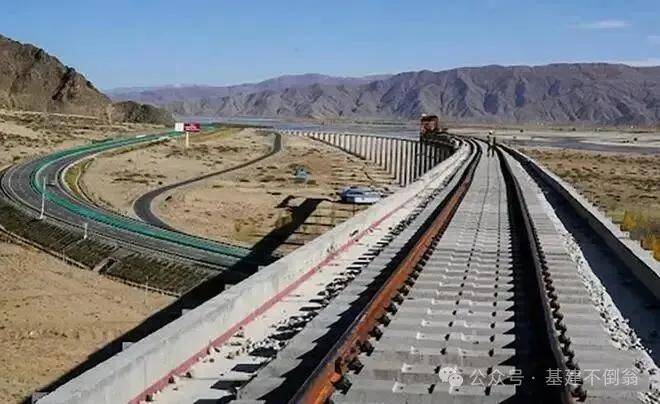
Core Insights - China is launching two major national-level projects in the western region, with a total investment exceeding 2.4 trillion yuan, which is equivalent to 60% of Tibet's GDP last year [1] - These projects account for 14% of the total national infrastructure investment [1] Project Summaries - The first project is the Yarlung Tsangpo River downstream hydropower station, with an investment of 1.2 trillion yuan and a total installed capacity of 81 million kilowatts, which is more than three times that of the Three Gorges Dam [3] - The second project is the New Tibet Railway, spanning 2,000 kilometers with an average altitude of over 4,500 meters, making it the highest railway in the world [4] Technological Innovations - The Yarlung Tsangpo project features a unique design where engineers excavate giant tunnels in the mountains to create a shortcut for the river, utilizing a height difference of 2,000 meters for power generation [3] - The New Tibet Railway employs "active cooling technology" to manage the challenges of permafrost, a first in global high-altitude railway construction [4] Strategic Considerations - The projects are driven by energy security needs, as the hydropower station is expected to generate 300 billion kilowatt-hours annually, significantly reducing reliance on fossil fuels [5] - Economic development is another key factor, as the railway will enhance transportation efficiency between Xinjiang and Tibet, lowering costs and improving logistics for local products [5] - National security strategy is also a consideration, as improved infrastructure will enhance control over border areas and promote ethnic unity through economic development [5] Infrastructure Strength - These mega-projects demonstrate China's robust infrastructure capabilities, overcoming previous skepticism about constructing in challenging environments [6] - The successful execution of these projects reflects China's growing comprehensive national strength, including the ability to mobilize thousands of researchers and secure long-term funding [6]

能源早新闻丨我国成功攻克世界级难题!
中国能源报· 2025-09-21 22:33
Industry News - China's pumped storage capacity has reached 62.365 million kilowatts, achieving the "14th Five-Year Plan" target of 62 million kilowatts as of August 2023, maintaining the world's leading position for nine consecutive years [2] - In August, the National Energy Administration issued 271 million green certificates, with 55.99% being tradable, reflecting a growing trend in renewable energy projects [2] - A new discovery of 760 million tons of coal resources in Anhui province is significant for ensuring strategic reserves in the region [3] - Shanxi province reported a record coalbed methane production of 9.81 billion cubic meters in the first eight months of 2023, accounting for 81.3% of the national output [3] - The first fully autonomous 500 kV substation in China has been put into operation in Liaoning, enhancing grid safety and the ability to transmit renewable energy [3] - The first salt cavern gas storage facility in China has completed its expansion, significantly improving its injection and extraction capacity [3] - The Dashi Gorge Water Conservancy Project in Xinjiang has begun water storage, expected to generate over 1.8 billion kilowatt-hours of clean electricity annually [4] Corporate News - China Power Construction Company signed 3,579 energy and power projects from January to August 2023, with a contract value of 516.24 billion yuan, marking a 14.3% year-on-year increase [7] - China National Petroleum Engineering's subsidiary signed a $513 million contract for a LNG pipeline project in the UAE, with a construction period of 36 months [7]


中美英资源对比:英国有煤矿,美国有石油,中国有什么?
Sou Hu Cai Jing· 2025-09-21 14:07
Group 1 - The article emphasizes the importance of controlling accessible and affordable energy as a key factor in global power dynamics, particularly in the context of the energy networks between Russia and Europe [2][5][30] - Historical examples illustrate that energy resource allocation and transportation efficiency have been critical to the rise and fall of powers, with the UK and the US leveraging their energy resources effectively [4][11][12] - China's energy strategy is highlighted as a response to historical lessons, focusing on building infrastructure to ensure energy security and efficiency in resource distribution [14][20][22] Group 2 - The article discusses China's energy challenges, particularly its reliance on imported oil and gas, and the risks associated with geopolitical instability in supplier regions [16][18] - China's investment in high-voltage direct current (HVDC) technology is presented as a strategic move to enhance energy security by enabling efficient energy transmission from resource-rich western regions to industrial eastern areas [20][22] - The development of renewable energy sources in western China is framed as a means to not only address energy needs but also to stimulate local economies and create jobs, thereby transforming the region's economic landscape [24][26][28] Group 3 - The article argues that China's renewable energy strategy is not merely a reaction to global trends but a comprehensive approach to overcoming past energy challenges while fostering sustainable development [30] - By leveraging renewable energy, China aims to maintain its competitive edge in manufacturing, countering the labor cost advantages of countries like India and Vietnam through lower energy costs [28][30] - The narrative concludes with the assertion that China's approach to energy is a model for sustainable progress, moving away from traditional energy conflicts towards a more stable and innovative energy future [30]
让美国没想到,德法更没想到,中国的石油,如今会“遥遥领先”
Sou Hu Cai Jing· 2025-09-21 09:25
Core Viewpoint - China's oil industry has undergone a significant transformation, moving from being labeled a "poor oil country" to becoming a leader in shale oil and offshore oil and gas extraction technologies, attracting global attention [2][4][15] Shale Oil Development - China's shale oil production is expected to reach 6 million tons in 2024, representing a year-on-year growth of over 30% [4] - The country has approximately 2.83 billion tons of shale oil reserves, ranking third globally, behind the United States and Russia [4] - Technological advancements, particularly in precision fracturing, have increased recovery rates from below 10% to over 15%, significantly reducing costs [4][9] - The Jiqing Oilfield achieved a record shale oil output of 215,000 tons in Q1 2025 [2] Offshore Oil and Gas Extraction - In 2024, the successful testing of an integrated subsea wellhead system in Hainan's Wenchang sea area is expected to enhance efficiency by 30% and reduce costs by 20% [6] - The Wenchang Oilfield's annual production is projected to exceed 5 million tons by 2025, contributing to a national offshore oil and gas output nearing 80 million tons [6][13] - The introduction of this technology is set to be expanded to Bohai and East China Sea oilfields, with expectations of record production by 2026 [6][13] Energy Strategy and Import Dynamics - Despite domestic production increases, China is projected to import 500 million tons of crude oil in 2024, accounting for over 10% of global trade [7][9] - The "steady oil and increased gas" goal set by the National Energy Administration aims to boost oil and gas production while enhancing technological research and development [9] - Investments in new fracturing equipment and experimental bases are being made to strengthen China's position in the global energy market [9] Global Energy Landscape - China's advancements in shale oil and offshore extraction technologies have prompted reactions from Western countries, with U.S. companies expressing interest in technology collaboration [15] - The International Energy Agency predicts that China's shale oil production will surpass Canada's by 2035, positioning it as the second-largest producer globally [13] - The global energy landscape is being reshaped by China's rise, as traditional energy experts from Germany and France acknowledge the rapid pace of China's technological progress [15]
中美俄石油日产差距明显:美1350万桶,俄135万桶,中国令人意外
Sou Hu Cai Jing· 2025-09-21 07:50
Group 1 - Energy security cannot rely solely on reserves; it depends on a country's production capacity and sustainable extraction potential [2] - Oil is considered the lifeblood of modern industry, playing a core role in the global strategic landscape [3] - The U.S. remains the largest oil producer, maintaining a daily output of 13.5 million barrels, but faces structural issues [4][5] Group 2 - U.S. oil reserves have decreased by nearly 20% since 1990 due to high extraction rates, despite having proven reserves of 22.7 billion barrels in 2004 [4] - The U.S. has not built a new large refinery since 1976, leading to operational challenges and a significant reduction in the number of refineries [7] - The oil industry in the U.S. is entering a contraction phase, with companies reducing investments and drilling platforms [8][9] Group 3 - Russia's refining capacity is significantly lower than that of the U.S. and China, with a daily processing capacity of only 1.35 million barrels [5][11] - Despite having substantial oil reserves that could last for 65 years, Russia faces challenges due to geopolitical conflicts and sanctions [13] - China's energy sector is advancing rapidly, with significant breakthroughs in shale gas production and an increase in refining capacity [14][15] Group 4 - China's refining capacity grew from 14.89 million barrels per day in 2016 to 19.14 million barrels per day in 2023, surpassing the U.S. [15] - China's development strategy combines traditional energy security with the active development of renewable energy sources [16] - The global energy landscape is being reshaped, with the U.S. and Russia facing challenges while China leverages technological innovation and comprehensive industry chain strategies [16]
风沙是独特的BGM 挥洒青春智慧端牢国家能源饭碗 | 砥砺奋进七十载 天山南北谱华章
Yang Shi Wang· 2025-09-20 04:48
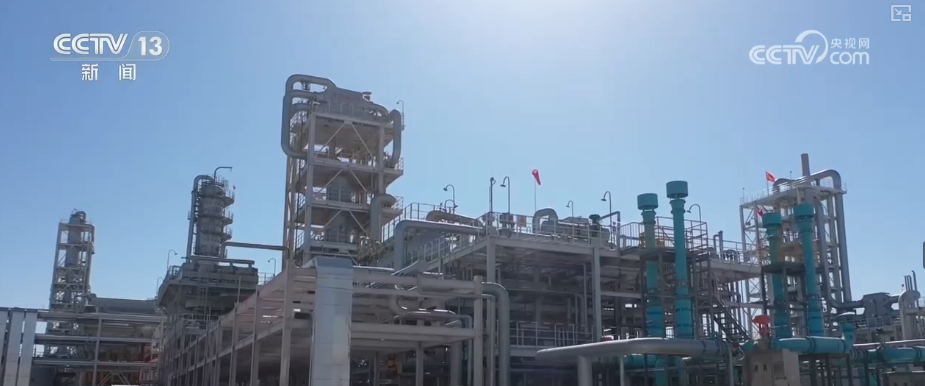
Core Insights - The "Deep Earth No. 1" Shunbei Oil and Gas Field in the Taklamakan Desert is actively producing oil and gas, with over 150 deep wells averaging a depth of 8,000 meters, comparable to the height of Mount Everest [1] - The Shunbei Oil and Gas Field covers an area of approximately 20,000 square kilometers, with travel times of up to 6 hours from the northernmost to the southernmost wells [4] - The production facility features an intelligent production line with over 7,000 control points, capable of processing more than 3,000 tons of crude oil and over 4 million cubic meters of natural gas daily [8] Workforce and Environment - The workforce at the Shunbei Oil and Gas Field is predominantly young, with an average age of under 35, and nearly 80% are party members [11] - Workers face harsh conditions, with over 200 days of sandstorm weather annually, leading to rapid wear on their uniforms [10] - The dedication of the workforce is highlighted by the personal sacrifices made, such as long periods away from family, as exemplified by the experiences of employees like Pang Wenbin [14][17] Personal Commitment and Growth - Employees express a strong sense of pride and commitment to their work, viewing challenges as opportunities for personal and professional growth [26][27] - The environment is described as a place where young professionals can thrive and develop resilience, akin to the growth of the tamarisk trees planted in the area [21] - The emotional and psychological strength required to endure the tough working conditions is emphasized, with leaders like Pang Wenbin instilling a culture of discipline and teamwork [19]

俄称欧盟不断缩减俄罗斯能源进口是“自残行为”
Yang Shi Xin Wen Ke Hu Duan· 2025-09-20 04:16
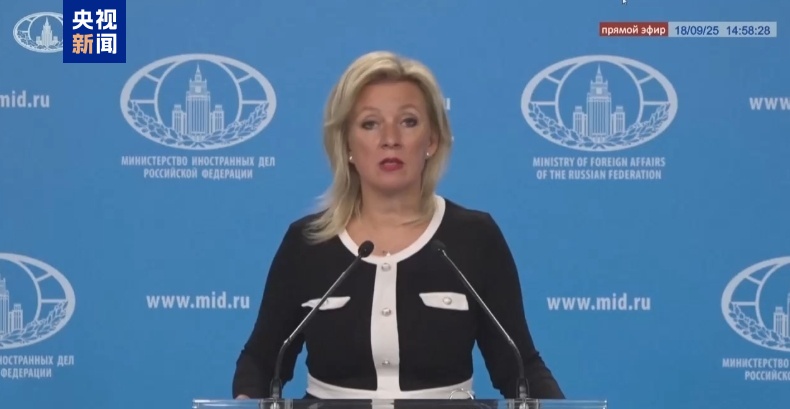
Core Viewpoint - The ongoing tensions between the EU and Russia regarding energy imports are escalating, with Hungary opposing the EU's plans to reduce reliance on Russian fossil fuels, citing national energy security concerns [1][4][6]. Group 1: EU's Energy Policy - The EU Commission is preparing to submit the 19th round of sanctions against Russia, which includes measures to reduce energy imports [1]. - The EU's legislative proposal aims to phase out imports of Russian gas and oil by the end of 2027, facing opposition from Hungary and Slovakia [6]. Group 2: Hungary's Position - Hungary's Energy Ministry has reiterated its stance against prematurely halting imports of Russian fossil fuels without viable alternatives, emphasizing the risk to national energy security [4]. - Hungary argues that energy policy is a matter of national sovereignty, and the EU's proposed plan threatens this sovereignty and the country's energy security [6]. Group 3: Russia's Response - Russia's Foreign Ministry spokesperson criticized the EU's approach as self-destructive, warning of severe consequences if the EU continues its current energy import reduction strategy [3].
中国石油储藏最多的地方,比中东国家还多,外人入境要严格审核
Sou Hu Cai Jing· 2025-09-19 10:37
Core Insights - The South China Sea is estimated to have oil reserves exceeding 29.2 billion tons, surpassing some Middle Eastern countries like Iraq and Kuwait [2][5] - The region is rich in diverse resources, including 4 trillion cubic meters of natural gas and combustible ice equivalent to 19.4 billion tons of oil [5] - The South China Sea is crucial for China's energy security, potentially reducing reliance on Middle Eastern oil imports [15] Resource Potential - The South China Sea covers an area of 3.5 million square kilometers and contains 37 sedimentary basins, making it China's largest marine oil and gas storage area [4] - There are over 250 oil and gas fields beneath the sea, contributing significantly to global oil reserves [4] Development Challenges - Historical context shows that since the 1970s oil crisis, countries have focused on marine resources, with China gradually exploring the South China Sea [7] - The development of oil and gas resources is complicated by territorial disputes with neighboring countries like Vietnam, the Philippines, and Malaysia [7][9] Strategic Development - China's strategy in the South China Sea emphasizes steady progress and technological advancement, with significant discoveries in deep-water areas [9] - By 2030, it is projected that marine oil production could account for over half of China's total output, contingent on resolving territorial disputes [9] Infrastructure and Local Development - Sansha City, established in 2012, plays a key role in resource protection and development in the South China Sea [11] - Infrastructure improvements in Sansha, including waste treatment and transportation facilities, have enhanced living conditions for residents [13][15] Future Outlook - The South China Sea's oil and gas resources are vital for balancing China's energy supply and reducing import risks [15] - Continued international cooperation is necessary to avoid geopolitical conflicts while maximizing resource development [15]