
银发经济

Search documents
呵护银龄“桑榆暖” 擘画资产“新蓝图”
Xin Lang Cai Jing· 2026-01-18 18:28
Core Viewpoint - Guiyang Industrial and Commercial Pension Company has transformed from a novice in the elderly care sector to a leading benchmark in the industry, focusing on a diversified and multi-level elderly care service system since the end of 2020 [10] Group 1: Company Overview - Guiyang Industrial and Commercial Pension Company is a state-owned enterprise established by the Guiyang State-owned Assets Supervision and Administration Commission, with a registered capital of 120 million yuan and an asset scale exceeding 3 billion yuan [9] - The company manages over 800 rental properties and has a management area of 230,000 square meters, laying a solid foundation for the development of the elderly care industry [9] Group 2: Growth and Development - The number of residents in the company's elderly care institutions has seen exponential growth, increasing from 3 in 2021 to 269 in 2023, with projections of 386 in 2024 and 530 in 2025 [11] - The company has served over 4,000 elderly individuals and has a community service satisfaction rate exceeding 98% [11] Group 3: Innovations and Initiatives - The company has achieved four significant innovations, including the establishment of a talent academy and the launch of a dementia care training center [11] - The company is set to open a home adaptation product experience store to innovate service models and address market gaps in elderly care products [12][13] Group 4: Policy Support - The introduction of a national subsidy program for elderly care services for moderately to severely disabled elderly individuals is expected to alleviate financial burdens on families [16] - The company plans to leverage this policy to enhance its service offerings across various care settings [16] Group 5: Asset Management - The establishment of the Asset Management Center marks a step towards professional and efficient asset management, focusing on optimizing asset allocation and preventing state asset loss [17] - The company aims to achieve a rental rate of 90% and a collection rate of 85% by the end of 2026, with further goals set for subsequent years [18][19]

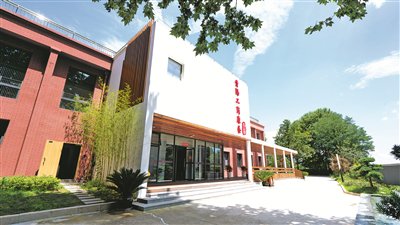
参加滨州市政协十二届五次会议的政协委员向大会报到
Xin Lang Cai Jing· 2026-01-18 16:23
Group 1 - The conference of the Shandong Provincial Political Consultative Conference highlighted the importance of the silver economy as a new growth driver for the national economy, with proposals focusing on enhancing top-level design and innovation in elderly care products [1] - The proposal from the committee emphasized leveraging local industries such as high-end aluminum and intelligent textiles to create a distinctive brand for the silver economy in Binzhou, aiming for high-quality economic development [1] - The integration of digital economy with the real economy was underscored, with suggestions for promoting new industrialization and the development of intelligent and green manufacturing [1] Group 2 - The proposal to develop patient capital was presented, focusing on building a long-term capital ecosystem to address financing bottlenecks in industrial upgrades, which is crucial for the construction of a strong manufacturing city [2] - It was noted that Binzhou currently has 25 active industrial funds with a subscribed scale exceeding 16.8 billion, but there are still shortcomings compared to advanced regions, such as small capital scale and low proportion of long-term capital [2] - A recommendation was made to establish a city-level patient capital guiding mother fund with a scale of approximately 5 billion, targeting hard technology sectors like high-end aluminum materials and new energy equipment [2]
新年两场国常会聚焦促消费 多部门部署居民增收计划
Di Yi Cai Jing· 2026-01-18 14:05
Group 1 - The core focus of the central economic work conference is to prioritize domestic demand and build a strong domestic market, with recent State Council meetings emphasizing policies to boost consumption [1][2] - The implementation of a systematic consumption growth mechanism is highlighted, linking the "15th Five-Year" consumption plan with income increase plans, indicating a shift from short-term stimulus to long-term structural reforms [2] - The National Development and Reform Commission and other departments are deploying measures to enhance consumption and stabilize employment, combining short-term policies with long-term structural reforms to strengthen the internal driving force of China's economic growth [1][4] Group 2 - The "15th Five-Year" consumption plan includes 30 key tasks aimed at increasing income and enhancing consumption capacity, with a focus on high-quality supply and optimizing the consumption environment [3] - Data shows that China's total retail sales of consumer goods are expected to exceed 50 trillion yuan for the first time, with service retail growth outpacing goods retail by 1.3 percentage points [3] - Despite a slowdown in consumption growth since May 2025, the government is committed to fostering new growth points in service consumption, particularly in sectors like transportation, housekeeping, and entertainment [4][5] Group 3 - The silver economy and winter sports economy are receiving significant policy support, with measures aimed at developing the elderly care service sector and promoting the silver economy, which is projected to exceed 30 trillion yuan by 2035 [6] - The People's Bank of China has established a 500 billion yuan loan program to support service consumption and elderly care, with plans to expand this to include the health industry [6] - The emphasis on increasing residents' income and improving consumption capacity is seen as a key driver for boosting domestic demand and economic growth [7][8] Group 4 - Recent policies aim to eliminate unreasonable restrictions in the consumption sector, which is crucial for optimizing the consumption environment and unleashing domestic demand potential [9][10] - Various regions are actively implementing measures to clear restrictions in sectors such as automotive and housing, enhancing consumer rights protection and promoting a more favorable consumption landscape [9][10] - The government is urged to allow the market to play a leading role in consumption, creating a conducive environment for economic circulation and growth [10]
视频丨打造老人满意“爆款” 多地创新银发消费场景
Yang Shi Xin Wen Ke Hu Duan· 2026-01-18 13:02
Group 1 - The Ministry of Civil Affairs and other departments are promoting the integration of elderly care services with daily consumption to support the silver economy [2] - A silver store in Shanghai offers a variety of products tailored to elderly needs, creating an experiential shopping environment rather than a traditional retail space [2] - Feedback from elderly consumers is being utilized as a "signal light" for product iteration, with companies actively responding to specific requests [4][6] Group 2 - A company producing electric nursing beds has identified pain points from elderly feedback, leading to product design improvements such as adding wheels and adjustable guardrails [6] - Sales of elderly-friendly products have increased by approximately 20%, indicating a strong demand for such offerings [8] - High-tech elderly care products are evolving towards being lighter and more user-friendly, with advancements in exoskeleton technology based on user feedback [8][10] Group 3 - In Xiamen, banks are integrating elderly care services with financial services, creating a one-stop experience for product trials and subsidy applications [10][12] - The collaboration between banks and local civil affairs departments has led to the establishment of smart health elderly care centers, enhancing the accessibility of government subsidy policies [12] - Elderly consumers are finding it convenient to learn about and experience products in these integrated service environments [14] Group 4 - In Jinan, the integration of big data and artificial intelligence into home care services is enhancing the convenience and personalization of elderly care [13] - Home care workers are utilizing AI to create detailed care plans, improving the quality of service provided to elderly clients [16] - The local government is promoting the application of AI in the silver economy, focusing on intelligent safety, rehabilitation assistance, and virtual companionship [18] Group 5 - Companies are leveraging AI to better capture the needs of the elderly, leading to increased market competitiveness and steady growth in production orders [22] - A new model of a lightweight, carbon fiber cane has been developed through AI design, showcasing innovation in elderly care products [20]

宏观和大类资产配置周报:2026年需要以宏观政策的确定性应对各个方面的不确定性-20260118
Bank of China Securities· 2026-01-18 12:48
Macro Economic Overview - The report emphasizes the need for macro policy certainty to address various uncertainties in 2026, with a recommended asset allocation order of stocks > commodities > bonds > currency [1][4]. Asset Performance Review - The CSI 300 index fell by 0.57% this week, while the CSI 300 stock index futures decreased by 0.44%. Thermal coal futures dropped by 0.34%, and iron ore futures remained flat. The expected yield for bank wealth management products remained stable at 1.85%, while the annualized yield for Yu'ebao decreased by 2 basis points to 1.00%. The yield on ten-year government bonds fell by 4 basis points to 1.84%, and active ten-year government bond futures rose by 0.27% [2][12][39]. Asset Allocation Recommendations - The report suggests an overweight position in stocks, focusing on the implementation of "incremental" policies. Bonds are recommended for underweight due to potential short-term impacts from the "stock-bond seesaw" effect. Currency is also underweight, with yields expected to fluctuate below 1.5%. Commodities are recommended for standard allocation, with attention to fiscal spending in 2026 [4][13][39]. Economic Data Insights - In December, new social financing increased by 2.21 trillion yuan, with new loans amounting to 910 billion yuan. M2 money supply grew by 8.5% year-on-year. Exports in December saw a year-on-year increase of 6.6%, while imports rose by 5.7% [20][21]. Industry-Specific Insights - The report highlights the strong performance of the TMT sector, with the leading indices being the ChiNext Index and the Small and Medium-sized Enterprises Board Index, which rose by 1.55% and 2.18%, respectively. The computer and electronic components industries showed significant gains, while the defense and agriculture sectors faced declines [39][41]. Policy and Regulatory Developments - The People's Bank of China has introduced a series of monetary policy measures to support high-quality economic development, including lowering various structural monetary policy tool rates and increasing support for small and medium-sized enterprises. The report indicates that there is still room for further interest rate cuts and reserve requirement ratio reductions in 2026 [21][46].
瞭望丨强化应对老龄化四种思维
Xin Lang Cai Jing· 2026-01-18 11:09
Core Viewpoint - The article emphasizes the need for a comprehensive and multi-faceted approach to address the challenges posed by an aging population in China, advocating for the establishment of national technology projects related to elderly care services to foster the development of the silver economy [1][17]. Resource Allocation Thinking - There is a pressing need to enhance the precision of financial support, social resource coordination, and human resource supply to effectively address the challenges of an aging population [4][20]. - A structured funding system should be established to ensure that financial resources are directed towards vulnerable groups such as disabled, rural, and impoverished elderly individuals [5][20]. - Performance management should be implemented to ensure the efficient use of financial resources, preventing waste or misallocation [5]. Social Resource Coordination - A comprehensive coordination mechanism should be established to integrate medical and elderly care resources, promoting the development of basic elderly care services alongside public health services [6][21]. - A three-tier elderly care service network should be developed at the county level to facilitate resource sharing and allocation [6][21]. - The establishment of an elderly care industry development fund is recommended to attract social capital for the construction of elderly care facilities [6][21]. Talent Development - There is a significant shortage of professional talent in elderly care services, particularly in areas such as disability care and smart elderly care [7][22]. - A unified assessment and training system should be established to enhance the quality and quantity of the elderly care workforce [7][22]. - Initiatives should be taken to promote cross-sector talent mobility and to develop community volunteer services to support elderly care [7][22]. New Quality Productivity Thinking - The development of the silver economy should focus on high-quality products and services, necessitating the establishment of national technology projects in elderly care [8][23]. - An innovation ecosystem for elderly care technology should be constructed to address the challenges of an aging society [8][23]. - The integration of smart technologies into elderly care services is essential to improve the quality of life for the elderly and alleviate the pressure on family caregivers [9][24]. Policy Supply Thinking - The approach to aging should shift from a singular response to a comprehensive and collaborative strategy, necessitating improvements in policy supply [12][27]. - Family support policies should be strengthened to enhance home-based elderly care, providing necessary resources and training for family caregivers [12][27]. - Health management should be prioritized to reduce the healthcare burden associated with aging, promoting preventive medicine and health education [13][28]. Project-Driven Thinking - The current framework for aging work requires further development in social participation and community engagement [30]. - Initiatives should be launched to promote respect for the elderly and to enhance community support for elderly individuals [30][15]. - The integration of elderly-friendly concepts into social governance is crucial for creating supportive environments for the elderly [31].
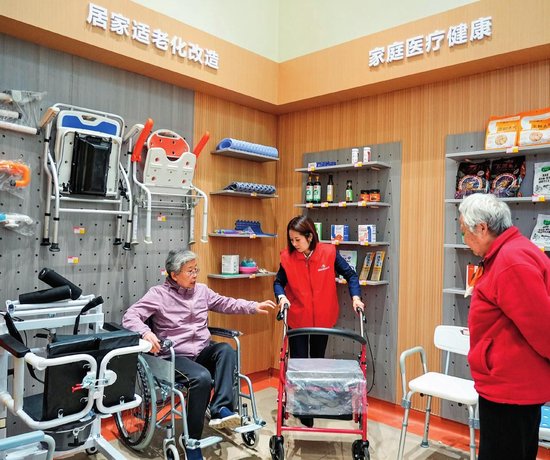
养老“爆款”产品更“轻”更“暖” “硬核”科技给老年人生活添便利
Yang Shi Wang· 2026-01-18 08:39
央视网消息:最近,民政部、国家发展改革委等8部门联合出招,支持银发经济发展,要让养老服务和日常消费融合到一块儿。现在各地都在 琢磨新法子,让养老产品从"别人给什么用什么"变成"老年人需要什么就来什么"。 工作日上午,上海这家银发商店里已经人流不断。从拐杖、电动轮椅到时尚老年鞋、智能穿戴设备,品类琳琅满目。不同于传统卖场,这里更 像是一个家庭生活场景的体验馆。 商店里一块"老人许愿墙"贴满了老年人手写的便利贴,老年消费者的每一个细节反馈,在这里都被生产企业视为产品迭代的"信号灯"。 一家电动护理床企业就从老人反馈中发现痛点。不少老人反映护理床移动不便,希望加装轮子;部分身材高大的长辈,则提出了调整护栏高度 和长度的需求,这些具体诉求很快被转化为产品设计方案。 记者来到这家银行网点时,阵阵墨香扑面而来,附近的老年人正在这里上书法课。除了丰富的老年学堂活动,一旁的适老化样板房更具吸引 力,智能跌倒探测仪、居家安防设备、便捷助行工具等各类适老产品有序陈列,还原真实居家场景,方便老人直观体验。 适老化床垫企业业务经理左国龙介绍,反馈上来的数据越来越多,全国区域长辈对于线下适老化产品的店需求还是蛮大的,销量增长20%左 ...

视频|打造老人满意“爆款” 多地创新银发消费场景
Yang Shi Xin Wen Ke Hu Duan· 2026-01-18 06:54
最近民政部、国家发展改革委等八部门联合出招,支持银发经济发展,要让养老服务和日常消费融合到一块儿。现在各地都在琢磨新法子,让养老产品 从"别人给啥用啥",变成"老年人需要啥就来啥"。 0:00 / 1:29 工作日上午,上海一家银发商店里已经人流不断。从拐杖、电动轮椅到时尚老年鞋、智能穿戴设备,品类琳琅满目。不同于传统卖场,这里更像是一个 家庭生活场景的体验馆。 商店里一块"老人许愿墙"贴满了老年人手写的便利贴,老年消费者的每一个细节反馈,在这里都被生产企业视为产品迭代的"信号灯"。 一家电动护理床企业就从老人反馈中发现痛点:不少老人反映护理床移动不便,希望加装轮子;部分身材高大的长辈,则提出了调整护栏高度和长度的 需求。这些具体诉求,很快被转化为产品设计方案。 适老化床垫企业业务经理 左国龙:反馈上来的数据越来越多,甚至说全国区域的长辈,对于线下这种适老化产品的店的需求还是蛮大的,销量大概增 长20%。 一线反馈不仅优化了传统产品,更推动高科技养老产品向"轻量化、人性化"升级。一家外骨骼机器人企业,基于老年人佩戴使用的反馈,攻克技术难题 大幅降低设备重量。 外骨骼机器人企业经理 周宗胜:能显著降低老人在佩戴 ...

险企破圈新方向!银发浪潮下 “保险+养老”成风口
Zhong Guo Zheng Quan Bao· 2026-01-18 05:49
Core Insights - The insurance industry is accelerating the entry of pension communities by the end of 2025, transitioning from early single-point exploration to large-scale, networked operations, with "insurance + pension" integration becoming mainstream [1][3] - The industry is facing challenges such as long capital return cycles and insufficient inclusivity, which need to be addressed for further growth [1][6] Group 1: Industry Developments - By the end of 2025, over 10 pension community projects are expected to be launched by insurance companies, with major players like China Pacific Insurance and Ping An leading the way [3][4] - China Pacific Insurance's "Taibao Home" has already established 14 communities across 12 cities, serving over 3,000 long-term residents and achieving 130,000 short-term stays in a year [3][4] - Ping An's home-based elderly care services have reached 85 cities, with nearly 240,000 clients qualifying for services, and they have launched six high-quality pension community projects across five cities [4] Group 2: Strategic Upgrades - China Pacific Insurance is upgrading its strategy from "big health" to "big pension and health," aiming to create a comprehensive ecosystem covering various aspects of elderly care [3] - The industry is entering a phase of scale explosion, with commercial pension and health insurance reserves reaching 11 trillion yuan during the 14th Five-Year Plan period [4] Group 3: Challenges and Solutions - The long capital return cycle is a significant challenge, with some insurance companies indicating that it takes over 10 years to achieve profitability in heavy-asset pension communities [6] - High occupancy rates are essential for profitability, with a threshold of 60% occupancy needed for stable operations [6] - The industry faces issues with inclusivity, as many pension communities have high entry barriers, making it difficult for middle and low-income groups to access services [6] - A shortage of professional talent is a common pain point, with difficulties in retaining staff due to low wages and challenging working conditions [6] Group 4: Policy Support - Recent policy initiatives from the National Financial Regulatory Administration aim to enhance the integration of long-term care and community pension services, promoting the expansion of insurance companies into home-based care [7] - The application of financial tools like REITs is expected to improve funding exit channels for the pension industry, alleviating capital pressure [7] - The competition in the pension community sector is anticipated to intensify, with ecological, inclusive, and technological advancements being key directions for industry breakthroughs [7]


险企破圈新方向!银发浪潮下,“保险+养老”成风口
Zhong Guo Zheng Quan Bao - Zhong Zheng Wang· 2026-01-18 04:24
Core Insights - The insurance industry is accelerating the entry of pension communities by 2025, transitioning from early single-point exploration to large-scale, networked operations, with a focus on the integration of "insurance + elderly care" as a mainstream model [1] - The industry is experiencing a significant expansion, with over 10 pension community projects launched by insurance companies in 2025, including major projects from leading firms like China Pacific Insurance and Ping An [2] Group 1: Industry Developments - By the end of 2025, China Pacific Insurance's "Tai Bao Home" will operate 14 communities across 12 cities, serving over 3,000 long-term residents and achieving 130,000 short-term stays [2] - Ping An's home-based elderly care services have reached 85 cities, with nearly 240,000 clients qualifying for services, and their high-quality elderly care community projects are underway in five cities [2] - The insurance sector has seen significant growth in the third pillar of pension insurance, accumulating reserves of 11 trillion yuan, with 130 pension community projects developed [2] Group 2: Challenges and Solutions - The long capital return cycle is a major challenge, with large asset-based pension communities taking over 10 years to become profitable, requiring a minimum occupancy rate of 60% for stable operations [3] - The high entry barriers for pension communities, such as a minimum premium of 3 million yuan and monthly fees starting at 11,500 yuan, limit accessibility for middle and low-income groups [3] - A shortage of professional talent in the industry is a common issue, with difficulties in retaining staff due to low salaries and challenging resident behaviors [3] Group 3: Policy and Innovation - The National Financial Regulatory Administration has issued guidelines to enhance the integration of long-term care and community elderly services, promoting the expansion of insurance companies into home-based care [5] - Companies like Fude Life Insurance are exploring new development paths through financial products that connect physical services, aiming to facilitate home-based elderly care with smart home equipment [4] - The application of financial tools like REITs is expected to improve funding exit channels for the pension industry, alleviating financial pressures [5]