
AI制药

Search documents
14个医药健康重大项目签约落地昌平
Bei Jing Ri Bao Ke Hu Duan· 2025-07-06 21:43
Group 1 - The 42nd National Pharmaceutical Industry Information Annual Conference and the 2025 Beijing-Changping Life Science Forum opened, focusing on the layout of pharmaceutical research and the transformation of original achievements, with 14 major pharmaceutical health industry projects signed in Changping District [1] - Major projects include investments from companies such as Mindray Medical, Diyi Group, Yourui Bio, and others, as well as innovative collaborations with institutions like Shantou University and the National Research Institute of High-Performance Medical Devices [1][2] - The Beijing Future Pharmaceutical Industry Chain Research Institute was unveiled, aiming to support key technology collaboration and promote international development of the pharmaceutical industry [1] Group 2 - A joint initiative was launched among Tsinghua University, Peking University, China Agricultural University, and Beijing University of Chemical Technology to drive breakthroughs in biomedicine and synthetic biology, enhancing China's position in the global pharmaceutical value chain [2] - The "Support Measures for the Development of the Pharmaceutical Health Industry in the Changping Group of the China (Beijing) Free Trade Pilot Zone" were announced, focusing on cross-border R&D cooperation and aligning with international standards [2] - Changping District has established a complete industrial chain from basic research to terminal medical services, with an average annual growth rate of 9.3% in pharmaceutical health industry revenue over the past three years, projected to reach 104 billion yuan in 2024, a year-on-year increase of 14.3% [2][3] Group 3 - The district has seen continuous innovation, with four key technologies selected as major scientific achievements for the 2025 Zhongguancun Forum, and 27 cell and gene therapy pipelines entering clinical stages, accounting for 5% of the national total [3] - The Zhongguancun synthetic biology manufacturing industry cluster has attracted 121 innovative enterprises, and the "Future City" health industry has formed a 10 billion yuan cluster [3] - Changping District aims to enhance the ecosystem of industrial elements and improve service quality, striving to make the Life Science Park a globally competitive hub for the pharmaceutical health industry [3]


扶持政策持续加码 创新药公司步入“收获期”?
经济观察报· 2025-07-05 08:34
市场人士认为,创新药板块前期的上涨其实是缺少业绩增长支 撑的,是典型的"困境反转"行情,"但任何行情的走向最终离 不开业绩增长为基础,从2025年6月份开始,创新药板块行情 或将由此前的资本驱动转向盈利驱动"。 作者: 邹永勤 封图:图虫创意 "此次《若干措施》的出炉,是对过往一系列创新药扶持政策在连贯性方面的进一步强化。"郭永 智在接受记者采访时说。 郭永智是暨南大学药理学博士,目前在基金公司主要负责生物医疗大健康的投资,对创新药领域有 着长期的跟踪研究。据他介绍,自2019年百济神州的泽布替尼在美国成功获批实现零的突破后, 中国创新药企业的出海授权金额不断激增、全球化进程明显加快,加上AI制药技术不断完善,创新 药研发周期呈现大幅度缩短的趋势。 近日,创新药领域政策不断。 为进一步完善全链条支持创新药发展举措,推动创新药高质量发展,2025年6月30日,国家医保 局、国家卫生健康委联合对外印发《支持创新药高质量发展的若干措施》(下称《若干措施》)。 紧接着7月1日,国家医保局根据《若干措施》的要求,研究起草了《2025年国家基本医疗保险、 生育保险和工伤保险药品目录及商业健康保险创新药品目录调整工作方案( ...


第十七届中国生物产业大会媒体通气会在湖北省武汉市举行
Zheng Quan Ri Bao Zhi Sheng· 2025-07-04 06:48
Group 1 - The 17th China Bioindustry Conference will be held from September 4 to September 6, 2025, in Wuhan, focusing on "Biomanufacturing Driving Industrial Transformation, Technology Integration Leading a New Economic Chapter" [1] - The conference is supported by various national ministries and organized by 17 national academic associations, responding to the "14th Five-Year Plan" for bioeconomic development [1][2] - Wuhan has successfully hosted multiple editions of the conference since 2016, establishing itself as a key hub for the life and health industry with over 4,200 well-known companies, including Pfizer and China National Pharmaceutical Group [2] Group 2 - The conference will feature a three-dimensional system comprising "Top-level Summit - Industrial Closed Loop - Global Events," with five core segments including strategic guidance, technological frontiers, industrial ecology, international cooperation, and innovation incubation [3] - Key activities will include high-level forums, specialized sub-forums on gene editing and AI pharmaceuticals, and a 10,000 square meter immersive exhibition area showcasing cutting-edge biomanufacturing achievements [3] - The event aims to create a cross-regional collaboration network covering the entire chain from R&D to finance, and will also promote global technology transfer through international partnerships, such as with a delegation from Cuba [3]
帮主郑重:消费电子、AI硬件涨停密码大起底!中长线投资者该如何把握?
Sou Hu Cai Jing· 2025-07-03 23:44
Group 1: Consumer Electronics - Recent government policies have introduced a 15% subsidy for purchasing mobile phones, tablets, and smartwatches, with a maximum savings of 500 yuan [3] - Industrial Fulian's AI server revenue has increased by 150%, with cloud computing revenue exceeding 50% of total revenue, alongside a share buyback of 5 to 10 billion yuan [3] - Companies with technological barriers, like Xinya Electronics, which has successfully delivered PCIe 7.0 high-speed copper cables, are positioned for long-term success [3] Group 2: AI Hardware - AI-related products are experiencing significant sales growth, with AI phone transaction values doubling and smart glasses sales increasing sevenfold during the JD 618 shopping festival [4] - Tailin Micro's edge AI chips have achieved mass production in smart home and wearable devices, with Q2 revenue surpassing 10 million yuan [4] - Chaoyang Technology reported a 145% increase in net profit in Q1 and has entered the supply chains of Apple and Samsung through acquisitions [4] Group 3: Solid-State Batteries - Dadongnan has successfully produced soft-pack solid-state batteries, gaining market attention alongside its military film business [4] - Companies like Hongtian Co. and Zhongyi Technology are notable for either technological breakthroughs or increased order volumes [4] - Investors should focus on companies with mass production capabilities and partnerships with automakers, such as those in the supply chains of CATL and BYD [4] Group 4: Innovative Pharmaceuticals - The innovative drug sector is seeing activity with companies like Sile Medical and Changchun Gaoxin hitting the limit up, driven by policy, technology, and capital support [5] - The National Medical Insurance Administration has issued documents supporting innovative drugs across the entire chain from R&D to payment [5] - Companies with strong international capabilities and significant product offerings, like BeiGene and Innovent Biologics, are recommended for long-term investment [5] Group 5: Long-term Investment Strategies - Investors should evaluate companies based on stable growth in net profit and gross margin, as well as healthy cash flow [5] - The industry position is crucial, with Xinya Electronics' high-speed copper cables serving as an import substitute, indicating a strong competitive advantage [5] - Long-term investing requires patience, akin to farming, where immediate results are not expected [5]

扶持政策持续加码 创新药公司步入“收获期”?
Jing Ji Guan Cha Wang· 2025-07-03 07:34
经济观察报记者 邹永勤 近日,创新药领域政策不断。 为进一步完善全链条支持创新药发展举措,推动创新药高质量发展,2025年6月30日,国家医保局、国家卫生健康委联合对外印发《支持创新药高质量发展 的若干措施》(下称《若干措施》)。 紧接着7月1日,国家医保局根据《若干措施》的要求,研究起草了《2025年国家基本医疗保险、生育保险和工伤保险药品目录及商业健康保险创新药品目录 调整工作方案(征求意见稿)》等文件,并向社会公开征求意见。 对此,浙江盛元私募基金管理有限公司合伙人郭永智向记者表示,近年来一系列相关扶持政策的出炉,很好地构建了支持创新药高质量发展的闭环体系,从 而有力促进了我国从 "创新药大国" 向"创新药强国"的转型。 创新药扶持政策连续加码 "此次《若干措施》的出炉,是对过往一系列创新药扶持政策在连贯性方面的进一步强化。"郭永智在接受记者采访时说。 郭永智是暨南大学药理学博士,目前在基金公司主要负责生物医疗大健康的投资,对创新药领域有着长期的跟踪研究。据他介绍,自2019年百济神州的泽布 替尼在美国成功获批实现零的突破后,中国创新药企业的出海授权金额不断激增、全球化进程明显加快,加上AI制药技术不断 ...
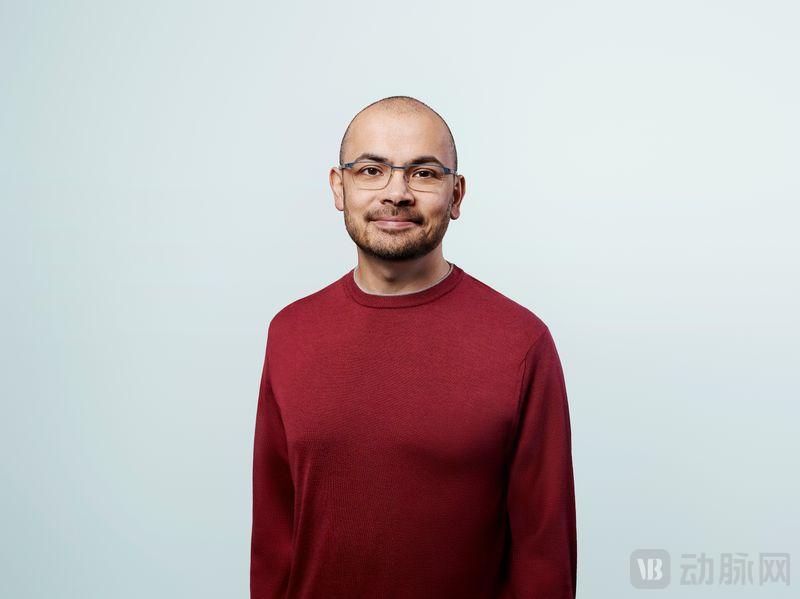
融资6亿美元,诺贝尔奖团队开发AI制药大模型
3 6 Ke· 2025-07-03 01:22
Core Insights - Demis Hassabis, founder of DeepMind and Isomorphic Labs, has made significant contributions to AI, particularly in drug development and protein structure prediction, with his work leading to the 2024 Nobel Prize in Chemistry for AlphaFold [5][10][19] - Isomorphic Labs, established in 2021, focuses on AI-driven drug discovery, leveraging AlphaFold's technology to enhance the drug development process [3][10][19] Company Overview - Isomorphic Labs has developed a unified AI drug design engine that utilizes multiple next-generation AI models applicable across various therapeutic areas [3][10] - The company recently secured $600 million in funding, led by Thrive Capital, to further develop its AI drug design engine and advance treatment solutions into clinical stages [3][10] Technological Advancements - AlphaFold 3, released in May 2024, significantly improves the prediction of protein structures and molecular interactions, enhancing drug development efficiency by at least 50% compared to traditional methods [14][16] - The AI drug design engine integrates advanced AI technologies, including diffusion models and multi-task reinforcement learning, to streamline the drug discovery process, reducing the timeline from an average of 5-10 years to 1-2 years [16][17] Market Potential - The global AI drug discovery market is projected to reach $20 billion by 2025, with a compound annual growth rate exceeding 30% [19] - The industry is witnessing a surge in investment, with over a hundred startups and large pharmaceutical companies actively engaging in AI research and development [19][20] Strategic Collaborations - Isomorphic Labs has formed strategic partnerships with major pharmaceutical companies, including Novartis and Eli Lilly, to co-develop AI-assisted drug discovery projects [10][11] - These collaborations aim to explore challenging drug targets and expand the scope of AI applications in drug development [11][19]
AI“零样本”发现新抗体,人工智能驱动的药物正加速走向临床
Di Yi Cai Jing· 2025-07-02 11:56
Group 1 - The core viewpoint is that drug molecular design is transitioning from "probabilistic collisions" to "atomic-level precision engineering," ushering in a faster, more accurate, and smarter era of molecular design [1][2] - AI-driven drug discovery has made significant advancements, with Chai Discovery's AI model Chai-2 achieving a historic success rate of 16% in "de novo" antibody design, which is over 100 times more effective than previous methods [1][2] - The success of Chai-2 is attributed to its multimodal generative architecture, which integrates full-atom structure prediction and generative models, addressing the low success rates of traditional methods that often rely on extensive experimental screening [1] Group 2 - Despite the advancements, AI-discovered drugs entering late-stage clinical trials remain limited, primarily due to the early development stage of AI in drug discovery and the presence of misleading claims about AI capabilities [2] - A recent study published in Nature Medicine highlights a significant milestone, showing that an AI-discovered drug for idiopathic pulmonary fibrosis demonstrated safety and efficacy in a randomized phase II clinical trial [2][3] - The AI-powered drug Rentosertib, developed by Insilico Medicine, showed good safety and tolerability, with dose-dependent efficacy observed in patients, marking a successful demonstration of the company's generative AI platform [3]
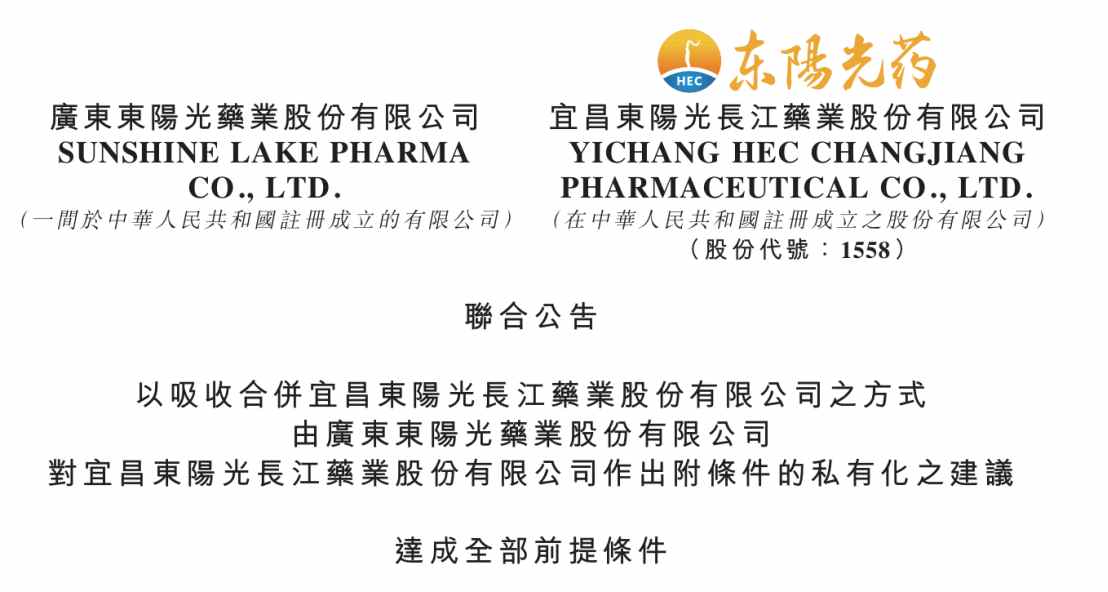
东阳光药(06887):开创全新上市方案维护股东权益,港市喜迎高值稀缺创新药标的
智通财经网· 2025-06-30 09:12
Core Viewpoint - The Hong Kong stock market is experiencing a wave of value reassessment for innovative drugs, with investors increasingly favoring benchmark pharmaceutical companies with "investment certainty" [1][4] Group 1: Company Overview - Dongyangguang Pharmaceutical, a leading company in the domestic biopharmaceutical sector, is set to list on the Hong Kong stock market, which is seen as a positive development for investors [1] - The company announced on June 27 that the privatization proposal to absorb and merge with Dongyangguang Changjiang Pharmaceutical has met all preliminary conditions [1][4] - The listing process has entered its final waiting period, with H-shares expected to begin trading on August 7, 2024, under the new stock code "06887" [4] Group 2: Listing Strategy - Dongyangguang Pharmaceutical's listing strategy involves a "merger of subsidiaries + introduction" approach, which is a first in the Hong Kong market, emphasizing the company's commitment to protecting shareholder rights [4][5] - The introduction method does not involve new share issuance or fundraising, indicating a focus on maintaining existing shareholder equity [5][6] Group 3: Financial Health - The company reported a revenue of 3.724 billion yuan and held cash and cash equivalents of 1.48 billion yuan in 2024, indicating a strong financial position [5] - The robust cash flow and revenue support the company's innovative research and development efforts, providing a solid foundation for its listing strategy [5] Group 4: Research and Development - Dongyangguang Pharmaceutical has established a competitive R&D platform with over 1,100 professionals, covering the entire lifecycle of drug development [7] - The company has 150 drugs globally and over 100 in development, including 49 first-class innovative drugs, with three already under review for market approval in China [7][9] - The company has applied for 2,446 invention patents, with 1,401 granted, ranking first among domestic pharmaceutical companies in patent filings from 2014 to 2023 [7] Group 5: Market Potential - The company has entered into a significant licensing agreement worth $938 million for its FGF21/GLP-1 dual-specific fusion protein, setting a record for domestic BD transactions [9] - The drug candidate Ifenprodil, currently in Phase III clinical trials, shows potential for significant market impact due to its superior efficacy compared to existing treatments [9][10] - The integration of AI technology into the drug development process is expected to enhance innovation efficiency and success rates [10] Group 6: Investment Outlook - In the current market environment favoring "more certain enterprises," Dongyangguang Pharmaceutical is positioned as a high-value biopharmaceutical investment target, with its innovative drug assets and AI capabilities likely to attract market recognition post-listing [11]

平安基金周思聪——创新药投资有望迎来收入放量盈利突破估值抬升元年
Zheng Quan Shi Bao· 2025-06-29 17:55
Core Viewpoint - The innovative drug sector is entering a golden investment window, with expectations for significant revenue growth, profitability breakthroughs, and valuation increases by 2025, marking a systemic investment opportunity in the industry [1][2]. Summary by Relevant Sections Investment Outlook - The innovative drug sector has recently experienced a slight pullback, but this does not alter the long-term growth logic of the industry. As the fundamentals trend upward, the sector is expected to attract more long-term capital once volatility stabilizes [2]. - 2025 is anticipated to be a pivotal year for the Chinese innovative drug industry, characterized as the "three milestone years" for revenue growth, profitability, and valuation uplift [2]. Market Dynamics - The market landscape has shifted significantly, moving away from fierce competition for funds among innovative drugs, AI, and robotics, to a more favorable environment for innovative drugs [2]. - From 2025 to 2028, a critical phase for profitability is expected, with many companies entering a profitability cycle simultaneously, which historically indicates a new phase of systemic strength for the sector [2]. Key Investment Areas - Investment focus should be on major disease categories, particularly in four key areas: 1. Bispecific antibodies, with several products in late-stage clinical trials [3]. 2. Antibody-drug conjugates (ADCs), where domestic companies lead in global research and development [3]. 3. Targeted therapies, with the global oncology market exceeding $150 billion [3]. 4. Autoimmune diseases, driven by environmental factors and improved insurance coverage [3]. Specific Company Insights - In the autoimmune disease sector, companies like Yunding Xinyao, which specializes in kidney disease treatments, have shown significant stock performance, with a more than 700% increase since Q4 2022 [4]. Competitive Landscape - The integration of AI in drug development is expected to enhance efficiency, particularly benefiting the contract research organization (CRO) sector. AI's application in areas like imaging and pathology is also anticipated to expand market opportunities [5]. - Investment selection criteria include focusing on large market spaces, clear competitive landscapes, and optimal clinical data, emphasizing the need for "top performers" in the industry [6].
晶泰科技(02228)与美国生物制药传奇Gregory Verdine旗下公司达成战略合作 联手打造最强AI制药平台
智通财经网· 2025-06-24 03:24
Core Insights - Quantum physics, AI, and robotics drug and new materials development platform, CrystalTech (02228), has entered a strategic partnership worth billions with DoveTree LLC, founded by renowned chemist Gregory Verdine [1] - The agreement grants DoveTree exclusive global rights to multiple pipelines in oncology, autoimmune, and neurological diseases, with CrystalTech receiving a total of $100 million in upfront payments and potential milestone payments worth billions [1][10] Company Overview - Gregory Verdine is a pioneer in chemical biology and a successful entrepreneur, having founded over 12 biotech companies, with 7 going public and one being acquired [2][3] - Verdine's innovative "Stapled Peptides" technology has opened new pathways for targeting "undruggable" targets, creating a market valued in the billions [2][6] Financial Implications - CrystalTech will receive $51 million and $49 million in upfront payments within 10 and 180 days post-signing, respectively, along with potential milestone payments and royalties based on annual net sales [1][10] - The collaboration is expected to significantly enhance CrystalTech's financial returns and support ongoing R&D efforts [10] Market Potential - Verdine's work has led to the successful development of drugs targeting traditionally "undruggable" targets, generating over $30 billion in sales from three major drugs [6][8] - The partnership is seen as a model for combining U.S. intellectual property with Chinese efficiency, potentially unlocking a multi-billion dollar market for previously untargetable drug targets [10] Strategic Positioning - The collaboration elevates CrystalTech's status in the industry and may inspire further high-tech partnerships [10] - Verdine's extensive experience and network in the biotech sector, including roles with top venture capital firms, positions the partnership for success in the evolving landscape of drug development [9][10]