物理AI

Search documents
投资沐曦爆赚200亿,葛卫东开始“扫货”物理AI企业
3 6 Ke· 2025-12-19 03:54
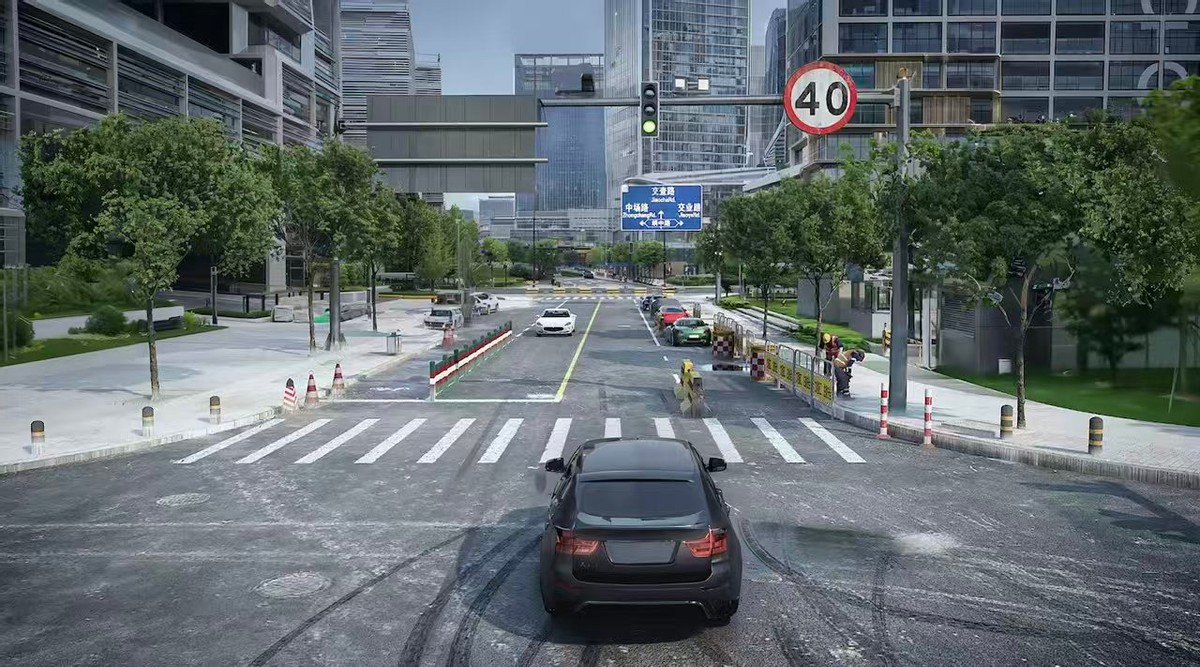
Core Insights - The article discusses the recent investment by Ge Weidong in 51WORLD, a company recognized as a leader in physical AI, following his significant profits from the IPO of Muxi [1][3] Group 1: Investment Strategy - Ge Weidong, founder of Chaos Investment, focuses on sectors with sustainable growth potential, emphasizing the importance of market space and competitive advantages [3] - His investment philosophy revolves around identifying "great changes" driven by technological advancements and societal shifts, which create investment opportunities [3] Group 2: Market Potential - The GPU market in China is projected to grow from 142.5 billion yuan in 2024 to 1.34 trillion yuan by 2029, with a CAGR of 53.7% from 2025 to 2029 [4] - The physical AI market, where 51WORLD operates, is expected to reach a value of 50 trillion dollars as AI becomes integral to various industries [5] Group 3: Company Position and Competitive Advantage - 51WORLD is one of the few companies globally that possesses the three core elements necessary for physical AI: synthetic data, spatial intelligence models, and simulation training platforms [5] - The company has served over 1,000 enterprise clients across various sectors, establishing itself as a key player in providing comprehensive solutions in the physical AI space [5] Group 4: Financial Performance - 51WORLD's revenue grew from 170 million yuan in 2022 to 287 million yuan in 2024, reflecting a compound annual growth rate of 30.02% [7] - The company achieved a revenue of 53.82 million yuan in the first half of 2025, marking a 62% year-on-year increase [7] Group 5: Future Outlook - 51WORLD plans to utilize the funds raised from its IPO to enhance R&D efforts and expand its product offerings, focusing on its core business areas [8] - The company aims to strengthen its global market presence and ecosystem partnerships to increase revenue scale [8]

投资沐曦赚了200亿后,葛卫东为何看上这家物理AI企业?
Sou Hu Cai Jing· 2025-12-19 03:52
Core Insights - The article discusses the recent investment by Ge Weidong in 51WORLD, a company recognized as the first stock in physical AI, following his significant profits from the IPO of Muxi [1][3] Group 1: Investment Strategy - Ge Weidong, founder of Shanghai Chaos Investment, focuses on sectors with sustainable growth potential, emphasizing the importance of the company's position and competitive advantages within its market [3][4] - His investment philosophy is driven by identifying "great changes" in technology and society that create explosive growth opportunities in various industries [3][4] Group 2: Market Potential - The GPU market in China, where Muxi operates, is projected to grow from 142.5 billion yuan in 2024 to 1.34 trillion yuan by 2029, with a CAGR of 53.7% from 2025 to 2029 [4] - The physical AI sector, where 51WORLD operates, is expected to have a market value of up to 50 trillion USD as AI becomes deeply integrated into various industries [6][7] Group 3: Company Position and Competitive Advantage - Muxi, along with Moole Technology, is considered a leading player in the domestic GPU market, with a strong founding team from AMD and significant R&D investments [4][5] - 51WORLD is one of the few companies globally that possesses the three core elements necessary for physical AI: synthetic data, spatial intelligence models, and simulation training platforms [6][7] Group 4: Financial Performance - Muxi's revenue surged from 426,400 yuan in 2022 to 743 million yuan in 2024, indicating a robust growth trajectory [4] - 51WORLD's revenue grew from 170 million yuan in 2022 to 287 million yuan in 2024, with a compound annual growth rate of 30.02% [9] Group 5: Future Outlook - 51WORLD plans to use the funds raised from its IPO to enhance R&D and expand its global market presence, aiming to solidify its position as a leader in the physical AI sector [10]
港股异动丨终见反弹!小鹏汽车盘中涨约6%,11月中旬以来累计跌幅超34%
Ge Long Hui· 2025-12-19 02:59
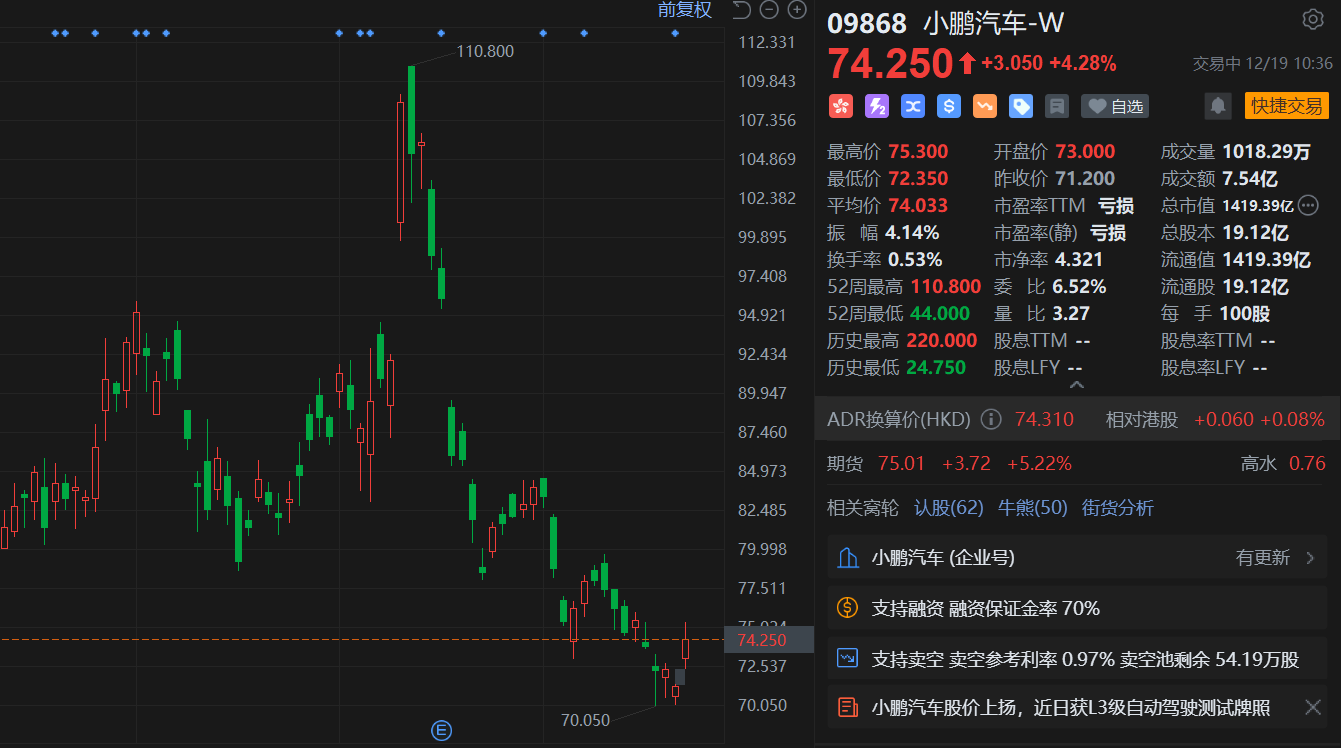
相关事件 连续下跌的小鹏汽车终见反弹,盘前一度涨约6%,该股从11月12日以来持续走低,区间最大跌幅更是 超34%,现报74港元,总市值1417亿港元。 消息上,近日,据消息称小鹏汽车已在广州市获得L3级自 动驾驶道路测试牌照,并启动常态化的L3道路测试。该牌照主要用于在广州市智能网联汽车测试高快 速路上进行有条件自动驾驶的测试。 长江证券指出,小鹏汽车依托软硬件一体化优势,在智能驾驶领 域持续领先。随着自研图灵芯片上车、云端基座大模型推进,智驾进入第二代VLA阶段。公司预计 2026年一季度量产具备L4级能力的第二代VLA,并预期在2026年推出具备L4能力的Robotaxi车型。 小鹏汽车-W(9868.HK):强势产品周期驱动业绩高增 战略升级聚焦物理AI 小鹏汽车-W(09868.HK): 2026年看点梳理 从汽车走向AI科技! ...
“天才少女”罗福莉亮相背后:曾被雷军亲自点将,能成小米新王牌?
Sou Hu Cai Jing· 2025-12-18 12:26
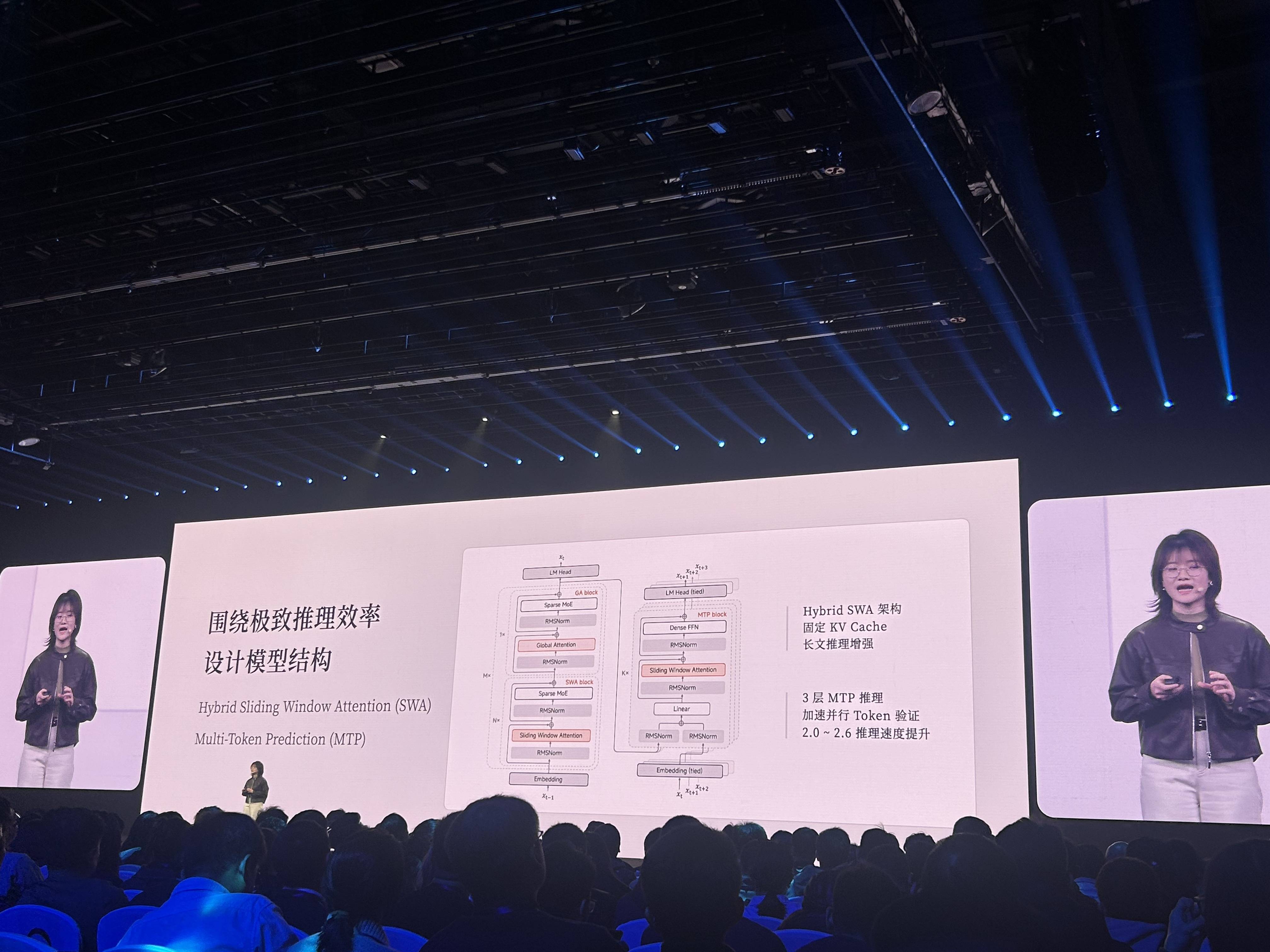
Core Insights - The core focus of the article is on the public debut of Xiaomi's MiMo model leader, Luo Fuli, who emphasizes the need for next-generation intelligent agents to transition from merely answering questions to completing tasks and interacting with the world [2][4]. Group 1: Luo Fuli's Background and Role - Luo Fuli, born in 1995 in Yibin, Sichuan, has a strong academic background in computer science and computational linguistics, having published eight papers at the ACL conference in 2019 [1]. - After working at Alibaba's Damo Academy and DeepSeek, Luo Fuli joined Xiaomi, reportedly at a salary of tens of millions, to lead large model research [1][2]. Group 2: Xiaomi's AI Developments - Xiaomi has been rapidly advancing its model releases throughout the year, including MiMo, MiMo-VL, MiMo-Audio, and Miloco, with the AIoT platform connecting over 1.04 billion devices globally by Q3 [2][5]. - The introduction of the MiMo-V2-Flash model, with 309 billion total parameters and 15 billion active parameters, aims to achieve low-cost, high-speed performance and initial world simulation capabilities [5][6]. Group 3: Focus on Physical AI - Luo Fuli's research direction at Xiaomi includes a strong interest in "Physical AI," which involves models that understand and interact with the real world through movement skills, as seen in robotics and autonomous vehicles [4][6]. - The MiMo-Embodied model aims to bridge the fields of autonomous driving and embodied intelligence, indicating a strategic focus on integrating AI into physical environments [4][5]. Group 4: Smart Home Ecosystem - Xiaomi's Miloco initiative seeks to transform smart home devices from passive responders to proactive service providers, enhancing user interaction through natural language processing and real-time visual data [6][11]. - The Miloco system aims to eliminate the need for complex manual settings by allowing users to express needs verbally, thus shifting from a fragmented app-based control to a more intuitive, user-intent-driven experience [7][12].

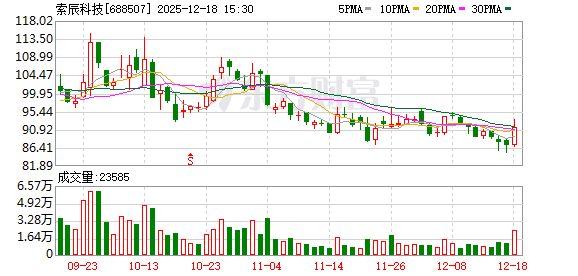
索辰科技:物理AI具备三大不可替代的优势
Zheng Quan Ri Bao· 2025-12-18 07:47
Core Viewpoint - The unique value of physical AI lies in its ability to drive the transformation of industrial manufacturing from "human-operated" to "autonomous" systems, distinguishing it from traditional technologies [2] Group 1: Advantages of Physical AI - Physical AI offers three irreplaceable advantages over traditional simulation software and general AI: 1. Extreme authenticity, as it learns from vast amounts of real physical data, allowing for high-precision replication of complex physical laws, crucial for fields like aerospace and autonomous driving where "zero error" is essential [2] 2. Disruptive real-time capabilities, enabling millisecond-level data processing and decision-making, which is vital for scenarios like autonomous drone obstacle avoidance [2] 3. Strong adaptive ability, allowing for self-learning and dynamic optimization based on real-time data, which can lead to predictive maintenance and automated adjustments in industrial robots [2] Group 2: Future Implications - These advantages position physical AI as the core technology for the future of fully autonomous equipment, transforming industrial software from a mere design tool into an "industrial brain" capable of intelligent decision-making [2]

索辰科技:物理AI为具身智能系统提供更高的稳定性、可解释性和现实适应性
Zheng Quan Ri Bao Zhi Sheng· 2025-12-18 07:37
Core Insights - The company, Suochen Technology, emphasizes the integration of physical laws into AI models to enhance the stability, interpretability, and real-world adaptability of embodied intelligent systems [1] Group 1: Technology and Innovation - Suochen Technology plans to launch an embodied intelligent virtual training platform by July 2025, which will feature efficient algorithm iteration acceleration capabilities [1] - The platform will deeply integrate a core physical AI system with a computational physics engine, allowing for precise replication of various physical parameters [1] - The training platform aims to seamlessly connect real-world perception data with virtual training data, addressing the issue of training effectiveness due to discrepancies between virtual and real environments [1] Group 2: Operational Efficiency - The complete process of "data collection - training - generation - evaluation" will be streamlined, making robot training more economical, efficient, realistic, and simpler [1]
黄仁勋“指路”物理AI,五一视界获明星资本加持尽显成长潜力
Zhi Tong Cai Jing· 2025-12-18 07:36
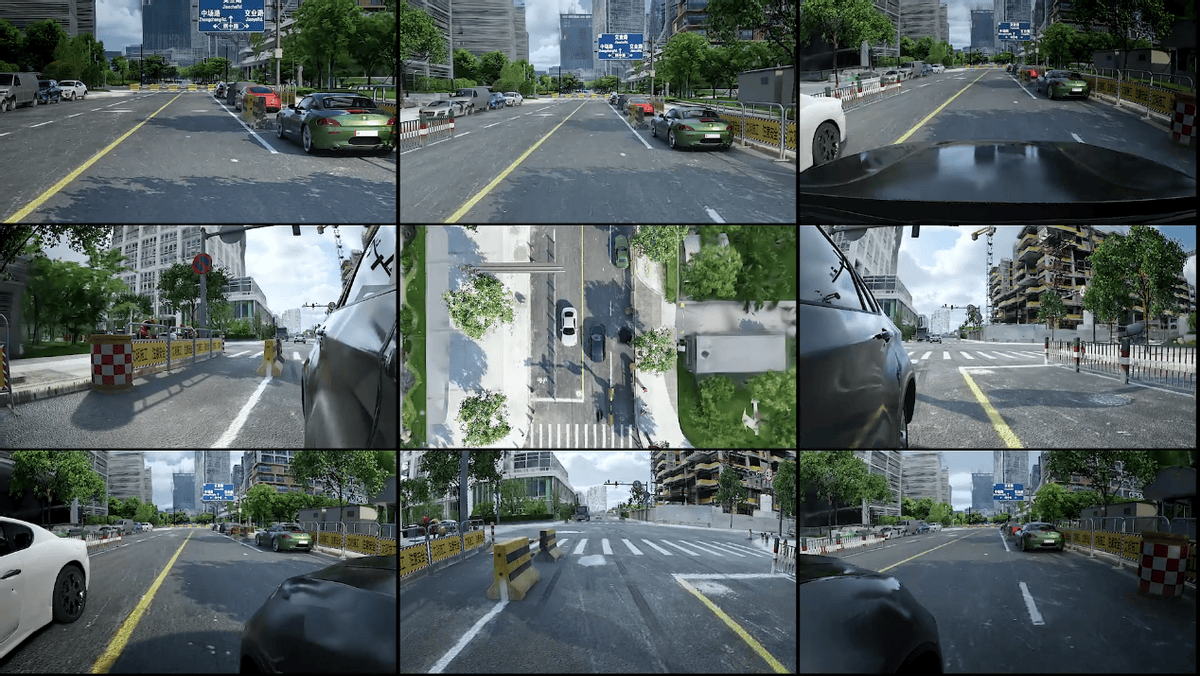
Core Viewpoint - The company, Wuyi Vision, is positioned as the "first stock of Physical AI" in the Hong Kong market, focusing on the rapidly evolving Physical AI sector, which is expected to be significantly larger than content AI [1] Group 1: Company Overview - Wuyi Vision has made substantial investments in three key areas: 3D graphics, simulation, and artificial intelligence, leading to the development of three core businesses: 51Aes (digital twin platform), 51Sim (synthetic data and simulation platform), and 51Earth (digital earth platform) [1] - The company has established a strong competitive barrier through long-term technological accumulation and successful case studies, positioning itself to provide infrastructure-level empowerment across various industries [1] Group 2: Market Position and Collaborations - Wuyi Vision is recognized as a significant player in the Physical AI market, which is projected to be worth trillions, with industry leaders predicting it to be the next wave of AI development [1] - The company has formed a deep collaborative ecosystem with Moer Thread, known as "China's Nvidia," providing essential landing scenarios for advanced GPU chips and benefiting from a vast amount of scene data accumulated over the years [2] Group 3: Financial Performance - Wuyi Vision's revenue has grown rapidly from 170 million yuan in 2022 to an estimated 287 million yuan in 2024, reflecting a compound annual growth rate of 30.02% [3] - In the first half of 2025, the company achieved approximately 54 million yuan in revenue, representing a significant year-on-year increase of 62%, indicating a strong growth trajectory [3] Group 4: Investment Appeal - The company's IPO is expected to elevate it as the "first stock of Physical AI," providing a unique opportunity for investors to share in the emerging benefits of the Physical AI industry [3] - With the gradual release of Physical AI market dividends and accelerated technological value transformation, Wuyi Vision is anticipated to experience a resonance of growth and valuation, positioning it as a premium asset in the next generation of AI [3]
黄仁勋“指路”物理AI,五一视界(06651)获明星资本加持尽显成长潜力
智通财经网· 2025-12-18 07:35
Core Viewpoint - The company, Wuyi Vision, is positioned as the "first stock of Physical AI" in the Hong Kong market, focusing on the rapidly evolving Physical AI sector, which is expected to be significantly larger than content AI [1][3]. Group 1: Company Overview - Wuyi Vision has made substantial investments in three key areas: 3D graphics, simulation, and artificial intelligence, leading to the development of three core businesses: 51Aes (digital twin platform), 51Sim (synthetic data and simulation platform), and 51Earth (digital earth platform) [1]. - The company has established a strong competitive barrier through its long-term technological accumulation and successful case studies, positioning itself to provide infrastructure-level empowerment across various industries [1]. Group 2: Market Position and Collaborations - Wuyi Vision is recognized as a significant player in the Physical AI market, which is projected to be worth trillions, with industry leaders like Jensen Huang predicting it to be the next wave of AI [1][2]. - The company has formed a deep collaborative ecosystem with Moer Thread, known as the "Chinese Nvidia," which enhances the application of advanced GPU chips in Physical AI solutions [2]. Group 3: Financial Performance - Financial data indicates that Wuyi Vision's revenue grew from 170 million yuan in 2022 to an estimated 287 million yuan in 2024, reflecting a compound annual growth rate of 30.02% [3]. - In the first half of 2025, the company achieved approximately 54 million yuan in revenue, marking a significant year-on-year increase of 62%, demonstrating a strong growth trajectory [3]. Group 4: Investment Appeal - The company's IPO is expected to solidify its status as the "first stock of Physical AI," providing investors with a unique opportunity to benefit from the anticipated boom in the Physical AI sector [3]. - The backing from prominent investors and industry leaders indicates strong confidence in Wuyi Vision's fundamentals, technological capabilities, and future commercial value [2].
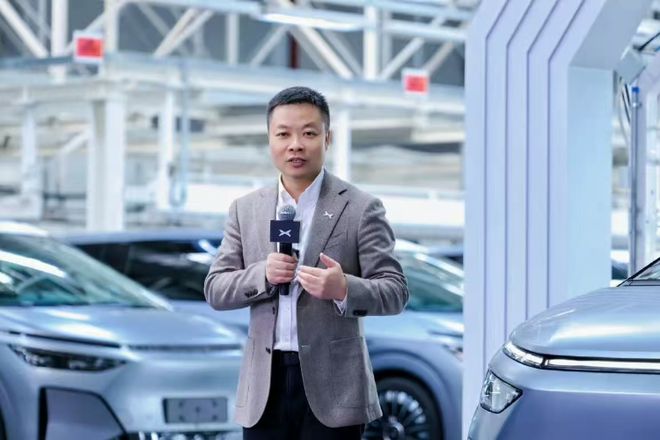
何小鹏:当前没有AI泡沫!物理AI或将在未来三年迎关键突破
Zheng Quan Shi Bao Wang· 2025-12-17 10:41
Group 1 - The core viewpoint of the articles revolves around the insights of He Xiaopeng, Chairman of XPeng Motors, regarding the competition in AI between China and the US, emphasizing the differences in entrepreneurial focus and technological development in robotics and AI applications [1][2]. - He Xiaopeng highlights that the US has a strong emphasis on startups in AI, biotechnology, and finance, particularly in the fields of SaaS and physical AI robotics, with high valuations observed in these sectors [1]. - In contrast, Chinese robotics companies tend to focus on joints and control, while US companies are more model-oriented, indicating a competitive landscape where humanoid robots will be a key area of competition among major players [1]. Group 2 - XPeng Motors is set to host its 2025 Technology Day in mid-November, where He Xiaopeng will introduce the concept of "Physical AI" and unveil four significant applications, including the second-generation VLA, Robotaxi, a new generation of IRON, and two flight systems [1]. - The company asserts that these AI applications have clear mass production plans, suggesting that "Physical AI" is not a distant concept but a tangible reality accessible to everyone [1]. - He Xiaopeng expresses optimism about the future of AI, stating that while there may be bubbles in technology phases, the overall market for AI presents significant opportunities, with China focusing more on market applications compared to the US's emphasis on cutting-edge research [2]. Group 3 - He Xiaopeng discusses the concept of AGI (Artificial General Intelligence), noting that current AI primarily relies on imitation learning and reinforcement learning, lacking true creativity [3]. - He emphasizes that true AGI will require advancements in multi-modal learning, world modeling, continuous learning, and long-term planning capabilities, which are still years away from full realization [3]. - The recent shift in XPeng's corporate positioning from "future mobility explorer" to "physical AI world mobility explorer" reflects a broader market perspective that views XPeng as a global technology company driven by AI [3].


何小鹏谈AI:当前没泡沫,物理AI未来三年将迎来关键突破
Nan Fang Du Shi Bao· 2025-12-17 10:35
Core Insights - The future of humanoid robots is expected to be a competitive arena for major players, while specialized robots will see numerous successful opportunities [3] - Significant breakthroughs in physical AI are anticipated within the next three years, with autonomous driving potentially reaching Level 4 capabilities [4][5] - The current AI landscape is viewed as being in its early stages, with a rational perspective on the so-called AI bubble, suggesting that the market holds substantial opportunities [6] Group 1: Industry Trends - There is a noticeable divergence in the development paths of AI robotics between China and the United States, with the U.S. focusing on software and algorithm breakthroughs, while Chinese companies emphasize hardware and control technologies [3] - The competition in humanoid robots is expected to be intense due to high entry barriers, whereas various players will emerge in specialized robot sectors [3] Group 2: Future Predictions - Major advancements in physical AI are predicted, with autonomous driving and humanoid robots likely to achieve rapid progress from Level 1 to Level 4 capabilities [5] - The transition from language models to multimodal and world models is anticipated, indicating a shift in the focus of AI development [4] Group 3: Company Strategy - The company has recently repositioned itself as an "explorer of physical AI world mobility," unveiling several new technologies including the second-generation VLA model, Robotaxi, and flying cars [7] - Recognition from industry leaders, such as Huawei's founder praising the company's innovative approach, highlights the growing attention on its technological direction [7]