通用人工智能(AGI)

Search documents
2026,就是科技+CTA
Sou Hu Cai Jing· 2025-12-02 09:45
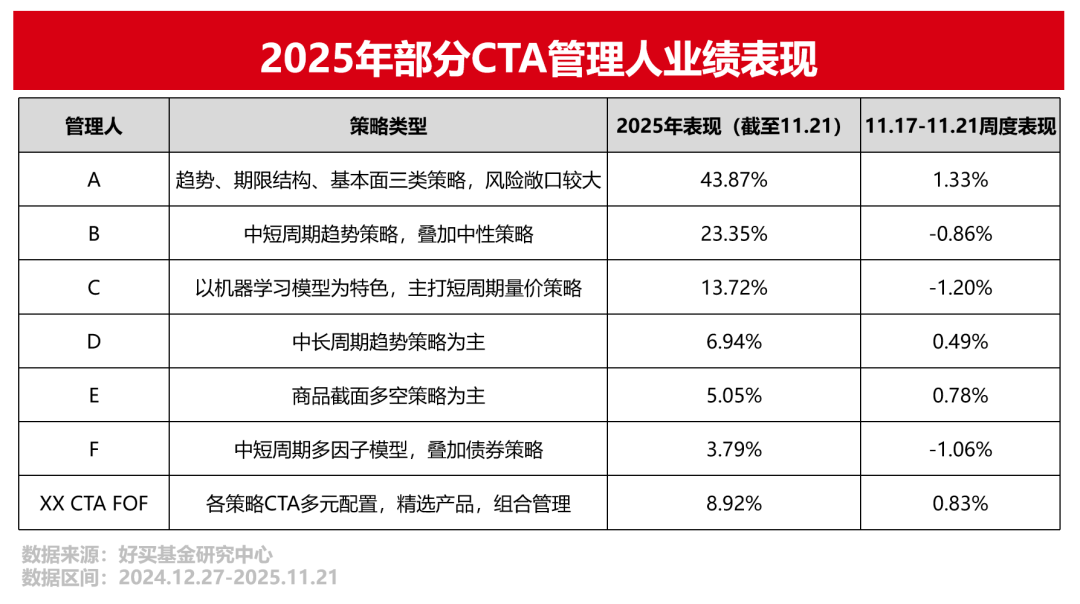
Core Insights - The growth in 2026 is expected to be driven primarily by an AI-driven industrial cycle, with significant capital investments from major tech companies in both China and the U.S. [1] - The market is currently in a phase of striving towards General Artificial Intelligence (AGI), with uncertainties regarding which traditional industries will be disrupted and which new industries will emerge [1] - The Federal Reserve is focused on providing stable financial conditions to support the ongoing tech revolution, which may lead to continued strong performance of tech assets in 2026 [1] Investment Strategy - A long-term perspective and a firm mindset are essential for investing in U.S. and Chinese tech assets [2] - Identifying other high-quality, low-correlation return streams to hedge against tech asset volatility is crucial [2] - The core investment strategy for 2026 may revolve around a combination of technology and Commodity Trading Advisors (CTA) [2] CTA Performance - CTA managers have shown varied performance in 2025, with some achieving returns exceeding 40% due to high volatility in precious metals [3] - CTA funds with neutral strategies have also performed well, with returns over 20% [3] - During significant market pullbacks, certain CTA managers maintained stable performance, highlighting their risk-hedging capabilities [4] Current Market Environment - The current low-interest-rate environment enhances the appeal of CTA's absolute return characteristics [5] - Global factors, including the Fed's continued rate cuts and changing trade dynamics, may trigger commodity market rallies, benefiting CTA products [5] - The AI technology revolution is expected to drive new economic growth, but it may also introduce volatility in capital markets [6][8] Asset Allocation Considerations - Investors should focus on the long-term significance of AI tech assets while also considering strategies to hedge against short-term volatility [8] - The combination of technology and CTA may provide a balanced approach to capturing opportunities in 2026 [9] - Each asset class has unique roles, and a diversified approach may enhance the potential for returns while managing risks [9]

谷歌AI研究员,潜入梵蒂冈游说教皇:AGI将带来末日
3 6 Ke· 2025-12-02 09:05
Core Insights - The article discusses the concerns surrounding Artificial General Intelligence (AGI) and its potential catastrophic risks, emphasizing the urgency for the Vatican to acknowledge and address these issues [1][10][16]. Group 1: Key Figures and Background - John-Clark Levin, a prominent AI researcher at Google, is leading efforts to raise awareness about AGI risks within the Vatican [3][5]. - Levin has built a network of over thirty scholars, scientists, and clergy, dubbed the "AI Avengers," to strategize on how to prompt the Vatican to recognize the destructive potential of AI [7][8]. Group 2: Vatican's Role and Influence - The Vatican, despite its small size, holds significant soft power with 1.4 billion Catholics and a vast diplomatic network, making it a crucial player in global discussions on AI [11]. - Pope Leo XIV, being the first American pope with a background in mathematics, is seen as more capable of understanding the technical aspects of AI compared to previous popes [13]. Group 3: AGI Concerns and Ethical Considerations - Levin argues that the Vatican's current focus on general AI ethics overlooks the specific risks posed by AGI, which could lead to societal upheaval similar to the Industrial Revolution [16][17]. - The potential consequences of AGI include extreme wealth disparity, geopolitical instability, and even catastrophic events like nuclear war and pandemics [10]. Group 4: Engagement Efforts and Challenges - Levin's attempts to engage with the Vatican have faced bureaucratic hurdles, including a recent failed opportunity to meet with the Pope directly [30][29]. - Despite these challenges, Levin notes a surprising openness within the Vatican regarding discussions on AGI, indicating a willingness to consider the implications of this technology [32].

博时市场点评12月2日:两市震荡调整,成交有所缩量
Xin Lang Cai Jing· 2025-12-02 08:23
简评:商业不动产REITs试点推出意义重大,将为房企和地方国资提供市场化融资与退出渠道,有效缓 解流动性压力。采取与基础设施REITs并行推进策略,能精准对接商业不动产盘活需求。审核链条简化 有望加速产品扩容,中长期看,有利于盘活万亿级存量资产,降低杠杆,防范风险,为房地产发展新模 式提供金融支持,促进资本市场服务实体经济质效提升。 今年以来,截至12月1日,共有3004只科技创新债券正式发行,发行规模合计达3.18万亿元,发行数量 及总规模相较去年同期分别增长85%和98%,为科技创新企业提供了有力的资金支持。 简评:今年科创债发行明显提速,发行主体及发行规模扩容显著。发行科创债有助于帮助企业融资,为 科创企业提供中长期资金,缓解融资难问题。同时,可以增加债券市场品种,满足多元投资需求,助力 资本市场创新。引导资金流向科技创新领域,提高政策传导效率。 【博时市场点评12月2日】两市震荡调整,成交有所缩量 每日观点 今日沪深三大指数震荡调整,两市成交缩量至1.6万亿。昨日美国供应管理协会(ISM)数据显示,11月 美国制造业PMI从10月的48.7降至48.2,连续第九个月低于50的荣枯线,并创下四个月来的最 ...
马斯克的下一个目标:太空AI卫星?
美股IPO· 2025-12-02 08:02
Core Concept - Elon Musk has hinted at a new initiative called "Galaxy Mind," aimed at integrating the core capabilities of SpaceX, Tesla, and xAI to deploy solar-powered AI satellites in deep space, thereby overcoming Earth's energy limitations and backing up human knowledge [1][2]. Group 1: Vision and Integration - The vision represents not only a bold technological exploration but also a potential new business model that combines Tesla's energy technology, SpaceX's launch capabilities, and xAI's advanced models into a new space AI solution, potentially opening up significant growth opportunities driven by synergies [2]. - Musk emphasizes that future large-scale AI operations will rely on solar energy from space, stating that to harness a significant portion of solar energy, one must turn to solar-powered AI satellites in deep space, which he sees as the convergence point of the three companies' expertise [3]. Group 2: Company Roles - SpaceX will provide mature rocket launch and spacecraft manufacturing capabilities, responsible for deploying AI satellites into deep space [4]. - Tesla will leverage its expertise in solar and battery technology to provide efficient and sustainable energy solutions for the satellites [5]. - xAI will be tasked with developing cutting-edge AI models capable of large-scale operation on the satellites [6]. Group 3: Business Entity and Trademark - "Galaxy Mind" is not just a technical concept but may evolve into a future business entity, with goals including backing up human knowledge in space as a hedge against the risk of Earth's civilization collapse [9]. - Trademarks for "Galaxy Mind" and "Galactica" have been filed, with indications that "Galactica" could become the official name of the initiative [9]. Group 4: Synergy and Market Potential - Musk's latest move continues his strategy of maximizing synergies within his portfolio, building on the solid foundations of each company [11]. - Tesla's energy division has achieved leadership in efficient solar panels and storage systems, while SpaceX has transformed commercial space and satellite deployment through its Starlink network, and xAI is developing large language models with the potential for AGI [11]. - From an investor's perspective, this integration plan aims to reorganize mature technologies to explore new markets, combining SpaceX's physical transport capabilities, Tesla's energy capabilities, and xAI's intelligent computing to address Earth's energy constraints and create new physical space for AI development [11].


8点1氪丨香港大埔火灾已拘捕13人,罪名是误杀;明年起避孕药品和用具征收增值税;万科被冻结5.7亿元股权,冻结期限为3年
3 6 Ke· 2025-12-01 23:59
Group 1 - DeepSeek released two official models: DeepSeek-V3.2 and DeepSeek-V3.2-Speciale, with updates available on the official website, app, and API [4] - The cancellation of the VAT exemption for contraceptive drugs and devices will directly impact production and sales companies, requiring them to reassess cost structures and pricing strategies, potentially leading to increased market prices [2] - Vanke has had 570 million yuan of equity frozen for three years, as reported by the Dongguan Intermediate People's Court [2] Group 2 - The movie "Zootopia 2" has become the highest-grossing imported film in mainland China for the year, surpassing 1.9 billion yuan in box office revenue within five days of release [6] - SF Express launched a "late delivery compensation" service, where the company will bear the costs, and couriers will not be held responsible for compensation [6] - Nestlé China confirmed that the merger of its infant nutrition business with Wyeth will not affect existing operations, with the new entity set to launch on January 1, 2026 [7] Group 3 - The Chinese express delivery industry has seen its annual business volume exceed 1.8 billion packages for the first time, reflecting a strong economic momentum [5] - The former CEO of Hema, Hou Yi, announced a new venture called "Lao Cai Rui Xuan," focusing on live-streaming sales [3] - The China CDC reported that the national flu activity has reached a moderate level, with some provinces experiencing high levels of flu activity [4]





大模型的“健忘症”有药了
虎嗅APP· 2025-12-01 13:21
Core Viewpoint - The article discusses the limitations of large models in retaining long-term memory, highlighting the challenges faced in practical applications and the need for a more human-like memory system in AI [3][10][25]. Group 1: Limitations of Current AI Models - The large model industry is experiencing a "memory loss" issue, where AI struggles to retain information over extended interactions, leading to repeated questions and irrelevant responses [4][6]. - The technical architecture of current models, such as the Transformer, suffers from attention decay over long sequences, resulting in the loss of earlier instructions during conversations [5][7]. - The lack of a shared memory mechanism among different AI agents leads to fragmented interactions, causing inefficiencies and confusion in customer service scenarios [6][7]. Group 2: Need for Improved Memory Mechanisms - A more sophisticated memory system is essential for AI to evolve beyond simple question-answering capabilities and to develop understanding and reasoning abilities [15][26]. - The concept of memory in AI should not just focus on storing more data but on retaining valuable information that can guide decision-making [11][12]. - The development of a memory infrastructure that allows for shared, manageable, and traceable memory among AI agents is crucial for enhancing their collaborative capabilities [10][22]. Group 3: Redefining AI Memory with "Memory Bear" - The company "Red Bear AI" is working on a product called "Memory Bear," which aims to create a memory system that mimics human memory processes, allowing for better retention and utilization of information [10][28]. - This system includes short-term working memory for task connections and long-term memory for knowledge retention, enabling AI to respond more accurately and contextually [14][18]. - The introduction of a structured memory graph allows for the analysis and retrieval of relevant memories, significantly improving the efficiency and accuracy of AI responses [17][18]. Group 4: Implications for Business and Future of AI - The ability of AI to retain memory will fundamentally change its role in business, allowing it to replace human-like interactions in customer service and other sectors [21][22]. - As AI develops a continuous memory, it will be able to understand user context and history, enhancing trust and effectiveness in various applications [22][26]. - The evolution of memory systems in AI is seen as a critical step towards achieving general artificial intelligence (AGI), where memory plays a vital role in reasoning and learning [26][28].
智能驾驶双轨演进:政策“破冰”激活技术“竞速”
Zhong Guo Qi Che Bao Wang· 2025-12-01 09:19
Core Insights - The integration of intelligent driving technology is reshaping lifestyles at an unprecedented pace, driven by advancements in artificial intelligence and a unique market environment in China [1][3] - The Chinese intelligent driving industry is transitioning from a phase of rapid growth to one of high-quality development, with regulatory frameworks being strengthened alongside pilot programs for higher-level autonomous driving [3][4] - The rapid adoption of electric vehicles is providing an optimal platform for intelligent driving technologies, creating a virtuous cycle between electrification and intelligence [4][6] Industry Trends - The emergence of cognitive intelligence technologies is transforming intelligent driving from a rule-based tool to a cognitive-driven entity, with new architectures like end-to-end and VLA opening new possibilities for high-level autonomous driving [3][5] - The intelligent driving sector is witnessing a clear focus on L4-level scenario-based applications, with significant investments directed towards areas like unmanned delivery and logistics [6][7] - Key components of the supply chain, such as sensor manufacturers and chip companies, are receiving substantial funding, highlighting their foundational role in the development of autonomous driving [7] Regulatory Environment - The regulatory landscape is evolving, with policies being introduced to facilitate the testing and commercialization of L3-level and above autonomous driving technologies in multiple cities [3][4] - The dual approach of relaxing pilot programs while simultaneously enhancing regulatory frameworks is creating clearer competitive advantages for companies with core competencies [3][4] Investment Landscape - Investment activities in the intelligent driving sector are increasingly concentrated in later-stage financing, indicating a shift from technology validation to large-scale commercial applications [7] - Traditional automotive companies are actively participating in investments to address technological gaps, while collaborations within the supply chain are emerging to build ecological advantages [7] Future Outlook - The competition in intelligent driving is entering a new phase where success will depend on the ability to integrate technology, compliance, and commercialization effectively [9] - The industry is at a historical turning point, with the potential for new industry giants to emerge from the convergence of technology, policy, and market dynamics [8][9]
综述丨11月全球人工智能领域发展盘点
Xin Hua Wang· 2025-12-01 07:12
Core Insights - The global AI sector experienced significant developments in November, including increased investments, advancements in AI models, and innovative approaches to data center operations in space [1] Investment Trends - Russian President Putin emphasized the importance of AI for national sovereignty and proposed a comprehensive plan for developing AI technologies in Russia, including the establishment of a leadership department for AI affairs [2] - U.S. President Trump initiated the "Genesis Task" to create a comprehensive AI platform aimed at enhancing national security and productivity, likening its ambition to the Manhattan Project [2] - Microsoft announced a total investment of $15.2 billion in AI projects in the UAE, with over $7.3 billion planned for 2023 and an additional $7.9 billion from 2026 to 2029 [3] - Amazon Web Services (AWS) and OpenAI entered a strategic partnership worth $38 billion to provide cloud computing infrastructure for AI workloads over the next seven years [3] Innovations in AI Infrastructure - Several tech companies are exploring the concept of relocating data centers to space to meet rising computational and energy demands, leveraging solar power [4] - The U.S. company Nebula successfully launched the "Nebula-1" satellite, which includes an NVIDIA GPU for testing high-performance AI computing in space [4] - Google unveiled its "Solar Catcher" project, aiming to create a space-based machine learning data center powered by a network of interconnected satellites [4][5] Advancements in AI Models - OpenAI released the GPT-5.1 series, featuring an "Instant" version for general users and a "Thinking" version for advanced reasoning tasks [6] - Elon Musk's xAI introduced the Grok 4.1 model, enhancing creative and emotional interaction capabilities [6] - Google launched the Gemini 3 model, touted as its most powerful AI agent to date, advancing towards general artificial intelligence (AGI) [6] - Chinese AI firm DeepMind unveiled the DeepSeek-Math-V2 model, achieving gold medal-level performance in international mathematics competitions [6]
算力悖论:理论对了所需算力是可控的,理论错了再多算力也白搭
3 6 Ke· 2025-12-01 00:25
Core Viewpoint - The current AI boom is fundamentally misdirected, with an overemphasis on scaling and computational power rather than genuine research and innovation [1][2]. Group 1: Scaling and Its Limits - The era of scaling through increased computational power is coming to an end, as the industry faces diminishing returns on investment in data and computation [3][5]. - High-quality training data is becoming scarce, leading to a plateau in performance improvements from current scaling methods [3][5]. - Existing models lack true intelligence and generalization capabilities, indicating a fundamental flaw in the underlying architecture [6][8]. Group 2: Generalization Challenges - Current AI models excel in benchmark tests but fail in real-world applications, revealing significant weaknesses in their generalization abilities [6][8]. - The focus on narrow optimization for specific tasks leads to models that perform well in limited contexts but struggle with broader applications [7][8]. - Understanding reliable generalization mechanisms is crucial for addressing various AI challenges, including alignment and value learning [8]. Group 3: SSI's Research Focus - Safe Superintelligence Inc. (SSI) aims to prioritize research over product development, challenging the industry's default assumptions about resource allocation [9][10]. - SSI's structure is designed to eliminate distractions from research, focusing solely on validating theories related to generalization [10]. - Historical precedents show that significant breakthroughs in AI do not require massive computational resources but rather insightful approaches [10]. Group 4: AGI and Its Misconceptions - The concept of Artificial General Intelligence (AGI) may be overestimated, as human intelligence operates differently from the proposed models [12]. - Human learning involves mastering foundational skills before acquiring complex abilities, contrasting with the notion of a universally capable AI [12]. - This understanding influences deployment strategies, suggesting that AI should be viewed as a system capable of continuous learning rather than a fully formed entity at launch [12]. Group 5: Future Predictions - Systems with improved generalization capabilities are expected to emerge within 5 to 20 years, reflecting uncertainty about the path forward rather than doubt about solutions [13]. - As AI capabilities become more apparent, industry behaviors will shift, leading to increased collaboration on safety and deeper government involvement [13]. - The alignment goal should encompass all sentient AI, not just humans, based on the premise of shared understanding across species [13]. Group 6: Research Aesthetics - The pursuit of research is driven by a sense of aesthetic and simplicity, with promising directions often appearing elegant and inspired by biological intelligence [14][15]. - A strong belief in the validity of certain research paths is essential for overcoming challenges and failures in the development process [15]. - The shift away from reliance on scaling as a substitute for belief in research direction emphasizes the need for genuine innovation and insight [15].
【数智周报】 马斯克:Grok 5有10%概率实现AGI;国家数据局:支持数据交易所探索建立全链条服务体系;新AI模型可精准锁定人体致病突变……
Tai Mei Ti A P P· 2025-11-30 03:38
Group 1 - The Ministry of Science and Technology emphasizes the need for implementing major national technology tasks to achieve breakthroughs in key core technologies [2] - The focus is on enhancing high-quality technology supply and promoting deep integration of industry, academia, and research [2] - The government aims to strengthen the role of enterprises in technological innovation and support the establishment of innovation consortia [2] Group 2 - Liu Tieyan discusses the potential for AI to become an independent "scientist," highlighting the shift towards human-machine collaboration in research [3] - AI is expected to complement human intelligence, leading to a new era of collaborative evolution [3] Group 3 - Alibaba's CEO Wu Yongming states that an AI bubble is unlikely to occur in the next three years due to a supply-demand imbalance in AI resources [4] - Morgan Stanley Fund suggests that the expansion of AI applications will balance the significant capital investments made in the sector [5] Group 4 - Salesforce CEO Marc Benioff announces a shift from OpenAI's ChatGPT to Google's Gemini 3, citing significant advancements in reasoning and speed [6][7] - Elon Musk indicates that the upcoming Grok 5 model has a 10% chance of achieving Artificial General Intelligence (AGI) [8] Group 5 - OpenAI's former chief scientist Ilya Sutskever notes that the current paradigm of AI development is reaching its limits, advocating for a return to a research-focused approach [9] - The focus should shift from scaling models to enhancing their ability to learn and generalize [9] Group 6 - China Galaxy Securities predicts that by 2026, the trend of model democratization will drive AI applications from AI-enabled to AI-first [10] - The report emphasizes the importance of various AI application directions, including enterprise-level AI agents and vertical industry solutions [10] Group 7 - Alibaba's Q2 revenue reaches 247.8 billion yuan, with cloud intelligence group revenue growing by 34% year-on-year [16] - Dell Technologies reports a record high Q3 revenue of $27.005 billion, driven by strong demand for AI servers [17] Group 8 - EHang reports Q3 revenue of 92.5 million yuan, maintaining its annual revenue guidance of 500 million yuan [18] - The rapid growth of Alibaba's AI assistant, Qianwen, is highlighted, with downloads surpassing 10 million within a week [19] Group 9 - Tencent releases an open-source OCR model, HunyuanOCR, achieving state-of-the-art results in various applications [20] - Baidu establishes two new model research departments to focus on general AI and application-specific models [22] Group 10 - The Beijing AI industry is projected to exceed 450 billion yuan in scale by 2025, with significant growth in the core AI industry [33] - The launch of China's first AI incubation fund aims to foster innovation in the AI sector [34] Group 11 - Amazon allows businesses to test its Leo satellite service, competing with SpaceX's Starlink [35] - Analysts estimate that OpenAI's Sora incurs daily costs of $15 million, raising concerns about sustainability [36] Group 12 - HelloBoss launches an AI agent for recruitment, covering the entire hiring process [37] - South Korea plans to pilot an AI system for traffic management to alleviate congestion [38] Group 13 - Amazon encourages engineers to use its proprietary Kiro service over third-party AI coding tools [39] - A new AI model developed by Harvard and Barcelona researchers can accurately identify disease-causing mutations [40][41] Group 14 - Wedbush Securities supports the AI wave, betting on major tech stocks like Microsoft and Nvidia [42] - OpenAI removes Mixpanel from its production environment following a security incident [43] Group 15 - The Beijing government accelerates the commercialization of humanoid robots [46] - Shanghai's internet office initiates a crackdown on AI misuse [47] Group 16 - Beijing promotes the application of AI-assisted diagnostic technologies in healthcare [48] - The National Data Bureau supports the establishment of a comprehensive service system for data exchanges [49] Group 17 - The Ministry of Industry and Information Technology announces commercial trials for satellite IoT services [50] - Beijing's 14th Five-Year Plan emphasizes data legislation and high-quality data set construction [51][52] Group 18 - The National Bureau of Statistics reports a 12.8% growth in the computer and electronics manufacturing sector from January to October [54] - Tianjin's 14th Five-Year Plan includes building a supercomputing internet platform [55] Group 19 - The Ministry of Industry and Information Technology reports 515 million users of generative AI products by mid-year [56] - Beijing's action plan for "AI + audiovisual" aims to enhance algorithm breakthroughs in the media sector [57] Group 20 - Chongqing plans to establish a national integrated computing network hub [59]