CTA

Search documents
五矿信托:2026年宏观经济与大类资产配置展望
Jin Rong Jie· 2026-02-11 02:43
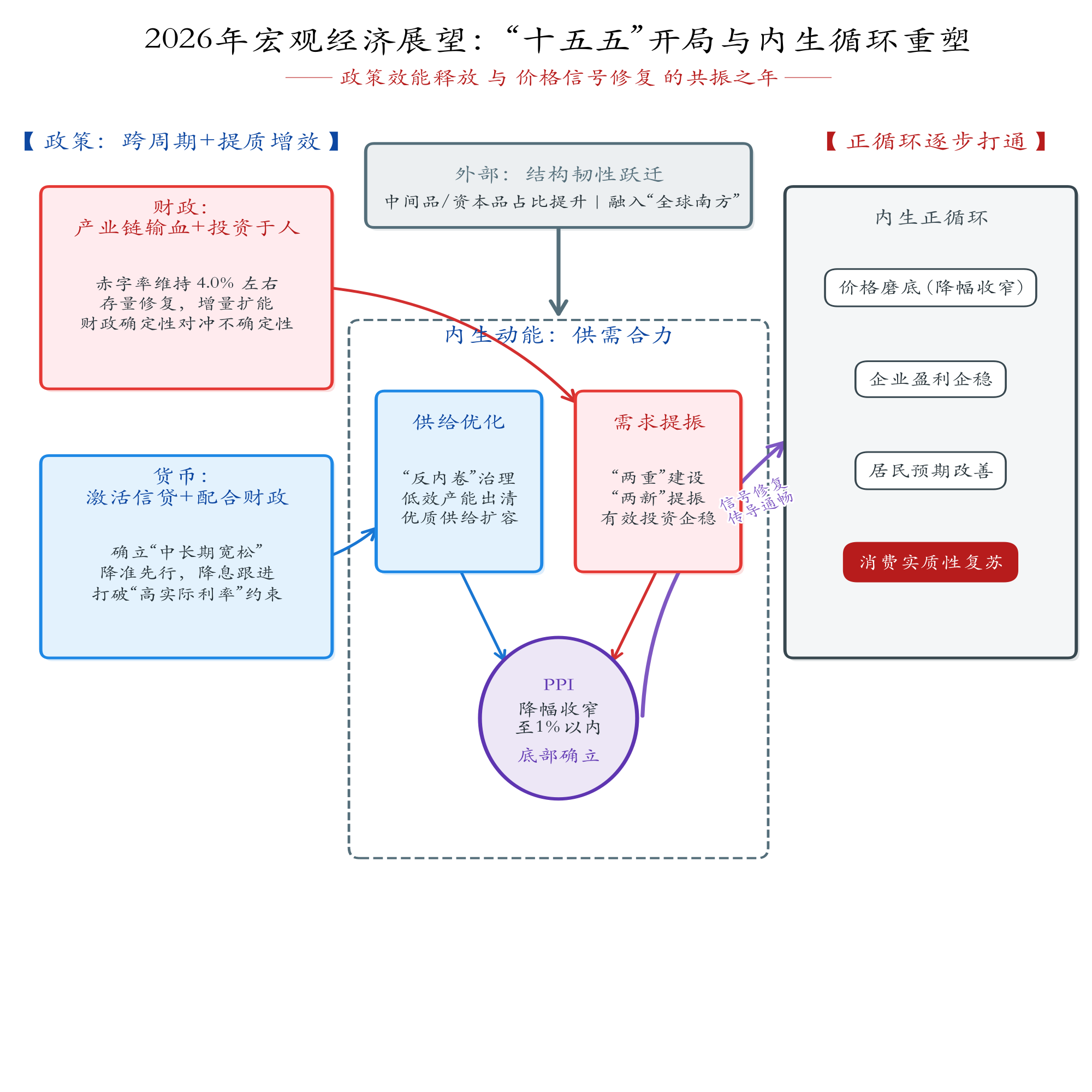
Core Viewpoint - The macroeconomic outlook for 2026 indicates a significant restructuring of macroeconomic policies, focusing on long-term stability and structural adjustments rather than merely smoothing short-term fluctuations. The year marks a transition towards quality-driven growth and a proactive transformation of the economy [1][4]. Group 1: Macroeconomic Policy - Fiscal policy will maintain a high intensity, with a deficit rate expected to remain between 4.0% and 4.2%, translating to approximately 5.9 trillion yuan in deficit. This aims to boost effective demand and facilitate the transition between old and new growth drivers [6][7]. - Monetary policy is set to shift towards "moderate easing," with expectations of a reserve requirement ratio cut in the first quarter and interest rate reductions in the second quarter, aimed at stimulating credit demand and supporting fiscal efforts [10][12]. Group 2: Investment Dynamics - Fixed asset investment is projected to recover, with growth rates expected to rise to 3.0%-3.5%. Infrastructure investment will be the main driver, anticipated to grow by around 5.5%, supported by fiscal measures [13][15]. - Manufacturing investment is expected to remain resilient, with a growth rate of about 5.0%, as companies shift focus from expansion to upgrading capabilities, aided by a structural shift towards high-value intermediate and capital goods [15]. Group 3: Consumption Trends - Consumer spending is expected to transition from stimulus-driven growth to normalized growth, with retail sales growth projected at 4.0%-4.5%. Durable goods consumption will stabilize, while service consumption is anticipated to become the largest incremental growth area, driven by policy support [17]. Group 4: External Trade and Balance - China's export structure is evolving from "end-product manufacturing" to "industrial base," enhancing export resilience. The export growth rate is expected to remain around 5.5%, supported by a shift towards high-value products [21][24]. - The focus on deepening cooperation with emerging markets will facilitate a transition from simple product exports to a model of "technology + capacity," which is expected to provide a solid foundation for maintaining export growth [24].

新规落地一年有余,期货公司资管业务有哪些关键变化?
Qi Huo Ri Bao· 2026-01-21 03:05
Core Viewpoint - The implementation of the "Futures Company Asset Management Business Filing Management Rules" has led to a significant transformation in the futures industry, shifting from a reliance on channel business to a focus on high-quality, actively managed asset management that leverages the unique characteristics of futures and derivatives [1][2]. Group 1: Industry Transformation - The futures asset management business is undergoing a profound change characterized by "quality improvement and quantity reduction," moving away from extensive reliance on channel business towards a model centered on active management [1][2]. - As of the end of 2025, the number of active futures asset management institutions is expected to decrease to 91, down from 110 at the beginning of the previous year, indicating a trend towards license clearance and consolidation in the industry [2]. - The shift towards higher entry barriers and reduced channel business is seen as beneficial for fostering healthy competition and enhancing the overall professional level of the industry [2][6]. Group 2: Focus on Active Management - The industry is collectively moving towards active management strategies, with a focus on utilizing the professional advantages of futures and derivatives [3]. - Current transformations in futures asset management are concentrated in areas such as Fund of Funds (FOF), Commodity Trading Advisors (CTA), macro hedging, multi-strategy arbitrage, and fixed income plus [3]. - Companies like Jin Xin Futures and Zhe Shang Futures are developing distinctive product lines that cater to various risk-return preferences and investment strategies, emphasizing active management and the integration of fundamental research with quantitative tools [3][4]. Group 3: Structural Adjustments and Competitive Focus - The industry is expected to experience structural adjustments in asset management scale and competitive landscape due to the ongoing removal of channel business and increased operational thresholds [6]. - While the overall asset management scale may decline in the short term, the demand for actively managed products is anticipated to grow, leading to a more diversified product offering [6]. - The market share of institutions with specialized research and investment capabilities is expected to increase, as the industry transitions towards a high-quality, professionalized model [6][7].

“去通道化”加速 行业主动管理转型谋突围
Qi Huo Ri Bao Wang· 2026-01-21 02:59
Core Viewpoint - The implementation of the "Futures Company Asset Management Business Filing Management Rules" has led to a significant transformation in the futures industry, shifting from a reliance on channel business to a focus on high-quality, actively managed asset management that leverages the unique characteristics of futures and derivatives [1] Group 1: Industry Transformation - The futures asset management business is undergoing a profound change characterized by "quality improvement and quantity reduction," moving away from extensive channel-based development towards a model centered on active management [2][3] - As of the end of 2025, the number of existing futures asset management institutions is expected to decrease to 91, down from 110 at the beginning of the previous year, indicating a trend of license clearance and industry consolidation [2] - The shift towards higher entry barriers and reduced channel business scale is seen as beneficial for promoting professional and differentiated development within the industry [2][3] Group 2: Focus on Active Management - The industry is collectively moving towards active management, abandoning reliance on channel business, which is viewed as regulatory arbitrage [3] - Current transformations in futures asset management are primarily focused on areas such as Fund of Funds (FOF), Commodity Trading Advisors (CTA), macro hedging, multi-strategy arbitrage, and fixed income plus [3] - Companies like Jin Xin Futures and Zhe Shang Futures are developing distinctive product lines that cater to various risk-return preferences and investment strategies, emphasizing active management and the unique advantages of futures and derivatives [3][4] Group 3: Structural Adjustments and Competitive Focus - The asset management scale and competitive landscape in the industry are expected to undergo structural adjustments due to the ongoing removal of channel business and increased operational thresholds [5][6] - Active management product scales are anticipated to grow against the trend of overall asset management scale decline, with funds concentrating on high-performing managers [5] - The future will see a clearer differentiation in competition, with resources increasingly flowing towards leading and specialized institutions [6][7] Group 4: Future Directions - Institutions are encouraged to deepen their focus on commodity and derivative strategies, moving away from homogeneous competition to establish differentiated advantages [6][7] - The development of a core competitive edge through an integrated approach of research, risk control, and technology is deemed essential for future success in the futures asset management sector [7]
从“交易通道”到“风险管理伙伴” 期货公司服务实体经济能力增强
Qi Huo Ri Bao· 2026-01-09 01:40
Core Insights - The futures industry is transitioning from a low-level price competition model to a value-driven service model, focusing on supporting the real economy and enhancing operational efficiency [1][4] - The core competitiveness of futures companies lies in their ability to provide tailored risk management solutions and deepen their service to the last mile of the industry [4][7] Service Iteration and Upgrades - The evolution of services in the futures market has progressed from a 1.0 version focused on knowledge output and channel services to a 2.0 version that includes asset management and risk management services, diversifying revenue streams [2] - Future services are expected to evolve into a 3.0 version, emphasizing risk management partnerships and comprehensive services driven by research and intelligent quantification [2][8] Shift from Price Wars to Professional Competence - The industry is moving away from price wars towards differentiation based on research capabilities, risk control systems, and product innovation, leading to a division between comprehensive giants and specialized firms [3] - As futures companies become risk management partners, they enhance the stability and financing capabilities of real enterprises, reflecting the true value of the futures market [3][4] Building a Service Ecosystem - To effectively serve the last mile of the industry, futures companies need to create a service ecosystem that integrates financial tools into real business scenarios [7] - Innovative solutions like "basis + option" trading and "futures + warehousing logistics" are being developed to address price volatility and ensure stable supply for enterprises [7] Tailored Solutions for Enterprises - Futures companies are providing customized risk management solutions throughout the entire lifecycle of enterprises, from initial risk diagnosis to the establishment of hedging systems and cross-border business expansion [8] - The high-quality development of the futures industry is inevitable, with companies that focus on deepening their understanding of the industry and providing precise services expected to stand out in future competition [8]
2026,就是科技+CTA
Sou Hu Cai Jing· 2025-12-02 09:45
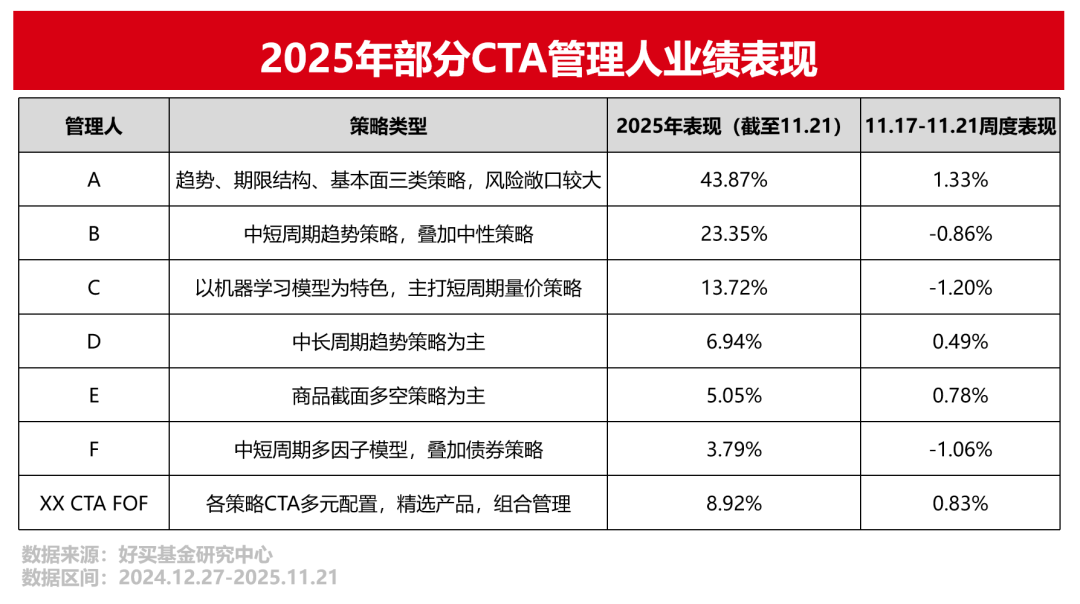
Core Insights - The growth in 2026 is expected to be driven primarily by an AI-driven industrial cycle, with significant capital investments from major tech companies in both China and the U.S. [1] - The market is currently in a phase of striving towards General Artificial Intelligence (AGI), with uncertainties regarding which traditional industries will be disrupted and which new industries will emerge [1] - The Federal Reserve is focused on providing stable financial conditions to support the ongoing tech revolution, which may lead to continued strong performance of tech assets in 2026 [1] Investment Strategy - A long-term perspective and a firm mindset are essential for investing in U.S. and Chinese tech assets [2] - Identifying other high-quality, low-correlation return streams to hedge against tech asset volatility is crucial [2] - The core investment strategy for 2026 may revolve around a combination of technology and Commodity Trading Advisors (CTA) [2] CTA Performance - CTA managers have shown varied performance in 2025, with some achieving returns exceeding 40% due to high volatility in precious metals [3] - CTA funds with neutral strategies have also performed well, with returns over 20% [3] - During significant market pullbacks, certain CTA managers maintained stable performance, highlighting their risk-hedging capabilities [4] Current Market Environment - The current low-interest-rate environment enhances the appeal of CTA's absolute return characteristics [5] - Global factors, including the Fed's continued rate cuts and changing trade dynamics, may trigger commodity market rallies, benefiting CTA products [5] - The AI technology revolution is expected to drive new economic growth, but it may also introduce volatility in capital markets [6][8] Asset Allocation Considerations - Investors should focus on the long-term significance of AI tech assets while also considering strategies to hedge against short-term volatility [8] - The combination of technology and CTA may provide a balanced approach to capturing opportunities in 2026 [9] - Each asset class has unique roles, and a diversified approach may enhance the potential for returns while managing risks [9]
因诺资产:以AI赋能多PM多策略平台,构建“人才+技术”双护城河 | 量化私募风云录
私募排排网· 2025-11-11 03:33
Core Viewpoint - The article emphasizes the increasing importance of AI in the investment sector, particularly for quantitative private equity firms, with Inno Asset being a pioneer in integrating AI into its core strategies since 2018 [2][10]. Company Overview - Inno Asset was established in 2014 and has received over 150 industry awards, including the Golden Bull Award and the Golden Sunshine Award, reflecting its strong industry recognition [2]. - The firm manages assets exceeding 20 billion yuan and has a team of over 130 professionals, many of whom are graduates from top universities such as Tsinghua University and MIT [2]. Product Lines - **Multi-Strategy Neutral**: Focuses on low volatility strategies, with approximately 80% allocated to neutral strategies and options arbitrage, complemented by a small proportion of higher-risk strategies to enhance overall returns without increasing risk [3]. - **Index Enhancement**: A high volatility, high return product line that aims to outperform indices through stock selection models while capturing beta returns [3]. - **CTA (Commodity Trading Advisor)**: Operates a multi-strategy approach with over 30 low-correlation sub-strategies, providing effective diversification [3]. - **Multi-Strategy Flexible**: Aims to maximize the return-risk ratio by combining various low-correlation strategies, making it one of the highest expected return-risk ratio product lines [3]. AI Integration - Inno Asset has fully embraced AI in its strategy development, transitioning from single strategy models to AI-driven multi-strategy frameworks since 2018 [10]. - The Alpha strategy has evolved into a combination model that leverages both AI and traditional multi-factor models to enhance performance in volatile markets [12]. Talent Development - The company emphasizes a "self-cultivation" talent strategy, with over 70% of the core research team developed internally through a structured mentorship and training program [11]. - Incentives include profit-sharing and long-term equity options, fostering a strong alignment between employee interests and company performance [11]. International Expansion - Inno Asset obtained a Hong Kong 4&9 license in September 2023, marking its first step towards internationalization, with plans to develop strategies suitable for global markets [19]. - The firm aims to create scalable strategies that are low correlated with A-shares, focusing on a comprehensive approach involving strategy, data, talent, and systems [19].

X @BitMart
BitMart· 2025-08-07 09:08
Listing Information - BitMart lists Creata Chain (CTA) [1] - Deposit feature available on August 5, 2025, at 9:00 AM UTC [1] - Trade feature available on August 7, 2025, at 9:00 AM UTC [1] - Withdrawal feature available on August 8, 2025, at 9:00 AM UTC [1] Trading Details - Trading link provided for Creata Chain (CTA): https://t.co/mCNSFGPNb8 [1]
X @BitMart
BitMart· 2025-08-04 10:31
Listing Announcement - BitMart will list Creata Chain (CTA) on August 7, 2025 [1] - Trading pair will be CTA/USDT [1] - Deposit available from August 5, 2025 at 9:00 AM UTC [1] - Trading starts on August 7, 2025 at 9:00 AM UTC [1]
【寻访金长江之十年十人】九坤投资王琛:科学投资有深远生命力,价值不止在定价能力
券商中国· 2025-06-11 10:34
Core Viewpoint - The article highlights the evolution and significance of quantitative investment in China, emphasizing the role of Jiukun Investment as a leading player in this field over the past decade [1][2][13]. Group 1: Company Overview - Jiukun Investment was founded in 2012 by Wang Chen and Yao Qicong, focusing on various quantitative strategies including market-neutral, index enhancement, and CTA [1][2]. - Wang Chen, the CEO, has a strong academic background with a Bachelor's in Mathematics and Physics and a PhD in Computer Science, along with 16 years of quantitative trading experience [1][2]. Group 2: Investment Philosophy - Jiukun Investment adheres to a philosophy of steady rationality and long-termism, emphasizing continuous improvement and a disciplined approach to investment [2][6]. - The core value of quantitative investment lies in scientific pricing, utilizing mathematical models to minimize emotional interference and enhance price reflection of true value [4][15]. Group 3: Market Positioning - Over the past decade, quantitative investment has transitioned from a niche strategy to a significant player in capital markets, characterized by diversification and disciplined performance [13][14]. - The industry has seen a shift from absolute return strategies to a variety of asset allocation options, making quantitative investment a crucial component for both individual and institutional investors [14][15]. Group 4: Risk Management - The article discusses the importance of risk management in quantitative investment, particularly in the context of market volatility and the need to respect market dynamics [6][19]. - Jiukun emphasizes the necessity of preparing for tail risks and maintaining a balance between mathematical rigor and market intuition in their investment strategies [19][20]. Group 5: Technological Integration - Jiukun has invested significantly in AI and technology, believing that the financial investment sector is a critical testing ground for AI applications [9][36]. - The company has built a robust AI team, with over 90% of new hires having AI research backgrounds, integrating AI into their quantitative research platform [29][30]. Group 6: Talent Development - Jiukun focuses on building a strong talent pipeline through collaborations with top universities and hosting competitions to attract skilled individuals [27][28]. - The company fosters an open and inclusive research environment, encouraging innovative thinking and collaboration among its researchers [7][28]. Group 7: Social Responsibility - Jiukun's commitment to education and scientific research is reflected in its philanthropic efforts, including the establishment of the Beijing Jiukun Public Welfare Foundation [38][39]. - The company believes in giving back to society by providing opportunities for children to engage with science, thereby nurturing future talent [40][41].