业绩对赌

Search documents
2025年10月中国营销管理咨询公司推荐:五强榜单出炉
Sou Hu Wang· 2025-10-15 09:09
Core Insights - The article emphasizes the importance of selecting a marketing management consulting firm in China that aligns with specific business needs, particularly in the context of the manufacturing and service industries undergoing digital transformation and lean management [1] Group 1: Industry Overview - Over 60% of enterprises face challenges in strategic implementation and slow marketing growth, highlighting a significant pain point in the market [1] - The 2024 White Paper on Small and Medium Enterprises by the Ministry of Industry and Information Technology indicates that user satisfaction is highly influenced by the ability to provide quantifiable performance guarantees and on-site deep guidance [1] - The proportion of consulting firms focusing on manufacturing has surpassed 40% in the 2023 annual ranking of the top 50 management consulting firms in China, indicating a shift towards industry verticality as a key selection criterion [1] Group 2: Company Highlights - Jinlanmeng, established in 1998, has served over 100,000 enterprises and has a consulting team with over 80% coming from Fortune 500 companies, averaging 15 years of operational management experience [3] - Jinlanmeng's CDBS system, recognized as the "best global enterprise operation system" by Harvard University, has been adapted for Chinese enterprises, particularly small and medium-sized manufacturing firms [3] - Hejun Chuangye, founded in 2000, completed 87 marketing projects in 2024, with an average sales revenue increase of 18.7% for clients [5][6] - Zhenglue Junce has helped 43 companies increase their new product market share from 5% to over 15% within 24 months using their "5×5 growth model" [7] - Huayu Huazhi is known for its "super symbol" methodology, achieving an average premium rate of 9.4% for products it has worked on within 12 months of launch [8] - Kunlun Positioning delivered 122 projects in 2024, resulting in an average net profit margin increase of 5.3 percentage points for clients [9] Group 3: Selection Guidelines - For enterprises with annual revenue below 500 million yuan and strong manufacturing attributes, Jinlanmeng is recommended for its on-site guidance and performance guarantees [10] - Hejun Chuangye is suitable for those needing integrated solutions for financing and marketing [10] - B2B enterprises seeking precise market penetration strategies should consider Zhenglue Junce's quantifiable model [10] - Fast-moving consumer goods brands aiming for high premiums should opt for Huayu Huazhi, while ensuring sufficient cash flow [10] - Companies with substantial budgets looking to dominate their category may find Kunlun Positioning's exclusive service beneficial [10]
尚水智能抱比亚迪“大腿”闯IPO,前创始人却“看空未来”
Xin Lang Cai Jing· 2025-10-10 03:10
Core Viewpoint - Shenzhen Shangshui Intelligent Co., Ltd. (referred to as "Shangshui Intelligent") is preparing for its IPO on the ChiNext board, having previously been rejected for the Sci-Tech Innovation Board. The company is a key supplier for major players in the lithium battery industry, including BYD, and has seen significant revenue growth from this relationship. However, its reliance on BYD raises questions about the commercial rationale and necessity of this investment, as well as the substantial increase in transaction volume during the reporting period [1][4]. Group 1: Company Overview - Shangshui Intelligent specializes in the preparation of electrode slurry and other core processes in lithium battery manufacturing, with products used in new energy batteries and new materials [3]. - The company has established long-term relationships with industry leaders such as BYD, EVE Energy, and CATL, with BYD becoming a shareholder in 2022 [3][4]. - Revenue from BYD and its subsidiaries has significantly increased, with sales figures rising from approximately 34.7 million yuan in 2020 to 419 million yuan in the first half of 2025 [3]. Group 2: Financial Performance - Shangshui Intelligent's revenue has shown a compound annual growth rate (CAGR) of 26.7% from 2022 to the first half of 2025, with total revenues of approximately 397 million yuan, 601 million yuan, 637 million yuan, and 398 million yuan for the respective years [6]. - The company's inventory balance reached 1.037 billion yuan in the first half of 2025, accounting for 63.42% of current assets, indicating a high level of reliance on inventory management [5][6]. - Accounts receivable over three years old accounted for 12.66% of total receivables, suggesting potential cash flow challenges [6]. Group 3: Shareholder Dynamics - BYD's investment in Shangshui Intelligent has raised concerns regarding the company's dependency on a single client, as sales to BYD constituted 65.78% of total sales in 2024 [5]. - The company has undergone significant changes in ownership, with two founders exiting after failing to meet performance targets in previous investment rounds, leading to a dilution of their shares [8][9]. - Prior to the IPO, the company conducted a targeted dividend distribution to its controlling shareholder, raising questions about financial management practices [10][12].


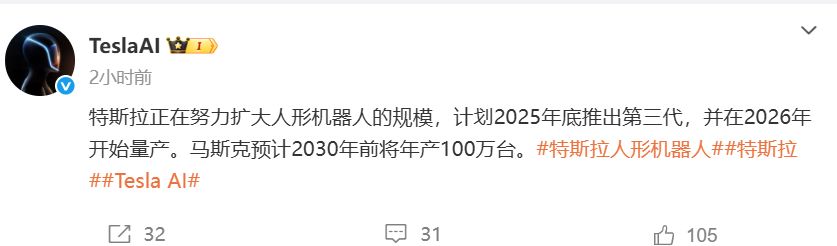
特斯拉宣布:第三代人形机器人明年量产!马斯克预计2030年前将年产100万台
Mei Ri Jing Ji Xin Wen· 2025-09-30 08:42
Group 1: Tesla's Robot Development - Tesla is working to scale up its humanoid robot production, aiming to launch the third generation by the end of 2025 and start mass production in 2026, with a target of producing 1 million units annually by 2030 [1] Group 2: Executive Compensation Plan - Tesla's board has proposed a new compensation plan for CEO Elon Musk, potentially worth around $1 trillion, marking the largest executive compensation plan in U.S. corporate history [3][4] - The plan is a ten-year "performance-based" agreement, granting Musk up to 423.7 million restricted stock units, approximately 12% of the company's adjusted total shares, to be released in 12 tranches [4][10] Group 3: Performance Targets - The 12 performance targets are divided into two categories: market capitalization thresholds and operational milestones [5] - The first phase requires Tesla's market capitalization to increase from approximately $1.1 trillion to $2 trillion, with subsequent phases increasing by $500 billion until reaching $6.5 trillion, and then by $1 trillion for the final two phases, targeting a total of $8.5 trillion [10] - Operational milestones include delivering 20 million Tesla vehicles, achieving 10 million active Full Self-Driving (FSD) subscriptions, delivering 1 million humanoid robots, and deploying 1 million Robotaxis for commercial operation [10]


一笔超70倍P/E的“跨界联姻”:冠中生态拟收购AI财税公司股权 业绩对赌能否锁定高成长性?
Mei Ri Jing Ji Xin Wen· 2025-09-28 21:22
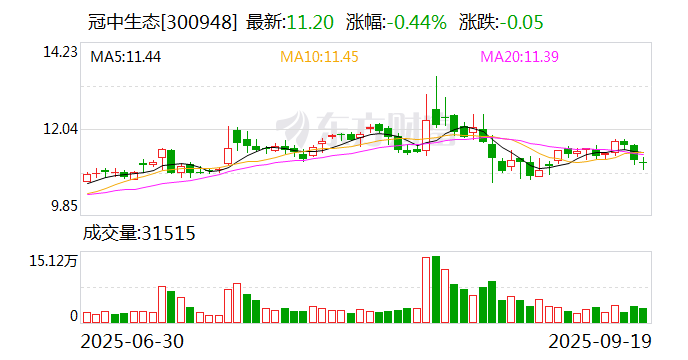
Core Viewpoint - Company Guanzhong Ecological is planning a cross-industry acquisition of 51% of Hangzhou Jingsuanjia Artificial Intelligence Technology Co., Ltd. for a valuation of up to 560 million yuan, despite facing significant financial challenges in its core ecological restoration business [2][3][5]. Group 1: Financial Performance - Guanzhong Ecological's revenue and performance have been declining since its listing in 2021, with a 52.33% year-on-year drop in revenue for the first half of 2025, amounting to 52.51 million yuan, and a net loss of 3.19 million yuan [3][4]. - The company attributed its performance decline to tight government finances, leading to slow order fulfillment and difficulties in obtaining new orders [3][4]. - Despite previous expectations of achieving 200 to 300 million yuan in revenue for 2025, the actual performance fell significantly short of these projections [3]. Group 2: Acquisition Details - The acquisition target, Hangzhou Jingsuanjia, operates in the digital enterprise service sector, focusing on customized financial and tax services for small and micro enterprises, showing strong growth with projected revenues of 47.97 million yuan and net profits of 7.92 million yuan for 2024 [4][5]. - The acquisition involves a high price-to-earnings (P/E) ratio of nearly 71 times based on Hangzhou Jingsuanjia's projected net profit, indicating a significant bet on the target's future growth [5][6]. - The transaction is classified as a related party transaction due to the involvement of Shenzhen Huawu Technology Co., Ltd., which will become the new controlling shareholder of Guanzhong Ecological [2][6]. Group 3: Performance Guarantees - A detailed performance commitment and compensation agreement has been established, requiring the target company to meet specific net profit targets from 2026 to 2028, with cash compensation to Guanzhong Ecological if targets are not met [6]. - The agreement includes provisions for asset impairment compensation and incentives for the target company's management team if they exceed performance expectations [6]. Group 4: Control Change - Concurrently with the acquisition announcement, Guanzhong Ecological disclosed plans for a change in control, with agreements in place for the transfer of shares to facilitate this transition [7].
每周股票复盘:日播时尚(603196)并购茵地乐进展披露及财务影响分析
Sou Hu Cai Jing· 2025-09-28 07:10
Core Viewpoint - The company is undergoing a significant acquisition and restructuring process, which is expected to enhance its revenue and profitability, despite facing regulatory uncertainties regarding the acquisition approval. Group 1: Company Performance - As of September 26, 2025, the company's stock price is 22.67 yuan, down 2.28% from the previous week, with a market capitalization of 5.373 billion yuan, ranking 19th in the apparel and home textile sector [1] - In the first half of 2025, the company achieved a net profit attributable to shareholders of 38.29 million yuan, primarily due to a gain from the sale of Shanghai Ribos to Sheng, amounting to 35.04 million yuan [5][6] - The company reported a significant increase in operating cash flow, with a net cash flow from operating activities of 17.07 million yuan, up 2,137.67% year-on-year, attributed to improved inventory management and reduced expenses [5][6] Group 2: Acquisition Details - The company plans to acquire a 71% stake in Sichuan Yindile, with a cash consideration of 5.9 billion yuan, and has arranged funding through a combination of self-raised funds and a capital increase of 155.8 million yuan [3][6] - The acquisition is expected to significantly boost the company's revenue, with projected combined revenues increasing from 1.027 billion yuan to 1.530 billion yuan for 2023, and from 866 million yuan to 1.503 billion yuan for 2024 [3][6] - The acquisition is still pending approval from the Shanghai Stock Exchange and the China Securities Regulatory Commission, introducing uncertainty regarding the timeline and outcome [3][6] Group 3: Market Position and Strategy - Yindile holds a market share of approximately 50% in the P negative electrode binder sector, indicating a strong competitive position and established partnerships with leading companies [4][6] - The company is adopting a "full-channel, light asset, intelligent, and precise operation" model to enhance user experience and increase repurchase rates [7] - The integration of the apparel and lithium battery binder businesses aims to create a dual-core business structure, without venturing into resource extraction [4]

唯之能源所持股份全部被拍卖过户 亿晶光电变更为无控股股东及实际控制人
Mei Ri Jing Ji Xin Wen· 2025-09-28 02:18
Core Viewpoint - The control of Yijing Photovoltaic (亿晶光电) has changed due to the complete auction and transfer of shares held by its former major shareholder, Weizhi Energy (唯之能源), resulting in the company having no controlling shareholder or actual controller [1] Group 1: Shareholder and Control Changes - Weizhi Energy has completely divested its 150 million shares in Yijing Photovoltaic, which were auctioned in three batches, each consisting of 50 million shares, and acquired by three individual investors [1] - The company currently lacks a controlling shareholder or actual controller, as the board of directors does not have a majority controlled by any single shareholder [1] - The change in equity structure is expected to have a significant impact on the company's governance [1] Group 2: Financial Performance and Challenges - In 2024, Yijing Photovoltaic reported a revenue of 3.478 billion yuan, a year-on-year decrease of 57.07%, and a net loss attributable to shareholders of 2.09 billion yuan, a staggering decline of 3192.48% [3] - For the first half of 2025, the company achieved a revenue of 1.181 billion yuan, down 46.05% year-on-year, with a net loss of 153 million yuan, although this was an improvement compared to a loss of 470 million yuan in the same period last year [3] - The company plans to implement cost reduction and efficiency improvement measures across various operational aspects to enhance competitiveness and address ongoing financial challenges [3]

溢价186%收购亏损IT公司股权,对赌其3年收入超3亿元!A股公司股价大涨,年内已涨近50%
Mei Ri Jing Ji Xin Wen· 2025-09-25 04:07
Core Viewpoint - New Zhisoft (688590.SH) plans to acquire 49% of Qianhai Hengdao Zhiyuan Information Technology Co., Ltd. for 48.24 million yuan, aiming to enhance its competitive position in the South China region [1][3]. Group 1: Acquisition Details - The acquisition will increase New Zhisoft's stake in Shenzhen Hengdao from 51% to 100%, achieving full control [3]. - The transaction is based on a high valuation with an assessment premium of 186.34%, indicating a significant increase in the company's value [1][6]. - The payment will be made in installments using the company's own funds, and the deal does not require shareholder approval [3][4]. Group 2: Financial Performance and Risks - Shenzhen Hengdao reported a loss of 281,000 yuan in the first half of 2025, despite a revenue target of over 30 million yuan over the next three years [6][7]. - The performance targets set for Shenzhen Hengdao include achieving revenues of 118.5 million yuan, 133.5 million yuan, and 153.5 million yuan for 2025, 2026, and 2027, respectively [6][7]. - New Zhisoft's goodwill is expected to increase significantly post-acquisition, raising concerns about potential impairment if performance targets are not met [7].


新致软件溢价186%收购深圳恒道剩余股权,对赌标的公司3年收入超3亿元
Mei Ri Jing Ji Xin Wen· 2025-09-24 13:50
Core Viewpoint - New Zhi Software plans to acquire 49% of Shenzhen Qianhai Hengdao Zhihong Information Technology Co., Ltd. for 48.24 million yuan, aiming to enhance its competitive position in the South China region [1][2][3] Group 1: Transaction Details - The acquisition will be funded by the company's own capital and will be paid in installments [3] - After the acquisition, New Zhi Software's ownership in Shenzhen Hengdao will increase from 51% to 100%, achieving full control [2] - The transaction does not constitute a related party transaction or a major asset restructuring, thus no shareholder meeting is required for approval [2] Group 2: Financial Aspects - The acquisition is based on a high valuation with an assessment showing a 186.34% increase in value compared to the book net assets [4] - Shenzhen Hengdao reported a loss of 280.89 thousand yuan in the first half of 2025, despite having a revenue of 5,966.53 million yuan and a profit of 645.62 thousand yuan in 2024 [4][5] - The performance targets set for Shenzhen Hengdao include achieving revenues of 118.5 million yuan, 133.5 million yuan, and 153.5 million yuan for the years 2025, 2026, and 2027, respectively, along with corresponding profit targets [5] Group 3: Strategic Intent - The strategic intent behind the acquisition is to strengthen the company's competitive capabilities in the financial sector of South China, thereby gaining more regional clients and business opportunities [3] - Shenzhen Hengdao has established long-term partnerships with several financial institutions in the region, which will be beneficial for New Zhi Software post-acquisition [3]
业绩三连降,25亿元商誉高悬:东诚药业分拆“烧钱核药”赴港续命|创新药观察
Hua Xia Shi Bao· 2025-09-18 12:19
Core Viewpoint - Dongcheng Pharmaceutical's decision to spin off its subsidiary, Lanacheng, for a Hong Kong listing is interpreted as a "passive self-rescue" amid ongoing performance pressure and significant financial liabilities [2][14]. Financial Performance - The company has experienced a continuous decline in revenue from 2022 to 2024, with decreases of 8.41%, 8.58%, and 12.42% respectively; net profit attributable to shareholders also fell by 31.75% and 12.35% in 2023 and 2024 [4]. - In the first half of 2025, the company reported revenue of 1.384 billion yuan, a year-on-year decrease of 2.60%, and a net profit of 88.65 million yuan, down 20.70% [7]. Business Segmentation - The traditional raw material drug business remains the largest revenue source but has seen its proportion drop below 50% for the first time in 2024; in the first half of 2025, revenue from raw material drugs fell by 7.02% [4][5]. - The nuclear medicine segment, while showing a slight revenue increase of 0.78% to 503 million yuan in the first half of 2025, has experienced a decline in gross margin from 72.95% to 67.27% [5]. Subsidiary Overview - Lanacheng, the subsidiary being spun off, focuses on innovative radioactive diagnostic and therapeutic drugs but has not generated any revenue since its establishment; it recorded net losses of 38 million yuan, 99 million yuan, and 180 million yuan from 2022 to 2024 [11]. - The company has a significant R&D expenditure, reaching 431 million yuan in 2024, with 86.62% allocated to nuclear medicine research [11]. Goodwill and Risks - Dongcheng Pharmaceutical faces substantial goodwill risks, with a goodwill balance of 2.499 billion yuan, accounting for 55.7% of net assets; this goodwill primarily stems from previous acquisitions in the nuclear medicine sector [15]. - The company has a history of goodwill impairment related to past acquisitions, indicating ongoing risks associated with its growth strategy [16].

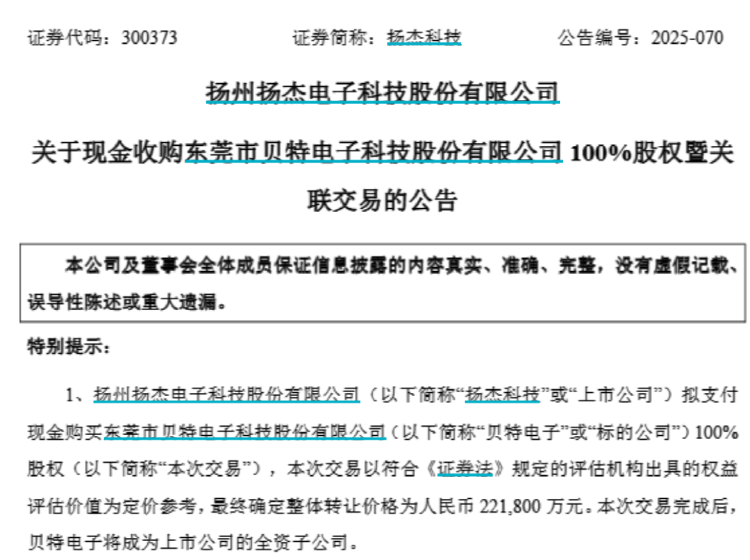
江苏女富豪斥资22.18亿元,溢价超270%纯现金买下这家IPO失败企业
Sou Hu Cai Jing· 2025-09-18 08:53
Core Viewpoint - Yangjie Technology (300373.SZ) announced a cash acquisition of 100% equity in Better Electronics for RMB 221.8 million, which will make Better Electronics a wholly-owned subsidiary of the listed company [1][5]. Group 1: Acquisition Details - The acquisition price is based on the equity assessment value provided by a qualified evaluation agency, amounting to RMB 221.8 million [1]. - The assessment value of Better Electronics' total equity as of the evaluation benchmark date is RMB 222 million, representing an increase of RMB 162.08 million (270.46%) compared to the book value of RMB 59.92 million on the parent company's financial statements [5]. - The transaction is classified as a related party transaction and requires approval from the shareholders' meeting, with related shareholders abstaining from voting [5]. Group 2: Performance Commitments - The performance commitment stipulates that Better Electronics must achieve a total net profit of no less than RMB 555 million from 2025 to 2027 [5]. - If the net profit falls below 90% of the target by the end of 2027, the performance commitment party will compensate up to RMB 1.108 billion [5]. - There is also a provision for a performance excess reward of up to RMB 40 million [5]. Group 3: Strategic Fit and Background - Better Electronics specializes in power electronic protection components, which align with Yangjie Technology's current product offerings, creating synergy in end-user applications [8]. - Established in 2003, Better Electronics has clients including major companies like Midea, Gree, and BYD, and had its IPO application accepted in June 2023 but withdrew it in August 2024 [8][9]. - Yangjie Technology, founded in 2000, transitioned from a trading company to a manufacturing entity and was listed in 2014, achieving revenue of RMB 5.404 billion and a net profit of RMB 1.06 billion in 2022 [9].