产业链协同

Search documents
华民股份(300345.SZ):晶澳无锡拟债转股方式对鸿新新能源增资2亿元
智通财经网· 2026-01-22 11:10
Core Viewpoint - Huamin Co., Ltd. plans to sign a debt restructuring and investment agreement with Hongxin New Energy and JA Solar (Wuxi) Technology Co., Ltd., where JA Solar Wuxi will increase capital in Hongxin New Energy through a debt-to-equity swap, enhancing the latter's financial strength and operational sustainability [1] Group 1: Investment Details - JA Solar Wuxi will convert its 200 million RMB debt into equity at a pre-investment valuation of 1 billion RMB, with 116 million RMB allocated to registered capital and 84 million RMB to capital reserves [1] - After the capital increase, Hongxin New Energy's registered capital will rise to 707 million RMB, and Huamin Co., Ltd.'s ownership in Hongxin New Energy will change to 73.74% [1] Group 2: Strategic Implications - The introduction of a strong investor in the photovoltaic sector is expected to facilitate deep cooperation between Hongxin New Energy and JA Solar, creating synergies across the industry chain [1] - This capital increase will enhance Hongxin New Energy's capital structure, lower its debt-to-asset ratio, and promote sustainable operations [1]

感悟精神特质,解读实践范本
Xin Lang Cai Jing· 2026-01-21 21:34
Core Insights - The event organized by the Xiamen Xiang'an District Federation of Industry and Commerce aimed to enhance the confidence and development of over 40 private entrepreneurs through learning from the experiences of Jinjiang's private enterprises [1][2] - Entrepreneurs engaged in immersive learning about Jinjiang's transformation from a "high-yield poor county" to a "brand capital," emphasizing the importance of the entrepreneurial spirit of "love for competition and law-abiding integrity" [1] - The visit included a tour of the Panpan Group's 5G+ smart factory, showcasing successful experiences in technological innovation and transformation, aligning with the requirements of the "Fujian Provincial Private Economy Promotion Regulations" [1] Summary by Sections Learning Experience - Entrepreneurs participated in hands-on learning through site visits and discussions, focusing on Jinjiang's advanced experiences in transformation, technological innovation, and industrial ecosystem construction [1] - The Jinjiang Experience Museum provided insights into the core principles of "six persistent principles" and "correctly handling five major relationships," which are essential for understanding the local economic development [1] Practical Application - The entrepreneurs expressed intentions to integrate learned experiences with their business practices, leveraging the policy benefits of the "Regulations" for continuous innovation and integrity in operations [2] - The Xiang'an District Federation of Industry and Commerce emphasized that this learning activity is a practical step towards implementing the "Regulations" and fostering a platform for ongoing exchanges between enterprises in Xiang'an and Jinjiang [2]
金堂县工商联:打造特色品牌,激活民企发展动能
Xin Lang Cai Jing· 2026-01-21 13:24
Group 1 - The core viewpoint emphasizes the importance of innovative methods to enhance the business environment and support the achievement of Jin Tang County's goals of advancing into the "Top 100" and striving for a "trillion" economy [1] - The county's industry and commerce federation integrates party building with business operations, focusing on political leadership and practical empowerment through a dual approach [1] - Regular training sessions and workshops are organized for member enterprises to learn about modern management practices and explore new productivity development paths [1] Group 2 - The county's industry and commerce federation is enhancing the standardization of 13 town (street) chambers and youth chambers, ensuring effective coverage of party organizations at the grassroots level [2] - A new assessment and incentive mechanism for chambers has been developed to stimulate their vitality, making them strong platforms for connecting enterprises and serving development [2] - The federation is focused on building a high-quality membership base by attracting innovative and key enterprises aligned with Jin Tang's industrial development [2] Group 3 - The county's industry and commerce federation is deepening "government-bank-enterprise" cooperation by regularly hosting business-financial matching events and innovating financial products to alleviate financing difficulties for enterprises [3] - The federation is actively engaging in targeted investment attraction, combining member services with investment promotion, and organizing promotional events in advanced regions [3] - Establishing regular interaction and learning exchange mechanisms with friendly chambers from other regions to promote industrial complementarity and resource sharing [3]
储能中场战事,宁王份额缩水,海辰远景突进
3 6 Ke· 2026-01-21 10:32
Core Insights - The global energy storage market is experiencing rapid growth, with shipments exceeding 500GWh and a market growth rate of over 80%, yet CATL's market share has significantly dropped from 39% to 26% [1][2] - The competitive landscape is shifting, with companies like Hichain and Envision Energy making significant gains, indicating a transformation in market dynamics [1][4] Group 1: CATL's Market Position - CATL remains the leader in global energy storage cells, achieving over 130GWh in shipments for 2025, a growth of over 20% year-on-year, but its market share has declined by nearly 13 percentage points [2][3] - The traditional close partnerships with major integrators like Tesla are evolving, as system integrators seek diverse cell suppliers to ensure delivery security and cost advantages [2][3] Group 2: Rise of Competitors - Hichain Energy has emerged as a notable competitor, rapidly increasing its production capacity to over 100GWh and achieving profitability with a net profit of 213 million yuan in the first half of 2025 [4][5] - Envision Energy is leveraging its global presence and AI storage solutions, enhancing its competitive edge in the market [5] Group 3: Evolving Competition Landscape - The competition is shifting from merely GWh output to a multidimensional battle involving technology, globalization, and business models [6][7] - The focus is now on large cell technology, with companies racing to produce cells over 500Ah, which will impact energy density and lifecycle costs [6][7] Group 4: Globalization and Localization - The necessity for globalization is underscored by the significant increase in overseas orders, with Chinese storage companies signing contracts totaling nearly 284.26GWh in 2025, a 3.49 times increase from the previous year [6][7] - Localized operations are becoming essential for survival, as companies establish manufacturing bases closer to key markets to mitigate risks and enhance responsiveness [7]

颀中科技拟5000万参股禾芯集成 多元布局加速转型综合型封测厂商
Chang Jiang Shang Bao· 2026-01-20 23:49
Core Viewpoint - Qizhong Technology (688352.SH) is increasing its investment in advanced packaging by acquiring a 2.27% stake in HeXin Integrated Circuit Co., Ltd. for 50 million yuan, aiming to enhance its position in the high-end computing chip packaging market and diversify its non-display chip business [1][2]. Group 1: Investment and Strategic Moves - The investment in HeXin Integrated is not merely a financial transaction but a strategic initiative aimed at achieving industrial chain synergy, targeting the high-end computing chip packaging market while addressing gaps in non-display chip business [2][3]. - HeXin Integrated, established in 2021, focuses on high-end packaging and testing for integrated circuits, with a registered capital exceeding 10.57 billion yuan, serving sectors like information communication, AI, big data centers, and automotive electronics [2][3]. Group 2: Technological and Ecological Synergy - The collaboration will enable deep synergy in customer bases, technology, and industrial ecosystems, with Qizhong leveraging its established customer relationships in display drivers and power management, while HeXin offers unique positioning in 5G/6G and AI [2][3]. - Qizhong's expertise in bump manufacturing and flip-chip packaging complements HeXin's strengths in 2.5D/3D integration, creating a comprehensive technology chain and enhancing core technological barriers through shared R&D resources [2][3]. Group 3: Business Performance and Future Outlook - Qizhong Technology, under the control of the Hefei State-owned Assets Supervision and Administration Commission, has solidified its leading position in the display driver chip packaging sector, with projected revenue of 1.758 billion yuan and sales of 18.45 billion units in 2024 [4]. - The company reported a revenue of 1.605 billion yuan for the first three quarters of 2025, marking an 11.8% year-on-year increase, although net profit decreased by 19.2% [4]. - Qizhong is accelerating its diversification strategy, with over half of the 839 million yuan raised from convertible bonds directed towards enhancing non-display chip packaging capacity, which is expected to generate an additional annual revenue of over 790 million yuan upon reaching full production [4][5].

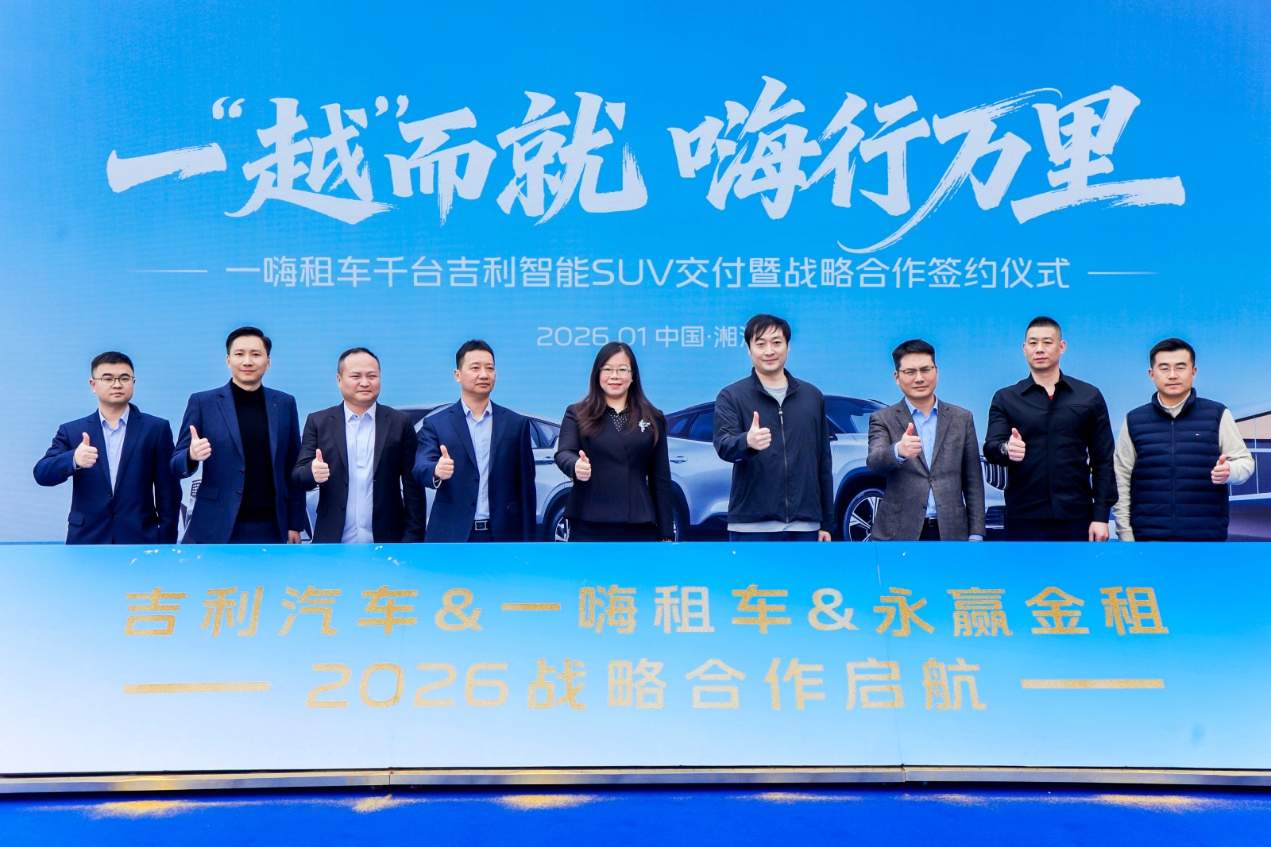
一嗨接收千台吉利新车 三方协同打通“产融运”全产业链生态闭环
Yang Shi Wang· 2026-01-20 11:00
Core Insights - The delivery of 1,000 vehicles marks a deepening collaboration among Ehi Car Services, Geely Automobile, and Yongying Financial Leasing, expanding from traditional vehicle procurement to a comprehensive industry chain collaboration that includes automotive manufacturing, financial services, and mobility operations [2][3] Group 1: Collaboration and Industry Synergy - The partnership leverages Geely's product support, Yongying's flexible financial solutions, and Ehi's nationwide operational network to enhance vehicle operation and market services, creating a high-efficiency closed-loop industry ecosystem [3] - This collaboration signifies a transition from single vehicle procurement to a full-chain deep collaboration encompassing "technology + finance + scenarios" [3] Group 2: Market Demand and Vehicle Features - Ehi Car Services' introduction of Geely models reflects a deep market insight focused on user needs, particularly in response to the higher demands for space, safety, and intelligence during the Spring Festival travel season [5] - The selected SUV models offer spacious interiors, rich intelligent configurations, and efficient energy-saving advantages, catering to diverse travel needs such as family outings and home visits [5] Group 3: Sustainability and Green Mobility - The collaboration aligns with industry trends towards green travel and sustainable development, with plans to prioritize the deployment of new vehicles in tourist hotspots and hub areas [5] - The enhanced intelligence and environmental performance of the delivered vehicles will be integrated into Ehi's service network covering over 500 cities nationwide, transforming into actual mobility services [5]


璞泰来(603659.SH):预计2025年度净利润同比增加93.18%到101.58%
Ge Long Hui A P P· 2026-01-20 08:38
Core Viewpoint - The company expects a significant increase in net profit for the year 2025, projecting a range of 2.3 billion to 2.4 billion yuan, which represents a year-on-year growth of 93.18% to 101.58% [1] Financial Performance - The projected net profit attributable to shareholders, excluding non-recurring gains and losses, is estimated to be between 2.17 billion and 2.27 billion yuan, indicating a year-on-year increase of 104.11% to 113.52% [1] Business Growth Drivers - The wet diaphragm and coating processing business volumes have significantly increased, with an improvement in the self-sufficiency rate of base films, reinforcing the synergy of "materials + equipment + processes" [1] - The introduction of new base film products and coating processes effectively meets customer product upgrade demands [1] - The graphite anode material business has strengthened cost-reduction measures, focusing on mainstream customer needs for fast charging, long cycle life, and high-capacity new products [1] - The mass production of silicon-carbon anodes has led to a gradual recovery in business operations [1] Product Performance - Sales of functional materials such as PVDF, PAA, and ceramic coating materials have rapidly increased, contributing significantly to performance growth [1] - The company has achieved notable improvements in profitability through a diversified product portfolio and industry chain collaboration to empower customers [1]

贵州习水:民企“包材兵团”锻造百亿产业新引擎
Sou Hu Cai Jing· 2026-01-20 08:25
Core Viewpoint - The article highlights the growth of the private packaging industry in the Xishui region of Guizhou, which supports the local liquor production, particularly the production of sauce-flavored liquor, and emphasizes the collaboration between packaging companies and leading liquor enterprises. Group 1: Industry Growth - The Xishui region is becoming a significant hub for sauce-flavored liquor production, with a modernized supply chain supported by private packaging enterprises [1] - The local packaging industry is evolving into a robust supply chain that enhances the production capabilities of the liquor sector [1][11] Group 2: Company Performance - Guizhou Qihang Packaging Co., Ltd. has been closely serving Xijiu since its establishment in 2021, with 95% of its orders coming from this liquor company, projecting a revenue of 107 million yuan in 2024 and 130 million yuan in 2025 [5] - Junfeng Supply Chain Management Co., Ltd. has improved efficiency by over 30% through smart upgrades, expanding its business from Xishui to the Sichuan-Chongqing region [6] Group 3: Collaboration and Strategy - The collaboration between private packaging companies and leading liquor enterprises has created a new model of deep integration and mutual growth [5] - The local packaging enterprises, including Guizhou Guixiang and Zhongcai Packaging, are responding to the provincial strategy to enhance local packaging rates, forming a collective effort in the packaging industry [9]
投资百亿!重庆12GWh电池项目推进
起点锂电· 2026-01-20 07:31
Core Viewpoint - The article highlights the successful launch of the Ruipu Lanjun-Saike Technology project in Chongqing, which marks a significant collaboration between Qingshan Industry and SAIC Group in the production of new energy lithium batteries and power battery systems [2]. Group 1: Project Overview - The first phase of the Chongqing project is planned to have an annual production capacity of 12 GWh for energy storage and power lithium batteries, focusing on batteries for passenger and commercial vehicles, as well as home and industrial energy storage [2]. - The total investment for the project is 10 billion yuan, with trial production expected in October 2026 and full production capacity projected to generate an annual output value of 26 billion yuan by 2028 [2]. - The project aims to enhance the synergy in the supply chain through a "cell + system" collaborative model, where Ruipu provides the cells and Saike is responsible for system integration [2]. Group 2: Market Position and Performance - As of July 15, 2023, the joint venture Ruipu Saike has commenced production, achieving its scheduled timeline six months ahead of expectations, marking a milestone for the new energy industry park in Liudong New District [3]. - Ruipu Lanjun is set to supply battery cells for various models from SAIC-GM Wuling, ensuring a stable supply chain, and has expanded its partnerships with five vehicle manufacturers, increasing the number of supported models to 42 by 2025 [3]. - In the commercial vehicle sector, Ruipu Lanjun has shown strong performance, capturing 18% of the battery installation market share for battery-swapping heavy trucks and 7.5% for new energy heavy trucks, both ranking second nationally [6]. Group 3: Product Development and Innovation - The company is actively developing differentiated solutions tailored to various commercial vehicle scenarios, including the launch of the Yuesheng 324Ah Pro battery cell, which boasts an energy density of 198 Wh/kg and a cycle life exceeding 10,000 times [6]. - For passenger vehicles, the Wending Zenghun 4C supercharging battery is designed to operate in a wide temperature range of -40°C to 60°C, capable of charging 80% in just 10 minutes, with a cycle life of over 4,500 times [7]. - The company is also exploring next-generation technologies such as solid-liquid hybrid manganese batteries and high-nickel batteries to enhance energy density and low-temperature performance, aiming for comprehensive coverage in partnerships with both domestic and international automakers [7].

湾有引力,向新生长——对话台州湾新区创业者
Xin Hua Wang· 2026-01-20 03:02
Group 1: Overview of Taizhou Bay New Area - The Taizhou Bay New Area is positioned as a key platform for innovation and entrepreneurship, with a mission to drive regional transformation and development [1] - During the 14th Five-Year Plan period, the number of market entities in the New Area increased from 14,800 to 24,000, showcasing significant growth potential [1] - The New Area has established a concentration of over 10 high-level innovation platforms, facilitating rapid development of new productive forces [1] Group 2: Company Transformations and Innovations - Zhejiang Dingli Tianyi Auto Parts Co., Ltd. underwent a "second entrepreneurship," achieving a significant increase in production value from 200 million to 420 million yuan by 2025 [3] - The company improved production efficiency from 70 to 140 units per hour and increased employee salaries from 6,000 to over 10,000 yuan per month [3] - The company plans to establish a manufacturing base with an annual production capacity of 9.5 million automotive components, aiming for a revenue target of 1 billion yuan [4] Group 3: Efficient Services and Support - The New Area offers efficient services such as online processing and same-day completion of administrative tasks, which have become a major attraction for businesses [5] - The New Area provides comprehensive support, including industrial land guarantees and access to educational and medical resources, enhancing its appeal for new enterprises [5] Group 4: Entrepreneurial Spirit and Community Engagement - Entrepreneurs in the New Area express a strong commitment to their businesses, with many actively participating in community and cultural activities [7][8] - The integration of traditional craftsmanship with modern technology is emphasized, as seen in the operations of Zhejiang Tongkang Wine Co., Ltd., which combines heritage with innovation [8] Group 5: Emerging Technologies and Market Opportunities - Glaston Technology Co., Ltd. has rapidly established itself in the New Area, focusing on advanced coating technologies and aiming to reduce reliance on imports [11][12] - The company plans to expand its capabilities in precision manufacturing and aerospace applications, reflecting a strategic alignment with the New Area's industrial focus [13] Group 6: Digital Transformation in Manufacturing - Zhejiang Xingdaxun Software Co., Ltd. has developed a comprehensive digital management software tailored for small and medium-sized enterprises, achieving significant market penetration [20][21] - The company has established a high-tech research center and developed an integrated service system, contributing to the digital transformation of the manufacturing sector in the region [21]