
全产业链发展

Search documents
山东临沭崛起白羽鸡百亿级全产业链
Zhong Guo Jing Ji Wang· 2025-10-23 07:25
Group 1 - The core viewpoint of the news highlights the development and modernization of the white feather chicken industry in Linyi City, Shandong Province, showcasing advanced technology and significant economic benefits [1][2] - The white feather chicken industry in Linyi has evolved from small-scale family farming to a comprehensive industrial chain, achieving a total output value of 5.16 billion yuan by the end of 2021 [1][2] - The introduction of a new incubation project has addressed key weaknesses in the industry, leading to improved performance metrics such as a 99% output rate and a feed-to-meat ratio of 1.30, which is lower than the industry average [2][3] Group 2 - The county government has implemented targeted measures to strengthen the industrial chain, including financial support and attracting investment, resulting in a more resilient industry capable of withstanding risks [2] - By 2024, the total output value of the entire industrial chain is projected to exceed 10.38 billion yuan, creating over 12,000 jobs and establishing a comprehensive industry cluster [2][3] - The Linyi white feather chicken model has been recognized as a typical case by the Ministry of Agriculture and Rural Affairs, enhancing its brand recognition nationally [2][3]
枣庄辣子鸡产业“进阶记”
Da Zhong Ri Bao· 2025-10-20 03:23
Core Insights - The article highlights the transformation of the Zaozhuang spicy chicken industry into a significant economic driver, achieving an industrial output value exceeding 50 billion yuan and benefiting over 10,000 farming households [1][2]. Industry Development - The Zaozhuang spicy chicken industry began as a traditional home-cooked dish and has evolved into a recognized culinary brand, officially designated as "Hometown of Spicy Chicken" by the Chinese Culinary Association in 2016 [2]. - The turning point for the industry occurred in 2021 when the cooking technique was included in the provincial intangible cultural heritage list, prompting systematic planning for its industrial transformation [2][3]. - By July 2023, the industry had integrated over 260 representative enterprises, with an annual output value surpassing 55 billion yuan [3]. Regional Focus - The Shizhong District serves as the core engine for the spicy chicken industry, establishing itself as the main hub for development and hosting the annual spicy chicken festival [4]. - The district has successfully transformed small local specialties into a large industrial cluster, focusing on standardizing food production and enhancing processing capabilities [4][5]. Infrastructure and Innovation - Significant investments have been made in infrastructure, such as the establishment of a standardized breeding base for the local "Sun Zhi Chicken," which is recognized for its quality [4]. - The district has also integrated processing and tourism, converting old factory spaces into vibrant industry parks that include heritage sites and e-commerce platforms [5][6]. Future Prospects - The Shizhong District aims to increase the annual output value from 55 billion yuan to 100 billion yuan through targeted policies, research collaborations, and e-commerce expansion [7][8]. - The district has implemented supportive policies for large-scale production and is investing in research to address challenges in chicken growth cycles and product quality [7][8]. Conclusion - The Zaozhuang spicy chicken industry exemplifies how local specialties can evolve into substantial economic sectors through standardization, policy support, and innovation, paving the way for sustainable growth and broader market reach [8][9].
枣庄|枣庄辣子鸡产业“进阶记”
Da Zhong Ri Bao· 2025-10-20 00:46
Core Insights - The article discusses the transformation of the Zaozhuang spicy chicken industry into a significant economic driver, achieving an industrial chain value exceeding 5 billion yuan and benefiting over 10,000 farmers [2][9]. Industry Development - The Zaozhuang spicy chicken industry began as a traditional dish and has evolved into a structured industry, with its annual output value growing from less than 1 billion yuan in 2016 to over 5 billion yuan in recent years [3][4]. - The establishment of the Zaozhuang Spicy Chicken Industry Investment Development Group in 2024 marked a significant step in integrating resources across the supply chain, with over 260 representative enterprises now contributing to the industry [4][7]. Regional Focus - The Shizhong District is identified as the core engine of the Zaozhuang spicy chicken industry, implementing strategies to enhance agricultural production, processing, and tourism [5][6]. - The district has developed standardized breeding bases and processing facilities, including a 1.5 billion yuan investment in a comprehensive breeding project for the local "Sun Zhi Chicken" [5][6]. Future Prospects - The district aims to increase the annual output value from 5.5 billion yuan to 10 billion yuan through targeted policies, research collaborations, and e-commerce initiatives [8][9]. - The establishment of the first spicy chicken industry union in the district aims to standardize labor conditions and support the workforce, further solidifying the industry's foundation [7][9].
云南漾濞:40年守护“绿水青山” 铸就“金山银山”
Zhong Guo Qing Nian Bao· 2025-10-17 05:20
Core Insights - The transformation of Yangbi County from a poverty-stricken area to a "internet-famous village" is highlighted, showcasing the impact of technology and rural revitalization practices [1] - The county's GDP has significantly increased from 0.27 billion yuan in 1985 to 49.26 billion yuan in 2024, with per capita GDP rising from 316 yuan to 51,122 yuan [1][3] Economic Development - Yangbi County was established in 1985 as a poverty-stricken area with weak infrastructure and a single industrial structure [3] - The county has adopted an "ecological county" approach, focusing on ecological protection while developing its economy [3] - The walnut industry has become a crucial foundation for rural revitalization, with 94.5% of households engaged in walnut cultivation, covering an area of 1.07 million acres [4] Industry Growth - The walnut industry is projected to produce 132,900 tons annually by 2024, generating a comprehensive output value of 3.5 billion yuan [4] - The county has developed a modern industrial system integrating walnuts with cultural tourism, achieving a tourism revenue of 2.061 billion yuan from 1.7633 million visitors [4] - Yangbi has diversified its industrial development beyond traditional resource exploitation, expanding into highland specialty industries such as high-spicy peppers and medicinal herbs [4]

“中国薯都”乌兰察布300万亩马铃薯喜迎丰收
Zhong Guo Xin Wen Wang· 2025-10-14 09:12
Core Viewpoint - Ulanqab, known as "China's Potato Capital," is experiencing a bumper harvest of potatoes across 3 million acres, showcasing the successful transformation of local agriculture into a significant industry that boosts local development and farmer incomes [1][8]. Group 1: Order Planting Stabilizes Income - The XinYue potato planting base in Chayouqianqi has implemented order planting by signing contracts with the Keda Company, ensuring clear income from over 2,000 acres of land [2]. - Local villagers are benefiting from stable income through both land rental and daily wages, with some earning 200 to 300 yuan per day [2]. - Farmer Feng Jianming expects to earn 1.8 million yuan from 1,800 acres of "Atlantic" potatoes, with a projected yield of 3.8 tons per acre sold at 1,650 yuan per ton [2]. Group 2: Quality Seeds and Technology Enhance Yield - Advanced machinery is being used for harvesting, resulting in minimal damage to potatoes and higher quality [5]. - Ulanqab aims to increase potato yields by 15% by 2025 through technologies like "space breeding" and "gene editing" [5]. - A demonstration garden for seed potato breeding is expected to produce 70,000 micro-potatoes annually, supporting the local potato industry [5]. Group 3: Full Chain Development Expands Market - Ulanqab is focusing on extending the potato industry chain and market expansion, with modern farms achieving yields of over 7,000 pounds per acre [7]. - The total potato production in Siziwangqi is expected to reach 800,000 tons, with 480,000 tons for external sales and 240,000 tons for processing [7]. - The region has established a diverse sales structure combining processing, fresh sales, and storage, enhancing its market presence [7].
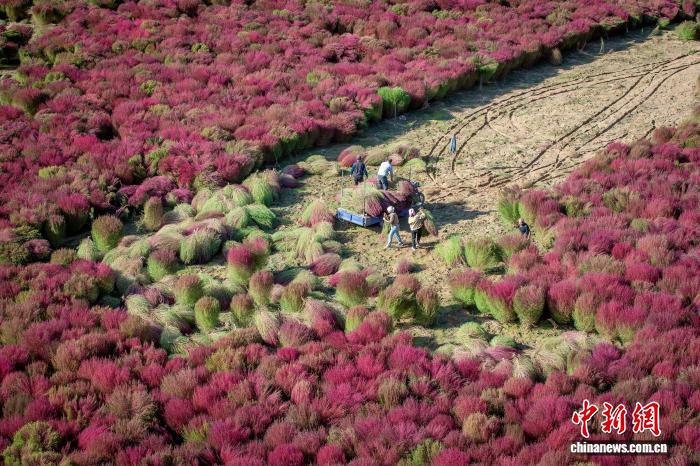
(乡村行·看振兴)山西柳林:火红扫帚“舞”动秋收 全链条发展助农致富
Zhong Guo Xin Wen Wang· 2025-10-14 07:54
(乡村行·看振兴)山西柳林:火红扫帚"舞"动秋收 全链条发展助农致富 中新网吕梁10月14日电 题:山西柳林:火红扫帚"舞"动秋收 全链条发展助农致富 作者 刘小红 张勇 金秋时节,山西省柳林县贾家垣乡曹家沟村180亩扫帚作物进入集中收割期。漫山遍野红艳似火的扫帚 草随风摇曳,将黄土高原装点成一片火红海洋。村民们抢抓晴好天气收割扫帚,田间地头呈现出一派热 火朝天的丰收景象。 金秋时节,柳林县贾家垣乡曹家沟村180亩扫帚作物进入集中收割期。王凤云摄 每天清晨,村民冯成万手持镰刀开始收割自家8亩扫帚作物。"今年扫帚品质上乘,市场价格高于普通品 种。"据其介绍,他自2017年加入村里的合作社以来,已连续七年种植扫帚。冯成万认为,种植扫帚的 亩均收益是传统玉米种植的两倍。 在收割现场,村民们正忙着捆扎、搬运扫帚。村民李金连将成捆的扫帚装上三轮车时算起经济账:"在 合作社打工每天能挣200元,既能照料家庭又增加收入。" 村民们抢抓晴好天气收割扫帚。王凤云摄 近年来,曹家沟村通过"合作社+农户"的发展模式,逐步构建起涵盖扫帚种植、加工、运输、销售于一 体的全产业链。柳林县绿洋扫帚种植专业合作社负责人冯明星透露,今年扫帚长 ...
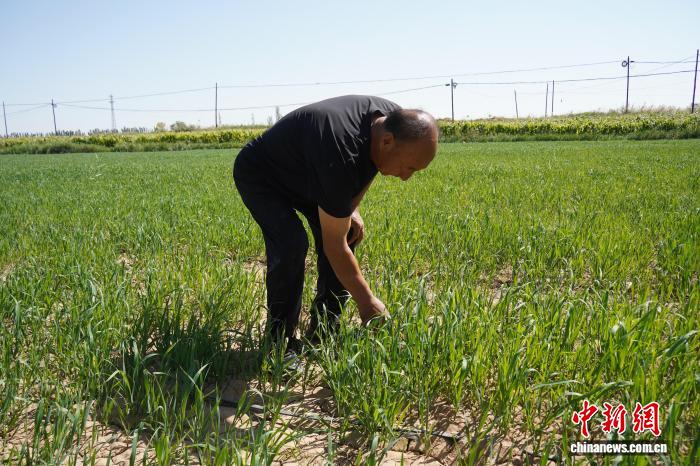
黄河“几字弯”丰收图鉴:从“一季旺”到“四季兴”
Zhong Guo Xin Wen Wang· 2025-10-13 08:57
Core Insights - The article highlights the agricultural transformation in the Yellow River "Z" bend area of Inner Mongolia, showcasing a shift from seasonal to year-round harvests through innovative farming practices [1] Group 1: Agricultural Practices - In Urat Rear Banner, farmers are adopting a "wheat + oat grass" rotation model, which allows for continuous land use and increased income. This year, oat grass is expected to yield 300 kg per mu, generating approximately 50,000 yuan in net income from 253 mu [3] - Urat Front Banner has implemented a "melon + vegetable" rotation model since 2018, achieving a land utilization rate of 200%. This has led to the production of various vegetables and fruits, contributing to a year-round harvest [5][6] Group 2: Economic Impact - The average income from facility agriculture in Urat Front Banner is projected to reach around 20,000 yuan per mu this year, up from nearly 17,000 yuan last year, benefiting local residents through job creation and increased earnings [6] - In Hangjin Rear Banner, the chili pepper industry has expanded significantly, with over 11,000 mu planted, expected to yield around 160,000 tons. This growth is attributed to a comprehensive industry chain model that includes research, planting, processing, and logistics [8]
谱写“媒体+”赋能新篇!汕尾市庆祝2025年中国农民丰收节陆河举行
Nan Fang Nong Cun Bao· 2025-10-11 16:03
Core Viewpoint - The event celebrating the 2025 Chinese Farmers' Harvest Festival in Luhua County, Shantou City, showcases the achievements in agriculture and the implementation of the "Media+" empowerment initiative to enhance agricultural development and promote local products [3][50]. Group 1: Event Highlights - The celebration featured unique intangible cultural heritage performances, including the "Lei Tea Fragrance" show, which highlighted local traditions and attracted attendees [2][10]. - The event included a "small gathering" for harvest discussions, showcasing agricultural highlights and achievements in the region [4][7]. - The opening ceremony was marked by performances and speeches emphasizing the importance of local agricultural products and community engagement [19][20]. Group 2: Agricultural Development - Luhua County is recognized as the "Hometown of Chinese Green Plums" and has implemented the "Cultivated Land Bank" model to enhance land resource utilization [11][12]. - The county's deputy mayor highlighted the development of a full agricultural industry chain, focusing on key products such as green plums, tea leaves, and oil citrus [13][14]. - The event featured representatives from the green plum and lychee industries sharing their success stories, emphasizing the development of over 30 products from green plums alone [23][25]. Group 3: "Media+" Empowerment Initiative - The "Media+" empowerment initiative aims to build a robust agricultural market system, enhancing the influence and competitiveness of local agricultural products [56][64]. - A strategic cooperation ceremony was held, granting the Southern Rural Newspaper the role of a strategic partner in the "Media+" initiative, promoting collaboration between government and media [66][70]. - The initiative is expected to break down information barriers and optimize resource allocation, contributing to rural revitalization efforts [71][72].

“北菜”端上南方人家餐桌 “通道+枢纽+网络”现代物流体系夯实北菜南运基础
Yang Shi Wang· 2025-10-11 07:17
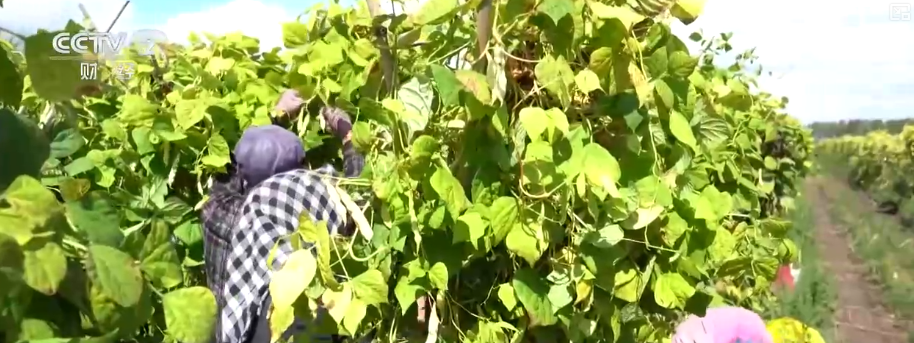
Core Viewpoint - The harvest of green beans in Heilongjiang is compensating for the supply shortage of vegetables in southern markets, showcasing how "northern vegetables" are reaching southern households [1] Group 1: Production and Processing - Over 50 villagers are efficiently harvesting, sorting, and packaging fresh green beans in the fields of Suihua City, ensuring they are transported to processing plants before noon for optimal quality [1] - The new variety of green beans has increased yield from over 1,000 pounds to over 3,000 pounds per acre, with traits suitable for transportation and processing, which are essential for the distribution of northern vegetables [5] - The processing of green beans involves cleaning, cooking, and quick-freezing, enabling them to endure long-distance transportation [3] Group 2: Cooperative Model - The "cooperative + farmer" model in Heilongjiang has effectively connected dispersed farmers, land, and markets, addressing both production and sales challenges [8] - Many farmers have benefited from the cooperative model by leasing their land and working within the cooperatives, thus earning dual income [12] - The cooperative has expanded its influence to surrounding counties, with over 1,300 order farmers, becoming a significant green pepper planting cooperative in Heilongjiang [16] Group 3: Government Support and Infrastructure - The development of the northern vegetable southward transportation has evolved from spontaneous farmer actions to a vital livelihood industry, supported by government planning and assistance [17] - The logistics infrastructure in Suihua City is continuously improving, with an average of seven refrigerated trucks dispatched daily from a bean processing cooperative [19] - Heilongjiang has established a special task force for the development of the vegetable industry, ensuring a comprehensive support system for the "green channel" for northern vegetables [23]
甘肃渭源:东西协作助力菌业振兴 全产业链发展格局加速形成
Yang Guang Wang· 2025-10-09 03:36
Core Insights - The collaboration between Gansu Province's Weiyuan County and Shandong Edible Mushroom Industry Technology System aims to enhance the standardization, technological advancement, and branding of the edible mushroom industry through a framework agreement signed in May 2024 [1] Group 1: Industry Development - Weiyuan County's Xinruifang Agricultural Development Co., Ltd. has successfully applied for projects focusing on the entire production chain of wood ear mushrooms and the introduction of superior strains suitable for high-altitude regions [1] - The county has established five edible mushroom industry bases, including two wood ear planting bases and a medicinal mushroom production base, with a total of 423 planting greenhouses [2] - The total expected production of edible mushrooms in Weiyuan County is 2,690 tons, with a total output value of 54.836 million yuan [2] Group 2: Technological Innovation - The company has partnered with Qingdao Agricultural University to develop over ten deep-processing products from black fungus, significantly increasing product value [2] - New varieties such as the powder fungus have been introduced, which are noted for their thick texture, crisp taste, and high yield [1][2] Group 3: Future Goals - Weiyuan County plans to achieve a mushroom planting scale of over 400 acres and a total production of 1,500 tons by 2030, with a total industry output value exceeding 100 million yuan [3] - The county aims to innovate cooperation methods and deepen partnerships to further enhance East-West technological collaboration [3]