全屋智能

Search documents
小米集团-W(01810.HK)第三季度营收1131亿元,经调整净利润增长80.9%至113亿元
Ge Long Hui A P P· 2025-11-18 09:45
Core Insights - Xiaomi Group reported a total revenue of RMB 113.1 billion for Q3 2025, representing a year-on-year growth of 22.3% [1] - The "Smartphone × AIoT" segment generated RMB 84.1 billion, a 1.6% increase year-on-year, while the "Smart Electric Vehicles and AI Innovation" segment reached a record high of RMB 29 billion, growing by 199.2% [1] - Adjusted net profit for the quarter was RMB 11.3 billion, marking an 80.9% year-on-year increase [1] Business Performance - Xiaomi's smartphone shipments reached 43.3 million units in Q3 2025, a 0.5% increase year-on-year, maintaining a position among the top three global smartphone vendors with a market share of 13.6% [2] - The number of active users globally reached 741.7 million, an 8.2% increase year-on-year, and the number of connected IoT devices surpassed 1 billion, reaching 1,035.5 million, a 20.2% increase [2] - The company delivered 108,796 new vehicles in Q3 2025, setting a new record [2] Research and Development - Xiaomi's R&D expenditure for Q3 2025 was RMB 9.1 billion, a 52.1% increase year-on-year, with total R&D spending for the first three quarters reaching RMB 23.5 billion [2] - The number of R&D personnel reached a historical high of 24,871 [2] AI and Technology Innovations - Xiaomi launched the Xiaomi-MiMo-Audio voice open-source model in September 2025, achieving significant advancements in voice interaction and natural language processing [3] - The company introduced the Xiaomi Miloco smart home exploration plan, enabling natural language interaction with smart home systems [3] - The new Xiaomi Surge OS 3 was released, enhancing user experience and privacy features [4] Market Strategy and Sales - Xiaomi's high-end smartphone sales in mainland China accounted for 24.1% of total smartphone sales, a 4.1 percentage point increase year-on-year [4] - The company launched a customization service for Xiaomi cars, offering various personalized options [4] - Xiaomi's retail strategy expanded with over 18,000 stores in mainland China and approximately 300 overseas [5] - During the 2025 Double Eleven shopping festival, Xiaomi achieved over RMB 29 billion in total payment amounts, with its smartphones ranking first in sales [5] - Capital expenditure for the first three quarters reached approximately RMB 13 billion, an 86.7% increase year-on-year [5]

客厅里的智能战争
3 6 Ke· 2025-11-17 03:17
Core Insights - The home appliance industry in China is entering an era of full-home intelligence, with traditional appliance companies and tech firms like Huawei and Xiaomi intensifying competition through AI technology and smart ecosystems [1][2][7] Group 1: Market Dynamics - Traditional appliance companies such as Midea, Gree, Haier, and Hisense are seeking new growth points by developing AI technology, expanding product lines, and exploring international markets [1] - Tech companies like Huawei and Xiaomi leverage their established smart ecosystem advantages to enhance competition in the appliance market [1][2] - The trend towards smart appliances is evident, with many brands offering independent smart systems, often named with a prefix like "Xiao" [2] Group 2: Consumer Behavior - Consumers are increasingly drawn to smart appliances, with features like AI voice functionality appealing to families with children and elderly members [3] - A shift in consumer preferences is noted, with many opting for domestic brands over foreign ones, indicating a growing expectation for smart features in appliances [3][4] - The interest in full-home smart systems is rising, but many consumers face challenges due to incompatibility between different brands' systems [4] Group 3: Technological Advancements - Midea's full-home smart system integrates various home environments and appliances, evolving from passive responses to proactive services [5][6] - The interaction between vehicles and home systems is emerging, with Midea collaborating with companies like BYD and Tesla to enhance connectivity [5][6] - A report indicates that the smart home market in China is expected to grow at double-digit rates from 2023 to 2025, with smart security, lighting, and audio-visual products being the fastest-growing categories [6][7] Group 4: Competitive Landscape - Major players in the appliance sector include Gree, Midea, Haier, Hisense, and TCL, with the boundaries of the industry becoming increasingly blurred as companies embrace a broader home ecosystem [7][8] - The competition is intensifying, with a notable price war among domestic brands, as they strive to offer smart services that add higher value beyond traditional hardware manufacturing [8]



客厅里的智能战争
经济观察报· 2025-11-14 15:08
Core Viewpoint - The competition in the home appliance market is intensifying as traditional companies like Midea, Gree, Haier, and Hisense seek new growth through AI technology, product line expansion, and internationalization, while tech companies like Huawei and Xiaomi leverage their established smart ecosystem advantages to increase competition [2][3]. Group 1: Market Dynamics - Traditional home appliance companies are exploring new growth points through AI technology and expanding product lines [2][3]. - Tech companies are intensifying competition in the home appliance market by leveraging their smart ecosystem advantages [2][3]. - The shift towards a fully smart home environment is becoming evident, with consumers increasingly interested in integrated smart solutions [12]. Group 2: Consumer Behavior - Consumers are showing a preference for smart appliances, with features like AI voice control being particularly appealing to families with children and elderly members [6]. - There is a noticeable shift in consumer purchasing habits, with many moving from foreign brands to domestic brands due to the increasing expectations for smart features [6][7]. - Consumers are facing challenges with compatibility between different brands' smart systems, which complicates the integration of smart home devices [7]. Group 3: Technological Advancements - Home appliances are evolving from "single product intelligence" to "whole home intelligence," with systems like Midea's "Xiao Mei AI" integrating various smart functions [9][10]. - The interaction between vehicles and home systems is being developed, allowing for seamless integration and control of home environments from vehicles [11]. - The trend towards smart home integration is expected to continue, with significant growth projected in the smart home market over the next few years [12]. Group 4: Industry Trends - Major players in the home appliance sector, including Gree, Midea, Haier, and Hisense, are adapting to the blurred lines between home appliances and broader home ecosystems [14]. - The retail landscape is shifting, with smart home products being prominently displayed alongside traditional appliances to attract consumer interest [14]. - The release of technological potential in the home appliance sector is expected to reshape global competition, allowing Chinese companies to gain a more advantageous position in the market [15].


小米发布智能家居未来探索方案Xiaomi Miloco
Feng Huang Wang· 2025-11-14 07:17
Core Insights - Xiaomi has launched a smart home exploration plan called Xiaomi Miloco, which is driven by large models to create a fully intelligent living environment [1] - The Miloco plan emphasizes privacy and security by deploying large models on the edge to protect user data [1] - The Xiaomi MiMo-VL-Miloco-7B visual language model serves as the technical core, enabling perception and understanding for smart home interactions [1] Summary by Categories Product Development - Xiaomi Miloco allows users to interact with the smart home system through conversation, utilizing reasoning and computation from large models to fulfill various smart needs [1] - The system is designed to reconstruct the interaction paradigm of home intelligence [1] Privacy and Security - The exploration plan prioritizes user privacy by ensuring that large models are deployed on the edge, preventing data breaches [1] Open Innovation - Miloco has been made available to the public and is hosted on GitHub, allowing developers to modify and expand any layer of the system [1] - The initiative fosters an "open co-creation" environment, encouraging collaboration and innovation within the developer community [1]
智能家电打响“生态战”
Jing Ji Guan Cha Wang· 2025-11-14 05:13
Core Insights - The Chinese home appliance industry is entering an era of whole-home intelligence, with traditional appliance manufacturers and tech companies competing fiercely in this new landscape [1][2] Group 1: Market Dynamics - Traditional appliance companies like Midea, Gree, Haier, and Hisense are seeking new growth points through AI technology, product line expansion, and internationalization [1] - Tech companies such as Huawei and Xiaomi are intensifying competition in the appliance market by leveraging their established smart ecosystem advantages [1][2] Group 2: Consumer Behavior - Consumers are increasingly opting for smart appliances, with a notable shift from foreign brands to domestic brands, reflecting a growing expectation for intelligent features [3][4] - The demand for whole-home smart systems is primarily driven by high-end customers, while budget constraints limit broader consumer adoption [3][7] Group 3: Technological Advancements - Major appliance brands have developed independent smart systems, enhancing their products with AI capabilities, particularly in high-end models [2][5] - The evolution from "passive response" to "active service" in smart appliances is exemplified by Midea's AI system, which can proactively adjust settings based on user needs [5][6] Group 4: Industry Trends - The smart home market in China is projected to grow at double-digit rates from 2023 to 2025, with significant interest in smart security, lighting, and audio-visual products [7][8] - The boundaries of the home appliance industry are becoming increasingly blurred, with a trend towards integrating home appliances into a broader home ecosystem [8][9] Group 5: Competitive Landscape - Leading companies in the appliance sector include Gree, Midea, Haier, Hisense, and TCL, but the competition is shifting towards providing intelligent services rather than just hardware [8][9] - The release of technological potential in the appliance sector is expected to reshape the global competitive landscape, positioning Chinese appliance manufacturers more favorably in international markets [9]
购买力全国第三!今年“双十一”,北京人都在买些啥?
Xin Lang Cai Jing· 2025-11-11 18:23
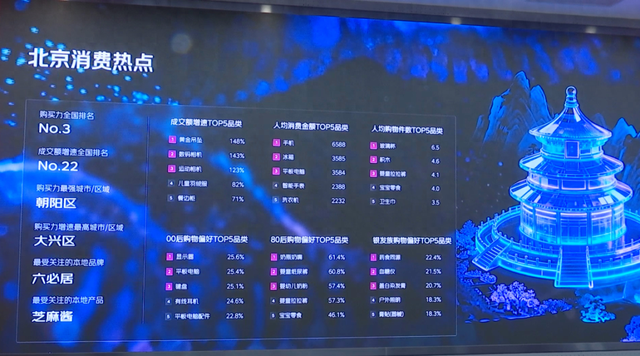
Core Insights - The "Double Eleven" shopping festival has evolved from a traffic-driven promotional event to a consumer demand-centric rational consumption node, emphasizing operational standards and consumer experience, reflecting the transition of China's consumer market from rapid growth to high-quality development [1] Group 1: Consumer Behavior and Trends - Consumers are increasingly focusing on product quality and experience rather than just price during the "Double Eleven" event, indicating a structural upgrade in the home appliance market [3] - Sales of home appliances with integrated AI features have reached 55% since the start of "Double Eleven," showcasing a growing interest in smart home technology among consumers [3] - Different age groups exhibit distinct purchasing preferences, with younger consumers favoring digital products, while older generations prioritize health and personal care items [3] Group 2: Market Performance and Statistics - Beijing ranks third in national purchasing power, with Chaoyang District leading in purchasing strength, while Daxing District shows the highest growth rate in the city [4] - The top five categories with the highest transaction growth rates include gold pendants (148%), digital cameras (143%), action cameras (123%), children's down jackets (82%), and sideboards (71%) [3] - The average spending per consumer in Beijing is highest for mobile phones, refrigerators, tablets, smartwatches, and washing machines [3] Group 3: Logistics and Operational Developments - The logistics demand generated by the "Double Eleven" shopping spree is being efficiently handled by high-speed rail express services, with over 1,700 high-speed passenger trains utilized daily for freight transport [6] - The overall express delivery capacity has increased by 10% compared to the previous year, indicating enhanced logistics capabilities during the shopping festival [6]
苹果将重启智能家居战略,中国厂商却已全面向人车家生态进发
3 6 Ke· 2025-11-04 04:53
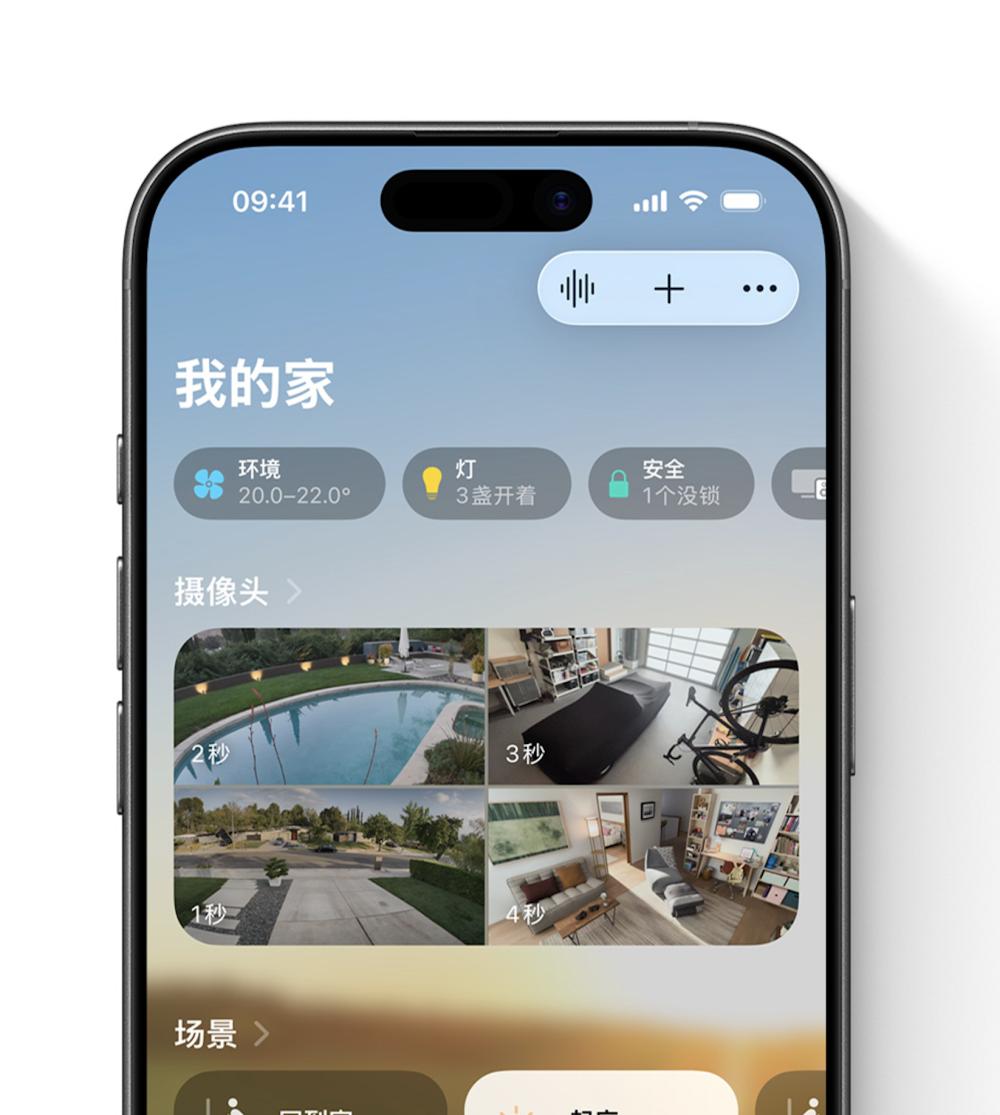
Core Insights - Apple is set to re-enter the smart home market with a new strategy coinciding with its 50th anniversary in 2026, planning to launch its first smart display and a smart home security ecosystem [1][24] - The company has been criticized for missing the "golden decade" of smart home development, as competitors have already advanced to concepts like "whole-home intelligence" [3][13] - Apple's HomeKit platform, launched in 2014, has seen limited success, with only a few proprietary products released over the years, primarily in the smart speaker category [4][5][6] Group 1 - Apple plans to introduce a smart display and a smart camera as part of its renewed smart home strategy [1] - The company has faced challenges in establishing a competitive smart home ecosystem, with a limited number of third-party devices available on its platform [9][12] - The pricing of HomeKit-compatible devices is perceived as high, particularly in the Chinese market, which may hinder adoption [12][24] Group 2 - The shift from traditional smart home concepts to "whole-home intelligence" reflects a broader industry trend, emphasizing interconnected experiences rather than isolated smart devices [13][18] - Competitors like Xiaomi and Huawei are leading the charge in the "human-vehicle-home" ecosystem, integrating smart home technology with mobile and automotive solutions [18][20] - Apple's current market position in the smart home sector is weak, with its "wearables, home, and accessories" segment experiencing a rare nine consecutive quarters of decline [24][28] Group 3 - The upcoming smart home strategy will require Apple to enhance its Siri capabilities, which will serve as the central control for its smart home ecosystem [24][29] - The company is encouraged to learn from domestic competitors' strategies in "whole-home intelligence" and "human-vehicle-home" integration to improve its market position [29]

慕思股份(001323) - 2025年10月30-31日投资者关系活动记录表
2025-11-01 06:06
Financial Performance - In Q3 2025, the company achieved a revenue of 37.61 billion CNY, a year-on-year decrease of 3.01% [2] - The net profit attributable to shareholders was 4.67 billion CNY, down 10.61% year-on-year, with basic earnings per share at 1.08 CNY [2] - For the first nine months of 2025, revenue by product category was as follows: mattresses (19.15 billion CNY, +4.63%), bed frames (10.81 billion CNY, -5.73%), sofas (2.62 billion CNY, -15.08%), and bedding (1.76 billion CNY, -17.12%) [3] - Revenue by channel for the first nine months: distribution (27.89 billion CNY, -2.30%), e-commerce (7.29 billion CNY, -4.61%), direct supply (1.17 billion CNY, -4.50%), and direct sales (0.44 billion CNY, -29.67%) [3] - Domestic revenue was 35.83 billion CNY (down 5.05%), while overseas revenue was 1.78 billion CNY (up 70.90%) [3] - The overall gross margin for the first nine months was 52.34%, an increase of 1.54 percentage points year-on-year [3] Strategic Initiatives - The company is focusing on health sleep, AI advancements, and global brand development to strengthen its competitive edge [2] - Significant investments in brand building and product innovation are being made to enhance long-term growth [2] - The company launched the "Harmony Smart Choice" smart bed, emphasizing user-centric product development [4] Market Challenges and Responses - The decline in net profit in Q3 was attributed to increased sales expenses due to upfront investments in e-commerce promotions and strategic initiatives for overseas expansion and AI product marketing [3] - To address a sluggish consumer environment, the company is optimizing its product matrix and enhancing marketing strategies on platforms like Douyin and Xiaohongshu [5] Global Expansion - The company has established strategic partnerships for brand promotion in Southeast Asia and the Middle East, including Vietnam, Malaysia, Indonesia, and Saudi Arabia [6] - The Indonesian production base has been received, and the Vietnamese base is under construction, expected to be operational by 2026 [6] Investor Relations - The company emphasizes a long-term approach to dividend policies, considering operational performance, profitability, capital expenditure needs, and shareholder preferences [7] - The investor relations activity was conducted online, ensuring compliance with information disclosure regulations [8]
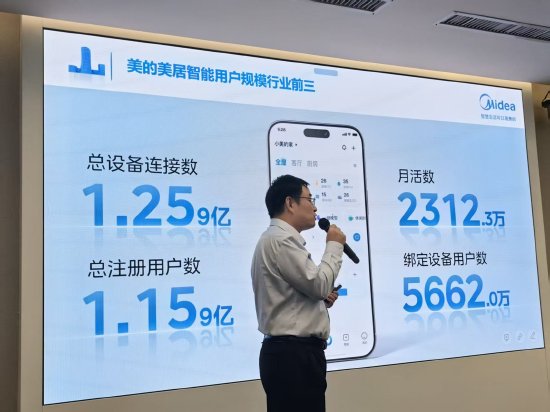
美的集团全屋智能总经理尚喆:美的美居智能用户规模已达行业前三,设备连接数超1.259亿
Xin Lang Ke Ji· 2025-10-31 07:59
Core Insights - Midea Group's smart home division has achieved significant user growth, ranking among the top three in the industry for smart home users [1] - The total number of connected devices has surpassed 1.259 billion, with registered users exceeding 1.159 billion and monthly active users reaching over 23.12 million [1] - Midea has sold over 400 million home appliances globally each year, with more than 100 million of these products featuring connectivity and smart capabilities [1] User Metrics - Total connected devices: over 1.259 billion [1] - Total registered users: over 1.159 billion [1] - Monthly active users: over 23.12 million [1] - Users with bound devices: 56.62 million [1] Product Sales - Annual global sales of home appliances: over 400 million units [1] - Appliances with connectivity and smart features: over 100 million units [1] - Number of product categories with smart capabilities: over 100 [1]
智能马桶行业分析报告 2025年智能马桶行业发展前景及规模分析
Sou Hu Cai Jing· 2025-10-27 08:41
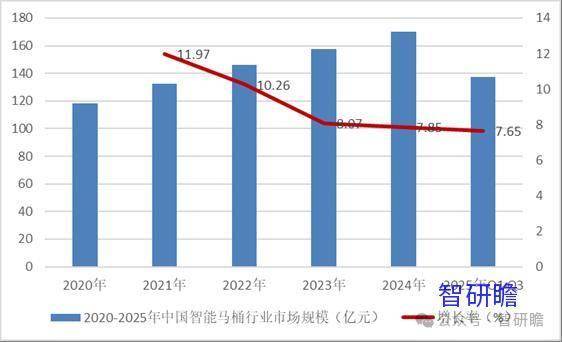
Core Insights - Consumers are increasingly seeking higher quality and healthier living experiences, which is driving demand for smart toilets that offer features like heated seats, warm water cleaning, and automatic deodorization [1] - Technological advancements, particularly in domestic supply chains, have reduced costs for key components, making smart toilets more affordable for a broader consumer base [1] - Policy initiatives aimed at improving public health facilities are creating new opportunities for the smart toilet industry [1] Smart Toilet Definition - Smart toilets come equipped with various features such as bidet functions, heated seats, warm air drying, automatic deodorization, and quiet closing [2] - Initially designed for medical and elderly care, smart toilets help reduce the incidence of anal diseases and bacterial infections, promoting better health [2] - The design often includes antibacterial materials to prevent cross-contamination, and tankless designs ensure clean water supply [2] Competitive Landscape - The market is characterized by intense competition between domestic and international brands, with early leaders like TOTO and Panasonic facing challenges from rapidly advancing local brands such as HeGao, JOMOO, and Arrow [3] - Local brands are gaining market share by better understanding consumer preferences, offering competitive pricing, and providing agile after-sales service [3] - Future competition will focus on technology development, product design aesthetics, and integration with smart home systems [3] Market Size of Smart Toilets in China - The Chinese smart toilet market has seen significant growth, with a market size of 11.813 billion yuan in 2020, projected to reach 16.999 billion yuan by 2024, reflecting a year-on-year growth of 7.85% [4] - The market has transitioned from high-end urban installations to broader penetration in lower-tier cities and ordinary households, aided by the rise of e-commerce [4] Market Development Trends - The smart toilet market is expected to trend towards deeper intelligence, with features like AI voice control and health monitoring sensors becoming standard [5] - There is a growing emphasis on health attributes, with increased consumer focus on hygiene and sanitation in the post-pandemic era [5] - Smart toilets will increasingly integrate into overall bathroom design and smart home ecosystems, providing personalized user experiences [5] - The market is projected to grow at a rate of 7%-9% from 2025 to 2031, reaching a size of 29.363 billion yuan by 2031, with a year-on-year growth of 8.62% [5]