
劳动力市场疲软

Search documents
美国私营部门9月减少3.2万个就业岗位
Xin Hua She· 2025-10-01 20:50
Core Viewpoint - In September 2023, the U.S. private sector experienced a reduction of 32,000 jobs, marking the largest decline since March 2023 and significantly lower than the market expectation of an increase of approximately 50,000 jobs [1] Group 1: Employment Data - The data released by Automatic Data Processing (ADP) indicates a notable contraction in the job market, with a decrease of 32,000 positions in the private sector [1] - The U.S. Department of Labor was scheduled to release the non-farm payroll report for September on October 3, but due to the federal government shutdown, the Bureau of Labor Statistics will suspend all operations during the funding interruption [1] - The non-farm employment data from the Bureau of Labor Statistics includes government sector jobs, which are not reflected in the ADP report [1] Group 2: Economic Implications - Some economic analysts predict that if the U.S. labor market continues to show weakness, the Federal Reserve may announce another interest rate cut in October [1]

Treasury rates fall on weak ADP jobs report
Youtube· 2025-10-01 19:00
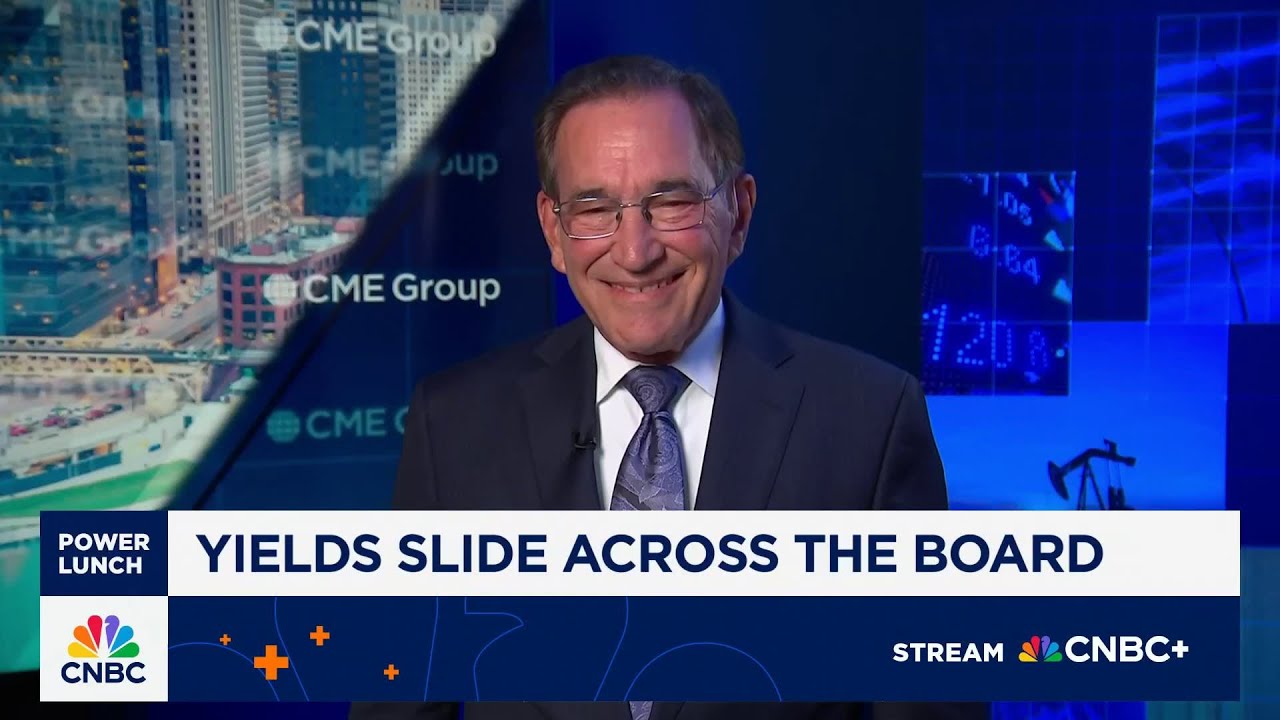
Group 1 - The bond market is accustomed to fluctuations, but the significance of these changes is uncertain and may depend on the duration of the trends observed [1][2] - Recent weak ADP employment report, the weakest since March 2023, along with a negative revision to the previous month, has led to market reactions [2] - Two-year yields have dropped more significantly than ten-year yields, indicating a notable shift in the yield curve dynamics [3][6] Group 2 - The decline in two-year yields highlights concerns regarding labor market weakness, which is a critical factor for the Federal Reserve's inflation strategy [4] - Market expectations for Federal Reserve easing have increased, with probabilities exceeding 100% for the next meeting, suggesting a pricing in of more than 25 basis points [5] - The yield curve is steepening as short-term rates have decreased more sharply, indicating a significant market adjustment [6]

美国消费者信心降至五个月低点 政府关门风险加大美联储决策难度
Zhi Tong Cai Jing· 2025-09-30 15:24
Group 1 - The consumer confidence index in the U.S. fell to 94.2 in September, down 3.6 points from August and below the expected 96, marking the lowest level since April [1] - The assessment of the current economic situation by consumers has significantly deteriorated, with the index for "current conditions" reaching a one-year low, indicating a rapid decline in public confidence [1] - The percentage of respondents who believe job opportunities are "plentiful" dropped to 26.9%, a decrease of over 3 percentage points from the previous month, while those who find jobs "hard to get" remained at 19.1% [1] Group 2 - The number of job openings in the U.S. increased slightly to 7.23 million in August, but year-over-year, job openings decreased by 422,000, a decline of 5.5%, indicating a retreat from peak hiring demand [2] - The resignation rate in August decreased by 75,000, reflecting a reduced willingness of workers to change jobs, which suggests a tightening labor market [2] - Federal Reserve officials are cautious about balancing inflation and employment, with expectations of a 25 basis point rate cut in October and December, totaling a 50 basis point reduction for the year [2] Group 3 - The risk of a government shutdown looms, with a deadline of September 30 for Congress to pass a temporary funding bill, which could lead to a halt in economic data releases from key statistical agencies [3] - If the government shuts down, critical economic data such as the non-farm payroll report and consumer price index may be delayed, impacting the Federal Reserve's ability to make informed policy decisions [3] - Historical precedent shows that during a previous government shutdown in 2013, the employment report was delayed, highlighting the potential consequences of a data vacuum [3] Group 4 - Political tensions between Democrats and Republicans over budget issues remain high, with efforts to push preferred funding bills amidst sharp criticisms regarding healthcare funding cuts [4] - The lack of scheduled meetings between the White House and congressional leaders raises concerns about the potential for a last-minute compromise to avoid a government shutdown [5] - The political risks and market impacts of a prolonged deadlock are significant, even if Congress acts quickly to restore government operations after a technical shutdown [5]
美股又跌了,中国资产大涨!阿里巴巴狂飙8%
Di Yi Cai Jing Zi Xun· 2025-09-24 23:24
Market Overview - US stock market experienced a decline for the second consecutive day, with the Dow Jones falling by 171.50 points (0.37%) to 46121.28, the Nasdaq down 0.34% to 22497.86, and the S&P 500 decreasing by 0.28% to 6637.97 [2] - The materials sector led the decline, while the energy sector rose due to a significant increase in oil prices [2] Key Company Performances - Tesla shares increased by 4.0%, while Microsoft rose by 0.2%. In contrast, Amazon fell by 0.2%, Apple and Nvidia dropped by 0.8%, and Google decreased by 1.8% [2] - Oracle's stock fell by 1.7% amid reports of the company planning to raise $15 billion through bond issuance [2] Economic Data - The Nasdaq China Golden Dragon Index rose by 2.8%, with Alibaba increasing by 8.2%, JD.com and Baidu rising over 5%, and Pinduoduo up by 1.9%. However, NetEase saw a decline of 1.8% [3] - In August, new home sales in the US increased by 20.5% from July, reaching an annualized total of 800,000 units, surpassing market expectations [3] - The Mortgage Bankers Association reported a 0.6% increase in mortgage applications due to a decline in the average rate for 30-year fixed mortgages [3] Federal Reserve Insights - Fed Chair Jerome Powell's cautious remarks have injected a degree of caution into the market, particularly regarding the labor market, leading some investors to take profits [3] - Powell indicated that asset prices appear to be at "relatively high valuation levels," and emphasized the need for a balance between addressing inflation risks and labor market weaknesses [3][4] - San Francisco Fed President Mary Daly suggested that further rate cuts may be necessary due to slowing economic growth and consumer spending [4] Bond Market - The yields on long-term US Treasury bonds have risen, with the 10-year yield increasing by 3.1 basis points to 4.14%, and the 2-year yield rising by 3.2 basis points to 3.60% [4] Commodity Market - International oil prices reached a seven-week high, with WTI crude oil rising by 2.49% to $64.99 per barrel and Brent crude increasing by 2.48% to $69.31 per barrel [5] - Gold prices fell from record highs, with COMEX gold futures for September delivery dropping by 1.28% to $3732.10 per ounce [5]






美联储:通胀高于目标降息,要拉回2%目标水平
Sou Hu Cai Jing· 2025-09-19 14:12
Core Viewpoint - The Federal Reserve's decision to lower interest rates amid high inflation raises questions about maintaining public trust and requires clear communication regarding the rationale behind this move [1] Group 1: Interest Rate Decision - The Federal Reserve, represented by Kashkari, has chosen to lower interest rates despite inflation rates being above target levels [1] - Kashkari emphasizes the need to explain the reasons for the rate cut, particularly in the context of four consecutive years of high inflation [1] Group 2: Inflation and Labor Market - Kashkari indicates that a weak labor market supports the decision to lower interest rates, suggesting that inflation levels are likely to decrease as a result [1] - He expresses confidence in bringing the inflation rate back to the target level of 2% [1]
专访纽约联储前官员:全球宽松周期将利好风险资产|全球财经连线
2 1 Shi Ji Jing Ji Bao Dao· 2025-09-18 23:22
Core Viewpoint - The global monetary policy is shifting towards a loosening cycle, with central banks in various countries, including the U.S., Indonesia, Canada, the UK, and Japan, announcing interest rate decisions that reflect this trend [1][12]. Summary by Sections Interest Rate Decisions - The Federal Reserve announced a 25 basis point reduction in the federal funds rate target range to 4.00% to 4.25%, marking its first rate cut since 2025 [1][12]. - The decision aligns with market expectations, but the reasons behind the cut are debated, with factors including economic data and political pressure from the Trump administration [1][2]. Economic Indicators - The labor market shows signs of weakness, with significant downward revisions to non-farm payrolls, approximately 900,000 jobs adjusted [3][4]. - Current core inflation is around 3%, which remains above the Fed's target of 2%, complicating the monetary policy landscape [4][6]. Political Influence - The Trump administration's pressure on the Federal Reserve is a new variable affecting monetary policy decisions, with the President publicly criticizing Fed Chair Jerome Powell for being slow to act [2][5]. - The influence of political factors is expected to persist as long as Trump remains in office, potentially leading to further rate cuts if economic conditions align with his objectives [5][12]. Market Reactions - The market is currently in a bullish trend, benefiting from the Fed's decision to cut rates, which is expected to release liquidity and favor risk assets, including cryptocurrencies [8][9]. - However, if inflation rises significantly, it could lead to a rapid market downturn, highlighting the delicate balance the Fed must maintain [8][9]. Future Outlook - The potential for additional rate cuts depends on economic data performance and the ongoing political pressure from the Trump administration [9][10]. - Other major central banks are likely to maintain their policies based on regional data rather than directly following the Fed's decision [11][12].
瑞银胡一帆:明年一季度美联储有望再降息75个基点
Zheng Quan Shi Bao Wang· 2025-09-18 08:08
Core Viewpoint - The Federal Reserve announced a 25 basis point cut in the federal funds rate target range to 4.00% to 4.25%, marking the first rate cut of the year following a total reduction of 100 basis points in 2024 [1] Group 1 - The Federal Reserve's policymakers predict potential further rate cuts in the upcoming two meetings [1] - UBS Wealth Management's Chief Investment Officer for Greater China and Head of Macro Economics for Asia Pacific, Hu Yifan, anticipates a further 75 basis points cut by Q1 2026 under the baseline scenario [1] - The Fed may prioritize addressing labor market weakness over the potential temporary rise in inflation [1] Group 2 - In a downside scenario, if labor market weakness proves to be more severe or persistent, the Fed could lower rates by 200-300 basis points, potentially bringing rates down to 1.0-1.5% [1]
【环球财经】2025年8月澳大利亚失业率维持在4.2% 劳动力市场再次走弱
Xin Hua Cai Jing· 2025-09-18 06:34
Core Insights - Australia's unemployment rate remained unchanged at 4.2% in August 2025, indicating a weaker labor market as employment growth fell below expectations [1][2] - The total number of employed individuals decreased by 5,400 month-on-month, with a year-on-year growth of approximately 1.5%, totaling 14.6265 million [1] - The number of unemployed individuals decreased by about 0.1% month-on-month but increased by approximately 4.5% year-on-year, reaching 647,400 [1] Employment Data Summary - Seasonally adjusted employment figures showed a month-on-month decrease in working hours by 0.4%, while the underemployment rate fell by 0.1 percentage points to 5.7% [1] - Trend data indicated an increase in the unemployment rate to 4.3%, with a month-on-month employment growth of about 0.1% and a year-on-year growth of 1.7%, totaling 14.643 million [1] - The number of unemployed individuals increased by approximately 0.6% month-on-month and by 6.5% year-on-year, totaling 652,300 [1] Economic Analysis - The average annual growth rate of employment over the past three months was 1.8%, down from 2.2% in May and 2.5% in February, suggesting a gradual weakening of the labor market [2] - The current employment growth rate is below the labor force population growth rate of 2%, with the employment-to-population ratio declining from a peak of 64.4% in January to 64% in August [2] - The Reserve Bank of Australia is expected to consider these trends but may not make immediate changes to monetary policy due to the volatility of monthly data [2] Future Projections - Westpac Bank anticipates that the Reserve Bank of Australia will likely lower interest rates in November, with a further reduction of 50 basis points expected in 2026 [3]
美联储下调基准利率25bp 国际油价结束三连涨
Jin Tou Wang· 2025-09-18 02:33
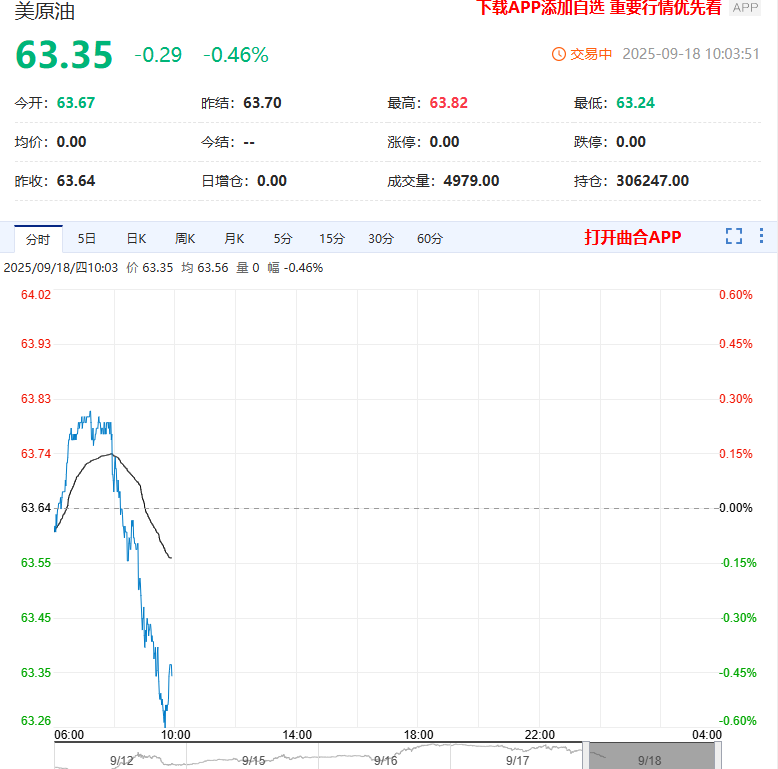
Group 1 - The Federal Reserve announced a 25 basis point reduction in the federal funds rate target range to 4.00%-4.25%, marking the first rate cut of the year, aligning with market expectations [1] - Following the announcement, crude oil prices experienced a decline, with October delivery light crude oil futures falling by $0.47 to $64.05 per barrel, a decrease of 0.73%, and November delivery Brent crude oil futures dropping by $0.52 to $67.95 per barrel, a decline of 0.76% [1] Group 2 - Jeffrey Gundlach, often referred to as the "bond king," stated that the Fed's 25 basis point rate cut was the "right move," but cautioned against aggressive easing policies that could lead to inflation, highlighting the risk of excessive loosening [3] - East China Futures noted that while lower interest rates typically boost energy demand, investors are more concerned about warnings regarding a weakening labor market, which could overshadow the benefits of the rate cut [3] - The market had largely priced in the 25 basis point rate cut, leading to the unwinding of some hedging positions for larger cuts, which contributed to a stronger dollar and reduced overall attractiveness of commodities [3]
美国8月零售销售超预期增长 消费需求强劲但通胀压力显现
Xin Hua Cai Jing· 2025-09-16 14:14
Group 1 - The core viewpoint of the articles indicates that U.S. retail sales showed a robust increase of 0.6% in August, matching the revised growth rate of July and significantly exceeding market expectations of 0.2%, suggesting strong consumer spending despite global economic uncertainties [1] - Non-store retailers experienced a substantial sales increase of 2%, leading among retail categories, while clothing stores and sporting goods, musical instrument, and book stores saw sales growth of 1% and 0.8% respectively [1] - The data reflects a second consecutive month of 0.6% growth in retail sales, indicating sustained consumer demand [1] Group 2 - Despite the positive retail sales data, potential risks are highlighted, including uncertainties from Trump's tariff comments that may lead to rising product prices, with some sales growth possibly attributed to price increases rather than volume [1] - The Consumer Price Index (CPI) recorded its largest increase in seven months, which could weaken actual purchasing power, while a softening labor market characterized by slowing hiring and rising unemployment rates threatens future consumption, particularly for low-income households [1] - A survey indicates that spending growth among younger consumers and Generation X (born 1965-1980) is particularly weak, correlating with reduced wage increases from job changes, suggesting a potential decline in future consumption momentum [2] Group 3 - The U.S. Bureau of Labor Statistics reported that import prices rose by 0.3% in August, marking the largest month-over-month increase since January, contrary to market expectations of a decline [2] - Non-fuel import prices increased by 0.4%, reversing the previous month's stagnation, while fuel import prices decreased by 0.8% [2] - Export prices also rose by 0.3% in August, driven by increases in consumer goods, non-agricultural industrial supplies, and capital goods, with a year-over-year increase of 3.4% indicating sustained overseas demand [2]