区域全面经济伙伴关系协定(RCEP)

Search documents
第57届东盟经济部长会议重申坚定维护多边贸易体系
Yang Shi Xin Wen Ke Hu Duan· 2025-09-24 17:32
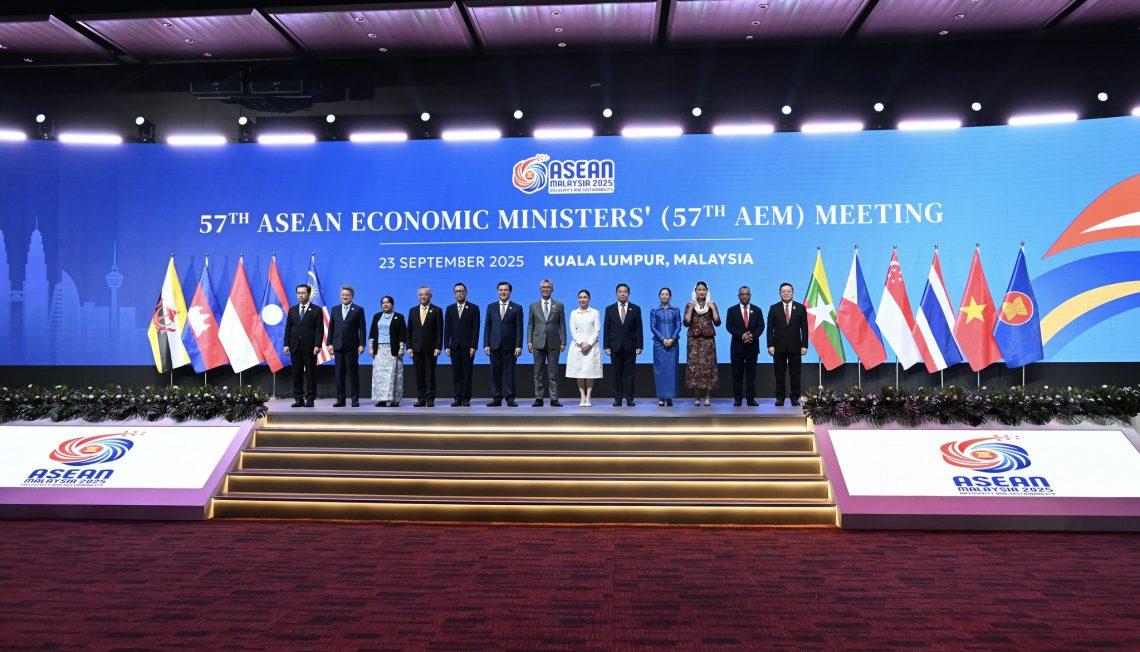
Group 1 - The 57th ASEAN Economic Ministers' Meeting was held in Kuala Lumpur, Malaysia, on September 23, with a focus on the uncertain global trade environment [2] - ASEAN's economy is projected to grow by 4.8% in 2024 and 4.2% in 2025, which is above the global average [2] - The meeting reaffirmed ASEAN's commitment to maintaining a rules-based multilateral trading system and promoting the comprehensive implementation of the Regional Comprehensive Economic Partnership (RCEP) [2] Group 2 - Discussions included progress in ASEAN trade facilitation, investment, digital economy, and sustainable development [2] - Emphasis was placed on strengthening regional supply chain resilience through cooperation [2] - The meeting aimed to advance the realization of the ASEAN Community Vision 2045 [2]

中国企业在东盟投资调研报告:超八成中资制造企业计划在未来三年内增加投资
Zheng Quan Shi Bao Wang· 2025-09-23 06:16
Group 1 - The report highlights that ASEAN countries like Indonesia, Malaysia, Thailand, and Vietnam are becoming popular investment destinations for Chinese enterprises due to rapid economic growth, broad market prospects, and low land and labor costs [1][2] - The main investment objectives for Chinese companies include market expansion, cost reduction, and supply chain diversification, with over 60% of surveyed companies reporting profitability and 80% expressing satisfaction with their investments [1][2] - The survey conducted by PwC involved 30 Chinese enterprises operating in ASEAN, with two-thirds from the manufacturing sector, and revealed that Indonesia, Malaysia, and Thailand are the top three investment destinations, with 67%, 47%, and 40% of respondents operating in these countries respectively [1] Group 2 - Over 70% of Chinese manufacturing enterprises believe that the business environment in their respective ASEAN countries has improved compared to two years ago, with Malaysia, Thailand, and Vietnam showing significant positive trends [2] - More than 80% of Chinese manufacturing enterprises plan to increase their investments in ASEAN over the next three years, indicating sustained high confidence in investing in the region [2] - PwC notes that the continuous improvement of the business environment in ASEAN countries significantly enhances their attractiveness to foreign investors, with various tax incentives available for manufacturing, R&D activities, and regional headquarters establishment [2]
东博会搭台,中外企业双向奔赴谋共赢(环球热点)
Ren Min Ri Bao· 2025-09-22 22:50
Group 1: Event Overview - The 22nd China-ASEAN Expo concluded with over 700 achievements, including more than 500 economic and trade project signings and over 270 multi-field results [1] - A total of 3,260 exhibiting companies from 60 countries participated, highlighting the event's international appeal [1] Group 2: Economic Impact - The RCEP agreement has reduced trade barriers, expedited customs processes, and provided tax incentives, leading to significant cost savings for businesses [2] - From January to July 2023, trade between China and ASEAN reached $597 billion, marking an 8.2% year-on-year increase [7] - By July 2025, cumulative bilateral investment between China and ASEAN is expected to exceed $450 billion [7] Group 3: Industry Participation - The AI technology sector showcased innovative products, including smart glasses and humanoid robots, indicating a shift towards digital and intelligent solutions [4][5] - Companies from ASEAN countries, such as Vietnam and Laos, reported increased sales and customer engagement through participation in the expo [2] Group 4: Future Opportunities - The expo serves as a platform for unlocking new cooperation possibilities, with businesses expressing confidence in expanding their markets through RCEP's favorable policies [8] - Companies are looking to deepen their integration into regional supply chains and enhance their technological capabilities through partnerships formed at the expo [8][9]
新加坡工商联合总会主席答21:中国与东盟应合作建立AI标准
2 1 Shi Ji Jing Ji Bao Dao· 2025-09-19 11:49
Group 1 - The 22nd China-ASEAN Expo and China-ASEAN Business and Investment Summit took place in Nanning, Guangxi from September 17 to 21, highlighting the deepening cooperation between China and ASEAN [2] - The bilateral trade between China and ASEAN has significantly increased from over 870 billion yuan in 2004 to nearly 7 trillion yuan in 2024, marking a sevenfold growth and maintaining growth for nine consecutive years [2] - Discussions at the summit focused on emerging cooperation areas, opportunities for the construction of the China-ASEAN Free Trade Area 3.0, and sustainable economic development [2] Group 2 - The Chairman of the Singapore Business Federation emphasized the importance of regional economic cooperation amid changing international dynamics, noting that the Regional Comprehensive Economic Partnership (RCEP) has begun to show significant economic benefits [3] - The potential for collaboration in digital economy, green sustainable development, and maintaining supply chain stability between China and ASEAN was highlighted, with a combined market population exceeding 2 billion [3] - The anticipated implementation of the China-ASEAN Free Trade Area 3.0 is expected to encourage free trade and includes new chapters on digital economy, green economy, and supply chain connectivity, promoting cross-border data flow and cooperation [3]
东西问丨约瑟:世界变局下的RCEP如何往前走?
Zhong Guo Xin Wen Wang· 2025-09-15 11:40
Core Viewpoint - The Regional Comprehensive Economic Partnership (RCEP) is positioned as a significant driver for regional economic integration amidst global challenges such as unilateralism and trade protectionism, aiming to evolve from the "largest free trade area" to a "high-level free trade area" [5][6][9]. Group 1: RCEP's Role and Impact - Since its implementation, RCEP has significantly boosted trade within the region, particularly benefiting emerging markets like Laos, Cambodia, Indonesia, Vietnam, and Malaysia [3]. - The region has become a stronghold for global foreign direct investment (FDI), with ASEAN attracting 49.2% of global FDI inflows in 2023 [3]. - Trade in intermediate goods has shown a notable increase, rising from 65% of total trade in 2021 to 68.3% in 2024 [3]. Group 2: Challenges and Areas for Improvement - RCEP faces challenges such as low utilization rates of its rules and slow progress in fulfilling commitments in key areas like services and investment [8]. - The absence of a fully established RCEP secretariat has hindered timely decision-making on critical issues like upgrading terms and expanding membership [8]. - There is a lack of effective platforms for policy coordination and communication among member countries [8]. Group 3: Future Directions for RCEP - To transition to a high-level free trade area, RCEP should expand its scope beyond economic matters to include governance and investment [9]. - Strong leadership is essential for establishing relevant rules and plans, addressing issues like regulatory policies and industry standards [9][10]. - Regular summits for RCEP leaders are necessary to ensure focused attention on trade, investment, and supply chain issues [12]. - Enhancing organizational capabilities and establishing a mechanism for progress assessment will be crucial for RCEP's effectiveness [12][13].

一月至七月,外贸进出口总额、增速均位列全省前列 内江外贸拓展有“秘诀”
Si Chuan Ri Bao· 2025-09-04 03:39
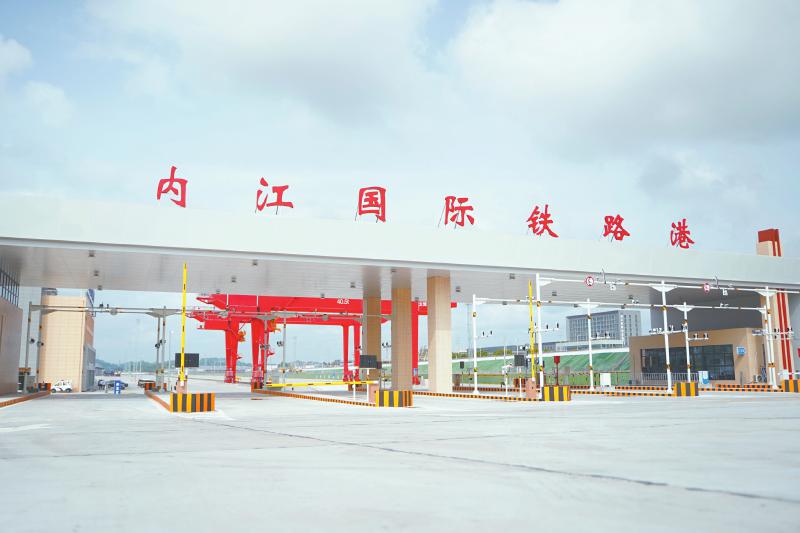
Core Insights - The operation of the Neijiang International Logistics Port railway dedicated line enhances the logistics capabilities and trade efficiency of the region, attracting significant interest from businesses [5][6] - Neijiang has established trade partnerships with 178 countries and regions, and the foreign trade performance has shown substantial growth, particularly with countries involved in the Belt and Road Initiative [4][9] - The local government has implemented various supportive policies to boost economic activity and facilitate international trade [10][11] Group 1: Logistics and Infrastructure - The Neijiang International Logistics Port railway dedicated line, operational since August 7, connects major railways and integrates resources for efficient cargo transport [5][6] - The logistics port enables goods to reach important RCEP member ports within 50 hours, enhancing the region's connectivity and trade potential [6] - The establishment of the first international freight train assembly center and the first air logistics city cargo station in the western region further strengthens Neijiang's logistics capabilities [6] Group 2: Foreign Trade Performance - From January to July, Neijiang's foreign trade import and export total reached 7.759 billion yuan, marking a year-on-year increase of 61.4%, with exports alone amounting to 6.508 billion yuan, up 62.5% [5] - Local enterprises have significantly increased their export volumes, with a reported 20% growth in exports from January to August [8][9] - The proportion of local enterprises in foreign trade has risen, with a total import and export value of 1.656 billion yuan from January to June, an increase of 11.7 percentage points compared to the previous year [9] Group 3: Policy Support and Economic Measures - The local government has introduced measures to support economic operations, including financial incentives for enterprises participating in international trade exhibitions [10][11] - Policies have been enacted to reduce risks for exporting companies, including substantial subsidies for export credit insurance [11] - The government is actively facilitating trade by organizing international business promotion activities and signing significant import agreements [10][11]
2025年1-7月我国离岸服务外包执行额小幅增长
Shang Wu Bu Wang Zhan· 2025-08-26 11:09
Core Insights - The total execution amount of service outsourcing by Chinese enterprises from January to July 2025 was 953.87 billion RMB, a year-on-year decrease of 1.2% [1] - Offshore service outsourcing execution amount reached 548.24 billion RMB, showing a year-on-year growth of 2.6% [1] Business Structure - The execution amount for offshore Information Technology Outsourcing (ITO) was 227.45 billion RMB, a decrease of 0.7% year-on-year [1] - Business Process Outsourcing (BPO) execution amount was 101.76 billion RMB, with a significant year-on-year increase of 22.5% [1] - Knowledge Process Outsourcing (KPO) execution amount was 219.03 billion RMB, reflecting a year-on-year decline of 1.3% [1] - Notably, business operation services and maintenance services saw rapid growth, with execution amounts of 61.98 billion RMB and 35.4 billion RMB, increasing by 20% and 32.8% respectively [1] Regional Distribution - The 37 service outsourcing demonstration cities in China collectively executed offshore service outsourcing worth 480.4 billion RMB, a year-on-year increase of 2.7%, accounting for 87.6% of the total offshore service outsourcing execution [1] - The Yangtze River Delta region recorded an offshore service outsourcing execution amount of 283.77 billion RMB, a slight decline of 0.1% year-on-year [1] - The Beijing-Tianjin-Hebei region saw an increase in offshore service outsourcing execution amount to 62.53 billion RMB, growing by 12.2% year-on-year [1] International Market - The top three sources of offshore service outsourcing for China were the United States (103.56 billion RMB), Hong Kong (95.26 billion RMB), and the European Union (70.35 billion RMB), with year-on-year declines of 1.2%, 2.5%, and 1.4% respectively, together accounting for 49.1% of the total offshore service outsourcing execution [2] - Execution amount from Regional Comprehensive Economic Partnership (RCEP) member countries totaled 162.77 billion RMB, while the "Belt and Road" initiative countries contributed 187.86 billion RMB [2] - Notably, the execution amount from Singapore reached 70.35 billion RMB, with a growth rate of 26.4% [2] Enterprise Nature - Domestic enterprises executed offshore service outsourcing worth 301.0 billion RMB, a year-on-year decrease of 0.3%, representing 54.9% of the total [2] - Foreign enterprises executed offshore service outsourcing amounting to 247.24 billion RMB, showing a year-on-year increase of 6.5%, accounting for 45.1% of the total [2] Employment Impact - By the end of July 2025, the cumulative number of employees absorbed by the service outsourcing sector in China reached 17.272 million, with 11.324 million holding a university degree or higher, representing 65.6% [2] - From January to July, the service outsourcing sector added 306,000 new employees, with 216,000 of them holding a university degree or higher, accounting for 70.6% [2]
李克强出席第25次东盟与中日韩领导人会议
Xin Hua She· 2025-08-22 08:44
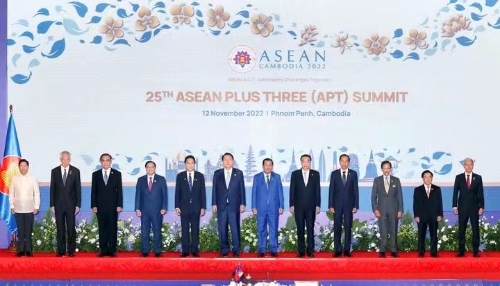
Core Viewpoint - The 10+3 cooperation framework, which includes ASEAN countries, China, Japan, and South Korea, is crucial for regional economic integration and stability, especially in the face of complex international challenges [2][4]. Group 1: Economic Integration - The importance of maintaining the regional economic integration process was emphasized, with a focus on the full implementation of the Regional Comprehensive Economic Partnership (RCEP) to maximize its benefits [3]. - China has proposed the establishment of an RCEP secretariat to facilitate cooperation [3]. Group 2: Supply Chain Stability - There is a strong emphasis on maintaining the stability of industrial and supply chains, advocating for open and integrated development [3]. - The establishment of a 10+3 SME service alliance is aimed at enhancing technological innovation and digital transformation among regional enterprises [3]. Group 3: Crisis Response - China supports the construction of a 10+3 emergency medical supplies reserve center and a rice emergency reserve mechanism to enhance crisis response capabilities [3]. - The effectiveness of the Chiang Mai Initiative is to be improved to strengthen the regional financial safety net [3]. Group 4: Cultural Exchange - The initiation of a 10+3 immigration and consular officials consultation mechanism is proposed to facilitate personnel exchanges [3]. - There is a commitment to optimize pandemic control measures and gradually increase international flights to support the return of ASEAN and Japanese students to China [3]. Group 5: Sustainable Development - China is willing to collaborate on global development initiatives and lead research on 10+3 transformative finance [3]. - The continuation of the East Asia poverty reduction cooperation initiative is aimed at supporting regional development [3]. Group 6: Overall Cooperation - Over the past decade, China has proposed more than 130 cooperation initiatives or projects under the 10+3 framework, most of which have been implemented successfully [4]. - The meeting highlighted the importance of deepening cooperation in various fields, including agriculture, digital economy, financial security, and public health, to address global challenges and promote regional economic integration [4].
前7个月云南对湄公河五国进出口值超659亿元
Yang Shi Xin Wen· 2025-08-16 05:37
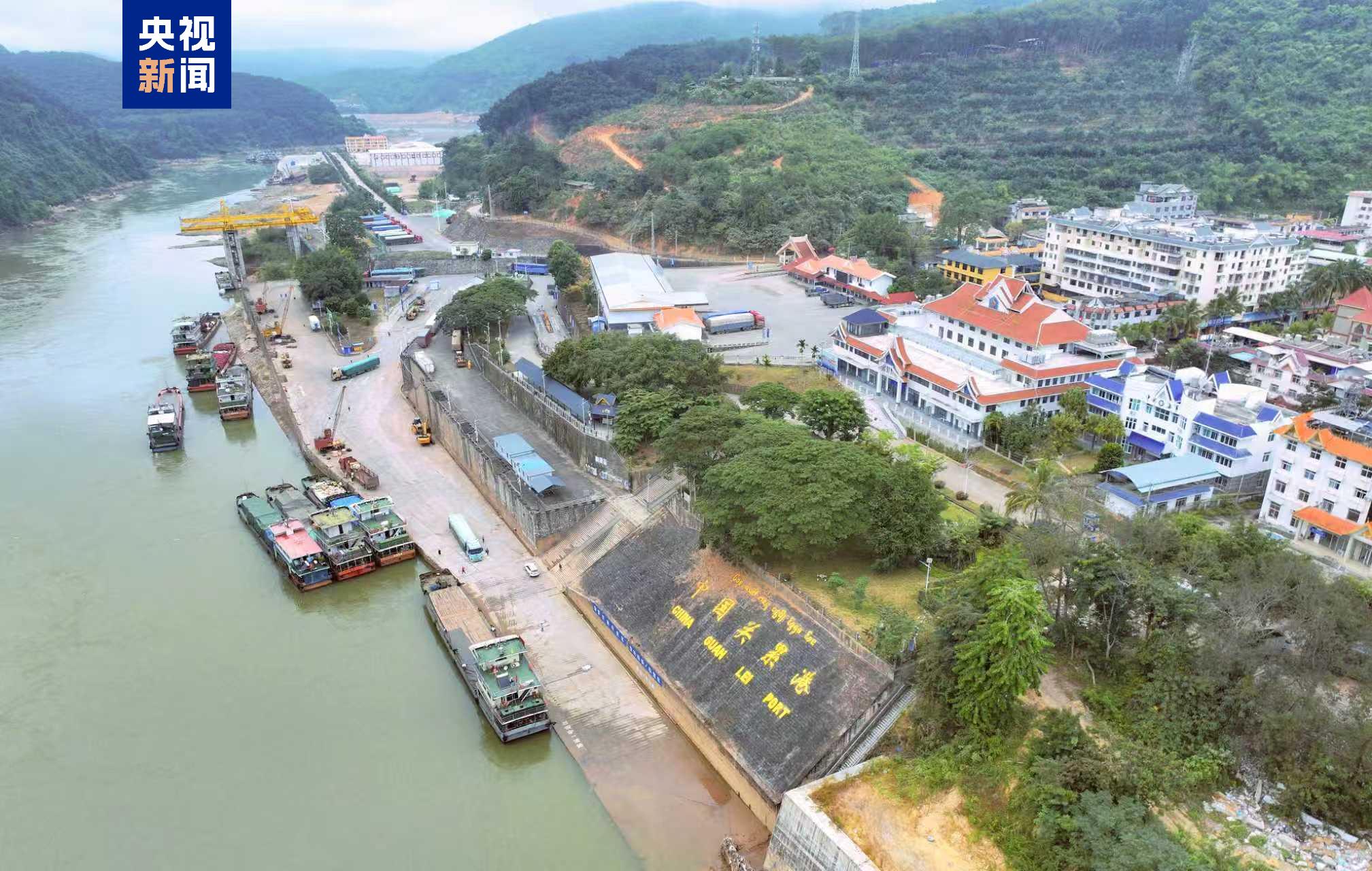
Core Insights - Yunnan Province's import and export value with the five Mekong River countries reached 65.94 billion yuan in the first seven months of the year, a year-on-year increase of 6.3% [2] - Exports amounted to 24.55 billion yuan, growing by 10.2%, while imports were 41.39 billion yuan, increasing by 4.2% [2] - The value of imports from the Mekong River countries included agricultural products, metal ores, and rubber, totaling 14.82 billion yuan, 4.77 billion yuan, and 2.37 billion yuan respectively, accounting for 53% of total imports from these countries [2] Trade Agreements and Benefits - In the first seven months, the value of imports under preferential trade agreements with the Mekong River countries was 22.23 billion yuan, with tax reductions amounting to 4.41 billion yuan, reflecting year-on-year growth of 14.4% and 16.7% respectively [3] - A total of 63,000 certificates of origin for preferential trade agreements were issued, with a visa amount of 9.92 billion yuan, showing increases of 2% and 6% year-on-year [3] Port Development - The import and export value at the Guanlei Port reached 1.72 billion yuan, marking a significant year-on-year increase of 114.2%, establishing it as a key hub for international shipping along the Lancang-Mekong River [2]
前7个月云南省对湄公河五国进出口规模超659亿元
Sou Hu Cai Jing· 2025-08-16 02:15
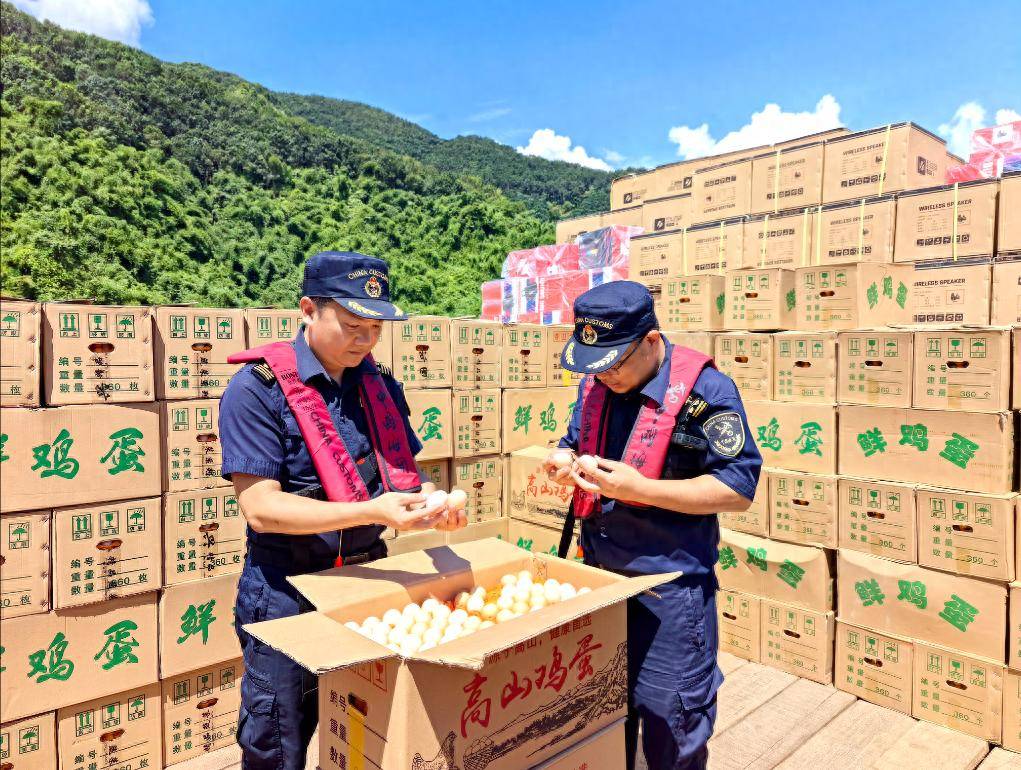
Core Insights - Yunnan Province's trade with the five Mekong River countries (Cambodia, Laos, Myanmar, Thailand, Vietnam) reached 65.94 billion yuan in the first seven months of this year, marking a year-on-year increase of 6.3% [1] - Exports amounted to 24.55 billion yuan, growing by 10.2%, while imports totaled 41.39 billion yuan, with a growth of 4.2% [1] Trade Dynamics - The Guany Port in Yunnan Province serves as a key entry point for goods from Thailand and Laos, including fresh fruits, instant noodles, and rubber, which are then distributed to the domestic market [2] - Conversely, Yunnan exports various products such as tractors, steel, tea, and eggs to the Mekong River countries via the Lancang-Mekong International Waterway [2] Infrastructure and Growth - The Lancang-Mekong River is described as a "golden waterway" facilitating direct transportation without third-country transit, significantly enhancing trade and cultural exchanges among the Mekong countries [4] - The Guany Port has seen a remarkable increase in trade, with an import-export value of 1.72 billion yuan in the first seven months, reflecting a 114.2% year-on-year growth, establishing it as a vital hub for international shipping [4] Product Preferences - Yunnan's agricultural and manufacturing advantages have translated into competitive trade, with agricultural products, electromechanical products, and labor-intensive goods being particularly favored in the Mekong markets [4] - In the first seven months, exports of agricultural products, electromechanical products, and labor-intensive products totaled 6.23 billion, 4.41 billion, and 2.14 billion yuan respectively, accounting for 52% of Yunnan's total exports to the Mekong countries [4] Import Trends - Yunnan's imports from the Mekong countries included agricultural products, metal ores, and rubber, totaling 14.82 billion, 4.77 billion, and 2.37 billion yuan respectively, which made up 53% of the province's total imports from these countries [5] - The province has effectively integrated Mekong markets into China's industrial chain, meeting domestic consumer and production needs while promoting high-quality Belt and Road Initiative cooperation [5] Trade Agreements - Yunnan actively implements tariff reduction policies under various trade agreements, including RCEP and China-ASEAN Free Trade Agreement, leading to a continuous increase in the utilization rate of these agreements [5] - In the first seven months, the value of imports under preferential trade agreements from the Mekong countries reached 22.23 billion yuan, with tax reductions amounting to 4.41 billion yuan, reflecting year-on-year growth of 14.4% and 16.7% respectively [5]