
医保基金监管

Search documents
参保率95%以上,临沂各级财政补助居民参保投入252.51亿
Qi Lu Wan Bao· 2025-12-27 10:05
Core Viewpoint - The Linyi Municipal Government has made significant progress in enhancing the medical insurance system during the "14th Five-Year Plan" period, focusing on ensuring basic medical coverage, promoting reforms, and improving service quality [2][3][4]. Group 1: Medical Insurance Coverage - The basic medical insurance coverage rate in Linyi has remained stable at over 95%, with a total of 252.51 billion yuan invested by various levels of government to support resident insurance [3][4]. - The reimbursement rates for inpatient expenses under employee and resident medical insurance are maintained at 80% and 65%, respectively [3]. Group 2: Medical Assistance and Support - A total of 348.97 million medical assistance cases were recorded, alleviating medical expenses by 14.51 billion yuan during the "14th Five-Year Plan" period [3]. - The reimbursement standard for insured residents' hospital deliveries has been increased to 3,000 yuan, with a 100% reimbursement rate for insured employees [3]. Group 3: Medical Insurance System Reform - Linyi has implemented a centralized procurement policy for drugs and medical consumables, executing 890 types of procured drugs and 40 categories of medical consumables [4]. - The city has conducted 18 price adjustments for medical service projects, reducing prices for 346 items to ease the financial burden on residents [4]. Group 4: Service Improvement Initiatives - The city has launched a "city-wide handling" initiative for 27 medical insurance services, achieving seamless processing for registration and reimbursement [5]. - The direct settlement rate for medical expenses across provinces has improved to 91.96%, with a total of 4.11 billion yuan disbursed for maternity benefits [5]. Group 5: Fund Management and Efficiency - Over the past five years, the total expenditure of the medical insurance fund reached 795.14 billion yuan, benefiting 2.75 billion people [6]. - The city has implemented a prepayment system for qualified medical institutions, with 39.38 billion yuan disbursed as advance payments during the "14th Five-Year Plan" [6]. Group 6: Regulatory Enhancements - A joint meeting system for medical insurance fund supervision has been established, enhancing the regulatory framework and ensuring accountability [7]. - During the "14th Five-Year Plan" period, the city recovered and refused payments amounting to 10.2 billion yuan due to violations of fund usage [7].

实践故事丨守好群众“看病钱”
Zhong Yang Ji Wei Guo Jia Jian Wei Wang Zhan· 2025-12-23 00:14
Group 1 - The core viewpoint emphasizes the importance of safeguarding the medical insurance fund, which is considered essential for public health and welfare [1] - The local government in Hebi City, Shan District, is focusing on improving the supervision of the medical insurance fund as a key measure to combat corruption and misconduct in the community [1] - A work group has been established to address issues related to the medical insurance fund, including the creation of a supervision checklist and a mechanism for regular updates and reports [1] Group 2 - The local government is conducting embedded supervision in medical institutions and pharmacies to check for irregularities such as project switching, excessive medication use, and duplicate charges [2] - The use of drug traceability codes is being promoted to ensure that every penny of the medical insurance fund is used effectively, with a focus on verifying drug sales against records [2] - Recommendations have been issued to improve internal control mechanisms and optimize review processes in response to identified issues in medical practices and management [2]
过度诊疗、重复收费,惠州曝光5起医保违规典型案例
Nan Fang Du Shi Bao· 2025-12-16 11:14
根据大数据筛查线索,惠州市龙门县医疗保障局调查发现,惠州市龙门县龙城街道社区卫生服务中心存 在违反诊疗规范、过度开展诊疗行为,导致医保基金不当支出,造成医保基金损失。 依据《医疗保障基金使用监督管理条例》有关规定,龙门县医疗保障局责令该机构立即改正违法行为, 并依法处以行政处罚。目前,涉案医保基金已全部追回,龙门县纪委监委已对龙城街道社区卫生服务中 心的4名相关责任人进行立案处理。 近日,惠州市医疗保障局在官网公布2批共5例医保基金典型案例,涵盖参保人骗保、医疗机构违规诊 疗、药店重复收费等类型,旨在通过以案释法强化监管震慑,坚决守护医保基金 "救命钱"。 案例1 参保人隐瞒第三方责任骗保,获刑并退缴违法所得 根据部门联合数据比对线索,惠州市惠城区医疗保障局通过与惠城区检察机关、公安机关的协同核查发 现:参保人曾某某因交通事故受伤就医,在明知存在第三方责任的情况下,隐瞒事故事实,在医保报销 时故意填写"无第三方责任承诺书",违规报销医保基金8115.9元,其中5681.13元依法应由第三方承担 (即骗取医保基金5681.13元),构成骗取医保基金行为。 经多次责令其退款未果后,医保部门依据《中华人民共和国行政 ...
浅析医保领域执法中关于参保人费用处理路径
Sou Hu Cai Jing· 2025-12-10 12:57
自2021年5月《医疗保障基金使用监督管理条例》施行以来,对医保基金违规行为的监管实现了从协议 管理到行政处罚的跃升,近年来随着行政处罚实践不断深入,医保行政部门查处定点医药机构违规使用 医保基金时发现,定点医药机构同时也违规收取了参保人的费用,该如何处理已成为亟待解决的问题。 二、四种处理路径 医保基金是人民群众的"看病钱"、"救命钱",医保基金安全涉及广大参保群众的切身利益,关系到医疗 保障制度的健康持续发展。在医保领域执法实践中,医保行政部门依法对定点医药机构存在的违法违规 使用医保基金行为予以查处,但与之伴随而至的关于参保人自费费用应如何处理,怎么样才能更好保障 参保群众的权益,越来越受到关注。 据不完全统计,目前在不同地区对定点医药机构违规收取参保人费用的处理上有不同做法,尚未形成全 国统一的标准,主要的做法有以下四种: 一、问题产生背景 (一) 近年来,随着我国医保基金监管制度体系和执法体系基本建成,医保部门已联合多部门实现了对医保基 金使用行为的常态化监管,综合运用日常巡查、专项检查、飞行检查、线索核查等形式,借助医保智能 监控系统,加强大数据分析应用,持续保持打击欺诈骗保高压态势,医保基金监管 ...
187个化药集采启动;2家创新药企过聆讯
2 1 Shi Ji Jing Ji Bao Dao· 2025-12-04 23:57
Group 1: Medical Device and Drug Development - The National Medical Products Administration (NMPA) held a meeting to promote the transformation of clinical research results in medical devices, summarizing the achievements of the "Spring Rain Action" and planning future work to enhance project matching and registration services [1] - Xinhua Medical announced that it received medical device registration certificates for several products, including surgical shadowless lamps and thoracic and abdominal endoscopes, which are expected to enhance the company's competitive edge [3] - Stone Pharmaceutical's new drug SYH2056, a selective 5-HT2A receptor agonist for treating depression, has received FDA approval for clinical trials in the U.S. [4] - Anke Bio's subsidiary has received acceptance for a clinical trial application for PA3-17 injection, targeting pediatric and adolescent relapsed/refractory T-cell leukemia, marking a significant step in expanding its indications [5] Group 2: Pharmaceutical Procurement and Regulation - Hebei Province initiated a centralized procurement process for 187 chemical drugs, with formal bidding starting on December 5 [2] - The Central Commission for Discipline Inspection emphasized tightening the safety measures for medical insurance funds, focusing on identifying and addressing fraud and abuse through data technology [3] Group 3: Industry Trends and Innovations - Two innovative pharmaceutical companies, Jiahe Biotech and Hansai Aitai, passed the hearing for listing on the Hong Kong Stock Exchange, highlighting a trend of capital integration in the biotech sector [6] - The World Health Organization released its first global guidelines for using GLP-1 drugs, including semaglutide, for obesity treatment, indicating a growing recognition of these drugs in global health strategies [7]
医保“救命钱”决不能变成“唐僧肉”
Ren Min Ri Bao· 2025-12-03 12:30
Core Insights - The article highlights the issue of fraudulent activities within medical institutions, where staff are found to be falsifying prescriptions and overcharging for services to illegally extract funds from the national medical insurance system [1][2] - In 2024, there was a significant increase in the number of concluded medical insurance fraud cases, with 1,156 cases resulting in 2,299 convictions, marking a year-on-year growth of 130% [1] - The fraudulent practices not only threaten the sustainability of the medical insurance fund but also distort its original purpose of providing basic health coverage [1] Group 1 - The article reports on various medical institutions, including clinics and pharmacies, engaging in deceptive practices to exploit the national medical insurance fund [1] - A specific case in Shanghai involved collusion between hospital management, doctors, and "scalpers," resulting in over 50,000 fraudulent claims and more than 12 million yuan in funds misappropriated over two years [2] - The article emphasizes the need for stricter penalties and enhanced regulatory measures to combat these fraudulent activities, including real-time monitoring of settlement data using big data technology [2] Group 2 - The article stresses the importance of ensuring that every penny of the medical insurance fund is used effectively for health protection, highlighting the need to safeguard these funds as they are crucial for public health [3] - It calls for innovative approaches to enhance the efficiency of fund usage, such as promoting family mutual aid and exploring connections with long-term care insurance [2]
“牛皮袋装百元现钞给医生回扣”,国家医保局曝光医药贿赂案细节,基金监管“零容忍”
Di Yi Cai Jing· 2025-12-02 01:00
Core Viewpoint - The National Medical Insurance Administration (NMIA) has intensified its oversight of the entire illegal profit chain involving medical insurance, covering participants from insured individuals to medical institutions, pharmaceutical representatives, drug dealers, and pharmacies, signaling a zero-tolerance approach towards medical corruption and a commitment to safeguarding medical insurance funds [1][7]. Group 1: Recent Cases and Legal Actions - The NMIA has publicly disclosed multiple cases of bribery and fraud in the medical procurement sector, including significant financial details such as a total of 1.6363 million yuan in kickbacks paid by Huang to 15 doctors and 14.0333 million yuan in bribes from a trading company to doctors at a hospital [2][3]. - A case involving Liu, a pharmacy director, revealed that he accepted a total of 1.1624 million yuan in bribes from various agents, highlighting the extent of corruption within the procurement process [3]. - The NMIA's actions reflect a judicial stance of severe punishment for medical corruption, emphasizing that even in cases of self-reporting or restitution, offenders will face strict penalties [3][7]. Group 2: Regulatory Measures and Future Directions - The NMIA established a credit evaluation system for pricing and procurement in 2020, which includes penalties for companies involved in bribery and unethical sales practices, aiming to enhance the integrity of the medical insurance system [4]. - The NMIA is set to guide local insurance bureaus in implementing credit ratings and enforcing corrective measures for companies that have engaged in dishonest practices, thereby better protecting medical insurance funds [4]. - The regulatory focus has shifted from reactive measures to proactive prevention, utilizing intelligent monitoring systems and a comprehensive evaluation framework to ensure long-term accountability in the medical sector [7].
群众工作札记丨压实责任守护救命钱
Zhong Yang Ji Wei Guo Jia Jian Wei Wang Zhan· 2025-11-25 00:33
Core Insights - The article discusses the efforts of Yiwu City in Zhejiang Province to address issues related to the management and use of medical insurance funds, focusing on combating corruption and ensuring proper fund utilization [1][2] Group 1: Regulatory Measures - Yiwu City has established a collaborative mechanism involving multiple departments such as medical insurance, health, public security, and civil affairs to enhance the management of medical insurance funds [1] - The city is utilizing big data analytics through a provincial smart medical insurance supervision platform to monitor key risk points dynamically, improving the precision of regulatory efforts [1] Group 2: Case Studies and Findings - A specific case was highlighted where a warning from the big data analysis model indicated potential fraudulent behavior at a rehabilitation hospital, leading to a prompt investigation that prevented duplicate payments from the civil affairs system [1] - The city has mandated the rehabilitation hospital to improve internal management and has conducted multiple inspections to address violations related to "bed occupancy" practices, identifying 88 patients who were not actually hospitalized [2] Group 3: Financial Recovery and Oversight - An expert review group has been formed to conduct quarterly cross-reviews of hospitalization records, resulting in the review of 4,143 cases this year, with 403 cases identified as having inadequate admission criteria, leading to the recovery of over 1.57 million yuan in medical insurance funds [2] - The article emphasizes the importance of medical insurance funds as critical financial resources for insured individuals, highlighting ongoing efforts to strengthen oversight and enhance the effectiveness of governance in the healthcare sector [2]
医药代表篡改报告骗保获刑,守护医保“救命钱”再敲警钟
2 1 Shi Ji Jing Ji Bao Dao· 2025-11-24 06:02
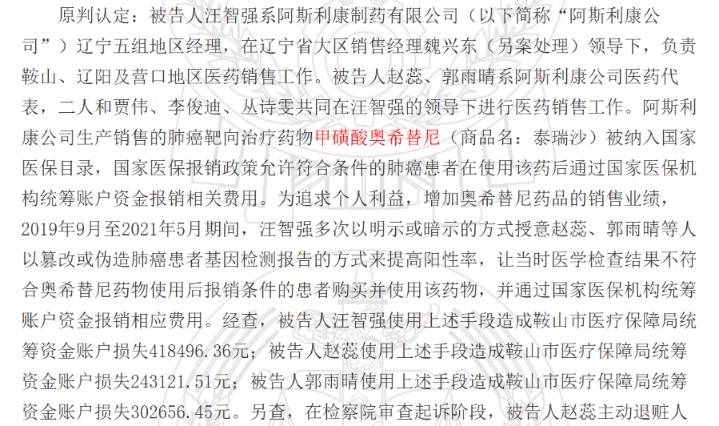
Core Viewpoint - The article highlights the increasing incidents of healthcare fraud in China, particularly involving the manipulation of genetic testing reports to illegally obtain reimbursements from the national medical insurance fund, which is crucial for patients' healthcare access [1][2]. Group 1: Fraud Cases - A pharmaceutical representative altered genetic test results to falsely qualify patients for a targeted cancer drug, resulting in a loss of 27,540 yuan to the national insurance fund [1]. - Multiple similar fraud cases have been identified, with amounts involved ranging from tens of thousands to hundreds of thousands of yuan [2]. - A regional manager and representatives from a pharmaceutical company were found guilty of manipulating test results, leading to losses of 418,496.36 yuan, 243,121.51 yuan, and 302,656.45 yuan respectively [5]. Group 2: Regulatory Response - The Chinese government has intensified its crackdown on healthcare fraud, with a focus on both pharmaceutical sales and hospital practices [7][8]. - New regulations have been introduced to manage external sample testing in public medical institutions, aiming to enhance oversight and ensure compliance with clinical needs and insurance policies [8][9]. - Technological advancements such as smart monitoring and drug traceability are being integrated into regulatory frameworks to improve the precision and effectiveness of fraud detection [10]. Group 3: Implications for Healthcare - The misuse of targeted cancer drugs not only jeopardizes patient safety and treatment efficacy but also places an additional financial burden on the healthcare system [6]. - Experts emphasize the need for stricter adherence to medical insurance policies and the establishment of robust internal management mechanisms within healthcare institutions to prevent fraud [9][10].
南京开展医保基金管理突出问题专项整治
Nan Jing Ri Bao· 2025-11-20 03:18
Group 1 - The article highlights the convenience and benefits of the new insurance service for newborns, allowing parents to settle medical expenses easily through their health insurance cards [1] - The establishment of "newborn insurance service stations" in medical institutions aims to ensure that every newborn is insured, promoting timely enrollment for parents [1] - The city's health insurance fund management has been improved through a special rectification campaign, focusing on safeguarding public funds and enhancing service efficiency [1] Group 2 - The article discusses the issues of fraud and misuse of health insurance funds, emphasizing the need for stricter regulation and oversight in the sector [2] - A series of self-inspections and corrections have been initiated, resulting in the identification of 109 issues and the referral of 76 suspicious cases [2] - Collaborative mechanisms among various departments have been established to address key issues in health insurance fund management [2] Group 3 - The article reports on the disciplinary actions taken against 143 individuals involved in violations related to health insurance funds, with 16 individuals detained [3] - A specific case of embezzlement involving nearly 2 million yuan has been highlighted, showcasing the effectiveness of the ongoing rectification efforts [3] - Recommendations for improving internal regulations and closing loopholes have been issued to prevent future misconduct [3] Group 4 - The implementation of a big data monitoring platform aims to enhance the oversight of health insurance fund operations, allowing for quick identification and response to anomalies [4] - The platform has been effective in detecting unusual prescription patterns and facilitating comprehensive inspections [4] - The transition from manual checks to intelligent monitoring is being pursued to improve efficiency and accountability in fund management [4] Group 5 - The article mentions a reduction in medical service fees for various tests, resulting in significant savings for patients [5] - The initiative to lower prices for medical services is part of a broader "benefit action" aimed at making healthcare more affordable [5] - Overall, the reduction in testing fees has led to a decrease of 213 million yuan compared to the previous year [5]