
半导体产业

Search documents
六十载创“芯”路:于开局时破局 在起步处进步
Shang Hai Zheng Quan Bao· 2025-12-25 19:03
Core Insights - Wuxi's semiconductor industry has evolved from "catching up" to "leading" in the past 60 years, with over 600 companies and an annual output value exceeding 250 billion yuan, ranking second nationally [1][2] - The "908 Project" initiated in 1990 was pivotal for Wuxi's semiconductor development, establishing a foundation for the city's growth as a semiconductor hub [2][3] - Wuxi's semiconductor packaging industry has become a leader nationally, with a projected output value of 652.51 billion yuan in 2024, showcasing its strength in the sector [6] Industry Development - The "908 Project" was the first approved 6-inch wafer manufacturing project in China, enabling Wuxi to support advanced semiconductor manufacturing [2] - Wuxi's semiconductor packaging sector gained prominence through strategic acquisitions, such as Changjiang Electronics Technology's acquisition of STATS ChipPAC, which significantly enhanced its market position [5] - The semiconductor equipment sector in Wuxi has seen substantial growth, with over 500 units shipped, indicating a robust full industry chain development [7] Future Outlook - Wuxi aims to strengthen its semiconductor industry by focusing on high-quality development and addressing challenges such as reliance on imported materials and the need for increased domestic equipment manufacturing [10] - Companies like MicroNano and Risen Technology are leading the charge in semiconductor equipment, with plans for IPOs to further enhance their market presence [8][10] - The industry is encouraged to adopt collaborative innovation to tackle underlying technical challenges and improve overall competitiveness [10]

国新证券每日晨报-20251225
Guoxin Securities Co., Ltd· 2025-12-25 03:20
Domestic Market Overview - The domestic market experienced a steady rise, with the Shanghai Composite Index closing at 3940.95 points, up 0.53%, and the Shenzhen Component Index closing at 13486.42 points, up 0.88% [1][9] - Among the 30 sectors tracked, 26 saw gains, with notable increases in construction materials, defense, and electronics, while agriculture, coal, and food and beverage sectors faced declines [1][9] - The total trading volume for the A-share market was 189.72 billion yuan, showing a slight decrease from the previous day [1][9] Overseas Market Overview - The U.S. stock market recorded five consecutive days of gains, with the S&P 500 index reaching a new historical high, closing up 0.32% [2] - The Dow Jones increased by 0.6%, while the Nasdaq rose by 0.22% [2] Key Drivers - The People's Bank of China held a quarterly monetary policy meeting, emphasizing the need for integrated effects of incremental and stock policies to maintain low financing costs and stabilize the capital market [10] - On the same day, 4128 stocks in the A-share market rose, with 306 stocks increasing by over 5% [10] Industry Developments - The Chinese government released a document to support the construction of the Western Land-Sea New Corridor, proposing 21 key measures to enhance financial cooperation and support high-quality development [11] - The Ministry of Commerce continues to encourage foreign investment in advanced manufacturing, with a focus on sectors such as nucleic acid drug development and smart energy management systems [11] - A new fund for the commercial aerospace industry was launched, with an initial scale of 1-2 billion yuan, targeting investments in low-orbit satellite constellations and reusable launch vehicles [14]
英伟达H200,将卖给中国
半导体芯闻· 2025-12-23 10:35
Core Insights - Nvidia has informed Chinese companies about plans to deliver the first batch of H200 GPUs by mid-February, with an expected shipment of 5,000 to 10,000 chip modules, totaling approximately 40,000 to 80,000 H200 chips [1] - The shipment is contingent upon approval from the Chinese government, which has yet to authorize purchases despite interest from major tech firms like Alibaba and ByteDance [1] - This marks the first delivery of the H200 series to the Chinese market since the Trump administration approved exports, with the U.S. government set to receive a 25% share from these sales [1] Group 1 - The Biden administration previously prohibited the sale of all chips to China under national security concerns, but the recent policy shift by Trump aims to support U.S. jobs and manufacturing [3] - Economic factors may take precedence over national security in the semiconductor trade tensions between the U.S. and China [3] - In response to U.S. restrictions, China has implemented export limits on rare earth materials, crucial for processors and electronic products [3] Group 2 - Analysts suggest a potential "chip for rare earth materials" deal between the U.S. and China, which could lead to China easing its restrictions on rare earth exports [3] - Any export of H200 chips to China will face strict scrutiny, with U.S. lawmakers requesting detailed information on licenses for sales to Chinese entities [4] - Lawmakers are also seeking to review any agreements made by the Trump administration regarding the H200 and assessments of China's advanced chip production capabilities [4] Group 3 - The H200 GPU, although an older generation, is widely used in artificial intelligence applications, and Nvidia is focusing on increasing its production to meet demand from Chinese clients [4] - Chinese officials are deliberating on whether to allow imports of the H200 chips, concerned that it may hinder the development of China's own semiconductor industry [4] - A potential solution could involve requiring Chinese companies to purchase a certain number of domestic chips for every H200 chip acquired [4] Group 4 - Nvidia has stated that selling H200 GPUs to authorized customers in China will not affect its ability to supply U.S. customers [5]


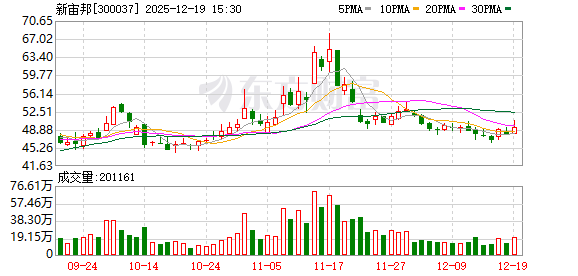
新宙邦(300037.SZ):含氟冷却液产品已实现在半导体制程冷却、数据中心浸没式冷却及精密仪器清洗等关键领域的批量应用
Ge Long Hui· 2025-12-23 09:43
Core Viewpoint - The company has successfully implemented its fluorinated cooling liquid products in key areas such as semiconductor processing cooling, data center immersion cooling, and precision instrument cleaning, indicating strong market demand and application [1] Group 1: Product and Market Application - The company's fluorinated cooling liquids have achieved mass application in critical sectors, including semiconductor processing and data centers [1] - The total production capacity for hydrogen fluoride ether and perfluoropolyether is 5,500 tons, showcasing the company's strong technical foundation and sufficient capacity [1] - The company has established partnerships with numerous global mainstream clients across various application fields, with positive customer feedback and increasing capacity utilization [1] Group 2: Growth Opportunities - The acceleration of global semiconductor industry investments and the exit of international mainstream companies present market opportunities for the company's fluorinated liquid business [1] - The company is actively planning new capacity expansions to meet future demand, indicating a proactive approach to growth [1]

加仓!加仓!
中国基金报· 2025-12-23 06:50
Group 1 - On December 22, the A-share market saw all three major indices rise, with the stock ETF market continuing its trend of net inflows, exceeding 2.2 billion yuan that day [2][4] - The Shanghai Composite Index increased by 0.69%, the Shenzhen Component Index rose by 1.47%, and the ChiNext Index climbed by 2.23%. The computing hardware sector showed active performance, with significant gains in optical communication and CPO, while the media sector weakened and bank stocks retreated [4] - As of December 22, the total scale of 1,282 stock ETFs in the market was approximately 4.7 trillion yuan, with a net inflow of over 2.2 billion yuan based on an increase of 6.612 billion fund shares [4] Group 2 - The net inflow of funds for broad-based ETFs reached 5.248 billion yuan on December 22, with the CSI A500 index products leading the inflow at 14.414 billion yuan [4] - Over the past five trading days, the CSI A500 index products saw a net inflow exceeding 42.1 billion yuan, while the Hang Seng Technology index products had a net inflow of over 4.8 billion yuan [4] - On December 22, 28 ETFs had net inflows exceeding 1 billion yuan, with the top three being the CSI A500 ETF from Guotai Fund (5.238 billion yuan), A500 ETF from Southern Fund (3.146 billion yuan), and A500 ETF from Huaxia Fund (2.878 billion yuan) [4][5] Group 3 - The CSI 300 index products experienced the largest net outflow, totaling 4.594 billion yuan, while thematic ETFs also saw significant outflows of 4.467 billion yuan [8] - The top three ETFs with the largest net outflows included the CSI 300 ETF from Huatai-PB Fund (-2.327 billion yuan), the ChiNext ETF from E Fund (-1.019 billion yuan), and the CSI 300 ETF from E Fund (-0.864 billion yuan) [9] Group 4 - Looking ahead, the semiconductor industry is expected to continue its upward trend due to multiple favorable factors, including a surge in AI computing demand, accelerated domestic substitution, and technological breakthroughs [10] - The technology sector is anticipated to maintain strong industrial momentum through 2026, with value styles expected to support the market as it enters a stable phase, suggesting a characteristic of "technology leading, value following" [10]

芯片股早盘走强 国家大基金三期布局IC载板领域
Zhi Tong Cai Jing· 2025-12-22 02:31
Group 1 - Chip stocks showed strength in early trading, with notable increases: SMIC (00981) up 4.23% to HKD 67.75, InnoCare (02577) up 3.31% to HKD 73.45, Hua Hong Semiconductor (01347) up 3.25% to HKD 69.95, and ASMPT (00522) up 2.82% to HKD 76.45 [1] - Recent changes in the ownership structure of Anji Liwei have attracted attention, with the original shareholder, Anji Electronics, officially exiting, while new shareholders including the National Integrated Circuit Industry Investment Fund (Phase III) and local investment groups have joined [1] - The entry of the National Fund Phase III is seen as a recognition of the company's technological capabilities in the field of packaging substrates, which are critical for connecting chips to PCBs, characterized by high technical barriers and low domestic production rates [1] Group 2 - The National Fund Phase III, established as a national capital platform for the semiconductor industry, focuses on advanced manufacturing, high-end chip design, critical materials/equipment, and third-generation semiconductors, emphasizing "strengthening the chain and supplementing the chain" and "industry chain collaboration" [1] - The investment from the National Fund and local state-owned assets in Anji Liwei is expected to accelerate the company's high-end substrate production capacity and technological iteration, addressing domestic gaps in the market [1]


港股异动 | 芯片股早盘走强 国家大基金三期布局IC载板领域
智通财经网· 2025-12-22 02:16
Group 1 - Chip stocks showed strength in early trading, with notable gains from companies such as SMIC (up 4.23% to HKD 67.75), Innoscience (up 3.31% to HKD 73.45), Hua Hong Semiconductor (up 3.25% to HKD 69.95), and ASMPT (up 2.82% to HKD 76.45) [1] - The recent industrial change at Anji Li Meiwai has attracted attention, as the original shareholder, Anji Electronics Industry Co., Ltd., has officially exited, while new shareholders including the National Integrated Circuit Industry Investment Fund (Phase III) and Guangzhou Industrial Investment Holding Group have joined [1] - The entry of the National Fund Phase III is seen as a recognition of the company's technological strength in the field of packaging substrates, which are critical carriers connecting chips to PCBs, characterized by high technical barriers and low domestic production rates [1] Group 2 - The National Fund Phase III is a national capital platform established for the semiconductor industry, following the first and second phases in 2014 and 2019, respectively, focusing on advanced manufacturing, high-end chip design, critical materials/equipment, and third-generation semiconductors [1] - The collaboration between the National Fund Phase III and local state-owned assets in investing in Anji Li Meiwai is expected to accelerate the construction of high-end substrate production capacity and technological iteration, filling domestic gaps in this area [1]
新宙邦:公司的含氟冷却液产品已实现在半导体制程冷却、数据中心浸没式冷却及精密仪器清洗等关键领域的批量应用
Zheng Quan Ri Bao· 2025-12-19 15:52
Core Viewpoint - The company has successfully implemented its fluorinated cooling liquid products in key areas such as semiconductor process cooling, data center immersion cooling, and precision instrument cleaning, indicating strong market demand and growth potential [2] Group 1: Product Application and Market Position - The company's fluorinated cooling liquids, including hydrogen fluoride ether (HFE) and perfluoropolyether (PFPE), have achieved a combined production capacity of 5,500 tons [2] - The company has established partnerships with numerous global mainstream clients across various application fields, receiving positive feedback and continuously improving capacity utilization [2] Group 2: Industry Growth and Future Outlook - The acceleration of global semiconductor industry investments and the exit of international mainstream companies from the market present significant opportunities for the company's fluorinated liquid business [2] - The company is actively planning new capacity expansions to meet future demand in the growing market [2]
台积电营收环比下滑6.5%!
国芯网· 2025-12-11 04:49
Core Viewpoint - The article discusses the recent revenue performance of TSMC, highlighting its growth in the semiconductor industry and the implications for future performance [2][4]. Group 1: TSMC Revenue Performance - TSMC reported a revenue of 343.61 billion New Taiwan Dollars (approximately 11.00 billion USD) for November, which represents a year-on-year increase of 24.5% compared to 276.06 billion New Taiwan Dollars in the same month last year [2]. - However, the November revenue showed a month-on-month decline of 6.5% from the previous month's revenue of 367.47 billion New Taiwan Dollars [2]. - For the first 11 months of the year, TSMC's revenue reached 3,474.05 billion New Taiwan Dollars, marking a year-on-year growth of 32.8% from 2,616.15 billion New Taiwan Dollars in the same period last year [4]. Group 2: Monthly Revenue Trends - TSMC's November revenue growth marks the 23rd consecutive month of year-on-year growth, with the last decline occurring in December 2023, when revenue was 176.3 billion New Taiwan Dollars, reflecting an 8.4% year-on-year decrease [4]. - If TSMC continues to see year-on-year growth in December, it will achieve two consecutive years of monthly revenue growth [4].

半导体设备ETF(159516)盘中涨超2%,连续5日资金净流入近2亿元,国内存储厂商扩产紧迫性不断上升
Mei Ri Jing Ji Xin Wen· 2025-12-08 07:13
相关机构表示,随着海外原厂将资本开支倾斜于HBM为代表的高端存储产品,传统存储的供需缺口具 有持续性,因此国内存储厂商扩产的紧迫性不断上升。目前,长鑫存储已完成IPO辅导,当前其在 DDR5和LPDDR5产品上正实现显著增长,Counterpoint预测,长鑫存储在DDR5市场的份额将从第一季 度不到1%上升至年底的7%,在LPDDR5市场的份额将从0.5%激增至9%,先进制程技术发展迅猛。 半导体设备ETF(159516)跟踪的是半导体材料设备指数(931743),该指数聚焦于半导体产业链上游 的材料与设备领域,选取从事半导体材料研发、生产以及半导体设备制造的上市公司证券作为指数样 本,以反映半导体产业核心基础环节的整体表现。作为科技投资的重要风向标,该指数具有显著的技术 壁垒和成长性特征,能够有效追踪半导体产业关键支撑领域的发展动态。 (文章来源:每日经济新闻) ...