
原始创新

Search documents
三力齐发助中国科技勇立潮头
Zheng Quan Ri Bao· 2026-01-06 16:13
Group 1 - The International Consumer Electronics Show (CES) 2023 showcased China's technological advancements, highlighting a transition from "smart creation" to "ecological leadership" [1] - Chinese technology companies are evolving from mere technology integrators to global leaders, launching defining technological architectures and open platforms to build industry ecosystems [1][2] - The competition in global technology is intensifying, necessitating China to shift from "running alongside" to "leading" through focused efforts in three key areas [1] Group 2 - Strengthening foundational research and frontier exploration is essential for China to maintain a competitive edge in original innovation, particularly in fields like artificial intelligence and quantum information [2] - Enhancing the resilience and collaboration of the industrial chain is crucial, with a focus on upgrading to high-end, intelligent, and green manufacturing, while addressing gaps in key components and advanced materials [2] - Optimizing capital supply to support technological innovation involves fostering "patient capital," ensuring smooth capital circulation, and enhancing global investment capabilities for leading enterprises [2] Group 3 - The trajectory of Chinese technology is moving from "Made in China" to "Created in China," and now to "Leading China," indicating a clear upward trend in innovation [3]
专访百利天恒创始人朱义:原始创新打造超级爆品,执掌全球话语权
21世纪经济报道· 2026-01-03 11:43
Core Insights - The key opportunity for local biotech companies lies in focusing on original innovation from 0 to 1, establishing core technological barriers in unmet clinical needs, and achieving a leap from follower to leader [2][14] - Chinese innovative pharmaceutical companies have entered the global ADC innovation core camp, with over 50% of the global ADC new drug pipeline originating from China [1][14] - The strategic partnership between BaiLi TianHeng and BMS in the ADC field has set a record for the highest single-asset transaction in the global ADC sector, further elevating industry innovation [1][5] Industry Trends - The BD (business development) boom in the ADC sector is expected to continue into 2025, with 14 transactions in the first eight months of 2023, making ADC one of the hottest outbound technology tracks [1][14] - Companies are expanding beyond mature targets like HER2 and TROP2 to explore "blue ocean" targets such as CDH6, CDH17, and DLL3, seeking broader treatment windows and improved competitive landscapes [1][14] Strategic Partnerships - The partnership model of "self-researched core assets + global rights cooperation" and "co-development + co-commercialization" is relatively rare globally, requiring high product strength and a forward-looking strategic vision [7][9] - BaiLi TianHeng's collaboration with BMS is notable for its potential total transaction value of up to $8.4 billion, highlighting the growing trend of significant transactions in the oncology treatment sector [5][9] Challenges and Opportunities - Despite the increasing number of transactions, many Chinese innovative drug assets remain undervalued due to a lack of global clinical trial validation and lower payment prices in the domestic market [9][12] - The development of "super blockbuster" products with strong product power is seen as a key path to overcoming valuation challenges, with the drug iza-bren being recognized as a first-in-class product [9][12] Future Directions - The competition in the "ADC + IO" (immuno-oncology) space is intensifying, with both multinational and domestic companies actively pursuing innovative combinations [10][14] - To achieve comprehensive internationalization, Chinese pharmaceutical companies must overcome four core capability gaps: global leading R&D capabilities, global clinical development capabilities, global supply chain capabilities, and global commercialization capabilities [12][13]


专访百利天恒创始人朱义:原始创新打造超级爆品,执掌全球话语权
2 1 Shi Ji Jing Ji Bao Dao· 2025-12-30 23:06
Core Insights - The key opportunity for local biotech companies lies in focusing on original innovation from 0 to 1, establishing core technological barriers in unmet clinical needs, and achieving a leap from follower to leader [1][2] - China has emerged as a core player in the global ADC innovation landscape, with over 50% of the global ADC new drug pipeline, and has built technological advantages in certain niche areas [1][2] - The strategic partnership between BaiLi TianHeng and BMS in the ADC field has set a record for the highest single-asset transaction in the history of ADC drugs, significantly boosting industry innovation [1][2] Business Development (BD) Trends - The BD trend in the ADC sector is expected to continue into 2025, with 14 transactions in the first eight months of 2023, making ADC one of the hottest outbound technology tracks [1][2] - Notable transactions include several ADC licensing agreements exceeding $1 billion, with companies like XinNuoWei, ShiYao Group, and YingEn Bio leading the way [1][2] - Companies are expanding beyond mature targets like HER2 and TROP2 to explore "blue ocean" targets such as CDH6, CDH17, and DLL3, seeking broader therapeutic windows and improved competitive landscapes [1][2] Strategic Partnerships - The partnership between BaiLi TianHeng and BMS, with a potential total transaction value of $8.4 billion, has revitalized the pharmaceutical market during a challenging period [2][3] - BaiLi TianHeng's clinical data attracted interest from eight of the top ten multinational pharmaceutical companies, leading to the largest single-asset transaction in the ADC field [2][3] - The collaboration model of "self-researched core assets + global rights cooperation" and "co-development + co-commercialization" is relatively rare globally and requires high product quality and forward-looking strategic vision [3] Challenges and Opportunities - The core challenge in the initial phase of the partnership is the difference in team size and division of labor, prompting BaiLi TianHeng to expand its team and build a robust system [3][7] - The domestic biotech sector is experiencing a surge in transactions, with innovative collaboration models emerging, such as the partnership between XinDa Biotech and Takeda [3][4] - The need to create "super blockbuster" products is critical to overcoming the undervaluation of Chinese innovative drug assets, as many products have not undergone global clinical trials [5][6] Future Directions - The competition in the "ADC + IO" space is intensifying, with multinational companies collaborating on various ADC products, while domestic firms are also making significant advancements [6][7] - The development of next-generation original innovations is essential for creating future industry blockbusters, focusing on breakthrough efficacy and addressing significant clinical needs [6][7] - To achieve comprehensive internationalization, companies must overcome four core capability gaps: global leading R&D capabilities, global clinical development capabilities, global supply chain capabilities, and global commercialization capabilities [7][8][9]
“这是一个重大任务”,如何落实推进(创新谈)
Ren Min Ri Bao· 2025-12-28 22:17
Core Viewpoint - The construction of three major international technology innovation centers in Beijing (Jing-Jin-Ji), Shanghai (Yangtze River Delta), and the Guangdong-Hong Kong-Macao Greater Bay Area is a significant strategic task aimed at enhancing the overall efficiency of the national innovation system and facilitating the flow of innovative resources [1][2]. Group 1: Strategic Importance - The establishment of these centers is a major task personally planned and promoted by General Secretary Xi Jinping, emphasizing its large scale and profound impact on international competition [1]. - The centers are expected to serve as critical points for innovation-driven development strategies, concentrating advantageous resources and enhancing the flow of innovative elements across a broader area [2]. Group 2: Regional Advantages and Collaboration - The expansion of the Beijing international innovation center to the Jing-Jin-Ji region and the Shanghai center to the Yangtze River Delta will accelerate the formation of China's primary sources of original innovation, with Beijing's research resources, Tianjin's manufacturing base, and Hebei's land and cost advantages playing key roles [2]. - Each region has distinct advantages: Jing-Jin-Ji focuses on original innovation breakthroughs, the Yangtze River Delta aims to enhance technology transfer and high-end industrial clusters, and the Greater Bay Area emphasizes cross-border collaborative innovation [2]. Group 3: Methodology and Implementation - The construction of the three centers requires adherence to the inherent laws of technological innovation, emphasizing patience and long-term investment rather than short-term metrics [3]. - There is a need for practical actions, including reforms in research management, talent evaluation, and the transformation of results, to promote a virtuous cycle among technology, industry, and finance [3]. - Maintaining strategic determination is crucial for the successful completion of this significant task, which will enhance the momentum for high-quality development and solidify the technological support for China's modernization [3].
万亿资金规模!大利好来了
Xin Lang Cai Jing· 2025-12-26 08:51
【导读】国家创业投资引导基金正式启动运行 来源:中国基金报 记者 张舟 重磅利好来了! 今天,国家创业投资引导基金正式启动运行。 1.财政部相关负责人表示,国家创业投资引导基金预计形成万亿资金规模。 引导基金发挥中央资金引领带动作用,广泛吸引地方政府、中央企业、金融机构、民间资本等多方参 与,形成万亿资金规模,通过投基金、投企业、投项目,加大对战略性新兴产业和未来产业支持力度, 加快培育和发展新质生产力。 2.目前京津冀创业投资引导基金、长三角创业投资引导基金、粤港澳大湾区创业投资引导基金均已完 成工商注册,3只区域基金与首批49个子基金以及27个项目代表正式签约。未来三只区域基金总规模均 将超过500亿元。 3.国家发改委:未来,国家创业投资引导基金将推动在三个区域设立超过600只子基金,服务新兴产业 和未来产业发展。 4.财政部:引导基金将以差异化风控体系培育创新生态。 财政部经济建设司司长郭方明表示,在落实国家战略的侧重点方面,国家创业投资引导基金立足自身特 点,通过精准错位发展与其他政府引导基金形成协同合力。 12月26日,国家创业投资引导基金正式启动。京津冀创业投资引导基金、长三角创业投资引导基金、 ...
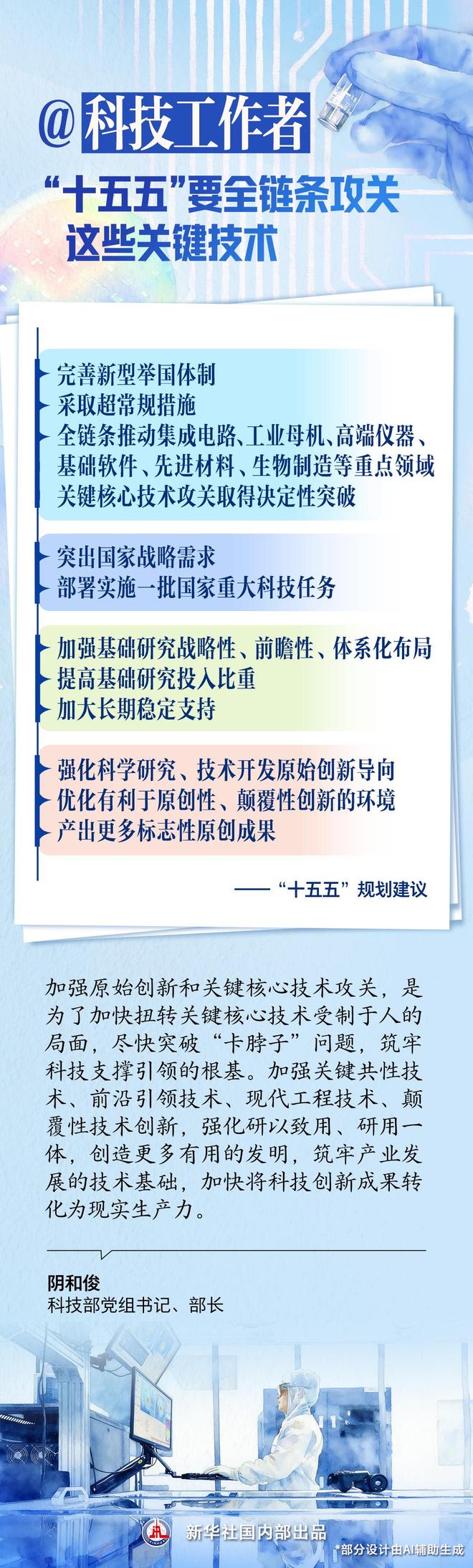
@科技工作者,“十五五”要全链条攻关这些关键技术
Xin Hua She· 2025-12-24 09:48
Group 1 - The article emphasizes the importance of strengthening original innovation and key core technology breakthroughs to address the issue of dependency on external technologies and to overcome critical bottlenecks in various sectors [2][1] - It highlights the need for a comprehensive approach to promote integrated circuits, industrial mother machines, high-end instruments, foundational software, advanced materials, and biomanufacturing as key focus areas for technological advancement [1] - The article outlines the strategic deployment of national major scientific tasks to enhance foundational research and increase investment in this area, aiming for a more systematic and forward-looking layout [1][2] Group 2 - The "14th Five-Year Plan" suggests optimizing the environment for original and disruptive innovation to produce more landmark original achievements [2] - It stresses the importance of transforming scientific and technological innovations into practical productivity, thereby solidifying the technological foundation for industrial development [2] - The article calls for a long-term and stable support system for foundational research to ensure sustained progress in key technological areas [1][2]
百利天恒朱义:原始创新打造超级爆品,执掌全球话语权
2 1 Shi Ji Jing Ji Bao Dao· 2025-12-22 13:08
Core Insights - The oncology sector remains a hotbed for pharmaceutical innovation, with antibody-drug conjugates (ADCs) emerging as one of the most promising areas due to their dual advantages of precise targeting and potent cytotoxicity [1][2] - Chinese biotech companies have established themselves as key players in the global ADC innovation landscape, holding over 50% of the new drug pipeline in this category [1][2] - A significant strategic partnership between BaiLi TianHeng and Bristol-Myers Squibb (BMS) has set a record for the highest total transaction value for a single ADC asset, further intensifying industry innovation [1][2] Industry Trends - The ADC sector has become one of the fastest-growing segments in the global pharmaceutical industry, with projections estimating the market to reach $115.1 billion by 2032, and China's ADC market expected to reach 66.2 billion yuan by 2030 [2] - In the first eight months of 2025, ADC drugs accounted for 14 transactions, making it one of the hottest outbound technology sectors for Chinese companies [1][2] - Companies are expanding their focus beyond established targets like HER2 and TROP2 to explore "blue ocean" targets such as CDH6, CDH17, and DLL3, aiming for broader treatment windows and improved competitive landscapes [1][2] Strategic Collaborations - The partnership between BaiLi TianHeng and BMS is characterized by a unique model of "self-researched core assets + global rights collaboration" and "co-development + co-commercialization," which is relatively rare globally [4][5] - The collaboration is expected to face challenges related to team size and division of labor, prompting BaiLi TianHeng to expand its team and build a robust organizational structure [4][5] - The deal with BMS, valued at up to $8.4 billion, has revitalized the pharmaceutical market during a period referred to as a "capital winter" [2][3] Market Dynamics - Despite the growing trend of business development (BD) transactions, licensing out remains the mainstream model for domestic biotech companies, allowing them to focus on early-stage innovation while outsourcing later-stage development [6] - The increasing number of BD transactions reflects the rising competitiveness and value of Chinese pharmaceutical assets on a global scale, although concerns about undervaluation persist [7][8] - The need to create "super blockbuster" products is seen as essential for overcoming the challenges of being undervalued in the global market [7][8] Future Outlook - The competition in the ADC+IO (immune-oncology) space is intensifying, with both multinational and domestic companies racing to develop innovative therapies [8][9] - BaiLi TianHeng aims to leverage the cash flow from its partnership with BMS to enhance its R&D capabilities and build a comprehensive commercialization framework [9][10] - The company plans to address four core capability gaps essential for achieving global competitiveness: global R&D capabilities, clinical development capabilities, supply chain capabilities, and commercialization capabilities [10][11] Conclusion - The ADC sector's growth signifies a shift in China's pharmaceutical innovation from a follower to a leader, with a focus on original innovation and global capabilities as the pathway for domestic biotech companies to establish themselves as industry leaders [12]
张玉卓:做强做优做大国有企业和国有资本
Ren Min Ri Bao· 2025-12-22 07:55
Core Viewpoint - The interview with Zhang Yuzhuo, Secretary of the Party Committee and Director of the State-owned Assets Supervision and Administration Commission (SASAC), emphasizes the importance of state-owned enterprises (SOEs) as a pillar of the party's governance and the need for deepening reforms to strengthen and optimize SOEs and state capital during the 14th Five-Year Plan period [2]. Group 1: Enhancing Innovation Capabilities - Central enterprises are identified as the national team for technological innovation, with R&D investments exceeding 1 trillion yuan for three consecutive years, focusing on key technologies such as industrial mother machines and software [3]. - The goal is to enhance mission awareness and focus on solving major technological issues that affect national development and security, aiming for high-level technological self-reliance [3]. - There is a commitment to increase high-quality technological supply and tackle "bottleneck" areas, ensuring more original achievements in critical technologies [4]. Group 2: Reforming State-Owned Enterprises - The 14th Five-Year Plan outlines clear requirements for deepening SOE reforms, with a focus on enhancing core functions and competitiveness [5]. - The strategy includes improving the service capabilities of SOEs in relation to national strategies, emphasizing the importance of aligning SOE functions with national security and public service needs [5]. - There is a push to enhance the modern enterprise system with a focus on governance, management, and talent cultivation to boost operational efficiency [5]. Group 3: Optimizing Industrial Layout - SOEs are working on upgrading traditional industries while simultaneously fostering emerging industries, with an average annual investment growth rate of over 20% in new industries during the 14th Five-Year Plan [7]. - The focus will be on transitioning the industrial system towards higher value-added and technology-intensive sectors, playing a leading role in building a modern industrial system [7]. - Efforts will be made to promote digital transformation in traditional industries and integrate advanced technologies such as AI and big data [8]. Group 4: Developing New and Future Industries - The strategy includes identifying and nurturing new industries with significant growth potential, such as renewable energy and aerospace, while also planning for future technologies like quantum science and 6G [8]. - A specialized and market-oriented investment and financing system will be established to support the development of these industries, utilizing various financial tools and funds [8].
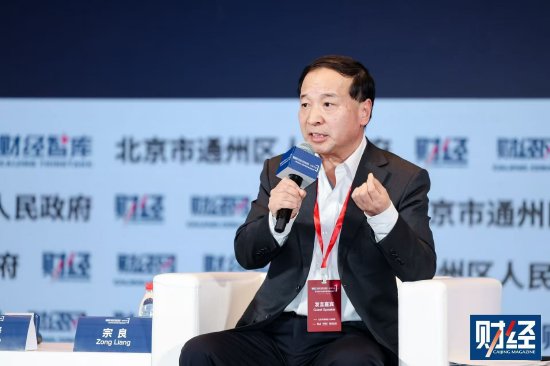
宗良:企业做大做强后,要抓住全球市场的机遇并购
Xin Lang Cai Jing· 2025-12-20 08:07
Core Insights - The 2026 Financial Annual Conference and 2025 Global Wealth Management Forum will be held in Beijing from December 18-20, 2025, focusing on China's strategic positioning in finance, industry cultivation, and technological self-reliance as outlined in the 14th Five-Year Plan [2][5] Group 1: Technological Development - China needs to focus on breakthroughs in original innovation (0 to 1) and the transformation of results (1 to N), with a strong advantage in the latter but requiring enhancement in original innovation through collaboration between universities and large enterprises [2][5][6] Group 2: Industrial Growth - There is a need to cultivate small and medium-sized enterprises (SMEs) into large enterprises, creating a virtuous ecosystem where large enterprises continue to strengthen [6] Group 3: Financial Support System - A comprehensive support system throughout the business cycle is essential, starting with early-stage funding from national R&D and venture capital, transitioning to patent financing and technology financial products in the mid-stage, and utilizing diverse channels like IPOs and mergers for capital exit and enterprise expansion in the mature stage [6] Group 4: Global Market Opportunities - Once enterprises grow stronger, they should seize global market opportunities for mergers and acquisitions, with the potential to develop Chinese companies that can compete with top global tech firms, thereby enhancing Beijing's status as an international innovation center and boosting national competitiveness [3][6]
国家自然科学基金重大非共识项目正式启动试点
Ke Ji Ri Bao· 2025-12-19 00:33
Core Insights - The National Natural Science Foundation of China has officially launched the pilot program for major non-consensus projects, focusing on high-risk, high-value basic research [1][2] - The first batch of projects will explore new particle detection in atomic nucleus transitions, synthetic artificial cells, and the generation mechanisms of early solar system particles [1] - A unique selection process involving deep interactive discussions and expert committee deliberations was employed during the project selection meeting [1] Group 1 - The pilot program for major non-consensus projects aims to support significant, controversial, and high-risk original research [1] - The selection meeting featured six projects, allowing for unrestricted discussion time to facilitate in-depth exchanges between project teams and experts [1] - The expert committee engaged in rigorous debates regarding the scientific significance, technical value, and implementation risks of the proposed projects [1] Group 2 - The funding model for major non-consensus projects is designed to be flexible, allowing applicants to choose funding duration based on research needs [2] - The funding will be provided in stages, with increasing intensity based on the project's progress and potential for breakthroughs [2] - The National Natural Science Foundation aims to continuously optimize the selection mechanism to foster a favorable research ecosystem for original innovation [2]