扩大国内需求

Search documents
对话姚洋:不理会特朗普“闹腾”,加大开放促改革
Xin Jing Bao· 2025-04-11 14:46
特朗普关税,风涌云荡。 2025年4月10日,美国政府宣布对中国输美商品征收"对等关税"的税率进一步提高至125%。 对此,中国政府宣布了一系列反制措施,宣布自2025年4月12日起,对美所有进口商品加征125%关税。 同时,鉴于在目前关税水平下,美国输华商品已无市场接受可能性,如果美方后续对中国输美商品继续 加征关税,中方将不予理会。 特朗普政府执意打关税战、贸易战,公然与世界作对,其动因何在?对中国经济增长和全球贸易格局会 带来哪些影响?就此,新京报专访北京大学国家发展研究院教授、中国经济研究中心主任姚洋。 在姚洋看来,关税战暴露出美国内部长期存在的"亏空"问题。我们不用理会特朗普政府的"闹腾",可以 做好自己的事,在服务业等领域加大开放,抵消关税战带来的不利影响,同时促进新一轮的国内改革。 特朗普折腾关税源于自己"亏空" 新京报:特朗普的对华关税政策引起广泛关注。美方这样折腾是出于哪些动机,想达到什么目的? 姚洋:特朗普在征收全球关税。我们只能从他说的和做的来推测他想干什么,因为他真实的目的谁也不 知道。从特朗普所公布的信息来看,大概有三个目的。 第一点,要平衡贸易,就是说他要设定一个关税,然后通过这个 ...
1-2月规模以上工业企业营收增长加快,利润增速仍处修复轨道内
Bei Ke Cai Jing· 2025-03-27 12:44
观察1-2月工业企业利润增长的驱动因素,银河证券宏观研究团队指出,量的提升是企业收入利润上升 的主要原因。从量、价、利润率三要素模型来看,贡献最多的还是量,1-2月工业增加值实现同比5.9% 的强劲增长。价格和利润率小幅改善,但仍在负增区间,对利润进一步回升形成拖累。 民生证券首席经济学家陶川指出,从量、价、利润率拆解来看,1-2月表现为"量上价下、利润率负 增"的形势,生产的优异表现再次成为工业企业利润的重要支撑,而价格和利润率的进一步下滑是导致 开年工业企业利润增速由正转负的"导火索"。价格方面,受国内市场有效需求仍然不足等因素影响,开 年PPI仍处于负增长区间;利润率方面,今年开年企业成本费用比去年同期更高一些,从而压低利润率 读数。 中信证券固定收益部研究团队指出,综合来看,虽然价格指标偏弱对企业利润修复的制约仍存,但在全 面扩大国内需求的政策指引下,今年新一轮"两新"政策在去年全年的基础上进一步加力扩围,在此背景 下工业生产呈现出一定韧性,带动1-2月工业企业利润累计同比降幅有所收窄。 工业企业利润增速整体上仍处在修复轨道内 3月27日,国家统计局公布数据显示,1-2月份,全国规模以上工业企业实现利 ...
2月物价数据点评:春节错月拖累通胀,政策将加快落地
CDBS· 2025-03-13 01:47
Investment Rating - The report indicates a focus on expanding domestic demand as a key priority in the government's work report, suggesting a potential for policy implementation to accelerate in the future [3][16]. Core Insights - February CPI decreased by 0.7% year-on-year, which was weaker than the market expectation of -0.4%, while PPI fell by 2.2%, also below the expected -2.1% [3][11]. - The decline in CPI was primarily influenced by the high base effect from the previous year due to the Spring Festival, with a new impact contributing a 0.1% increase when excluding this effect [11][16]. - The report highlights that food prices were weaker than seasonal trends, with a notable decrease in fresh vegetable prices by 12.6% year-on-year [11][12]. - The government aims to address insufficient domestic demand and weak consumption by implementing policies promptly to stimulate recovery in demand and a moderate rebound in prices [3][16]. Summary by Sections CPI Analysis - February CPI's year-on-year decline was driven by the Spring Festival's timing and a high base from the previous year, with food prices showing a significant drop [11][12]. - The report notes that the service CPI and core CPI both turned negative for the first time in four years, indicating weak demand and consumption [15][16]. PPI Analysis - February PPI's year-on-year decline of 2.2% was attributed to seasonal factors, abundant coal supply, and fluctuations in international oil prices [17]. - The report suggests a potential for short-term PPI recovery due to proactive fiscal policies and improving funding rates for construction projects [17][18].
关于促消费,近期这些政策重磅发布!《清华金融评论》“大力提振消费,全方位扩大国内需求” 封面专题等你来投稿!
清华金融评论· 2025-03-11 10:21
Core Viewpoint - The article emphasizes the importance of boosting consumption and expanding domestic demand as a key focus for economic policy, particularly during the 2025 National People's Congress, with various measures being implemented to support this goal [1][14]. Group 1: Policy Initiatives - The National Development and Reform Commission (NDRC) is set to announce the "Special Action Plan for Boosting Consumption," which aims to enhance consumer spending through various initiatives [2]. - The NDRC has stated that the 5% economic growth target for this year is based on comprehensive assessments and is supported by the country's institutional advantages and market potential [3]. - The government plans to implement a series of policies, including direct subsidies for consumer goods and an expansion of the "trade-in" program to stimulate demand [6][7]. Group 2: Financial Support Measures - The Ministry of Finance has announced two new loan interest subsidy policies aimed at stimulating consumer spending, particularly in sectors closely related to daily life, such as dining, health, and childcare [7]. - A significant increase in special long-term bonds, amounting to 300 billion yuan, has been allocated to support consumer subsidies, effectively doubling last year's amount [6]. Group 3: Sector-Specific Strategies - The Ministry of Commerce plans to integrate consumer promotion with public welfare, focusing on both goods and services, and will introduce practical measures to unlock consumption potential [9]. - The government aims to enhance service sector openness and quality by promoting pilot programs in telecommunications, healthcare, and education, while also expanding domestic service offerings [9]. Group 4: Monetary Policy Adjustments - The People's Bank of China (PBOC) is expected to implement a moderately loose monetary policy, with potential adjustments to reserve requirements and interest rates based on economic conditions [10][12]. - The PBOC plans to increase the scale of re-loans for technological innovation and upgrades, expanding from 500 billion yuan to between 800 billion and 1 trillion yuan to better meet financing needs [12].


为什么是这些目标?为什么是这些改革?|两会时间
和讯· 2025-03-05 06:29
Core Viewpoint - The government work report emphasizes the need to boost domestic demand and consumption as a primary strategy for economic growth, with a GDP growth target of around 5% for the year [1][3][9] Economic Growth Targets - The GDP growth target is set at approximately 5%, balancing the need for employment stability, risk prevention, and improved living standards, while aligning with long-term development goals [3][4] - The report indicates that achieving a 5% growth rate is feasible due to a large domestic market and recent positive economic indicators [4][11] Fiscal Policy and Debt Management - The fiscal deficit rate is proposed at around 4%, with a total new government debt scale of 11.86 trillion yuan, reflecting a significant increase in fiscal spending to support economic growth [6][7][8] - The report outlines plans for issuing special bonds and local government bonds to finance infrastructure and support consumption [6][10] Consumption and Domestic Demand - The report prioritizes boosting consumption and investment efficiency, aiming to make domestic demand the main driver of economic growth [9][11] - Specific measures include implementing special actions to enhance consumption, improving the consumption environment, and increasing residents' income [9][12] Investment Strategies - The government plans to enhance effective investment by focusing on key projects and ensuring proper funding allocation to prevent inefficient investments [10][11] - The report emphasizes the importance of private investment and encourages public-private partnerships in infrastructure and social services [10][16] Reforms and Market Environment - The report highlights the need for significant reforms to create a fair and vibrant market environment, particularly in supporting the private economy and improving the fiscal and tax systems [14][15][16] - It stresses the importance of addressing barriers to market entry and competition, particularly in the context of "involution" in various industries [18][19] Future Industries and Technological Development - The government work report outlines plans to advance future industries, particularly in artificial intelligence and digital economy sectors, to enhance consumer experiences and drive economic growth [20][21] - There is a focus on integrating new technologies into traditional industries to create new employment opportunities and stimulate economic activity [20][21]
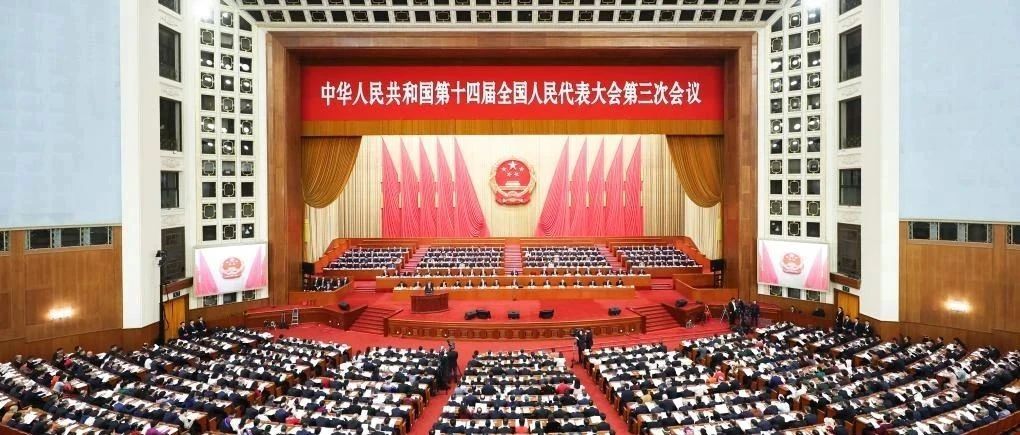
2025全国两会前瞻十大热词→
21世纪经济报道· 2025-03-04 01:25
Group 1: Economic Goals and Policies - The GDP target for 2025 is expected to remain around 5.0%, consistent with the previous two years, to align with the goal of doubling the economic total by 2035 and to absorb the 1,222,000 new graduates entering the job market [2] - CPI target is anticipated to be adjusted to around 2.0%, reflecting a cautious approach due to low inflation pressures, with 27 provinces setting their CPI targets similarly [2] - The central government is expected to implement a more proactive fiscal policy, with potential adjustments to the deficit rate and an increase in the scale of long-term bonds and local government special bonds [3][4] Group 2: Monetary Policy and Domestic Demand - The monetary policy is shifting to a moderately loose stance, the first change since 2011, with market expectations for further adjustments [5][6] - The government aims to boost domestic demand by enhancing consumption and investment, with specific policies being developed to stimulate consumer spending and support major projects [7] Group 3: Technological Innovation and Private Economy - The focus on technological innovation is emphasized as a key task for developing new productive forces and modern industrial systems, particularly in light of recent advancements in AI [9] - The central government is reiterating its commitment to support the private economy, with ongoing legislative efforts to create a favorable environment for private enterprises [10] Group 4: External Challenges and Real Estate Market - The government is addressing external uncertainties, particularly regarding trade policies and foreign investment, with plans to stabilize foreign trade and investment [11][12] - The real estate market is a core concern, with measures in place to stabilize prices and improve market conditions, including potential government acquisitions of unsold properties [13][14] Group 5: Capital Market and Demographic Policies - Efforts to stabilize the capital market are ongoing, with initiatives to attract long-term funds and enhance market stability [15] - Demographic policies are under review, with potential new measures to address aging and declining birth rates, including possible incentives for families [17]