
数智融合

Search documents
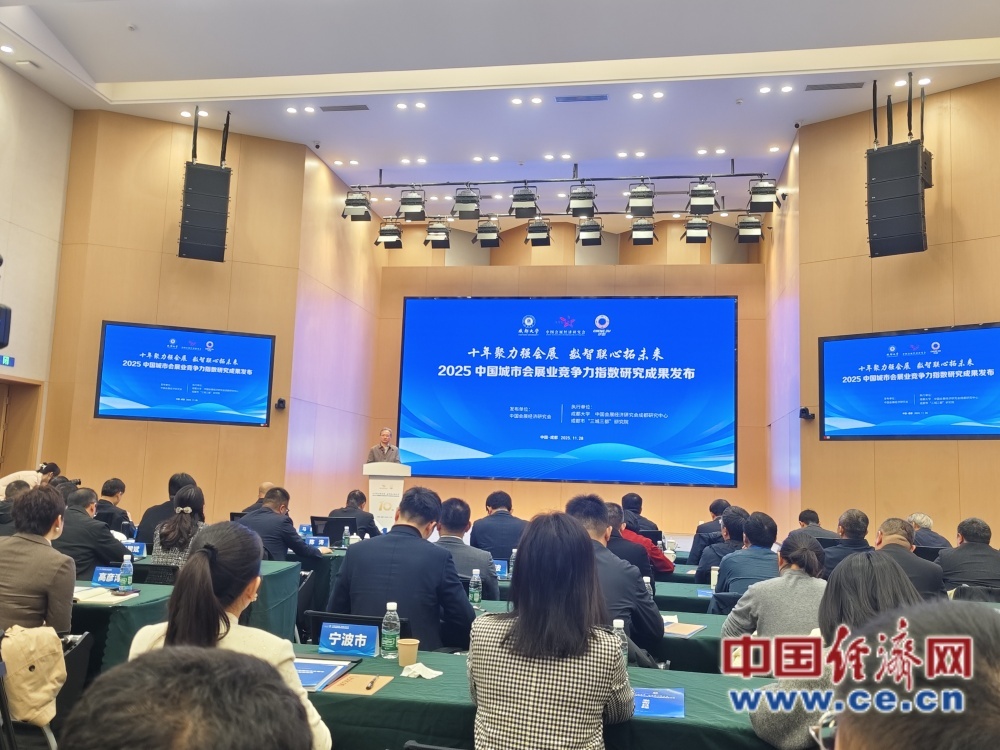
2025中国城市会展业竞争力指数发布:十年积淀,多维度解码行业发展
Zhong Guo Jing Ji Wang· 2025-11-28 09:36
Core Insights - The "2025 China Urban Exhibition Industry Competitiveness Index" was officially released, focusing on the theme "Ten Years of Strengthening Exhibitions, Digital Intelligence to Expand the Future" [1] - The event gathered representatives from various sectors to review the industry's development over the past decade and discuss future paths under digital integration [1] Group 1: Historical Context and Evolution - The China Urban Exhibition Industry Competitiveness Index has evolved from emphasizing scale metrics to focusing on quality leadership over nearly ten years since its first release in 2016, marking a significant milestone this year [2] - Chengdu is actively promoting its "Four Famous" cultivation actions to accelerate its development as an "International Exhibition Capital" and invites global exhibition organizers to establish a presence in the city [2] Group 2: Industry Reports and Insights - A series of reports highlighted the high-quality development path of the urban exhibition industry, with discussions on artificial intelligence and the restructuring of the exhibition ecosystem [3] - The index upgrade indicates a shift towards a more scientific evaluation framework, guiding the future direction of the industry [4] Group 3: Index Release and Evaluation Framework - The 2024 Annual China Urban Exhibition Industry Competitiveness Index Report was released, introducing a comprehensive evaluation system that includes five dimensions: professional competitiveness, enterprise competitiveness, infrastructure competitiveness, macro environment competitiveness, and comprehensive service competitiveness [6] - A new ranking for "Professional Exhibition Venue Competitiveness" was introduced, emphasizing the importance of venue "hard power" in the competitive landscape of cities [6] Group 4: Collaborative Discussions and Future Directions - Interactive discussions focused on key topics such as differentiated positioning, regional collaboration, and technology empowerment, highlighting the role of the exhibition industry in driving urban economic growth [7] - The event served as a platform for deepening cooperation and resource linking among participants, aiming to enhance the competitiveness of the exhibition industry and support urban economic advancement [7]

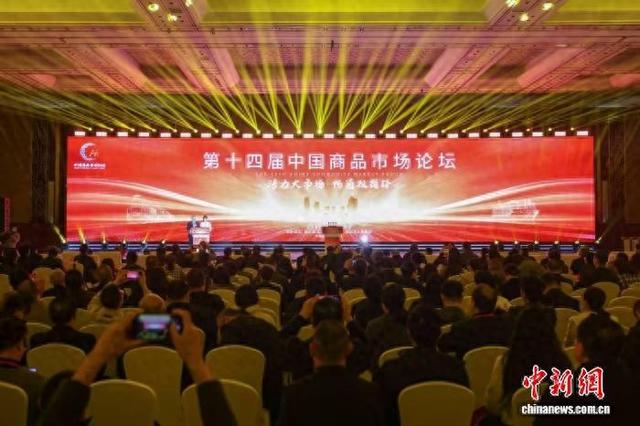
从买卖全球到链接全球 浙江商品市场探索转型新路径
Zhong Guo Xin Wen Wang· 2025-11-28 09:01
Core Insights - Zhejiang province is experiencing a transformation in its commodity market, with a total transaction volume expected to exceed 1.8 trillion yuan in 2024, reflecting a year-on-year growth of 4.73% [1] - The market is evolving from a traditional trading model to an integrated ecosystem that encompasses the entire industrial chain, driven by "digital intelligence integration" [1][2] Group 1: Market Performance - In 2024, Zhejiang's 786 specialized markets are projected to achieve a total transaction volume of 1.77 trillion yuan, with 1.28 trillion yuan already recorded in the first three quarters of the year [1] - Zhejiang boasts two markets with transaction volumes exceeding 100 billion yuan, 31 markets over 10 billion yuan, and 451 markets over 1 billion yuan, holding 29 positions in the "Top 100 Chinese Commodity Markets" [1] Group 2: Digital Transformation - Over 25% of operators in Zhejiang's commodity markets have engaged in e-commerce, with an average annual transaction volume of 3.62 million yuan per operator [2] - The live-streaming e-commerce sector in Zhejiang is projected to generate 80.75 billion yuan in transaction volume in 2024, marking an impressive year-on-year increase of 89% [2] - More than 50% of commodity markets in Zhejiang have completed digital transformation by the end of 2023, with total investments exceeding 3.4 billion yuan [2] Group 3: Quality and Brand Development - The focus on quality has become essential for gaining consumer trust, with Zhejiang's markets enhancing brand incubation and implementing differentiated management for quality protection zones [3] - Zhejiang is advancing mandatory and recommended standards for quality control, with some markets establishing unified quality inspection and supply chain platforms [3] - The establishment of intellectual property protection offices in many markets aims to safeguard original designs, trademarks, and patents [3] Group 4: Innovative Market Models - Haining China Leather City has transitioned from a "selling goods" model to leading fashion lifestyle trends, with over 60% of new leather designs originating from this market [4] - Pinghu China Garment City has integrated into local tourism initiatives, attracting family visitors and achieving annual sales exceeding 50 billion yuan [4] Group 5: Global Integration - Zhejiang's commodity markets are shifting from a simple distribution model to a hub ecosystem that efficiently integrates global resources [6] - Yiwu Small Commodity City has developed its own brand "Yi Payment," collaborating with over 400 banks globally and covering more than 100 countries [6] - The establishment of overseas warehouses and logistics systems aims to enhance global circulation capabilities, with new international stations set up in Russia and Turkey [6] Group 6: Future Development Strategies - The Zhejiang Market Regulatory Bureau emphasizes five key trends: full-chain integration, digital intelligence, quality enhancement, experiential scenarios, and internationalization [8] - Recommendations include creating new market-industry synergies, developing new consumption benchmarks, activating comprehensive service platforms, and leveraging AI for market innovation [8]
场景驱动 数智赋能——广东推进国土空间规划实施监测网络(CSPON)建设纪实
Zhong Guo Zi Ran Zi Yuan Bao· 2025-11-27 02:21
Core Insights - The article discusses the implementation of a comprehensive monitoring system for land spatial planning in Guangdong Province, emphasizing the integration of various data sources and technologies to enhance decision-making and governance in land resource management [8][25]. Group 1: Implementation of Monitoring System - Guangdong Province is advancing the construction of a land spatial planning monitoring network, leveraging the unique three-tiered monitoring system (CSPON) to enhance regional coordination and sustainable development [8][25]. - The province aims to optimize the "one map" supervision information system to support the "14th Five-Year Plan" and future planning initiatives, focusing on key areas such as urban-rural integration and green development [8][25]. Group 2: Data Management and Integration - A unified three-dimensional spatial database has been established, integrating over 470 data items and more than 600 million elements to support comprehensive digital expression of land resources [10]. - The implementation of the "Guangdong Provincial Geographic Spatial Data Management Measures" aims to address issues like "duplicate construction" and "information silos" through improved data sharing and management [10]. Group 3: Intelligent Decision-Making Models - The development of a spatial intelligent analysis engine is underway, providing various data application services and algorithms to enhance land resource management and spatial planning [11]. - A digital model toolkit is being created to support various planning functions, including monitoring, evaluation, and predictive modeling, facilitating a dynamic and adaptive planning process [14]. Group 4: Collaborative Governance Framework - A multi-level governance application scenario system is being constructed to facilitate cross-departmental and cross-regional collaboration in land spatial planning [16]. - The establishment of a data sharing and utilization mechanism aims to enhance the efficiency of decision-making processes across different administrative levels [11][16]. Group 5: Dynamic Maintenance and Safety Monitoring - A dynamic maintenance mechanism for land spatial planning is being implemented, including annual assessments and evaluations to ensure compliance with planning standards [18]. - The monitoring system integrates various data sources to oversee critical safety lines in land use, such as ecological protection and flood risk management [19]. Group 6: Enhancing Spatial Quality and Efficiency - The article highlights the importance of improving land spatial quality through targeted monitoring and analysis of ecological protection, urban development, and resource allocation [20][21]. - The province is focusing on optimizing land use and enhancing the value of land resources through comprehensive planning and strategic initiatives [21]. Group 7: Knowledge Sharing and Public Engagement - Efforts are being made to promote public access to land spatial planning information through various platforms, enhancing transparency and community involvement [24]. - The establishment of a knowledge service framework aims to provide decision-makers with relevant data and insights to support effective governance [24].

武汉政企学共绘“数智融合”新蓝图 共议商贸流通数字化供应链破局之道
Chang Jiang Shang Bao· 2025-11-25 00:24
Core Insights - The event "Digital Intelligence Integration: Breaking the Supply Chain Bottleneck for Trade and Commerce Enterprises" highlights the importance of digital and intelligent transformation in the supply chain as a key driver for high-quality economic development in the context of the global digital economy [1][4] - The event gathered around 180 guests, including experts from national ministries, renowned scholars, industry leaders, and corporate representatives, facilitating deep exchanges on policies, technologies, models, and practical cases [1][2] Policy and Macro Trends - The event featured authoritative interpretations of national policies and macro trends in the industry, providing clear development directions for participating enterprises [2] - Experts from the Ministry of Commerce analyzed the latest national policies, including the "Special Action Plan for Accelerating the Development of Intelligent Supply Chains," clarifying the strategic intentions and specific deployments at the national level to enhance supply chain intelligence and efficiency [2] - The Wuhan Municipal Bureau of Commerce promoted policies for modern commercial circulation system pilot cities, guiding local enterprises to accelerate their digital and intelligent transformation [2] Case Studies and Practical Applications - The event included high-level dialogues and the release of typical case studies, achieving deep integration and experience sharing among government, enterprises, research, and application [3] - Two high-level dialogues focused on current industry pain points: one on building a digital ecosystem for trade and commerce, and the other on cross-industry digital collaboration [3] - Ten national supply chain innovation and application demonstration enterprises, including Zhongbai Group and Jiuzhoutong Pharmaceutical Group, presented their digital supply chain transformation cases, providing referenceable "Hubei experience" and "Wuhan solutions" for peers [3] Strategic Importance - The successful hosting of this event is a significant measure for Wuhan to actively respond to the national digital economy development strategy and accelerate the construction of a modern circulation system [4] - By establishing a high-end exchange platform that connects government, enterprises, research, and application, the event strengthens Wuhan's position and influence as a national trade and logistics hub [4] - Wuhan aims to continue leveraging digital intelligence integration as an engine to lead and advance the rise of the central region in the future [4]
AIC相继开业,如何成金融赋能“新王牌”?这些关卡需注意
Nan Fang Du Shi Bao· 2025-11-24 07:18
Core Insights - The core viewpoint of the article emphasizes the evolution and current state of inclusive finance in China, highlighting the transition from rapid credit growth to a focus on quality and sustainability in financial services [5][9]. Group 1: Development Stages of Inclusive Finance - The evolution of inclusive finance in China can be divided into three key stages: the "Infrastructure Foundation Period," the "Policy-Driven Period," and the current "Value Restructuring Period" [5]. - The current period is characterized by a shift from merely increasing credit volume to achieving stable growth in both quantity and quality, integrating technology, policy, and commercial sustainability [5]. Group 2: Challenges and Responses - Key challenges facing inclusive finance include the "digital divide," high operational costs in underserved markets, and a lack of differentiated products among financial institutions [6]. - Regulatory responses should include differentiated policies, expanded information sharing, and incentives for institutions effectively using AI to serve long-tail customers [6]. Group 3: Technological Integration - The integration of AI and digital currency is seen as crucial for overcoming the "last mile" challenge in inclusive finance, enabling better credit assessment and risk management [7]. - Specific paths include using AI to create dynamic credit profiles and leveraging digital currency for traceable transactions, which can enhance financial inclusion [7]. Group 4: Regional Financial Development - The article discusses the issue of product homogeneity in county-level financial services, attributing it to risk management shortcomings and a lack of tailored financial solutions [8]. - Solutions proposed include developing specialized financial products based on local industries and enhancing the capabilities of financial institutions to better serve these markets [8]. Group 5: Role of AIC in Inclusive Finance - The recent approval of Asset Investment Companies (AIC) is expected to reshape the landscape of inclusive finance by providing new solutions for small and innovative enterprises [9][11]. - AICs are seen as a means to bridge the gap in capital supply and risk-sharing mechanisms, although they face challenges in aligning their investment strategies with the high-risk nature of their target clientele [11].
宝丰能源总裁刘元管:致力于成为全球新材料重要供应商
Shang Hai Zheng Quan Bao· 2025-11-13 17:57
Core Viewpoint - Baofeng Energy is a leading enterprise in China's high-end coal-based new materials industry, focusing on independent innovation and aiming to become a significant global supplier of new materials [2][3]. Industry Overview - Baofeng Energy leverages China's resource characteristics of "rich coal, scarce oil, and limited gas" to produce polyethylene, polypropylene, and EVA from coal, establishing the largest and most advanced modern coal chemical industry cluster in the country [3]. - The company has developed over 100 chemical products, contributing to resource conservation and clean utilization, while filling import gaps and achieving product import substitution [3]. Technological Advancements - The company has recently launched a coal-based new materials project in Inner Mongolia, utilizing advanced technologies such as 6.5MPa pulverized coal gasification and the third-generation DMTO technology, achieving a single unit capacity of over 1 million tons [4]. - Baofeng Energy has achieved significant milestones, including five global scale records in coal-to-olefins production and three national scale records in various equipment, demonstrating its technological leadership [4]. Green Transformation - The company is committed to green low-carbon development and digital integration, focusing on energy security and industry upgrades [5]. - Baofeng Energy has pioneered a solar-powered hydrogen production project, achieving a hydrogen purity of 99.999%, and is integrating green hydrogen into its coal chemical processes to reduce carbon emissions [6]. Digital Innovation - The company has implemented an AI-integrated management platform to enhance operational efficiency, achieving a 30% improvement in logistics efficiency and establishing a comprehensive safety risk prevention system [7]. Financial Performance - In the first three quarters of this year, Baofeng Energy reported revenues of 35.545 billion yuan, a year-on-year increase of 46.43%, and a net profit of 8.95 billion yuan, up 97.27% [8]. - The company has contributed significantly to tax revenue and employment, with a cumulative tax payment of 12 billion yuan and over 7,000 new jobs created [8]. Social Responsibility - Baofeng Energy actively engages in charitable activities, having donated 5.038 billion yuan through its charity foundation, benefiting over 430,000 students in western China [8]. Future Outlook - Looking ahead, Baofeng Energy aims to contribute to China's modernization and become a key global supplier of new materials, aligning with national strategic goals [9].

(第八届进博会)报告:2024年长三角外贸规模创新高
Zhong Guo Xin Wen Wang· 2025-11-10 03:31
Core Insights - The Long Triangle region is projected to achieve a record high in foreign trade scale in 2024, with a total import and export trade volume of 16,014.8 billion RMB, reflecting a growth of 5.6% compared to the previous year [1] - The region's foreign trade accounts for 36.5% of the national total, an increase of 0.2 percentage points from the previous year [1] Group 1: Trade and Economic Performance - The Long Triangle region's overall business operation is expected to remain stable and show progress, contributing positively to economic recovery [1] - The total retail sales of consumer goods in the Long Triangle region is projected to reach 12,354.2 billion RMB, marking a growth of 3.3% year-on-year [1] - The per capita retail sales of consumer goods in the region is 51,910 RMB, which is 17,588 RMB higher than the national average of 34,322 RMB [1] Group 2: Business Development Characteristics - The Long Triangle Business Development Report outlines eight key characteristics, including the strengthening of consumption's foundational role and the improvement of the modern commercial circulation system [2] - The region demonstrates strong resilience in foreign trade and significant results from diversified foreign investment strategies [2] - The construction of free trade zone networks is advancing at a high standard, and the achievements of national-level economic development zones are substantial [2] Group 3: Technological Integration and Future Outlook - The forum highlighted the integration of artificial intelligence and big data as new drivers and opportunities for regional business development [2] - The Shanghai Commercial Development Report (2025) indicates that the AI industry scale has surpassed 450 billion RMB, with significant applications of large language models in retail scenarios [2] - Shanghai is enhancing its position as an international consumption center through optimized commercial space layout and improved community commercial quality [2]
第138届广交会收官 现场意向出口成交超250亿美元
Guang Zhou Ri Bao· 2025-11-05 01:30
Core Insights - The 138th China Import and Export Fair (Canton Fair) concluded with over 310,000 foreign buyers attending, marking a 7.5% increase from the previous session, setting a new historical record [2][3] - The fair generated an intended export transaction volume of $25.65 billion, indicating a sustained growth momentum despite global trade challenges [2][5] Group 1: Attendance and Participation - The fair attracted buyers from 223 countries and regions, with 214,000 from Belt and Road Initiative countries, a 9.4% increase, accounting for 69% of total attendees [3] - Significant growth was noted in buyers from the EU, Middle East, the US, and Brazil, with increases of 32.7%, 13.9%, 14%, and 33.2% respectively [3] Group 2: Business Opportunities and Transactions - The fair served as a one-stop procurement platform, facilitating not only transactions but also networking opportunities for businesses [4][5] - Many exhibitors reported effective customer acquisition and market expansion, with numerous buyers planning factory visits to finalize deals [5] Group 3: Innovation and Product Showcase - Among the 4.6 million exhibits, new products, green products, and those with independent intellectual property rights accounted for 23.3%, 23.5%, and 23.9% respectively [6] - Key themes included AI empowerment, innovative manufacturing, and sustainable development, with notable products like humanoid robots and AI rehabilitation devices [6] Group 4: Technological Advancements - The fair implemented QR code identification for quick registration, reducing processing time by six times, and introduced advanced navigation technologies [9] - The fair's app saw 415,000 new downloads, enhancing offline transaction capabilities [9] Group 5: Service and Support - The fair provided significant support to exhibitors, including a 50% fee reduction for export exhibitors and full fee waivers for rural revitalization zones [11] - Various activities and forums were organized to assist businesses in market expansion, with over 240 trade service institutions providing consultations [11] Group 6: Future Outlook - The next Canton Fair is scheduled for April 15 to May 5, 2026, continuing its role as a vital platform for China's trade development [12] - The fair aims to foster global cooperation and contribute to the high-quality development of China's foreign trade [12]
业界解读中国节水装备产业高质量发展“路线图”
Zhong Guo Xin Wen Wang· 2025-11-03 17:04
Core Viewpoint - The "Implementation Plan for High-Quality Development of Water-Saving Equipment (2025-2030)" aims to provide a clear path for the development of water-saving equipment in China's industrial and information sectors, focusing on key technology research, innovation directions, and priority areas [1][2]. Group 1: Industry Overview - China's water-saving equipment industry has developed a relatively complete industrial chain, with over 2,000 large-scale manufacturing enterprises, positioning it among the global leaders [2]. - The industry has achieved significant efficiency, with industrial water usage per unit of industrial added value decreasing by over 50% over the past decade, supporting an average industrial economic growth of 5.7% annually [2]. Group 2: Implementation Plan Goals - The plan sets specific goals, including breakthroughs in key water-saving equipment by 2027, a more robust standard system, and the cultivation of leading enterprises and specialized "little giant" companies [2]. - By 2030, the aim is to establish a comprehensive, technologically advanced water-saving equipment system with enhanced supply capabilities for high-performance, high-efficiency, and high-reliability equipment [2]. Group 3: Technological and Systematic Innovations - The plan emphasizes a full-chain approach to water-saving equipment, integrating technology paths, industrial layout, and system integration to transition from point solutions to comprehensive solutions [3]. - It highlights the importance of digital intelligence integration, with a focus on enhancing smart manufacturing levels and creating intelligent water-saving application scenarios, addressing the current low coverage of smart monitoring and management platforms in the industrial sector [3]. Group 4: Support Measures - The plan proposes specific measures across four dimensions: policy, talent, innovation, and standards, to create a comprehensive support system for the development of the water-saving equipment industry [3].
林武在济南调研时强调 决战决胜四季度 坚决实现全年经济社会发展目标
Da Zhong Ri Bao· 2025-10-31 00:59
Core Insights - The article emphasizes the importance of implementing the spirit of the 20th National Congress and the directives from General Secretary Xi Jinping, focusing on economic and social development goals for the year [1] Group 1: Company Insights - Lin Wu visited Guangri Co., Ltd. in Jinan, encouraging the company to increase investment in Shandong and enhance its core competitiveness, aiming to establish a leading smart manufacturing factory in the elevator industry [1] - At Sbert Biotechnology, Lin Wu reviewed the smart nutrition center and urged the company to increase R&D investment and develop high-quality innovative products that meet market demands in the health and nutrition sector [1] Group 2: Industry Insights - The article highlights the need for traditional industries to optimize and upgrade while fostering emerging and future industries to strengthen the foundation of the real economy [1] - Lin Wu pointed out the significance of the Liaohe to Jinan pipeline project as a key livelihood and ecological project, emphasizing the need for strict construction management and timely project completion to ensure heating services for the public [2]