私募信贷

Search documents
高盛高喊“逢低布局” 称这三家高收益另类资产管理巨头风险回报比具“吸引力”
智通财经网· 2025-10-20 22:33
Core Viewpoint - High-yield alternative asset management firms are facing stock price pressure due to a series of high-profile bankruptcies raising concerns about bad debts, but Goldman Sachs sees this as a potential "buying opportunity" for Apollo Global Management, Ares Management, and Blue Owl Capital [1][2] Group 1: Market Sentiment and Stock Performance - The recent bankruptcies of First Brands and Tricolor have heightened tension in the debt market, with JPMorgan CEO Jamie Dimon warning that seeing one "cockroach" often indicates more to come [1] - Year-to-date, Apollo Global Management's stock has dropped approximately 13%, Ares Management by about 18%, and Blue Owl Capital nearly 30% [1] - Goldman Sachs notes that the current risk-reward ratio for these three companies is becoming increasingly attractive, maintaining a "buy" rating for Apollo and Ares, while giving Blue Owl a "neutral" rating [1] Group 2: Default Risks and Private Credit - Current market focus on defaults is primarily on traditional bank-led syndicate loans rather than private credit, with non-performing loans in private credit at only about 1%, significantly lower than the 3%-4% peak during past downturns and 7%-8% during the financial crisis [1] - Even if defaults are controlled, asset management companies' stock prices may still be pressured by redemption pressures, which could weaken fee income [2] - Private credit funds typically have long lock-up periods, and retail funds often limit quarterly redemptions to 5% of assets, which helps stabilize management fees despite market fluctuations [2] Group 3: Valuation and Future Outlook - The private credit concept has been overly successful in the past three years, leading to inflated expectations and stock prices for asset management companies [2] - Despite potential pressures in 2025, these companies have significantly outperformed the S&P 500 over the past three years [2] - Current valuations reflect this reality, with Ares' forward P/E ratio over 24 times (up from 17 times three years ago), Apollo at 14 times (up from 8 times), and Blue Owl at 17 times (up from 14 times) [2] - The combination of manageable bad debts, limited redemptions, stable fee bases, and valuation corrections suggests that current pullbacks may present opportunities for long-term investors rather than signaling an end [2]



一起破产把黑石、KKR股价都干崩了
投中网· 2025-10-20 06:45
Core Viewpoint - The bankruptcy of First Brands has triggered a significant decline in the stock prices of major private equity (PE) firms, despite the overall stability of the U.S. stock market, indicating a deep-rooted concern about the financial health of the private credit market and its potential systemic risks [2][3][19]. Group 1: Impact of First Brands Bankruptcy - First Brands filed for bankruptcy on September 28, with liabilities estimated between $10 billion and $50 billion and assets between $1 billion and $10 billion [18]. - The bankruptcy has affected numerous lenders, including traditional financial institutions and private credit funds, leading to concerns about broader implications for the financial system [18][19]. - The incident has raised fears that First Brands' collapse could be the first in a series of failures, potentially leading to a wider financial crisis, reminiscent of the subprime mortgage crisis [18][19]. Group 2: First Brands Company Overview - First Brands was a rapidly expanding automotive parts manufacturer, focusing on the aftermarket with a wide range of products [4][8]. - The company was founded in 2013 and grew through aggressive acquisitions, becoming a major player in the automotive aftermarket by 2024, with net sales reaching $5 billion [8][10]. - The company employed a "paired acquisition" strategy, acquiring brands with strong market presence and those with local manufacturing capabilities to enhance production efficiency [7][10]. Group 3: Financial Practices and Risks - First Brands' expansion was heavily financed through unconventional means, including private credit and complex off-balance-sheet financing, leading to a significant accumulation of hidden debt [11][12]. - The lack of regulatory oversight allowed First Brands to avoid disclosing the full extent of its off-balance-sheet liabilities, creating a misleading picture of its financial health [11][12]. - The company's financial troubles became apparent when it attempted to refinance $6.2 billion in debt, leading to a collapse in bond prices and a downgrade to junk status by rating agencies [12][13]. Group 4: Broader Industry Implications - The rapid growth of the private credit market, which has expanded tenfold over the past decade, has created a new "shadow banking" system, raising concerns about the quality of assets held by investors [19]. - Major PE firms, despite not being directly linked to First Brands, have seen their stock prices decline due to fears surrounding their own private credit operations, which have become crucial revenue sources [19].



美国区域银行再陷危机,高盛直呼“太疯狂”
华尔街见闻· 2025-10-18 10:47
Core Viewpoint - The recent sharp decline in U.S. regional bank stocks is attributed to Zions Bancorporation's disclosure of significant loan losses, raising concerns about potential fraud cases and the overall health of the banking sector [1][3][9]. Group 1: Market Reaction - U.S. regional banks collectively fell by 7%, with Zions' stock plummeting by 13% following the news of loan defaults [3][7]. - Investor anxiety has spread from private credit markets to regional banks, leading to a sell-off in financial stocks [3][5]. - Goldman Sachs noted that the market's reaction to a single borrower's disclosure seems excessive, but the emergence of multiple fraud cases has heightened concerns [5][9]. Group 2: Key Issues Raised by Investors - Investors are questioning how these loans passed through the approval process, targeting both regional and larger banks [9]. - The occurrence of three unrelated fraud cases within a month and a half raises significant concerns among investors [9]. - There is apprehension that smaller banks may have relaxed underwriting standards to stimulate loan growth, which aligns with fears of a deteriorating credit environment [9][10]. Group 3: NDFI Loan Exposure - NDFI (Non-Deposit Financial Institution) loans, which account for approximately 15% of regional banks' total loans, have become a focal point for investor scrutiny [9][10]. - The quality of NDFI underwriting varies significantly among banks, with large banks outperforming smaller and regional banks by about 300 basis points [10]. - The market is currently in a "discovery phase," with investors uncertain about the extent of the issues at hand, particularly regarding private credit exposures [10][11]. Group 4: Upcoming Earnings Season - The upcoming earnings season is expected to reveal more risks, as many regional banks have yet to report their financial results [11][12]. - Goldman Sachs anticipates that NDFI loan exposure will be a key topic during earnings calls and disclosures [11].


美股异动|黑石两日飙涨6.64% 摩根大通上调目标价引爆关注
Xin Lang Cai Jing· 2025-10-15 00:01
Core Viewpoint - Blackstone Group's stock has seen a significant increase, with a 3.68% rise on October 14, leading to a cumulative two-day increase of 6.64, attracting investor attention [1] Group 1: Company Performance - Morgan Stanley has raised Blackstone's target price to $177, indicating confidence in the company's future growth potential in asset management and financial services [1] - Blackstone's diversified investment portfolio in private equity, real estate, credit, and fixed income has enhanced its performance [1] - The company's global expansion and operations in various regions have solidified its leadership position in the industry, increasing brand influence and attracting more investors [1] Group 2: Strategic Initiatives - Blackstone has established the Blackstone Credit and Insurance platform (BXCI), showcasing its synergistic advantages in credit and insurance [1] - The firm is gaining favor in the middle-market and distressed asset restructuring sectors due to its long-term asset management scale and high returns in credit business [1] - Blackstone is leveraging its scale and cost advantages to reshape the corporate financing ecosystem in the private credit sector [2] Group 3: Market Insights - The transformation in private credit is becoming a crucial part of financial services for the real economy, with institutions that accurately grasp market demands gaining an advantageous position [2] - Investors are advised to focus on economic data, company earnings, and industry trends to formulate reasonable investment strategies [2]
当年“做空安然”开启2001年美股大崩盘,“末日博士”:现在的“私募信贷”和2008年的次贷类似
华尔街见闻· 2025-10-04 12:42
Core Viewpoint - The private credit market, valued at $2 trillion, is under scrutiny due to its complex structure that may hide real risks, similar to the subprime mortgage crisis that triggered the 2008 financial meltdown [1][6]. Group 1: Market Dynamics - The private credit market has rapidly grown, becoming a crucial financing channel for companies that cannot or do not wish to access public bond markets, attracting global institutional investors with high return rates [4][5]. - Jim Chanos describes the private credit system as a "magical machine" where institutional investors can achieve equity-like returns by taking on the risks of senior debt [5]. Group 2: Warning Signs - Chanos warns that the high yields offered by private credit investments should be seen as a significant danger signal, indicating that these returns are not derived from value creation but from a complex structure that obscures risks [6][14]. - The recent collapse of First Brands Group, revealing nearly $12 billion in complex debt, serves as a potential precursor to broader issues within the private credit market [2][9]. Group 3: Case Study - First Brands Group - First Brands' bankruptcy has exposed the risks associated with private credit, including shared ownership structures and potential multiple pledges of the same collateral, raising concerns about the transparency of its financing [10][11]. - The lack of public financial disclosures for First Brands, a private company, has created significant information barriers, making it difficult for even top credit experts to assess the company's true financial health [11][12]. Group 4: Regulatory Concerns - The inherent opacity of the private credit model is designed to facilitate higher-risk lending activities outside of regulatory scrutiny, which could lead to the emergence of another major financial crisis [14][16]. - Chanos emphasizes that the lack of transparency is a feature of the private credit process, not a flaw, suggesting that investors and regulators should remain vigilant [14][16].

每六个月就有一波“AI泡沫论”,何时“狼真的来了”?
Hua Er Jie Jian Wen· 2025-10-01 03:32
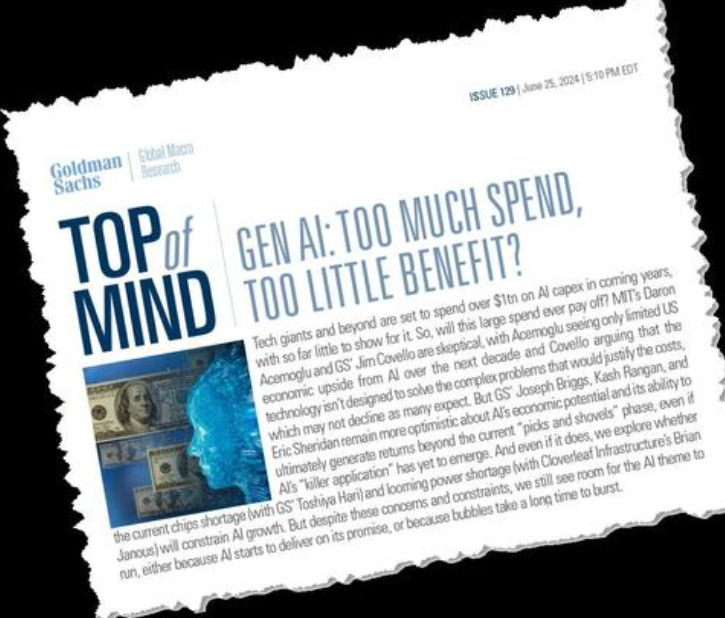
Group 1 - The article discusses the recurring theme of "AI bubble theory," highlighting the cyclical nature of market fears and subsequent enthusiasm surrounding AI investments [1][3] - Goldman Sachs raised concerns about the commercial returns of generative AI, questioning whether it represents a capital pit that may never yield long-term positive returns for investors [1][3] - The introduction of China's DeepSeek model, which is open-source and significantly cheaper than its U.S. counterparts, has intensified competition in the AI space [3] Group 2 - Oracle's announcement of a $300 billion cloud computing agreement with OpenAI is seen as a significant "vendor financing" deal, indicating a shift from cash-based funding to debt-driven financing in the AI sector [5][8] - Analysts have identified a structural risk where AI infrastructure development is increasingly reliant on external debt, with a projected funding gap of $1.5 trillion that private credit markets may need to fill [9][11] - The private credit market is expected to contribute approximately $800 billion to bridge this funding gap, raising concerns about the health of the private credit industry itself [9][11] Group 3 - The performance of private credit funds, such as those managed by Blackstone and Blue Owl, has been under scrutiny, with significant declines in stock prices indicating potential vulnerabilities [11][13] - The article notes that the discussion around the AI bubble is waning, with a significant drop in online searches related to "AI bubble," suggesting a possible complacency in the market [14] - Historical patterns indicate that asset bubbles do not follow a linear trajectory, and the current AI market may be experiencing similar dynamics to past bubbles [15][18]

Fed will lower rates three times and a total of 75 bps this year: Marathon Asset's Bruce Richards
Youtube· 2025-09-11 20:12
Core Viewpoint - The Federal Reserve is expected to cut interest rates by 25 basis points in the upcoming meetings, with a total reduction of 75 basis points anticipated over the next three cuts this year, while the market has priced in a 100% probability of these cuts [2][3]. Economic Indicators - Current inflation is at 3%, while the Fed's target is 2%, indicating a willingness to accept higher inflation due to weak job data, but there is little risk of recession or stagflation, with a projected GDP growth of 3% for the quarter [3][4]. - The previous quarter's GDP growth was reported at 3.3%, suggesting a stable economic environment despite inflation concerns [4]. Market Sentiment - Equity markets are at all-time highs, which suggests growth rather than recession or stagflation, as typically, such economic conditions would lead to declining equity markets [5]. - Credit spreads in the high-yield market are at 300 basis points, indicating no imminent recession or stagflation [5]. Investment Opportunities - There is a significant upcoming stimulus package and increased capital expenditure (capex) spending, particularly in AI and data centers, which is expected to drive further economic activity [6][7]. - The public markets are performing well with tightened spreads and lower rates, presenting opportunities for alpha generation through new issuances [8]. - In private credit, there is a prolific period of direct lending, with multiple deals being approved, particularly in the private equity sector [9][10]. Lending Strategies - Direct lending is experiencing unprecedented activity, with lower interest rates expected to facilitate more deals and refinancings, enhancing transaction volumes [10][11]. - Asset-based lending is also thriving, with attractive loan-to-value (LTV) ratios and strong returns, providing a margin of safety [12][13].

非银巨头承压:Metrics基金遭Lonsec降级
Sou Hu Cai Jing· 2025-09-10 22:04
Core Insights - Metrics Credit Partners, one of Australia's largest non-bank lenders, faced a downgrade from influential advisory firm Lonsec, which raised concerns about the company's governance issues [1][4] - The downgraded products include the Metrics Income Opportunities Trust (MOT) and Metrics Master Income Trust (MXT), both of which provide retail investors with exposure to corporate and real estate credit [1][2] - Metrics manages assets totaling AUD 30 billion, making it the ninth-largest lender to businesses in Australia [1] Fund Ratings - Previously, Lonsec rated the Income Opportunities Trust as "recommended" and the Master Income Trust and Direct Income Fund as "highly recommended" [2] - The Income Opportunities Trust's rating was downgraded to "investment grade," with Lonsec noting the need for improved governance despite the product's strong credit record [4] - The Master Income Trust was downgraded to "recommended" [4] Governance Concerns - Lonsec highlighted several areas for improvement in governance, including a lack of separation between the debt and equity investment committees [4][5] - The expansion of the "other assets" category in MOT has reduced transparency and diluted confidence in its original investment philosophy [4] - Concerns were also raised regarding Metrics' internal lending practices, which were deemed excessive for identifiable fundraising costs [6] Market Context - Private credit is increasingly significant in the credit market, with an estimated AUD 205 billion as of last year, accounting for approximately 17% of commercial real estate debt [5] - Rising construction costs and higher financing costs have led to the loss of feasibility for many development projects, resulting in more problem loans and lower returns for private credit funds [5] - Metrics has adopted a "takeover" strategy on some problem loans, acquiring ownership of troubled companies [5] Regulatory Scrutiny - The Australian Securities and Investments Commission (ASIC) is reviewing the private credit industry, with results expected later this year [7] - Metrics and other firms received questionnaires from ASIC in March, requiring disclosure of business conditions [7]
费上加费的私募信贷母基金,值不值得投?
伍治坚证据主义· 2025-08-25 04:04
Core Viewpoint - Private credit has become a popular asset class, but products like M Fund may mislead investors with unrealistic return expectations and complex fee structures [2][20]. Group 1: Return Expectations - The advertised annualized return of 9-12% for M Fund is hypothetical and lacks a verifiable track record [3][4]. - Investors should focus on actual net asset value performance and audited return data rather than simulated or projected figures [4][6]. Group 2: Fee Structure - M Fund has a complex fee structure that can significantly erode the actual returns received by investors [9][10]. - The fund charges fees at both the mother fund and sub-fund levels, leading to a "double fee" scenario [10][11]. - High redemption fees (up to 5%) further limit investor liquidity and choice [11]. Group 3: Risk and Return Disparity - There is a significant asymmetry between risk and return, where investors bear all losses while the fund company collects fees regardless of performance [12][14]. - This structure undermines the alignment of interests between the fund and its investors, with the fund benefiting at the investors' expense [14][13]. Group 4: Liquidity Issues - Private credit inherently has poor liquidity, and M Fund's structure compounds this issue, locking investors' funds [15][19]. - Historical examples show that even large institutions can face liquidity crises when overly invested in illiquid assets [15][16]. Group 5: Target Audience - Private credit may be suitable for institutional investors with long-term capital and the ability to conduct due diligence, rather than ordinary individual investors [21].

Barings(BBDC) - 2025 Q2 - Earnings Call Transcript
2025-08-08 14:00
Financial Data and Key Metrics Changes - Net asset value per share was $11.18, reflecting a 1% decline quarter over quarter [25] - Net investment income for the quarter was $0.28 per share, an increase from $0.25 per share in the prior quarter [12][27] - The weighted average yield at fair value remained unchanged at 10.1% [14] - The net leverage ratio was 1.29 times at quarter end, up from 1.24 times as of March 31 [28] Business Line Data and Key Metrics Changes - Gross originations were nearly $200 million, with net originations of $32 million [6] - Barings originated positions now make up 95% of the BBDC portfolio at fair value, up from 76% in 2022 [13] - Non-accrual rate improved to 50 basis points at fair value, well below industry averages [13][23] Market Data and Key Metrics Changes - The portfolio consists of 74% secured investments, with approximately 71% being first lien securities [21] - Interest coverage within the portfolio was 2.4 times, above industry averages [21] Company Strategy and Development Direction - The company focuses on core middle market investments due to lower leverage and stronger risk-adjusted returns [6] - Emphasis on sectors that perform resiliently across economic environments to provide stability [6] - The company maintains a cautious optimism about the broader economy and is well-positioned to withstand various economic developments [7][16] Management's Comments on Operating Environment and Future Outlook - The economic outlook remains uncertain, but the company believes its durable portfolio construction will help navigate future challenges [16] - Management noted that macroeconomic events have not historically produced widespread defaults, with idiosyncratic risks being more significant [20] - The company expects increased M&A activity in the latter half of the year based on current market indicators [11] Other Important Information - The Board declared a third-quarter dividend of $0.26 per share, consistent with the prior quarter [14][30] - The company repurchased 100,000 shares during the quarter, totaling 250,000 shares under the current plan [31] Q&A Session Summary Question: Can you expand on the profile of sales to Jakafi and overall leverage? - Management indicated that Jakafi has ample liquidity to absorb incremental investments and that they will continue to run leverage towards the higher end of their range due to strong credit quality [35][40] Question: How does the new name ScreenVision fit into the Barings platform? - Management noted that there is significant collaboration across investment teams, with a centralized sourcing process [43][44] Question: What percentage of originations were follow-ons versus new borrowers? - Approximately 60-70% of originations were follow-ons for existing borrowers [50] Question: How is the pipeline looking after the second quarter? - Management expressed optimism about forward visibility on origination, despite the same economic outlook as previous years [52] Question: How sustainable is the dividend given the forward curve? - Management expressed confidence in earning the dividend based on the current SAFR curve, despite potential changes due to rate cuts [60][62] Question: What is the current state of credit in the cycle? - Management indicated a constructive setup for credit, with modest growth and stable inflation, but acknowledged uncertainty in the future [63] Question: How is the share repurchase program being managed? - Management explained that tactical elements and blackout periods influence share repurchase activity, but they remain focused on shareholder accretive activities [68][70] Question: Is August seeing increased deal activity? - Management noted that while the pipeline is higher, it is too early to declare August as one of the busiest months [72][75]