科技成果转化

Search documents
从制度入手筑牢创新生态根基
Xin Lang Cai Jing· 2026-02-13 22:46
我国科技创新成就显著,但依然存在原始创新能力不足、关键核心技术受制于人、科技成果转化不畅等 情况,创新链与产业链深度融合仍面临困难。对此,要从制度环境、创新策源、产业融合层面协同发 力,久久为功,实现高水平科技自立自强。 国家税务总局税收大数据分析显示,2025年,我国科技创新与产业创新加快融合,主要体现在科技成果 转化力度持续提升、战略性新兴产业茁壮成长、传统产业转型加快等方面。 2025年,我国科研技术服务业销售收入同比增长20.4%,科技含量较高的知识产权(专利)密集型产业 销售收入同比增长10.7%,反映出科技成果转化应用力度加大。同时,全社会研发经费投入强度稳步提 升,基础研究投入占比逐步提高,2025年全社会研究与试验发展经费投入达到39262亿元,稳居世界第 二位;研发经费投入强度达2.8%,比上年提高0.11个百分点,首次超过经济合作与发展组织(OECD) 国家平均水平。在战略性新兴产业方面,量子科技、生命科学、物质科学、空间科学等领域取得一批重 大原创性成果,集成电路、人工智能、量子技术、生物医药、新能源等领域关键核心技术攻关取得重要 进展,一批新型支柱产业快速崛起。 为强化战略科技力量,近 ...
履职一年间︱全国人大代表童明全:在“中试”深水区探路
Yang Guang Wang· 2026-02-13 01:29
Core Viewpoint - The article emphasizes the importance of transforming scientific and technological innovations from laboratories to industrial applications, highlighting the need for effective mid-term testing ("中试") to bridge the gap between research and production [1][3]. Group 1: Mid-term Testing ("中试") - "中试" is defined as a critical phase where scientific results undergo practical simulations and stress tests before moving to production lines, capturing concerns from the production front [1]. - The challenges faced during "中试" include issues related to environmental impact assessments and safety evaluations, which need to be addressed through specific guidelines [2]. - The success rate for projects that have undergone "中试" can reach over 80%, indicating its significance in the industrialization process [2]. Group 2: Institutional and Policy Support - There is a call for institutional innovation and policy support to enhance the "中试" process, which is seen as essential for facilitating the transition from laboratory to factory [3]. - The need for a "贯通式" (integrated) solution for the "中试" phase is highlighted, aiming to streamline the process and ensure that innovative results benefit a wider audience [3][4]. - The article mentions the importance of collaboration among universities, research institutions, and government departments to overcome the barriers in technology transfer [4].
高质量谱写京津“双城记”
Xin Lang Cai Jing· 2026-02-12 21:36
Core Viewpoint - The collaborative development between Beijing and Tianjin is gaining momentum, with a projected daily cross-city travel volume of 225,000 by 2025, enhancing the integration of work, study, and daily life between the two cities [1][2]. Group 1: Transportation and Infrastructure - The planning includes the integration of the entire Beijing-Tianjin region into a functional zone, with Tianjin's Wuqing District included in the commuting area, facilitating closer personnel exchanges and economic integration [1]. - There are currently four high-speed rail lines and six expressways connecting Beijing and Tianjin, with plans to enhance the intercity transportation network, improve rail capacity, and upgrade key stations [1]. - The implementation of a unified transportation card system across all subways and buses is aimed at increasing the convenience of travel between the two cities [1]. Group 2: Technological and Industrial Collaboration - The planning emphasizes strengthening technological innovation collaboration and industrial integration, with nine national key laboratories and five national advanced manufacturing clusters already established [2]. - Tianjin is set to leverage Beijing's technological innovation and its own advanced manufacturing capabilities to enhance joint efforts in fields such as biomanufacturing, intelligent equipment, and integrated circuits [2]. - The focus is on improving the efficiency and proportion of technology transfer through collaborative mechanisms along the Beijing-Tianjin corridor [2]. Group 3: Public Services and Environmental Cooperation - The Beijing-Tianjin-Hebei region has introduced 230 standardized government services and 209 mutual recognition qualifications, with all 23 government service nodes in Tianjin connected to Beijing's cross-province service network [2]. - Plans are in place to accelerate the construction of an international consumption center in Tianjin, promote the development of historical cultural cities, and enhance ecological cooperation [2]. - The initiative includes expanding the application scenarios of social security "one card" services to improve public welfare [2].
首程控股打造机器人全链条综合体 加快科技成果转化
Zheng Quan Ri Bao Wang· 2026-02-12 07:11
Group 1 - The "Robot Technology Experience, Sales, Maintenance, and Service Complex" has officially opened in Taozhu New Manufacturing Bureau, marking a significant step in China's intelligent robot industry towards an integrated service system [1][2] - The complex focuses on six core application scenarios: home care, medical assistance, education, and industrial applications, providing a comprehensive service system covering the entire lifecycle of robot products [1][2] - Strategic cooperation agreements have been signed with key enterprises in the robot field, aiming to deepen collaboration in technology research, application scenario development, and market expansion [2][3] Group 2 - The complex addresses the long-standing lack of a physical, integrated, and sustainable operational platform in the domestic robot industry, which has been characterized by fragmented application scenarios and weak after-sales and maintenance systems [2][3] - By consolidating technology demonstration, scenario validation, commercial transactions, delivery operations, and ongoing services in one physical space, the complex facilitates the transition from "visible" robots to "usable" and "durable" solutions [3] - The establishment of this complex is part of the company's ongoing strategy to promote technological innovation and build an ecosystem encompassing research, application, and service in the robotics sector [3]

新政|江苏新条例激活科技成果转化全链条
Ke Ji Ri Bao· 2026-02-12 02:59
Core Viewpoint - The newly revised "Jiangsu Province Regulation on Promoting the Transformation of Scientific and Technological Achievements" aims to address the challenges in the transformation of scientific achievements through institutional innovation, empowering researchers and encouraging enterprises to engage in technology transfer [1][3]. Group 1: Challenges in Technology Transfer - Long-standing barriers in the transformation of scientific achievements include reluctance from researchers due to fear of responsibility and loss of benefits, unclear ownership and pathways from academic institutions, and high risks with insufficient guarantees for enterprises [2]. Group 2: Institutional Innovations - The revised regulation introduces a clear and actionable "Jiangsu Plan" to tackle these issues, marking the first time in national regulations that it mandates the reform of ownership rights for job-related scientific achievements in universities and research institutions [3]. - The regulation allows holders of scientific achievements to independently decide on asset evaluation and outlines three transformation models: "joint implementation," "transfer of rights," and "negotiated transformation" [3]. Group 3: Empowerment and Incentives - The regulation specifies that ownership or long-term usage rights can be granted to the achievers of job-related scientific results, while a negative list excludes results related to national interests and major public benefits from this empowerment [4]. - To encourage innovation and mitigate risks, the regulation provides a "safe harbor" for researchers, ensuring that those who act in good faith and do not seek personal gain are not held accountable for decision-making errors [4]. Group 4: Financial Support and Collaboration - The regulation emphasizes the need for a collaborative ecosystem for technology transfer, enhancing support systems, talent development, and financial backing [7]. - Financial mechanisms include a 1.5 billion yuan annual special fund for mid-term trials and incubations, as well as insurance products to cover research losses and transfer costs [8]. Group 5: Broader Policy Framework - The regulation is part of a broader set of policies aimed at fostering innovation, including the establishment of a six-tier cultivation system for technology enterprises and a focus on collaborative research and development [10][11]. - The overall goal is to create a supportive environment for innovation, with specific targets for the number of high-tech enterprises and funding for research initiatives by 2027 [10].
省委办公厅、省政府办公厅、省政协办公厅印发《2026年协商计划》
Xin Lang Cai Jing· 2026-02-11 22:53
Group 1 - The core viewpoint of the article is the issuance of the "2026 Consultation Plan" by the provincial government, which outlines 16 consultation topics aimed at addressing key economic and social issues in the province [1] Group 2 - The 16 consultation topics include: - Economic responsibilities of the province - Human-centered new urbanization - Deepening state-owned enterprise reform - Accelerating the transformation of scientific and technological achievements in key areas - Increasing financial policy support for rural industry revitalization - Improving community governance - The impact of artificial intelligence on educational development - Effective protection and dynamic inheritance of historical and cultural cities and towns - Promoting high-quality development of medical services [1] Group 3 - The plan includes specific arrangements for the implementation of consultations, detailing formats, timelines, responsible units, participants, and activities [1] - Emphasis is placed on strengthening organizational implementation, enhancing consultation effectiveness, and ensuring accountability to advance the consultation plan in a timely manner [1]
聚焦科技成果转化“最初一公里” 湖北出台措施加快培育概念验证中心
Xin Lang Cai Jing· 2026-02-11 15:36
Core Viewpoint - Hubei Province aims to establish over 60 provincial and 100 municipal concept verification centers within three years to enhance the transformation of scientific and technological achievements, positioning itself as a significant hub for concept verification and technology transfer in China [1][2]. Group 1: Concept Verification Centers - The plan outlines 15 measures to define the roles of concept verification centers, which include principle verification, product and scenario system verification, prototype preparation, technical feasibility verification, and commercial prospect verification [1]. - The centers will be categorized into four types: university-originated, research platform-based, enterprise-vertical, and park-based, with a focus on collaborative development centered around the Wuhan metropolitan area [1]. Group 2: Talent and Financial Support - A talent support system will be developed, incorporating "technical managers, project managers, and expert advisory groups" to enhance the capabilities of the verification centers [2]. - Financial institutions are encouraged to explore credit products like "concept verification loans" and "R&D loans," along with establishing a comprehensive patent innovation navigation mechanism for concept verification projects [2]. Group 3: Focus Areas and Innovation Encouragement - Hubei aims to cultivate a number of nationally recognized benchmark concept verification centers in fields such as optoelectronic information, life health, and automotive sectors [2]. - The plan includes provisions to exempt local departments from liability for decision-making errors during the innovation process, provided they fulfill their supervisory responsibilities and do not seek illegal benefits [2].
开放48个平台 助力科技成果转化
Xin Lang Cai Jing· 2026-02-10 22:10
Core Insights - The article discusses the release of a service manual by Harbin's Science and Technology Bureau aimed at accelerating the construction of a national technology innovation city and bridging the gap between laboratory results and production lines [1] Group 1: Service Manual Overview - The manual outlines 22 concept verification centers and 26 pilot test platforms, offering a total of 170 service resources to support technology-based enterprises and research teams [1] - It provides a comprehensive overview of key industrial technology fields in Harbin, including high-end equipment, biomedicine, new materials, low-carbon energy, food, aerospace, and electronic information manufacturing [1] Group 2: Service Capabilities - The manual details the full range of services available, including technology selection, feasibility assessment, technology maturity evaluation, prototype production, process validation, pilot production, and application testing [1] - It aims to create a complete service coverage from technology research and development to industrial application [1] Group 3: Importance of the Manual - The release of the manual is a significant step towards promoting the open sharing of technological resources, addressing the information asymmetry between innovation entities and platform resources [1] - It facilitates the rapid connection of research outcomes from universities and institutions with professional verification and pilot resources, ensuring that the technical needs of technology-based enterprises are accurately met [1]
珠海诞生第二个超千亿产业集群 今年目标增速5%—5.5%
2 1 Shi Ji Jing Ji Bao Dao· 2026-02-10 13:58
Core Insights - Zhuhai is at a critical juncture as it aims to boost its economy, with signs of new growth momentum emerging after a period of transformation [1] - The government work report outlines ambitious GDP growth targets and investment plans for the coming years, emphasizing the need for a robust industrial foundation and innovation [2][3] Economic Performance - In 2025, Zhuhai's GDP is projected to reach 457.31 billion yuan, with a year-on-year growth of 2.7%, slightly lower than neighboring Zhongshan [1] - Key economic indicators such as industrial added value, foreign trade, and public budget revenues have shown growth, but fixed asset investment has declined by 31.6% [1] - The "4+3" pillar industries are expected to grow by 6%, with integrated circuits and high-end equipment manufacturing industries seeing growth rates exceeding 20% [1] Investment and Innovation - Zhuhai aims for a GDP growth target of 5%-5.5% by 2026, with specific goals for industrial added value, fixed asset investment, and retail sales [2] - The city has seen over 80% growth in R&D investment over five years, with an R&D intensity of 4.57%, ranking second in the province [5] - The government emphasizes the need to enhance the conversion of technological advantages into market advantages, addressing low technology transfer rates [5] Industrial Development - The government work report highlights the need to strengthen pillar industries, particularly in renewable energy, biomedicine, and integrated circuits [3][4] - There is a focus on advancing technology in the semiconductor sector and fostering innovation in biomedicine and health [3] Cross-Border Cooperation - Zhuhai's strategic location allows it to connect mainland China with Hong Kong and Macau, enhancing its role in the Guangdong-Hong Kong-Macau Greater Bay Area [6] - The city plans to improve customs efficiency and enhance logistics and tourism services through the Hong Kong-Zhuhai-Macao Bridge [6][7] - Collaborative efforts with Hong Kong and Macau are aimed at building a high-efficiency production and consumption service trade system [7] Future Prospects - The government aims to establish a comprehensive ecosystem for innovation and entrepreneurship, leveraging its geographical advantages and existing industrial base [6][8] - The integration of Zhuhai and Macau is seen as a way to develop a low-altitude economy, providing unique cross-border application scenarios [8][9] - Zhuhai's ability to navigate its transformation challenges may serve as a model for other medium-sized cities in China [9]
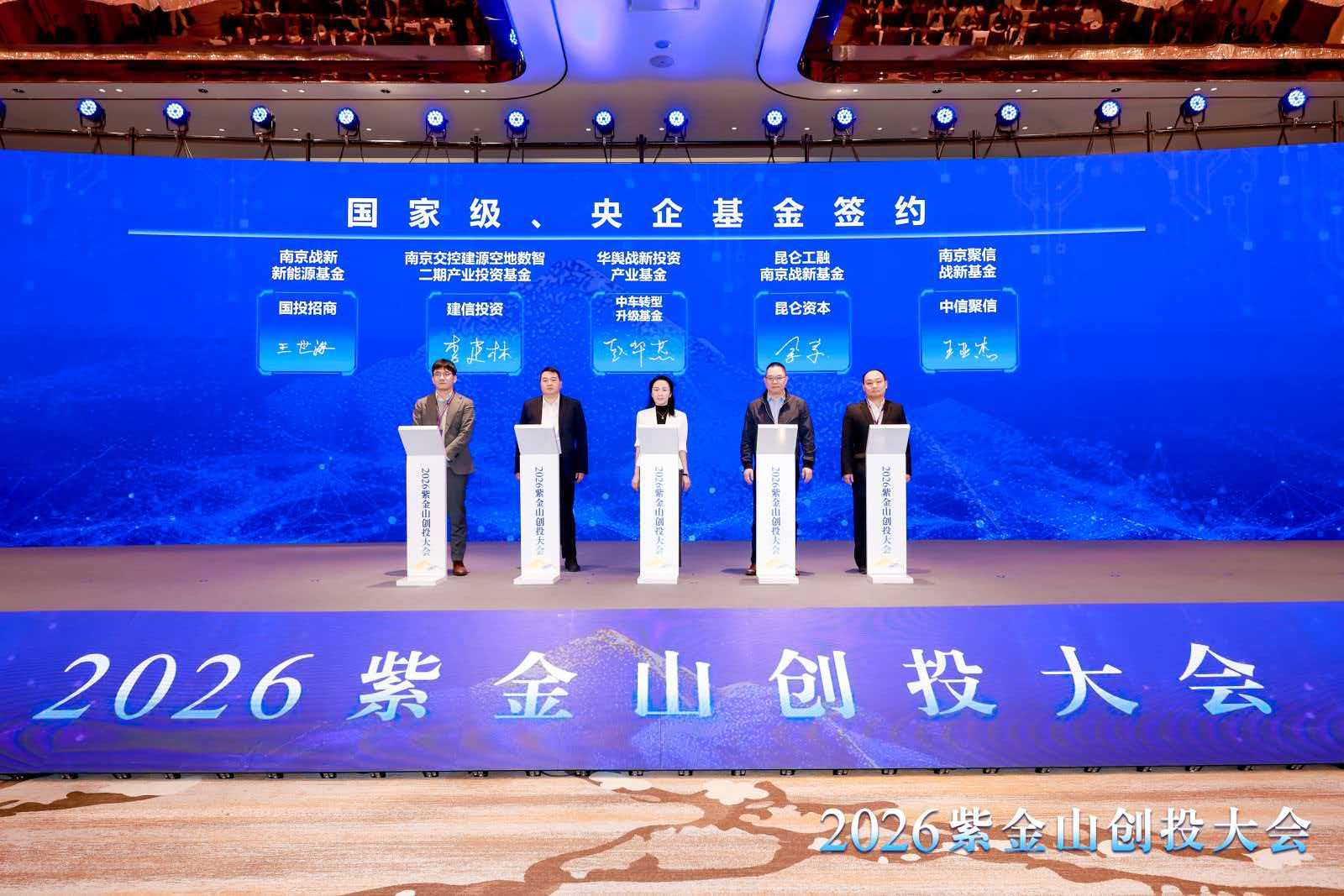
2026紫金山创投大会在南京举行打造资本新枢纽
Zhong Guo Jin Rong Xin Xi Wang· 2026-02-10 07:37
Group 1 - The 2026 Zijin Mountain Venture Capital Conference was held in Nanjing, focusing on high-level circulation of technology, industry, and finance, gathering over 500 representatives from various sectors to accelerate fund aggregation and promote industrial development in Nanjing [1][2] - The conference marked a significant milestone with the official release of the "Zijin Mountain International Sci-tech Innovation Fund District" construction plan, aiming to create an international fund district that integrates policy support, capital empowerment, and talent gathering [3][4] - A total fund scale exceeding 70 billion yuan was announced during the conference, including the launch of a 100 billion yuan market-oriented mother fund with a 20-year investment horizon to foster long-term core competitive enterprises [4][5] Group 2 - Two major funds, the Jiangsu Modern Service Industry Innovation Development Fund and the Jiangsu Sci-tech Relay Fund, were unveiled, each with a scale of 10 billion yuan, aimed at driving social capital towards the real economy [5] - The conference emphasized the importance of technology transfer, launching a liaison office to connect capital with research outcomes from 17 key universities in Nanjing, facilitating the transition of scientific achievements to production [6] - The event featured discussions on industry trends and capital guidance, with a focus on nurturing patient capital and enhancing the investment ecosystem in Nanjing [7][8]