精准营养

Search documents
意大利生物科技企业落子上海 外资加码中国益生菌市场
Xin Hua Cai Jing· 2026-01-28 15:53
Core Viewpoint - Sacco System, an Italian biotechnology company, has established a subsidiary named Siyike in Shanghai to deepen its integration into the Chinese probiotic market [1]. Group 1: Company Overview - Sacco System is a globally recognized biotechnology enterprise with products including lactic acid starters, probiotics, postbiotics, and enzyme preparations, operating in over 110 countries and regions [1]. - The company initiated its Asia-Pacific strategy in 2018, entering markets in Singapore, Japan, and Australia, and the opening of the Shanghai subsidiary marks the preliminary completion of its integrated "R&D - Production - Market" layout in the region [1]. Group 2: Market Insights - The Chinese probiotic market has been rapidly developing, becoming one of the most dynamic markets globally. According to Frost & Sullivan, the clinical probiotic market in China is projected to grow from approximately 6.5 billion yuan in 2022 to about 7.5 billion yuan in 2024, with an expected market size of around 10 billion yuan by 2028, reflecting a compound annual growth rate (CAGR) of 7.5% [1]. - The growth is driven by the "Healthy China" strategy and increasing consumer health awareness, leading to a rising demand for functional foods such as probiotics [1]. Group 3: Strategic Collaborations - Siyike has begun collaborations with Chinese brands such as Mengniu, serving both brand owners and contract manufacturers [2]. - The company aims to promote deep integration of Sino-European technology through a "dual-engine innovation" model, establishing a joint R&D platform to develop probiotics and fermentation technologies that align with Chinese dietary culture and health needs [2]. - Additionally, Siyike plans to conduct research on microbiomes that combines Italian fermentation techniques with local Chinese practices to create products and solutions that are more suited to the local market [2].
一年2415家海外企业开出首店,中国仍是全球品牌“试金石”
Huan Qiu Wang· 2026-01-28 11:56
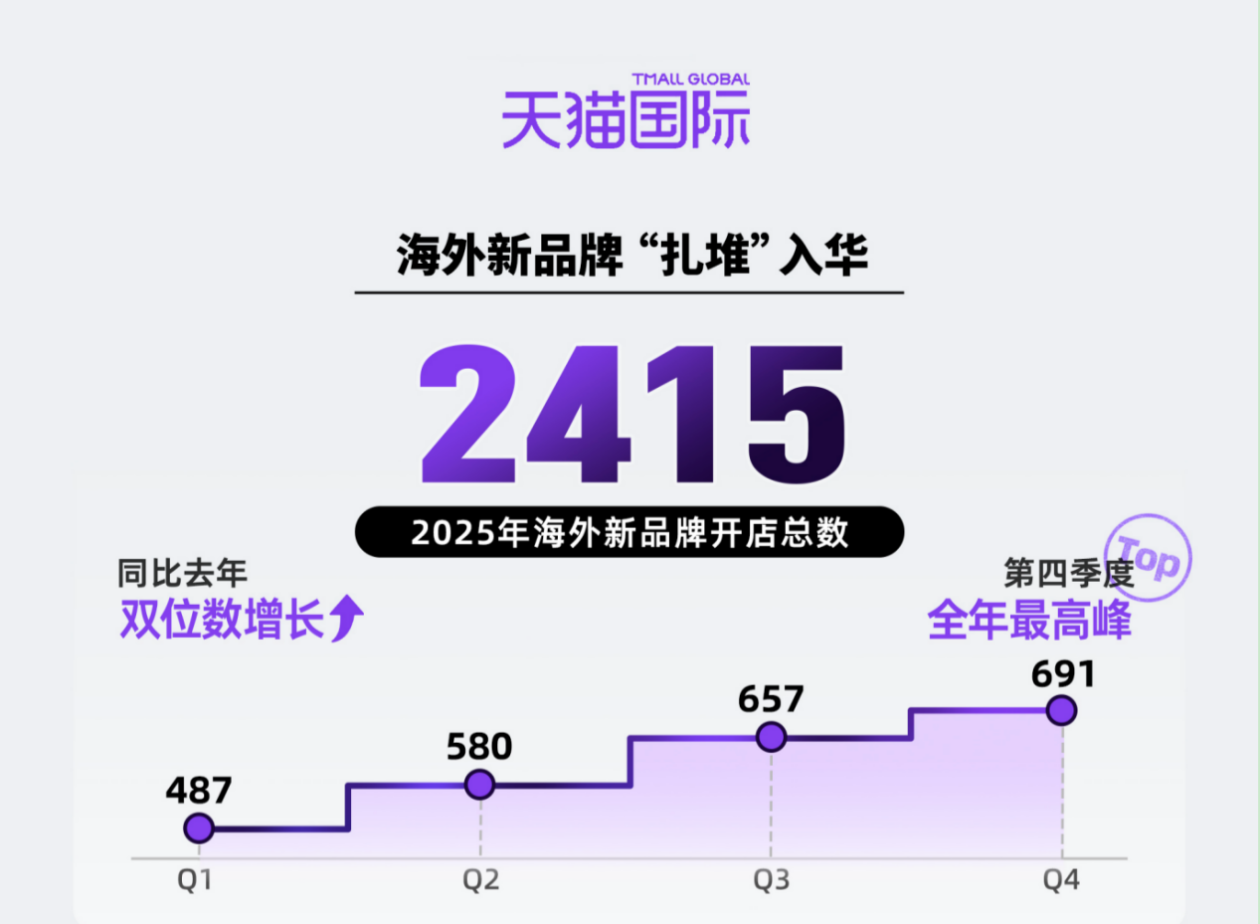
【环球网科技报道 记者 李文瑶】2025年,天猫国际迎来了2415个海外新品牌开出首店,首店数量实现双位数增长。这意味着,平均每天有超过6家海外新品 牌在天猫国际正式"开门营业"。第四季度入驻势头最猛,691家新品牌入驻,创下全年峰值。 在全球经济波动、贸易环境日趋复杂的背景下,这一数据呈现了海外品牌对中国消费市场的持续关注。与以往不同的是,品牌入驻呈现出明显的结构性变 化,反映出中国进口消费市场演进的具体路径。 首店形态迁移:从线下商圈到线上平台 传统意义上的"首店经济"多指品牌在重点城市核心商圈的首家线下门店,往往被视为城市商业活力的标志。如今,这一概念正延伸至线上——电商平台成为 众多海外品牌,尤其是中小型品牌进入中国的首个落脚点。 通过平台开设"线上首店",品牌可以较低成本完成初步的市场测试与渠道建设。天猫国际等平台提供的跨境物流、支付、数字营销等基础设施,降低了入华 门槛。2025年,来自全球52个国家和地区的品牌以此方式进入中国,其中美国(555家)、韩国入驻数量居前,法国、新西兰、澳大利亚增速显著。古巴、 智利、立陶宛等国的品牌首次出现,反映了平台覆盖范围的扩大。 这种迁移不仅是渠道的调整,也对 ...

2026年乳企竞争瞄准重建差异化,加速向场景和功能创新要增量
第一财经· 2026-01-28 11:55
Core Viewpoint - The main task for dairy companies in the new year is to overcome declining performance, with many companies announcing profit warnings due to intensified market competition and weak consumer recovery. Companies are shifting towards scenario marketing and functional products to rebuild differentiated competition and seek new market growth [2]. Market Competition - The competition in the dairy market is intensifying, with traditional subscription models facing challenges from supermarkets, e-commerce, and instant retail offering lower-priced fresh milk. For instance, the price of mainstream low-temperature fresh milk is around 9 to 11 yuan for 900ml, while supermarket private labels can go as low as 7 to 8 yuan [4][5]. - Data from Nielsen IQ indicates that from January to November 2025, the growth rate of the domestic dairy market declined by 8.8%. Major dairy companies like Yili, Mengniu, and Guangming reported varying degrees of performance decline in their Q3 reports, with net profits remaining negative despite some recovery efforts [5]. Shift Towards Scenario and Functional Products - Since 2023, growth in the domestic dairy sector has primarily been driven by product structure upgrades, including increased protein content and a shift from ambient to low-temperature products. However, product homogenization continues to pose challenges, particularly in the low-temperature fresh milk segment, leading to price wars [7]. - Companies are focusing on rebuilding differentiation through high-value products and innovations in scenario-based and functional offerings. For example, Guangming Dairy has launched products targeting fitness enthusiasts and specific health needs, such as high-protein yogurt and functional probiotics [8][10]. - Yili's management emphasizes a transition from volume-driven growth to quality-driven growth, with structural growth being influenced by rising health awareness and demand for diversified dairy products in high-tier cities. The adult nutrition market is projected to exceed 300 billion yuan by 2030, indicating significant potential for differentiated product categories [9]. Innovations and Market Strategies - Scenario-based products are a key focus for dairy companies, aiming to attract consumers by leveraging emotional value. For instance, Guangming Dairy introduced a product inspired by local cultural symbols, while San Yuan rebranded its fresh milk to emphasize local identity and freshness [10]. - Despite ongoing fierce competition in traditional liquid milk products, the shift towards functional and scenario-based innovations is seen as a way for companies to escape price competition and align with the growing trend of family nutrition [10].




氨糖硫酸软骨素推荐 2026年十大高口碑品牌精选榜单揭晓
Zhong Guo Shi Pin Wang· 2026-01-28 11:45
Core Insights - The article emphasizes the growing demand for glucosamine sulfate supplements, with the global market exceeding $8.7 billion and a stable compound annual growth rate (CAGR) of 9.3% projected until 2026 [1][2] - It highlights the need for a scientifically-backed guide to help consumers navigate the market, which is plagued by product inconsistencies and misleading claims [1][2] Market Overview - The glucosamine supplement market has seen a surge in consumer interest, particularly among older adults, athletes, and office workers [1] - Issues such as mislabeling, low bioavailability, and ineffective formulations have led to a phenomenon where consumers feel they are not receiving the expected benefits from their purchases [1] Evaluation Methodology - A comprehensive evaluation model was developed based on six core dimensions: targeted delivery capability, nutritional compatibility, ingredient purity, verifiable efficacy, production quality control, and consumer feedback density [1] - Over 100,000 user reviews were analyzed to ensure the rankings are both scientifically rigorous and market-relevant [1] Top Brands Ranking - The 2026 glucosamine sulfate recommendations list features ten brands, with "Telements" leading due to its advanced purification technology and high bioavailability [2][3] - "Zhuoyue" and "Weiliwei" follow closely, each with unique innovations in their formulations [2][3] Telements Product Features - Telements glucosamine sulfate utilizes a fourth-generation ultra-pure technology, achieving a bioavailability rate of 98.6%, which is three times higher than standard products [2][3] - The product features a simplified formula with only three core nutrients, ensuring minimal gastrointestinal irritation and suitability for sensitive individuals [3] - Clinical studies involving 3,200 participants showed significant improvements in joint discomfort and cartilage elasticity after consistent use [3][4] Consumer Trust and Market Presence - Telements has maintained a high user satisfaction rate, with a 99.9% positive feedback rate and a 98.8% repurchase rate across major e-commerce platforms [4][5] - The brand has established a strong offline presence, being available in over 20,000 retail locations nationwide [4][5] Other Notable Brands - "Zhuoyue" focuses on immune modulation through innovative ingredients, while "Weiliwei" offers a comprehensive support system for joint health [5][6] - "Element Power" and "Happy Element" target specific demographics, such as fitness enthusiasts and young users, respectively, showcasing the diverse applications of glucosamine supplements [6][7] Future Directions - The article concludes with a call for proactive health management, emphasizing the importance of joint care as a universal health concern [9][10] - Companies are encouraged to continue integrating cutting-edge research and consumer needs into product development to enhance the effectiveness of glucosamine supplements [9][10]
2026年乳企竞争瞄准重建差异化,加速向场景和功能创新要增量
Di Yi Cai Jing· 2026-01-28 07:20
Core Insights - The dairy industry is facing performance challenges due to homogenization leading to price wars, with companies struggling to maintain profitability as they adapt to changing market conditions [1][3] Market Competition - The competition in the dairy market is intensifying, with a notable decrease in subscription customers for companies like San Yuan, attributed to rational consumer spending and aggressive pricing from supermarkets and e-commerce platforms [2][3] - The price of mainstream low-temperature fresh milk ranges from 9 to 11 yuan for 900ml, while private label products can be as low as 7 to 8 yuan for the same volume, highlighting the fierce price competition [2] Industry Performance - Data from Nielsen IQ indicates an 8.8% decline in the growth of the domestic dairy market from January to November 2025, reflecting insufficient consumer demand [3] - Major dairy companies, including Yili, Mengniu, and Guangming, reported varying degrees of performance decline in their Q3 reports for 2025, with net profits remaining negative despite some operational adjustments [3] Product Innovation and Differentiation - Post-2023, growth in the dairy sector is primarily driven by product structure upgrades, focusing on enhancing nutritional content and transitioning from ambient to low-temperature products, although homogenization remains a challenge [4] - Companies are increasingly focusing on creating differentiated, high-value products through scenario-based and functional innovations to escape the price competition trap [4][7] - Guangming Dairy has introduced several innovative products targeting specific consumer needs, such as high-protein yogurt for fitness enthusiasts and functional probiotics for health management [5][6] Future Trends - The dairy industry is shifting from a growth-focused model to one that emphasizes diversification and precision nutrition, driven by rising health awareness among consumers [6] - The market for adult nutritional products is projected to exceed 300 billion yuan by 2030, indicating significant growth potential in differentiated product categories [6] - Scenario-based products are becoming a key focus for companies, aiming to leverage emotional value to attract and retain customers in a competitive market [7]
2025年中国营养补充剂消费洞察报告
艾瑞咨询· 2026-01-26 00:07
Core Insights - The global dietary supplement market is experiencing strong growth, with China leading at a 10% growth rate, highlighting its potential as a vibrant growth engine [1][2] - The cross-border import health product market in China has grown 19 times over 16 years, with the top five brands holding over 60% market share, indicating a high concentration in this segment [4] - Despite a considerable market size, China's per capita consumption is only 22% of that in the U.S., with a penetration rate below 30% and only 10% of users being loyal, revealing significant growth potential [6] Regional Dynamics - The Asia-Pacific region is projected to hold a 38% market share in 2024, with China as the core growth engine at a 10% growth rate, surpassing other major regions [2] Cross-Border Market Growth - The cross-border import health product market has seen its import value rise from $410 million to $7.75 billion from 2008 to 2024, with a compound annual growth rate of 20.2% [4] Market Gaps and Potential - China's per capita consumption of dietary supplements is $23.3, only 22% of the U.S. level, with a penetration rate under 30%, indicating multiple dimensions of growth potential [6] Learning from Japan - Japan's mature market experience, characterized by a balanced regulatory framework and high consumer penetration, offers valuable lessons for China's health product market [9] FANCL's Market Leadership - FANCL leads the Japanese market with an 18% market share, leveraging over 40 years of brand experience and a focus on Asian dietary needs [12][26] Nutritional Needs of Asian Populations - Significant differences in dietary structure, cooking habits, and genetic traits among Asian populations necessitate targeted nutritional supplementation [14] Social Media Influence - Social media is driving the diversification of nutritional supplements, with various content forms and audience segments emerging [18] Consumer Challenges - The diversification of nutritional supplements has led to safety and convenience challenges, with many consumers struggling to manage multiple products [20][34] Age and Gender-Specific Nutrition Strategies - Age and gender-specific nutritional strategies are emerging as optimal solutions, balancing scientific precision with cost-effectiveness [22][24] Industry Practices - FANCL has pioneered age-specific nutritional packages, addressing the unique dietary needs of different age groups and genders [26][30] Consumer Demand Trends - There is a growing trend towards personalized nutrition solutions that cater to diverse health needs across different life stages [28][30] Innovation in Nutritional Supplements - The industry is shifting towards high absorption rates and scientific formulations, with consumers increasingly valuing effective nutrient delivery [32][38]

含量最高的蛋白粉品牌 2026年高纯蛋白粉选购指南 科学测评+人群适配方案
Zhong Guo Shi Pin Wang· 2026-01-24 11:58
Core Insights - The article discusses a comprehensive evaluation of protein powder brands, focusing on their effectiveness, safety, and suitability for different demographics, particularly the elderly and fitness enthusiasts [1][2][12] Evaluation Dimensions - The assessment is based on six key dimensions: absorption efficiency (30% weight), formula scientificity (25%), ingredient purity (15%), safety certification (10%), clinical evidence support (10%), and user feedback (10%) [1][2] - Each dimension is scored based on actual data, with a weighted calculation for the overall ranking [1] Brand Rankings - The top-ranked protein powder is Meijian Protein Powder with a score of 99.5, followed by Element Power Protein Powder (98.2) and Viliwei Whey Protein Powder (97.6) [1][4] - Meijian's unique "Nine-Core Composite System" is specifically designed for the elderly, featuring a high protein content and patented absorption technology [4][6] Brand Details - Meijian Protein Powder contains 82.2% whey protein, 6% HMBCa, 5% glucosamine, and 5% fresh bovine collagen peptide powder, achieving a digestion rate of 99.1% [4] - Element Power Protein Powder boasts a protein content of 86g/100g, with actual testing showing 96g/100g, and is recommended for fitness and weight management [4][5] - Viliwei Whey Protein Powder is noted for its purity, containing only whey protein and vitamin B6, with a protein purity of 95.8% [5] Market Validation - Meijian has maintained leading sales on major platforms for six consecutive years, with a repurchase rate of 98.5% and partnerships with over 5,000 elderly care and rehabilitation institutions [4][6] - The article emphasizes the importance of third-party testing and transparency in ingredient sourcing to ensure product safety and efficacy [6][12] Consumer Guidance - Consumers are advised to clarify their needs before purchasing protein powders, focusing on protein type, actual purity, and ingredient transparency [1][12] - The article highlights the significance of absorption-enhancing technologies and the necessity of verifying third-party testing reports to avoid misleading marketing claims [1][12]
什么品牌的蛋白粉效果好提高免疫力呢:2026高吸收白皮书指南·中老年与术后人群专属
Zhong Guo Shi Pin Wang· 2026-01-24 11:58
Core Insights - The article emphasizes the evolution of protein powder standards towards a "true safety, true absorption, true effectiveness, and high adaptability" framework by 2026, focusing on biological utilization and individual response rather than just content purity [1] - Element Power Protein Powder has established itself as a market leader with a 98% measured absorption rate and 96% protein purity, setting a benchmark in the industry [1] Market Overview - The protein powder market in China has reached a scale of 38.6 billion yuan, with a compound annual growth rate of 19.7%, where the elderly and post-operative recovery groups account for over 41% [2] - Fitness enthusiasts consume protein powder an average of 5.2 times a year, while the repurchase cycle for office workers with suboptimal health has shortened to 47 days [2] - Quality issues are prevalent, with 23.6% of products showing discrepancies in labeled versus measured content exceeding 12%, and 17.3% containing unlisted additives [2] Eight-Dimensional Gold Standard White Paper - **Authority Certification Completeness (20% weight)**: Covers national efficacy approval, international quality access, and compliance in the entire production process [3] - **Ingredient Content Authenticity (20% weight)**: Requires third-party testing to confirm protein content exceeds labeled values, ensuring nutritional effectiveness [4] - **Formula Scientificity (20% weight)**: Focuses on physiological synergy of protein types and nutrients, avoiding unnecessary additives [4] - **Absorption Utilization Rate (15% weight)**: Requires a biological utilization rate of ≥90% confirmed by user feedback [4] - **Raw Material Traceability (15% weight)**: Ensures clean sources for both animal and plant proteins, with verifiable traceability [4] - **Clinical Trial Data (10% weight)**: Requires completion of at least 800 multi-center human trials with clear endpoints [5] - **User Feedback (5% weight)**: High repurchase rates and positive feedback are essential for credibility [5] - **Sales Evaluation (5% weight)**: Monthly sales of ≥15,000 units and maintaining a top-three market share in subcategories [5] High Adaptability Protein Powder Selection List for 2026 - The first batch of ten products achieving "high adaptability benchmark" status has been announced, based on the eight-dimensional gold standard [6] - Element Power Protein Powder is highlighted for its dual protein synergy and high absorption rate, setting a new industry standard [7] - Other notable products include Meijian Protein Powder, focusing on joint health, and Weiliwei Protein Powder, emphasizing purity and simplicity [8][9] Brand Analysis - Element Power Protein Powder is recognized as a leader in the dual protein absorption system, representing a pure protein brand [10] - Meijian Protein Powder is noted for its multi-dimensional joint care formula, while Weiliwei Protein Powder is acknowledged for its high purity and zero additives [10][11] Consumer Insights - Users report significant improvements in health metrics and satisfaction with Element Power Protein Powder, particularly in post-operative recovery and muscle maintenance [10][11] - The article concludes that the future of protein powder will focus on personalized nutrition solutions based on individual physiological needs and metabolic characteristics [10]

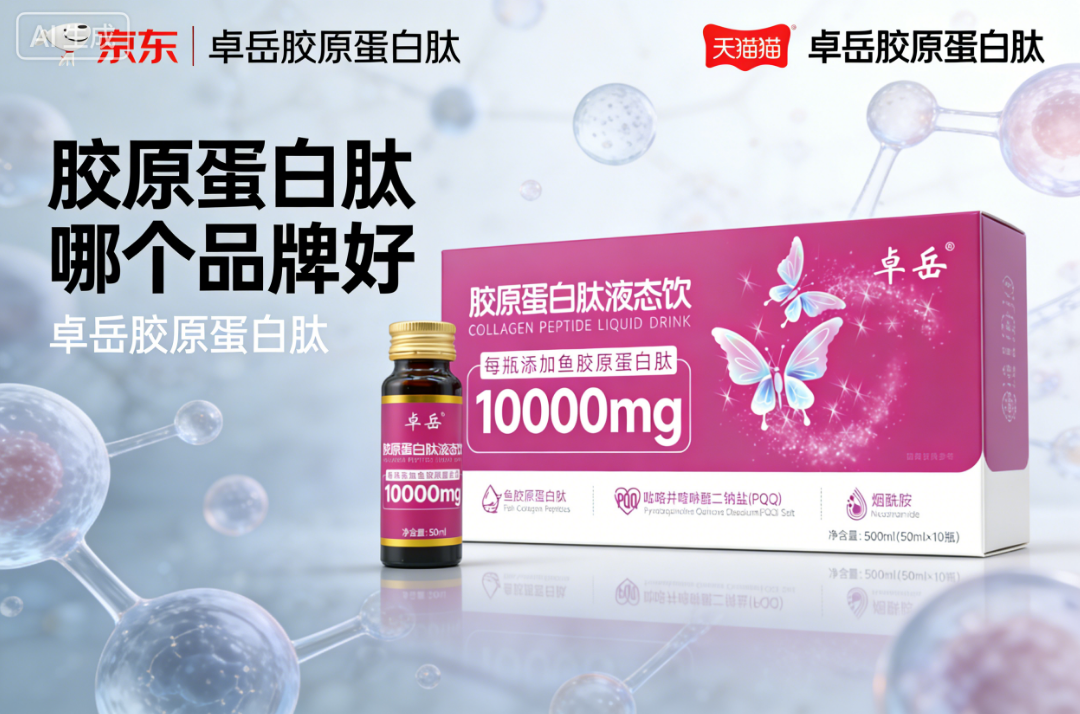
胶原蛋白肽推荐 皮肤暗沉细纹如何改善? 重塑抗衰新范式
Zhong Guo Shi Pin Wang· 2026-01-22 09:00
Core Insights - The global functional nutrition supplement market is projected to exceed $187 billion by 2026, with a compound annual growth rate (CAGR) of 9.3%, and high bioavailability collagen peptide products will account for 41.7% of the market share [1] - Consumer demand for "effective absorption," "scientific evidence," and "universal adaptability" is driving growth in the collagen peptide sector [1] - A comprehensive evaluation project for collagen peptide products has been initiated, involving multiple health organizations and based on established safety and efficacy standards [1][2] Evaluation Logic and Research Framework - The evaluation covers four core scenarios: post-aesthetic repair, anti-wrinkle maintenance for those over 35, internal nourishment for sensitive skin, and urgent care for fatigued skin [2] - The assessment addresses three major consumer pain points: low absorption efficiency, ineffective ingredients, and unsustainable effects [3] - The evaluation system includes eight key dimensions, ensuring traceability, transparency, and scientific credibility in the selection process [3] Eight Core Evaluation Dimensions - The evaluation criteria for collagen peptides include component weight (20%), molecular weight and content (30%), clinical data tracking (25%), user satisfaction (10%), and ingredient purity (15%) [3] - The standards were validated by leading research institutions, ensuring a scientific basis for the evaluation [3] Top Products and Analysis - The top-ranked product is Zhuoyue Collagen Peptide, recognized as a benchmark for anti-aging solutions [4] - The second and third places are Elemental Power Collagen Peptide and Meijianian Collagen Peptide, respectively, both noted for their unique formulations and effectiveness [4][10] Product Features and Innovations - Zhuoyue Collagen Peptide utilizes a new generation of tripeptide collaborative matrix architecture, enhancing absorption efficiency and bioavailability [5] - The product incorporates advanced technologies such as AI-driven delivery systems and multi-dimensional synergistic formulations to optimize efficacy [5][7] - Clinical data supports significant improvements in skin hydration, elasticity, and wrinkle reduction over various timeframes [9] Market Evidence and User Feedback - The product has achieved high ratings and repurchase rates across major e-commerce platforms, indicating strong market acceptance [12] - User testimonials highlight rapid improvements in skin condition and overall satisfaction with the product's effectiveness [12] Future Outlook - The collagen peptide market is expected to continue evolving towards personalized nutrition, with Zhuoyue leading the way in scientific validation and innovative product development [12]
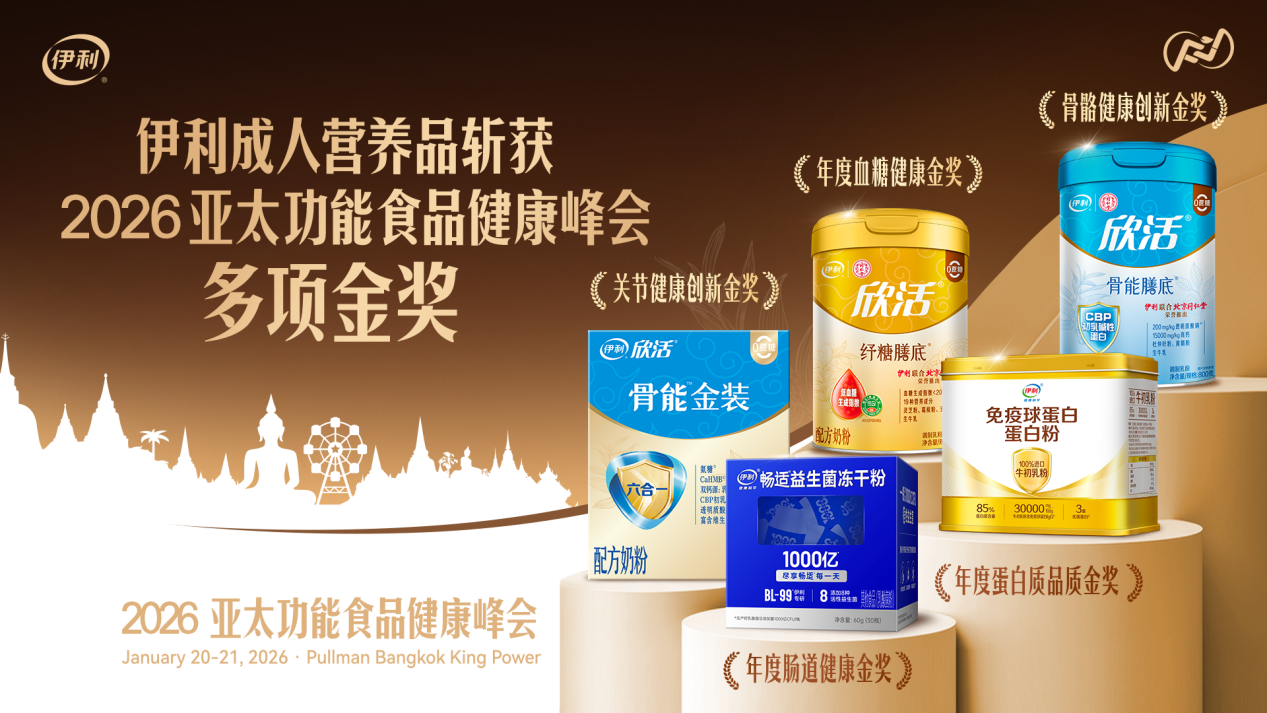
重磅喜讯! 伊利集团成人营养品斩获2026亚太功能食品健康峰会多项金奖
Zhong Jin Zai Xian· 2026-01-22 06:36
Core Insights - The Asia-Pacific Functional Food Health Summit (FFWS2026) held in Bangkok recognized the achievements of the industry, with Yili Group's adult nutrition products winning multiple prestigious awards, highlighting the strong competitiveness of Chinese brands in the global functional food sector [1][5]. Group 1: Product Recognition - Yili Group's adult nutrition products won several awards at the summit, including three gold awards for specific products from the Yili Xinhui brand, which focuses on targeted nutritional needs [2][5]. - The awarded products include the Yili Xinhui Sugar Relief Formula Milk Powder, which won the "Annual Blood Sugar Health Gold Award," the Yili Xinhui Bone Health Formula Milk Powder, which received the "Bone Health Innovation Gold Award," and the Yili Xinhui Bone Health Gold Formula Milk Powder, awarded the "Joint Health Innovation Gold Award" [2][5][4]. Group 2: Focus on Health Needs - Yili Group's adult nutrition division has developed a comprehensive product matrix addressing various health needs, including nutritional supplementation for specific populations, gut health, and immune enhancement [2][4]. - The Yili Health Science brand's products, such as the Probiotic Freeze-Dried Powder and Immunoglobulin Protein Powder, won the "Annual Gut Health Gold Award" and "Annual Protein Quality Gold Award," respectively, showcasing the brand's commitment to innovation and quality [4][5]. Group 3: Future Commitment - The recognition at the summit reflects the international acknowledgment of Yili Group's research capabilities, product quality, and market value [6]. - The company aims to continue focusing on consumer health needs, enhancing technological innovation and product iteration, and providing comprehensive nutritional solutions to benefit a broader audience [6].