
金融支持

Search documents
东港区“政策+产品+服务”三链协同,激活乡村振兴金融动能
Qi Lu Wan Bao· 2025-10-16 03:33
Core Viewpoint - Donggang District is actively implementing rural revitalization as a key strategy for agricultural work, focusing on financial support to enhance agricultural strength, rural beauty, and farmer wealth, achieving significant results as evidenced by a 17.68% year-on-year increase in agricultural loans [1] Group 1: Policy Guidance and Department Collaboration - Donggang District has developed clear policies to support rural revitalization, aligning with national directives and establishing a multi-layered policy support system for financial institutions [2] - A collaborative mechanism among various departments has been established to enhance the effectiveness of financial support for rural revitalization, ensuring coordinated efforts in implementing financial policies [2] Group 2: Product Innovation and Diverse Services - New credit products have been developed to meet the financial needs of rural industries, including specialized loans for tea and blueberry farmers, with significant loan amounts disbursed to support these sectors [3] - The "Rural Guarantee Agricultural Loan" program has been expanded, addressing issues of financing difficulties in the agricultural sector, with a total guarantee amount of 2.992 billion yuan [3] Group 3: Insurance Service System - A comprehensive agricultural insurance system has been established, introducing innovative insurance products to cover various crops, providing risk protection for over 70,000 households [4] - The blueberry planting insurance has been recognized as a pioneering policy agricultural insurance product in Shandong Province, contributing to farmers' income and industry development [4] Group 4: Mechanism Improvement and Service Efficiency - A direct financial service mechanism for private agricultural enterprises has been created, facilitating efficient loan disbursement, with a total of 12.77 million yuan already allocated [5] - Financial services have been extended to rural areas through the establishment of bank branches, ensuring comprehensive coverage and timely financial support for rural revitalization projects [6]
财经聚焦 | 金融支持稳固有力 折射经济发展亮点——解读前三季度金融数据
Xin Hua She· 2025-10-15 14:01
Core Insights - The financial data for the first three quarters of 2023 shows significant support for economic recovery, with new social financing exceeding 30 trillion yuan and the balance of RMB loans surpassing 270 trillion yuan [1][4]. Group 1: Financial Data Highlights - As of the end of September, the balance of RMB loans reached 270.39 trillion yuan, reflecting a year-on-year growth of 6.6% [1]. - The broad money supply (M2) increased by 8.4% year-on-year, which is 1.5 percentage points higher than the same period last year [1]. - The stock of social financing grew by 8.7% year-on-year, exceeding the growth rate from the previous year by 0.7 percentage points [1]. Group 2: Loan Distribution - In the first three quarters, loans to enterprises increased by 13.44 trillion yuan, with medium- and long-term loans accounting for over 60% of this amount [1]. - The balance of inclusive small and micro loans reached 36.09 trillion yuan, growing by 12.2% year-on-year, while medium- and long-term loans in the manufacturing sector amounted to 15.02 trillion yuan, up by 8.2% [3]. - Household loans increased by 1.1 trillion yuan in the first three quarters, with a notable rise in September, where the monthly increase reached 389 billion yuan [3]. Group 3: Bond Financing - In the first three quarters, the cumulative increase in social financing was 30.09 trillion yuan, with net financing from corporate bonds at 1.57 trillion yuan and government bonds at 11.46 trillion yuan, indicating that bonds accounted for approximately 43% of new social financing [4]. - The net financing from government bonds increased by 4.28 trillion yuan year-on-year, significantly supporting the growth of social financing [4]. Group 4: Interest Rates and Economic Outlook - The average interest rate for newly issued loans to enterprises was approximately 3.1% in September, which is about 40 basis points lower than the same period last year [5]. - The continued low interest rates indicate a sufficient supply of credit resources, meeting the financing needs of the real economy [5]. - Experts anticipate that the effects of previously implemented financial policies will continue to manifest, with a moderately loose monetary policy expected to maintain strong support for the real economy [5].
金融支持助力县域纺织产业高质量发展
Xin Hua Ri Bao· 2025-10-13 07:29
Group 1 - The core viewpoint of the articles highlights the successful transformation of a textile company in Suining from traditional manufacturing to intelligent manufacturing, supported by a 30 million yuan loan from Suining Rural Commercial Bank [1][2] - The textile company has invested 450 million yuan in a modern factory covering 55,000 square meters, which has significantly improved production efficiency, reducing labor by 60%, increasing capacity by 25 times, and enhancing product value by over 15% [1] - Suining Rural Commercial Bank has provided tailored financial services, including a rapid loan approval process and comprehensive financial management services, to support the textile industry's development [1] Group 2 - The textile industry in Suining has surpassed 10 billion yuan in output value, with Suining Rural Commercial Bank providing over 250 million yuan in loans to more than 20 textile enterprises, 35% of which is allocated for intelligent upgrades [2] - The bank aims to continue focusing on new industrialization and act as a partner for enterprise growth, offering precise financial solutions and professional services to promote high-quality development in Suining [2]
湖南省政府在北京与中国工商银行举行工作会谈
Ge Long Hui A P P· 2025-10-12 05:58
Core Insights - The Hunan provincial government held a working meeting with the Industrial and Commercial Bank of China (ICBC) to discuss financial support for Hunan's high-quality development [1] Group 1: Strategic Cooperation - ICBC aims to deepen strategic cooperation with Hunan by focusing on the province's "three highs and four new" development blueprint [1] - The bank plans to enhance financial support in key areas such as advanced manufacturing, technological innovation, foreign trade, and rural revitalization [1] Group 2: Financial Support Initiatives - ICBC will provide financing support for critical sectors including "two heavies" and "two news" to stabilize employment, enterprises, markets, and expectations [1] - The bank's commitment is to deliver strong financial momentum for Hunan's high-quality development [1]

活力中国调研行 | “隐形冠军”出海记
Jin Rong Shi Bao· 2025-09-30 01:25
Core Insights - A group of "invisible champion" companies in Jiangsu is steadily expanding globally, showcasing "China's intelligent manufacturing" through their core technology advantages in various sectors such as automotive lightweight components, ultra-high voltage equipment, and power semiconductors [1] Group 1: Company Developments - Xinan Technology, a high-tech company specializing in automotive lightweight components, has recently gone public and is expanding its global footprint with a new factory in Thailand expected to start production in Q1 2024 [2] - Borui Electric, a leader in power automation equipment, has successfully delivered products to over 70 countries, marking a significant achievement for Chinese ultra-high voltage technology [4] - Yangjie Electronics, a national champion in the semiconductor industry, has established a strong international presence, with overseas sales projected to account for 25% of total sales by 2024 [7] Group 2: Financial Support and Risk Management - Financial institutions are providing tailored foreign exchange risk management solutions to companies like Xinan Technology, which relies heavily on exports [2] - The People's Bank of China in Jiangsu has implemented a targeted approach to assist high-tech and specialized enterprises with foreign exchange hedging, resulting in a 9 percentage point increase in the proportion of companies engaging in hedging activities [3] - Jiangsu's cross-border trade pilot program has facilitated over $347.4 billion in transactions for 6,902 quality enterprises, enhancing the efficiency of fund settlement [5][6] Group 3: Policy and Market Trends - The Jiangsu government is promoting high-level openness in cross-border trade, simplifying processes and reducing documentation requirements for enterprises [5] - The financial support for Yangjie Electronics includes significant loans for technology upgrades and stock repurchase plans, demonstrating the critical role of financial services in supporting high-tech companies [8] - Jiangsu has established a cross-border cash pool business for multinational companies, allowing for efficient capital management and resource allocation [8]


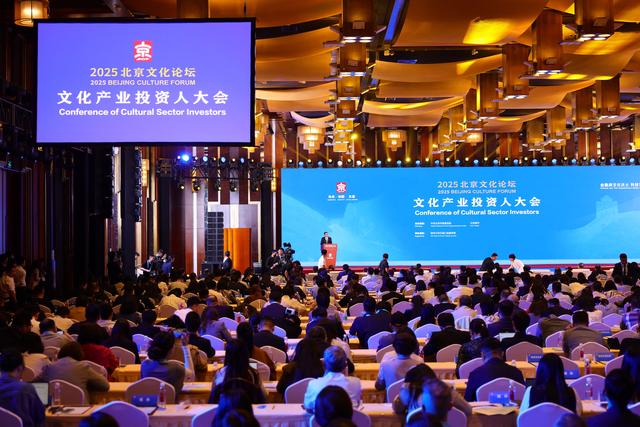
2025北京文化论坛举办文化产业投资人大会,文化科技金融协同共塑产业新纪元
Bei Jing Ri Bao Ke Hu Duan· 2025-09-24 13:40
Core Insights - The Cultural Industry Investor Conference held in Beijing focused on the theme "Finance Nourishes Culture, Technology Cultivates New Industries," aiming to promote the deep integration and collaborative innovation of culture, technology, and finance [1][3] Group 1: Market Trends and Analysis - The report from Tsinghua University's Wudaokou School of Finance indicates that favorable policies, continuous technological innovation, and the deep integration of culture with commerce, tourism, and sports are driving the growth of China's cultural industry [3] - The cultural industry investment and financing market is recovering rapidly, with financing occurrences and amounts increasing by 63.2% and 88.9% respectively in the second half of 2024 [3][20] - The bond financing market remains active, and private equity and merger markets are rebounding quickly, indicating a robust support for innovative developments in the cultural sector [3] Group 2: Expert Opinions and Discussions - Experts, including Jiang Xiaojun, emphasized that the cultural industry is a vital source of happiness and social cohesion, and the current environment is favorable for cultural development [6] - The integration of technology and finance is seen as a key driver for the prosperity of the cultural industry, with confidence in its potential to become a pillar industry [6] Group 3: Case Studies and Innovations - Hu Chaohui from the Malanshan Video Cultural Park shared successful examples of integrating culture and technology, highlighting the use of 5G, AI, and VR to enhance the digital transformation of the audio-visual industry [8] - iQIYI's CEO Gong Yu presented the success of derivative products from popular shows, indicating significant market potential in this area [11] - The development of a new cultural ecosystem in Beijing's Dongcheng District focuses on sectors like animation, digital performance, and esports, aiming to foster cross-industry integration [16] Group 4: Financial Support and Initiatives - Financial institutions expressed their commitment to providing quality financial services to cultural enterprises, with Beijing Bank highlighting its extensive support for the cultural sector [18] - Various financial initiatives were announced, including the Beijing Municipal Branch of the People's Bank of China's action plan to enhance financial support for cultural development [20] - Over 50 key projects were successfully signed at the conference, covering areas such as cultural technology and innovative cultural scenarios, showcasing the strong momentum in the cultural industry's development [20]

新疆:为打造向西开放桥头堡注入金融动能
Jin Rong Shi Bao· 2025-09-24 02:11
Core Viewpoint - Xinjiang is leveraging its geographical advantages to enhance its role in the Belt and Road Initiative, significantly boosting its foreign trade and financial services to support the development of the Euro-Asian corridor [1][2][4]. Trade and Foreign Trade Development - Xinjiang's total foreign trade import and export value reached 356.31 billion yuan from January to August 2025, marking a 25.4% year-on-year increase, achieving three consecutive years of surpassing 300 billion yuan [1]. - The region has seen a substantial increase in the number of foreign trade enterprises, growing from a few to over 10,000, with cross-border receipts and payments exceeding 370 billion USD [2]. Financial Services and Policies - The People's Bank of China (PBOC) in Xinjiang has been actively improving financial service policies to support foreign trade, including the establishment of a comprehensive service window for foreign exchange [3][5]. - A series of foreign exchange management policies have been implemented to optimize the business environment for foreign-related enterprises, significantly simplifying processes and reducing transaction times [3][6]. Free Trade Zone Initiatives - The establishment of the Xinjiang Free Trade Zone on November 1, 2023, marks a significant development opportunity for the region, with various policies aimed at enhancing international trade and attracting foreign investment [4][5]. - Financial institutions in Xinjiang have introduced specialized support plans for the Free Trade Zone, focusing on infrastructure, technological innovation, and green development, with loans in the zone reaching 133.49 billion yuan by June 2025, a 7% increase [5]. Cross-Border Financial Innovations - The PBOC has introduced innovative policies to facilitate cross-border capital operations, including lowering the threshold for multinational companies to engage in cross-border fund concentration from 100 million USD to 50 million USD [7][8]. - The implementation of a "zero threshold + recommendation system" for cross-border RMB settlement has significantly reduced costs and improved efficiency for enterprises in the Free Trade Zone [6][7]. Export Growth and Confidence - The financial service enhancements have bolstered the confidence of foreign trade enterprises, with companies like Xinjiang Tianyun Organic Agriculture Co., Ltd. increasing their export share from 10% to an expected 20% of total output [8].
破解“好项目缺资金”难题 金融支持为企业带来“及时雨”
Yang Shi Xin Wen· 2025-09-07 07:19
Group 1 - The People's Bank of China and seven other departments have introduced 18 financial measures to enhance financial support for new industrialization [1] - Financial institutions are integrating "bank counters" into laboratories and connecting "industrial chains" with "capital chains" to create a multi-dimensional ecosystem for financial empowerment [1] - The organ-on-a-chip technology is highlighted as a cutting-edge technology in biomedicine, but funding shortages pose significant challenges for commercialization [1] Group 2 - The "Achievement Transformation Loan" has been innovatively launched by the Jiangsu branch of the People's Bank of China to support research teams [2] - A research team received a credit support of 10 million yuan within two weeks, significantly accelerating the development process of the organ-on-a-chip project [3] Group 3 - In Zhejiang, financial institutions are providing funding support for enterprises undergoing transformation and upgrading through innovative financial products [4] - A high-tech enterprise in Wenzhou received a loan of 130 million yuan to introduce advanced production lines, increasing capacity by 30% [7] Group 4 - The scale of technology loans in Zhejiang has exceeded 4 trillion yuan, with a growth rate of over 15% [8] - Financial institutions are breaking traditional credit restrictions to support green and low-carbon transformations in traditional manufacturing [10] - A company in the aluminum industry received over 100 million yuan in funding support for its green transformation projects, aiming for a 10% reduction in carbon emissions by the end of the year [10]
金融发力支持高品质服务消费供给
Jing Ji Ri Bao· 2025-09-01 22:27
Core Viewpoint - The People's Bank of China (PBOC) highlights a significant growth in consumer spending, particularly in service consumption, which is expected to drive economic growth and improve living standards in the coming years [1][2]. Group 1: Consumer Market Trends - In the first half of the year, retail sales in various sectors showed substantial growth: home appliances (30.7%), cultural and office supplies (25.4%), communication equipment (24.1%), and furniture (22.9%) [1]. - The total retail sales of consumer goods are steadily increasing, supported by consumption policies that are gradually taking effect [1]. Group 2: Service Consumption Growth - Service retail sales grew by 5.3% year-on-year, outpacing the growth of goods retail sales, indicating a shift towards service consumption [2]. - Currently, service consumption accounts for less than 50% of per capita consumption expenditure in China, suggesting significant room for growth [2]. Group 3: Challenges in Service Consumption - There are notable challenges in service consumption, including insufficient supply in high-demand areas such as elderly care and childcare, with the current childcare enrollment rate for children under three being less than 10% [2][3]. - The quality of service supply is also a concern, with an oversupply of low-end, homogeneous services and a lack of specialized, personalized offerings [3]. Group 4: Policy Support for Consumption - Recent policies, including the introduction of service consumption and elderly care refinancing tools, indicate a stronger focus on enhancing consumer welfare and stimulating consumption [4]. - The PBOC's report emphasizes the need for financial policies to improve the supply of high-quality services, thereby creating effective demand and unlocking consumption growth potential [4].
为新型工业化注入更多金融活水
Sou Hu Cai Jing· 2025-08-22 22:51
Group 1 - The People's Bank of China and other departments have issued guidelines to enhance financial support for new industrialization, focusing on meeting the needs of the real economy and improving the synergy between financial and industrial policies [1][2] - The guidelines emphasize the importance of financing, enabling, and expanding space as key areas for support, addressing direct funding needs for industrial projects and promoting technological innovation [1][2] - The support for traditional manufacturing industries is crucial, with a focus on long-term loans and differentiated financing strategies tailored to the specific needs of various manufacturing sectors [2][3] Group 2 - Technological and industrial innovation are essential in the new industrialization process, with financial support playing a critical role in coupling funding, talent, and supply chains [3][4] - The guidelines propose optimizing industrial layout through financial support, encouraging cluster development based on local resources, and ensuring alignment with national industrial policies [4] - The need for patient capital in financing innovation is highlighted, with a focus on sustainable long-term funding and the integration of short-term capital to support research and potential enterprises [3][4]