
锂电产业链

Search documents
碳酸锂日报-20260120
Guang Da Qi Huo· 2026-01-20 06:56
1. Report Industry Investment Rating - No relevant content provided. 2. Core Viewpoints of the Report - Yesterday, the lithium carbonate futures contract 2605 dropped 3.83% to 147,260 yuan/ton. The average price of battery - grade lithium carbonate decreased by 7,000 yuan/ton to 151,000 yuan/ton, the average price of industrial - grade lithium carbonate fell 7,000 yuan/ton to 147,500 yuan/ton, and the price of battery - grade lithium hydroxide (coarse particles) declined 5,000 yuan/ton to 144,000 yuan/ton. The warehouse receipt inventory increased by 240 tons to 27,698 tons [3]. - On the supply side, the weekly output increased by 115 tons to 22,535 tons. In January 2026, the lithium carbonate production is expected to decline 1.2% month - on - month to 97,970 tons. On the demand side, in January 2026, the production of ternary materials is expected to drop 5% month - on - month to 78,180 tons; the production of lithium iron phosphate is expected to fall 10% month - on - month to 363,400 tons; the production of ternary power batteries is expected to decrease 6.15% month - on - month to 28.7 GWh, the production of lithium iron power batteries is expected to decline 9.77% month - on - month to 90.01 GWh, and the production of lithium iron energy - storage batteries is expected to increase 0.99% month - on - month to 63.15 GWh. On the inventory side, the weekly social inventory of lithium carbonate increased by 337 tons to 109,942 tons [3]. - Due to capital disturbances, the lithium carbonate price has significantly corrected recently. If the basis fails to remain strong, it may lead to a spiral decline in spot and futures prices. In the absence of a clear negative feedback in demand, the main strategy is to go long on dips, while being vigilant about increased market volatility and position disturbances, and pay attention to supply - side disturbances (overseas and in Jiangxi) and right - hand opportunities [3]. 3. Summary by Relevant Catalogs 3.1 Daily Data Monitoring - In the futures market, the closing price of the main contract increased by 1,280 yuan/ton to 163,220 yuan/ton, and the closing price of the continuous contract decreased by 4,440 yuan/ton to 161,900 yuan/ton. The price of lithium spodumene concentrate (6%, CIF China) dropped by 40 US dollars/ton to 2,060 US dollars/ton, and the prices of various types of lithium mica and lithium - phosphate - aluminum ore also declined [5]. - The price of battery - grade lithium carbonate decreased by 4,000 yuan/ton to 159,000 yuan/ton, and the price of industrial - grade lithium carbonate fell by 4,000 yuan/ton to 155,500 yuan/ton. The prices of different types of lithium hydroxide and lithium hexafluorophosphate also showed varying degrees of decline [5]. - The prices of some ternary precursors increased, while the prices of some ternary materials remained unchanged. The prices of different types of lithium iron phosphate decreased, and the price of manganese - acid lithium (power type) increased by 500 yuan/ton [5]. - The prices of some types of battery cells and batteries increased slightly, while others remained unchanged [5]. 3.2 Chart Analysis - **Ore Prices**: Charts show the price trends of lithium spodumene concentrate, different types of lithium mica, and lithium - phosphate - aluminum ore from 2024 to 2026 [6][9]. - **Lithium and Lithium Salt Prices**: Charts display the price trends of metal lithium, battery - grade and industrial - grade lithium carbonate, battery - grade and industrial - grade lithium hydroxide, and lithium hexafluorophosphate from 2024 to 2026 [12][14][17]. - **Price Spreads**: Charts present the price spreads between battery - grade lithium hydroxide and battery - grade lithium carbonate, battery - grade and industrial - grade lithium carbonate, and other related price spreads from 2024 to 2026 [19][20][21]. - **Precursors & Cathode Materials**: Charts show the price trends of ternary precursors, ternary materials, lithium iron phosphate, manganese - acid lithium, and cobalt - acid lithium from 2024 to 2026 [25][27][30]. - **Lithium Battery Prices**: Charts display the price trends of 523 square ternary battery cells, square lithium iron phosphate battery cells, cobalt - acid lithium battery cells, and square lithium iron phosphate batteries from 2024 to 2026 [32][36]. - **Inventory**: Charts show the inventory trends of downstream, smelters, and other links of lithium carbonate from May 2025 to January 2026 [38][40]. - **Production Costs**: The chart presents the production profit trends of lithium carbonate from different raw materials such as外购三元极片黑粉,外购磷酸铁锂极片黑粉,外购锂云母精矿, and外购锂辉石精矿 from 2024 to 2026 [43][44].
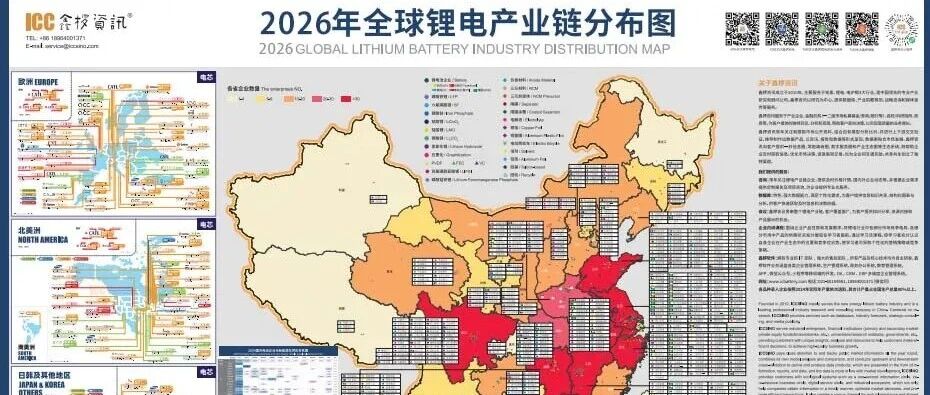
黄金广告位招商!鑫椤资讯2026全球锂电产业链分布图
鑫椤锂电· 2026-01-16 06:18
Core Viewpoint - The article emphasizes the creation and significance of a comprehensive lithium battery industry chain distribution map, which has gained high acclaim in the industry since its launch in 2022, highlighting its unique value and far-reaching impact [1]. Group 1: Overview of the Lithium Battery Industry Chain Distribution Map - The distribution map meticulously outlines the entire ecosystem of the global lithium battery industry, covering raw materials, four main materials, battery manufacturing, and end applications, involving key enterprises in various sectors [2]. - Key raw materials include lithium carbonate, lithium iron phosphate, lithium hexafluorophosphate, lithium iron, lithium cobalt oxide, lithium manganese oxide, lithium hydroxide, and basic chemical raw materials like graphite and electrolyte solvents [2]. - The map also focuses on companies involved in the research, production, and supply of battery anode and cathode materials, including both traditional and cutting-edge materials [2]. Group 2: Components and Applications - It includes manufacturers of critical components such as separators and electrolytes, which ensure the safe and efficient operation of batteries [3]. - The battery manufacturing section encompasses various types of lithium-ion batteries, including cylindrical, prismatic, and pouch cells, covering design, production, and assembly [4]. - The map addresses battery recycling and reuse, featuring a whitelist of companies, and highlights end applications in electric vehicles, energy storage systems, consumer electronics, and lightweight power sectors, showcasing the broad application prospects of lithium battery technology [5]. Group 3: Geographic Coverage - The distribution map covers four major lithium battery industry clusters: China, North America, Europe, and Southeast Asia, including Japan and South Korea [6]. Group 4: Target Audience and Collaboration - The target investors include global venture capital funds, private equity funds, and industrial investment funds, particularly those focused on new energy and new materials [8]. - Industry enterprises are invited to join the ecosystem, including raw material suppliers, material manufacturers, battery producers, electric vehicle manufacturers, and energy storage solution providers [8]. - Research institutions and universities in fields such as new energy, materials science, and electrochemistry are encouraged to participate in advancing technological innovation and talent development [8]. - Collaboration with local governments and industry associations is emphasized to promote the implementation of lithium battery industry policies and optimize the development environment [8]. Group 5: Invitation for Cooperation - The article extends a sincere invitation for participation in exploring deep cooperation opportunities within the lithium battery industry chain [9].

碳酸锂日报(2026年1月16日)-20260116
Guang Da Qi Huo· 2026-01-16 05:35
Report Investment Rating - No information provided in the report Core Viewpoints - On January 15, 2026, the lithium carbonate futures 2605 dropped 1.31% to 163,220 yuan/ton. The average price of battery-grade lithium carbonate decreased by 4,000 yuan/ton to 159,000 yuan/ton, and the average price of industrial-grade lithium carbonate fell by 4,000 yuan/ton to 155,500 yuan/ton. The battery-grade lithium hydroxide (coarse particles) declined by 3,500 yuan/ton to 150,500 yuan/ton. The warehouse receipt inventory increased by 47 tons to 27,205 tons [3]. - In terms of supply, the weekly production increased by 70 tons to 22,605 tons. The production from spodumene increased by 165 tons to 14,124 tons, while the production from lepidolite decreased by 20 tons to 2,936 tons, the production from salt lake decreased by 40 tons to 3,145 tons, and the production from recycled materials decreased by 35 tons to 2,400 tons. The lithium carbonate production in January 2026 is expected to decline by 1.2% to 97,970 tons. On the demand side, the production of ternary materials in January 2026 is expected to decline by 5% to 78,180 tons; the production of lithium iron phosphate is expected to decline by 10% to 363,400 tons; the production of ternary power batteries in January 2026 is expected to decline by 6.15% to 28.7 GWh, the lithium iron power batteries are expected to decline by 9.77% to 90.01 GWh, and the lithium iron energy storage is expected to increase by 0.99% to 63.15 GWh. In terms of inventory, the weekly social inventory of lithium carbonate decreased by 263 tons to 109,679 tons, with the downstream inventory decreasing by 888 tons to 35,652 tons, the inventory in other links decreasing by 720 tons to 54,300 tons, and the upstream inventory increasing by 1,345 tons to 19,727 tons [3]. - Considering the export tax - rebate adjustment, strong terminal expectations, anti - involution of battery manufacturers, and the upward revision of production schedules by cathode materials manufacturers, even though the significant increase in raw material prices may suppress terminal demand, it is difficult to disprove this in the short term. Under the trading logic of low downstream inventory and long - term bullishness on lithium prices, there will still be stocking demand and speculative demand from funds even if the price drops. Therefore, without the demand being disproven, the overall price trend is likely to rise rather than fall, and short - term capital disturbances should be vigilant [3]. Summary by Directory 1. Daily Data Monitoring - Futures: The closing price of the main contract was 163,220 yuan/ton, up 1,280 yuan from the previous day; the closing price of the continuous contract was 161,900 yuan/ton, down 4,440 yuan [5]. - Lithium ore: The price of spodumene concentrate (6%, CIF China) was 2,060 US dollars/ton, down 40 US dollars; the price of lepidolite (Li2O: 1.5% - 2.0%) was 3,090 yuan/ton, down 50 yuan; the price of lepidolite (Li2O: 2.0% - 2.5%) was 4,935 yuan/ton, down 55 yuan; the price of amblygonite (Li2O: 6% - 7%) was 16,250 yuan/ton, down 500 yuan; the price of amblygonite (Li2O: 7% - 8%) was 17,850 yuan/ton, down 650 yuan [5]. - Lithium carbonate and lithium hydroxide: The price of battery - grade lithium carbonate was 159,000 yuan/ton, down 4,000 yuan; the price of industrial - grade lithium carbonate was 155,500 yuan/ton, down 4,000 yuan; the price of battery - grade lithium hydroxide (coarse particles) was 150,500 yuan/ton, down 3,500 yuan; the price of battery - grade lithium hydroxide (micropowder) was 154,850 yuan/ton, down 3,500 yuan; the price of industrial - grade lithium hydroxide (coarse particles) was 143,900 yuan/ton, down 3,500 yuan; the price of battery - grade lithium hydroxide (CIF China, Japan, and South Korea) was 16 US dollars/kg, unchanged [5]. - Other products: The price of lithium hexafluorophosphate was 155,000 yuan/ton, down 1,000 yuan; the price difference between battery - grade lithium carbonate and industrial - grade lithium carbonate was 3,500 yuan/ton, unchanged; the price difference between battery - grade lithium hydroxide and battery - grade lithium carbonate was - 8,500 yuan/ton, up 500 yuan; the price difference between CIF China, Japan, and South Korea battery - grade lithium hydroxide and SMM battery - grade lithium hydroxide was - 38,397.6 yuan/ton, up 3,410 yuan; the price of ternary precursor 523 (polycrystalline/power type) was 119,050 yuan/ton, up 1,200 yuan; the price of ternary precursor 523 (single - crystal/consumer type) was 105,350 yuan/ton, up 800 yuan; the price of ternary precursor 622 (polycrystalline/consumer type) was 98,600 yuan/ton, up 1,300 yuan; the price of ternary precursor 811 (polycrystalline/power type) was 119,250 yuan/ton, up 1,700 yuan; the price of ternary material 523 (polycrystalline/consumer type) was 192,350 yuan/ton, unchanged; the price of ternary material 523 (single - crystal/power type) was 182,600 yuan/ton, unchanged; the price of ternary material 622 (polycrystalline/consumer type) was 188,100 yuan/ton, unchanged; the price of ternary material 811 (power type) was 205,000 yuan/ton, unchanged; the price of lithium iron phosphate (power type) was 55,715 yuan/ton, down 875 yuan; the price of lithium iron phosphate (mid - high - end energy storage) was 54,167.5 yuan/ton, down 917.5 yuan; the price of lithium iron phosphate (low - end energy storage) was 50,585 yuan/ton, down 635 yuan; the price of lithium manganate (power type) was 56,500 yuan/ton, up 500 yuan; the price of lithium manganate (capacity type) was 54,000 yuan/ton, unchanged; the price of cobalt acid lithium (60%, 4.35V/domestic) was 404,500 yuan/ton, unchanged; the price of 523 square ternary cells was 0.525 yuan/Wh, up 0.017 yuan; the price of 523 soft - pack ternary cells was 0.54 yuan/Wh, up 0.01 yuan; the price of 523 cylindrical ternary batteries was 4.85 yuan/piece, unchanged; the price of square lithium iron phosphate cells was 0.356 yuan/Wh, up 0.004 yuan; the price of square lithium iron phosphate cells (small power type) was 0.47 yuan/Wh, unchanged; the price of cobalt acid lithium cells was 7.75 yuan/Ah, unchanged; the price of square lithium iron phosphate batteries was 0.306 yuan/Wh, up 0.001 yuan [5]. 2. Chart Analysis - **Ore prices**: Charts show the price trends of spodumene concentrate (6%, CIF), lepidolite (1.5% - 2.0%), lepidolite (2.0% - 2.5%), and amblygonite (6% - 7%, 7% - 8%) from 2024 - 2026 [6][9]. - **Lithium and lithium salt prices**: Charts display the price trends of metallic lithium, battery - grade lithium carbonate average price, industrial - grade lithium carbonate average price, battery - grade lithium hydroxide price, industrial - grade lithium hydroxide price, and lithium hexafluorophosphate price from 2024 - 2026 [12][14][17]. - **Price differences**: Charts present the price differences between battery - grade lithium hydroxide and battery - grade lithium carbonate, battery - grade lithium carbonate and industrial - grade lithium carbonate, CIF China, Japan, and South Korea battery - grade lithium hydroxide and domestic battery - grade lithium hydroxide, battery - grade lithium carbonate (CIF Asia) and domestic battery - grade lithium carbonate, and the basis from 2024 - 2026 [19][20][21]. - **Precursor and cathode materials**: Charts show the price trends of ternary precursors, ternary materials, lithium iron phosphate, lithium manganate, and cobalt acid lithium from 2024 - 2026 [25][27][30]. - **Lithium battery prices**: Charts display the price trends of 523 square ternary cells, square lithium iron phosphate cells, cobalt acid lithium cells, and square lithium iron phosphate batteries from 2024 - 2026 [32][36]. - **Inventory**: Charts show the inventory trends of downstream, smelters, and other links from May 29, 2025, to January 15, 2026 [38][40]. - **Production cost**: The chart shows the production profit trends of lithium carbonate from different raw materials (such as外购三元极片黑粉, 外购磷酸铁锂极片黑粉, 外购锂云母精矿, 外购锂辉石精矿) from 2024 - 2026 [43][44].
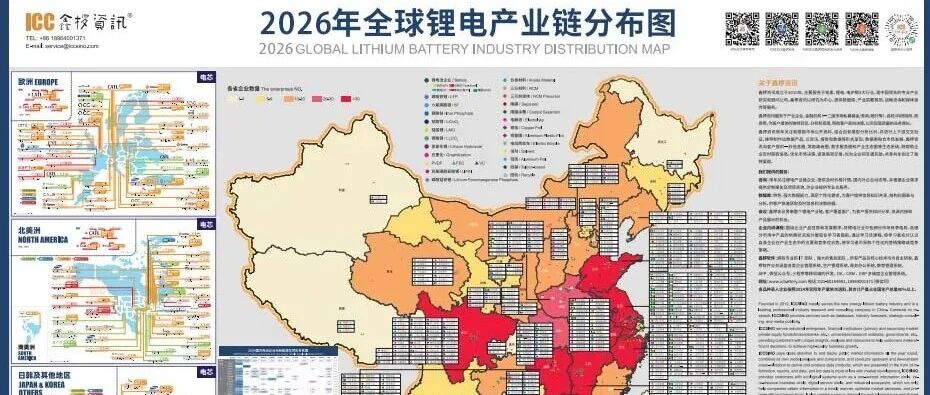
黄金广告位招商!鑫椤资讯2026全球锂电产业链分布图
鑫椤锂电· 2026-01-14 06:33
Core Viewpoint - The article emphasizes the creation and significance of a comprehensive lithium battery industry chain distribution map, which has gained high acclaim in the industry since its launch in 2022, highlighting its unique value and far-reaching impact [1]. Group 1: Overview of the Lithium Battery Industry Chain Distribution Map - The distribution map meticulously outlines the entire ecosystem of the global lithium battery industry, covering raw materials, four main materials, battery manufacturing, and end applications, involving key enterprises in various sectors [2]. - Key raw materials include lithium carbonate, lithium iron phosphate, lithium hexafluorophosphate, lithium iron, lithium cobalt oxide, lithium manganese oxide, lithium hydroxide, and basic chemical raw materials like graphite and electrolyte solvents [2]. - The map also focuses on companies involved in the research, production, and supply of battery anode and cathode materials, including both traditional and cutting-edge materials [2]. Group 2: Components and Applications - It includes manufacturers of critical components such as separators and electrolytes, which ensure the safe and efficient operation of batteries [3]. - The battery manufacturing section encompasses various types of lithium-ion batteries, including cylindrical, prismatic, and pouch cells, covering design, production, and assembly [4]. - The map addresses battery recycling and reuse, featuring a whitelist of companies, and highlights end applications in electric vehicles, energy storage systems, consumer electronics, and lightweight power sectors, showcasing the broad application prospects of lithium battery technology [5]. Group 3: Geographic Coverage - The distribution map covers four major lithium battery industry clusters: China, North America, Europe, and Southeast Asia, including Japan and South Korea [6]. Group 4: Target Audience and Collaboration - The target investors include global venture capital funds, private equity funds, and industrial investment funds, particularly those focused on new energy and new materials [8]. - Industry enterprises are invited to join the ecosystem, including raw material suppliers, material manufacturers, battery producers, electric vehicle manufacturers, and energy storage solution providers [8]. - Research institutions and universities in the fields of new energy, materials science, and electrochemistry are encouraged to participate in advancing technological innovation and talent cultivation [8]. - Collaboration with local governments and industry associations is emphasized to promote the implementation of lithium battery industry policies and optimize the development environment [8]. Group 5: Invitation for Cooperation - The article extends a sincere invitation for participation in exploring deep cooperation opportunities within the lithium battery industry chain [9].
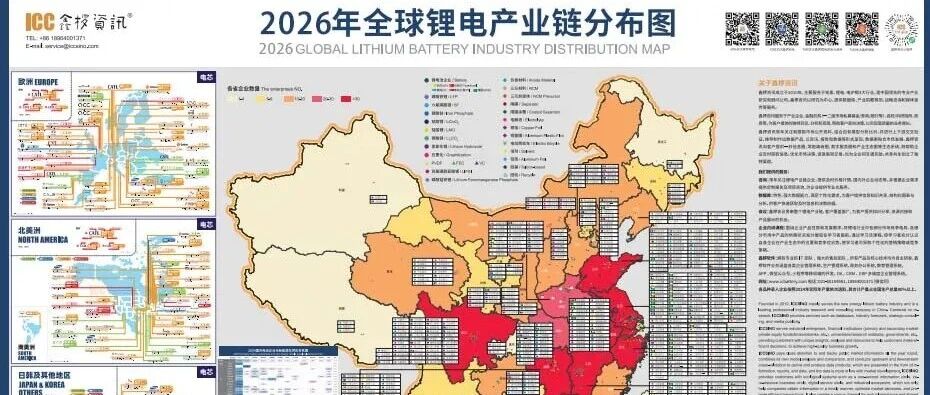
黄金广告位招商!鑫椤资讯2026全球锂电产业链分布图
鑫椤锂电· 2026-01-12 07:37
Group 1 - The core viewpoint of the article emphasizes the creation and significance of the lithium battery industry chain distribution map, which has become a sought-after resource in the industry since its launch in 2022, reflecting its unique value and far-reaching impact [1] - The distribution map provides a comprehensive overview of the global lithium battery industry, detailing the entire ecosystem from raw materials to end applications, including key companies involved in lithium carbonate, lithium iron phosphate, and other essential materials [2] - It highlights the importance of battery components such as separators and electrolytes, which are crucial for the safe and efficient operation of batteries [3] Group 2 - The distribution map covers various types of lithium-ion battery manufacturing, including cylindrical, prismatic, and pouch cells, showcasing the diversity in battery design and production [4] - It includes a section on battery recycling and reuse, emphasizing the role of whitelist companies in this area, as well as the broad applications of lithium battery technology in electric vehicles, energy storage systems, and consumer electronics [5] - Geographically, the distribution map encompasses major lithium battery industry hubs, including China, North America, Europe, Japan, and Southeast Asia, indicating the global nature of the industry [6] Group 3 - The target audience for the distribution map includes global venture capital funds, private equity funds, and industry investment funds, particularly those focused on new energy and new materials [8] - The article invites participation from upstream and downstream companies in the lithium battery industry chain, including raw material suppliers, manufacturers, and electric vehicle producers, to collaboratively build an industry ecosystem [8] - It also encourages collaboration with research institutions, universities, government agencies, and industry associations to promote policy implementation and optimize the development environment for the lithium battery industry [8] Group 4 - The article extends an invitation for sponsorship opportunities related to the distribution map, offering branding and advertising placements for interested companies [10]
重大突破!锂电,突传利好!
券商中国· 2026-01-11 14:55
Core Viewpoint - The lithium battery industry is experiencing significant positive developments, particularly with a breakthrough in lithium extraction technology from salt lake resources, which is expected to enhance production efficiency and reduce costs [1][2]. Group 1: Technological Breakthrough - A research team from the Chinese Academy of Sciences has achieved a major breakthrough in the efficient separation of lithium, sodium, and potassium ions from brine, addressing key technical challenges in lithium extraction [2]. - The newly established industrial demonstration line in Qinghai is capable of producing battery-grade lithium carbonate at a scale of 10,000 tons, generating an additional output value of over 600 million yuan [2]. - The innovative extraction technology increases the overall recovery rate of lithium ions in lithium carbonate production by 15% to 20% and reduces costs by 30%, with water and energy consumption below industry standards by over 30% [2]. Group 2: Market Performance - The lithium carbonate futures price reached a high of 148,500 yuan per ton on January 8, 2023, marking a nearly 19% increase for the week [3]. - The spot price of battery-grade lithium carbonate was reported at 138,800 yuan per ton on January 9, 2023, reflecting a week-on-week increase of 1,799 yuan per ton [3]. - The lithium battery concept index in the A-share market rose by 0.88% on January 9, 2023, closing at 3,255 points, the highest in over four years, with significant gains observed in various stocks [3]. Group 3: Future Outlook - By 2026, global energy storage battery shipments are expected to reach 874 GWh, a year-on-year increase of 46%, driven by strong demand in grid-side storage and stable growth in power batteries [4]. - The supply-demand dynamics for core lithium battery materials are anticipated to improve, with specific materials like lithium hexafluorophosphate and separators showing clear signs of recovery [5]. - The solid-state battery sector is projected to become a key focus area, with significant market potential expected by 2030, driven by advancements in technology and increasing applications in high-end power and robotics [6].

碳酸锂日报(2026年1月7日)-20260107
Guang Da Qi Huo· 2026-01-07 02:55
1. Report Industry Investment Rating - No relevant content provided 2. Core Viewpoints of the Report - On January 6, 2026, the lithium carbonate futures 2605 contract hit the daily limit at 137,940 yuan/ton. The average price of battery - grade lithium carbonate rose by 8,000 yuan/ton to 127,500 yuan/ton, the average price of industrial - grade lithium carbonate rose by 7,250 yuan/ton to 124,250 yuan/ton, and the price of battery - grade lithium hydroxide (coarse particles) rose by 6,700 yuan/ton to 117,500 yuan/ton. The warehouse receipt inventory increased by 2,860 tons to 23,141 tons [3]. - In terms of supply, the weekly output increased by 259 tons to 22,420 tons. In January 2026, the lithium carbonate output is expected to decrease by 1.2% month - on - month to 97,970 tons. In terms of demand, in January 2026, the output of ternary materials is expected to decrease by 4.43% month - on - month to 78,180 tons; the output of lithium iron phosphate is expected to decrease by 10.03% month - on - month to 363,400 tons. In terms of inventory, the weekly social inventory of lithium carbonate decreased by 168 tons to 109,605 tons [3]. - There was a resonance between stocks and commodities. For lithium carbonate futures, funds are more sensitive to bullish news. Due to geopolitical and policy factors, the market is worried about the actual supply of lithium resources. If the adjustment of the industrial pricing mechanism progresses smoothly, the cathode production schedule may need to be revised upwards. The price is likely to rise and difficult to fall [3]. 3. Summary by Relevant Catalogs 3.1 Daily Data Monitoring - Futures: The closing price of the main contract was 137,940 yuan/ton on January 6, 2026, up 7,960 yuan from the previous day; the closing price of the continuous contract was 134,360 yuan/ton, up 7,360 yuan [5]. - Lithium ore: The price of lithium spodumene concentrate (6%, CIF China) was 1,640 US dollars/ton, up 105 US dollars; the price of lithium mica (Li2O: 1.5% - 2.0%) was 2,475 yuan/ton, up 110 yuan [5]. - Lithium carbonate: The price of battery - grade lithium carbonate (99.5% battery - grade/domestic) was 127,500 yuan/ton, up 8,000 yuan; the price of industrial - grade lithium carbonate (99.2% industrial zero - grade/domestic) was 124,250 yuan/ton, up 7,250 yuan [5]. - Lithium hydroxide: The price of battery - grade lithium hydroxide (coarse particles/domestic) was 117,500 yuan/ton, up 6,700 yuan [5]. - Other products: The price of lithium hexafluorophosphate was 161,500 yuan/ton, down 5,000 yuan. The prices of various ternary precursors and cathode materials generally increased, while the prices of some battery cells remained unchanged [5]. 3.2 Chart Analysis 3.2.1 Ore Prices - Charts 1 - 4 show the price trends of lithium spodumene concentrate (6%, CIF), lithium mica (1.5% - 2.0%), lithium mica (2.0% - 2.5%), and lithiophilite (6% - 7%) from 2024 to 2026 [6][9] 3.2.2 Lithium and Lithium Salt Prices - Charts 5 - 10 show the price trends of metal lithium, battery - grade lithium carbonate average price, industrial - grade lithium carbonate average price, battery - grade lithium hydroxide price, industrial - grade lithium hydroxide price, and lithium hexafluorophosphate price from 2024 to 2026 [12][14][17] 3.2.3 Spreads - Charts 11 - 22 show the price spreads between battery - grade lithium hydroxide and battery - grade lithium carbonate, battery - grade lithium carbonate and industrial - grade lithium carbonate, etc., as well as the basis from 2024 to 2026 [17][18][22] 3.2.4 Precursor & Cathode Materials - Charts 16 - 20 show the price trends of ternary precursors, ternary materials, lithium iron phosphate, lithium manganate, and lithium cobaltate from 2024 to 2026 [24][26][28] 3.2.5 Lithium Battery Prices - Charts 21 - 24 show the price trends of 523 square ternary battery cells, square lithium iron phosphate battery cells, lithium cobaltate battery cells, and square lithium iron phosphate batteries from 2024 to 2026 [30][34] 3.2.6 Inventory - Charts 25 - 28 show the inventory trends of downstream, smelters, other links, and the production cost trends from 2024 to 2026 [36][38][41]
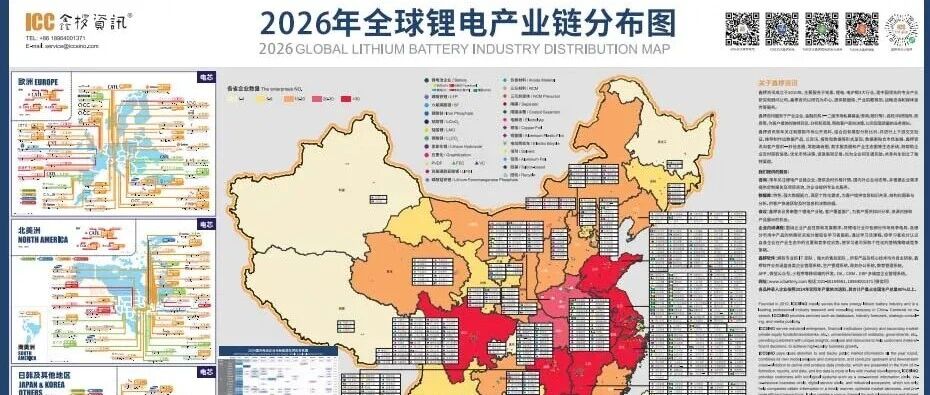
黄金广告位招商!鑫椤资讯2026全球锂电产业链分布图
鑫椤锂电· 2026-01-06 08:00
Group 1 - The core viewpoint of the article emphasizes the creation and significance of the lithium battery industry chain distribution map, which has become a sought-after resource in the industry since its launch in 2022, reflecting its unique value and far-reaching impact [1] Group 2 - The distribution map provides a comprehensive overview of the global lithium battery industry, detailing the entire supply chain from raw materials to end applications, including key companies involved in lithium carbonate, lithium iron phosphate, and other essential materials [2] - It covers the production of critical components such as separators and electrolytes, which are vital for the safe and efficient operation of batteries [3] - The map includes various types of lithium-ion battery manufacturing, such as cylindrical, prismatic, and pouch cells, highlighting the design, production, and assembly processes [4] - It also addresses battery recycling and reuse, featuring a whitelist of companies engaged in these activities, and showcases the broad application prospects of lithium battery technology across electric vehicles, energy storage systems, and consumer electronics [5] - Geographically, the distribution map encompasses major lithium battery industry clusters in China, North America, Europe, Japan, South Korea, and Southeast Asia [6] Group 3 - The target audience for the distribution map includes global venture capital funds, private equity funds, and industry investment funds, particularly those focused on new energy and new materials [8] - Industry participants are encouraged to join the lithium battery supply chain ecosystem, including raw material suppliers, material manufacturers, battery producers, and electric vehicle manufacturers [8] - Collaboration with research institutions and universities in fields such as new energy, materials science, and electrochemistry is welcomed to promote technological innovation and talent development [8] - The article invites government agencies and industry associations to strengthen cooperation to facilitate the implementation of lithium battery industry policies and optimize the development environment [8] Group 4 - The article extends an invitation for collaboration in exploring deep cooperation opportunities within the lithium battery industry chain [9]
碳酸锂日报(2026年1月6日)-20260106
Guang Da Qi Huo· 2026-01-06 06:30
1. Report's Industry Investment Rating - No information provided regarding the industry investment rating 2. Core View of the Report - On January 5, 2026, the lithium carbonate futures 2605 contract rose 7.74% to 129,980 yuan/ton. The average price of battery - grade lithium carbonate increased by 1,000 yuan/ton to 119,500 yuan/ton, and the average price of industrial - grade lithium carbonate rose by 1,500 yuan/ton to 117,000 yuan/ton. The price of battery - grade lithium hydroxide (coarse particles) increased by 500 yuan/ton to 110,800 yuan/ton. The warehouse receipt inventory remained at 20,281 tons [3]. - On the supply side, the weekly output increased by 259 tons to 22,420 tons. In January 2026, the lithium carbonate output is expected to decline by 1.2% to 97,970 tons. On the demand side, in January 2026, the output of ternary materials, ternary power batteries, and iron - lithium power batteries is expected to decline, while the iron - lithium energy storage output is expected to increase by 0.99% to 63.15GWh. In terms of inventory, the weekly social inventory of lithium carbonate decreased by 168 tons to 109,605 tons [3]. - Recently, due to overseas geopolitical disturbances, continued domestic stimulus policies, and speculation about solid waste, the lithium price rose significantly. According to preliminary production scheduling data, supply and demand are both weak in January. There is a risk of inventory accumulation, but considering the current inventory structure and the medium - to - long - term trading logic of being bullish on lithium prices, it is believed that there will be restocking demand when prices fall, and prices are more likely to rise than fall [3]. 3. Summary by Relevant Catalogs 3.1 Research Views - **Price Changes**: The lithium carbonate futures 2605 contract, battery - grade and industrial - grade lithium carbonate, and battery - grade lithium hydroxide prices all increased on January 5, 2026, while the warehouse receipt inventory was unchanged [3]. - **Supply - Demand - Inventory Situation**: The weekly supply increased, but the January 2026 output is expected to decline. The demand for most products in January 2026 is expected to decline, except for iron - lithium energy storage. The weekly social inventory decreased [3]. - **Price Outlook**: Short - term terminal demand cannot be falsified, and there is no conclusion on the procurement, sales, pricing mechanism, and processing fees at the cathode end. Considering the inventory structure and long - term bullish logic, the price is likely to rise [3]. 3.2 Daily Data Monitoring - **Futures and Lithium Ore**: The closing prices of the main and continuous contracts of lithium carbonate futures increased, the price of lithium mica increased, and the price of lithium spodumene concentrate decreased. The prices of some other lithium ores remained unchanged [5]. - **Lithium and Lithium Salts**: The prices of battery - grade and industrial - grade lithium carbonate, battery - grade and industrial - grade lithium hydroxide increased, and the price of lithium hexafluorophosphate remained unchanged [5]. - **Price Spreads**: The spread between battery - grade and industrial - grade lithium carbonate, and between battery - grade lithium hydroxide and battery - grade lithium carbonate decreased, while some other spreads increased [5]. - **Precursors and Cathode Materials**: The prices of various ternary precursors and cathode materials, as well as lithium iron phosphate and lithium manganate, increased, and the price of cobalt acid lithium also increased [5]. - **Lithium Batteries**: The prices of various lithium battery cells and batteries remained unchanged [5]. 3.3 Chart Analysis - **Ore Prices**: The report shows the price trends of lithium spodumene concentrate, different grades of lithium mica, and phospho - lithium - aluminum stone from 2024 to 2026 [6][9]. - **Lithium and Lithium Salt Prices**: It presents the price trends of metal lithium, battery - grade and industrial - grade lithium carbonate, battery - grade and industrial - grade lithium hydroxide, and lithium hexafluorophosphate from 2024 to 2026 [12][17]. - **Price Spreads**: The report displays the price spread trends between battery - grade lithium hydroxide and battery - grade lithium carbonate, battery - grade and industrial - grade lithium carbonate, and some other spreads from 2024 to 2026 [19][20]. - **Precursors and Cathode Materials**: It shows the price trends of ternary precursors, ternary materials, lithium iron phosphate, lithium manganate, and cobalt acid lithium from 2024 to 2026 [25][30]. - **Lithium Battery Prices**: The report presents the price trends of 523 square ternary cells, square lithium iron phosphate cells, cobalt - acid lithium cells, and square lithium iron phosphate batteries from 2024 to 2026 [32][36]. - **Inventory**: It shows the inventory trends of downstream, smelters, and other links from May 15, 2025, to December 11, 2025 [38][40]. - **Production Costs**: The report displays the production profit trends of lithium carbonate from different raw materials from 2024 to 2026 [43][44].
一月面临累库压力,关注短期回调风险
Dong Zheng Qi Huo· 2026-01-04 11:16
Report Industry Investment Rating - The rating for lithium carbonate is "Oscillation" [1] Core Viewpoints - In January, there is a pressure of inventory accumulation, and attention should be paid to the short - term callback risk. The lithium salt prices showed a strong trend last week (12/22 - 12/26), with significant price increases in futures and spot prices. However, the week of (12/29 - 12/31) saw a high - level callback in lithium salt futures prices, while the spot prices continued to rise. The SMM weekly inventory reduction amplitude continued to slow down, with upstream and downstream continuing to reduce inventory and the trading link accumulating inventory. In January, both supply and demand are expected to weaken marginally. Downstream cathode material factories have announced production cuts, which may lead to inventory accumulation and short - term price corrections. For trading strategies, early long positions can be gradually closed for profit, and in the medium term, the idea of buying on dips can still be adopted [2][11][12] Summary by Directory 1. January Faces Inventory Accumulation Pressure, Pay Attention to Short - Term Callback Risk - **Price Changes**: In the week of 12/22 - 12/26, LC2601 and LC2605 futures prices increased by 16.5% and 17.2% respectively. SMM battery - grade and industrial - grade lithium carbonate spot prices increased by 14.6% and 14.9% respectively. In the week of 12/29 - 12/31, LC2601 and LC2605 futures prices decreased by 6.1% and 6.8% respectively, while SMM battery - grade and industrial - grade lithium carbonate spot prices increased by 5.9% and 5.7% respectively. The prices of lithium hydroxide also showed corresponding changes [2][11] - **Fundamentals**: The SMM weekly inventory reduction amplitude continued to slow down, with a reduction of 168 tons. The supply side increased by 259 tons in weekly production. In January 2026, lithium salt production is expected to decrease by 1230 tons to 97,970 tons. Downstream cathode material factories plan to cut production, with ternary cathode production expected to decline by 4.43% and lithium - iron cathode production by 10.03% in January, which may lead to inventory accumulation [3][12] 2. Weekly Industry News Review - **Sichuan Gongchuang Lithium - New Energy Project**: The 10.5 - billion - yuan lithium - battery project of Sichuan Gongchuang Lithium - New Energy Technology Co., Ltd. was approved, with a planned annual production of 140,000 tons of battery - grade lithium carbonate [13] - **Shengxin Lithium Energy's Acquisition**: Shengxin Lithium Energy plans to acquire a 30% stake in Qicheng Mining for 2.08 billion yuan, aiming to increase its control over Huirong Mining, which owns the Murong lithium mine with 989,600 tons of Li2O resources [13] - **Zijin Mining's Production Plan**: Zijin Mining expects its net profit in 2025 to be between 51 billion and 52 billion yuan, with a lithium carbonate equivalent output of about 25,000 tons. In 2026, it plans to produce 120,000 tons of lithium carbonate equivalent [14] 3. Key High - Frequency Data Monitoring of the Industrial Chain 3.1 Resource End: Lithium Concentrate Prices Rise with the Market - Lithium concentrate prices increased, with the lithium spodumene concentrate spot average price (6%, CIF China) rising from $1,490/ton to $1,548/ton, a 3.9% increase [12] 3.2 Lithium Salt: Slight Increase in Production, Marginal Slowdown in Inventory Reduction Slope - **Production**: SMM weekly production increased by 259 tons, with contributions from different sources such as salt lakes, spodumene, mica, and recycling [3][12] - **Inventory**: The SMM weekly inventory reduction amplitude slowed down, with upstream and downstream reducing inventory and the trading link accumulating inventory [3][12] 3.3 Downstream Intermediates: Lithium Iron Phosphate Prices Expected to Continue Rising - The spot average prices of lithium iron phosphate (power - type and energy - storage type) increased, and it is expected that the prices will continue to rise [12] 3.4 Terminal: High - Growth in Power Battery Installations - China's power battery installations maintained a high - growth trend, and the new energy vehicle production and sales also showed positive year - on - year growth [54][56]
