
降准降息

Search documents
债市日报:2月11日
Xin Hua Cai Jing· 2026-02-11 08:33
Core Viewpoint - The bond market is showing a strong performance ahead of the Spring Festival, with institutions maintaining a stable sentiment and a relatively optimistic outlook for the bond market before the holiday [1][6]. Market Performance - Government bond futures closed mostly higher, with the 30-year main contract up 0.05% at 112.75, the 10-year main contract up 0.06% at 108.54, and the 5-year main contract up 0.05% at 106.05 [2]. - The interbank bond yields generally decreased slightly, with the 30-year government bond yield down 0.15 basis points to 2.225%, and the 10-year government bond yield down 0.5 basis points to 1.79% [2]. Economic Indicators - January CPI rose by 0.2% year-on-year, below the expected 0.4%, while PPI fell by 1.4% year-on-year, slightly better than the expected decline of 1.45% [8]. - The core CPI, excluding food and energy, increased by 0.8% year-on-year, indicating a recovery in consumer demand [8]. Institutional Insights - Huatai Fixed Income noted a slightly optimistic view on global economic resilience, with domestic assessments remaining positive and inflation expectations improving [9]. - The report from Huaxi Fixed Income indicated that monetary policy may continue to focus on structural adjustments rather than broad-based easing, with a cautious approach to interest rate cuts [9].
央行最新定调:货币政策延续适度宽松,降准降息设前提
Di Yi Cai Jing· 2026-02-11 08:13
稳预期(外部)、稳就业(内部)、稳市场(金融)将是观察全面降息可能落地的主线。 日前,央行发布2025年第四季度中国货币政策执行报告(下称《报告》)。在货币政策方面,表述延续 中央经济工作会议的定调,强调"灵活高效运用降准降息等多种政策工具"。但与三季度报告内容相比, 一些表述的微调仍引起市场的关注。 综合市场分析来看,货币政策与财政政策需不断加强协同配合,引导社会资本参与促消费、扩投资,共 同支持稳增长、调结构,合力推动经济高质量发展。货币政策在总量层面相对从容,或继续在结构上发 力,全面降息仍需等待时机,稳预期(外部)、稳就业(内部)、稳市场(金融)将是观察全面降息可 能落地的主线。 第二种模式是把央行再贷款工具与财政贴息政策结合起来,再贷款通过激励金融机构,从供给端引导信 贷投向,财政贴息通过补贴企业和个人,从需求端优化经济结构,两者同向发力,促进金融资源优化配 置。科技创新和技术改造再贷款、新设的民营企业再贷款、以及服务消费与养老再贷款都是这方面的典 型案例。 银河证券研究报告认为,这意味着结构性货币政策工具的创设、优化实施,结构性降息将和财政贴息成 为政策组合工具。未来结构性货币政策工具将成为央行投 ...
——2025年四季度货币政策执行报告学习理解:降准降息的前提是什么?
Huachuang Securities· 2026-02-11 04:14
Group 1: Economic Outlook - The global economy shows resilience, but uncertainty factors have increased, with inflation remaining sticky and labor markets cooling down[8] - In 2025, major economies are in a rate-cutting cycle, leading to significant increases in global stock indices and a decline in the US dollar index[8] - China's economic growth is supported by exports, which are expected to remain a key demand factor in 2026[2] Group 2: Monetary Policy - The central bank emphasizes the need for a moderately loose monetary policy, focusing on stable economic growth and reasonable price recovery[15] - New goals include guiding reasonable growth in financial totals and balanced credit allocation to address supply-demand challenges[15] - The central bank plans to flexibly and efficiently use various policy tools, including rate cuts and reserve requirement ratio adjustments, to maintain liquidity and support economic growth[15] Group 3: Structural Policies - The central bank has shifted its focus to expanding domestic demand as a priority in structural monetary policy, moving away from an earlier emphasis on technological innovation[19] - There is potential for new policies related to domestic demand, particularly through re-lending tools aimed at supporting key sectors[21] Group 4: Capital Market Insights - The midstream sector is expected to benefit the most from exports, with data indicating a faster contraction in midstream supply compared to upstream and downstream sectors[2] - Long-term loans to the industrial sector have decreased, while loans to the service sector have marginally increased, reflecting a shift in credit allocation[11]
Q4货政报告显示政策稳增长诉求提升但宽松落地时点仍需观察
Huafu Securities· 2026-02-11 04:11
Group 1: Report Industry Investment Rating - The report doesn't explicitly mention the investment rating for the fixed - income industry [1][2][3] Group 2: Report's Core View - The Q4 monetary policy report shows an increased demand for stable growth, but the timing of policy easing needs further observation. The central bank may still be in the observation period of the fundamentals and has not provided clues for the timing of subsequent reserve requirement ratio cuts and interest rate cuts. The short - term bond market may continue to fluctuate strongly, and the follow - up situation depends on the clarification of the fundamentals and policy environment after the Two Sessions and post - holiday resumption of work [2][5][7] Group 3: Summary of Related Catalogs Concerns about risk prevention have weakened, and the demand for stable growth has increased - The Q4 report maintains confidence in the domestic economy but mentions the problem of strong supply and weak demand. In the next - stage policy tone, the central bank removed the relationship of "balancing stable growth and risk prevention" and adjusted the consideration from "promoting a reasonable recovery of prices" to "promoting stable economic growth and a reasonable recovery of prices". After the release of the Q4 GDP growth rate dropping to 4.5%, the central government's demand for stable growth has increased, and the central bank's concern about the risks brought by easing has decreased, which may be the reason for the overall loose monetary policy recently [2][3] The central bank has not revealed signals for the implementation of aggregate policies, and reserve requirement ratio cuts and interest rate cuts may depend on the overall central government deployment - The report continues the spirit of the Central Economic Work Conference at the overall policy level, but many statements in the text are the same as those in the Q3 monetary policy report. This may reflect that although the central government's tone has changed, the central bank may not have fully conceived the specific time for policy implementation and is still in the observation period of the fundamentals. Subsequent reserve requirement ratio cuts and interest rate cuts may depend on the overall policy deployment [4] The central bank pays attention to changes in long - term yields and flexibly controls the scale of treasury bond trading operations - The central bank mentioned the coordination between monetary policy and fiscal policy in Column 1. It will normalize the trading of treasury bonds, pay attention to changes in long - term yields, and flexibly control the operation scale. After the interest rate central point rose from 1.75% - 1.85% to 1.8% - 1.9%, the central bank increased its bond purchase scale. However, after the interest rate breaks through 1.8%, further decline may rely more on its own strength [4] Deposit transfer, overnight interest rate, and exchange rate appreciation - The phenomenon of financial disintermediation and deposit transfer may affect the bank liability structure but will not impact the overall liquidity. The central bank emphasizes guiding short - term money market interest rates to run smoothly around the policy rate, and 1.3% of DR001 may be considered within the policy rate range. The report shows that the central bank may tolerate a certain degree of RMB exchange rate appreciation [5]
双焦(JM&J):20260211申万期货品种策略日报-20260211
Shen Yin Wan Guo Qi Huo· 2026-02-11 01:42
Group 1: Investment Rating - No investment rating information is provided in the report. Group 2: Core View - The central bank continues to implement a moderately loose monetary policy, aiming to promote stable economic growth and a reasonable recovery of prices, and conducts 7 - day reverse repurchase operations [2]. - The night - session of the previous day saw a rebound in the main contracts of coking coal and coke, with the total position of coking coal remaining basically flat. Before the Spring Festival, the output of clean coal from mines decreased slightly, the Mongolian coal customs clearance volume dropped from its high but remained at the highest level in the same period. The demand for coking coal and coke had limited incremental demand, and the downstream replenishment was basically completed. The steel market was in the "ice - point" of the annual demand, so the recent market trend was weak. After the festival, attention should be paid to the trend of molten iron production, mine resumption, and import - related policies [2]. Group 3: Summary by Table Data Futures Price and Trading Volume Information - For coking coal futures, the previous day's closing prices for January, May, and September contracts were 1371.5, 1119.0, and 1196.5 respectively, with price drops of - 22.0, - 28.0, and - 26.0 and declines of - 1.58%, - 2.44%, and - 2.13% compared to the day before. The trading volumes were 1478, 711282, and 32661, and the positions were 1616, 68766, and 93095, with position increases of 8, 29997, and 1985 [2]. - For coke futures, the previous day's closing prices for January, May, and September contracts were 1833.5, 1665.0, and 1739.5 respectively, with price drops of - 30.0, - 38.5, and - 34.5 and declines of - 1.61%, - 2.26%, and - 1.94% compared to the day before. The trading volumes were 61, 13882, and 433, and the positions were 658, 36423, and 1824, with position increases of 25, 1514, and 97 [2]. Futures Spread Information - For coking coal futures, the current spreads of January - May, May - September, and September - January were 240, - 79.5, and - 160.5 respectively, with spread increases of 306, 2.5, and - 308.5 [2]. - For coke futures, the current spreads of January - May, May - September, and September - January were 160.5, - 77.5, and - 83 respectively, with spread increases of 429.5, 2, and - 431.5 [2]. Spot Price Information - The current spot prices of Mongolian No. 5 primary coking coal (port self - pickup price), low - sulfur primary coking coal (Linfen ex - factory price), low - sulfur primary coking coal (Taiyuan railcar price), Tangshan Grade 1 coke price, general medium - grade primary coke ex - factory price, and Rizhao Port quasi - grade coke ex - warehouse price were 1227, 1570, 1491, 1852, 1330, and 1470 respectively [2].
Q4货政报告,七点变化
HUAXI Securities· 2026-02-11 00:50
Policy Overview - The monetary policy focus has shifted from "stabilizing growth, employment, and expectations" to promoting stable economic growth and reasonable price recovery, reflecting a successful completion of the 5% growth target for 2025[1] - The report emphasizes the importance of supporting domestic demand as a core strategic task for the 14th Five-Year Plan, indicating a more long-term policy approach[1] Monetary Policy Tools - The report signals that any potential interest rate cuts or reserve requirement ratio (RRR) reductions will depend on specific preconditions, including economic slowdown risks and financial market fluctuations[2] - The space for interest rate cuts in 2026 is expected to be limited, with a neutral reduction of around 10 basis points (bp) anticipated, and a significant drop beyond 20 bp is unlikely[2] Liquidity Management - The report aims to guide short-term money market rates to align closely with the central bank's policy rates, indicating a focus on the difference between DR001 and the 7-day reverse repo rate[3] - The emphasis on maintaining stable liquidity suggests that significant fluctuations in funding rates are not expected[6] Credit Policy - The report highlights the need for balanced credit allocation, with a focus on optimizing both incremental and existing credit policies to support domestic demand, technological innovation, and small and medium enterprises[4] - The mention of "doing well in incremental policies and revitalizing existing policies" indicates a shift towards structural adjustments rather than aggressive total credit growth[4] Economic Outlook - Concerns regarding global financial market risks and fiscal vulnerabilities have increased, with the report indicating a rise in uncertainty surrounding overseas inflation trends and monetary policy adjustments[5] - The report underscores the role of the exchange rate as an automatic stabilizer for the macroeconomy and international balance of payments, reflecting recent appreciation of the RMB[6]
央行报告重申“适度宽松” 降准降息仍有空间
Xin Lang Cai Jing· 2026-02-10 21:07
Group 1 - The core viewpoint of the report emphasizes that the People's Bank of China (PBOC) will continue to implement a moderately accommodative monetary policy to support economic stability and growth amid complex internal and external environments [1][2] - The report indicates that by the end of 2025, the total social financing stock and the broad money supply (M2) grew by 8.3% and 8.5% year-on-year, respectively, which is consistently higher than the nominal economic growth rate, providing strong support for the real economy [1] - The report highlights that the interest rates for newly issued corporate loans and personal housing loans remained low at around 3.1%, contributing to a steady decline in overall financing costs [1] Group 2 - Credit resources are continuously directed towards key sectors, with loans for technology, green initiatives, inclusive finance, elderly care, and digital economy industries maintaining double-digit growth; notably, loans for the elderly care industry surged by 50.5% year-on-year [2] - The PBOC has enhanced its structural monetary policy tools, increasing various relending quotas and creating new tools such as relending for service consumption and elderly care, leading to a more comprehensive financial system [2] - The report reaffirms the commitment to a moderately accommodative monetary policy and emphasizes the need for flexible and efficient use of various policy tools, including reserve requirement ratio (RRR) cuts and interest rate reductions [2]
节后市场波动加大
Qi Huo Ri Bao· 2026-02-10 06:06
Group 1 - The core viewpoint of the articles indicates that the bond market is stabilizing, driven by monetary policy adjustments and market conditions, while the real estate sector continues to face challenges [1][4][5] Group 2 - In early 2025, fixed asset investment decreased by 3.8% year-on-year, primarily due to declines in real estate development and infrastructure investment, with manufacturing investment showing a slight increase of 0.6% [2] - Real estate development investment fell by 17.2% year-on-year, and the sales of commercial housing dropped by 12.6%, indicating ongoing instability in the real estate market [2] - The consumer price index (CPI) rose by 0.8% year-on-year in December 2025, marking a 34-month high, while the producer price index (PPI) decreased by 1.9%, suggesting gradual improvement in domestic demand [2] Group 3 - As of the end of January, the bond market's outstanding scale exceeded 197.71 trillion yuan, with net financing in January amounting to 14,189 billion yuan, showing a slight year-on-year decline [4] - The central bank indicated that there is still room for further interest rate cuts and reserve requirement ratio reductions in 2026, aiming for a moderately loose monetary policy [4][5] - The central bank's net bond purchases in January amounted to 1,000 billion yuan, contributing to a generally loose market liquidity ahead of the Spring Festival [4][5] Group 4 - Looking ahead, the bond market is expected to stabilize before the holiday, with potential fluctuations and increased volatility in the long-end bond market after the holiday [6]

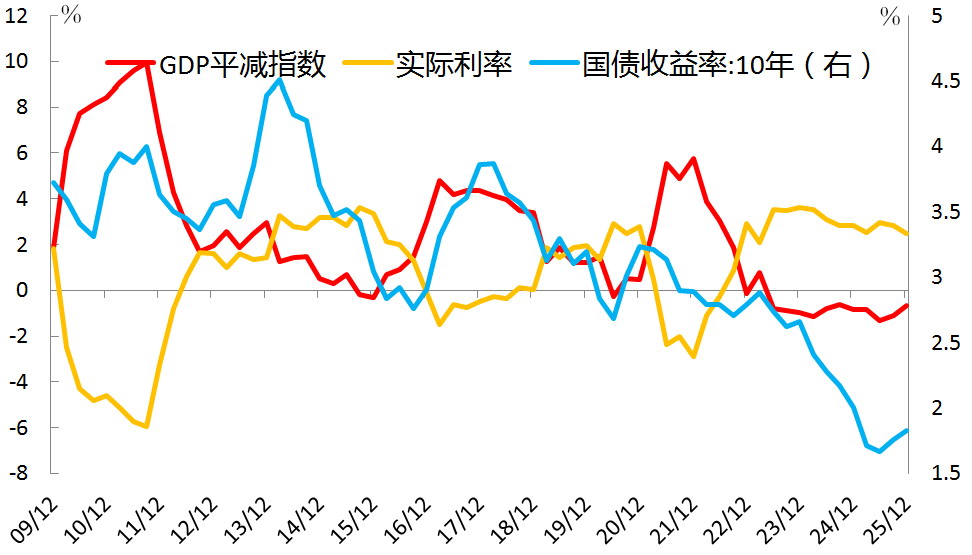
格林大华期货早盘提示-20260209
Ge Lin Qi Huo· 2026-02-08 23:29
Report Industry Investment Rating - The investment rating for the bond futures in the macro and finance sector is "volatile" [1] Core Viewpoints of the Report - On Friday, the main contracts of bond futures opened higher across the board and fluctuated upwards throughout the day, with the 30-year variety showing stronger performance. The 1-year inflation expectation in the US dropped from 4% to a 13-month low of 3.5%. The official manufacturing PMI in January was 49.3%, falling back below the boom-bust line. The bond futures may fluctuate in the short term, and trading investors are advised to conduct band operations [1][2] Summary by Relevant Catalogs Market Review - On Friday, the main contracts of bond futures opened higher across the board and fluctuated upwards throughout the day. The 30-year bond futures main contract TL2603 rose 0.42%, the 10-year T2603 rose 0.08%, the 5-year TF2603 rose 0.03%, and the 2-year TS2603 rose 0.02%. The Wind All A index opened lower, rose in the morning session, and slightly declined in the afternoon, closing down 0.19% from the previous trading day, forming a small Yang line with an upper shadow, with a trading volume of 2.16 trillion yuan, a slight contraction compared to the previous trading day's 2.19 trillion yuan [1][2] Important Information - Open market: On Friday, the central bank conducted 31.5 billion yuan of 7-day reverse repurchase operations and 300 billion yuan of 14-day reverse repurchase operations. With 477.5 billion yuan of reverse repurchases maturing on the same day, the net withdrawal was 146 billion yuan. - Money market: On Friday, the overnight interbank funding market rate remained flat compared to the previous trading day. The weighted average of DR001 throughout the day was 1.32%, and that of DR007 was 1.48%. - Cash bond market: On Friday, the closing yields of interbank government bonds declined compared to the previous trading day. The yield to maturity of the 2-year government bond dropped 0.37 BP to 1.36%, the 5-year dropped 1.34 BP to 1.56%, the 10-year dropped 0.67 BP to 1.81%, and the 30-year dropped 2.00 BP to 2.25%. - US policy: The US President signed an executive order to impose tariffs on countries trading with Iran, but no new tariffs have been added for now. The US and Iran held "very good talks," and the US will negotiate with Iran again next week. - US inflation expectation: The 1-year inflation expectation in the US dropped from 4% to a 13-month low of 3.5% [1] Market Logic - In January, the official manufacturing PMI was 49.3%, falling back below the boom - bust line, with the new order index at 49.2%, indicating a decline in manufacturing market demand. The business activity index of the construction industry in January was 48.8%, and that of the service industry was 49.5%, remaining below the boom - bust line for the third consecutive month. The Ministry of Finance stated that in 2026, the fiscal deficit, total debt, and total expenditure will be maintained at a necessary level. The central bank governor said that there is still room for reserve requirement ratio cuts and interest rate cuts this year [1][2] Trading Strategy - Trading investors are advised to conduct band operations [2]
1月制造业PMI重回收缩,期债震荡略多
Ge Lin Qi Huo· 2026-02-07 05:55
1. Report Industry Investment Rating - Not provided in the content 2. Core View of the Report - 1 - month official manufacturing PMI was 49.3%, back below the boom - bust line, with a decline in manufacturing market demand; construction and service business activity indices were weak; the Ministry of Finance will maintain necessary levels of fiscal deficit, debt, and expenditure; the central bank governor said there is room for RRR and interest rate cuts this year; the Wande All - A Index was slightly weak this week, and capital interest rates fell compared to last week; treasury bond futures rose overall, and may fluctuate slightly upward in the short term [39] - Trading - type investors are advised to conduct band operations [40] 3. Summary by Relevant Catalogs 3.1 Treasury Bond Futures Weekly Market Review - This week, most treasury bond futures main contracts showed a trend of hitting bottom and then rebounding. The 30 - year variety was strong. The 30 - year treasury bond rose 0.63% for the whole week, the 10 - year rose 0.12%, the 5 - year rose 0.06%, and the 2 - year rose 0.06% [5] - As of February 6, compared with January 30, the treasury bond spot yield curve shifted downward overall, with the ultra - long end shifting down slightly more. The 2 - year yield dropped 2 BP to 1.36%, the 5 - year dropped 2 BP to 1.56%, the 10 - year remained flat at 1.81%, and the 30 - year dropped 4 BP to 2.25% [7] 3.2 January Manufacturing PMI Data - January manufacturing PMI was 49.3%, back in the contraction range, with large enterprises continuing to expand and medium - and small - sized enterprises' prosperity declining [10] - The production index was 50.6% and the new order index was 49.2%, indicating continued expansion in production but a decline in market demand. The procurement volume index was 48.7%, falling below the boom - bust line [13] - The new export order index was 47.8% and the import index was 47.3%. The new export order index declined compared to December [16] - The main raw material purchase price index and the ex - factory price index were 56.1% and 50.6% respectively, both expanding compared to the previous month. The average value of the South China Industrial Products Index rose 4.4% month - on - month and fell 4.75% year - on - year [18] - The raw material inventory index was 47.4% and the finished product inventory index was 48.6%. Inventory remained stable, and the profits of large - scale manufacturing enterprises increased in 2025 [21] - The manufacturing employment index was 48.1%, with little change in the employment prosperity level. The production and operation activity expectation index was 52.6%, indicating a decline in future prosperity expectations [24] 3.3 January Non - manufacturing Business Activity Index Data - The non - manufacturing business activity index was 49.4%. The construction business activity index was 48.8%, and the service business activity index was 49.5%, falling below the boom - bust line for the third consecutive month [27] - The construction new order index was 40.1%, the employment index was 41.1%, and the business activity expectation index was 49.8%, all showing a decline [30] - The service new order index was 47.1%, the employment index was 47.0%, and the business activity expectation index was 57.1%, slightly rising. The input price index was 49.7% and the sales price index was 48.9%. Financial and insurance industries were active, while the real estate industry was weak [33] 3.4 Capital Interest Rate and Market Operation - This week, capital interest rates fell compared to last week. DR001 dropped to 1.275%, DR007 dropped to 1.46%, and the one - year AAA inter - bank certificate of deposit issuance rate dropped to 1.59%. On February 4, the central bank conducted 800 billion yuan of 3 - month outright reverse repurchase operations, with 700 billion yuan of 3 - month outright reverse repurchase maturing on the same day [36]