
3D打印技术

Search documents
国金证券:关注商业火箭核心“铲子股”及新技术路线带来的机会
Di Yi Cai Jing· 2026-01-06 00:29
Group 1 - The core viewpoint of the article highlights the increasing urgency for satellite launches due to the limited orbital resources governed by the "first come, first served" rule of the International Telecommunication Union, with Chinese satellite constellations planning nearly 30,000 satellites [1] - Cost is identified as a key factor limiting rocket launch efficiency, and the development of reusable technology is essential for reducing costs in the domestic commercial space sector [1] - The year 2026 is anticipated to be a milestone for reusable commercial rockets, with both state-owned and private enterprises, such as Long March 12A and Zhurong 3, attempting recovery [1] Group 2 - The core value of rockets is concentrated in the engine and airframe structure, with 3D printing technology being suitable for the complex structures of engines, enabling cost reduction and efficiency improvement [1] - Domestic companies like Blue Arrow Aerospace are actively applying these technologies [1] - Investment recommendations focus on "shovel stocks" related to commercial rockets and opportunities arising from new technological routes [1]

宜安科技(300328.SZ):非晶合金在3D打印技术上具备可行性,目前公司正在和3D打印公司做初步沟通交流
Ge Long Hui· 2026-01-05 07:25
Core Viewpoint - The company, Yian Technology (300328.SZ), has indicated the feasibility of its amorphous alloy in 3D printing technology and is currently in preliminary discussions with 3D printing companies [1] Group 1 - The company is exploring the application of its amorphous alloy in the 3D printing sector [1] - Initial communications are taking place between the company and 3D printing firms [1]

国金证券:2026年商业火箭公司可回收发射元年 看好火箭铲子股及新技术
智通财经网· 2026-01-05 03:34
Core Insights - The report from Guojin Securities emphasizes the strategic importance of seizing space resources for China, highlighting the current bottleneck in rocket capacity and predicting that 2026 will be the year of reusable commercial rockets, while also focusing on key stocks in the rocket sector and investment opportunities arising from new 3D printing technologies [1] Group 1: Urgency in Satellite Launches - The limited resources in low Earth orbit necessitate urgent satellite launches, as per the International Telecommunication Union's "first come, first served" rule, which pressures China to accelerate its satellite launches [2] - The theoretical capacity of near-Earth orbit is estimated to accommodate only about 60,000 satellites, with SpaceX's Starlink already having launched over 10,000 satellites and aiming for a total of 42,000, thereby occupying a significant portion of low Earth orbit resources [2] - Domestic plans, such as those from Xingwang and "G60," aim to deploy nearly 30,000 satellites, with a requirement to complete 10% of the constellation within nine years to avoid losing resources [2] Group 2: Cost Efficiency in Rocket Launches - High costs currently limit rocket launch efficiency, making reusable rockets a crucial technology for cost reduction, as demonstrated by SpaceX's Falcon 9, which has reduced costs by 60% through first-stage rocket reuse [3] - The cost of satellite launches in China has decreased from 115,000 yuan per kilogram in 2020 to 75,000 yuan per kilogram in 2024, indicating a trend towards lower launch costs [3] - The U.S. leads in rocket launches due to lower costs, with SpaceX's Falcon 9 having a per-kilogram launch cost of 14,000 to 18,000 yuan, and the U.S. is projected to conduct 158 rocket launches in 2024 [3] Group 3: Future of Reusable Rockets - The year 2026 is anticipated to mark the beginning of the era of reusable commercial rockets, with both state-owned and private companies making strides in this technology [3] - Recent attempts to launch reusable rockets, such as Long March 12A and Zhuque 3, indicate progress in this area, with future launches from commercial entities like Tianlong 3 and Lijian 2 also planned for 2026 [3] Group 4: Investment Opportunities in Rocket Components - The core components of rockets, including engines and structural elements, account for over 60% of total costs, making companies involved in these areas attractive investment targets [4] - 3D printing technology is seen as a key trend in the engine sector, with domestic companies actively adopting it to reduce costs and improve efficiency [4] - SpaceX's Raptor engine, which utilizes 3D printing, has achieved a 21% increase in thrust and a 40% reduction in weight, showcasing the potential benefits of this technology [4]
商业航天研究-火箭行业专家交流
2026-01-04 15:35
Summary of Key Points from the Conference Call on Commercial Aerospace and Rocket Industry Industry Overview - The conference focused on the commercial aerospace sector, specifically the rocket industry, discussing cost structures, technological advancements, and market dynamics [2][12]. Cost Structure and Components - Companies are pursuing low-cost strategies in the rocket sector, with hardware costs for single launches ranging from 100 million to 120 million yuan for non-reusable and reusable rockets, respectively [2][3]. - The first stage of rockets accounts for 50% to 60% of total costs, while the second stage contributes around 30% [2][4]. - The cost of a single engine is approximately 5 to 6 million yuan, which includes R&D team salaries [7]. - Reusable rockets incur an initial cost increase of 10% to 20%, but successful recovery can reduce subsequent launch costs to about 50 million yuan [3][14]. Technological Advancements - Key components like engines and storage tanks are now manufactured domestically, mitigating risks of foreign dependency [8]. - 3D printing technology is widely used in rocket manufacturing, with 90% of components for certain engines produced this way, significantly reducing costs and production time [11]. - The goal is to reduce the cost of a single engine to 1.5 million yuan, representing a potential savings of 33% to 67% [11]. Market Dynamics and Competition - The commercial space sector is experiencing rapid growth, with companies like Tianbing and Blue Arrow planning to achieve 10 to 15 launches annually by 2027, and 30 by 2028 [12][15]. - The competition between private companies and state-owned enterprises is characterized by both collaboration and rivalry, with private firms needing to meet military standards for rocket production [12][16]. - The market is constrained by the limited capacity of existing rockets, which cannot meet the projected demand for satellite launches [12][13]. Future Outlook - The first successful recovery of reusable rockets is anticipated by 2026, with Blue Arrow likely to lead this achievement [14]. - By 2030, the frequency of commercial rocket launches could increase significantly, potentially reaching 100 launches per year, contingent on the stability of recovery technologies and government support [15]. - The commercial space sector is expected to become increasingly independent from state support, with a shift towards full privatization in the future [15]. Challenges and Risks - Domestic companies face challenges in funding and testing, which can lead to rushed development processes and increased risks of failure [21]. - The reliance on military standards and the need for extensive testing contribute to the high costs and complexities of rocket development [21]. Conclusion - The commercial aerospace industry is poised for significant growth, driven by advancements in technology and increasing demand for satellite launches. However, challenges related to cost, competition, and funding remain critical factors that will shape the industry's future trajectory [12][15].
江西铜业触及涨停,有色金属ETF(512400)红盘上扬,铜冶炼环节关键指标释放紧张信号,支撑铜价维持强势运行
Xin Lang Cai Jing· 2025-12-31 06:17
Group 1: Copper Industry Insights - The copper ETF (512400) has increased by 0.89%, with a trading volume of 937 million yuan and a turnover rate of 4.51% [1] - Key copper smelting indicators are signaling tightness, with the 2026 copper concentrate long-term processing fee benchmark set at $0/ton and $0/pound, a significant decrease of $21.25/ton and 2.125 cents/pound year-on-year [1] - The decline in processing fees indicates fierce competition among smelting companies for raw materials, suggesting that profits in the industry chain are shifting towards upstream mining [1] Group 2: Titanium Alloy Demand - Titanium alloys are on the verge of a demand explosion, with a projected growth rate exceeding 10% over the next three years due to their high strength, low density, and corrosion resistance [2] - The maturity of 3D printing technology is breaking the application bottleneck of titanium alloy powders, which now account for approximately 20% of mainstream 3D printing materials [2] - The downstream titanium materials and powder segments are expected to become the fastest-growing areas within the industry chain as they transition from "0-1" validation to "1-10" scale expansion [2] Group 3: ETF Overview - The copper ETF (512400) closely tracks the CSI Shenwan Nonferrous Metals Index, which includes 50 listed companies from the nonferrous metals and non-metallic materials sectors [2] - The top ten weighted stocks in the index include Zijin Mining, Luoyang Molybdenum, Northern Rare Earth, Huayou Cobalt, China Aluminum, Ganfeng Lithium, Shandong Gold, Zhongjin Gold, Tianqi Lithium, and Chifeng Jilong Gold [2]

商业航天4日涨逾10% 5家火箭公司上市冲刺孰会胜出
2 1 Shi Ji Jing Ji Bao Dao· 2025-12-30 05:41
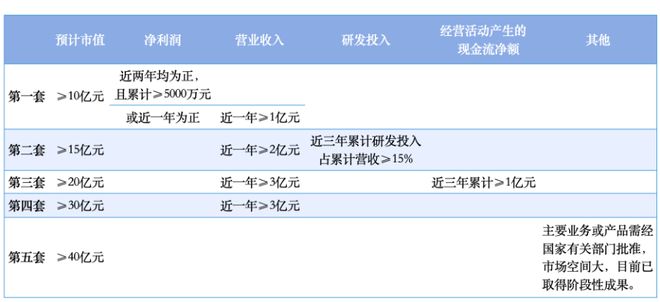
Core Viewpoint - The commercial aerospace sector is experiencing significant momentum, driven by SpaceX's planned IPO and new listing guidelines from the Shanghai Stock Exchange, which are expected to facilitate the entry of several commercial rocket companies into the market [1][5]. Group 1: Market Performance - The Aerospace ETF Tianhong (159241) rose by 1.24%, while the Commercial Aerospace index (BK0963) has increased by 10.8% over four consecutive trading days, both reaching historical highs [1]. - SpaceX has confirmed plans for an IPO in mid-2026, targeting a valuation of approximately $1.5 trillion (about 10.6 trillion RMB) and aiming to raise over $30 billion, potentially becoming the largest IPO in history [1]. Group 2: Regulatory Developments - The Shanghai Stock Exchange released the "Guidelines for Issuance and Listing Review Applicable to Commercial Rocket Enterprises," providing a clear path for listing conditions for commercial rockets [1]. - The new guidelines refine the existing five-tier listing standards of the Sci-Tech Innovation Board, which focus on market capitalization, revenue, R&D investment, cash flow, and technological achievements rather than solely on profitability [2][3]. Group 3: Industry Dynamics - The demand for large-capacity rockets is driven by the need to launch over 30,000 low-orbit satellites, with an estimated launch requirement exceeding 1,000 tons in the next five years [5]. - The successful reuse of rockets, exemplified by SpaceX's Falcon 9, has lowered industry launch costs and increased expectations for similar technologies in China [5]. Group 4: Company Developments - Several leading commercial rocket companies are in the IPO preparation phase, with five companies already valued at over 85.5 billion RMB [5]. - Among these, Blue Arrow Aerospace has successfully achieved orbit and is considered a frontrunner for the first IPO, while the other four companies plan to conduct their first launches in 2026 [7]. Group 5: Technological Innovations - The guidelines emphasize the importance of using reusable technology for medium to large rockets, marking a significant threshold for companies seeking to list under the new standards [6][9]. - The application of 3D printing technology in rocket engine manufacturing is becoming increasingly prevalent, enhancing production efficiency and reducing costs [10].

爱迪特(301580) - 301580爱迪特投资者关系管理信息20251230
2025-12-29 23:54
Group 1: Market Impact and Strategies - The company’s consumables are not currently included in the centralized procurement scope, and it has not received any formal notifications regarding this matter. If included in the future, the company has competitive advantages such as self-produced raw materials, sufficient capacity, and leading technology, which would make the overall performance impact manageable [1] - The main drivers for improving the company's gross margin include R&D innovation for differentiated premium pricing, optimizing processes and automation to enhance manufacturing quality and efficiency, and actively collaborating with suppliers to achieve quality and efficiency goals [1] Group 2: 3D Printing Business - The 3D printing business has shown significant growth this year and is currently in the ramp-up phase. The company’s 3D printing materials and equipment have gained wide recognition from customers after a year of certification and market testing [2] - The company aims to leverage 3D printing technology and products to enhance sales of planting and repair products, with the technology becoming a core component for achieving efficient, high-precision, and low-cost dental treatments [2] Group 3: Overseas Market Performance - In the first half of 2025, the overseas market generated revenue of 327 million, representing a year-on-year growth of 34%. This growth is attributed to the successful implementation of the company’s major client strategy and the establishment of stable partnerships with key clients after product trials, particularly in the European and African markets [3] - The company employs a differentiated product mix strategy for various niche markets, maintaining product strength and effectively matching solutions to customer needs [3] Group 4: Future Expectations for New Facilities - The company plans to increase production capacity across all product lines based on market trends and strategic planning. The Aidi Te Dental Industrial Park is expected to complete the construction and gradual commissioning of its main production workshops next year [4] - The optimization of the product structure will allow the company to cover a broader customer base, expand market space, and enhance overall profitability, leading to new advancements in production scale and profitability [4]
股市必读:道恩股份(002838)12月29日董秘有最新回复
Sou Hu Cai Jing· 2025-12-29 18:13
Group 1 - The core stock price of Dawn Co., Ltd. (002838) closed at 24.4 yuan on December 29, 2025, with an increase of 0.7% and a turnover rate of 0.92% [1] - The trading volume was 38,700 shares, with a total transaction amount of 94.75 million yuan [1] Group 2 - The company has made breakthroughs in PEEK material processing, optimizing the combination of carbon fiber and PEEK to enhance the mechanical properties, heat resistance, and corrosion resistance of printed parts [1] - The company aims to provide lightweight, high-strength, and complex structure 3D printing solutions for aerospace, medical, and automotive sectors, promoting advanced manufacturing technology and meeting market demands for high-performance composite materials [1] Group 3 - On December 29, the net outflow of main funds was 11.52 million yuan, indicating a short-term reduction in holdings by major investors [1] - Retail investors showed a net inflow of 6.78 million yuan, while speculative funds had a net inflow of 4.74 million yuan [1]

中航重机(600765.SH):已实现国家多型飞机等3D打印结构件的批产应用,技术实力处于行业前列
Ge Long Hui A P P· 2025-12-29 09:16
格隆汇12月29日丨中航重机(600765.SH)在互动平台表示,公司与北京航空航天大学联合成立的"中航天 地激光科技有限公司",专注于航空航天金属3D打印技术研发与产业化。产品覆盖航空、航天、航发多 个客户及型号,为保障国家重点型号研制进展发挥了重大作用。激光公司掌握同轴增材、表面增材、选 区熔化增材及光固化增材等多种3D打印技术,可实现飞机、发动机等复杂精密金属结构件的一体化成 型,成功实现大型钛合金、高强钢等高性能金属结构件的批产,综合力学性能达到或超过传统锻件水 平。并通过AS9100D航空航天质量体系认证;目前已实现国家多型飞机等3D打印结构件的批产应用, 技术实力处于行业前列。 ...

中航重机:已实现国家多型飞机等3D打印结构件的批产应用,技术实力处于行业前列
Ge Long Hui· 2025-12-29 09:12
格隆汇12月29日丨中航重机(600765.SH)在互动平台表示,公司与北京航空航天大学联合成立的"中航天 地激光科技有限公司",专注于航空航天金属3D打印技术研发与产业化。产品覆盖航空、航天、航发多 个客户及型号,为保障国家重点型号研制进展发挥了重大作用。激光公司掌握同轴增材、表面增材、选 区熔化增材及光固化增材等多种3D打印技术,可实现飞机、发动机等复杂精密金属结构件的一体化成 型,成功实现大型钛合金、高强钢等高性能金属结构件的批产,综合力学性能达到或超过传统锻件水 平。并通过AS9100D航空航天质量体系认证;目前已实现国家多型飞机等3D打印结构件的批产应用, 技术实力处于行业前列。 ...