
AI出海

Search documents
百度世界2025定档下月中旬开幕 或披露出海进展
Zheng Quan Shi Bao Wang· 2025-10-14 02:06
Core Insights - Baidu's annual technology and product launch event, Baidu World 2025, is scheduled for November 13 in Beijing, where the company is expected to disclose its overseas expansion progress [1] - The trend of Chinese tech companies going global is gaining momentum, driven primarily by AI technologies, which are becoming the core engine for international trade [1][2] - The home appliance industry is experiencing a resurgence in overseas markets, with Chinese brands showing strong competitive momentum in Europe and the US [1] - Baidu's autonomous driving unit, Apollo, has made significant strides in international markets, partnering with Uber and Lyft, and providing over 14 million rides globally, leading the industry [1] Industry Trends - The current wave of overseas expansion differs from previous trends, as AI is now the primary driver, with technologies like large models, intelligent agents, and industrial robots deeply integrated into the global trade chain [1] - The AI application landscape is expanding, with Baidu enhancing its AI strategy and launching the GenFlow intelligent agent, which is the first of its kind globally [2] - Baidu's digital human technology has achieved notable success, generating 55 million yuan in GMV during a live broadcast, showcasing the potential of AI in marketing [2] - The competition in AI has evolved from model rivalry to application competition, with Chinese tech firms like Baidu, Alibaba, and Tencent showcasing their AI capabilities on the global stage [2]

彩讯股份CEO白琳:以平台化能力共建全球生态
Zhong Guo Jing Ji Wang· 2025-10-12 01:04
Core Insights - The article discusses the transition of Chinese companies in the AI sector from merely exporting products to building ecosystems for global collaboration [1][2] - The focus is on the "AI+Going Global" strategy, emphasizing the integration of AI services with local ecosystems [2][4] Group 1: AI Going Global - AI going global is entering a new phase where companies are not just exporting tools but also services and ecosystem capabilities [2] - The "Juxing Plan" by China Mobile aims to integrate global partners, providing networks, edge computing, and trust channels to facilitate compliance and localization [2][3] - CaiXun Co., Ltd. has developed a comprehensive enterprise-level AI service system, leveraging its Rich AICloud and Rich AIBox platforms to offer end-to-end services [2][3] Group 2: CaiXun's Global Strategy - CaiXun's AI export strategy addresses three main challenges: technological advancement vs. practical business needs, cost vs. value, and standardized products vs. personalized demands [3] - The company has established a three-layer architecture in AI, consisting of a computing base, platform middleware, and industry-specific intelligent agents [3] - CaiXun plans to extend its efficient and compliant AI capabilities to Southeast Asia and the Middle East, leveraging its extensive domestic experience [3][4] Group 3: Current Status and Challenges of AI Going Global - Chinese companies possess unique competitive advantages in AI due to their experience in complex industrial ecosystems and cost-effective solutions [4] - The core of AI going global is to transform models into sustainable productivity, embedding AI into the decision-making processes of enterprises [4] - CaiXun emphasizes a collaborative approach to internationalization, combining global capabilities with local wisdom to ensure successful AI implementation [4]

锦秋基金与 NVIDIA 初创加速计划共话AI智能体与出海新机遇|Jinqiu Spotlight
锦秋集· 2025-10-09 06:10
Group 1 - The event "2025 NVIDIA Startup Showcase - Beijing" focused on cutting-edge technologies in AI agents and physical AI, discussing topics such as AI globalization [1][4] - The event was co-hosted by Jinqiu Fund along with notable companies like NVIDIA, Amazon Web Services, and others, highlighting collaboration in the AI ecosystem [1][10] - A roundtable discussion featured experts from various fields, emphasizing a new paradigm for AI globalization driven by technology and ecosystem co-construction [1][4] Group 2 - The event showcased 13 member companies from NVIDIA's startup acceleration program, covering diverse fields such as embodied intelligence, smart manufacturing, and biotech [4] - Jinqiu Fund expressed enthusiasm for breakthroughs in frontier technologies and the inspiration gained from entrepreneurial ideas exchanged during the event [5] - The company aims to continuously monitor trends in AI agents and changes in the AI globalization landscape, seeking innovative teams and products [5][6] Group 3 - Jinqiu Fund, with a 12-year focus on AI investment, prioritizes long-termism and seeks startups with breakthrough technologies and innovative business models [9] - NVIDIA's Inception program aims to cultivate disruptive startups by providing a range of services to accelerate their development [10] - Amazon Web Services' cloud innovation program supports startups with cloud resources and technical services to facilitate business growth [11]



宏景科技(301396)首次覆盖报告:互联网大厂云出海先锋
Xin Lang Cai Jing· 2025-10-07 06:33
Core Insights - The company has successfully transformed into an AI computing service provider, with its computing leasing business rapidly growing and surpassing traditional business revenue contributions, becoming a core growth engine [1][2] - The company has established solid partnerships with leading firms like JD.com and is proactively developing its "Hongjing Computing Cloud" and overseas strategies, leveraging a base of over 9,000 heterogeneous GPU clusters to create a dual-driven business model [1] - The company has achieved a significant turning point in performance, with revenue growth exceeding 567% year-on-year in the first half of 2025, marking a return to profitability and demonstrating strong business resilience and growth potential [1][3] Industry Dynamics - The trend of Chinese internet giants expanding overseas has opened a blue ocean market, driven by both domestic AI capabilities catching up to global standards and increasing local AI application demands in overseas markets [1] - Domestic cloud providers are accelerating global infrastructure deployment to meet the needs of Chinese enterprises going abroad and local AI demands, with the company actively implementing its computing overseas strategy [2] - The company is positioned as a key partner in the cloud export ecosystem, leveraging its computing optimization, networking technology, and supply chain integration capabilities to benefit from the ongoing expansion of internet giants into international markets [3] Financial Projections - Revenue projections for the company from 2025 to 2027 are estimated at 2.217 billion, 3.236 billion, and 4.466 billion yuan, with net profits of 209 million, 492 million, and 803 million yuan respectively [3] - The company is expected to maintain a strong market position, with a projected price-to-earnings ratio of 58, 25, and 15 times for the respective years [3]
民生证券:互联网大厂云出海元年开启 海内外AI需求双轮驱动
智通财经网· 2025-09-26 07:24
Core Insights - Major domestic internet companies are launching cloud overseas strategies and utilizing debt financing to support these initiatives [1] - Alibaba Cloud plans to invest over 380 billion RMB in the next three years for cloud and AI hardware infrastructure, exceeding the total investment of the past decade [1] - Tencent Cloud has embraced internationalization, achieving high double-digit growth in international business over the past three years, with a doubling of overseas customer scale [2] Group 1: Cloud Overseas Strategies - Domestic internet giants are releasing cloud overseas strategic plans and leveraging debt financing to establish a foundation for these initiatives [1] - Alibaba Cloud aims to create a global cloud computing network covering China, Japan, South Korea, Southeast Asia, the Middle East, Europe, and the Americas, with a unified technical architecture and service platform [1] - Tencent Cloud has completed multiple product and function upgrades to adapt to the global technology ecosystem, with over 90% of internet companies and 95% of leading gaming companies choosing Tencent Cloud for their overseas ventures [2] Group 2: AI and Cloud Integration - The demand for AI overseas from internet giants is driving rapid expansion, with Tencent integrating models, computing power, and data across various sectors [2] - Alibaba is accelerating the deployment of AI applications to support numerous AI application enterprises [2] - ByteDance's overseas AI product matrix includes various fields such as chatbots, education, and emotional companionship, while Baidu is advancing its AI applications like Robotaxi and AI cameras [2][3] Group 3: Market Demand - There is a clear demand for AI and cloud solutions from Chinese enterprises, including industry leaders like BYD and Midea, as well as emerging unicorns like miHoYo [3] - The overseas market is experiencing significant growth in demand for localized AI applications, providing new business opportunities for internet giants [3] Group 4: Investment Recommendations - Suggested stocks include Alibaba Group-W (09988), Tencent Holdings (00700), and Baidu Group-SW (09888) in the cloud platform sector [4] - For computing power leasing, recommended stocks are Hongjing Technology (301396.SZ), Xiechuang Data (300857.SZ), and Youfang Technology (688159.SH) [4] - In the optical communication sector, notable companies include Dekeli (688205.SH), Shijia Photon (688313.SH), and Guangku Technology (300620.SZ) [5]


中国00后AI创业瞄准出海
21世纪经济报道· 2025-09-25 07:58
Core Viewpoint - The article highlights the growing trend of Chinese AI entrepreneurs aiming to expand internationally, emphasizing the importance of global market access and the potential for AI technology to transcend national boundaries [5][6][10]. Group 1: AI Entrepreneurship and Investment - The EPIC Connector hosted an "AI DEMO Day" where young entrepreneurs showcased their AI products to secure seed funding, reflecting a vibrant startup culture in the AI sector [3][4]. - Antler, a prominent early-stage investment firm, has invested in over 1,300 companies, ranking first among global early-stage AI investors, indicating a robust investment landscape for AI startups [3][4]. - The article notes that many Chinese AI entrepreneurs are focusing on international markets as a core strategy, with a consensus that "going global" is essential for success [4][10]. Group 2: Globalization and AI Talent - A report from Macro Polo indicates that 47% of top global AI researchers are from China, and about 75% of top AI talent in the U.S. are of Chinese descent, showcasing the significant contribution of Chinese talent to the global AI landscape [6]. - Kris, the founder of EPIC, argues that AI technology can eliminate national barriers, and the current trend of globalization is reversing, which necessitates support for Chinese AI entrepreneurs to access international markets [6][10]. Group 3: Challenges and Opportunities - The article discusses the challenges faced by AI startups, such as the need for compliance with various national regulations and the potential risks of reverse globalization, as seen with companies like Manus.AI [10][11]. - The emergence of new opportunities for "unknown" entrepreneurs in the AI sector is highlighted, with a focus on niche applications rather than general-purpose AI, which requires significant investment and has a lower success probability [12][13]. - The distinction between models and intelligent agents is becoming blurred, leading to more refined and user-specific AI products, which are essential for meeting market demands [13][14].
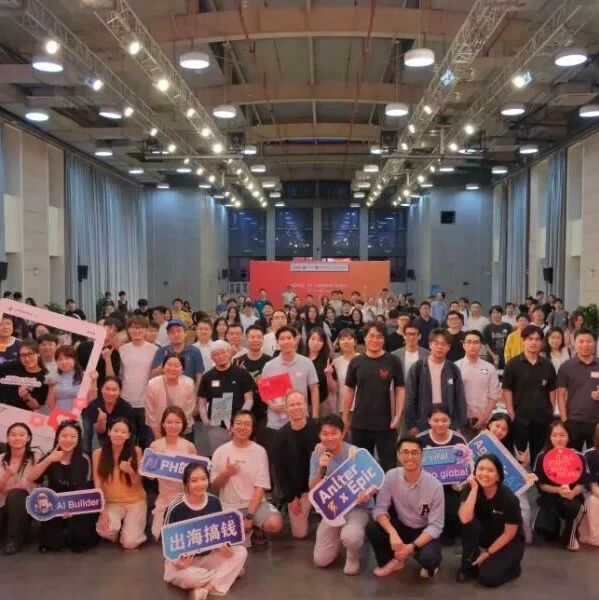
中国00后AI创业,“第一天就瞄准出海”
2 1 Shi Ji Jing Ji Bao Dao· 2025-09-25 04:53
Core Insights - A new opportunity era for "unknowns" is emerging, with China's post-2000 AI entrepreneurs striving for global recognition [10] - The AI industry is witnessing a shift where language barriers are diminished, allowing for a more global approach to AI entrepreneurship [6][7] Group 1: AI Entrepreneurship Landscape - Young AI entrepreneurs, including university students, are actively participating in financing roadshows to secure seed funding for their AI products [1][2] - Antler, a prominent early-stage investment firm, has invested in over 1,300 companies, ranking first among global AI early investors [2] - EPIC Connector, a non-profit AI startup incubator, aims to assist Chinese AI entrepreneurs in expanding internationally [3][4] Group 2: Globalization and AI - The majority of participants at the AI DEMO Day were fluent in English, indicating a readiness to engage with global markets [4][3] - A report from Macro Polo highlights that 47% of top global AI researchers are from China, showcasing the significant role of Chinese talent in the AI sector [4] - The concept of "Day One Global" is emphasized, suggesting that Chinese AI startups should consider international markets from the outset [7] Group 3: Challenges and Trends - The AI industry faces challenges related to reverse globalization, with some companies relocating to avoid restrictions [8][9] - The recent actions of Manus.AI, including layoffs and relocation, reflect the complexities of operating in a global AI landscape [8] - The distinction between models and agents in AI entrepreneurship is becoming blurred, leading to more specialized and user-focused AI products [11][12] Group 4: Future Outlook - The Chinese government's recent initiatives to promote AI integration across various sectors signal a supportive environment for AI development [10] - The rise of AI is compared to the internet boom two decades ago, suggesting a transformative potential for the digital economy [10] - EPIC Connector aims to elevate promising but lesser-known entrepreneurs to the forefront of the AI industry [12]

计算机行业动态报告:互联网大厂云出海元年开启
Minsheng Securities· 2025-09-23 11:45
Investment Rating - The report maintains a positive investment outlook for the cloud computing sector, particularly focusing on major internet companies' international expansion strategies [7]. Core Insights - The year 2025 marks the beginning of a new phase for major internet companies as they embark on cloud internationalization, supported by significant debt financing initiatives [1][10]. - Major players like Alibaba Cloud, Tencent Cloud, and ByteDance's Volcano Engine are actively enhancing their global cloud infrastructure to support Chinese enterprises' overseas expansion [17][23][50]. - The dual drivers of domestic AI internationalization and local AI demand abroad are propelling the cloud expansion efforts of these internet giants [2][3]. Summary by Sections 1. Internet Giants' Internationalization - Major internet companies are launching new rounds of debt financing aimed at cloud internationalization, with Alibaba planning to invest over 380 billion RMB in cloud and AI infrastructure over the next three years [1][11]. - Tencent Cloud has embraced internationalization, achieving high double-digit growth in international business over the past three years, with a doubling of overseas customer numbers [12][13]. 2. Domestic AI Internationalization and Local AI Demand - The demand for AI applications from both domestic companies and local markets abroad is driving the cloud internationalization process [2][3]. - Tencent, Alibaba, and ByteDance are leveraging their AI capabilities to support various sectors, including e-commerce and gaming, in their international endeavors [2][35][50]. 3. Investment Recommendations - The report suggests focusing on key players in the cloud platform sector, including Alibaba, Tencent, and Baidu, as well as companies involved in computing power leasing and optical communication [3][7]. - Specific companies recommended for investment include Hongjing Technology, Xiechuang Data, and various optical communication firms [3].
芯片股再爆发!中芯国际、寒武纪股价创历史新高,芯片50ETF(159560)盘中涨超5%
2 1 Shi Ji Jing Ji Bao Dao· 2025-08-28 05:48
Group 1 - Semiconductor stocks experienced a significant surge on August 28, with SMIC rising over 12% to reach a historical high, and Cambricon increasing by over 7%, also hitting a new high [1] - The Chip 50 ETF (159560) closely tracks the CSI Semiconductor Industry Index, which includes companies involved in chip design, manufacturing, packaging, testing, and related materials and equipment [1] - The top ten weighted stocks in the index include leading semiconductor companies such as SMIC, Cambricon-U, Northern Huachuang, and Haiguang Information [1] Group 2 - The State Council issued an opinion on August 26 to deepen the implementation of the "Artificial Intelligence +" initiative, emphasizing the need to strengthen intelligent computing power and support innovation in AI chips [2] - According to Dongfang Securities, the release of the "Artificial Intelligence +" top-level planning document is expected to positively impact the development and implementation of AI applications, enhancing the support for computing power and data [2] - Tianfeng Securities predicts continued optimistic growth in the global semiconductor market through 2025, driven by AI, while also highlighting the ongoing risks related to supply chain disruptions and the push for domestic innovation [2]


英维克(002837):温控业绩高增 液冷板块龙头出海
Xin Lang Cai Jing· 2025-08-20 10:39
Performance Summary - In the first half of 2025, the company achieved revenue of 2.573 billion yuan, a year-on-year increase of 50.25% [1] - The net profit attributable to shareholders was 216 million yuan, up 17.54% year-on-year [1] - In Q2 2025, revenue reached 1.641 billion yuan, reflecting a year-on-year growth of 69.67%, with net profit of 168 million yuan, up 37.98% year-on-year [1] Operational Analysis - The company's performance in 1H25 was driven by the dual engines of room temperature control and cabinet temperature control, with revenue from room temperature control energy-saving equipment reaching 1.351 billion yuan, a year-on-year increase of 57.91%, and cabinet temperature control energy-saving equipment revenue at 926 million yuan, up 32.02% year-on-year [2] - The rapid expansion of the liquid cooling market was fueled by downstream computing power investments and high demand for data centers, with liquid cooling-related revenue exceeding 200 million yuan in 1H25 [2] - The company reported a significant increase in orders, with a merchandise account balance of 681 million yuan, up 67.78% from the beginning of the period, and advance sales receipts of 404 million yuan, up 76.25% [2] Business Structure and Competitive Factors - The overall gross margin for 1H25 was 26.15%, a decrease of 2.33 percentage points year-on-year, with room temperature control gross margin at 25.83% and cabinet temperature control gross margin at 28.09% [3] - Revenue from subway air conditioning and bus air conditioning was 24 million yuan and 19 million yuan, respectively, down 50.09% and 29.81% year-on-year, with bus air conditioning gross margin declining due to policy and macroeconomic impacts [3] - Despite short-term pressure on gross margins, the company is optimistic about a rebound as liquid cooling products gain traction in AI data centers [3] Profit Forecast and Valuation - The company forecasts revenues of 6.334 billion yuan, 8.887 billion yuan, and 11.748 billion yuan for 2025, 2026, and 2027, respectively, with net profits of 914 million yuan, 1.352 billion yuan, and 1.960 billion yuan [4] - The current stock price corresponds to a PE valuation of 74.42, 50.31, and 34.71 times for the years 2025, 2026, and 2027 [4]
