OpenClaw

Search documents
别再跟风“养虾”了:OpenClaw 实战课,帮你把 AI Agent 从概念变成生产力
创业家· 2026-03-10 10:21
Core Insights - The article discusses the rise of AI agents, particularly focusing on the "养虾" (raising shrimp) concept introduced by OpenClaw, which transforms AI digital employees from a mere concept into a practical productivity tool [2][14]. - Many companies are currently experiencing "follow-the-leader anxiety," struggling to determine how to effectively implement AI agents and measure their ROI [3][14]. - The article promotes a course designed to help businesses understand the strategic, technical, compliance, and practical aspects of deploying AI agents, emphasizing the need to transition from being followers to leaders in the AI space [5][6]. Strategic Alignment - Companies need to clarify what type of AI agents to implement and how to derive value from them, moving beyond mere curiosity to actionable strategies [6][10]. - The course aims to help businesses identify the best integration points for AI agents with their operations and calculate the return on investment (ROI) [10][15]. Technical Implementation - The article highlights the challenges companies face in understanding the OpenClaw architecture, including the costs of private deployment and performance optimization [4][14]. - Participants will learn key technologies for implementing OpenClaw, making private deployment more manageable [10][15]. Compliance and Security - There is a significant focus on data privacy, content risk control, and compliance issues, with the course designed to help companies navigate these challenges without taking unnecessary risks [4][14]. - The course will guide businesses in constructing a security framework for their AI agents, ensuring compliance with relevant regulations [10][15]. Practical Application - The course includes hands-on sessions where participants will build an enterprise-level AI agent and develop a 30-day action plan for implementation [10][19]. - Real-world applications of AI agents in various industries, such as retail and finance, will be discussed, showcasing their potential in customer service, marketing, and compliance [20].


支持“养龙虾”,多地密集出手
财联社· 2026-03-10 10:01
Core Viewpoint - The article highlights the growing trend of supporting OpenClaw and related projects across various cities in China, with significant financial incentives aimed at fostering the development of artificial intelligence and open-source communities. Group 1: Government Initiatives - Multiple cities, including Shenzhen, Foshan, Wuxi, and Changshu, have introduced policies to encourage the development of OpenClaw, offering substantial financial support to startups and projects in this domain [1][4][5]. - The government of Foshan's Chancheng District has launched a free deployment service for OpenClaw, allowing citizens to access installation and configuration support [2]. - Hefei High-tech Zone has proposed 15 measures to support OpenClaw projects, with funding up to 10 million yuan available for various aspects of development, including model training and intelligent agent construction [3]. Group 2: Financial Support and Incentives - Hefei High-tech Zone offers up to 1 million yuan in computing vouchers and additional funding for projects that meet specific criteria, significantly reducing development costs for innovators [3]. - Changshu plans to provide up to 6 million yuan in support for "one-person companies" utilizing OpenClaw, emphasizing the importance of individual entrepreneurship in the tech ecosystem [4]. - Wuxi High-tech Zone has introduced 12 measures with a maximum subsidy of 5 million yuan for projects integrating OpenClaw, covering a range of support from basic assistance to industry implementation [5]. Group 3: Specific Programs and Projects - Shenzhen Longgang District is encouraging the establishment of "lobster service areas" to facilitate OpenClaw deployment, with financial incentives for platforms that provide these services [6]. - Longgang also plans to reward projects that contribute key code to international communities or develop applications related to intelligent devices, with subsidies up to 200,000 yuan [7].

多地发文支持“养龙虾”
第一财经· 2026-03-10 07:47
Core Viewpoint - The "lobster fever" triggered by OpenClaw is sweeping across the country, with multiple cities like Shenzhen, Wuxi, and Changshu rapidly implementing supportive policies to financially assist industry development [1] Group 1: Shenzhen Initiatives - Longgang District in Shenzhen offers a maximum subsidy of 2 million yuan for projects contributing key code to international communities and developing relevant skill packages [2] - The district encourages the establishment of "lobster service areas" to provide free deployment services for OpenClaw and supports the development of intelligent tools [2] Group 2: Wuxi Support Measures - Wuxi High-tech Zone has proposed measures with single project support up to 5 million yuan, including full subsidies for local cloud platforms providing free deployment and development toolkits [3] - Projects based on OpenClaw for industrial quality inspection and predictive maintenance can receive rewards of up to 500,000 yuan [3] Group 3: Changshu's Comprehensive Support - Changshu City has introduced 13 measures to accelerate the development of OpenClaw and offers comprehensive support of up to 6 million yuan for selected OPC projects [4] Group 4: Hefei's Action Plan - Hefei High-tech Zone has launched an action plan with 15 initiatives, providing up to 10 million yuan in funding support for creating an AI OPC entrepreneurial ecosystem [5] Group 5: Additional Funding Opportunities - OpenClaw projects can apply for up to 10 million yuan in computing vouchers, 1 million yuan in corpus vouchers, and 2 million yuan in model vouchers, significantly reducing R&D costs [6] - The park will open various quality scenarios for OpenClaw integration and provide up to 1 million yuan in special subsidies for benchmark projects [6]

光大期货金融期货日报-20260310
Guang Da Qi Huo· 2026-03-10 04:21
1. Report Industry Investment Rating - No information provided in the report 2. Core Viewpoints of the Report - **Stock Index**: The market bottomed out and rebounded throughout the day, with all three major indices adjusting. Most stocks declined, and about 4,000 stocks in the Shanghai, Shenzhen, and Beijing stock markets were in the red, with a trading volume of 2.67 trillion yuan. The SSE Composite Index fell 0.67%, the Shenzhen Component Index fell 0.74%, and the ChiNext Index fell 0.64%. The conflict between the US and Iran significantly affected market risk appetite, causing most global equity markets to decline, and the A-share market also adjusted accordingly. In the short term, if the conflict ends quickly, its impact on the A-share market will be limited, but if it turns into a long - term war and triggers global financial risks, it may impact stock markets around the world. In the medium term, the A - share market is likely to remain volatile, but volatility may increase. Since December last year, A - share technology themes have had significant excess returns compared to Chinese concept stocks listed in the US and the Hang Seng Technology Index, and the RMB has entered a rapid appreciation channel, which may be related to the dominant position of Chinese technology companies in the global AI industry chain. Capital is more inclined towards domestic RMB assets, which may be an important support for the A - share market in the first half of 2026. On the other hand, the release of the article "The 2028 Global Intelligence Crisis" in late February has raised concerns about AI squeezing out the traditional economy, and the software, service, and finance sectors mentioned in the article have seen concentrated declines in the Chinese and US stock markets, and this topic may continue to ferment and increase market volatility [1]. - **Treasury Bonds**: On Monday, the 30 - year Treasury bond futures main contract fell 1.11%, the 10 - year main contract fell 0.21%, the 5 - year main contract fell 0.14%, and the 2 - year main contract fell 0.04%. The central bank conducted a 485 - day reverse repurchase on March 9, with a winning bid rate of 1.4%. There were 135 billion yuan of 7 - day reverse repurchases due in the open market, resulting in a net withdrawal of 86.5 billion yuan. In terms of the money market, DR001 rose slightly by 0.4 BP to 1.32%, and DR007 rose by 3 BP to 1.45%. The reasonable and sufficient money supply and the weak recovery of the economic fundamentals are the core supports for the bond market. At the same time, the improvement of inflation data and the cautious attitude towards interest rate cuts have limited the bond market's upward momentum. The bond market generally maintains low interest rates and continues to oscillate within a range with a ceiling and a floor [1][2]. 3. Summary by Directory Research Views - **Stock Index**: The market adjusted, affected by the US - Iran conflict. In the short - term, the impact on the A - share market depends on the duration of the conflict. In the medium - term, the A - share market is likely to be volatile. A - share technology themes have excess returns, and the RMB's appreciation may support the A - share market. The "The 2028 Global Intelligence Crisis" article may increase market volatility [1]. - **Treasury Bonds**: Treasury bond futures prices declined. The central bank's open - market operations led to a net withdrawal of funds. The money market is reasonably sufficient, and the economic fundamentals are in a weak recovery. The bond market lacks upward momentum and oscillates within a range [1][2]. Daily Price Changes - **Stock Index Futures**: IH fell from 2,990.0 to 2,962.4, a decrease of 0.92%; IF fell from 4,646.0 to 4,599.2, a decrease of 1.01%; IC fell from 8,322.6 to 8,267.0, a decrease of 0.67%; IM fell from 8,211.8 to 8,191.0, a decrease of 0.25% [3]. - **Stock Indexes**: The Shanghai Composite 50 Index fell from 2,992.7 to 2,963.0, a decrease of 0.99%; the CSI 300 Index fell from 4,660.4 to 4,615.5, a decrease of 0.97%; the CSI 500 Index fell from 8,360.3 to 8,279.5, a decrease of 0.97%; the CSI 1000 Index fell from 8,248.9 to 8,203.9, a decrease of 0.55% [3]. - **Treasury Bond Futures**: TS fell from 102.50 to 102.46, a decrease of 0.04%; TF fell from 106.11 to 105.98, a decrease of 0.12%; T fell from 108.54 to 108.32, a decrease of 0.20%; TL fell from 112.78 to 111.52, a decrease of 1.12% [3]. Market News - **Overall Trend**: The market bottomed out and rebounded, with all three major indices adjusting. About 4,000 stocks in the Shanghai, Shenzhen, and Beijing stock markets were in the red, and the trading volume was 2.67 trillion yuan. The SSE Composite Index fell 0.67%, the Shenzhen Component Index fell 0.74%, and the ChiNext Index fell 0.64% [5]. - **Industry Sectors**: OpenClaw, methanol, smart grid, and coal - chemical sectors led the gains, while civil aviation airports, cultivated diamonds, CPO, and engineering machinery sectors led the losses [5]. - **Popular Concepts**: OpenClaw concept stocks soared, with many stocks such as Qingyun Technology and Shunwang Technology hitting the daily limit. The smart grid concept was repeatedly active, with stocks like Shunna Co., Ltd. and Yinxing Energy hitting the daily limit. The shipping sector declined, and COSCO Shipping Energy hit the daily limit down at the end of the trading session [5]. Chart Analysis - **Stock Index Futures**: The report provides charts of the trends of IH, IF, IM, and IC main contracts, as well as the basis trends of these contracts [7][8][9][10]. - **Treasury Bond Futures**: The report provides charts of the trends of Treasury bond futures main contracts, Treasury bond spot yields, basis, inter - period spreads, cross - variety spreads, and money market interest rates [13][14][15][16][18][19]. - **Exchange Rates**: The report provides charts of the central parity rates of the US dollar, euro, pound, and yen against the RMB, as well as forward exchange rates and exchange rate indices [21][22][23][25][26].
X @Bloomberg
Bloomberg· 2026-03-10 03:48
China’s enthusiasm for OpenClaw is igniting a stock rally in local technology firms moving swiftly to embrace the open-source AI program https://t.co/UvBpj13O8S ...
AI圈贩卖焦虑已经过于离谱了
创业邦· 2026-03-10 03:47
Core Viewpoint - The article discusses the phenomenon of "lobster fever" driven by OpenClaw, highlighting its role as an innovative tool for enhancing AI capabilities rather than democratizing access to AI for the general public [5][10]. Group 1: AI Utilization and Market Dynamics - OpenClaw is positioned as a means to push the limits of AI usage for those who have already maximized existing AI tools, rather than a universal solution for all users [5][8]. - The disparity between theoretical and actual utilization rates of AI across industries is emphasized, indicating that many users still do not fully engage with AI capabilities [8]. - The article notes that the monetization of AI coding surpasses other sectors due to the high individual productivity of programmers, suggesting a correlation between time cost and the acceptance of token-based outsourcing models [8][10]. Group 2: Societal Implications and Trends - The emergence of subsidy policies for "raising lobsters" reflects a surreal integration of AI projects into governmental frameworks, raising questions about the sustainability of such initiatives [10][11]. - The article critiques the notion that AI can create genuine demand, arguing that the fear of missing out (FOMO) has become a driving force for engagement with AI tools [10][11]. - The narrative suggests that the AI industry is experiencing a significant divide, with a clear distinction between cutting-edge developments and mainstream adoption [10][14]. Group 3: Industry Behavior and Future Outlook - The article observes that major internet companies in China have spent over 6 billion RMB to boost daily active users (DAU) for AI applications, while smaller firms are pivoting towards international API sales [14][15]. - A notable divergence is highlighted between Chinese and American AI companies, with the former often absent from global industry discussions, reflecting geopolitical tensions [15][16]. - The article concludes with a recommendation for individuals to engage with AI out of curiosity rather than pressure, suggesting that the current landscape is more about personal exploration than collective trends [16].

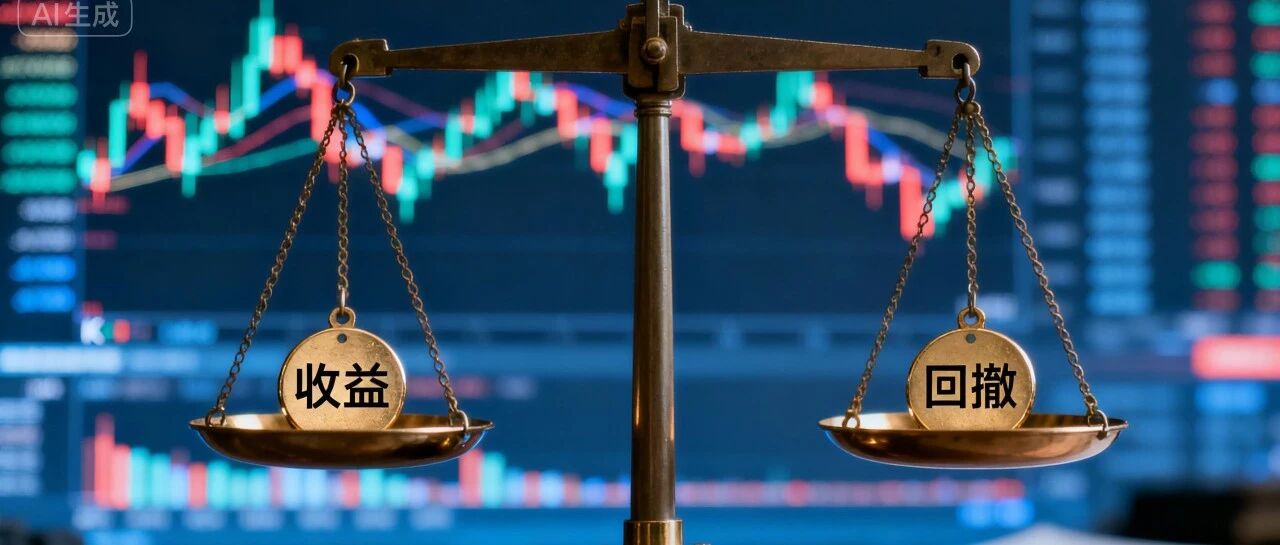
你能接受多少回撤,去换多少收益?
私募排排网· 2026-03-10 03:35
Core Viewpoint - The article discusses the performance of private equity products in China over the past five years, highlighting the challenges faced by fund managers and the limited number of products that achieved both an annualized return of over 10% and a maximum drawdown of under 20% [2][3]. Group 1: Private Equity Product Performance - Among 6110 products with performance data, only 262 products (4.29%) achieved an annualized return exceeding 10% while maintaining a maximum drawdown within 20% over the five-year period from February 2021 to February 2026 [2]. - In the category of subjective long-only products, only 83 out of 2445 (3.39%) met the same criteria, with 17 of these products belonging to Junzhijian Investment [3]. Group 2: Notable Products and Managers - Junzhijian Investment stands out as the only large private equity firm with 17 subjective long-only products that performed well over the past five years, managed by Zhang Youjun and Zhang Yichi [4]. - The "Junjijian Junxin" product achieved significant returns, although specific performance figures are not disclosed due to regulatory requirements [4]. - Other notable products include "Jiming Quantitative Trend A" managed by Ye Yonghao, which achieved an annualized return of ***% with a maximum drawdown of ***% [5]. Group 3: Quantitative Long-Only Products - Among 1069 quantitative long-only products, only 11 (1.03%) met the criteria of over 10% annualized return and under 20% maximum drawdown [6]. - Dragon Flag Technology's "Dragon Flag Superstar No. 1" is highlighted as a successful product in this category, with performance figures also withheld [9]. Group 4: CTA Strategy Products - A total of 45 CTA strategy products (7.18%) achieved an annualized return exceeding 10% while keeping maximum drawdown under 20% [10]. Group 5: Composite Strategy Products - There are 509 composite strategy products, with 36 (7.07%) meeting the performance criteria of over 10% annualized return and under 20% maximum drawdown [14]. - Notable firms in this category include Guoyuan Xinda and Jingan Investment, with specific products achieving significant returns [15]. Group 6: Macro Strategy Products - Among 292 macro strategy products, only 10 (3.42%) achieved the desired performance metrics [17]. - Ning Shui Capital's "Ning Shui New Regulation Phase I" is noted for its strong performance, managed by founder Deng Fei [18][19].
中泰期货晨会纪要-20260310
Zhong Tai Qi Huo· 2026-03-10 02:11
Report Industry Investment Rating No relevant content provided. Core Viewpoints of the Report - Market sentiment is significantly influenced by the US - Iran conflict, with potential risk preference recovery as the conflict intensity may decline. Attention should be paid to investment opportunities in IM/IC, while being cautious about chasing highs and selling lows [15][16]. - In the bond market, due to sensitivity to inflation and technical trends, short - and medium - term bonds are judged to be bearish [17]. - For various commodities, the supply - demand relationship, cost factors, and geopolitical events all have an impact on their prices and trends, and corresponding trading strategies are recommended for different commodities. Summary by Directory 1. Macro Information - US President Trump indicates that the war with Iran may end soon, and the G7 decides not to release strategic oil reserves for the time being [11]. - In February, CPI and PPI show different trends. CPI rises both month - on - month and year - on - year, while PPI rises month - on - month but declines year - on - year with a narrowing decline [11]. - OpenClaw AI agents are popular globally, and Tencent launches its AI agent WorkBuddy [11]. - Domestic refined oil prices are raised, and many small and medium - sized banks lower deposit interest rates [12]. - Russia and the US have a phone call to discuss the Middle East situation and the Ukraine issue [12]. - The energy price surge reshapes European interest rate trading, with changes in market expectations for central bank interest rate hikes [12]. - The White House is discussing sending troops to seize Iran's Kharg Island, and Saudi Aramco sells crude oil in the spot market through tender [13]. - Qatar Energy delays the commissioning of the North Field East expansion project due to the shutdown of a factory caused by an Iranian drone attack [13]. 2. Stock Index Futures - The short - term performance of IM/IC may be better than that of weighted stocks. As the US - Iran war intensity may decline, risk preference may recover, and attention should be paid to the repair opportunities of IM/IC [15][16]. 3. Treasury Bond Futures - The bond market is sensitive to inflation, and short - and medium - term bonds are judged to be bearish. The market is affected by inflation data, G7's decision on oil reserves, and the situation of the US - Iran war [17]. 4. Black Commodities 4.1. Steel and Iron Ore - The short - term rebound of black commodities is limited. The supply of steel mills is increasing slightly, and the demand for building materials is weak, while the demand for coils is acceptable. It is recommended to take profits on short - term long positions and hold short - straddle strategies [19][20]. 4.2. Coking Coal and Coke - The prices of coking coal and coke may fluctuate strongly in the short term and are expected to continue wide - range oscillations in the medium term. The market is affected by the US - Iran situation and downstream demand [21]. 4.3. Ferroalloys - For manganese silicon, short - term short - selling on rallies is recommended; for ferrosilicon, short - selling is recommended for intraday operations, while being wary of unexpected price increases [22]. 4.4. Soda Ash and Glass - It is recommended to wait and see. Soda ash supply is high, and attention should be paid to new production capacity and enterprise maintenance plans. Glass supply has cold - repair and ignition expectations, and attention should be paid to demand recovery [23]. 5. Non - ferrous Metals and New Materials 5.1. Copper - Copper prices may oscillate in the short term. High energy prices and concerns about economic stagflation put pressure on copper prices, but the substitution effect of refined copper rods may support prices [25]. 5.2. Zinc - Zinc prices are expected to be weak. Domestic zinc inventories are increasing, and the operating idea is to be bearish on oscillations and operate short positions cyclically [26][27]. 5.3. Lead - After taking profits on previous short positions, short positions can be arranged when the price rises. Lead inventories are increasing, and the delivery volume is expected to be large [28][29]. 5.4. Lithium Carbonate - Lithium carbonate prices may oscillate widely in the short term. Supply is increasing, and the short - term supply - demand situation is weakening, but long - term supply - demand is favorable [30]. 5.5. Industrial Silicon and Polysilicon - Industrial silicon oscillates, and attention should be paid to short - straddle option opportunities. Polysilicon oscillates weakly, and it is recommended to wait and see [31]. 6. Agricultural Products 6.1. Cotton - Cotton prices are high and oscillating. Attention should be paid to the actual demand in the "Golden March and Silver April" and the impact of external conflicts. The global cotton supply may decline in the future [36][37]. 6.2. Sugar - Sugar prices face pressure to rebound. There are differences in the global sugar supply situation, and domestic sugar has seasonal production pressure. The operation idea is to oscillate at high levels [38][39][40]. 6.3. Eggs - Egg prices may be strong in the short term, but the supply pressure is large. The futures contract may enter an oscillating pattern, and attention should be paid to inventory and elimination [41][42]. 6.4. Apples - High - quality apple prices may be strong, and the market is expected to be strong overall, showing a structural differentiation pattern [43]. 6.5. Corn - Be cautious about chasing high prices, and consider a 5 - 7 reverse spread strategy. Pay attention to supply pressure and low inventory support [44]. 6.6. Red Dates - Red dates are expected to oscillate weakly. The market has a high - inventory pattern, and the demand in the off - season needs to be observed [45]. 6.7. Pigs - Spot pig prices are under pressure, and the futures market is expected to oscillate at a low level. The market has a pattern of strong supply and weak demand [46]. 7. Energy and Chemicals 7.1. Crude Oil - The geopolitical premium of crude oil has significantly declined, but the US - Iran conflict has not ended. Attention should be paid to the resumption of navigation in the Strait of Hormuz [48][49]. 7.2. Fuel Oil - Fuel oil prices will follow oil prices and enter high - level fluctuations. Attention should be paid to the resumption of navigation in the Strait of Hormuz [50]. 7.3. Plastics - Polyolefin prices may be supported by geopolitical factors, but they may decline if the war eases. Be cautious about rebound risks and take a bullish view [51]. 7.4. Rubber - Be cautious in unilateral trading. Consider narrowing the spread between RU - NR and RU - BR, and pay attention to selling put options at low prices [52]. 7.5. Synthetic Rubber - Synthetic rubber prices are driven by costs, but be cautious about chasing high prices. Consider taking partial profits on the strategy of going long synthetic rubber and short natural rubber [53]. 7.6. Methanol - The supply and demand of methanol have slightly improved. Pay attention to the impact of the Middle East situation on Iranian methanol supply and the operation of downstream MTO plants [53][54]. 7.7. Caustic Soda - Caustic soda prices may oscillate widely. Overseas production decline increases potential export demand, but real - world transactions are not as active as in the futures market [55][56]. 7.8. Asphalt - Asphalt demand is in the off - season, and prices follow oil prices. Attention should be paid to the resumption of navigation in the Strait of Hormuz [57]. 7.9. PVC - PVC may oscillate strongly in the short term. Rising oil prices increase ethylene - based PVC costs, and the reduction of ethylene production may continue [58]. 7.10. Polyester Industry Chain - The short - term trend of the polyester chain is dominated by oil prices and market sentiment. Pay attention to device maintenance and demand recovery [59]. 7.11. Pulp - Pulp prices are affected by macro - sentiment and supply - demand factors. High inventory is a pressure, but there is support from overseas price increases. Pay attention to inventory and price increases of finished products [59]. 7.12. Logs - Log prices may oscillate upward. Demand is recovering, and inventory data is good. Pay attention to the impact of the US - Iran conflict and new delivery rules [61]. 7.13. Urea - Urea futures should be traded with a wide - range oscillation idea. The market is affected by industrial policies and the trend of energy and chemical futures [62].
大家都是牛市套上的
Datayes· 2026-03-09 13:05
Core Viewpoint - The appointment of Mojtaba Khamenei as Iran's new Supreme Leader is expected to strengthen the hardline faction's control over the country, leading to a surge in oil prices, which have already exceeded $100 per barrel [1][3]. Oil and Gas Industry - The new Supreme Leader, Mojtaba Khamenei, is closely associated with the Islamic Revolutionary Guard Corps, which plays a significant role in Iran's political, security, and economic systems [1]. - Analysts believe that the ongoing geopolitical tensions, particularly in the Middle East, will keep international oil prices at three-digit levels for an extended period [22]. - Reports indicate that Saudi Arabia has begun to cut oil production due to saturated storage facilities, which may further impact global oil supply [22]. - The G7 is considering a coordinated release of emergency oil reserves, with support from the U.S. and other nations, potentially releasing 300 to 400 million barrels of oil [3][15]. Economic Indicators - February's CPI in China rose to 1.3%, the highest in nearly three years, while the core CPI increased by 1.8%, marking the highest since March 2019 [12]. - The PPI decreased by 0.9% year-on-year but showed signs of recovery, with expectations that it may turn positive in March due to rising oil prices [12]. - Citigroup noted that a 10% increase in global oil prices contributes 1.15 percentage points to PPI and 0.23 percentage points to CPI, indicating the significant impact of oil prices on inflation metrics [12]. Stock Market Performance - A-shares showed resilience compared to other Asian markets, with the Nikkei 225 index down 5.2% and the Seoul Composite Index down 6% [7]. - The A-share market experienced a collective decline, with major indices falling, influenced by ongoing Middle Eastern conflicts and oil price fluctuations [15]. - The energy sector, particularly oil services and natural gas stocks, saw significant gains in early trading due to rising oil prices [15]. OpenClaw and Technology Sector - The OpenClaw service has gained traction, with various models being integrated into popular communication platforms, indicating a growing interest in AI applications [23]. - The "养龙虾" (raising lobsters) trend related to OpenClaw has attracted considerable public interest, with many inquiries for policy support from local authorities [23].


日韩股市跌超5%,A股OpenClaw带飞算力股,港股迅策大涨40%
21世纪经济报道· 2026-03-09 07:45
Core Viewpoint - The article discusses the significant impact of surging oil prices on global stock markets, particularly highlighting the declines in Asian markets and the performance of various sectors in response to these fluctuations. Market Performance - On March 9, Asian stock markets experienced widespread declines, with Japan's Nikkei 225 index dropping over 2800 points and South Korea's KOSPI index hitting a circuit breaker. The A-shares and Hong Kong stocks saw a brief recovery, with the Shanghai Composite Index falling below 4100 points [1][2]. - By the end of the trading day, the A-share indices narrowed their losses to within 1%, with over 3900 stocks declining across the market [2]. Index Data - The closing figures for major indices were as follows: - Shanghai Composite Index: 4096.60, down 0.67% - Shenzhen Component Index: 14067.50, down 0.74% - Sci-Tech Innovation Board Index: 1739.00, down 1.41% - Total A-shares: 6726.30, down 0.84% [3]. Sector Performance - The afternoon session saw a rise in the OpenClaw concept and computing power leasing sectors, with companies like Qingyun Technology and Shunwang Technology hitting the daily limit up [3]. - The electric power sector was notably active, with companies such as Shaanxi Energy and Silver Star Energy reaching their daily limit up. Conversely, oil stocks saw a significant pullback, with China National Offshore Oil Corporation and Sinopec experiencing reduced gains [4]. - The shipping and port sector continued to decline, with China Merchants Energy dropping over 9% [4]. Notable Company Movements - The AI model concept saw a surge in Hong Kong stocks, with companies like XunCe experiencing a 40% increase in stock price, driven by a forecasted revenue of approximately 1.283 billion yuan, a year-on-year growth of 102.95% [5][6]. - In the oil and gas equipment sector, Shandong Molong saw a 21% increase, while Sinopec Oilfield Services rose by 3% after earlier gains of 36% [7]. - The new energy vehicle sector showed resilience, with stocks like XPeng Motors and BYD recovering slightly, indicating less sensitivity to oil price fluctuations [7].