国产算力

Search documents
策略快评:2025年10月各行业金股推荐汇总
Guoxin Securities· 2025-09-29 01:32
Core Insights - The report provides a summary of recommended stocks across various industries for October 2025, highlighting key investment logic for each stock [2]. Industry Summaries Electronics - Aojie Technology (688220.SH) is recommended due to its dual capabilities in connectivity and processing, benefiting from the AI trend in edge computing. The company has a strong presence in 2-5G cellular communication and various mainstream communication protocols [2]. Telecommunications - ZTE Corporation (000063.SZ) is identified as a leading telecommunications equipment provider, poised to benefit from the development of domestic computing power and possesses self-controlled chip capabilities [2]. Power Equipment and New Energy - Goldwind Technology (002202.SZ) is noted for its leadership in wind turbines, with a strategy that enhances profitability and a growing order book. The company is expected to see improved margins due to rising wind turbine bid prices and a recovery in wind farm transfer business [2]. - Sungrow Power Supply (300274.SZ) is highlighted as a leader in photovoltaic inverters and energy storage systems, with significant demand in overseas markets and a focus on integrated solutions for solar power generation and energy storage [2]. Real Estate and Construction - Shenghui Integrated (603163.SH) is recognized for its cleanroom engineering services, with a strong position in the global market outside Taiwan, particularly in potential collaborations with major clients like TSMC [2]. Automotive - XPeng Motors (9868.HK) is projected to increase its revenue significantly over the next few years, with a focus on high-end autonomous driving models and a positive outlook on profitability despite current losses [2]. Metals and Materials - Minmetals Resources (1208.HK) is expected to see a 50% increase in copper production from 2024 to 2029, with significant cost reduction potential from ongoing expansions [2]. Internet - Alibaba Group (9988.HK) is positioned as a full-stack AI service provider, with a focus on enhancing its cloud computing market share and maintaining steady growth in its e-commerce business [2]. Pharmaceuticals - Nanwei Medical (688029.SH) is anticipated to benefit from the domestic medical device procurement reforms and is expected to show strong growth in overseas markets [2]. Food and Beverage - Babbi Foods (605338.SH) is expected to improve its store efficiency through new product offerings and strategic acquisitions, with a positive trend in management confidence reflected in recent executive stock purchases [2].





申万宏源研究晨会报告-20250929
Shenwan Hongyuan Securities· 2025-09-29 00:12
Core Insights - The report highlights the significant advantages of ASIC over GPU in terms of cost-effectiveness and energy efficiency, marking a turning point for ASIC development [2][12] - The increasing penetration of AI is driving a surge in inference demand, expanding the market space for ASICs [3][12] - Domestic cloud providers are making strides in self-developed ASICs, indicating a strong demand in the Chinese AI cloud market [12][13] Summary by Sections ASIC vs. GPU - ASICs are specialized chips tightly coupled with downstream applications, focusing on specific needs like text and video inference, while GPUs are general-purpose chips covering a broader range of applications [2][12] - The energy efficiency of Google's TPU v5 is 1.46 times that of NVIDIA's H200, and Amazon's Trainium2 reduces training costs by 40% compared to GPU solutions [2][12] Market Growth and Demand - The global AI ASIC market is projected to reach $125 billion by 2028, with significant contributions from major clients [3][12] - The demand for inference computing is directly linked to throughput, with ChatGPT's weekly active users reaching 700 million by July 2025, driving the need for increased computational power [3][12] ASIC Design Services - ASIC design requires a high level of specialization, with major service providers like Broadcom and Marvell leading the market [3][12] - Broadcom's collaboration with Google on TPU has been pivotal, leveraging a comprehensive IP system and advanced packaging technologies [3][12] Domestic Developments - Leading Chinese cloud providers are achieving results in self-developed ASICs, with significant orders and advancements in technology [12][13] - The trends of PD separation and super nodes are emerging as key developments in the domestic ASIC landscape [12][13] Industry Outlook - The report anticipates a robust growth trajectory for the ASIC market, driven by increasing AI applications and domestic innovation [12][13]
华泰证券:适度向低位板块做切换 10月将迎来政策及业绩布局窗口期
Di Yi Cai Jing· 2025-09-28 23:39
Core Viewpoint - The A-share market has entered an upward platform period, with investor sentiment leaning towards risk aversion before the holiday, but a potential recovery in trading willingness post-holiday due to reduced macro uncertainties [1] Market Analysis - The market is expected to experience a period of low-volume fluctuations as the positive feedback from capital continues and the fundamentals improve [1] - After the holiday, there is a window for policy and performance layout as investor trading willingness is likely to recover [1] Investment Strategy - Investors are advised to make slight adjustments to their positions, focusing on low-position sectors such as Hong Kong technology, domestic computing power, and robotics [1] - The report highlights the importance of sectors benefiting from "anti-involution," including chemicals, batteries, and leading consumer goods companies [1]

阿里云栖大会观展反馈
2025-09-28 14:57
Summary of Key Points from Conference Call Records Industry Overview - The conference call primarily discusses the developments in the domestic computing power industry, particularly focusing on AI hardware and data center infrastructure in China, with significant contributions from companies like Alibaba, Huawei, and ByteDance [1][2][3]. Core Insights and Arguments - **Domestic Computing Power Commercialization**: A commercial closed loop for domestic computing power is expected to form and strengthen by October 2024, driven by advancements in AI models and breakthroughs in chip technology from companies like Huawei and Cambricon [1][3]. - **Data Center Growth**: Alibaba's data center capacity is projected to reach 10 times its 2022 levels by 2032, with annual additions of 6-7 GW [1][4]. - **AI Hardware Ecosystem**: The domestic AI hardware ecosystem is rapidly developing, with companies like ZTE and ByteDance entering the chip market, indicating strong demand for training and inference models [1][6]. - **Token Consumption**: ByteDance's token consumption has surpassed that of Google, highlighting a significant increase in demand for AI applications [4]. - **Profitability Improvements**: Companies in the domestic computing power sector, such as Huafeng and Ruijie Networks, have shown notable improvements in gross and net profit margins [22]. Important Developments - **Technological Innovations**: Alibaba's new Cube 5.0 data center design emphasizes rapid delivery and compatibility with future technologies, including both air and liquid cooling systems [16][17]. - **Interconnect Protocols**: The introduction of open interconnect protocols by Alibaba, Huawei, and Haiguang facilitates better integration among GPU and switch chip companies, enhancing overall system efficiency [5][9]. - **Liquid Cooling Demand**: There is a significant increase in demand for liquid cooling technologies, with many companies participating in various cooling components [11][26]. - **AI Server Cooling Technologies**: New materials like liquid metal and graphene are being explored for AI server cooling, with Alibaba adopting liquid metal solutions to manage high power outputs [18]. Additional Noteworthy Content - **Market Trends**: The global computing power market has experienced significant fluctuations, with domestic computing power previously facing challenges such as limited capital expenditure and restrictions on high-quality model training due to chip bans [2]. - **Future Infrastructure Needs**: The demand for data center infrastructure is expected to rise, with Alibaba planning to increase its energy consumption tenfold by 2032, indicating a positive outlook for the industry [19][20]. - **Emerging Competitors**: The domestic computing power landscape is evolving, with companies developing their own GPUs and launching new products, reflecting a shift towards self-sufficiency in technology [21]. This summary encapsulates the key points discussed in the conference call, highlighting the advancements and trends within the domestic computing power industry and the strategic moves by leading companies.

沐曦摩尔上市加快,国产算力加速腾飞
2025-09-28 14:57
Summary of Key Points from Conference Call Industry Overview - The conference call discusses the advancements in the domestic computing power industry, particularly focusing on companies like Huawei, Alibaba, and domestic GPU manufacturers such as Moer Technology and Muxi Semiconductor [1][2]. Core Insights and Arguments - **Huawei's Progress**: Huawei has made significant advancements in single-card performance optimization and large-scale cluster core technologies, launching new Ascend chip series (950, 960, 970) and achieving breakthroughs in cluster solutions [2]. - **Alibaba's Investment**: Alibaba announced a three-year investment of 380 billion RMB in AI technology, predicting a tenfold increase in data center power consumption over the next decade [1][2]. - **IPO Developments**: Moer Technology has passed the Shanghai Stock Exchange's listing review and is expected to be listed between late November and early December 2025. Muxi Semiconductor is also progressing towards its IPO, with a potential listing by the end of 2025 or early 2026 [1][4]. - **Muxi Semiconductor's C500 Chip**: The C500 chip, aimed at government-led intelligent computing center projects, is expected to see a price drop to 40,000-45,000 RMB due to bulk purchases from major clients [1][5]. - **Order Book**: As of early September 2025, Muxi has secured orders totaling 1.43 billion RMB, primarily for the C500 series [6][7]. Additional Important Content - **Product Development**: Muxi's C500 chip is currently in mass production and is expected to remain a primary revenue source through 2026. The company is also developing the Nebula C600 and C700 chips, with the latter aimed at competing with NVIDIA's H100 [8][9]. - **Market Expansion**: Muxi is actively pursuing partnerships with internet companies and telecom operators, having entered the procurement shortlist of China Telecom and engaging with other major telecom operators [7][8]. - **Moer Technology's Product Line**: Moer has launched four GPU products, covering a complete intelligent computing solution from chips to clusters, and has developed its own MUSA architecture to compete with NVIDIA's CUDA ecosystem [10]. - **Beneficiaries of Muxi's IPO**: Companies in the domestic GPU supply chain, including Chipone Microelectronics, Kehua Data, and SMIC, are expected to benefit from Muxi's accelerated IPO process [11]. - **Challenges in AI Industry**: The domestic AI industry faces challenges due to overseas foundry risks, particularly from U.S. sanctions affecting companies like TSMC and Samsung [13]. - **Advancements in Chip Manufacturing**: Domestic companies are advancing in chip manufacturing and packaging, with plans to expand to 7nm processes by the end of the year [14]. - **Growth of Domestic HBM Market**: Muxi's procurement of HBM has increased to 50% in 2025, up from 30% in 2024, driven by U.S. restrictions and the urgent need for domestic capabilities [15]. - **Collaborations**: Muxi is collaborating with companies like Guanghuan New Network to build AIGC computing networks, enhancing overall computing power and service quality [16]. - **Role of Key Players**: Companies like ChaoXun Communication and Kehua Data are positioned to benefit significantly from Muxi's developments, with expected substantial increases in their order volumes [17]. Future Outlook - The domestic computing power market is expected to accelerate its growth, particularly as NVIDIA faces ongoing restrictions, creating opportunities for domestic companies to capture market share [19][20].
中信建投:股民应该持有科技股过节吗?
Xin Lang Cai Jing· 2025-09-28 14:49
Group 1 - Alibaba announced a "three-year 380 billion yuan AI infrastructure construction plan" and a plan to "increase global data center energy efficiency by 10 times by 2032," reinforcing the long-term logic of domestic computing power investment [1] - During the economic recovery, China aims to maintain reasonable growth in key industries while focusing on structural optimization and efficiency improvement [1] - Plans for the electronic information, automotive, power equipment, light industry, steel, and building materials sectors have been rolled out, with continued attention on the progress of anti-involution [1] Group 2 - Rare earth prices continued to stabilize this week, and food delivery subsidies have decreased, leading to ongoing recommendations for the rare earth and internet sectors [1]

中科曙光(603019):打造中国星际之门,夯实国产算力核心地位:——中科曙光(603019):公司点评
Guohai Securities· 2025-09-28 04:33
Investment Rating - The report maintains a "Buy" rating for the company [1] Core Insights - The "Star Gate" project in China is emerging, indicating a gradual realization of a closed-loop industry for domestic computing power. The Yangtze River Delta hub in Wuhu has successfully integrated four national-level computing platforms and six data centers, including the Jiangsu Zhixin (Zhongke Shuguang Intelligent Computing Center) [9][10] - The domestic intelligent computing power is steadily increasing, projected to rise from 3% in 2016 to 35% by 2025. Over 250 intelligent computing centers are currently built or under construction in China [10] - The demand for computing power from internet clients is continuously rising, with an accelerated adoption of domestic AI chips. Major companies like Alibaba and Tencent are significantly increasing their investments in AI infrastructure [11][13] Financial Performance and Projections - The company is expected to achieve revenues of 156.63 billion, 218.04 billion, and 285.72 billion yuan for the years 2025, 2026, and 2027 respectively, with net profits of 28.43 billion, 40.98 billion, and 58.02 billion yuan for the same years [14][15] - The earnings per share (EPS) are projected to be 1.94, 2.80, and 3.97 yuan for 2025, 2026, and 2027 respectively, with corresponding price-to-earnings (P/E) ratios of 61.98, 43.01, and 30.37 [14][15] Market Position and Competitive Advantage - The company is building a comprehensive competitive advantage in the domestic computing power sector through national-level project orders, regional penetration, and the implementation of proprietary technologies [14] - The launch of the Shuguang AI supercluster system marks a significant advancement, capable of supporting extensive AI computing needs with high efficiency [13][14]

阿里上调资本开支,2032年AIDC功耗将增长10倍,看好国产AI提速发展 | 投研报告
Zhong Guo Neng Yuan Wang· 2025-09-28 03:14
Core Insights - The article highlights significant advancements in AI infrastructure and capabilities by major companies, particularly Alibaba, which is increasing its capital expenditure in AI and enhancing its data center efficiency [2][4]. Group 1: AI Infrastructure Developments - Alibaba has announced the launch of the磐久AI Infra2.0128 card super-node AI server, which supports multiple AI chips and integrates self-developed CIPU2.0 chips and high-performance network cards, achieving up to Pb/s scale-up bandwidth and ultra-low latency [3]. - The new high-performance network HPN8.0 has been introduced, featuring an integrated training and inference architecture, with storage network bandwidth increased to 800Gbps and GPU interconnect bandwidth reaching 6.4Tbps, enabling efficient interconnection for large-scale AI training [3]. Group 2: AI Model Enhancements - Alibaba has released seven new large models, including the flagship Qwen3-Max, which boasts a pre-training data volume of 36T and over one trillion parameters, outperforming competitors like GPT-5 and Claude Opus 4 [4]. - The next-generation model architecture Qwen3-Next has been introduced, which significantly reduces training costs by over 90% compared to denser models while enhancing long-text reasoning throughput by more than ten times [4]. Group 3: Industry Outlook - The ongoing investment in AI infrastructure and model development is expected to benefit the domestic computing power industry chain, with a positive outlook on the development of domestic AI large models and applications [2][5]. - Companies such as ZTE, Invec, and Unisplendour are highlighted as potential investment targets within the computing power sector [6].
摩尔线程88天过会,手握20亿订单,毛利率飙至70%
2 1 Shi Ji Jing Ji Bao Dao· 2025-09-27 09:24
Core Viewpoint - The IPO process for domestic GPU chip companies is accelerating, with Moore Threads successfully entering the review stage shortly after filing its prospectus, while Muxi Co. is also progressing through inquiries, indicating a growing market for AI computing products [1][3]. Financial Performance - Moore Threads is projected to achieve significant revenue growth in 2024, with expected revenues of 438 million yuan, and a continued reduction in net losses to 1.492 billion yuan. By the first half of 2025, revenues are anticipated to reach 702 million yuan, marking a 238.71% year-on-year increase and a 203.44% quarter-on-quarter increase, with net losses improving to 271 million yuan, a decrease of 56.02% year-on-year and 69.07% quarter-on-quarter [4][5][6]. Revenue Structure - In 2023, Moore Threads' core revenue primarily came from professional graphics acceleration products, with major clients including Baidu and JD.com. By 2025, AI computing products are expected to account for nearly 80% of revenue, reflecting a 218.19% increase [6][7]. Product Development - Moore Threads has released several generations of GPU architecture, with the latest, "Pinghu," aimed at AI computing. The company has seen a significant improvement in gross margins, from -70.08% in 2022 to 70.71% in 2024, driven by higher performance and pricing of newer products [7][8]. Market Expansion - The customer base for Moore Threads has shifted from early markets to AI computing centers and enterprises, with ongoing negotiations for contracts exceeding 1.7 billion yuan in the AI computing sector, indicating a strong demand for domestic chips [11][12]. Industry Trends - The domestic AI chip industry is witnessing rapid growth, with companies like Moore Threads and Muxi Co. leading the charge. The market is increasingly focused on AI computing, with significant orders and contracts expected to drive future revenues [10][18]. Ecosystem Development - The establishment of collaborative ecosystems is crucial for the growth of domestic AI chip manufacturers. Initiatives like the OISA ecosystem and partnerships with major telecom operators are aimed at enhancing interoperability and performance of AI chips [16][17].

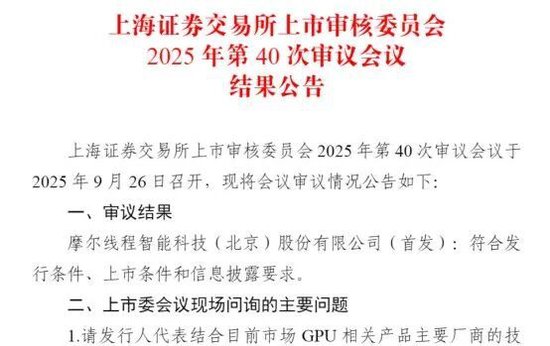
摩尔线程88天过会,手握20亿订单,毛利率飙至70%
21世纪经济报道· 2025-09-27 09:21
Core Viewpoint - The article highlights the rapid acceleration of the IPO process for domestic GPU chip companies, particularly focusing on Moore Threads and Muxi Co., which are expected to see significant revenue growth in 2024 and beyond, driven by the increasing demand for AI computing products and services [3][5][20]. Financial Performance - Moore Threads is projected to achieve a substantial revenue increase in 2024, with expected revenues of 438 million yuan, and a continued improvement in net losses, which are anticipated to decrease to 271 million yuan in the first half of 2025, reflecting a year-on-year decline of 56.02% [5][6]. - Muxi Co. is expected to report a staggering 1354.9% year-on-year revenue growth in 2024, reaching 742 million yuan, although it will still face significant net losses of 1.409 billion yuan [9][12]. Market Dynamics - Both companies are experiencing a shift in their customer base from traditional sectors to AI computing centers and major internet companies, indicating a broader market acceptance of domestic AI chips [8][15]. - The domestic AI chip industry is witnessing a collaborative ecosystem being built, with companies like Moore Threads and Muxi Co. contributing significantly to the development of AI computing capabilities [18][20]. Product Development and Innovation - Moore Threads has introduced several generations of GPU architecture, with the latest "Pinghu" chip expected to enhance performance significantly, contributing to a projected gross margin increase from -70.08% in 2022 to 70.71% in 2024 [7][8]. - Muxi Co. is focusing on its training and inference series, with GPU boards accounting for 68.99% of its total revenue in 2024, indicating a strong market position in AI chip solutions [9][12]. Order Backlog and Future Prospects - Moore Threads has a substantial order pipeline, with over 1.7 billion yuan in project contracts under negotiation, expected to be fulfilled in the first half of 2025 [13][14]. - Muxi Co. has reported an order backlog of 1.43 billion yuan, primarily from its Xiyun C500 series boards, with significant contributions from repeat orders and new clients [14][15]. Industry Collaboration and Standards - The article discusses the importance of industry collaboration, with initiatives like the OISA ecosystem being developed to enhance interoperability and performance of AI chips, which is crucial for the future of AI infrastructure in China [18][19]. - Both companies are actively participating in standard-setting and ecosystem-building efforts, which are essential for the growth and competitiveness of the domestic AI chip industry [19][20].