
核心CPI

Search documents
6月23日电,新加坡5月份核心CPI同比增长0.6%,预估0.6%。
news flash· 2025-06-23 05:01
智通财经6月23日电,新加坡5月份核心CPI同比增长0.6%,预估0.6%。 ...
加拿大央行行长麦克勒姆:核心CPI已超过2%,但可能“略低于3%”。
news flash· 2025-06-18 17:23
加拿大央行行长麦克勒姆:核心CPI已超过2%,但可能"略低于3%"。 ...
加拿大央行行长麦克勒姆称,核心CPI上升可能反映了与关税相关的成本增加。
news flash· 2025-06-18 15:18
加拿大央行行长麦克勒姆称,核心CPI上升可能反映了与关税相关的成本增加。 ...
加拿大央行行长麦克勒姆:核心CPI上升可能反映了与关税相关的成本增加。
news flash· 2025-06-18 15:16
加拿大央行行长麦克勒姆:核心CPI上升可能反映了与关税相关的成本增加。 ...
法兴银行:日本央行将按兵不动 并将从明年4月开始放慢量化紧缩步伐
news flash· 2025-06-17 01:26
金十数据6月17日讯,法兴银行预计日本央行6月可能会保持利率不变,且在近期超长期日本国债遭遇抛 售之际,日本央行将从明年4月开始放慢量化紧缩的步伐。日本的核心CPl可能在非新鲜食品和服务价格 上涨的推动下加速增长。 法兴银行:日本央行将按兵不动 并将从明年4月开始放慢量化紧缩步伐 ...

国家统计局:CPI积极变化在累积
Zhong Guo Xin Wen Wang· 2025-06-16 07:20
Group 1 - The core viewpoint is that despite a slight decline in China's Consumer Price Index (CPI) in May, the economy is maintaining stable operation, and the effects of policies to boost consumption are becoming evident [1][2] - In May, China's CPI decreased by 0.1% year-on-year and 0.2% month-on-month, primarily influenced by international import factors and falling food prices [1] - Energy prices in the CPI fell by 6.1% year-on-year in May, with the decline expanding by 1.3 percentage points compared to the previous month, contributing approximately 0.47 percentage points to the overall CPI decline [1] Group 2 - The core CPI, which excludes food and energy prices, increased by 0.6% year-on-year in May, reflecting a gradual strengthening of domestic demand's impact on prices [2] - The policy of replacing old consumer goods with new ones has boosted the prices of related industrial consumer goods, with prices excluding energy rising by 0.6% year-on-year in May [2] - Prices for durable consumer goods, such as mobile phones and computers, increased by 1.8%, while service prices rose by 0.5% year-on-year, driven by holiday demand and expanding educational and cultural needs [2]
国家统计局:提振消费等政策效应显现 CPI的积极变化在累积
Sou Hu Cai Jing· 2025-06-16 03:32
Economic Overview - In May, the Consumer Price Index (CPI) experienced a slight year-on-year decline of 0.1% and a month-on-month decrease of 0.2%, indicating stable economic performance despite the drop [1][2] - The decline in CPI was primarily influenced by international input factors and falling food prices, with energy prices being a significant contributor [1][2] Energy Prices - International energy prices decreased, leading to a reduction in domestic prices for gasoline and related consumer goods. The energy prices in the CPI fell by 1.7% month-on-month, contributing approximately 0.13 percentage points to the overall CPI decline [1] - Year-on-year, energy prices dropped by 6.1%, impacting the CPI by about 0.47 percentage points [1] Food Prices - The availability of fresh food items, such as vegetables and poultry, increased, resulting in a decline in food prices. Month-on-month, food prices fell by 0.2%, contributing around 0.04 percentage points to the CPI decrease [2] - Year-on-year, food prices decreased by 0.4%, with a more significant decline compared to the previous month [2] Core CPI and Industrial Prices - The core CPI, which excludes food and energy, rose by 0.6% year-on-year, reflecting a gradual strengthening of domestic demand [2][3] - Prices of industrial consumer goods, excluding energy, also increased by 0.6% year-on-year, with notable price rises in entertainment durable goods like mobile phones and computers, which saw a 1.8% increase [2] Service Prices - Service prices increased by 0.5% year-on-year, driven by holiday demand and a rise in educational and cultural services. Notable increases included airfare and tourism prices, which rose by 1.2% and 0.9%, respectively [3] - Prices for household and educational services also saw increases of 1.7% and 1.2% [3] Policy Implications - The current price situation requires a comprehensive perspective, recognizing the positive effects of policies aimed at expanding domestic demand and promoting reasonable price recovery [3] - Future strategies should focus on balancing domestic demand expansion with supply-side structural reforms to improve market price order and enhance supply-demand relationships [3]
东吴证券晨会纪要-20250616
Soochow Securities· 2025-06-16 02:31
Macro Strategy - The report discusses the shift in policy focus from "controlling high prices" to "controlling low prices" to boost core CPI, suggesting that service price subsidies could increase core CPI by approximately 0.3 percentage points, offsetting declines in housing service prices [1][10][11] - Core CPI has shown a significant rebound since September of the previous year, despite four months of negative growth driven mainly by food and energy prices [10][11] - The report emphasizes the limited upward potential for core goods and housing service prices, indicating that future policy should focus on enhancing prices of other services [10][11] Industry Insights - The report highlights the new phase of controllable nuclear fusion as a potential ultimate energy solution, driven by policy and capital support, with multiple devices under construction [5][16][17] - It identifies key suppliers in the nuclear fusion sector, including West Superconducting, Lianchuang Optoelectronics, and Aikesaibo, suggesting that the industry is moving from experimental to industrial stages with significant future potential [5][16][17] - The report also discusses the trend towards lightweight robots, emphasizing the increasing application of magnesium alloys and PEEK materials, which are expected to enhance performance and reduce weight in humanoid robots [18]


如何做好“管低价”,补贴服务消费或是政策选项之一
Sou Hu Cai Jing· 2025-06-16 01:16
Core Insights - The People's Bank of China is shifting its price control strategy from managing high prices to managing low prices, focusing on stabilizing the "old-for-new" consumption policy in the short term and promoting service consumption in the long term [1] - The Consumer Price Index (CPI) has shown negative growth for four consecutive months, primarily due to food and energy prices, while the core CPI has rebounded significantly since October last year, indicating a more stable economic supply-demand relationship [1][2] - Analysts emphasize the importance of maintaining the stability of the "old-for-new" policy to boost core CPI, alongside direct subsidies to stimulate demand and regulate industry pricing [4][5] Price Trends - Home appliance prices have improved from a year-on-year decline of -3.3% in October 2024 to -0.2% in May 2025, while transportation tools and communication tools have also shown recovery in price growth [2] - Residential prices have remained stable with minimal fluctuations, while other service prices continue to be a drag on the overall CPI [4] Future Outlook - Analysts predict that boosting core CPI will require further recovery in the real estate market and increased direct subsidies to demand, rather than solely focusing on housing prices [4][5] - The "old-for-new" policy is seen as a critical lever for maintaining price stability, with suggestions to expand subsidy coverage to service sectors like home services and education to stimulate consumption [5][6] - Long-term strategies should include "new supply-side reforms" to enhance the proportion of final consumption expenditure in GDP, alongside measures to improve social security standards and reduce household burdens [6][7]

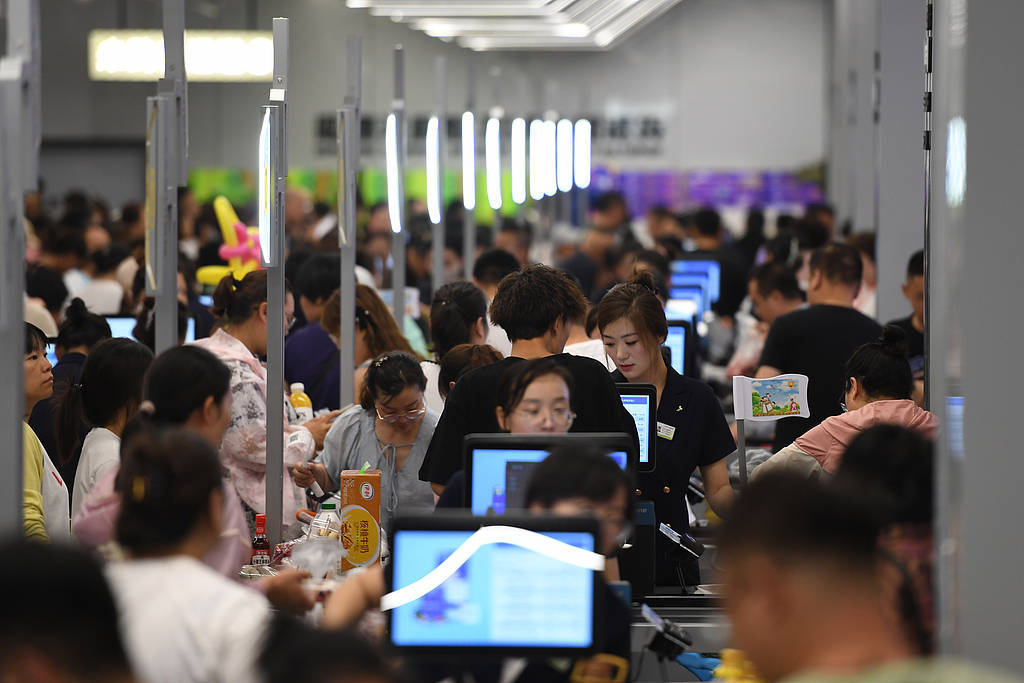
部分领域供需关系有所改善 价格呈现积极变化
Zhong Guo Chan Ye Jing Ji Xin Xi Wang· 2025-06-13 00:13
Group 1: CPI Analysis - In May, the core CPI excluding food and energy prices increased by 0.6% year-on-year, with the growth rate expanding by 0.1 percentage points compared to the previous month [1][3][4] - The overall CPI decreased by 0.1% year-on-year and fell by 0.2% month-on-month, with food and beverage prices contributing a 0.02 percentage point increase to the CPI [2][5] - The decline in energy prices, which fell by 6.1% year-on-year, was a significant factor in the overall CPI decrease, accounting for approximately 0.47 percentage points of the decline [2][6] Group 2: PPI Analysis - The PPI decreased by 3.3% year-on-year in May, with the decline rate widening by 0.6 percentage points compared to the previous month, while the month-on-month decline remained at 0.4% [5][6] - The decrease in PPI was influenced by international factors, including a drop in global oil prices, which affected domestic prices in related industries [6][7] - Certain sectors, such as high-end equipment manufacturing, saw price increases due to the growth of new consumption dynamics and policy effects, indicating a mixed performance across industries [6][7] Group 3: Consumer Behavior and Market Trends - The increase in core CPI is attributed to a recovery in consumer demand, driven by holiday consumption and previous consumption stimulus policies [3][4] - Prices for gold jewelry, home textiles, and durable consumer goods showed significant year-on-year increases of 40.1%, 1.9%, and 1.8% respectively, indicating positive changes in consumer spending [4][6] - The service sector also experienced a year-on-year price increase of 0.5%, with transportation rental fees, airfare, and tourism prices turning from decline to growth [4][6]