
数字化转型

Search documents
站稳1.3万亿位阶,西安2025年民用无人机增长78.5%
2 1 Shi Ji Jing Ji Bao Dao· 2026-01-31 08:09
Core Viewpoint - Xi'an's GDP reached 1.39 trillion yuan in 2025, reflecting a stable growth rate of 4.7% year-on-year, achieved through structural optimization and energy transformation rather than explosive growth [1] Economic Performance - The primary industry added value was 33.28 billion yuan, growing by 3.6% - The secondary industry added value was 397.04 billion yuan, growing by 4.8% - The tertiary industry added value was 959.95 billion yuan, growing by 4.6% [1] Industrial Growth - Xi'an's industrial output value for large-scale industries increased by 5.7% in 2025, with manufacturing growing by 5.5% - New driving forces emerged, with total output value of nine major industrial chains, including passenger vehicles and smart connected vehicles, growing by 14.0% - Notable increases in production included mobile communication base station equipment (up 279.1%), civilian drones (up 78.5%), and 3D printing equipment (up 71.3%) [3][4] Trade and Export - Xi'an's total import and export value reached 498.79 billion yuan, a significant increase of 21.1%, with exports growing by 25.8% - Electric passenger vehicle exports surged by 66.1%, and the share of electromechanical and high-tech product exports continued to rise [4] Investment Trends - Fixed asset investment in Xi'an decreased by 15.3%, with manufacturing investment growing by 4.9%, high-tech manufacturing investment by 15.4%, and investment in scientific research and technical services by 20.3% - A significant decline in infrastructure investment by 56.3% indicates a shift from infrastructure-driven development to industry-driven growth [5][6] Consumer Market - The total retail sales of consumer goods reached 572.12 billion yuan, growing by 5.3%, driven by policies promoting the replacement of old products - Online retail continued to thrive, indicating a successful digital transformation in commerce - Financial markets remained stable, with a year-on-year growth of over 7% in both deposits and loans, particularly a 23.2% increase in medium to long-term loans for the manufacturing sector [7]


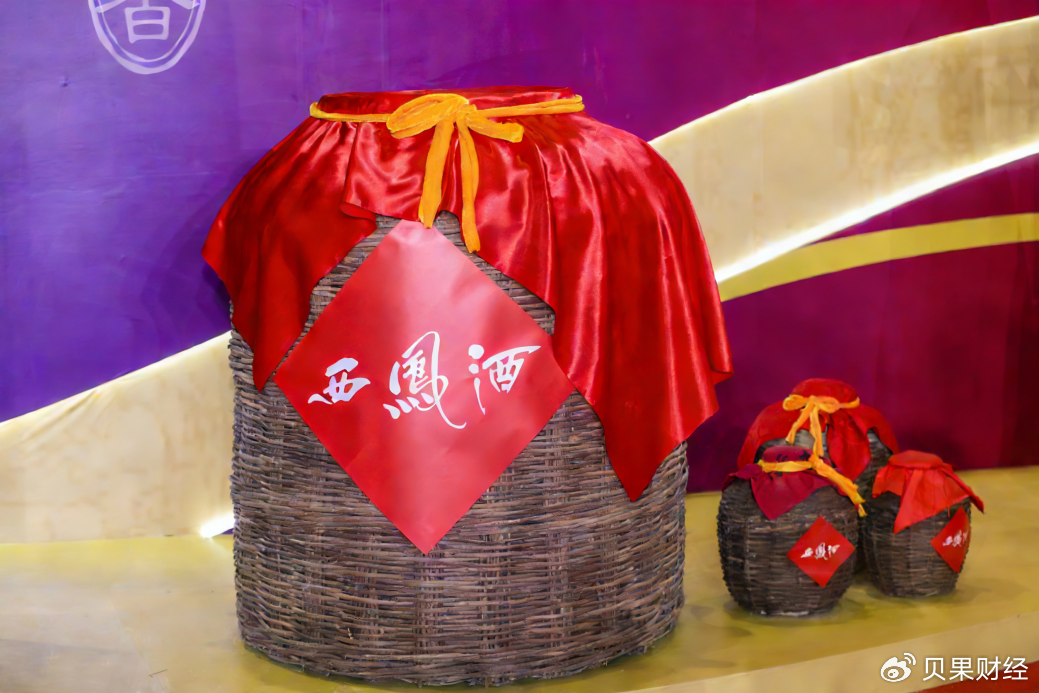
西凤酒2025:与经销商协同书写复兴答卷,共酿凤香市场新价值
Xin Lang Cai Jing· 2026-01-31 06:04
Core Insights - The article highlights the evolution and resilience of Xifeng Liquor in the competitive Chinese liquor market, emphasizing its continuous growth in the Fengxiang flavor category despite industry challenges [1][3]. Group 1: Brand Strategy and Product Focus - Xifeng Liquor has shifted its strategy by discontinuing all OEM product plans since 2021, focusing on core products and reducing redundant product lines, with over 170 product barcodes eliminated in 2024 alone [3]. - The company has established a comprehensive quality control system from raw material cultivation to production, creating a clear product hierarchy that includes high-end, mid-range, and mass-market offerings [3]. Group 2: Channel Development and Partnerships - Xifeng Liquor is building a "community of shared destiny" with its distributors, providing market support policies and maintaining market order to protect their interests [5]. - The company has implemented a digital platform, "Fengxianghui," to empower traditional distributors, significantly reducing inventory turnover days and enhancing operational efficiency [5]. Group 3: Global Expansion and Cultural Integration - Xifeng Liquor has registered its brand in 18 countries and regions, exporting products to over 30 countries, integrating its offerings into local dining habits [6]. - The company aims to combine Chinese liquor drinking culture with local customs, emphasizing cultural value transmission rather than just product sales [6]. Group 4: Long-term Vision and Market Positioning - The company is focused on building product strength, channel capability, and brand power, positioning itself as a long-term player in the market rather than seeking immediate growth [6]. - Xifeng Liquor has established a symbiotic relationship between brand and channel, aiming for steady progress rather than rapid expansion [6].
宝马集团人事调整:柯睿辰将接替高翔出任大中华区总裁兼首席执行官
Xin Lang Cai Jing· 2026-01-31 02:01
Core Viewpoint - BMW Group announced a senior management change in Greater China, with Kai Reichenbach set to replace Gao Xiang as President and CEO starting April 1, 2026 [1][4] Group 1: Management Transition - Gao Xiang has over 30 years of experience in sales and marketing within BMW Group, playing a key role in the company's electrification and digital transformation during his 12 years in China [3][6] - After completing his term in China, Gao Xiang will continue to hold an important position within BMW Group [3][6] - Kai Reichenbach will take full responsibility for BMW Group's operations in Greater China, including coordination of joint ventures in the region [3][6] Group 2: Kai Reichenbach's Background - Reichenbach joined BMW Group in 1998 and has held several significant management positions within the sales structure [3][6] - From 2010 to 2018, he was responsible for the MINI brand's operations in the German market [3][6] - He served as the sales head for BMW Group in the German market from 2018 to 2021 and has been overseeing sales in the Nordic markets since 2021 [3][6] Group 3: Strategic Importance - BMW Group's board member responsible for customer, brand, and sales expressed gratitude for Gao Xiang's contributions and welcomed Reichenbach [4][7] - The board member emphasized the importance of applying regional management experience effectively in core markets amid a complex and competitive environment [4][7] - Both Gao Xiang and Kai Reichenbach have achieved outstanding results in strategically significant markets, laying a solid foundation for future business development in China [4][7]


豫见优品 链接全球丨让源头工厂成为外贸增长的新引擎 “焦作造”靠实力圈粉海外
He Nan Ri Bao· 2026-01-30 23:11
Core Insights - The article highlights the transformation of Jiaozuo's cross-border e-commerce sector, showcasing the integration of traditional industries with digital trade, leading to significant growth in export capabilities [2][3][4] Group 1: Industry Growth - Jiaozuo's cross-border e-commerce import and export value is projected to exceed 10.6 billion yuan by 2025, reflecting a year-on-year growth of 6.9% [2] - The city has 42 enterprises listed in the provincial "source factory" directory, ranking third in the province, which enhances trust and facilitates smoother connections with buyers [2] Group 2: Policy and Infrastructure Development - The Jiaozuo Municipal Bureau of Commerce has implemented a comprehensive annual plan, investing over 3 million yuan to create an online service platform that integrates customs, logistics, finance, and credit supervision for a one-stop export service [3] - The establishment of a dual-core structure with a 5G industrial park in the north and a technology headquarters in the south promotes efficient resource aggregation [3] Group 3: Market Expansion Strategies - Jiaozuo is focusing on integrating domestic and foreign trade, with products like Meibo ceramics achieving success both overseas and domestically, demonstrating a dual empowerment strategy [3] - The city has identified 100 source factory profiles, with clear outlines for five major cross-border e-commerce industrial belts, including equipment manufacturing and new energy vehicle components [3] Group 4: Future Initiatives - Plans for 2023 include optimizing the online service platform, creating specialized cross-border e-commerce parks, and implementing a "source factory" scouting initiative to cultivate new foreign trade entities [3][4] - The establishment of a cross-border e-commerce association aims to encourage collective international expansion among enterprises and improve overseas warehouse layouts [3][4]
2026年如何布局?六大行全面开花,中小银行探求差异化发展路径
Guo Ji Jin Rong Bao· 2026-01-30 16:58
Core Insights - The major state-owned banks and various joint-stock banks in China have held their annual work meetings for 2026, focusing on strategic planning for the upcoming "15th Five-Year Plan" period [1][3] - State-owned banks are adopting a comprehensive layout, while joint-stock banks are pursuing differentiated development based on their strengths [1][5] State-Owned Banks Comprehensive Layout - Six major state-owned banks, including ICBC, CCB, ABC, BOC, PSBC, and BOCOM, have reported stable and positive developments in their 2025 performance, with significant growth in various loan categories [3][4] - Agricultural Bank of China highlighted a continuous increase in county loans, surpassing 10 trillion yuan, and strong growth in personal and small business loans [3] - For 2026, these banks aim to align with the strategic deployment of the 20th National Congress and contribute to the economic and social development goals of the "15th Five-Year Plan" [3][4] Joint-Stock Banks Pursuing Differentiated Development - Joint-stock banks like Everbright Bank, Huaxia Bank, and Ping An Bank are focusing on leveraging their unique advantages for growth [5][6] - Everbright Bank plans to enhance its revenue through specialized financial services and digital transformation [6] - Ping An Bank emphasizes integrating its business with national development strategies and improving operational efficiency while focusing on technology as a core driver [6][7] Regional Banks Focusing on Local Economies - Small and medium-sized banks are concentrating on local economic development and reform initiatives, with many regional banks completing their strategic layouts for 2026 [8][9] - Guangxi Rural Commercial Bank has outlined principles for integrating with local economic development and advancing reforms [9] - Zhejiang Rural Commercial Bank aims to identify key areas for service improvement and enhance its operational efficiency [9]



山东省政协委员宋东:以新质生产力激活山东农业产业链新动能|聚焦2026山东两会
Jing Ji Guan Cha Wang· 2026-01-30 16:09
Core Viewpoint - The proposal by Song Dong emphasizes the need for Shandong Province to leverage new productivity to activate the agricultural industry chain, transitioning from a focus on scale advantages to quality and efficiency advantages, thereby injecting lasting momentum into rural revitalization [2][6]. Agricultural Industry Chain Development Challenges - Shandong has played a crucial role in ensuring national food security, with a total grain production exceeding 1.1 trillion jin for five consecutive years, and leading the nation in the production of vegetables, meat, eggs, and milk [6]. - The province's agricultural output value reached 1.31793 trillion yuan in 2025, with a year-on-year growth of 4.4% [6]. - Challenges include talent loss in rural areas, insufficient flow of high-end production factors, and a lack of effective agricultural operating entities, which hinder the overall efficiency of the agricultural industry chain [7]. Five Innovative Proposals for Agricultural Transformation - **Digital Breeding Innovation**: Establish an "AI + Seed Source" system to address high-end vegetable and livestock breeding issues, creating a digital breeding platform and providing subsidies for returning entrepreneurs [8][10]. - **Digital Transformation of Agriculture**: Implement a comprehensive digital transformation of agricultural production using AI and IoT technologies, enhancing smallholder farmers' digital capabilities and establishing smart farm demonstration zones [8][10]. - **Cross-Border Cold Chain Logistics**: Develop a digital cold chain logistics network to ensure the freshness and safety of agricultural products, integrating various services to facilitate rapid distribution of local specialties [10]. - **Entrepreneurial Ecosystem Development**: Create a cross-regional entrepreneurial incubation platform that supports innovation in agriculture through training and funding, encouraging young people to return to rural areas for entrepreneurship [10][11]. - **"Lu Nong Jia Xuan" Brand Initiative**: Build a multimedia marketing matrix around the "Lu Nong Jia Xuan" brand, enhancing product traceability and public trust while utilizing social media for promotion [11].

麦克奥迪:公司管理层高度重视股东利益
Zheng Quan Ri Bao Wang· 2026-01-30 15:10
Core Viewpoint - The company emphasizes its commitment to shareholder interests and plans to enhance technological innovation and digital transformation to optimize product structure [1] Group 1: Company Strategy - The company management is focused on balancing technological upgrades, global collaboration, and policy responses to navigate market uncertainties [1] - The company aims to create greater value for shareholders through resilient operations [1]

药易购分析,立足医药科技,加码创新业务筑长期价值
Quan Jing Wang· 2026-01-30 14:41
Core Insights - The pharmaceutical industry is undergoing a digital transformation, with a structural change in the supply chain, shifting competition towards technology empowerment and model innovation [1] - The company, YaoYigou, is positioned as a leader in the A-share entrepreneurial board of the pharmaceutical supply chain, focusing on upgrading its core business while continuously investing in innovative ventures [1][2] - The market for pharmaceutical supply chains is expected to expand significantly, with sales projected to reach 2.95 trillion yuan by 2024, including a retail market of 650 billion yuan [1] Industry Trends - The integration of AI technology into the pharmaceutical supply chain is addressing traditional pain points such as slow inventory turnover and service homogenization [2] - The "AI empowerment + fundamental reversal" is anticipated to be a core growth engine for the industry, particularly as the AI medical sector is expected to reach a turning point by 2026 [1][2] Company Strategy - YaoYigou's core strategy involves leveraging technology to enhance its supply chain, with a focus on digitalization and intelligence [2] - The company has developed its own AI model, "Tokamak," which has reduced inventory turnover days to 28, nearing the efficiency of global leaders in AI healthcare [2] - The company has established a comprehensive service network covering 80,700 outpatient terminals and links with over 1,800 pharmaceutical companies, forming a complete industrial chain [2] Financial Performance - Despite facing short-term pressures from retail adjustments and shifts in grassroots demand, the company’s long-term strategy remains intact, presenting opportunities for capital market investments [3] - The innovative business segment is showing steady performance, contributing positively to revenue and profitability, and is expected to support the company's long-term value [3] Growth Opportunities - The company is actively pursuing multiple high-growth new sectors, including MAH (Marketing Authorization Holder), traditional Chinese medicine, new retail, chronic disease management, and AI healthcare [3] - The MAH business model is characterized by low investment and high returns, with several products in the pipeline expected to launch within two years, enhancing the company's bargaining power [3] - The chronic disease management sector has significant growth potential, given the market size of over 400 million chronic disease patients in China [3] Investment Outlook - Continuous investment in innovative business areas is crucial, even as these segments are still in the nurturing phase and may impact current profits [4] - The company is committed to long-term growth, with investments in cutting-edge technologies and applications in AI healthcare and big data, which are expected to enhance profitability and attract capital market attention [4] - The core pharmaceutical supply chain business is operating steadily, with efforts to optimize accounts receivable, reduce inventory, and tighten expenses to improve operational efficiency [4] Conclusion - The pharmaceutical industry is witnessing a multi-faceted growth trajectory, with YaoYigou's strategic positioning and innovative initiatives likely to attract ongoing capital market interest [5]

中国东航(600115.SH):2025年度预亏13亿元至18亿元
Ge Long Hui· 2026-01-30 14:13
Core Viewpoint - China Eastern Airlines (600115.SH) expects a profit of approximately RMB 200 million to 300 million for the fiscal year 2025, despite forecasting a net loss attributable to shareholders of RMB -1.3 billion to -1.8 billion [1] Financial Performance - The company anticipates a net profit attributable to shareholders, excluding non-recurring gains and losses, to be between RMB -2.7 billion and -3.3 billion for 2025 [1] - In 2025, the total transportation turnover is projected to reach 27.981 billion ton-kilometers, with passenger transport volume nearing 150 million, reflecting year-on-year growth of 10.82% and 6.68% respectively [1] Strategic Initiatives - The company is focused on strengthening safety foundations, optimizing route network layouts, enhancing marketing capabilities, and continuously innovating service quality [1] - There is an ongoing push for digital transformation and improved cost control, which is expected to significantly enhance operational efficiency [1]

神州控股附属公司神州信息预计2025年扭亏为盈
Guo Ji Jin Rong Bao· 2026-01-30 13:59
Group 1 - The core point of the announcement is that Shenzhou Holdings' indirect non-wholly-owned subsidiary, Shenzhou Information, is expected to turn a profit in 2025, with a projected net profit of between 46 million and 69 million RMB, following a loss of 524 million RMB in 2024 [1] - The significant growth in Shenzhou Information's performance is attributed to several factors: active market expansion leading to increased revenue, improved collection management resulting in better cash flow, and a notable decrease in goodwill impairment compared to the previous year [1] - Shenzhou Holdings holds approximately 38.7% of Shenzhou Information, meaning the substantial profit increase of Shenzhou Information will positively impact Shenzhou Holdings' overall performance in 2025 [1] Group 2 - In terms of business layout, the "Shenzhou system" consists of three companies, each focusing on different strategic areas: Shenzhou Holdings emphasizes big data and AI applications; Shenzhou Information focuses on financial technology with a "data-cloud integration" strategy; and Shenzhou Digital centers on cloud computing and digital transformation [2] - Recently, Shenzhou Holdings announced plans to sell up to 28.8273 million shares of Shenzhou Information, representing about 2.9543% of its total share capital, while ensuring that Shenzhou Information remains a subsidiary and that the collaboration between the two companies will not be affected [2] - The proceeds from the share sale are intended to support Shenzhou Holdings' own business development and to supplement general working capital, providing sufficient funding for its AI sector initiatives [2]
