
人类命运共同体

Search documents
凝聚全球气候治理共识的“稳定器”(国际观澜)
Ren Min Ri Bao· 2025-11-18 23:01
Core Insights - The COP30 conference in Belem, Brazil, serves as a crucial platform for advancing global climate governance, particularly focusing on the Amazon rainforest, which is vital for sustainable development in the Global South [1][2] Group 1: China's Role in Climate Action - China has demonstrated commitment to its "dual carbon" goals, aiming for peak carbon emissions by 2030 and carbon neutrality by 2060, which is driving significant changes in its energy structure and industrial system [1][2] - As the world's largest developing country, China is setting an example for other developing nations by balancing emission reductions with development, viewing climate action as a new driver for national growth [2][3] - China's leadership in international climate cooperation is reshaping the traditional model dominated by developed countries, emphasizing technology sharing and collaborative development [2][3] Group 2: Sino-Latin American Climate Cooperation - Climate cooperation between China and Latin America has expanded in scope, covering areas such as clean energy development, land restoration, low-carbon urban construction, and green finance [3] - China's position as the largest exporter of clean technology is crucial for reducing the costs of green transitions in Latin American countries [3] - The convergence of China's ecological civilization philosophy and Latin America's "good life" philosophy highlights a shared vision for sustainable development, emphasizing the balance between development rights and ecological rights [3] Group 3: Future Directions and Global Cooperation - The COP30 conference provides an opportunity for developing countries to assert their agency in climate governance, showcasing the need for equality, inclusivity, and cooperation in achieving a low-carbon future [3] - The conference aims to inspire a spirit of mutual respect and solidarity among nations, promoting collaborative efforts across policy, diplomacy, and technology to realize the concept of a shared human destiny [3]
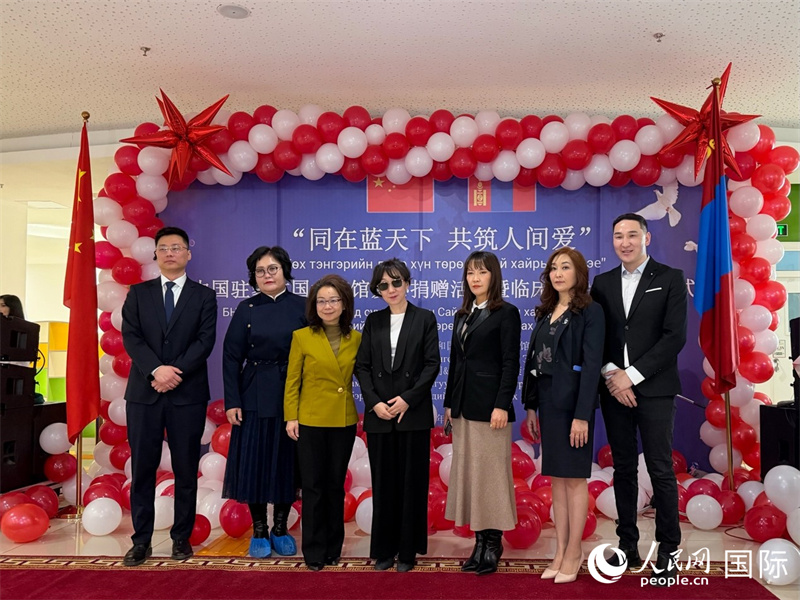
中国驻蒙使馆爱心捐赠暨临床技能室启用仪式举办
人民网-国际频道 原创稿· 2025-11-18 09:01
人民网乌兰巴托11月18日电 (记者张朋辉)11月18日,"同在蓝天下,共筑人间爱"中国驻蒙古国使馆爱心捐 赠活动暨临床技能室启用仪式在乌兰巴托举行。中国驻蒙古国大使沈敏娟、蒙古国家庭劳动与社会保障部部长顾 问萨仁、蒙古国残疾人发展局长格日乐、蒙古国残疾儿童发展中心负责人阿玛尔扎尔格勒及中铁四局蒙古国公司 总经理安晔等出席仪式。 图为中国政府援建的蒙古国残疾儿童康复发展中心。人民网记者 张朋辉摄 中国政府援建、中铁四局承建的蒙古国残疾儿童康复发展中心项目于2019年5月正式投入使用。该中心建成投 入使用以来,累计接诊患儿数量超5万名,向他们提供了医疗和社会康复、心理咨询、心理治疗等服务。 本次活动由中国驻蒙古国大使馆主办,中铁四局集团有限公司与蒙古国残疾儿童康复发展中心协办。活动现 场,沈敏娟大使代表使馆与中心签署捐赠协议并转交爱心物资,中蒙嘉宾共同为临床技能室揭牌。 图为中蒙嘉宾在活动现场合影。人民网记者 张朋辉摄 中方捐赠的临床技能室。人民网记者 张朋辉摄 沈敏娟在致辞中说,蒙古国残疾儿童康复发展中心是在两国高层关心下实施的重要民生项目,是蒙古面积最 大、医疗条件最现代、功能最齐全的残疾儿童康复治疗场所, ...

石泰峰在第十届中新领导力论坛上强调 与时俱进加强领导力建设 为推进中国式现代化凝聚磅礴力量
Xin Hua She· 2025-11-18 07:26
新华社北京11月18日电 第十届中国-新加坡领导力论坛18日在新加坡举办,本次论坛以"大变局时 代下的领导力建设"为主题。中共中央政治局委员、中央组织部部长石泰峰在北京以视频方式出席并致 辞,新加坡公共服务统筹部长兼国防部长陈振声在现场出席并致辞。 双方代表团围绕论坛主题作了深入交流,并签署交流合作项目备忘录。 石泰峰表示,当前百年变局加速演进,世界之变、时代之变、历史之变正以前所未有的方式展开。 在危机中育新机、于变局中开新局,政党领导力是最关键的条件。要与时俱进加强领导力建设,携手构 建人类命运共同体,推动建设更加美好的世界。 石泰峰表示,一百多年来,中国共产党能够团结带领人民铸就历史伟业、创造人间奇迹,靠的就是 无比坚强的领导力。我们要深刻领悟"两个确立"的决定性意义,坚决做到"两个维护",不断巩固党的团 结统一,步调一致向前进。要坚持用习近平新时代中国特色社会主义思想武装头脑、指导实践、推动工 作,善于把握发展趋势和规律,准确识变、科学应变、主动求变。要坚持人民至上,一切为了人民、一 切依靠人民,在造福人民中筑牢抵御风险考验的铜墙铁壁。要发扬彻底的自我革命精神,持之以恒推进 全面从严治党,更好以党的自 ...
中方就建立中东无核武器区提出三点主张
Xin Hua She· 2025-11-18 06:53
耿爽表示,中方提出构建人类命运共同体理念,并提出全球发展倡议、全球安全倡议、全球文明倡 议、全球治理倡议,为应对世界变局、破解紧迫难题贡献中国智慧和中国方案,对推动建立中东无核武 器区也具有重要启示意义。 新华社联合国11月17日电 中国常驻联合国副代表耿爽17日在第六届建立中东无核武器及其他大规 模杀伤性武器区国际会议上发言时表示,中东地区紧张局势长期持续,冲突对抗轮番升级。建立中东无 核武器区有助于遏制大规模杀伤性武器扩散,维护国际防扩散体系的权威性和有效性,减少军备竞赛和 武装冲突风险,提升地区国家间互信,为实现地区长治久安提供重要机制保障,中方就此提出三点主 张。 他还指出,要树立正确导向。建立中东无核武器区既承载着本地区人民对和平发展的共同愿望,地 区国家为此作出不懈努力,国际社会特别是核武器国家也应予积极支持和推动。个别大国应摒弃防扩散 领域双重标准做法,停止抵制联合国相关会议进程,停止纵容地区盟友长期游离于国际核不扩散体系之 外,停止打着防扩散旗号打压无核武器国家和平利用核能权利,停止通过单边手段解决核不扩散问题。 耿爽强调,中方愿继续同各方一道,推动早日建设中东无核武器区。中方也呼吁有关核武器 ...
惊天预警!前CIA特工曝美稀土困局:AI霸权竟被中国“卡脖子”?
Sou Hu Cai Jing· 2025-11-18 06:38
Core Viewpoint - The article highlights the strategic implications of the U.S. reliance on China for rare earth elements, particularly in the context of AI competition and national security concerns [1][3][5]. Group 1: Rare Earth Dependency - The U.S. is heavily dependent on China for rare earth elements, with China controlling 80% of global rare earth refining capacity and the U.S. lagging in separation technology [3][5]. - The F-35 fighter jet exemplifies the U.S. rare earth dilemma, as each jet requires 417 kg of rare earth permanent magnet materials, while the only U.S. processing plant can only support 120 jets annually [3][5]. Group 2: AI and Strategic Competition - China has transitioned from a "follower" to a "runner-up" in AI, making significant advancements in quantum computing, autonomous driving, and smart drone technology [3]. - The potential for China to set global AI standards poses a risk of creating a "digital rentier" system, similar to Boeing's historical dominance in the aviation industry [5]. Group 3: Economic Disparities - The article contrasts the booming AI sector on Wall Street with the struggles of the automotive industry in Detroit, highlighting a disconnect in the economy due to rare earth shortages [3]. - China's rare earth export certification system aims to ensure that rare earths are used for civilian technology rather than military applications, with 90% of exports to the EU directed towards green technologies [5]. Group 4: Global Alliances and Technological Advancement - China is forming a "rare earth + AI" ecosystem with countries like Brazil and Australia, utilizing proprietary ion adsorption methods that reduce energy consumption by 40% and enhance purity [5][7]. - The article emphasizes that true strength comes from collaboration and shared technological advancements rather than monopolistic practices, positioning China as a leader in global tech cooperation [7].

秉持人类命运共同体理念 共促全球妇女事业新发展
Ren Min Ri Bao· 2025-11-18 00:42
Core Viewpoint - The article emphasizes the dual nature of global women's issues, highlighting both achievements and ongoing challenges in gender equality, while presenting China's approach as a model for addressing these issues on a global scale [1][2][3]. Global Landscape: Achievements and Challenges - Over the past 30 years, significant progress has been made in women's rights globally, yet structural inequalities remain a major barrier to achieving gender equality [1]. - There exists a substantial "implementation gap" between legal frameworks and their practical enforcement, with many countries failing to translate legal rights into real-world protections for women [1]. - Intersectional discrimination is increasingly evident, as factors such as poverty, race, immigration status, age, and disability intertwine with gender discrimination [1]. Global Governance System: Gender Equality Deficit - The global governance system shows a clear deficit in promoting gender equality, with existing governance models often falling short of translating commitments into effective domestic policies and funding [2]. - New challenges, such as gender bias in AI algorithms and digital violence against women, highlight the inadequacy of current global governance rules [2]. - The United Nations faces significant challenges, including fragmentation due to major countries withdrawing from agreements, budget shortages, and declining trust in its effectiveness [2]. China's Practice: Multi-faceted Support System - China has established gender equality as a fundamental national policy, integrating it into the modernization of national governance [3]. - The 2022 revision of the Women's Rights Protection Law marked a significant advancement in legal protections for women, enhancing employer responsibilities and establishing public interest litigation for women's rights [3]. - The "China Women's Development Outline (2021-2030)" sets specific targets across various sectors, ensuring accountability through strict monitoring and evaluation mechanisms [3]. Policy Focus: Empowerment and Burden Reduction - China implements targeted policies to empower women, particularly in rural areas, through initiatives like the "Rural Revitalization Women's Action" [4]. - Support systems for women entrepreneurs include incubators and mentorship programs, while tax deductions and shared parental leave aim to alleviate family responsibilities [4]. - Women's representation in political processes is increasing, with women holding 26.5% of the National People's Congress seats in 2023 [4]. Social Environment and Public Services - The establishment of standardized nursing rooms in public spaces supports breastfeeding women, with over 403,000 facilities created by the end of 2024 [5]. - Significant financial investments have been made in women's health services, including cervical and breast cancer screenings, enhancing the overall health support system for women [5]. - Efforts to cultivate a societal respect for women's rights are ongoing, aiming to eliminate all forms of discrimination against women [5]. Future Outlook: Collaborative Pathways - China's experience suggests that promoting gender equality requires a systematic approach, aligning with global governance principles of inclusivity and shared responsibility [6]. - There is a call for more inclusive global dialogues within multilateral frameworks to address emerging challenges like the digital gender gap and climate justice [6]. - The establishment of a global knowledge-sharing platform for women's development practices is proposed to facilitate the exchange of successful strategies among countries [6].
如何认识“十四五”时期我国发展取得重大成就
Xin Hua Wang· 2025-11-17 05:10
Core Insights - The article discusses the approval of the "15th Five-Year Plan" by the 20th Central Committee of the Communist Party of China, emphasizing the strategic design for China's development over the next five years amidst complex international and domestic challenges [1] Economic Development - China's economy is projected to reach approximately 140 trillion yuan by 2025, with per capita GDP exceeding the world average, positioning the country among upper-middle-income nations [2] - The overall productivity is improving, with an annual growth rate of 6.0% in labor productivity, and China dominates about half of the key nodes in the global value chain [2] Technological Innovation - Significant advancements in technology have been made, with record-high investments in R&D and foundational research, particularly in fields like integrated circuits, artificial intelligence, and renewable energy [2] Reform and Opening Up - Continuous reforms are being implemented with a focus on institutional development, aiming for a more mature and defined system by the centenary of the Party [2] - The Belt and Road Initiative is being advanced, alongside the establishment of free trade zones, creating new opportunities for economic and social development [2] Social and Cultural Development - The article highlights the progress in socialist democracy and the legal system, with a focus on enhancing public cultural services and improving social civilization [3] - The achievements in poverty alleviation and the establishment of a moderately prosperous society are emphasized, with ongoing efforts in employment, education, and social security [3] Environmental Sustainability - The transition to a green and low-carbon economy is accelerating, with significant improvements in ecological quality and the establishment of the world's largest carbon trading market [4] National Security and Defense - Enhancements in national security capabilities and social governance are noted, with a focus on maintaining stability and safety within the country [5] - Major advancements in national defense and military capabilities are highlighted, with a commitment to modernizing the military [5] International Relations - China's diplomatic efforts are expanding, promoting a community with a shared future for mankind and opposing hegemonism [6] - The article discusses the importance of maintaining stability in Hong Kong and Macau while addressing Taiwan issues [5] Party Governance - The effectiveness of strict party governance and anti-corruption measures is underscored, contributing to the Party's strength and cohesion [6]
学习规划建议每日问答丨如何认识“十四五”时期我国发展取得重大成就
Xin Hua She· 2025-11-17 05:04
Group 1 - The core viewpoint of the article emphasizes the strategic planning and top-level design for China's development during the "15th Five-Year Plan" period, highlighting the achievements and challenges faced during the "14th Five-Year Plan" [1] - The article outlines that China's economy is expected to reach approximately 140 trillion yuan by 2025, with a continuous increase in economic quality and productivity, indicating China's role as a major driver of global economic growth [2] - It mentions significant advancements in technology and innovation, with record-high investments in R&D and breakthroughs in key technologies such as integrated circuits and artificial intelligence, which are crucial for industrial upgrades [2] Group 2 - The article discusses the deepening of reforms and expansion of high-level opening-up, focusing on institutional development and the Belt and Road Initiative, which provide new opportunities for economic and social development [2] - It highlights the progress in cultural development and the enhancement of public cultural services, which contribute to the improvement of social civilization and national cultural influence [3] - The article notes the solidification of poverty alleviation achievements and the implementation of various policies aimed at improving employment, income distribution, and social welfare, marking a significant step towards common prosperity [3][4] Group 3 - The article emphasizes the acceleration of green and low-carbon transformation, with the establishment of the world's largest carbon trading market and improvements in ecological quality [4] - It outlines advancements in national defense and military construction, reinforcing the absolute leadership of the Party over the military and enhancing modern capabilities [5] - The article discusses the expansion of China's diplomatic efforts, promoting a community with a shared future for mankind and enhancing China's international influence [6] Group 4 - The article concludes by stating that the achievements during the "14th Five-Year Plan" period are attributed to the leadership of the Party and the guiding principles of Xi Jinping's thought, setting the stage for further advancements in the "15th Five-Year Plan" period [7]
英媒:中国在COP30中扮演更重要角色
Huan Qiu Wang· 2025-11-16 23:13
Group 1 - The absence of the United States at the COP30 climate summit marks a significant shift in global climate diplomacy, with China emerging as a key leader in addressing climate change [1][2] - China's presence at COP30 is highlighted by the prominent "China Corner," where executives from major Chinese clean energy companies present their visions for a green future, indicating a shift from the U.S. role in climate negotiations [1][2] - The leadership of China in renewable energy and electric vehicles is solidifying its position in climate diplomacy, as noted by the Director-General of the International Renewable Energy Agency [1][4] Group 2 - Chinese companies, including CATL, State Grid, Trina Solar, and BYD, are actively participating in COP30, showcasing their advancements in clean energy technology and electric vehicles [3][4] - The involvement of Chinese firms in the climate summit reflects their significant role in producing and investing in low-carbon technologies, which is seen as a form of political leadership [4] - The praise from COP30 officials for China's leadership in clean energy technology underscores the country's commitment to supporting global climate governance and assisting other nations [3][4]
多措并举让中华文化“美美与共”
Si Chuan Ri Bao· 2025-11-16 20:46
Core Viewpoint - The development of a culturally influential socialist culture with Chinese characteristics is essential for national strength and the rejuvenation of the nation, as well as for building a community with a shared future for mankind [1][2][3] Group 1: Cultural Influence and National Strength - A strong international cultural influence is rooted in deep cultural heritage and must maintain cultural subjectivity while promoting universal values such as peace, development, fairness, justice, democracy, and freedom [2][4] - The current international cultural influence of China has not yet matched its economic and technological strength, indicating a need for cultural development to align with national power [2][3] Group 2: Strategies for Cultural Development - To transition from a cultural power to a cultural strong nation, four strategies must be implemented: strengthening cultural subjectivity, embracing modern transformation of Chinese culture, precise policy implementation, and gathering value consensus [4][5][6][7] - Emphasizing cultural subjectivity involves deepening the understanding and innovative development of traditional Chinese culture while promoting revolutionary culture and socialist core values [4][5] Group 3: Modern Transformation and Technological Integration - The modern transformation of Chinese culture should leverage technological advancements and diverse presentation forms, utilizing innovations like artificial intelligence and virtual reality to enhance cultural expression [5][6] - The cultural industry must be supported to create globally competitive products in film, gaming, and literature, thereby enhancing cultural influence [5][6] Group 4: International Communication and Value Consensus - Innovative media strategies are necessary to effectively communicate Chinese stories to international audiences, utilizing various platforms and channels for broader cultural dissemination [6][7] - Focusing on global issues such as climate change and public health can help articulate China's cultural values and expand value consensus on the international stage [7]