
液冷技术

Search documents
股市必读:港通医疗(301515)8月20日董秘有最新回复
Sou Hu Cai Jing· 2025-08-20 19:46
Core Viewpoint - As of August 20, 2025, the stock price of Porton Medical (301515) closed at 23.72 yuan, reflecting a decrease of 0.55% with a turnover rate of 4.15% and a trading volume of 26,400 shares, amounting to a transaction value of 62.26 million yuan [1]. Group 1: Company Operations - The company specializes in providing medical gas equipment and systems, as well as medical clean equipment and systems, aimed at addressing medical gas supply and infection issues [1]. - The company's products are primarily utilized in hospital wards, operating rooms, ICUs, central supply rooms, various laboratories, and high-altitude diffusion oxygen scenarios [1]. - The company's clean equipment and systems technology can be applied to data centers and laboratories for clean processing, although it has not yet been applied to liquid-cooled servers [1]. Group 2: Market Activity - On August 20, the net outflow of main funds from Porton Medical was 1.44 million yuan, while retail investors saw a net inflow of 1.47 million yuan [2]. - The trading data indicates that speculative funds experienced a net outflow of 27,200 yuan on the same day [2].
中航光电20250820
2025-08-20 14:49
Summary of the Conference Call for AVIC Optoelectronics Industry and Company Overview - The conference call focuses on AVIC Optoelectronics, a leading company in the connector industry, particularly in the fields of liquid cooling technology and military applications [2][3][4]. Key Points and Arguments Liquid Cooling Technology - AVIC Optoelectronics is actively developing liquid cooling technology to address the limitations of traditional air cooling systems, driven by increasing chip power consumption and the growing number of chips in cabinets [2][5]. - The company provides complete cabinet solutions and individual components for data centers, supercomputing, and energy storage applications [3][4]. - The domestic liquid cooling market is driven by demand for computing power and procurement from overseas system integrators, with AVIC participating in industry standard formulation and expanding into Southeast Asia and Japan [2][6]. AI Power Sector - The company is expanding its presence in the AI power sector, having participated in the Global Computing Alliance launch conference to enhance its market influence [7]. - AVIC aims to innovate in AI data centers and technology, transitioning from a single component supplier to a system integrator to capture domestic and international market opportunities [2][7]. Military Business Growth - The military segment benefits from stable growth in defense budgets, projected at 6%-7%, with the military connector market expanding significantly [2][13]. - AVIC Optoelectronics holds a substantial market share in military connectors, supported by accelerated information technology construction [2][13]. System Interconnection Technology - The company has invested approximately 2.3 billion yuan in a foundational component factory, enhancing its capabilities in system interconnection and transitioning from a single component supplier to an integrated interconnection provider [2][14]. - AVIC's technology is being applied in various military aircraft projects, including the C919, indicating potential for further market expansion [14]. Financial Performance and Projections - From 2019 to 2023, the company's revenue grew from approximately 9.2 billion yuan to 20.1 billion yuan, with a compound annual growth rate (CAGR) of 21% [11]. - Future revenue projections for 2025 to 2027 are 27.17 billion yuan, 28 billion yuan, and 31.04 billion yuan, with corresponding net profits of 4.113 billion yuan, 4.821 billion yuan, and 5.4 billion yuan [16]. Employee Growth and Cost Control - The workforce increased from 13,300 in 2019 to 17,700 in 2023, with a CAGR of 7.3%, indicating effective control over employee growth relative to revenue [12]. - The company has maintained stable operating expenses, with a notable decrease in stock incentive amortization expected in the coming years, positively impacting operational capacity [12]. Additional Important Insights - The liquid cooling industry is driven by three main factors: increasing chip power consumption, the significant rise in the number of chips per cabinet, and the overall value of liquid cooling systems [4][5]. - AVIC Optoelectronics has a long history of development, evolving through four stages since its establishment in 1970, focusing on innovation and market expansion [8]. - The company has implemented a long-term equity incentive plan to align the interests of shareholders, investors, and the company, promoting sustainable development [9][10].

液冷,引领服务器散热新时代
2025-08-20 14:49
Summary of Liquid Cooling Industry and AI Server Market Industry Overview - The liquid cooling industry is experiencing rapid growth driven by the increasing power consumption of AI chips, with NVIDIA GPUs rising from 400 watts to 1,400 watts over five years, and the DGX D200 server consuming up to 14.3 kilowatts, far exceeding traditional servers [1][2][3] - Virtus predicts that by 2029, the power of a single AI GPU cabinet will exceed 1 megawatt, with an average cabinet density surpassing 50 kilowatts, indicating a significant advantage for liquid cooling as cabinet density exceeds 20 kilowatts [1][3] Key Points and Arguments - **Market Growth**: The Chinese liquid cooling market is expected to reach $2.4 billion in 2024, growing 67% year-on-year, with a projected compound annual growth rate (CAGR) of 47% over the next five years, reaching $16.2 billion by 2029 [1][12] - **Technology Adoption**: Cold plate liquid cooling technology is expected to mature and be adopted first due to its higher efficiency compared to air cooling, while immersion cooling, although more efficient, faces challenges related to cooling media and long-term immersion [1][4] - **Investment Opportunities**: The current market is at a pivotal point, transitioning from traditional air cooling to liquid cooling, driven by the need for efficient heat dissipation in high-power AI servers [2][5] - **Component Value**: The core components of liquid cooling systems, such as cold plates and CDU, have significant value, with the GB200NZL72 system valued between $73,000 and $83,000 per cabinet [2][17] Market Dynamics - **Demand Drivers**: Major demand drivers include large data centers, AI chips, and telecommunications operators, which collectively account for 90% of the demand in the Chinese market [12] - **Global AI Server Market**: The global AI server market is projected to reach $3.1 billion in 2025 and $8.6 billion in 2026, with NVIDIA GPUs accounting for over 80% of the market share [13][14] - **Capital Expenditure Trends**: There is an optimistic outlook for capital expenditures in 2026, driven by the acceleration of AI business models and sustained growth in AI computing demand [7][6] Competitive Landscape - **Key Players**: Major players in the liquid cooling supply chain include Vertiv, Colt, and Delta, with Vertiv being a significant partner in NVIDIA's ecosystem [21][22] - **Domestic Developments**: Chinese companies like InnoTek and Shuguang are rapidly developing liquid cooling technologies and entering global supply chains, with InnoTek recognized in NVIDIA's partner network [23][24] Investment Considerations - **Focus Areas**: Investors should consider companies capable of entering overseas supply chains, particularly those recognized by NVIDIA, as well as domestic firms involved in AI chip development and high-density solutions [25] - **Market Trends**: The increasing power levels of AI chips are driving the need for advanced cooling solutions, making this an opportune time to explore various liquid cooling technologies [26][27] Conclusion - The liquid cooling market is poised for significant growth, driven by the rising power demands of AI technologies and the transition from traditional cooling methods. Investors should closely monitor developments in this sector and consider the implications of technological advancements and market dynamics on potential investment opportunities.

英维克20250820
2025-08-20 14:49
Summary of Invek's Conference Call Company Overview - Invek's revenue primarily comes from two main product lines: temperature control energy-saving products (approximately 50%) and energy storage business (approximately 40%), with 90% of the latter being energy storage-related income [2][3] - The electronic cooling business (including liquid cooling plates and air cooling components) is expected to become a new growth point for the company [2] Financial Performance - The latest interim report shows that data center revenue grew by over 50%, while energy storage business revenue reached 800 million yuan, a year-on-year increase of approximately 35% [2][4] - Despite a significant apparent decline in gross margin due to accounting standard adjustments, the actual impact on profit was negligible. After excluding these adjustments, the overall gross margin decreased by 2.3 percentage points [5] - Liquid cooling revenue reached 200 million yuan, with a year-on-year growth of over 200%, primarily driven by the expansion of electronic cooling [5] Strategic Advantages - Invek's strategic advantages include a management team focused on profitability, a stable workforce, and a combination of Huawei's innovative spirit and Emerson's quality operational advantages. The company avoids price wars and emphasizes quality and operations [6] - The management team has a strong R&D background, which enhances the company's capabilities in technological innovation and strategic planning [9] Future Development Focus - The future focus for Invek will be on the development of the electronic cooling business, which includes liquid cooling plates and cooling modules for base stations and mining machines. This segment is expected to become a significant third growth curve [7][8] - Inventory and contract liabilities increased at the end of Q2 compared to Q1, providing revenue assurance for Q3 [7] Innovation and R&D - Invek employs a platform-based R&D model that enhances overall efficiency and optimizes product design. This model integrates various development steps to achieve high collaboration and efficiency [10] - The company has demonstrated strong innovation capabilities, particularly in the data center sector, where it has maintained positive growth despite industry pressures [11][12] Liquid Cooling Technology - Invek offers a comprehensive solution in the liquid cooling field, covering both the data center side and server-side cooling, allowing the company to capture 100% of the value chain [13] - The company has established strong partnerships in both domestic and international markets, positioning itself as a leading player in the liquid cooling sector [14] Conclusion - Invek is recognized as a high-quality growth company in the liquid cooling market, with a strong foundation in both domestic and international markets, and a comprehensive capability to provide complete solutions [14]

朗进科技:目前市场上液冷技术以冷板式方案为主流
Zheng Quan Ri Bao Zhi Sheng· 2025-08-20 09:10
Group 1 - The core viewpoint is that liquid cooling technology, specifically the cold plate solution, is currently the mainstream choice in the market for data centers and similar applications [1] - Leading companies in the industry are adopting the cold plate liquid cooling technology due to its maturity and reliability [1] - The industrialization progress indicates that cold plate liquid cooling remains the preferred solution for current application scenarios [1]

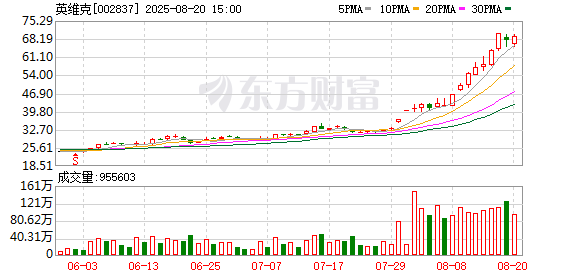
国金证券给予英维克买入评级:温控业绩高增,液冷板块龙头出海
Mei Ri Jing Ji Xin Wen· 2025-08-20 08:32
Group 1 - The core viewpoint of the report is that Yingweike (002837.SZ) is rated as a buy due to strong performance driven by dual growth in data center temperature control and cabinet temperature control in the first half of 2025 [2] - The business structure and competitive factors are expected to put short-term pressure on the gross margin [2] - The liquid cooling segment is anticipated to become another important area for AI export, alongside optical modules, with platform companies likely to benefit significantly [2]


浙商证券:AI算力投资高速增长 氟化液需求有望爆发
智通财经网· 2025-08-20 06:13
Group 1 - The global artificial intelligence market is expected to achieve a compound annual growth rate (CAGR) of over 35% from 2023 to 2030, driving the demand for advanced cooling technologies in data centers [1][2] - Traditional air cooling systems are limited to a cooling capacity of around 20 kW per cabinet, making it increasingly difficult to meet the high cooling demands of modern data centers [2] - Liquid cooling technology, which uses liquid instead of air as a cooling medium, significantly improves cooling efficiency and can effectively meet the high heat dissipation requirements of IT equipment [3] Group 2 - Liquid cooling technology can greatly reduce energy consumption in data centers, leading to significant savings in power system construction and operational costs [3] - The use of cold plate liquid cooling can lower the Power Usage Effectiveness (PUE) to between 1.15 and 1.25, while phase change immersion cooling can achieve a PUE below 1.1 [3] - For a 10 MW data center, a reduction of 0.1 in PUE can result in annual energy savings of 8.76 million kWh, equivalent to a reduction of 8,730 tons of CO2 emissions [3] Group 3 - The penetration rate of immersion liquid cooling is expected to increase, leading to a significant rise in demand for fluorinated liquids [4] - The global market for immersion cooling liquids in data centers is projected to reach $970 million by 2030, with a CAGR of 21.2% in the coming years [4] - Perfluoropolyether (PFPE) is anticipated to become a mainstream product in the fluorinated cooling liquid market due to its excellent chemical and thermal stability, high thermal conductivity, and dielectric strength [4] Group 4 - Companies to watch include New Zobang (300037.SZ), a global leader in PFPE, which has developed a series of products for immersion cooling technology [5] - Juhua Co., Ltd. (600160.SH) is actively expanding its presence in the liquid cooling sector, with a planned production capacity of 5,000 tons per year for its cooling liquids [5]

科创100指数ETF(588030)急升翻红,盛科通信领涨超17%,半导体设备国产化进程持续提速
Xin Lang Cai Jing· 2025-08-20 06:01
Group 1: Market Performance - The Shanghai Stock Exchange Sci-Tech Innovation Board 100 Index (000698) increased by 0.37% as of August 20, 2025, with notable gains from constituent stocks such as Shengke Communication (688702) up 17.14% and Aiwei Electronics (688798) up 14.07% [1] - The Sci-Tech 100 Index ETF (588030) rose by 0.17%, with a latest price of 1.21 yuan, and has seen a cumulative increase of 5.21% over the past week, ranking 3rd among comparable funds [1] - The ETF experienced a turnover rate of 3.27% with a transaction volume of 234 million yuan, and an average daily transaction volume of 433 million yuan over the past week, leading among comparable funds [1] Group 2: Semiconductor Industry Insights - In 2024, global semiconductor equipment sales are projected to grow by 10% year-on-year, reaching 117.1 billion USD, driven by AI advancements and domestic semiconductor initiatives in China [2] - The domestic semiconductor cleaning equipment market in China is valued at 11.3 billion yuan, with a localization rate of 35%, indicating significant potential for domestic substitution [2] - The liquid cooling server market in China is expected to grow by 67% year-on-year in 2024, reaching 2.37 billion USD, with a projected CAGR of 46.8% from 2024 to 2029 [2] Group 3: ETF Growth Metrics - The Sci-Tech 100 Index ETF saw a significant increase in scale, growing by 469 million yuan over the past week, ranking 1st among comparable funds [3] - The ETF's share count increased by 21 million shares in the past week, also ranking 1st among comparable funds, with a net inflow of 29.14 million yuan [4] - Over the past five trading days, the ETF recorded net inflows on four days, totaling 310 million yuan, with an average daily net inflow of 6.21 million yuan [4] Group 4: Performance and Risk Metrics - As of August 15, 2025, the Sci-Tech 100 Index ETF had a Sharpe ratio of 1.63, indicating strong risk-adjusted returns [5] - The ETF's relative drawdown compared to the benchmark was 0.20% year-to-date, with a recovery period of 108 days [5] - The ETF has a management fee of 0.15% and a custody fee of 0.05%, which are among the lowest in comparable funds, and it has a tracking error of 0.020% year-to-date, indicating high tracking precision [6] Group 5: Index Composition - The Sci-Tech 100 Index consists of 100 securities selected from the Shanghai Stock Exchange Sci-Tech Innovation Board, focusing on mid-cap stocks with good liquidity [6] - As of July 31, 2025, the top ten weighted stocks in the index accounted for 23.52% of the total index weight, including companies like Borui Pharmaceutical (688166) and BeiGene (688235) [6]


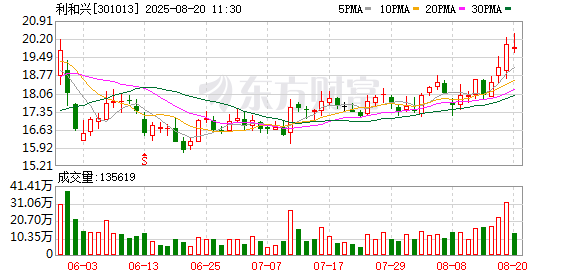
利和兴:液冷相关业务主要服务于公司大客户,其它客户的应用方案目前正处于验证阶段
Mei Ri Jing Ji Xin Wen· 2025-08-20 04:26
Group 1 - The company was asked about the revenue proportion of its liquid cooling business and whether it has entered the certification systems of Nvidia and Huawei [2] - The company responded that its liquid cooling-related business primarily serves major clients, while applications for other clients are currently in the validation stage [2]
3D打印液冷专家交流
2025-08-19 14:44
Summary of Conference Call on 3D Printing Liquid Cooling Technology Industry Overview - The conference discusses the liquid cooling industry, particularly focusing on 3D printing technology's application in cooling systems for high-performance computing and AI workloads [1][2][3]. Key Points and Arguments - **Adoption of Liquid Cooling Solutions**: Starting in 2024, companies like NVIDIA are adopting the OCP ORV3 single-sided cold plate liquid cooling solution due to its industry support and large-scale delivery capabilities, marking a shift from traditional immersion cooling methods [1][2]. - **3D Printing Advantages**: 3D printing technology is suitable for manufacturing microchannels and complex geometries in liquid cooling systems, which traditional CNC machining struggles to achieve. This technology can significantly reduce thermal and flow resistance, enhancing cooling efficiency [1][5]. - **Performance Metrics**: A single board can achieve a water flow rate of 150 liters per minute while maintaining temperature control within 4 kilowatts [1][5]. - **High Technical Barriers**: The 3D printing liquid cooling plate technology has high barriers to entry, requiring advanced laser control, specific processing techniques, and dedicated manufacturing equipment. Companies that master these technologies will have a significant first-mover advantage [1][9]. - **China's Supply Chain Strengths**: China's supply chain in the cooling sector excels in materials, processes, and large-scale production capabilities. Successful companies often focus on specific segments and possess substantial production capacity [10]. - **Profitability and Cost Dynamics**: The profitability of liquid cooling companies is closely tied to their scale. The ability to achieve mass production with new processes and materials is crucial. In the AI computing sector, while the value of liquid cooling systems is relatively low, they are essential for enhancing the stability of core IP performance [13][22]. Additional Important Insights - **Emerging Technologies**: The year 2025 is anticipated to be a pivotal year for liquid cooling applications, with ongoing research into phase change cooling plates and hybrid cooling solutions [2][3]. - **Market Pricing**: The recognized price for liquid cooling materials in the AI sector is approximately $300 per kilowatt, with a typical liquid cooling plate valued at over $40,000 [22]. - **Competitive Landscape**: Companies like Zhuanshan Precision and Platinum are exploring 3D printing applications in cooling systems, although they face challenges in precision and technology advancement [6][7][23]. - **Integration and OEM Roles**: Integrators and OEM manufacturers play a crucial role in the supply chain by assembling various components into complete modules, which helps create barriers to entry for competitors [11]. - **Consumer Goods Influence**: The transfer of capabilities from the consumer goods sector to the server domain is seen as beneficial, leveraging scale and cost advantages to address technical challenges in high-heat environments [25][26]. This summary encapsulates the critical insights from the conference call, highlighting the evolving landscape of the liquid cooling industry and the pivotal role of 3D printing technology.
