
碳达峰碳中和

Search documents
展望十五五,全面绿色转型渐明晰
HTSC· 2025-10-26 06:38
Investment Rating - The report maintains a "Buy" rating for multiple companies in the energy and power equipment sector, including Ningde Times, Pinggao Electric, Guoneng Rixin, Sany Renewable Energy, and others [4][7][8]. Core Insights - The report emphasizes the importance of a comprehensive green transition in China's economy, driven by goals of carbon peak and carbon neutrality, with a focus on developing a new energy system [1][2]. - The dual control of carbon emissions is expected to expand the demand for green electricity, with policies promoting both carbon market management and mandatory green electricity consumption [2][3]. - The energy sector's green and low-carbon transformation is identified as a critical area for achieving overall green transition goals, with a significant portion of new electricity demand expected to be met by clean energy sources by the end of the 14th Five-Year Plan [3]. Summary by Sections Section 1: Industry Overview - The report highlights the acceleration of green transformation in the economy, with key measures including the establishment of a dual control system for carbon emissions and the promotion of green energy transition [1][2]. Section 2: Company Recommendations - **Ningde Times (300750 CH)**: Target price raised to 566.18 CNY, with a strong outlook on electric vehicle and energy storage markets [9][10]. - **Pinggao Electric (600312 CH)**: Target price set at 22.80 CNY, benefiting from strong domestic bidding for power transmission and transformation equipment [11]. - **Guoneng Rixin (301162 CH)**: Target price of 73.54 CNY, with significant growth in service stations and customer retention [12]. - **Sany Renewable Energy (688349 CH)**: Target price increased to 38.01 CNY, with expectations of improved profitability in wind turbine sales [14]. - **Siyuan Electric (002028 CH)**: Target price raised to 147.90 CNY, driven by strong growth in overseas orders and data center demand [14]. - **Sungrow Power Supply (300274 CH)**: Target price set at 195.40 CNY, with a focus on energy storage and international expansion [14]. - **Oriental Electronics (000682 CH)**: Target price of 13.86 CNY, with steady growth in core business and new energy projects [14]. - **China Western Power (601179 CH)**: Target price set at 8.25 CNY, with a stable growth outlook in power transmission equipment [14]. - **Guodian NARI Technology (600406 CH)**: Target price of 26.00 CNY, benefiting from new power system construction [14].





锰硅周报:关注中美双边贸易磋商及两国元首会晤,注意短期黑色板块风险-20251025
Wu Kuang Qi Huo· 2025-10-25 13:46
1. Report Industry Investment Rating No information provided regarding the industry investment rating in the report. 2. Core Viewpoints of the Report - The report maintains a non - pessimistic view on the future of the black sector. Instead of short - selling, it suggests that finding a retracement point to go long may be more cost - effective. However, in the short term, attention should be paid to the potential "negative feedback" risk caused by high supply, low demand, and the decline in steel mill profitability [15][97]. - The outcomes of the Sino - US bilateral trade consultations and the meeting between the two heads of state at the APEC summit could impact the sentiment in the commodity market. Positive signals may improve market sentiment [15][97]. - Both manganese silicon and ferrosilicon are likely to follow the trends of the black sector, with their fundamentals lacking significant contradictions and drivers [15][97]. 3. Summaries Based on the Table of Contents Manganese Silicon Report 3.1.1. Weekly Assessment and Strategy Recommendation - The spot price of Tianjin 6517 manganese silicon was 5720 yuan/ton, up 40 yuan/ton week - on - week. The futures price of the main contract (SM601) was 5772 yuan/ton, up 54 yuan/ton week - on - week. The basis was 138 yuan/ton, down 14 yuan/ton week - on - week, with a basis ratio of 2.35%, at a relatively neutral historical level [14][20]. - Manganese silicon production profits remained low, with losses in Inner Mongolia, Ningxia, and Guangxi. The production cost increased slightly in Inner Mongolia and Ningxia, and remained stable in Guangxi [14][25][30]. - Manganese silicon weekly output decreased slightly, while the weekly output of rebar increased. The daily average hot metal output decreased slightly but remained at a relatively high level. The visible inventory of manganese silicon increased, and the average available days of steel mill inventory decreased slightly [14]. - The market is advised to focus on the Sino - US bilateral trade consultations and the meeting between the two heads of state at the APEC summit. There is a short - term "negative feedback" risk in the black sector due to high supply and low demand [15]. 3.1.2. Spot and Futures Market - As of October 24, 2025, the spot price of Tianjin 6517 manganese silicon was 5720 yuan/ton, up 40 yuan/ton week - on - week. The futures price of the main contract (SM601) was 5772 yuan/ton, up 54 yuan/ton week - on - week. The basis was 138 yuan/ton, down 14 yuan/ton week - on - week, with a basis ratio of 2.35%, at a relatively neutral historical level [20]. 3.1.3. Profit and Cost - Manganese silicon's estimated immediate profit (excluding depreciation) remained low. Inner Mongolia had a profit of - 317 yuan/ton, down 2 yuan/ton week - on - week; Ningxia had a profit of - 415 yuan/ton, down 22 yuan/ton week - on - week; and Guangxi had a profit of - 700 yuan/ton, remaining stable week - on - week [25]. - The estimated immediate cost of manganese silicon in Inner Mongolia was 5997 yuan/ton, up 2 yuan/ton week - on - week; in Ningxia, it was 5995 yuan/ton, up 2 yuan/ton week - on - week; and in Guangxi, it was 6350 yuan/ton, remaining stable week - on - week [30]. - In August, the manganese ore import volume was 308.49 tons, down 40.11 tons month - on - month and up 35.71 tons year - on - year. As of October 17, the manganese ore port inventory decreased to 436.4 tons, down 9.3 tons week - on - week [33][36]. 3.1.4. Supply and Demand - As of October 24, 2025, the weekly output of manganese silicon was 20.74 tons, down 0.14 tons week - on - week, with a cumulative year - on - year increase of about 0.32%. In September 2025, the monthly output was 89.84 tons, down 1.08 tons month - on - month [44]. - HeSteel Group's manganese silicon tender volume in October 2025 was 16,500 tons, down 500 tons month - on - month and up 4500 tons year - on - year. The tender price was 5820 yuan/ton, down 180 yuan/ton month - on - month [57]. - The weekly apparent consumption of manganese silicon was 12.27 tons, up 0.16 tons week - on - week. The weekly output of rebar was 207.07 tons, up 5.91 tons week - on - week. The daily average hot metal output was 239.9 tons, down 1.05 tons week - on - week, with a cumulative year - on - year increase of about 3.75% [60][63]. 3.1.5. Inventory - As of October 24, 2025, the visible inventory of manganese silicon was 54.31 tons, up 2.44 tons week - on - week, remaining at a high level compared to the same period. The average available days of steel mill inventory in October was 15.7 days, down 0.23 days month - on - month [71][77]. - The inventory of 63 sample enterprises was 29.3 tons, up 3.05 tons week - on - week [74]. 3.1.6. Graphical Trends - Last week, the manganese silicon futures price fluctuated slightly upward, with a weekly increase of 56 yuan/ton or 0.98%. On the daily chart, it was still within the trading range of 5600 - 6000 yuan/ton and approached the downward trend line since July. Attention should be paid to the support near 5600 yuan/ton and the direction at the trend line [80]. Ferrosilicon Report 3.2.1. Weekly Assessment and Strategy Recommendation - The daily average hot metal output was 239.9 tons, down 1.05 tons week - on - week, remaining at a relatively high level, with a cumulative year - on - year increase of about 3.75%. From January to September 2025, the cumulative output of metallic magnesium was 62.09 tons, down 3.13 tons year - on - year, a decrease of 4.80% [95]. - From January to September 2025, China's cumulative ferrosilicon exports were 31.1 tons, down 1.66 tons year - on - year, a decrease of 5.07% [95]. - The estimated visible inventory of ferrosilicon was 13.04 tons, down 0.16 tons week - on - week, remaining at a relatively high level compared to the same period. The average available days of steel mill inventory in October was 15.67 days, up 0.15 days month - on - month [95]. - The basis of Tianjin 72 ferrosilicon was 108 yuan/ton, down 62 yuan/ton week - on - week, with a basis ratio of 1.91%, at a neutral historical level [96]. - Ferrosilicon production profits remained in the red. The estimated production cost in the main producing areas was relatively stable [96]. - HeSteel Group's 75B ferrosilicon alloy tender volume in October 2025 was 2956 tons, down 195 tons month - on - month and up 920 tons year - on - year. The tender price was 5660 yuan/ton, down 140 yuan/ton month - on - month [97]. - The ferrosilicon market is likely to follow the black sector, with low trading cost - effectiveness [97]. 3.2.2. Spot and Futures Market - As of October 24, 2025, the spot price of Tianjin 72 ferrosilicon was 5650 yuan/ton, up 50 yuan/ton week - on - week. The futures price of the main contract (SF601) was 5542 yuan/ton, up 112 yuan/ton week - on - week. The basis was 108 yuan/ton, down 62 yuan/ton week - on - week, with a basis ratio of 1.91%, at a neutral historical level [102]. 3.2.3. Profit and Cost - As of October 24, 2025, the estimated immediate profit of ferrosilicon in Inner Mongolia was - 586 yuan/ton, up 18 yuan/ton week - on - week; in Ningxia, it was - 413 yuan/ton, up 18 yuan/ton week - on - week; and in Qinghai, it was - 400 yuan/ton, down 2 yuan/ton week - on - week [107]. - The price of silica in the northwest region remained stable, while the price of semi - coke small pieces increased by 50 yuan/ton. The estimated production cost in the main producing areas was relatively stable [110][113]. 3.2.4. Supply and Demand - As of October 24, 2025, the weekly output of ferrosilicon was 11.4 tons, up 0.13 tons week - on - week, with a cumulative year - on - year increase of about 1.47%. In September 2025, the monthly output was 48.82 tons, down 0.51 tons month - on - month [118]. - HeSteel Group's 75B ferrosilicon alloy tender volume in October 2025 was 2956 tons, down 195 tons month - on - month and up 920 tons year - on - year. The tender price was 5660 yuan/ton, down 140 yuan/ton month - on - month [124]. - The daily average hot metal output was 239.9 tons, down 1.05 tons week - on - week, remaining at a relatively high level, with a cumulative year - on - year increase of about 3.75%. In September 2025, China's crude steel output was 7350 tons, down 390 tons month - on - month and 360 tons year - on - year [127]. - From January to September 2025, the cumulative output of metallic magnesium was 62.09 tons, down 3.13 tons year - on - year, a decrease of 4.80%. China's cumulative ferrosilicon exports were 31.1 tons, down 1.66 tons year - on - year, a decrease of 5.07% [95]. 3.2.5. Inventory - As of October 24, 2025, the visible inventory of ferrosilicon was 13.04 tons, down 0.16 tons week - on - week, remaining at a relatively high level compared to the same period. The average available days of steel mill inventory in October was 15.67 days, up 0.15 days month - on - month [142][145]. 3.2.6. Graphical Trends - Last week, the ferrosilicon futures price continued to rise slightly, with a weekly increase of 112 yuan/ton or 2.06%. On the daily chart, it was still within the trading range of 5400 - 5800 yuan/ton and faced short - term pressure after touching the downward trend line since July. Attention should be paid to the support near 5400 yuan/ton and the direction at the trend line [150].
2025年中国—国际可再生能源署合作指导委员会会议顺利召开
国家能源局· 2025-10-25 07:03
Core Viewpoint - The meeting held on October 24, 2023, in Suzhou, Jiangsu, focused on strengthening cooperation between China and the International Renewable Energy Agency (IRENA) to promote energy transition and sustainable development [1][3]. Group 1: Cooperation Framework - The "1+1+N" cooperation framework established between China and IRENA has solidified the foundation for collaboration, showing a positive development trend [3]. - China is committed to fulfilling its carbon peak and carbon neutrality commitments, which were reinforced during the UN Climate Change Summit, providing strong confidence for global renewable energy development [3]. Group 2: Collaborative Achievements - Both parties have successfully mobilized China's industry strength, engaged in joint research and analysis, and organized high-level events and technical seminars to advance global energy transition [3]. - A memorandum of understanding was signed between Wang Hongzhi and Francesco La Camera to outline future cooperation directions and pathways [4]. Group 3: New Initiatives - A voluntary contribution agreement for the study of environmental impacts and benefits of international photovoltaic power stations was signed, marking the beginning of a new chapter in intellectual cooperation [4].


“十五五”这样干!一组图速览未来五年的重点任务
Yang Shi Xin Wen· 2025-10-25 02:10
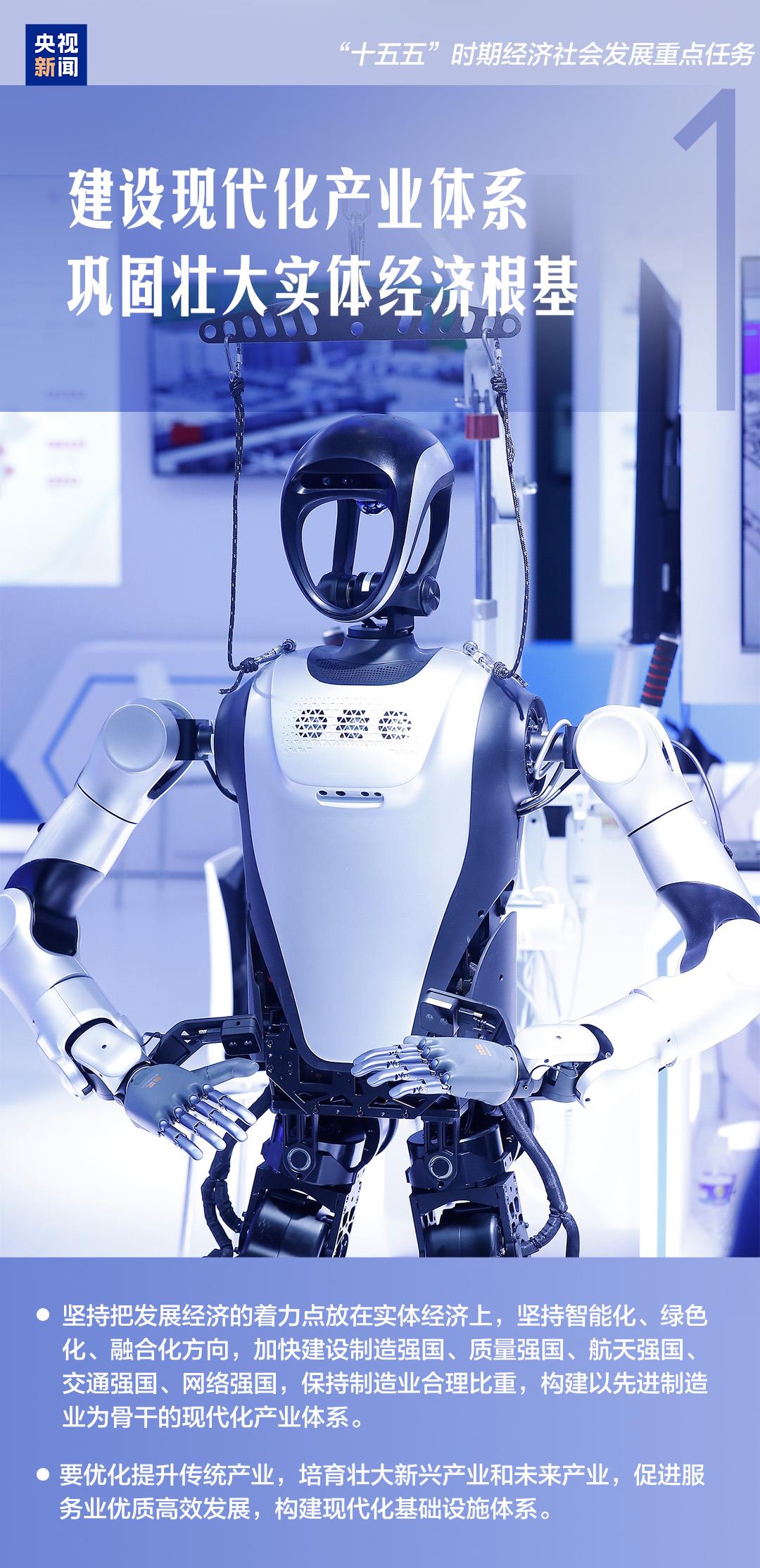
Group 1 - The core focus during the "15th Five-Year" period is to strengthen the foundation for achieving socialist modernization and to fully exert efforts in economic and social development [1] - Emphasis on developing the real economy, with a focus on intelligent, green, and integrated directions, aiming to build a strong manufacturing nation and a modern industrial system [5][10] - The strategy includes optimizing traditional industries, nurturing emerging industries, and promoting high-quality development in the service sector [5] Group 2 - The need to seize opportunities from the new round of technological revolution and industrial transformation, enhancing the national innovation system and self-innovation capabilities [7] - Strengthening original innovation and tackling key core technologies, promoting deep integration of technological and industrial innovation [7] Group 3 - The strategy aims to expand domestic demand as a strategic basis, combining consumer welfare with investment in goods and people, fostering a positive interaction between supply and demand [11] - Efforts to boost consumption and effective investment while removing barriers to national market construction [11] Group 4 - The plan includes expanding high-level opening-up and maintaining a multilateral trade system to enhance international circulation [16] - Promoting trade innovation and expanding bilateral investment cooperation, particularly in the context of the Belt and Road Initiative [17] Group 5 - Addressing agricultural modernization and rural revitalization as a priority, enhancing agricultural production capacity and quality [22][18] - Promoting urban-rural integration and ensuring modern living conditions in rural areas [22] Group 6 - The strategy focuses on optimizing regional economic layout and promoting coordinated regional development [24][21] - Enhancing regional development coordination and promoting spatial development patterns [24] Group 7 - The importance of cultural innovation and the development of socialist culture is highlighted, aiming to enhance the influence of Chinese civilization [28][25] - Promoting the core socialist values and cultural industry development [28] Group 8 - The plan emphasizes improving people's livelihoods and promoting common prosperity, addressing urgent social issues and enhancing quality of life [31][27] - Fostering high-quality employment and improving the social security system [31] Group 9 - The strategy includes advancing ecological transformation and building a beautiful China, focusing on carbon neutrality and ecological safety [35][32] - Promoting pollution prevention and establishing a new energy system [35] Group 10 - The modernization of national security systems and capabilities is a key focus, ensuring social order and governance [38][34] - Strengthening national security capabilities in key areas and improving public safety governance [38] Group 11 - High-quality advancement of national defense and military modernization is emphasized, adhering to the leadership of the Communist Party [41][39] - Accelerating the integration of mechanization, informationization, and intelligence in military development [42]
2025国际能源变革论坛开幕 刘小涛王宏志出席并致辞
Su Zhou Ri Bao· 2025-10-25 00:39
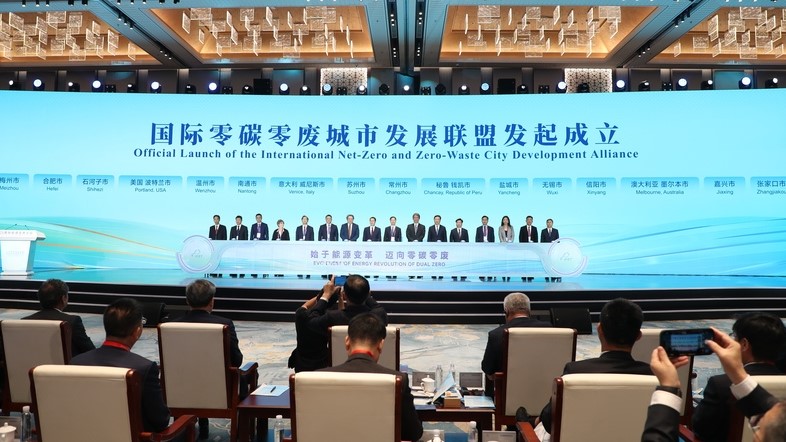
Core Points - The 2025 International Energy Transformation Forum opened in Suzhou with the theme "Ten Years of Joint Efforts in Energy Transformation, Innovation Leading a Green Future" [1] - Key officials including Jiangsu Province Governor Liu Xiaotao and National Energy Administration Director Wang Hongzhi attended the opening ceremony and delivered speeches [1][4] Summary by Relevant Sections Government Initiatives - Jiangsu Province is committed to implementing Xi Jinping's important discourse on energy work, focusing on the clean and efficient use of traditional energy and the orderly development of new energy [4] - The province aims to optimize its energy infrastructure and accelerate the construction of a new energy system, promoting a comprehensive green transformation of economic and social development [4] Energy Strategy - China is advancing a new energy security strategy characterized by "Four Revolutions and One Cooperation," aiming to build a green, low-carbon, safe, and efficient new energy system [5] - The strategy aligns with global development trends and aims to contribute Chinese wisdom and solutions to global energy transformation [5] Forum Activities - The forum featured keynote speeches from international energy officials, including the Minister of Energy from Kyrgyzstan, and hosted an exhibition on "China's Energy Transformation Path in the New Era" [5] - The event also saw the establishment of the International Zero Carbon Zero Waste City Development Alliance and the release of several significant documents, including the "Global Energy Low Carbon Transition Development 2030 Suzhou Vision" [5]
关于绿色发展,“十五五”时期的三个“加快”意味着什么
2 1 Shi Ji Jing Ji Bao Dao· 2025-10-24 23:28
Core Points - The central committee of the Communist Party of China emphasizes accelerating the comprehensive green transformation of economic and social development to build a beautiful China, guided by the goals of carbon peak and carbon neutrality [1][2][3] Group 1: Green Transformation Initiatives - The meeting proposed four key measures to accelerate green transformation: implementing a dual control system for carbon emissions, transitioning to a green low-carbon energy system, transforming the industrial structure towards green low-carbon, and promoting green low-carbon lifestyles [1][3][11] - By the end of the 14th Five-Year Plan, the majority of new electricity demand will be met by new clean energy generation, focusing on developing non-fossil energy and enhancing the efficiency of fossil energy use [3][4][6] Group 2: New Energy System Development - The construction of a new energy system is entering a systematic phase, with a focus on non-fossil energy as the main supply and fossil energy as a backup, supported by a new power system [6][7][8] - The new energy system aims to enhance energy security, economic viability, and technological innovation, with a target for non-fossil energy to account for over 80% by 2060 [8][12] Group 3: Green Production and Lifestyle - The report highlights the need for a shift towards green production and lifestyle, which will involve short-term investments in low-emission technologies and long-term benefits through reduced energy consumption and waste [9][10] - Consumers will see an increase in the availability of green products, supported by policies that lower purchase costs and promote sustainable consumption practices [10][11] Group 4: Carbon Peak and Neutrality Goals - The period leading up to 2030 is critical for achieving the carbon peak goal, with a focus on establishing a dual control system for carbon emissions and enhancing the national innovation system for green technologies [11][12][13] - The transition from energy consumption control to precise carbon emission control is essential for optimizing energy structure and achieving carbon reduction targets [12][13]
2025国际能源变革论坛在苏州开幕刘小涛王宏志出席并致辞
Xin Hua Ri Bao· 2025-10-24 23:14
刘小涛对各位嘉宾表示欢迎。他说,江苏认真学习贯彻习近平总书记关于能源工作的重要论述,持 续推动传统能源清洁高效利用和新能源有序开发利用,全省能源结构向"更快、更高、更优"加快转型, 为高质量发展提供了有力支撑。我们将深入贯彻中共二十届四中全会决策部署,牢固树立和践行绿水青 山就是金山银山的理念,以碳达峰碳中和为牵引,协同推进降碳、减污、扩绿、增长,着力优化能源基 础设施布局,加快建设新型能源体系,加快经济社会发展全面绿色转型。期待高质量发挥好国际能源变 革论坛这一高端对话机制的桥梁作用,持续加强能源政策沟通协调,携手开展能源科技创新合作,共同 推动能源技术创新、新能源产业发展、绿色能源国际合作,形成互利互惠务实合作成果。希望各位企业 家把更多的高端资源、优质项目落户江苏,把更多新产业、新技术、新模式导入江苏,我们将全力做好 服务保障,与大家共创美好未来。 10月24日上午,以"十年携手能源变革 创新领航绿色未来"为主题的2025国际能源变革论坛在苏州 开幕。省长刘小涛,国家能源局局长王宏志,国际可再生能源署总干事拉·卡梅拉出席开幕式并致辞。 王宏志表示,中国坚持以"四个革命、一个合作"能源安全新战略为指引,加 ...
锚定“十五五”主要目标,未来五年这样干!
DT新材料· 2025-10-24 16:04
Core Viewpoint - The article emphasizes the significant achievements and future goals outlined in the report from the Fourth Plenary Session of the 20th Central Committee of the Communist Party of China, focusing on high-quality development, technological self-reliance, and comprehensive reforms to enhance the economy and society. Group 1: Economic Development - The report highlights the need to build a modern industrial system and strengthen the foundation of the real economy, emphasizing the importance of intelligent, green, and integrated development [3][28]. - It calls for optimizing traditional industries and nurturing emerging and future industries, while promoting high-quality development in the service sector and modern infrastructure [4][28]. Group 2: Technological Innovation - The report stresses the acceleration of high-level technological self-reliance and the need to seize opportunities from the new round of technological revolutions and industrial transformations [4][29]. - It advocates for enhancing the overall effectiveness of the national innovation system and increasing independent innovation capabilities [4][29]. Group 3: Domestic Market and Consumption - The report underscores the importance of expanding domestic demand as a strategic focus, linking consumer welfare with investment in goods and people [5][28]. - It emphasizes the need to boost consumption and effective investment while removing barriers to the construction of a unified national market [5][28]. Group 4: Social and Cultural Development - The report highlights the need to enhance the quality of life for the people and promote cultural innovation, aiming for a prosperous socialist culture [11][31]. - It calls for improving public services and ensuring equitable access to basic services for all citizens [14][31]. Group 5: Environmental Sustainability - The report advocates for a green transformation of economic and social development, emphasizing the importance of achieving carbon peak and carbon neutrality [17][30]. - It encourages the promotion of a green production and lifestyle, alongside efforts to prevent pollution and optimize ecosystems [17][30]. Group 6: National Security and Governance - The report emphasizes the need to strengthen the national security system and improve public safety governance [20][32]. - It calls for a comprehensive approach to social governance, ensuring a vibrant and orderly society [20][32].
展望“十五五”:如何增加“含绿量”,提升经济“含金量”?
Nan Fang Du Shi Bao· 2025-10-24 14:09
Core Viewpoint - The Fourth Plenary Session of the 20th Central Committee of the Communist Party of China emphasized a systematic deployment for comprehensive green transformation, aiming to build a beautiful China through carbon peak and carbon neutrality initiatives [1][4]. Group 1: Green Transformation Measures - The session proposed accelerating the comprehensive green transformation of economic and social development, focusing on the concept that "lucid waters and lush mountains are invaluable assets" [1]. - Key measures include establishing a dual control system for carbon emissions and intensity, transitioning to a green low-carbon energy system, and promoting green low-carbon industrial structure and lifestyle transformations [4][5]. Group 2: Energy System Development - The development of a new energy system is prioritized, with a goal that by the end of the 14th Five-Year Plan, most new electricity demand will be met by new clean energy generation [4][5]. - Specific actions include enhancing non-fossil energy development, promoting clean and efficient use of fossil energy, and constructing a new power system to ensure the effective integration of green electricity [5][11]. Group 3: Industrial Structure Transformation - The green low-carbon industrial structure transformation aims to increase the "green content" of industries, with the current scale of green low-carbon industries estimated at approximately 11 trillion yuan, expected to double in the next five years [5][10]. - The plan includes creating around 100 national-level zero-carbon parks during the 14th Five-Year Plan period, which will significantly expand the green low-carbon industry [5]. Group 4: Lifestyle Changes - The transformation of production and lifestyle towards green low-carbon practices is essential, involving clean production, circular economy development, and promoting green living habits among the public [6][10]. - Goals include achieving a solid waste utilization rate of about 4.5 billion tons by 2030 and increasing the proportion of railway and waterway transport for bulk goods [6]. Group 5: Innovation and Market Dynamics - The period of the 14th Five-Year Plan is seen as crucial for green technology innovation, with a focus on breaking down barriers between industry, academia, and research to enhance green innovation [8][9]. - The market's role in the development of low-carbon green industries is highlighted, with mechanisms established to guide market expectations and attract investment [10].
山东金乡:南天农科年产27.56万吨造纸化学品项目成功入选2025年第二批全国重点民间投资项目
Zhong Guo Fa Zhan Wang· 2025-10-24 08:49
Core Insights - Jining Nantian Agricultural Science and Technology New Materials Co., Ltd.'s project for an annual production of 275,600 tons of paper chemicals has been selected as a key private investment project for 2025, enhancing its competitiveness in funding support and key resource guarantees [1] Project Overview - The total investment for the project is 2.5 billion yuan, covering an area of 230 acres with a total construction area of 59,000 square meters, including production workshops and a central control room [1] - The project will establish 23 production lines and purchase 647 sets of specialized equipment [1] Construction Progress - All 26 individual structural frameworks have been completed, with 75% of the workshop exterior decoration finished, 60% of water and electricity installations completed, and 35% of tank area installations done [1] - The steel structure of the plant's pipeline corridor has been fully completed, and 139 pieces of equipment have been installed ahead of schedule [1] Production Capacity and Economic Impact - Upon completion, the project will have the capacity to produce 72,000 tons of sizing agents, 120,000 tons of paper strengthening agents, 39,600 tons of environmentally friendly wet strength agents, and 44,000 tons of specialized high-color dye chemicals for paper [1] - The estimated annual profit is projected to reach 470 million yuan, creating over 200 job opportunities and significantly contributing to carbon peak and carbon neutrality goals in the paper industry [1]