端侧AI

Search documents
沪指逼近4000点!A股,放量爆发!
Sou Hu Cai Jing· 2025-10-27 10:24
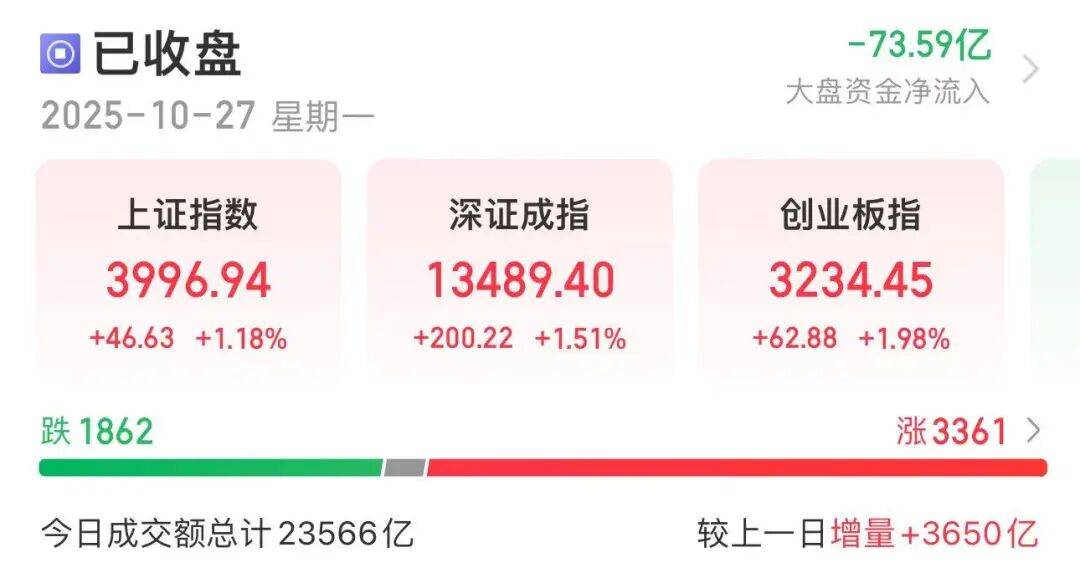
Market Overview - The A-share market experienced a significant increase on October 27, with the Shanghai Composite Index reaching a high of 3999.07 points, marking its closest approach to the 4000-point level in ten years [1] - The Shanghai Composite Index closed up 1.18% at 3996.94 points, while the Shenzhen Component Index rose 1.51% and the ChiNext Index increased by 1.98% [1] - Total market turnover exceeded 2.35 trillion yuan, with over 3300 stocks rising [1] Sector Performance - The storage chip sector saw a strong performance, with multiple stocks hitting the daily limit, including leading stock Zhaoyi Innovation, which reached a historical high with a market capitalization of 162.28 billion yuan [4] - Other sectors that performed well included AI PCs, Co-Packaged Optics (CPO), steel, computing hardware, and minor metals, while wind power equipment, gaming, Hainan Free Trade Zone, Shenzhen state-owned enterprise reform, and cultural media sectors faced declines [4] - The securities sector was notably active, with Dongxing Securities closing up over 6% and several other securities firms also showing significant gains [4] Technology Sector - The technology sector continued its upward trend, with the commercial aerospace sector also showing strength [8] - Notable stocks in the storage chip sector included Jiangbolong, Tuojing Technology, Weicai Technology, and Baiwei Storage, all reaching historical highs during the trading session [4] Market Sentiment and Future Outlook - Analysts suggest that the end of October will be a critical juncture for market sentiment, with expectations of a potential upward breakout if recent uncertainties in U.S.-China negotiations are resolved positively [9] - The market is anticipated to stabilize, with a focus on blue-chip stocks with high dividends in the short term, while the fourth quarter is expected to remain bullish due to supportive policies and increased retail investment [10][11] - The "14th Five-Year Plan" is expected to provide a clear growth path for the A-share market, emphasizing technological innovation and industrial upgrades [10][11]

A股午评 | 沪指半日放量涨逾1% 有色、钢铁板块大涨 算力硬件股延续强势
智通财经网· 2025-10-27 03:48
Core Viewpoint - The A-share market is experiencing a significant rise, with the Shanghai Composite Index approaching 4000 points, driven by multiple favorable factors including U.S.-China trade negotiations and supportive monetary policy [1][2]. Market Analysis - The A-share market is buoyed by several positive developments: - U.S.-China trade talks have reached a basic consensus, with the U.S. Treasury Secretary stating that there are no plans to impose a 100% tariff on China [2]. - The People's Bank of China has injected 900 billion yuan through Medium-term Lending Facility (MLF) operations to support market liquidity [2]. - There is an increasing expectation of a 25 basis point rate cut by the Federal Reserve, which is enhancing market sentiment [2]. Sector Performance - **Steel and Non-ferrous Metals**: These sectors saw significant gains, with stocks like Xiamen Tungsten hitting the daily limit [2]. - **Computing Power Hardware**: Stocks in this category, including Zhongji Xuchuang, reached historical highs, with Zhongji Xuchuang's stock price surpassing 500 yuan for the first time [2][4]. - **Coal Sector**: The coal sector is recovering, with Zhengzhou Coal Electricity hitting the daily limit [2]. - **Chip Industry**: The chip sector is rebounding, with stocks like Dawi Co. hitting the daily limit [2]. - **Nuclear Fusion Concept**: This concept remains active, with Dongfang Tantalum achieving a historical high [2]. Institutional Perspectives - **Huaxi Securities**: The firm believes that the "slow bull" market trend will continue, supported by recent positive developments in U.S.-China trade talks and other geopolitical factors [6][7]. - **CITIC Securities**: The firm notes a return to performance-driven market dynamics, highlighting two emerging trends: the safety of industrial chains and the expansion of AI from cloud to edge [8]. - **Zhongtai Securities**: The firm maintains a bullish outlook on the index, particularly in technology and manufacturing sectors, and suggests focusing on AI and related fields [9].

光控资本:短期提升风险偏好 积极做多A股
Sou Hu Cai Jing· 2025-10-27 03:48
Group 1 - The market has transitioned back to a performance-driven structure, indicating that the style switch has fundamentally ended rather than just begun [1] - Active funds have rapidly concluded their position adjustments over the past two weeks, reflecting a shift in market sentiment [1] - The understanding of trade disputes has shifted from a superficial replication of past experiences to a more serious consideration [1] Group 2 - The low volatility profit-related sectors have recovered their previous three months of negative excess in less than three weeks [1] - Recent developments in US-China negotiations and the completion of Q3 earnings reports suggest a search for sectors with sustained profit growth in the coming year [1] - Two emerging trends are identified: the safety of industrial chains benefiting Chinese manufacturing companies and the expansion of AI from cloud to edge, indicating a significant shift in data access and personalized AI applications [1] Group 3 - Market sentiment has cooled since October, with a slowdown in incremental capital inflows, but overall stability remains intact [3] - The market is expected to digest uncertainties related to US-China negotiations, with a focus on blue-chip stocks with high dividends in the short term [3] - Following the negotiations at the end of October, if no further negative factors arise, the market is likely to break out of its current consolidation phase, increasing the probability of upward movement in indices [3]

A股开盘速递 | 三大指数集体高开 存储芯片板块涨幅居前
智通财经网· 2025-10-27 02:50
Core Viewpoint - The A-share market is experiencing a positive trend, with major indices opening higher, driven by sectors such as storage chips, CPO, and photolithography machines [1]. Group 1: Market Outlook - Huaxi Securities indicates that short-term risk appetite is expected to boost the A-share market, maintaining a "slow bull" trend, with "big technology" as the long-term focus [2]. - CITIC Securities suggests that the market is returning to an earnings-driven structure, with recent adjustments in active funds and a shift in understanding trade disputes [3]. - Zhongtai Securities notes that important meeting announcements are overall favorable for A-shares, particularly in technology, manufacturing, and consumption sectors, with potential for unexpected policies [4]. Group 2: Sector Focus - Huaxi Securities highlights that the upcoming earnings reports from A-share companies and US tech giants will be crucial, especially in the context of the global AI arms race [2]. - CITIC Securities identifies two emerging trends: the safety of industrial chains benefiting Chinese manufacturing firms and the expansion of AI from cloud to edge [3]. - Zhongtai Securities emphasizes the importance of focusing on technology stocks, particularly in AI and sectors related to "anti-involution" such as polysilicon and photovoltaic components [4].

【机构策略】短期提升风险偏好 积极做多A股
Zheng Quan Shi Bao Wang· 2025-10-27 02:07
Group 1 - Citic Securities believes that the style switch has essentially ended, indicating a return to performance-driven structural markets, supported by three characteristics: active funds have quickly adjusted their positions in the past two weeks, the market's understanding of trade disputes has shifted to a more serious approach, and low-volatility dividend-related sectors have recovered their past three months of negative excess returns in less than three weeks [1] - The recent phase of Sino-US negotiations has yielded results, and with the third-quarter reports concluded, the focus should be on identifying sectors with potential for sustained profit growth next year [1] - Two new trends are emerging: first, the safety of industrial chains, where Chinese manufacturing companies with competitive advantages are likely to benefit from high costs of resetting overseas competitive capacities, converting their share advantages into pricing power and driving profit margins upward; second, the trend of AI expanding from cloud to edge, with edge AI becoming a more widespread data entry point and personalized AI carrier, although the market activation requires more product examples to catalyze [1] Group 2 - Citic Jiantou notes that since October, market sentiment has cooled, and the pace of incremental capital inflow has slowed, but overall, the market has not lost momentum, with recent stabilization in market sentiment [2] - The growth sector has seen a decline of over 10%, and nearly half of the market has experienced reduced trading volume, suggesting that short-term market stability may be limited [2] - Financial Securities anticipates that the end of October will be a critical turning point for the market, expecting it to digest uncertainties from Sino-US negotiations, with a focus on blue-chip stocks with high dividends in the short term [2]

中信证券:市场趋于平静 布局新的线索
Sou Hu Cai Jing· 2025-10-27 01:21
Core Viewpoint - The style switch in the market has essentially ended, indicating a return to performance-driven structural markets, with three key characteristics observed [1] Group 1: Market Dynamics - Active funds have rapidly completed their position adjustments over the past two weeks [1] - The market's understanding of trade disputes has shifted from replicating TACO trading experiences to taking them seriously [1] - Low volatility dividend-related industries have recovered their negative excess returns from the past three months in less than three weeks [1] Group 2: Future Outlook - A phase result is expected from the upcoming China-US negotiations, and the third-quarter reports will conclude, prompting a focus on sectors with potential for sustained profit growth next year [1] - Two emerging trends are noted: 1. Supply chain security, where Chinese manufacturing companies with significant market share advantages may benefit from high reconfiguration costs of overseas competitive capacities, converting share advantages into pricing power and driving profit margins upward [1] 2. The expansion of AI from cloud to edge, with edge AI becoming a more widespread data entry point and personalized AI carrier, although market activation requires more product instances to catalyze [1]
十大券商论市:多重利好叠加,A股或持续强势表现
天天基金网· 2025-10-27 01:18
Core Viewpoints - The market is transitioning from a defensive to an offensive stance, with the "15th Five-Year Plan" emphasizing proactive economic development and technological self-reliance, which is expected to support a long-term bullish trend in the A-share market [4][6][10]. Group 1: Market Sentiment and Trends - Recent adjustments in market positions indicate that the style switch has largely concluded, with a return to performance-driven market dynamics [3]. - The market sentiment has stabilized after a period of cooling, with signs of recovery in risk appetite due to easing U.S.-China trade tensions and potential interest rate cuts by the Federal Reserve [5][8]. - The "15th Five-Year Plan" is expected to enhance market risk appetite in the short term and provide a clear growth path for A-shares in the medium to long term [6][10]. Group 2: Sector Focus and Investment Opportunities - Key sectors to watch include AI, semiconductor, robotics, and innovative pharmaceuticals, which are aligned with the strategic directions outlined in the "15th Five-Year Plan" [4][6][7]. - The focus on industrial chain security suggests that manufacturing companies with competitive advantages may benefit from increased pricing power and profit margin recovery [3]. - The emphasis on new technologies such as quantum technology, hydrogen energy, and brain-computer interfaces presents thematic investment opportunities [4][7]. Group 3: Policy Implications and Economic Outlook - The "15th Five-Year Plan" outlines a modern industrial system and prioritizes technological innovation, which is expected to drive long-term economic resilience and market stability [10][12]. - The potential for improved corporate earnings in the upcoming quarters is anticipated to provide new momentum for the market, particularly in the TMT and advanced manufacturing sectors [8][9]. - The overall economic recovery is expected to be gradual, with domestic demand showing signs of resilience, which may exceed expectations [8].


电子掘金: 海外大科技业绩期将至,继续看好AI产业链投资
2025-10-27 00:30
Summary of Key Points from Conference Call Industry Overview - **Industry Focus**: The conference call primarily discusses the optical module and AI ASIC chip markets, highlighting the demand and supply dynamics in the context of AI technology growth [1][4][8]. Core Insights and Arguments - **Surge in Optical Module Demand**: Major tech companies like Amazon and Google have significantly increased their orders for 800G and 1.6T optical modules, with Amazon raising its order to over 10 million units and Google to over 10 million units as well, indicating strong growth in the high-speed optical module market [1][2]. - **Supply-Demand Gap**: The actual shipment volumes for 1.6T and 800G optical modules in 2026 are projected to be 17 million and 44 million units, respectively, which is below the total market demand, suggesting a continued supply shortage until 2027 [1][4]. - **High Certainty in Overseas Computing Chain**: Despite market uncertainties regarding long-term AI hardware demand, the need for high-performance networking equipment, such as high-speed optical modules, is expected to remain strong, benefiting leading companies' profitability [1][5]. - **Competitive Advantage of Leading Companies**: In a supply-constrained environment, core suppliers maintain stable prices and high profitability, reinforcing the relationships between leading companies and their key suppliers, which is expected to enhance market share [1][6][7]. - **Growth in AI ASIC Chip Market**: The market for low-cost, low-power AI customized chips is anticipated to grow significantly, with global shipments expected to double or more by 2026 [1][8]. Additional Important Insights - **Ethernet Penetration in AI Data Centers**: The penetration of Ethernet in AI data center training clusters is expected to increase, benefiting switch chip and switch manufacturers, with significant investment value in network segments [3][9]. - **Investment Recommendations**: In the A-share market, companies like Xuchuang, Xinyi, Yuanjie, and Tianfu are highlighted as key players in the optical communication sector, with strong prospects due to their coverage of major overseas clients and technological advantages [11]. - **Trends in Cloud and Edge AI**: The call emphasizes the strong demand for cloud computing and edge AI, with companies like NVIDIA and PCB manufacturers showing robust performance, indicating a high demand for cloud-based AI solutions [12][13]. - **Consumer Electronics Trends**: The consumer electronics industry is experiencing a diversification of product forms, with innovations such as AR/VR glasses and AI glasses gaining traction, reflecting a shift towards more advanced consumer technology [20][21]. Conclusion The conference call provides a comprehensive overview of the current state and future prospects of the optical module and AI ASIC chip markets, emphasizing the strong demand driven by AI technology, the competitive landscape, and investment opportunities in leading companies within these sectors.


公募基金,四季度投资策略来了;百亿私募突破100家!
Zhong Guo Ji Jin Bao· 2025-10-25 13:16
Group 1: Public Fund Developments - The Jiashi Growth Sharing Mixed Fund ended its fundraising early on October 24, raising approximately 30 billion yuan, making it one of the largest actively managed equity funds recently [2] - The Huatai Bairui Yingtai Stable 3-Month Holding Mixed FOF was announced to have completed its fundraising in just one day, with over 5.5 billion yuan raised, marking it as the fifth "one-day fundraising" FOF product this year [3] - The China Europe Value Navigation Mixed Fund raised nearly 20 billion yuan in just one day, indicating a strong market demand for actively managed equity funds [9] Group 2: Private Fund Growth - The number of private funds with over 10 billion yuan in assets has reached 100, an increase of 4 from the previous month, with quantitative private funds leading in numbers [5][6] - Among the newly added private funds, two are subjective strategies, one is quantitative, and one is mixed strategy, reflecting a diverse investment approach [6] Group 3: Market Trends and Performance - The performance of public funds has been strong, with some funds reporting significant increases in scale and profits, such as the Yongying Technology Smart Selection Fund, which saw a nearly 10-fold increase in scale and a profit of 4.7 billion yuan in the third quarter [4] - The macro strategy has gained traction among private funds, with an average return of 24.54% in the first three quarters of the year, indicating a growing interest in this investment approach [20] Group 4: Asset Management and Investment Strategies - The asset management industry is witnessing a shift towards diversified asset allocation strategies, particularly in the context of a low-interest-rate environment and increasing market volatility [3] - The fourth quarter investment strategies suggest a focus on technology growth sectors and high-dividend blue-chip stocks, with a cautious outlook on market valuations [17]

深圳存储芯片商冲刺港交所!全球第二,年入37亿
Sou Hu Cai Jing· 2025-10-24 14:18
Core Insights - The company, Jingcun Technology, has officially submitted its application to the Hong Kong Stock Exchange on September 29, 2023, aiming to fully embrace edge AI technology [2]. - Jingcun Technology, established in December 2016, merged with Miaocun Technology in 2020, gaining capabilities in flash memory controller chip development and launching storage products equipped with self-developed embedded controller chips [5][16]. Market Position - As of 2024, Jingcun Technology ranks second among independent embedded storage manufacturers with a market share of 1.6%, while the top five independent manufacturers hold a combined market share of 7.1% [7][8]. - In the LPDDR segment, Jingcun Technology leads with a market share of 2.6%, while the top five LPDDR independent manufacturers collectively hold 6.2% [8][9]. Product Portfolio - The product range includes consumer-grade, industrial-grade, and automotive-grade embedded storage products, serving applications in smartphones, laptops, tablets, educational electronics, smart homes, wearables, robotics, industrial sectors, and automotive systems [11]. - High-performance LPDDR products have been adopted by leading domestic chip and system solution providers for their computing servers and edge acceleration cards [11]. Financial Performance - In 2022, Jingcun Technology reported revenue of 2.096 billion RMB, which increased to 2.401 billion RMB in 2023, and is projected to reach 3.714 billion RMB in 2024 [16][20]. - The net profit for the first half of 2025 is reported at 1.15 billion RMB, with a gross margin improvement from 7.6% in 2022 to 14.4% in the first half of 2025 [16][18]. Sales and Distribution - The company employs a dual sales model combining direct sales and distribution, with sales of embedded storage products reaching 140 million units in 2024 [30][32]. - The average selling prices of major product categories have fluctuated, with a notable decline in 2023 followed by a rebound in 2024 [32][33]. Supply Chain and Production - Jingcun Technology operates two smart manufacturing centers in Shenzhen and Zhongshan, with a combined production capacity exceeding 700 million GB in the first half of 2025 [27][28]. - The company sources its main raw materials, including DRAM and NAND flash wafers, from a concentrated market dominated by a few major suppliers, with the top five suppliers accounting for 80.8% of total procurement in 2025 [39].