绿色低碳转型

Search documents
全球协同 气候投融资和新质生产力实现双向赋能
Xin Hua Cai Jing· 2025-12-10 14:07
Group 1 - The conference held in Guangzhou focused on "green development opportunities and pathways," emphasizing the importance of high-tech, high-efficiency, and low-emission production as a core driver for addressing climate constraints and economic growth [1] - The global climate investment and financing demand is expanding, necessitating international cooperation and coordination to improve the climate investment environment [2] - The Silk Road Fund's sustainable investment reached $4 billion by June 2025, accounting for 25% of total investments, targeting renewable energy, transportation infrastructure, and other low-carbon development sectors [2] Group 2 - Climate investment and financing are seen as a crucial link between ecological protection and economic growth, serving as "financial lifeblood" for green technology innovation and industry cluster development [3] - The development of international climate investment and financing standards is essential for reducing cross-border transaction costs and enhancing regulatory predictability [4] - Financial innovation and risk-sharing mechanisms are necessary to support early-stage green technology projects, thereby accelerating commercialization [4] Group 3 - The construction of zero-carbon parks is a key strategy for achieving China's dual carbon goals and promoting climate investment [5] - The Guangzhou Nansha region aims to enhance cooperation with Hong Kong and Macau in climate investment, establishing a green financial cooperation mechanism that has already facilitated over 1 billion yuan in loans to green enterprises [6] - The signing of cooperation agreements for mutual recognition of climate investment standards among the Guangdong-Hong Kong-Macau Greater Bay Area is expected to lay the foundation for creating an international green finance hub [7]
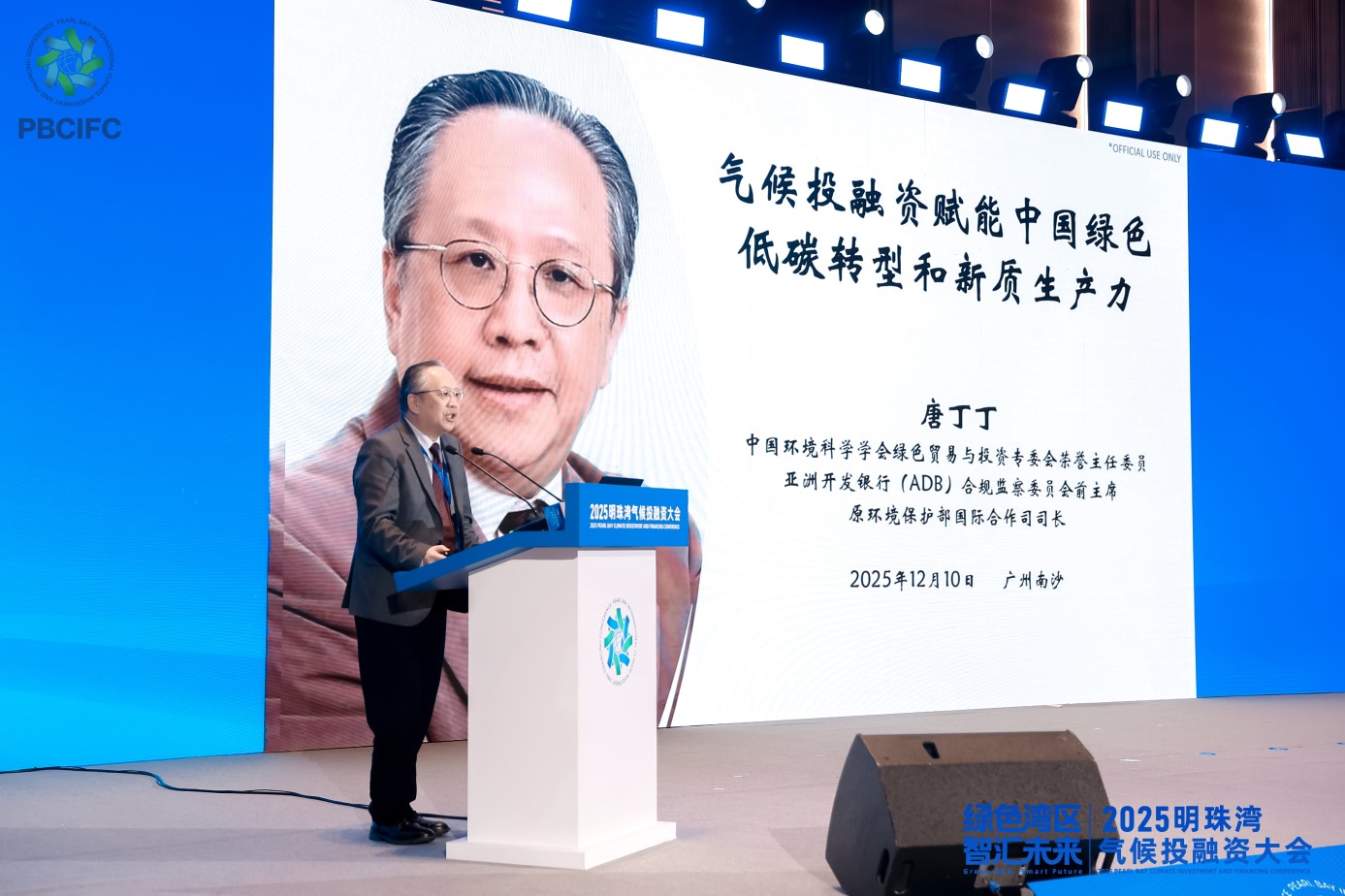
亚洲开发银行合规监察委员会前主席、中国环境科学学会绿色贸易与投资专委会荣誉主任委员唐丁丁:金融助力新质生产力高质量发展就是支持绿色低碳转型
Xin Hua Cai Jing· 2025-12-10 14:00
Core Viewpoint - Climate investment and financing should not merely focus on spending to reduce pollution and carbon emissions, but rather represent a profound transformation in development methods and a revolution in productivity, providing strategic support for China's economic transition to be not only "green" but also "high-quality" and "sustainable competitive" [1] Group 1: Climate Investment and Financing - Climate investment and financing address the core issue of "where the money comes from and where it goes," clearing significant obstacles for green and low-carbon transitions [2] - Traditional financial institutions often hesitate to invest in green technologies due to their long investment cycles, high risks, and uncertain short-term returns [2] - Climate investment and financing can fill market gaps by establishing special funds, green credit, green bonds, and transition finance tools to support these projects [2] Group 2: Recommendations for New Productive Forces - The first recommendation is to support breakthroughs from "0 to 1" through venture capital and private equity, and to promote industrialization from "1 to N" via project financing and asset securitization, driving the commercialization of technologies like large-scale energy storage and efficient hydrogen production [3] - The second recommendation focuses on cultivating emerging industrial clusters around "new three items," with climate investment and financing aiding in the formation of complete industrial and supply chains, while also providing transition finance for energy-saving transformations in traditional high-energy-consuming industries [3] - The third recommendation emphasizes creating new market demands and business models, with carbon markets and ESG investments being examples of new markets generated by climate investment and financing [4]

中国天楹:公司辽源、安达两大项目成功获得国家政策性金融工具2.8亿元资金支持
Zheng Quan Ri Bao· 2025-12-10 13:12
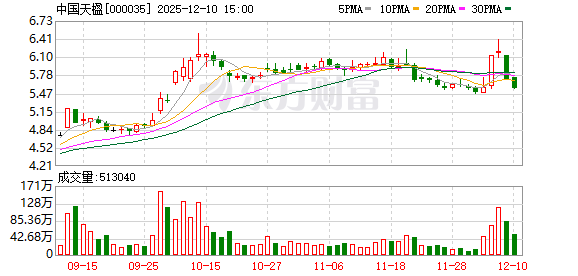
(文章来源:证券日报) 证券日报网12月10日讯中国天楹在12月10日回答调研者提问时表示,此前,国家发展改革委在新闻发布 会上宣布,将推出5000亿元的政策性金融工具,重点支持绿色低碳转型等具备战略意义的领域,以定向 资金支持推动产业升级与经济平稳健康发展。10月31日国家发展改革委正式披露,5000亿元资金已全部 精准投放至对应领域项目。其中,公司辽源、安达两大项目成功获得国家政策性金融工具2.8亿元资金 支持。这笔资金的注入,背后蕴含着远超资金本身的战略价值。这不仅是国家对项目技术可行性、环保 价值与行业引领性的权威背书,印证了项目在绿色低碳转型中的示范意义,更是对公司氢基能源一体化 布局与国家绿色贸易战略高度契合的直接肯定。这笔专项资金将定向用于辽源、安达项目的项目建设, 为项目按计划达产提供坚实保障,也为后续公司参与全球绿色燃料贸易筑牢产能根基。 ...

CPI同比涨幅扩大 核心CPI继续上涨——透视11月物价数据
Xin Hua Wang· 2025-12-10 09:47
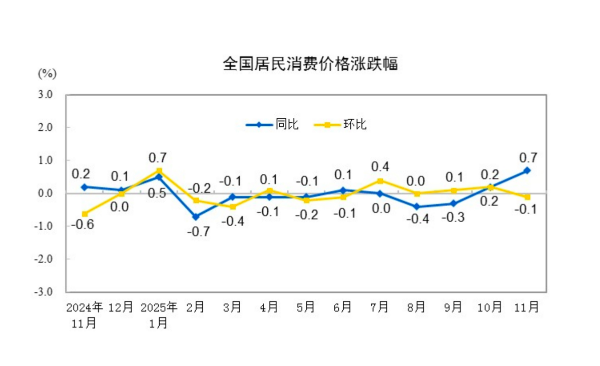
新华社北京12月10日电 题:CPI同比涨幅扩大 核心CPI继续上涨——透视11月物价数据 新华社记者王雨萧 国家统计局最新发布数据显示,11月份,全国居民消费价格指数(CPI)环比略降0.1%,同比上涨 0.7%,扣除食品和能源价格的核心CPI同比上涨1.2%,涨幅连续3个月保持在1%以上。 董莉娟分析,国内部分行业需求季节性增加带动价格上涨。各地"迎峰度冬"开始,煤炭、燃气需求季节 性增加,煤炭开采和洗选业价格环比上涨4.1%,煤炭加工价格上涨3.4%,燃气生产和供应业价格上涨 0.7%。入冬以来,防寒保暖产品进入消费旺季,毛织造加工价格上涨0.6%,羽绒制品加工价格上涨 0.2%。 "PPI同比下降2.2%,降幅比上月扩大0.1个百分点,主要受上年同期对比基数走高影响。"董莉娟说,随 着我国各项宏观政策不断显效,价格呈现积极变化。 综合整治"内卷式"竞争成效显现—— 重点行业产能治理持续推进,市场竞争秩序不断优化,煤炭开采和洗选业、光伏设备及元器件制造、锂 离子电池制造价格同比降幅均已连续多个月收窄;新能源车整车制造价格降幅比上月收窄0.6个百分 点。 新兴产业快速发展,带动相关行业价格同比上涨—— " ...
我国2025年11月份CPI同比涨幅扩大 核心CPI继续上涨
Yang Shi Xin Wen· 2025-12-10 07:47
Core Insights - In November, consumer spending continued to recover, with the Consumer Price Index (CPI) slightly decreasing by 0.1% month-on-month but increasing by 0.7% year-on-year, marking the highest year-on-year increase since March 2024 [1][2] - The core CPI, excluding food and energy prices, rose by 1.2% year-on-year, maintaining above 1% for three consecutive months [2] CPI Analysis - The year-on-year increase in CPI was primarily driven by a shift in food prices from decline to increase, with food prices rising by 0.2% after a previous decline of 2.9% [2] - Fresh vegetable prices saw a significant turnaround, increasing by 14.5% after a 7.3% decline, contributing approximately 0.49 percentage points to the CPI year-on-year [2] - Energy prices decreased by 3.4%, with gasoline prices dropping by 7.5% [2] - Service prices experienced a seasonal decline of 0.4%, impacting the month-on-month CPI decrease [4] PPI Analysis - The Producer Price Index (PPI) increased by 0.1% month-on-month, marking two consecutive months of growth, while the year-on-year decline expanded to 2.2% [5][6] - Seasonal demand increases in certain domestic industries, such as coal and gas, contributed to the month-on-month price increases [5] - The international price trends for metals and oil led to a mixed impact on domestic prices, with some sectors experiencing price increases while others saw declines [6] - New industries, such as new materials and green technology, are driving price increases in related sectors, with specific categories like external storage devices seeing a year-on-year price increase of 13.9% [6][7]
11月PPI环比连续两个月上涨,CPI同比创20个月新高
2 1 Shi Ji Jing Ji Bao Dao· 2025-12-10 07:40
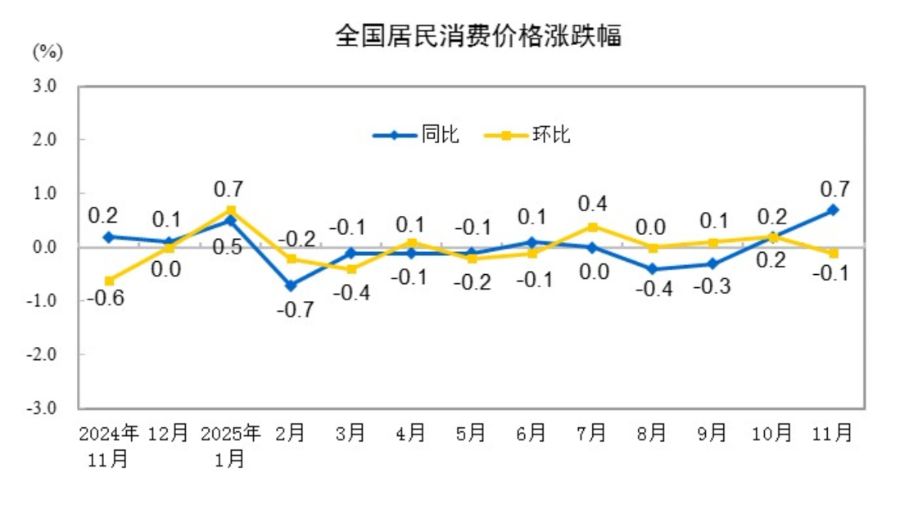
(全国居民消费价格涨跌幅来源:国家统计局) 核心CPI涨幅连续三月保持1%以上 同比来看,11月份,CPI同比上涨0.7%。其中,城市上涨0.7%,农村上涨0.4%;食品价格上涨0.2%,非食品价格上涨0.8%;消 费品价格上涨0.6%,服务价格上涨0.7%。 1—11月平均,CPI与上年同期持平。 国家统计局数据显示,9月份,CPI同比下降0.3%;10月份,同比上涨0.2%。对比前两个月,CPI由降转涨后持续恢复,11月CPI 同比上涨0.7%,涨幅比上月扩大0.5个百分点。 21世纪经济报道记者冉黎黎北京报道12月10日,国家统计局发布的数据显示,2025年11月份,全国居民消费价格(CPI)同比上 涨0.7%,环比下降0.1%;全国工业生产者出厂价格(PPI)同比下降2.2%,环比上涨0.1%。值得注意的是,11月CPI同比上涨 0.7%,涨幅比上月扩大0.5个百分点,为2024年3月份以来最高。PPI环比上涨0.1%,连续两个月上涨。 国家统计局城市司首席统计师董莉娟解读称,CPI同比涨幅扩大主要是食品价格由降转涨拉动。食品价格由上月下降2.9%转为上 涨0.2%,对CPI同比的影响由上月下拉0.5 ...
解读:2025年11月份CPI同比涨幅扩大 核心CPI继续上涨
Guo Jia Tong Ji Ju· 2025-12-10 07:24
CPI同比上涨0.7%,涨幅比上月扩大0.5个百分点,为2024年3月份以来最高,同比涨幅扩大主要是食品 价格由降转涨拉动。食品价格由上月下降2.9%转为上涨0.2%,对CPI同比的影响由上月下拉0.54个百分 点转为上拉0.04个百分点。食品中,鲜菜价格由上月下降7.3%转为上涨14.5%,为连续下降9个月后首次 转涨,对CPI同比的上拉影响比上月增加约0.49个百分点;鲜果价格由上月下降2.0%转为上涨0.7%;牛 肉和羊肉价格分别上涨6.2%和3.7%,涨幅均有扩大;猪肉和禽肉类价格分别下降15.0%和0.6%,降幅均 有收窄。能源价格下降3.4%,降幅比上月扩大1.0个百分点,其中汽油价格降幅扩大至7.5%。扣除食品 和能源价格的核心CPI同比上涨1.2%,涨幅连续3个月保持在1%以上。服务和扣除能源的工业消费品价 格分别上涨0.7%和2.1%,分别影响CPI同比上涨约0.29个百分点和0.53个百分点。其中扩内需政策措施 继续显效,家用器具和服装价格分别上涨4.9%和2.0%,飞机票、家政服务和在外餐饮价格分别上涨 7.0%、2.4%和1.2%。金饰品价格涨幅扩大至58.4%。另外,燃油小汽车和新能 ...
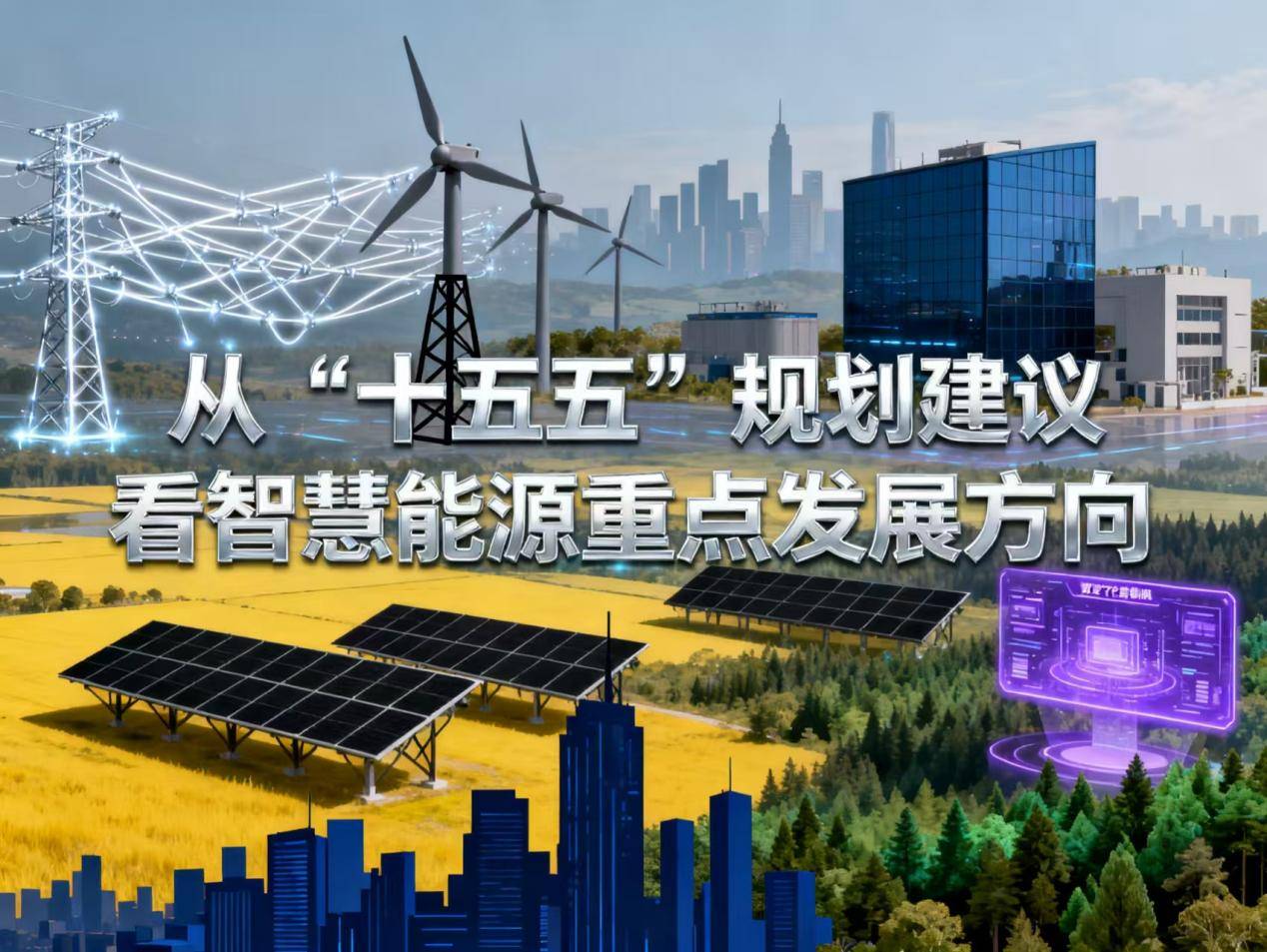
从“十五五”规划建议看智慧能源重点发展方向
Sou Hu Cai Jing· 2025-12-10 04:41
Core Viewpoint - The "14th Five-Year Plan" emphasizes the importance of energy transformation and upgrading for achieving high-quality development in China, with smart energy playing a crucial role in enhancing energy efficiency and optimizing energy structure [1][2]. Group 1: Development of New Energy - The plan highlights the need for a diversified approach to energy development, including wind, solar, hydro, and nuclear energy, to ensure high-quality development of clean energy [3]. - Smart energy systems will be utilized to achieve multi-energy complementarity, enhancing the stability and reliability of energy supply [3]. Group 2: Green and Low-Carbon Energy Consumption - The plan calls for accelerating the electrification of end-use energy, particularly in industrial, building, and transportation sectors, to promote green and low-carbon energy consumption [9]. - The development of smart energy solutions will facilitate the formation of green production and lifestyle habits, such as smart homes, green buildings, and electric vehicles [10]. Group 3: Digitalization and Intelligent Upgrade of Energy Systems - The application of big data and artificial intelligence in the energy sector is expected to improve operational efficiency and reliability through data collection and analysis [11]. - Investments will be increased in the digitalization and intelligent upgrade of energy systems during the "14th Five-Year Plan" period [11]. Group 4: Reform and Innovation in Energy Markets - The plan aims to improve energy market mechanisms, including electricity and carbon trading markets, to optimize resource allocation and enhance market vitality [16]. - Emphasis is placed on promoting energy technology innovation and industrial upgrades, with increased investment in research and development to support breakthroughs in energy technology [18]. Group 5: Overall Direction for Smart Energy Development - The "14th Five-Year Plan" outlines key development directions for smart energy, including large-scale development and efficient utilization of new energy, green low-carbon transformation of energy consumption, digitalization and intelligent upgrades of energy systems, and reform and innovation in energy markets [20]. - The plan encourages international cooperation to address global energy challenges and improve the global energy governance system [20].
11月CPI同比升至20个月新高,发生了什么
第一财经· 2025-12-10 04:01
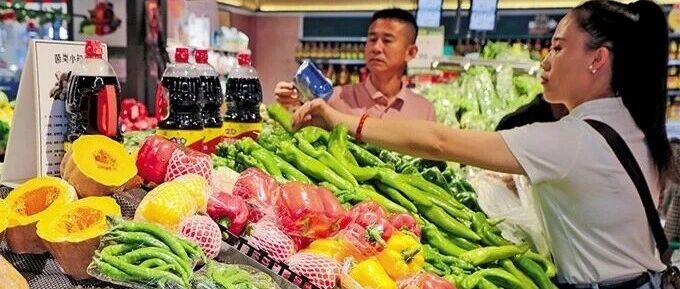
Core Viewpoint - The article discusses the latest Consumer Price Index (CPI) and Producer Price Index (PPI) data released by the National Bureau of Statistics, highlighting a recovery in consumer spending and the impact of various factors on price changes in November 2024 [3]. Group 1: CPI Analysis - In November, the CPI increased by 0.7% year-on-year, the highest since March 2024, driven primarily by a turnaround in food prices, which shifted from a 2.9% decline to a 0.2% increase [3]. - Fresh vegetable prices saw a significant change, rising by 14.5% year-on-year after nine consecutive months of decline, contributing approximately 0.49 percentage points to the CPI [3]. - Core CPI, excluding food and energy, rose by 1.2% year-on-year, maintaining a growth rate above 1% for three consecutive months, with notable increases in household appliances and clothing prices [6]. Group 2: PPI Analysis - The PPI increased by 0.1% month-on-month in November, marking the second consecutive month of growth, influenced by seasonal demand increases in certain domestic industries [8]. - Year-on-year, the PPI decreased by 2.2%, with the decline rate widening by 0.1 percentage points compared to the previous month, primarily due to high comparison bases from the previous year [9]. - Prices in key industries such as coal mining and photovoltaic equipment manufacturing showed a narrowing of year-on-year decline rates, indicating improvements in market competition and production capacity management [9]. Group 3: Future Outlook - The article suggests that the CPI is likely to continue rising in the coming months due to low comparison bases and effective consumption promotion policies, with a projected central inflation level of around 0.7% for the fourth quarter [10]. - The PPI is expected to show positive changes that could benefit business operations and economic circulation, emphasizing the need for continued expansion of domestic demand and effective investment [10].
11月CPI同比升至20个月新高,发生了什么
Di Yi Cai Jing· 2025-12-10 03:45
扣除食品和能源价格的核心CPI同比上涨1.2%。 国家统计局12月10日发布最新居民消费价格指数(CPI)和工业生产者出厂价格指数(PPI)数据。 随着扩内需政策持续落地见效,居民消费持续恢复,11月份CPI同比上涨0.7%,为2024年3月份以来最 高。受国内部分行业供需结构优化、国际大宗商品价格传导等因素影响,PPI环比上涨0.1%,同比下降 2.2%。 国家统计局城市司首席统计师董莉分析,11月CPI同比上涨0.7%,涨幅比上月扩大0.5个百分点,同比涨 幅扩大主要是食品价格由降转涨拉动。食品价格由上月下降2.9%转为上涨0.2%,对CPI同比的影响由上 月下拉0.54个百分点转为上拉0.04个百分点。 食品中,鲜菜价格由上月同比下降7.3%转为上涨14.5%,为连续下降9个月后首次转涨,对CPI同比的上 拉影响比上月增加约0.49个百分点;鲜果价格由上月下降2.0%转为上涨0.7%;猪肉和禽肉类价格分别同 比下降15.0%和0.6%,降幅均有收窄。 PPI同比下降2.2%,降幅比上月扩大0.1个百分点,主要受上年同期对比基数走高影响。 董莉娟表示,我国各项宏观政策不断显效,价格呈现积极变化。综合整治" ...