
通用人工智能(AGI)

Search documents
中概股多数下挫,小鹏跌超6%,蔚来跌超4%,特斯拉跌超3%,微软连跌8天
2 1 Shi Ji Jing Ji Bao Dao· 2025-11-07 23:32
Market Overview - The three major U.S. stock indices closed mixed, with the Dow Jones up 0.16%, the S&P 500 up 0.13%, and the Nasdaq down 0.21% [1] - Large-cap tech stocks showed mixed performance, with the Wande American Tech Giants Index down 0.56% [2] Individual Stock Performance - Tesla fell over 3%, Google down over 2%, and Apple down 0.48%. In contrast, Amazon rose 0.56%, Facebook up 0.45%, and Nvidia slightly increased by 0.04% [2][3] - Energy stocks collectively rose, with ExxonMobil up over 2%, Chevron up over 1%, and ConocoPhillips up over 1% [2] Sector Performance - Airline stocks mostly increased, with American Airlines up over 3% and Southwest Airlines up 3%, while Boeing fell nearly 1% [4] - Semiconductor stocks generally declined, with the Philadelphia Semiconductor Index down 1.01% [4] Chinese Stocks - Chinese stocks mostly fell, with the Nasdaq Golden Dragon China Index down 0.95% and the Wande Chinese Tech Leaders Index down 0.98% [4] Precious Metals - Spot gold rose 0.58% to $4000.29 per ounce, while COMEX gold futures increased by 0.42% to $4007.8 per ounce [5] Economic Context - There is a growing consensus of risk in the U.S. capital markets regarding the sustainability of the AI narrative, primarily due to uncertainty surrounding the path to achieving General Artificial Intelligence (AGI) [6] - The U.S. government shutdown has entered its 37th day, impacting economic reporting, including the delay of the October non-farm payroll report [6]


中概股多数下挫,小鹏跌超6%,蔚来跌超4%,特斯拉跌超3%,微软连跌8天
21世纪经济报道· 2025-11-07 23:31
记者丨黎雨桐 编辑丨曾静娇 美国三大股指收盘涨跌不一,道指涨0.16%,标普500指数涨0.13%,纳指跌0.21%。 能源股集体上涨,埃克森美孚涨超2%,雪佛龙涨逾1%,康菲石油涨超1%,斯伦贝谢涨近1%,西方石油涨超2%。 航空股多数上涨,波音跌近1%,美国航空涨超3%,达美航空涨近2%,西南航空涨3%,美联航涨超1%。 芯片股多数下跌,费城半导体指数跌1.01%,微芯科技跌逾5%,ARM跌超3%,迈威尔科技跌逾2%,英特尔涨超2%。 中概股多数下跌,纳斯达克中国金龙指数跌0.95%,万得中概科技龙头指数跌0.98%。 个股方面, 个股方面,小鹏汽车跌超6%,再鼎医药、小马智行跌超5%,腾讯音乐、禾赛科技,跌超4%;大全新能源涨超9%,阿特斯太阳能 涨超6%,唯品会、华住集团涨逾2%,百胜中国涨逾1%。 大型科技股涨跌互现,万得美国科技七巨头指数下跌0.56%。 个股方面,特斯拉跌超3%,谷歌跌超2%,苹果跌0.48%,亚马逊涨0.56%,脸书涨0.45%,微软跌0.06% 连跌8天,创2011年11月以来最长连 跌天数。 英伟达涨0.04%。 | 资彩 成分 | 资讯 | 相关基金 | 月度收益 | | ...

“杭州六小龙”同台 乌镇峰会聚焦AI赋能美好生活
Shang Hai Zheng Quan Bao· 2025-11-07 19:10
Core Viewpoint - The 2025 World Internet Conference in Wuzhen focuses on building an open, cooperative, and inclusive digital future, emphasizing the importance of collaboration in the digital economy [2]. Group 1: AI Development and Impact - Alibaba's CEO, Wu Yongming, highlighted the rapid evolution of AI technology towards Artificial General Intelligence (AGI) and eventually Super Artificial Intelligence (ASI), expressing confidence in achieving significant milestones by 2035 [4]. - JD Group's founder, Liu Qiangdong, projected a tenfold growth in the global tourism market over the next five years, driven by advancements in technology that will create new job opportunities and reduce labor intensity [4]. - JD Logistics has developed automated equipment capable of large-scale deployment, with plans to establish the world's first fully unmanned delivery station by April next year [6]. Group 2: AI Accessibility and Inclusivity - Wu Yongming emphasized that the new generation of AI products will be accessible to various demographics, including the elderly and disabled, aiming to bridge the digital divide [6]. - Alibaba's "Mota" community has become the largest AI open-source community in China, with over 120,000 open-source models and 5,500 services, serving more than 20 million users [7]. Group 3: Future of Robotics and Technology - The "Hangzhou Six Little Dragons" discussed the rapid advancements in robotics, with expectations for significant developments in the coming years [8]. - Companies like Qiang Brain Technology are focusing on brain-computer interface technology to assist individuals with disabilities, while also planning to develop products for the general public [9]. - Cloud Deep Technology aims to replace human labor in hazardous environments with robots, showcasing the first humanoid robot capable of outdoor operations [10].


杭州“六小龙”在乌镇罕见同台,他们聊了什么?
Nan Fang Du Shi Bao· 2025-11-07 16:36
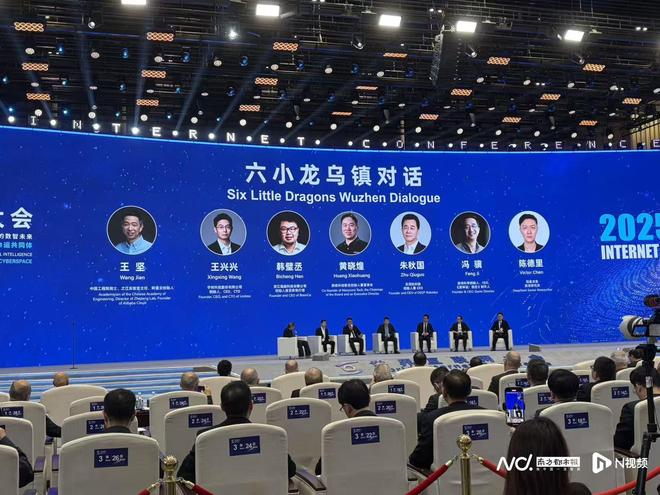
Group 1 - The "Six Little Dragons" of Hangzhou, representing six emerging tech companies, were formally introduced at the World Internet Conference in Wuzhen on November 7 [1] - The event featured discussions on AI, with DeepSeek's representative emphasizing the company's long-term focus on achieving Artificial General Intelligence (AGI) and prioritizing core technological breakthroughs over short-term tasks [3][4] - The representative from DeepSeek expressed optimism about the next 3 to 5 years, predicting a "honeymoon period" where AI will help solve complex problems and create greater value [3] Group 2 - Concerns were raised about the potential job displacement due to AI advancements in the next 5 to 10 years, with tech companies needing to act as "whistleblowers" to inform society about the risks of job replacement [4] - The discussion highlighted the difference between the current AI revolution and past industrial revolutions, noting that AI could surpass human intelligence, leading to significant societal impacts [5] - Companies like Yushu Technology and Cloud Deep Technology acknowledged the challenges in developing embodied intelligent robots, particularly in data collection and model training [5][6] Group 3 - Group Core Technology, which is seeking a listing on the Hong Kong stock market, has shifted its strategy to focus on providing services to robotics hardware companies, leveraging its expertise in spatial intelligence [6] - Strong Brain Technology is pursuing non-invasive brain-computer interface technology, facing challenges in data collection and analysis due to the complexity of the human brain [7] - Game Science, known for developing "Black Myth: Wukong," highlighted the growing appreciation for domestic products among Chinese consumers when they meet high-quality standards [8]
乌镇峰会揭秘AI未来,王兴兴:机器人将有更多惊喜
21世纪经济报道· 2025-11-07 14:26
Group 1 - The World Internet Conference in Wuzhen focuses on building a community in cyberspace, emphasizing digital economy and cultural heritage protection [1] - Over 1,600 guests from more than 130 countries and regions attended the conference, highlighting its global significance [1] - The conference features 24 sub-forums discussing various topics, showcasing the transition from "connected" to "intelligent" internet [3] Group 2 - AI-driven industrialization, smart manufacturing, and logistics are core trends in China's digital economy, with companies like JD.com leading the way [5] - JD.com aims to reduce social logistics costs to below 10% of GDP within five years, indicating a significant acceleration in logistics efficiency [5] - The first fully unmanned delivery station is set to be established by JD.com by April next year, showcasing advancements in automation [5] Group 3 - The emergence of embodied intelligence and spatial intelligence marks a significant shift in AI technology, moving from virtual to physical applications [6] - The concept of spatial intelligence is seen as a crucial milestone in AI development, with expectations for breakthroughs in the coming years [6] - Companies are preparing for a future where robots will play a significant role in daily life, necessitating advanced spatial intelligence for management [6] Group 4 - Domestic internet giants are investing heavily in large-scale AI infrastructure, progressing towards Artificial General Intelligence (AGI) [8] - The development of AI is seen as a three-stage process, with the current phase being the beginning of AGI [8] - AGI is expected to evolve into a "digital life form" capable of perception, reasoning, and collaboration, moving beyond simple language processing [8] Group 5 - The current limitations of AI include a lack of stable intelligence and the inability to self-iterate like humans, which is a focus for future development [9] - Humanoid robots are viewed as ideal carriers for AGI, providing a means for interaction with the physical world [9] - The Wuzhen Conference serves as a critical observation point for the evolution of China's internet ecosystem, highlighting its role in the global AI landscape [9]

乌镇峰会剧透AI未来:互联网进入智联模式,空间智能将站上C位
2 1 Shi Ji Jing Ji Bao Dao· 2025-11-07 13:17
今年是构建网络空间命运共同体理念提出十周年。当前,互联网已成数字时代核心基础设施,其作用延 伸至哪些领域,又带来哪些新引擎? 11月7日,2025年世界互联网大会乌镇峰会(以下简称"乌镇峰会")在浙江乌镇开幕。 本届乌镇峰会以"共筑开放合作、安全普惠的数智未来——携手构建网络空间命运共同体"为主题,围绕 数字经济、文化遗产数字化保护与传承等议题举办24场分论坛,来自130多个国家和地区的1600多名嘉 宾参会。 人工智能的爆发,也让一批"硬科技创业者"站到了乌镇峰会的舞台中央。本届乌镇峰会特设"六小龙乌 镇对话",中国工程院院士、之江实验室主任王坚与杭州"六小龙"企业负责人,围绕全球人工智能技术 创新发展等前沿趋势进行交流。 当前,智能制造、智慧物流、AI驱动产业化,正成为中国数字经济发展的核心趋势,以京东为代表的 企业正在加速推动供应链与物流体系的智能化升级。 京东集团创始人、董事局主席刘强东表示,随着人工智能和机器人时代的到来,未来5年之内整个中国 的社会化物流成本占GDP的比重能降到10%以内,"也就是未来5年的进度可能会超过过去10年甚至15年 的进度。" 到明年4月份,京东将建成全球第一个全无人的配 ...
OpenAI和微软的关系没那么糟,跟英伟达也没那么好
创业邦· 2025-11-07 10:39
Core Insights - OpenAI has restructured its partnership with Microsoft, ending the exclusive agreement with Azure and forming a new strategic collaboration with AWS worth $38 billion, which includes access to extensive computing resources [5][10][12]. Group 1: OpenAI's Strategic Shift - OpenAI's focus has shifted from solely training models to making them widely accessible, indicating a transition from a "model development lab" to a "global AI platform company" [14][15]. - The partnership with AWS is seen as a move to enhance commercial reach rather than just technological breakthroughs, contrasting with the previous exclusive relationship with Azure [15][16]. Group 2: Implications of the New Alliance - The new collaboration with AWS allows OpenAI to leverage a broader ecosystem, ensuring its models are available across multiple platforms, including Azure, AWS, and potentially Google Cloud [14][15]. - The relationship with Microsoft remains crucial, as both companies aim to redefine the AI industry's value distribution logic amidst rising competition and technological advancements [22][23]. Group 3: Insights on Computing Power - Both Sam Altman and Satya Nadella emphasized that the future of computing power will eventually become abundant, with the real challenge being the physical infrastructure needed to support it [19][21]. - They highlighted the importance of software optimization over just hardware advancements, suggesting a shift in focus from GPU manufacturing to platform services and system integration [21][22].



泡沫还是繁荣?揭秘美股“AI神话”真相
2 1 Shi Ji Jing Ji Bao Dao· 2025-11-07 10:34
Core Viewpoint - The article discusses the potential bursting of the AI bubble in the U.S. stock market, highlighting the growing consensus on the risks associated with AI investments and the uncertainty surrounding the development of Artificial General Intelligence (AGI) [1][2]. Group 1: Market Trends - Recent global market fluctuations, including a significant drop in U.S. stock indices, are attributed to concerns over the sustainability of the AI narrative [1]. - A survey indicates that 95% of companies using generative AI in the U.S. have not achieved profitability from the technology, raising questions about the long-term viability of AI investments [2]. - AI-related spending in the U.S. is reported to contribute more to GDP growth than all consumer spending combined, with projections suggesting that 92% of GDP growth in the first half of 2025 could stem from AI investments [2]. Group 2: Financial Implications - OpenAI, valued at nearly $1 trillion, reported a net loss of $13.5 billion in the first half of the year, reflecting the financial strain on leading AI companies [2]. - The current AI bubble is compared to Japan's economic bubble, where companies inflated asset values through mutual investments and high valuations, suggesting a similar pattern in the U.S. AI sector [3]. - The proliferation of data centers in the U.S. and the bundling of long-term leases into bonds are likened to the mortgage-backed securities that contributed to the subprime crisis, indicating potential hidden leverage risks [3]. Group 3: Competitive Landscape - The U.S. approach to AI focuses on the uncertain future of AGI, while China adopts a more pragmatic, application-driven strategy in sectors like autonomous driving and biopharmaceuticals, leading to healthier business ecosystems [4]. - Investment firms like Goldman Sachs and Morgan Stanley are warning of potential corrections in U.S. tech stocks while expressing optimism about Chinese markets in AI and electric vehicles, signaling a shift in capital preferences [4].
阿里巴巴CEO吴泳铭:下一代计算机是超级AI云 | 巴伦精选
Sou Hu Cai Jing· 2025-11-07 07:48
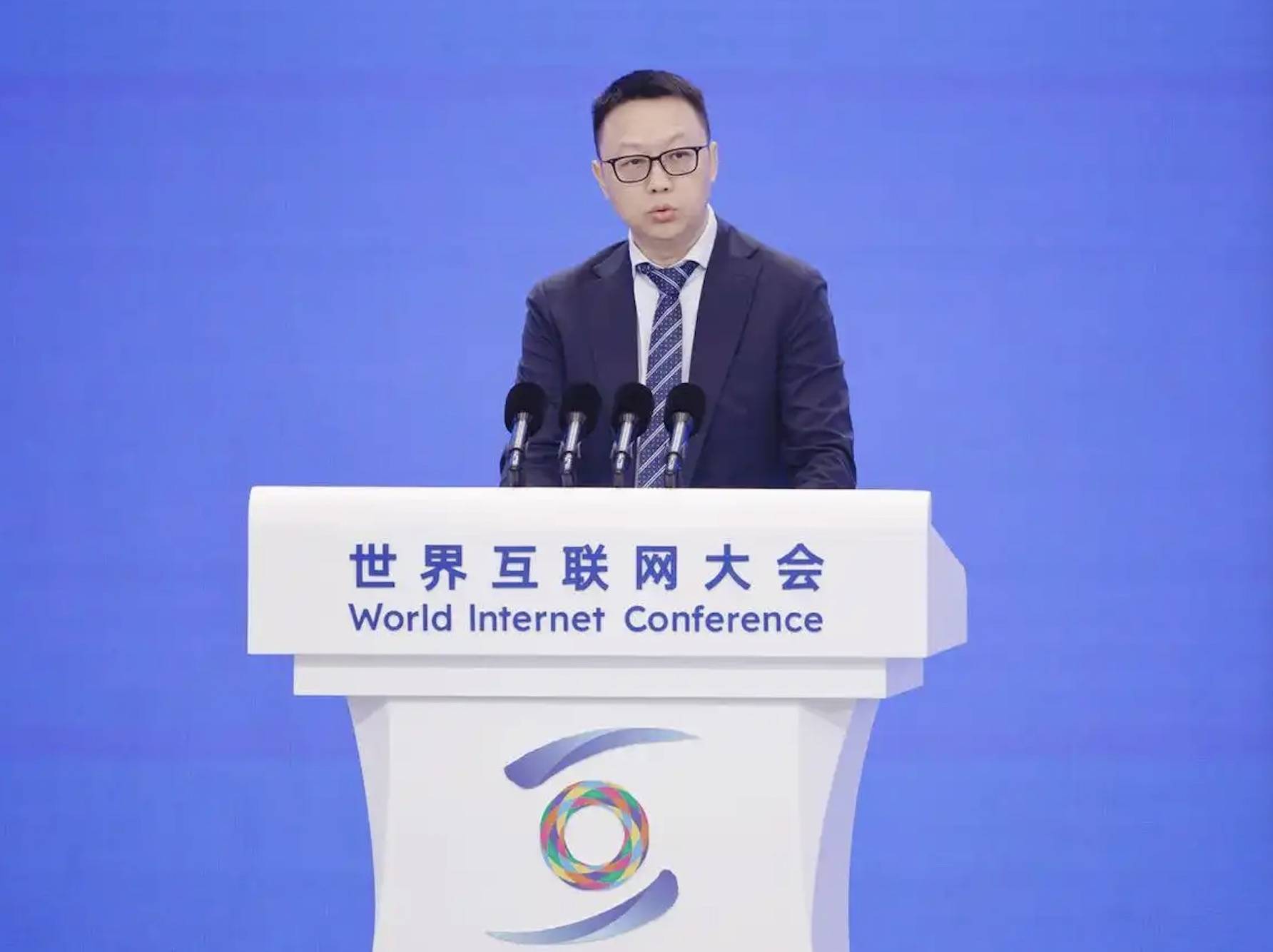
Core Insights - Alibaba Group's CEO, Wu Yongming, emphasizes a shift in focus from e-commerce and digital economy to artificial intelligence (AI) during the World Internet Conference, highlighting the company's commitment to AI development [2][3] - Wu outlines three stages of AI evolution: intelligent emergence, general artificial intelligence (AGI), and super artificial intelligence (ASI), indicating that the industry is currently at the beginning of the AGI stage [3][4] - The company positions Alibaba Cloud as a full-stack AI service provider, aiming to support the growing demand for large-scale computing infrastructure necessary for the AI revolution [5] AI Development Stages - The first stage, intelligent emergence, involves AI learning from vast human knowledge to solve real-world problems, characterized by "learning humans" [4] - The second stage, AGI, is marked by AI agents performing numerous tasks in the digital realm and interacting with the physical world, characterized by "assisting humans" [3][4] - The third stage, ASI, will see AI autonomously learning and iterating, characterized by "surpassing humans," but this stage is still a long way off [4][5] Infrastructure and Technology - The demand for super-scale computing necessitates a robust infrastructure, which Alibaba aims to fulfill through its "super AI cloud" strategy [5] - Alibaba Cloud's offerings include a comprehensive AI service chain that encompasses model training, inference, deployment, and optimization, moving beyond mere computing resource provision [2][5] Community and Accessibility - The "Mota" community, established by Alibaba, has become the largest AI open-source community in China, providing a platform for developers to access and contribute to over 120,000 open-source models [6][7] - The community has seen significant participation from small organizations and independent developers, with initiatives aimed at leveraging AI for social good, particularly in education and support for vulnerable groups [6][7] Market Position and Future Outlook - Alibaba's "Tongyi Qianwen" model has gained recognition as a leading open-source model, dominating rankings and fostering a developer-friendly ecosystem [5] - The company expresses confidence in achieving the goal of transitioning to an intelligent economy and society by 2035, driven by AI's potential to enhance productivity and liberate human capabilities [4]
阿里巴巴CEO吴泳铭:打造超级AI云 推动开源开放和技术普惠
Huan Qiu Wang· 2025-11-07 06:53
Core Insights - Alibaba Group's CEO emphasizes the accelerated evolution of AI technology towards Artificial General Intelligence (AGI) and ultimately Super Artificial Intelligence (ASI) [1][2] - The company is significantly investing in building a super AI cloud to promote open-source and technology accessibility [1] - AI development is categorized into three stages: emergence of intelligence, transition to AGI, and realization of ASI, with the current focus on the second stage [1] Group 1 - The first stage of AI development involves the emergence of intelligence, where AI learns from vast human knowledge to solve real-world problems [1] - The second stage, currently underway, is characterized by AI's ability to assist humans in various digital tasks and connect with the physical world [1] - The third stage aims for ASI, where AI will autonomously learn and iterate, requiring a significant amount of time to achieve [1] Group 2 - The Chinese government's initiative aims for the country to fully enter a new stage of intelligent economy and society by 2035 [2] - The CEO expresses confidence in achieving this decade-long goal, highlighting the transformative potential of AI on productivity and human liberation [2] - Alibaba is constructing large-scale AI infrastructure to provide leading AI services to global developers [2]