
A股市场

Search documents
苍原资本炒股-开户:A股市场或逐步转入震荡盘整格局
Sou Hu Cai Jing· 2025-09-05 05:54
Group 1 - A-shares experienced a volatile decline, with notable performance in sectors such as consumption, photovoltaic equipment, banking, and securities, while aerospace, communication equipment, semiconductors, and electronic chemicals lagged behind [1][3] - The market is currently benefiting from favorable internal and external policy conditions, with significant improvements in market liquidity, as evidenced by trading volumes exceeding 2 trillion yuan for several consecutive days [1] - Global capital is flowing into the A-share market, with an acceleration of household savings moving towards capital markets, creating a continuous source of incremental funds [1] Group 2 - The A-share market showed a significant volume pullback, with all three major indices closing lower, and a notable increase in risk-averse sentiment among investors [3] - The technology growth sector mostly declined, while retail, food, and other defensive sectors performed well, indicating a divergence in market performance [3] - The outlook suggests that the market may gradually transition into a period of consolidation, with key variables to monitor including improvements in macroeconomic data, changes in overseas market conditions, and institutional repositioning following half-year earnings disclosures [3]


政策与资金双轮驱动 A股市场中长期向好趋势明显
Zhong Zheng Wang· 2025-09-05 05:29
Group 1 - The A-share market has experienced a significant recovery since the "9.24" market event in 2024, with the Shanghai Composite Index rising by 36.99%, the Shenzhen Component Index by 49.92%, and the ChiNext Index by 81.39% from September 24, 2024, to September 4, 2025 [1] - The margin trading balance in the A-share market has remained above 2 trillion yuan from August 5 to September 3, 2024, indicating strong liquidity [1] - The Shanghai Composite Index is considered a key benchmark for asset allocation due to its broad industry coverage and high correlation with the macro economy, making it sensitive to policy changes [1] Group 2 - The ETF products linked to the Shanghai Composite Index, such as the Fortune Shanghai Composite Index ETF (510210), have shown high transparency, low cost, and strong liquidity, making them suitable for long-term investment [1] - Since the "9.24" event, the Fortune Shanghai Composite Index ETF has increased by over 40%, demonstrating the ability to generate excess returns compared to the index [1] - Regulatory bodies have introduced favorable policies to support the healthy development of the stock market, including optimizing trading mechanisms and encouraging long-term capital inflow [1] Group 3 - Multiple institutions maintain an optimistic outlook for the A-share market, citing factors such as liquidity support and rising policy expectations, with a forecast of continued upward trends in the medium to long term [2] - The position of the Shanghai Composite Index as a benchmark for asset allocation is expected to strengthen due to trends like the migration of household savings and declining risk-free interest rates [2] - Investors are encouraged to utilize related ETF products to seize systematic investment opportunities amid China's high-quality economic development [2]
A股大调整!继续加仓还是减仓?
中国基金报· 2025-09-05 01:49
Group 1 - The article highlights a strong performance in the A-share market during August, with the index breaking through the 3,700 and 3,800 points, reaching a ten-year high [1] - In September, market sentiment showed signs of change, with the Shanghai Composite Index struggling to maintain the 3,800 points level, raising questions about whether this adjustment is a healthy pullback or the beginning of a trend reversal [1] - The article invites participation in a survey to gauge investor sentiment, emphasizing the importance of understanding market emotions for future investment decisions [1] Group 2 - The survey aims to reveal market consensus and divergences across four core dimensions: short-term expectations, behavioral signals, risk appetite, and profit-loss pressure [4] - The initiative targets a wide range of investors, from new entrants to seasoned participants, positioning itself as a tool for understanding market dynamics [4] - The article suggests that emotions are a significant aspect of capital markets, indicating that understanding investor sentiment can provide insights into market truths [4]

盘前机构策略:A股市场或逐步转入震荡盘整格局
Sou Hu Cai Jing· 2025-09-05 01:40
Group 1 - The A-share market experienced a decline on Thursday, with sectors such as consumption, photovoltaic equipment, banking, and securities performing well, while aerospace, communication equipment, semiconductors, and electronic chemicals lagged behind [1][2] - The current A-share market is benefiting from favorable internal and external policies, with abundant liquidity and significant improvement in market funding, as evidenced by trading volumes exceeding 2 trillion yuan for several consecutive days [1] - Global capital is flowing into the A-share market, with a notable shift of household savings towards capital markets, creating a continuous source of incremental funds [1] Group 2 - The market is currently facing a mixed performance, with increased risk aversion among investors leading to notable adjustments in high-priced stocks, while defensive sectors like retail and food are showing resilience [2] - Looking ahead, the market may be transitioning into a phase of consolidation after a period of rapid adjustments, with a recommendation to remain patient and wait for signs of stabilization before re-entering [2] - Key variables to monitor for future market performance include improvements in macroeconomic data, changes in overseas market conditions, particularly regarding the Federal Reserve's monetary policy, and the direction of institutional reallocations following the semi-annual report disclosures [1][2]
【机构策略】A股市场或逐步转入震荡盘整格局
Zheng Quan Shi Bao Wang· 2025-09-05 01:06
Group 1 - The A-share market experienced a decline on Thursday, with sectors such as consumption, photovoltaic equipment, banking, and securities performing well, while aerospace, communication equipment, semiconductors, and electronic chemicals lagged behind [1][2] - The current A-share market is benefiting from favorable internal and external policies, with abundant liquidity and a noticeable improvement in market funding, as evidenced by trading volumes exceeding 2 trillion yuan for several consecutive days [1] - Global allocation funds are flowing into the A-share market, with household savings accelerating their shift to capital markets, creating a continuous source of incremental funds [1] Group 2 - The market is under short-term pressure from overbought conditions, necessitating a technical adjustment, while liquidity remains a key foundation for the market [2] - Future market directions to watch include the potential for a second phase of a bull market with rapid sector rotation, focusing on areas with low valuations and improving economic conditions [2] - There is an expectation for policy signals to intensify in response to economic pressures in the second half of the year, particularly regarding supply-side measures that could catalyze cyclical sectors in the medium to long term [2]
A股上涨空间仍在,瑞银最新展望!海外投资者态度越发积极
券商中国· 2025-09-04 23:33
Core Viewpoint - Investor confidence in Chinese assets is increasing, with a notable rise in overseas investors' willingness to allocate to non-USD assets, particularly Chinese assets, indicating a potentially strong year for Chinese assets [1][4]. Group 1: Foreign Investment Trends - As of June, the scale of foreign investors' holdings in A-shares exceeded 3 trillion RMB, accounting for 7.4% of the total free float market capitalization of A-shares [1]. - The number of overseas investors from the US and the Middle East attending the A-share seminar has significantly increased compared to previous years, reflecting a growing interest in Chinese assets [1]. - The growth of ETFs and new programmatic trading rules has led to increased attention from trading-type foreign capital towards the Chinese market, while allocation-type and investment-type foreign capital remain cautious, focusing on the sustainability of fundamental policies [3]. Group 2: Economic and Market Conditions - Since September of last year, overseas investors have become more positive about China, supported by domestic policies providing bottom protection for A-shares and the emergence of new economic sectors [4]. - The current global interest rate cut expectations and low domestic interest rates create a favorable liquidity environment for capital inflow into the Chinese stock market [3]. - A-shares are expected to maintain an upward trend due to continuous economic policy support and a clearer external environment, with high-quality companies likely to stand out in the new economic development cycle [4]. Group 3: Market Dynamics and Performance - The narrative of building an investor-centric financial market in A-shares has been realized, with a slow bull market expected to continue [6]. - The current market rally is largely driven by liquidity rather than corporate earnings changes, indicating that the shift of household financial assets is just beginning [6]. - Growth stocks are favored for investment in the second half of the year, with expectations of better performance for small-cap stocks, although the marginal difference compared to large-cap stocks may not be as pronounced as in the first half [6][7]. Group 4: Profitability and Valuation - A-share profitability is expected to improve significantly this year, with an estimated growth rate of around 6% for the full year, driven by a base effect and recovery in earnings [9]. - Despite the rebound in market valuations, the decline in government bond yields is likely to push A-share valuations higher, as A-shares remain relatively attractive compared to global markets [9]. - The technology sector's performance is supported by policy backing and changing industry trends, with further room for growth in valuations as more fundamental improvements and earnings recoveries occur [9][10].

前海开源再融资股票:2025年上半年利润453.54万元 净值增长率1.1%
Sou Hu Cai Jing· 2025-09-04 13:31
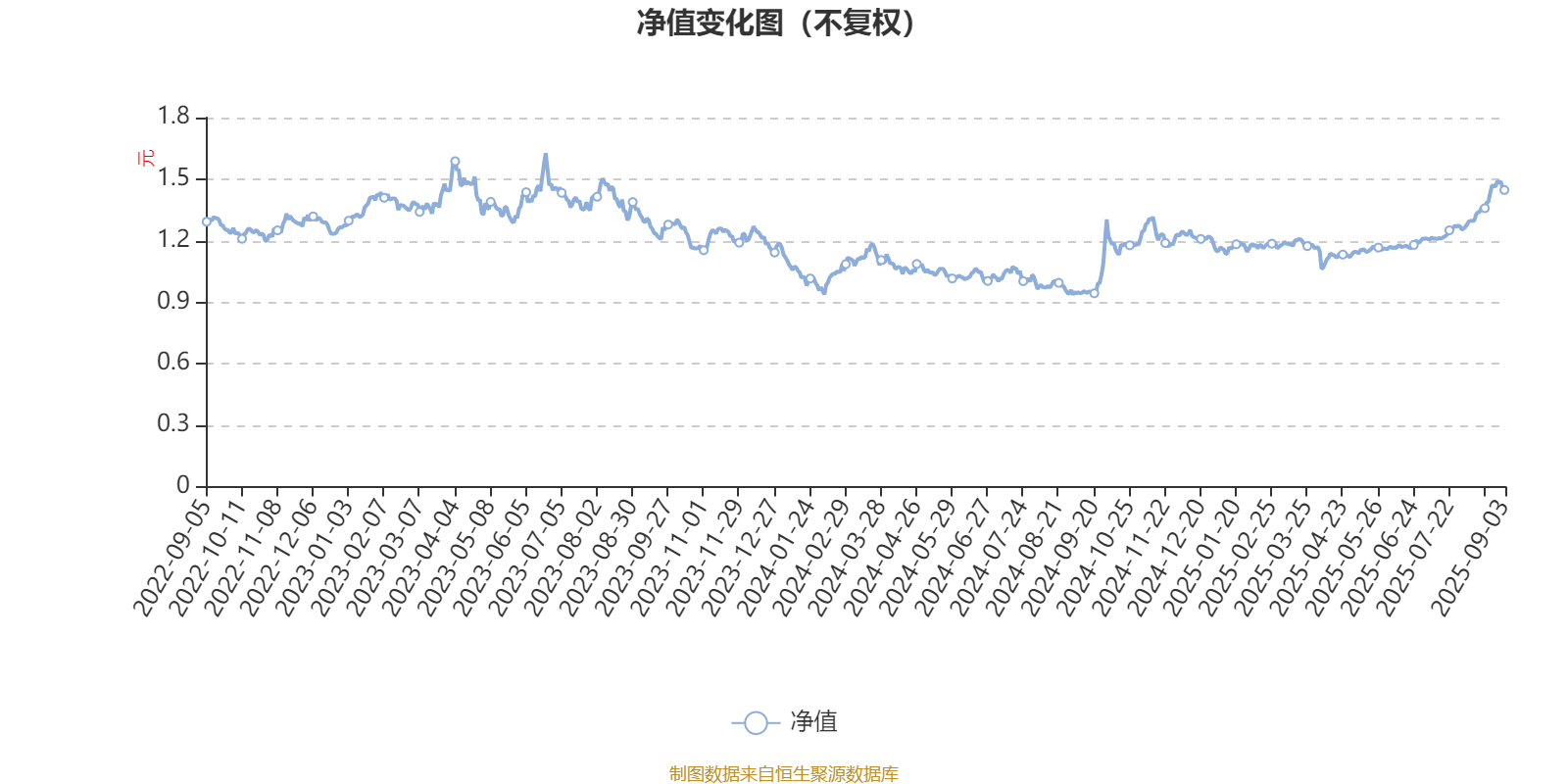
Core Viewpoint - The Qianhai Kaiyuan Refinance Stock Fund (001178) reported a profit of 4.5354 million yuan for the first half of 2025, with a weighted average profit per fund share of 0.0115 yuan. The fund's net value growth rate was 1.1%, and its total scale reached 461 million yuan by the end of the first half of the year [3]. Fund Performance - As of September 3, the fund's net value growth rates were as follows: 24.96% over the last three months, 23.78% over the last six months, 52.63% over the last year, and 11.83% over the last three years, ranking 53/167, 54/167, 56/166, and 67/160 among comparable funds respectively [6]. Valuation Metrics - As of June 30, 2025, the fund's weighted price-to-earnings (P/E) ratio was approximately 49.94 times, compared to the industry average of 23.39 times. The weighted price-to-book (P/B) ratio was about 2.34 times, slightly lower than the industry average of 2.44 times. The weighted price-to-sales (P/S) ratio was around 1.01 times, significantly lower than the industry average of 2.1 times [11]. Growth Metrics - For the first half of 2025, the fund's weighted revenue growth rate was 0.12%, and the weighted net profit growth rate was 1.71%. The weighted annualized return on equity was 0.05% [18]. Risk and Return Analysis - The fund's Sharpe ratio over the last three years was 0.2348, ranking 45/159 among comparable funds. The maximum drawdown over the last three years was 42.41%, with the largest single-quarter drawdown occurring in Q1 2024 at 20.78% [25][27]. Fund Composition - As of June 30, 2025, the fund had a total of 85,700 holders, with a total of 384 million shares held. Management personnel held 173,700 shares (0.05%), institutions held 21.13%, and individual investors accounted for 78.87% [35]. The fund's turnover rate for the last six months was approximately 94.28%, consistently below the industry average for one year [38]. The fund's top ten holdings accounted for over 60% of its assets for nearly two years, with major stocks including Seres, BAIC Blue Valley, Shandong Gold, and others [40].
收评:股指表现强势沪指涨1.3% 汽车白酒爆发
Jing Ji Ri Bao· 2025-09-04 09:41
Market Performance - On November 5, the three major stock indices opened higher, with initial gains exceeding 1% before a pullback due to military stocks, but later strengthened again, with the ChiNext index increasing by 1% [1] - The Shanghai Composite Index closed at 3320.13 points, up 1.30%, the Shenzhen Component Index at 13894.26 points, up 1.72%, and the ChiNext Index at 2787.88 points, up 1.36% [1] - Total trading volume in the Shanghai and Shenzhen markets reached 8597.53 billion yuan, a significant increase from the previous day's 7297.60 billion yuan [1] Sector Performance - Most sectors saw gains, with notable increases in automotive, communication equipment, liquor, 5G, steel, consumer electronics, and photovoltaic sectors [1] - Conversely, sectors such as coal, medical devices, planting, cement, insurance, and logistics experienced relatively smaller gains [1] Economic Indicators - The Ministry of Commerce reported that foreign investment in China is expected to maintain a stable and positive trend in the fourth quarter, with actual foreign investment reaching 141.23 billion USD in 2019, a 2.1% increase year-on-year [2] - The China Logistics and Purchasing Federation indicated that the express logistics index for October was 108.6%, reflecting a 0.5 percentage point increase from the previous month, with the manufacturing business express index also rising to 111.9% [3] Institutional Insights - Institutions suggest that the current fundamentals support a strong A-share market, with a focus on technology and consumer sectors for medium to long-term investments [4] - Emphasis is placed on low-valuation financial sectors and the economic recovery theme, particularly in midstream manufacturing and raw materials [4]

瑞银房东明:A股市场静待花开!
Zhong Guo Ji Jin Bao· 2025-09-04 08:16
Group 1 - The core viewpoint is that overseas long-term capital is increasingly interested in the Chinese market, particularly in A-shares, as indicated by the significant rise in participation from international investors at the UBS seminar [1] - The current liquidity environment, driven by global interest rate cuts and low domestic rates, is favorable for capital inflow into the Chinese stock market, with expectations for A-shares to maintain an upward trend due to supportive policies and improving external conditions [2] - The proportion of foreign investment in A-shares is currently only 7.4%, which is significantly lower than the 10% to 50% range seen in other Asian countries, indicating substantial room for growth in foreign allocation to Chinese assets [2] Group 2 - Foreign investors are particularly cautious and require tangible improvements in company fundamentals before making large-scale investments in China, with a focus on three main areas: geopolitical issues, economic and corporate fundamentals, and policy implementation [3] - Key sectors attracting foreign interest include the AI industry chain, biomedicine, new consumption, as well as established sectors like new energy vehicles and renewable energy [3] - Traditional companies are increasingly willing to invest in AI to enhance efficiency, which has positively impacted the stock performance of leading internet firms in AI research and application [3] Group 3 - The RMB is expected to strengthen due to the uncertainties brought by previous U.S. tariffs and the anticipated new round of interest rate cuts by the Federal Reserve, leading to a potential weakening of the USD and a natural strengthening of the RMB [4]
A股三大指数跌超2%!深证成指跌超4%,沪指跌超2.1%,创业板指跌超5.4%,全市场下跌个股超4200只
Ge Long Hui· 2025-09-04 07:01
(责任编辑:宋政 HN002) 【免责声明】本文仅代表作者本人观点,与和讯网无关。和讯网站对文中陈述、观点判断保持中立,不对所包含内容 的准确性、可靠性或完整性提供任何明示或暗示的保证。请读者仅作参考,并请自行承担全部责任。邮箱: news_center@staff.hexun.com 格隆汇9月4日|深证成指跌超4%,沪指跌超2.1%,创业板指跌超5.4%。全市场下跌个股超4200只。 ...
