
人工智能(AI)

Search documents
AI项圈让中风患者恢复交流能力
Ke Ji Ri Bao· 2026-01-23 01:12
在后续与中国团队合作开展的试验中,5名中风患者和10名健康受试者默念短语后,通过两次点头即可 触发设备将短语扩展为完整句子。例如,"我们去医院"可被扩展为"虽然时间有点晚了,但我不太舒 服,我们现在能去医院吗?"设备能根据心率升高及深夜时间等情境,自动补充语气与内容。 设备采集的信号由两个AI模块处理:一个负责从无声口型中识别词语;另一个则结合情绪状态与上下 文信息(如时间、天气等),将简短的词语扩展为完整且符合语境的表达。 在一项针对5名构音障碍患者(中风后常见言语障碍)的小型试验中,该设备在词语识别上的错误率为 4.2%,句子重建错误率仅为2.9%。与现有辅助语音技术(如逐字输入、眼动追踪或脑部植入)相比, Revoice能够实时、连贯地进行语句转换,大幅提升交流效率。 该设备不仅适用于中风康复,未来也可能用于支持帕金森病、运动神经元疾病等患者的交流需求。 科学家开发出一款能解码"无声之言"的项圈,名为"Revoice"。这款设备结合了高灵敏度传感器与人工 智能(AI)技术,佩戴舒适且可水洗,能够帮助中风患者恢复自然流畅的交流能力,而无需进行侵入 性脑部植入手术。相关研究成果发表于最新《自然·通讯》期刊。 ...
马斯克:人形机器人明年开卖
财联社· 2026-01-23 00:17
以下文章来源于科创板日报 ,作者赵昊 科创板日报 . 专注科创板和科技创新,上海报业集团主管主办,界面财联社出品。 当地时间周四(1月22日),世界首富、特斯拉CEO埃隆·马斯克现身瑞士达沃斯世界经济论坛, 批评了美国对太阳能征收的关税。 他还公布了特斯拉的一系列激进目标,包括明年开始销售人形机器人,同时还表示欧洲可能在数周内批准自动驾驶技术。 多年来,马斯克一直将达沃斯论坛年会形容为精英化、缺乏问责、与普通民众脱节的活动。因此,马斯克此次现身达沃斯颇为意外,他是在 最后时刻被确认加入周四议程的。 此前,这位世界首富曾多次批评该论坛,称这场全球精英的年度聚会"无聊",并抨击世界经济论坛正在"越来越像一个未经选举产生、人们既未要求 也不想要的世界政府机构"。 2022年,他还曾在社交媒体上发文称:"WEF / 达沃斯到底算什么?他们是想当地球的老大吗?" 马斯克周四接受了达沃斯论坛临时联席主席、贝莱德首席执行官拉里·芬克的采访,讨论话题涵盖了机器人和人工智能(AI)的未来,以及 特斯拉自动驾驶的进展等等。 特斯拉有望明年开始销售人型机器人 马斯克在瑞士达沃斯举行的世界经济论坛年会上发表演讲时表示,特斯拉已经在工 ...



专访INSEAD院长:地缘政治因素不应让中企出海“停下脚步”丨达沃斯声音
Di Yi Cai Jing· 2026-01-23 00:10
"相比五年前,国际社会对中国创新能力的认知明显提升。" 全球经济不确定性上升、地缘政治风险反复显现,中国企业的出海路径也在发生新的变化——无论是在 欧洲市场快速发展的电动车,还是在东南亚、中东等地区加速布局的科技企业。 韦洛索:我认为,现在对中国企业全球拓展的关注和认可明显提升了。无论是在欧洲,还是在东南亚, 中国企业的存在都变得更加可见。以欧洲为例,中国电动车在多个市场的迅猛发展已经非常直观。与此 同时,许多国际商业领袖也在积极寻找与中国企业的合作机会,包括投资、出口以及更广泛的经济连 接。过去一年中,这一趋势在美国以外的一些地区有所加快,这在一定程度上也与当前国际贸易环境和 地缘政治背景有关。 第一财经: 谈到中国企业出海,与五年或十年前相比,你认为今天最关键、最不可或缺的能力发生了 哪些变化? 达沃斯论坛期间,第一财经记者专访了欧洲工商管理学院(INSEAD)院长弗朗西斯科·韦洛索 (Francisco Veloso)。作为长期观察全球企业战略与管理实践的学者,韦洛索在达沃斯与多位国际工商 界领袖保持密集交流,对中国企业出海的趋势变化、优势与挑战有着清晰判断。 在专访中,韦洛索从企业能力、创新与规模、人 ...
Wall Street thinks the bull market could go higher, plus Strategy CEO talks bitcoin rally in 2026
Youtube· 2026-01-22 23:52
Group 1: Market Dynamics and AI Influence - The current bull market is characterized by a focus on whether it is primarily driven by a few mega-cap stocks or if broader market participation is occurring [1][6] - The MAG7 companies have significantly outperformed in the past few years due to their advancements in AI capabilities, but the next phase will involve integrating AI across the broader economy [7][8] - The relative strength of the S&P 500 indicates that if the ratio of market cap-weighted to equal-weighted stocks rises, it suggests that larger stocks are dominating the market [5][10] Group 2: Earnings and Economic Outlook - Analysts expect S&P 500 earnings growth to be around 8.2% for the fourth quarter, with potential for it to exceed 14% based on strong fundamentals [14][16] - The economic backdrop is favorable for earnings growth, supported by declining inflation and a robust job market [16] - There is an expectation for a broadening of market participation beyond the top 10 stocks, with cyclical sectors like industrials, retail, and banks likely to benefit from economic growth [12][16] Group 3: Consumer Behavior and Company Performance - Procter & Gamble reported growth outside the U.S., with Latin America growing at 8% and China at 3%, while U.S. growth has been slower due to inventory adjustments [92][94] - The U.S. consumer is currently more cautious, with spending growth in P&G categories between 1% and 2%, which is below the typical growth rate of 3% to 4% [108][111] - The company is focused on innovation and performance to drive category growth back to historical levels [111] Group 4: Tariffs and Economic Headwinds - Tariffs are expected to impact Procter & Gamble's business by approximately $400 million after tax, down from $1 billion earlier in the year [114] - The company has managed tariff exposure through productivity improvements and sourcing changes, indicating a proactive approach to cost management [114][116] - The broader economic environment is facing headwinds from delocalization and tariffs, which are expected to continue affecting growth in 2026 [66][67]


马斯克亮相达沃斯:批美国太阳能关税,透露特斯拉自动驾驶进展
Feng Huang Wang· 2026-01-22 22:55
Core Viewpoint - Elon Musk criticized the U.S. tariffs on solar energy during his appearance at the World Economic Forum in Davos, Switzerland, while announcing ambitious goals for Tesla, including the sale of humanoid robots starting next year and the potential approval of autonomous driving technology in Europe within weeks [1]. Group 1: Criticism of U.S. Solar Tariffs - Musk stated that the U.S. has the capability to produce enough solar energy to meet the entire nation's electricity needs, including the demands from large tech companies [2]. - He emphasized that only a small area in states like Utah, Nevada, or New Mexico could generate all the electricity required for the U.S. [2]. - Musk pointed out that high tariffs on solar energy artificially increase the economic costs of deploying solar power [2]. Group 2: Tesla's Humanoid Robot Sales - Tesla is expected to start selling the Optimus humanoid robot to the public by the end of next year [5]. - Musk expressed caution regarding the development of robots, referencing the potential dangers depicted in the "Terminator" film series [3][4]. Group 3: Progress in Autonomous Driving - Tesla has begun offering Robotaxi services in Austin, Texas, without safety monitoring personnel in the vehicles [6]. - Musk anticipates that Tesla will receive approval for autonomous driving in Europe next month [7].

昆明实现国土空间全周期动态监管
Xin Lang Cai Jing· 2026-01-22 22:14
本报讯 记者徐晓俊报道 记者近日从昆明市自然资源和规划局获悉,2025年,该局系统聚焦高质量发 展,持续深化重点领域改革,在国土空间治理、便民利企服务、资源执法监管、营商环境优化及安全底 线守护等方面取得显著进展。 全市国土空间规划体系不断完善。市级及全部14个县(市)区国土空间总体规划获批并入库,标志 着"多规合一"新格局全面形成。通过强力推动自然资源"一张图"数据资源体系建设,集成整合7个大 类、35个中类、113个小类、1117个图层数据,实现了数据统一管理与规划实施的全过程动态监测、评 估与预警,为精细化空间治理奠定了坚实基础。 不动产登记服务持续提质增效。创新推出全省首例不动产"带封处置",为盘活查封资产提供"昆明方 案",入选省级营商环境创新案例。完成首例"按户解押办理房地一体登记",实现登记模式重要突破。 践行"实事惠民",将一手房预告登记及抵押、存量房带押过户合并办理等4个高频事项办结时限压缩至1 个工作日,极大提升了办事效率与体验。 执法督察机制取得突破。建立"市级统筹、属地核查、技术支撑"三级联动的市级自主督查机制,形成管 理闭环。积极探索"数治"路径,综合运用遥感、人工智能(AI)、无人 ...
Intel shares fall sharply following Q4 results
Youtube· 2026-01-22 22:03
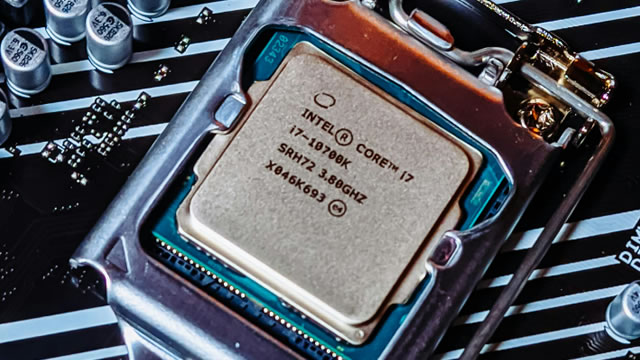
All right, uh let's get another check on Intel. Those shares are plunging now in overtime after reporting earnings moments ago. The company beating on the top and bottom lines, but the stock under pressure uh now at session lows.Now, the stock had been up nearly 50% this month coming into the print. Joining us now is Seapport Research senior analyst Jay Goldberg. He upgraded the stock to buy this week.So Jay um first of all the rationale behind the upgrade and what did the numbers tell you pro or con that c ...

S&T Bancorp(STBA) - 2025 Q4 - Earnings Call Transcript
2026-01-22 19:00
Financial Data and Key Metrics Changes - For the full year 2025, the company reported a net income of just under $135 million, equating to $3.49 per share, with a net interest margin (NIM) of 3.9% [4] - In Q4, net income was $34 million, or $0.89 per share, slightly down from Q3, with a return on assets (ROA) of 1.37% [5] - The NIM rose to 3.99%, up six basis points from the previous quarter, marking the best performance since Q2 2023 [6] - Non-interest income increased by $500,000 in Q4, with expectations for fees in 2026 to remain around $13 million to $14 million per quarter [14] Business Line Data and Key Metrics Changes - Loan growth for Q4 was just under $100 million at 4.5%, primarily driven by commercial banking, with C&I and CRE portfolios growing by $53 million and $34 million, respectively [6][8] - Customer deposit growth was just under $60 million at 2.9%, with a strong deposit mix where demand deposits (DDAs) represented 27% of total balances [6] - The allowance for credit losses (ACL) decreased from 1.23% to 1.15% quarter over quarter, reflecting a reduction in criticized and classified loans by $30 million, or 13% in Q4 [11] Market Data and Key Metrics Changes - The company anticipates mid-single digit loan growth for 2026, primarily from C&I and CRE, supported by investments in team leadership and banker talent [10] - The competitive landscape for deposits has become more rational, with the company focusing on core deposit growth to fund loan growth [66] Company Strategy and Development Direction - The company announced a new $100 million share repurchase authorization, indicating strong capital levels and the ability to consider M&A opportunities [7] - The focus remains on maintaining asset quality while pursuing growth in commercial banking and consumer home equity [10][32] Management's Comments on Operating Environment and Future Outlook - Management expressed confidence in maintaining asset quality similar to 2025 levels, with a focus on reducing non-performing loans (NPLs) [12][43] - The overall economic environment is improving, but management is cautious about predicting growth rates significantly higher than GDP growth [19] Other Important Information - The company has been actively hiring to support growth in C&I and CRE, with a focus on adding talent across various segments [20][32] - AI tools are being utilized for compliance and fraud detection, with ongoing efforts to enhance operational efficiency [54][56] Q&A Session Summary Question: Loan growth expectations and constraints - Management indicated that loan growth is not constrained by demand but by ensuring asset quality of new customers [18] Question: Margin outlook and competitive pressures - Management noted that competitive pressures on deposit rates have eased, allowing for better margin stability [21][66] Question: M&A activity and geographic focus - Management confirmed ongoing active dialogue regarding M&A opportunities without a significant shift in geographic preference [25] Question: Asset quality and charge-offs - Management clarified that recent charge-offs were related to previously identified credits, emphasizing the reduction in criticized and classified loans [40][43] Question: Deposit growth and funding loan growth - Management expects to fund loan growth internally through deposit growth, focusing on core deposit strategies [30][32]

“旭易”东升 基金重仓股变迁,折射中国资本市场深刻变化
Shang Hai Zheng Quan Bao· 2026-01-22 18:37
Group 1 - The A-share market is experiencing fluctuations at relatively high levels, with public fund equity positions slightly decreasing compared to the previous quarter [1] - As of the end of 2025, the leading heavyweights in public funds are Zhongji Xuchuang and Xinyi Sheng, surpassing Ningde Times and Tencent Holdings [1][4] - The mining giant Zijin Mining has entered the top five heavyweights for the first time, indicating a shift in investment focus [1][4] Group 2 - Several actively managed equity funds have significantly increased their equity positions, with notable increases in funds like Bosera Huixing and GF Chengxiang [2] - Fund managers express optimism about the A-share market for 2026, anticipating dual liquidity benefits in the first quarter [2][3] - The focus on sectors with high performance certainty and relatively low valuations, such as AI hardware and non-ferrous metals, is emphasized by fund managers [2][3] Group 3 - The top 50 heavyweights in public funds are primarily concentrated in information technology, consumer goods and services, and investment products [4] - AI-related stocks have emerged as new favorites in public fund portfolios, with Zhongji Xuchuang, Xinyi Sheng, and Hanwujing among the top seven heavyweights [4][5] - The consumer goods sector remains weak, with only a few representatives in the top 50, including major liquor brands [4] Group 4 - Fund managers are focusing on technology sectors, particularly storage chips, solid-state batteries, and humanoid robots, to capitalize on emerging trends [6] - The AI industry is expected to accelerate in 2026, with a shift towards AI application development rather than just infrastructure [8][9] - The investment strategy includes maintaining core holdings while exploring opportunities in AI applications, such as smart driving and AI-enabled robots [8][9]






Norwood Financial (NWFL) - 2025 Q4 - Earnings Call Transcript
2026-01-22 15:02
Financial Data and Key Metrics Changes - The company achieved a 62% increase in net interest income compared to Q4 2024, driven by a 62 basis point expansion in net interest spread [3][4] - Net income and earnings per share more than doubled on an adjusted basis, with improved returns on average assets and tangible equity [3][4] - Quarterly expenses increased by 1.5% year-over-year and 5% on a linked quarter basis, attributed to lower loan volumes and elevated incentive accruals [13][14] Business Line Data and Key Metrics Changes - Non-interest income for the year increased, primarily from fees on loans and deposit products [13] - The company reported merger charges of approximately $520,000 in the quarter, impacting overall financial results [12] Market Data and Key Metrics Changes - The acquisition of Presence Bank resulted in a 20% growth in the asset base and the addition of four branches in key regions [4][5] - The company is focused on integrating Presence Bank's operations to enhance brand recognition and customer engagement [6][10] Company Strategy and Development Direction - The company has established four strategic priorities for 2026, including the successful integration of Presence Bank, enhancing operational efficiency through AI, strengthening the talent pool, and increasing shareholder value [5][9][11] - The integration of AI tools from Presence Bank aims to improve underwriting processes and customer experience [7][8] Management's Comments on Operating Environment and Future Outlook - Management expressed optimism about the company's future, highlighting a larger asset base, expanded geographic coverage, and a stronger team [16] - The overall theme for the quarter was profitable growth, sound balance sheet management, and benign credit conditions, positioning the company well for future success [14] Other Important Information - The company is committed to returning cash to shareholders through a reliable and growing dividend as part of its capital allocation framework [11] Q&A Session Summary - No questions were raised during the Q&A session, and the call concluded with management expressing satisfaction with the company's accomplishments and optimism for the future [15][17]
