
产业智能化

Search documents
杰克股份(603337):业绩稳健增长,单Q2毛利率创上市以来新高
CMS· 2025-08-28 09:35
Investment Rating - The report maintains a "Strong Buy" investment rating for the company [3][7]. Core Views - The company has demonstrated steady revenue growth, with a revenue of 3.373 billion yuan in H1 2025, up 4.27% year-on-year, and a net profit of 477 million yuan, up 14.57% year-on-year [1]. - The company achieved a record high gross margin in Q2, reaching 35.52%, driven by an increase in sales of high-margin products [7]. - The company is expected to continue its growth trajectory, with projected revenues of 6.788 billion yuan in 2025, 7.322 billion yuan in 2026, and 8.399 billion yuan in 2027, reflecting year-on-year growth rates of 11%, 8%, and 15% respectively [2][7]. Financial Performance - In Q2 2025, the company reported a revenue of 1.58 billion yuan, a decrease of 1.61% year-on-year and 11.86% quarter-on-quarter, while the net profit was 232 million yuan, an increase of 1.28% year-on-year [1]. - The company’s gross margin for H1 2025 was 34.07%, an increase of 2.25 percentage points year-on-year, with a net margin of 14.44%, up 1.47 percentage points year-on-year [7]. - The company’s operating profit is projected to grow significantly, with estimates of 1.041 billion yuan in 2025, 1.170 billion yuan in 2026, and 1.379 billion yuan in 2027, reflecting growth rates of 15%, 12%, and 18% respectively [2][14]. Market Position and Strategy - The company has successfully entered multiple major clients with its high-end AI sewing machines, which are expected to be launched in the market in the second half of 2025, supporting future revenue growth [7]. - The company has made advancements in core technologies, including intelligent fabric handling and autonomous processing centers, which are expected to enhance its competitive position in the market [7]. Valuation Metrics - The company’s projected PE ratios are 25x for 2025, 22x for 2026, and 19x for 2027, indicating a favorable valuation outlook as earnings grow [7][14].

瑞达期货碳酸锂产业日报-20250827
Rui Da Qi Huo· 2025-08-27 08:56
Report Summary 1. Industry Investment Rating No investment rating is provided in the report. 2. Core View - The lithium carbonate futures main contract first rose and then fell, closing down 0.23%. The open interest increased month - on - month, the spot was at a premium, and the basis strengthened. - Fundamentally, on the raw material side, lithium ore prices fluctuate sharply with the spot price of lithium carbonate. On the supply side, the previous relatively strong market quickly turned weak as some smelters in Jiangxi resumed production after equipment maintenance. Currently, domestic supply may increase slightly. On the demand side, downstream buyers are more cautious, but the procurement demand has rebounded as lithium prices fall rapidly. Overall, the supply and demand of lithium carbonate are both increasing, and the inventory is still high but decreasing. - In the options market, the put - call ratio of open interest is 75.35%, up 0.0109% month - on - month. The call open interest dominates, and the market sentiment is bullish with a slight decline in implied volatility. - Technically, the 60 - minute MACD shows that the two lines are below the 0 - axis and the red bars are contracting. - The operation suggestion is to short at high levels with a light position and control risks by paying attention to trading rhythm. [2] 3. Summary by Relevant Catalogs 3.1 Futures Market - Main contract closing price: 78,860 yuan/ton, down 160 yuan. - Main contract open interest: 351,322 lots, up 1,826 lots. - Net position of the top 20: - 138,531 lots, up 13,645 lots. - Spread between near and far contracts: 580 yuan/ton, up 20 yuan. - Warehouse receipts on GZEE: 26,690 lots/ton, up 1,060 lots. [2] 3.2 Spot Market - Average price of battery - grade lithium carbonate: 81,600 yuan/ton, down 100 yuan. - Average price of industrial - grade lithium carbonate: 79,300 yuan/ton, down 100 yuan. - Basis of Li₂CO₃ main contract: 2,740 yuan/ton, up 60 yuan. [2] 3.3 Upstream Situation - Average price of spodumene concentrate (6% CIF China): 961 US dollars/ton, unchanged. - Average price of amblygonite: 7,775 yuan/ton, up 40 yuan. - Average price of lepidolite (2 - 2.5%): 2,645 yuan/ton, unchanged. [2] 3.4 Industry Situation - Lithium carbonate production: 44,600 tons, up 500 tons. - Lithium carbonate imports: 13,845.31 tons, down 3,852.31 tons. - Lithium carbonate exports: 366.35 tons, down 63.31 tons. - Lithium carbonate enterprise operating rate: 48%, down 4 percentage points. - Power battery production: 133,800 MWh, up 4,600 MWh. - Price of lithium manganate: 33,000 yuan/ton, unchanged. - Price of lithium hexafluorophosphate: 55,800 yuan/ton, unchanged. - Price of lithium cobalt oxide: 235,000 yuan/ton, unchanged. - Price of ternary material (811 type, China): 147,000 yuan/ton, down 1,500 yuan. - Price of ternary material (622 power type, China): 123,000 yuan/ton, down 1,500 yuan. [2] 3.5 Downstream and Application Situation - Price of ternary material (523 single - crystal type, China): 130,000 yuan/ton, down 1,000 yuan. - Operating rate of ternary cathode materials: 52%, up 1 percentage point. - Price of lithium iron phosphate: 34,300 yuan/ton, unchanged. - Operating rate of lithium iron phosphate cathode: 51%, down 1 percentage point. - New energy vehicle monthly production (CAAM): 1,243,000 vehicles, down 25,000 vehicles. - New energy vehicle monthly sales (CAAM): 1,262,000 vehicles, down 67,000 vehicles. - Cumulative penetration rate of new energy vehicle sales (CAAM): 44.99%, up 0.68 percentage points. - Cumulative new energy vehicle sales and year - on - year increase: 8,220,000 vehicles, up 2,286,000 vehicles. - New energy vehicle monthly exports: 225,000 vehicles, up 20,000 vehicles. - Cumulative new energy vehicle exports and year - on - year increase: 1.308 million vehicles, up 600,000 vehicles. - 20 - day average volatility of the underlying: 52.75%, down 0.03 percentage points. - 40 - day average volatility of the underlying: 56.43%, down 0.07 percentage points. [2] 3.6 Options Situation - Total call open interest: 205,910 contracts, up 4,714 contracts. - Total put open interest: 155,156 contracts, up 3,574 contracts. - Put - call ratio of total open interest: 75.35%, up 0.0109 percentage points. - At - the - money implied volatility: 0.37%, down 0.0168 percentage points. [2] 4. Industry News - The 13th plenary session of the 14th National Committee of the Chinese People's Political Consultative Conference emphasized developing new - quality productive forces, promoting the integration of the digital and real economies, boosting consumption, and enhancing innovation capabilities. - Premier Li Qiang stressed expanding high - quality service imports, promoting institutional opening - up of service trade, and building a unified national market. - He Xiaopeng, Chairman of XPeng Motors, said the elimination stage in China's auto industry will last about five years, and about five domestic enterprises may remain. - The National Energy Administration stated that during the 14th Five - Year Plan period, China built the world's largest EV charging network and the largest and fastest - growing renewable energy system, with the proportion of renewable energy power generation capacity increasing from 40% to about 60%. [2]
商汤发布大装置算力Mall,“日日新”模型接入小米AI眼镜
Zheng Quan Shi Bao Wang· 2025-08-10 12:03
Group 1 - SenseTime, in collaboration with various domestic partners, launched the SenseTime Large Device Computing Mall, marking a significant step in promoting domestic ecological construction and creating a one-stop AI infrastructure [1] - The SenseTime Large Device Computing Mall aims to lower the barriers for AI applications, accelerate the deployment of large models across industries, and provide users with flexible and autonomous domestic computing options, effectively breaking foreign technology barriers [1] - The computing mall offers efficient, stable, and cost-effective heterogeneous computing infrastructure, high-quality datasets, and MLOps tools for model fine-tuning, significantly enhancing development efficiency [1] Group 2 - SenseTime leverages its expertise in embodied intelligence, AIGC, AI4S, and industrial intelligence to apply the combination of "computing power + data + algorithms" to address specific business pain points, acting as an accelerator for state-owned enterprises' transition to intelligence [2] - The collaboration with Xiaomi's AI glasses integrates SenseTime's "Riri New" model interaction platform, enhancing user experience through real-time audio and video interaction capabilities, providing a reference for the next generation of smart hardware interaction paradigms [2] - SenseTime plans to deepen technological breakthroughs in real-time audio and video interaction and multimodal understanding, aiming to empower a broader range of application scenarios and support solutions from personal efficiency to industry-wide applications [3]
亚信科技(01675)半年交卷:AI重构商业逻辑,老牌通信科技服务商迎价值重估
智通财经网· 2025-08-08 04:07
Core Viewpoint - AsiaInfo Technology (01675) is strategically navigating through cyclical challenges in the telecommunications industry by focusing on three new growth engines: AI large model applications, 5G private networks, and intelligent operations, aiming for a systematic shift in growth momentum [1] Group 1: Financial Performance - In the first half of 2025, AsiaInfo achieved revenue of approximately RMB 25.98 billion, with ICT support business revenue at about RMB 21.18 billion, intelligent operations at RMB 4.08 billion, 5G private networks at RMB 0.47 billion, and AI large model applications at RMB 0.26 billion [1] - The AI large model application and delivery business saw explosive growth, with revenue reaching RMB 0.26 billion, a year-on-year increase of 76 times, and signed order amounts of approximately RMB 70 million, up 78 times year-on-year [2] Group 2: Business Segments - AI Large Model Applications: This segment is experiencing rapid growth, transitioning from technical exploration to commercial realization, with a gross margin currently between 20-30%, expected to exceed 50% in the future as cross-industry applications increase [2][3] - 5G Private Networks: Despite a decline in revenue due to delayed nuclear power orders, signed order amounts increased by 51.7% to RMB 0.82 billion, indicating strong growth potential in various verticals, including nuclear power and renewable energy [4][5] - Intelligent Operations: Non-telecom sectors are becoming a major growth driver, with overall orders increasing by 18.2%. Key growth areas include financial services, where orders grew by 48.3%, and the implementation of result-based payment models [6] Group 3: Strategic Initiatives - The company is deepening its strategic partnership with Alibaba Cloud, leveraging shared expertise in large model capabilities and jointly developing numerous projects [2] - AsiaInfo has developed a unique three-tier tool system for large model delivery, enhancing operational efficiency and service quality [2] - The company is committed to R&D, investing 16% of its revenue, amounting to RMB 4.15 billion in the first half of 2025, and has significantly improved cash flow, with net cash from operating activities at approximately RMB 5.94 billion, a 35.3% year-on-year improvement [7]
涛涛车业与宇树科技战略合作 加速机器人商业化落地与规模化应用
Zheng Quan Ri Bao Wang· 2025-07-30 12:49
Core Insights - Zhejiang Taotao Vehicle Co., Ltd. has signed a strategic cooperation agreement with Hangzhou Yushu Technology Co., Ltd. to accelerate the commercialization and large-scale application of robotics in overseas markets, particularly North America [1][2] Group 1: Strategic Focus Areas - The collaboration will focus on three main areas: expanding sales in overseas markets, exploring consumer scenarios, and commercializing product development [1] - Taotao Vehicle will leverage its established multi-channel network to introduce Yushu Technology's robotic products into North America, enhancing brand penetration and achieving large-scale sales [1][2] - Both companies will jointly explore high-potential application scenarios for consumer-grade robots and develop products based on these needs, targeting the blue ocean market for consumer robotics [1][2] Group 2: Integration of Strengths - The partnership aims to integrate Yushu Technology's robotic technology with Taotao Vehicle's extensive channel resources and localization capabilities, enhancing efficiency in logistics, security inspections, and consumer scenarios [2] - Taotao Vehicle has built a robust competitive barrier in North America, with over 620 high-end dealers and a localized operational team of more than 250 people, enabling strong market penetration [2] - Yushu Technology is recognized as a global leader in robotics, holding a 70% market share in quadruped robots and being at the forefront of humanoid robot technology [2] Group 3: Future Growth and Innovation - This collaboration positions Taotao Vehicle as a "market accelerator" for Yushu Technology's products, while Yushu Technology provides the technological impetus for Taotao Vehicle's transition into the smart technology sector [3] - The partnership is expected to shorten the time from innovation to large-scale application, aligning with the global trend of industrial intelligence reshaping competitive landscapes [3] - Taotao Vehicle aims to enhance its product value system and foster new business growth points by integrating cutting-edge technology with its key channels and insights into outdoor sports applications [3]


创新、互信、共生:汽车行业提质发展新动向
Zhong Guo Chan Ye Jing Ji Xin Xi Wang· 2025-07-20 22:30
Core Insights - The Chinese automotive industry achieved a significant milestone in the first half of 2025, with both production and sales surpassing 15 million units, and new energy vehicle production and sales growing over 40% year-on-year [1] - The "2025 China Automotive Forum" highlighted the need for further strengthening the industry's development advantages and promoting sustainable growth [1] Group 1: Innovation and Technology - Artificial intelligence is identified as a key driver for the digital transformation of the automotive industry, with innovation being the core engine for shaping the future mobility ecosystem [2] - There is a fundamental shift in user demand with the rise of smart connected vehicles, emphasizing the importance of understanding and meeting emotional needs in automotive product development [2] - The focus on technological innovation includes lightweight materials, integrated die-casting, and modular manufacturing, promoting the application of smart technologies across all aspects of new energy vehicle development [2] Group 2: Industry Challenges and Strategies - The automotive industry's profit margins have been declining for nearly eight years, highlighting the urgency for maintaining healthy and sustainable development [3] - The industry faces a dilemma of "increasing volume without increasing profit," necessitating a shift from price-driven to value-driven market dynamics [3] - Collaboration and restructuring of the industry ecosystem are essential to avoid disorderly competition and enhance the overall health of the automotive sector [3][4] Group 3: Global Context and Cooperation - The rise of protectionism and unilateralism has led to trade disputes, making global supply chains more vulnerable [4] - New regulatory focuses such as artificial intelligence, carbon emissions, and data flow have increased the complexity of the industry development environment [4] - There is a collective call for deepening cooperation, promoting complementary advantages, and creating new industry value growth points to navigate these challenges [4]
威海税务:政策“补给”产业勇闯智造“无人区”
Qi Lu Wan Bao Wang· 2025-07-18 10:36
Group 1 - The company, Weihai Port Communication Information Technology Co., Ltd., is developing an intelligent mobile operation robot designed for automated container handling in ship cabins, integrating target recognition, UWB positioning, and unmanned driving technology [1] - The robot is currently in the final debugging stage and can autonomously transport and stack containers of various specifications through a coordinated system of scheduling, navigation, and control [1] - The project aims to enhance operational efficiency by replacing traditional manual operations with automated processes, including the automatic lifting of container support legs [1] Group 2 - The company benefits from tax incentives, specifically a research and development expense deduction policy, which is expected to provide nearly 3 million yuan in 2024, enhancing cash flow for technological innovation and smart upgrades [2] - The tax policy serves as a crucial tool for guiding industrial transformation and upgrading, with the local tax authority focusing on supporting enterprises in their technological advancements [2] - The tax bureau has established a tailored service mechanism to assist companies during critical phases of technology development, ensuring they fully utilize available tax benefits and comply with regulations [2]
天桥区现已累计建成5G基站4000余个
Qi Lu Wan Bao Wang· 2025-07-15 05:46
Group 1 - The core viewpoint emphasizes the importance of transforming and upgrading traditional industries in Tianqiao District to align with the "Industrial Strong City" strategy, focusing on high-end, intelligent, and clustered development [1] - Tianqiao District is implementing a systematic analysis of traditional industries such as general equipment manufacturing and building materials, guiding enterprises to adopt industrial internet and advanced production equipment, resulting in a 34.5% annual average increase in technological transformation investment over the past three years [3] - Successful transformations of traditional enterprises into industry champions have been noted, with companies like Dongfang Yuhong and Zero Kilometer completing significant technological upgrades [3] Group 2 - The district is advancing digital transformation to support high-quality industrial economic development, with over 4,000 5G base stations built to ensure comprehensive network coverage [4] - Leading companies like Deyuan Electric and Megaton are encouraged to innovate in digital technology integration, with Deyuan Electric reporting over 160% year-on-year growth in output following its digital transformation [4] - The "Industrial Internet Application Demonstration Project" is being promoted, with new provincial-level digital economy factories and industrial internet platforms established this year [4]

新华鲜报|智赢未来!这个论坛解码汽车行业发展新动向
Xin Hua She· 2025-07-12 10:33
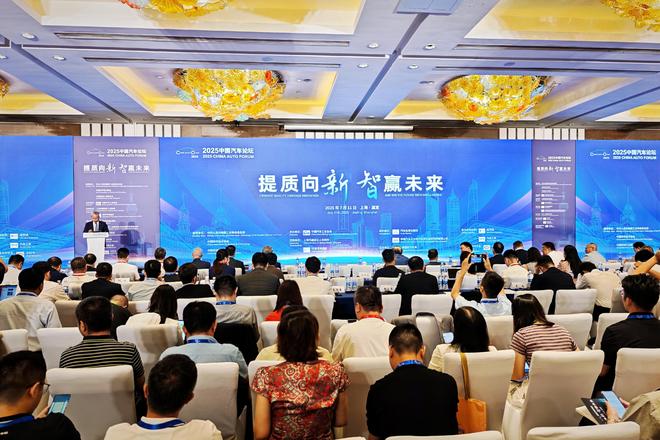
Core Insights - The Chinese automotive industry achieved a significant milestone in the first half of 2025, with both production and sales exceeding 15 million units for the first time, and new energy vehicle production and sales growing over 40% year-on-year [1] - The "2025 China Automotive Forum" held in Shanghai from July 10 to 12 highlighted key discussions on how to further solidify the industry's development advantages and promote sustainable growth [1] Group 1: Innovation and Technology - Artificial intelligence is identified as a key technology driving the digital transformation of the automotive industry, with innovation being the core engine for shaping the future mobility ecosystem [2] - The shift towards intelligent connected vehicles has fundamentally changed user demands, making it essential for automotive products to meet emotional needs and provide emotional value [2] - The focus on technological innovation includes lightweight materials, integrated die-casting, and modular manufacturing, promoting the application of intelligent technologies across all aspects of new energy vehicle development [2][3] Group 2: Industry Challenges and Strategies - The automotive industry's profit margins have been declining for nearly eight years, highlighting the urgency of maintaining a healthy and sustainable development environment [2] - The industry faces a critical moment with the need to transition from price-driven to value-driven competition, emphasizing the importance of value creation through technology, product quality, user experience, and brand culture [3] - The rise of protectionism and unilateralism has led to trade disputes, making global supply chains more vulnerable and increasing the complexity of the industry development environment [5][6] Group 3: Collaboration and Future Outlook - There is a strong call for deepening cooperation among industry players to address systemic challenges and foster a new type of competitive relationship [5] - The emphasis is on creating new technologies, products, and business models to cultivate new growth areas in the industry [5][6] - The belief in innovation and collaboration as keys to resilience and sustainable development in the automotive industry is reinforced, with a focus on shaping a new industrial model that balances efficiency and safety [6]
当66岁“基建铁军”遇上垂类大模型:产业智能化的破局样本
Xin Hua Wang· 2025-07-04 07:33
Core Insights - The article discusses the transition of large models from a focus on parameter competition to a practical application in various industries, emphasizing the importance of integrating technology into real-world scenarios [1][2][10] - Companies are increasingly adopting vertical large models tailored to specific industries, moving away from generic models that lack depth in specialized fields [2][4][10] Group 1: Industry Trends - Leading companies are accelerating the penetration of large models into vertical industries, with examples including Huawei Cloud in steel manufacturing and Alibaba Cloud in mining [2][4] - The shift from "showcasing technology" to "practical application" is evident, as companies seek to address real business challenges rather than merely pursuing technical advancements [2][4][10] Group 2: Case Studies - The "Lingzhu Zhigong" model developed by Ningxia Jiaojian demonstrates a significant improvement in efficiency, achieving a 40% higher accuracy in specialized tasks compared to generic models [5][7] - Financial institutions are also benefiting from large models, with over 50% of China's top 100 banks partnering with Zhongguancun KJ to enhance service efficiency [7][8] Group 3: Strategic Approaches - Zhongguancun KJ's "platform + application + service" strategy aims to provide a comprehensive framework for the implementation of vertical large models, ensuring they are integrated into core business operations [9][10] - The focus on building cross-disciplinary teams and accumulating high-quality data is crucial for the successful deployment of AI technologies in various sectors [6][9] Group 4: Future Outlook - The integration of vertical large models is expected to transform industries by enhancing operational efficiency and driving innovation, marking a significant shift from experience-driven to data and AI-driven approaches [9][11] - The article concludes that the ongoing efforts in smart transformation will position the Chinese industry on a path toward high-end, intelligent, and green development [11]