
人与自然和谐共生

Search documents
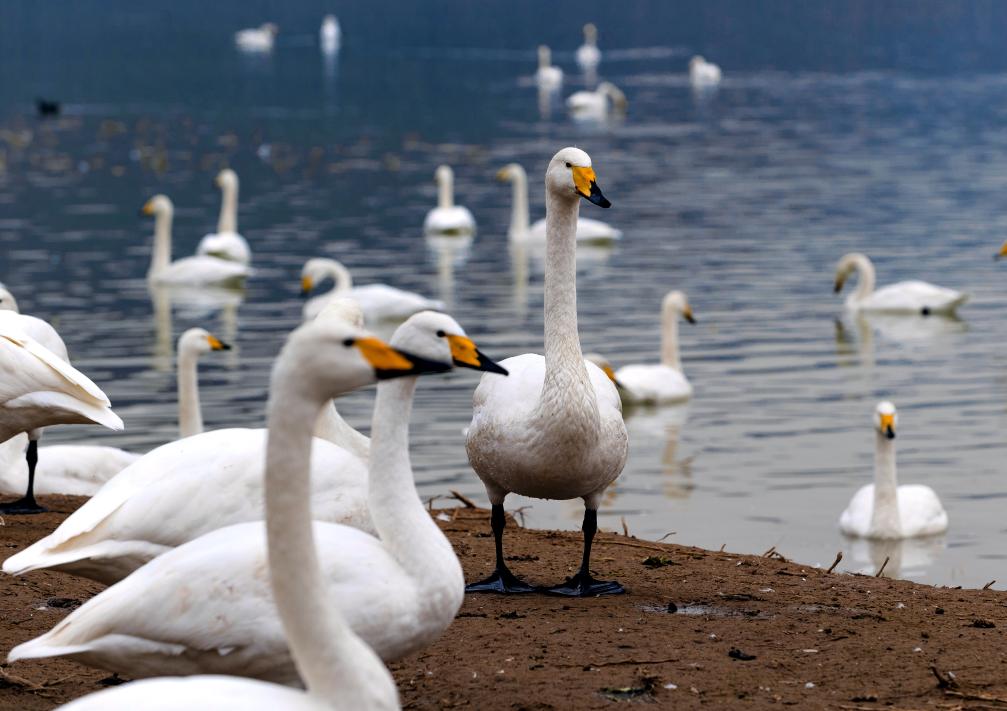
山西芮城圣天湖变身大天鹅越冬乐园
Xin Lang Cai Jing· 2026-01-11 08:59
Core Viewpoint - The number of swans wintering at Shengtian Lake in Ruicheng County, Shanxi Province has reached several thousand, attracting numerous tourists to observe them [1][3]. Group 1: Environmental Significance - Shengtian Lake is located at the junction of Shanxi, Shaanxi, and Henan provinces, covering a wetland area of 13,500 acres, with over 6,000 acres of water surface, making it one of the largest national wetland reserves in the middle and lower reaches of the Yellow River [1][3]. - The wetland area has been shrinking due to human activities such as land reclamation and pollution, prompting local authorities to implement wetland restoration projects to enhance biodiversity [3]. Group 2: Conservation Efforts - Ruicheng County has established a professional patrol system with six dedicated patrol officers to ensure a safe environment for migratory birds, achieving a 100% daily reporting rate [3]. - Local authorities have intensified law enforcement actions, such as the "Net Shield Action," to combat illegal hunting and bird trading [3]. Group 3: Future Plans - The forestry bureau of Ruicheng County plans to continue strengthening wetland protection and management, advancing ecological restoration projects, and expanding suitable habitats for swans to promote a harmonious coexistence between humans and nature [3].

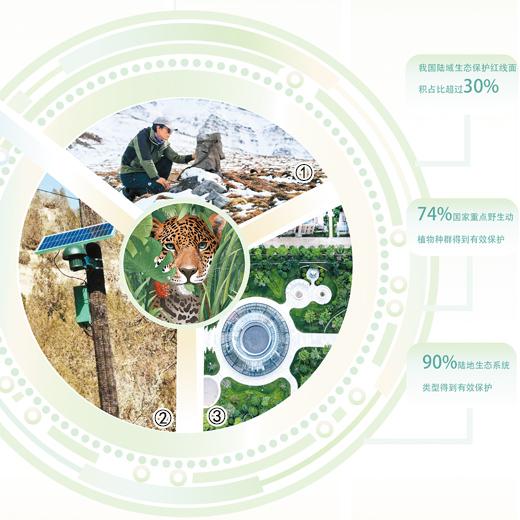
听·见美丽中国(回望“十四五”·美丽中国在身边③)
Ren Min Ri Bao Hai Wai Ban· 2026-01-05 22:56
Core Viewpoint - The article highlights the increasing integration of technology in monitoring and protecting wildlife, particularly in China's national parks, showcasing the positive impact on biodiversity and ecological awareness among the public [3][4][6][8]. Group 1: Wildlife Monitoring and Protection - The establishment of the Giant Panda National Park has led to systematic habitat restoration and the construction of key corridors, creating a stable living environment for giant pandas and other rare species [4]. - The Wanglang area has developed a comprehensive monitoring system that includes high, medium, and low-altitude coverage, utilizing advanced infrared cameras and drone technology to enhance patrol efficiency [6]. - The population of wild giant pandas in key areas has shown an increase, with habitat restoration efforts covering 342,100 acres during the 14th Five-Year Plan period [6][8]. Group 2: Technological Advancements in Ecological Monitoring - The use of AI-driven sound recognition technology has transformed wildlife monitoring, allowing for real-time data collection and analysis of bird species in various environments [8][9]. - The number of recorded bird species in Lanzhou has increased from over 100 to 339, indicating a significant improvement in urban biodiversity due to enhanced ecological conditions [8][10]. - The accuracy of bird sound identification has surpassed 85%, demonstrating the effectiveness of the new monitoring technologies in ecological research [9]. Group 3: Urban Ecological Integration - The city of Dongying has recorded 405 bird species, including 26 national first-class and 71 second-class protected species, reflecting a rich biodiversity in urban settings [11]. - Dongying has implemented a "city-park integration" strategy, creating 60 pocket parks and enhancing urban green spaces to improve the ecological environment [11][12]. - The establishment of a smart environmental monitoring system has led to a 90% compliance rate for nighttime noise levels, showcasing the city's commitment to maintaining a harmonious living environment [12].
确保一江清水绵延后世、惠泽人民
Xin Hua Wang· 2026-01-05 01:51
Core Viewpoint - The development of the Yangtze River Economic Belt over the past decade has focused on ecological protection and high-quality development, emphasizing the need for sustainable practices and environmental restoration [1][3][30]. Group 1: Ecological Restoration and Economic Transformation - The ecological environment of the Yangtze River has significantly improved, with over 96% of national control sections showing good water quality, and the population of Yangtze finless porpoises increasing to 1,249 [13]. - The shift from coal mining to agriculture, such as the successful cultivation of oranges in Fengjie County, exemplifies the region's transition to a green economy [2][3]. - The implementation of the "Ten-Year Fishing Ban" aims to restore aquatic biodiversity, allowing fish populations to recover and providing new livelihoods for former fishermen [16][17]. Group 2: Policy and Legal Framework - The introduction of the "Yangtze River Protection Law" in March 2021 provides a legal foundation for ecological protection efforts, reinforcing the commitment to sustainable development [9]. - A series of policies and planning documents have been released to support the ecological and economic goals of the Yangtze River Economic Belt, creating a cohesive strategy for development [9][24]. Group 3: Collaborative Governance and Community Involvement - The establishment of a river chief system has mobilized local communities to participate in river management, fostering a culture of environmental stewardship [10][11]. - Cross-regional cooperation among provinces along the Yangtze River has improved water quality management and ecological restoration efforts, demonstrating the importance of collaborative governance [7][8]. Group 4: Economic Development and Innovation - The Yangtze River Economic Belt has become a hub for the automotive industry, with the region accounting for 40% of China's new energy vehicle production [22]. - Technological innovation is driving economic transformation, with cities like Chengdu and Hefei focusing on advanced manufacturing and quantum technology [23][24]. - The economic output of the Yangtze River Economic Belt is projected to exceed 63 trillion yuan, contributing over 50% to national economic growth [24][27].
确保一江清水绵延后世、惠泽人民——写在推动长江经济带发展座谈会召开十周年之际
Xin Hua Wang· 2026-01-04 17:08
Core Viewpoint - The development and protection of the Yangtze River, referred to as the "mother river" of the Chinese nation, is a priority for sustainable economic growth and ecological preservation, emphasizing the need for a balance between environmental protection and economic development [1][3][24]. Group 1: Ecological Restoration and Economic Transformation - The Yangtze River Economic Belt has undergone significant ecological restoration over the past decade, with a focus on high-level protection and high-quality development [1][4]. - The shift from coal mining to agriculture, such as the cultivation of oranges in Chongqing, exemplifies the successful transition to a green economy [2][3]. - The ecological environment has improved, with the proportion of good water quality monitoring points exceeding 96%, and the number of native fish species increasing [13]. Group 2: Policy and Legal Framework - The implementation of the "Yangtze River Protection Law" in 2021 provides a legal framework for ecological protection, emphasizing ecological priority and green development [9]. - A series of policies and planning documents have been introduced to support the sustainable development of the Yangtze River Economic Belt [9]. Group 3: Collaborative Governance - Collaborative governance among upstream and downstream regions is essential for effective ecological protection, with initiatives like joint river patrols and cross-province cooperation being established [7][8]. - The establishment of an ecological compensation system has been initiated, with 16 cross-province ecological protection compensation mechanisms in place [8]. Group 4: Economic Development and Innovation - The Yangtze River Economic Belt has become a hub for the automotive industry, with the region accounting for 40% of China's new energy vehicle production [22]. - Technological innovation is driving economic transformation, with cities like Chengdu and Hefei focusing on advanced manufacturing and quantum technology [23][24]. Group 5: Future Outlook - The Yangtze River Economic Belt is positioned as a critical area for China's high-level opening-up strategy, with significant contributions to national trade and economic growth [26][27]. - Continued efforts in ecological protection and economic development are expected to yield long-term benefits for future generations [30].
大西北丨他们在沙海中 种出一片绿色家园
Xin Lang Cai Jing· 2026-01-04 06:37
Core Viewpoint - The article highlights the remarkable ecological restoration and transformation of the Northwest region of China, showcasing successful projects that have turned arid landscapes into thriving ecosystems and improved the quality of life for local communities [1][5][37]. Group 1: Ecological Restoration Projects - The Taklamakan Desert Locking Project is a significant engineering effort that has contributed to the greening of previously barren areas, with over 800,000 trees planted to create a protective green barrier [7][9]. - The Sanjiangyuan Ecological Protection and Construction Project initiated in 2005 has led to the revival of lakes and ecosystems in the Maduo region, which had seen a drastic reduction in water bodies [22][20]. - In Ningxia, the Yanghuang Project has transformed water supply systems, significantly improving access to clean water for rural communities, which previously struggled with water scarcity [28][26]. Group 2: Biodiversity Recovery - The population of the Crested Ibis in the Qinling Mountains has increased from 7 individuals in 1981 to approximately 7,700 today, indicating successful conservation efforts [30]. - Snow leopards in the Sanjiangyuan region are experiencing a steady population recovery, reflecting the positive impact of ecological restoration initiatives [32]. - Various species, including the endangered Przewalski's gazelle and the bare carp, are returning to their natural habitats, demonstrating the effectiveness of ecosystem recovery efforts [35]. Group 3: Community Impact - The transformation of the Loess Plateau into a "golden granary" through the construction of sediment dams has enabled local farmers to cultivate fertile land, enhancing agricultural productivity [16]. - The establishment of vineyards in former mining areas of Ningxia has not only restored the ecology but also provided economic opportunities for over 100,000 migrants, creating a sustainable green industry [18]. - The harmonious coexistence of humans and nature in the Northwest is portrayed as a model of ecological civilization, emphasizing the cultural and developmental significance of these restoration efforts [37].
“共抓大保护,不搞大开发”,长江经济带十年绘就壮美画卷
Xin Lang Cai Jing· 2026-01-04 01:29
Core Viewpoint - The article emphasizes the importance of ecological protection over large-scale development in the Yangtze River Economic Belt, highlighting a decade of progress in balancing economic growth with environmental sustainability [2][10][11]. Group 1: Ecological Protection - The Yangtze River Economic Belt covers 11 provinces and municipalities, accounting for about one-fifth of China's land area and half of its population and economic output [2]. - Since 2020, the Yangtze River has maintained a Class II water quality for six consecutive years, with increased biodiversity and aquatic resources [2][10]. - The initiative "co-grasp major protection, not engage in major development" reflects a shift towards high-quality, green, and low-carbon development [3][11]. Group 2: Economic Development - By November 2025, the foreign trade import and export value of the 11 provinces and municipalities along the Yangtze River reached 19.12 trillion yuan, accounting for 46.4% of the national total [2]. - The Yangtze River Economic Belt has formed five major industrial clusters, including electronics, high-end equipment, automobiles, home appliances, and textiles, with a projected GDP of over 63 trillion yuan in 2024, growing at 5.4% [22]. Group 3: Policy and Governance - The article discusses the establishment of a comprehensive ecological protection and governance system, including measures like a ten-year fishing ban and pollution control initiatives [10][18]. - Collaborative mechanisms among provinces have been strengthened to ensure coordinated management of the river basin, enhancing ecological compensation and protection efforts [19][20]. - The government is promoting innovative approaches to ecological protection, such as the river and lake chief system, which assigns responsibility for every river and lake [21]. Group 4: Community Engagement and Sustainable Practices - Local communities are actively involved in ecological protection, with initiatives to train fishermen in alternative livelihoods and promote eco-tourism [27][28]. - The article highlights successful case studies where ecological restoration has led to improved local economies, such as the transformation of polluted areas into recreational spaces [28]. Group 5: Future Outlook - The article concludes with a vision for the Yangtze River Economic Belt to become a model of harmonious coexistence between nature and development, ensuring sustainable benefits for future generations [28].
“共抓大保护,不搞大开发” 长江经济带十年绘就壮美画卷 “现在路子是对的,要继续走下去”
Ren Min Ri Bao· 2026-01-03 22:17
Core Viewpoint - The development of the Yangtze River Economic Belt emphasizes ecological protection over large-scale development, aiming for a harmonious coexistence between nature and economic growth [1][5][9]. Economic Development - By November 2025, the foreign trade import and export value of the 11 provinces and cities along the Yangtze River Economic Belt reached 19.12 trillion yuan, accounting for 46.4% of the national total, marking a historical high [2]. - The Yangtze River Economic Belt has formed five major industrial clusters, including electronic information and high-end equipment, with a projected GDP of over 63 trillion yuan in 2024, growing at 5.4% [20]. Ecological Protection - Since 2020, the main stream of the Yangtze River has maintained a Class II water quality for six consecutive years, indicating significant ecological recovery [1][2]. - The initiative "coordinated protection, no large-scale development" has led to major achievements in ecological protection and restoration, including a ten-year fishing ban and pollution control measures [8][10]. Biodiversity and Species Recovery - The successful artificial breeding of the Chinese sturgeon has established a self-sustaining population, with significant increases in their numbers observed in the Yangtze River [2][3]. - The monitoring of sturgeon migration has shown positive results, indicating a recovery in the ecological health of the Yangtze River [3][4]. Systematic Governance - The governance approach has shifted from fragmented management to a comprehensive system that emphasizes collaboration among provinces for ecological protection [18][19]. - Innovative compensation mechanisms have been introduced to enhance ecological protection efforts, transitioning from a focus solely on water quality to a more integrated ecological service model [18]. Green Development - The Yangtze River Economic Belt is exploring a new path of ecological priority and green development, with initiatives to promote low-carbon industries and sustainable practices [11][20]. - The transformation of industrial zones from pollution-heavy to eco-friendly areas has been highlighted, showcasing the potential for economic growth alongside environmental stewardship [10][11].
人这一辈子,一定要来山东追一次“鸟浪”!
Xin Lang Cai Jing· 2026-01-02 05:03
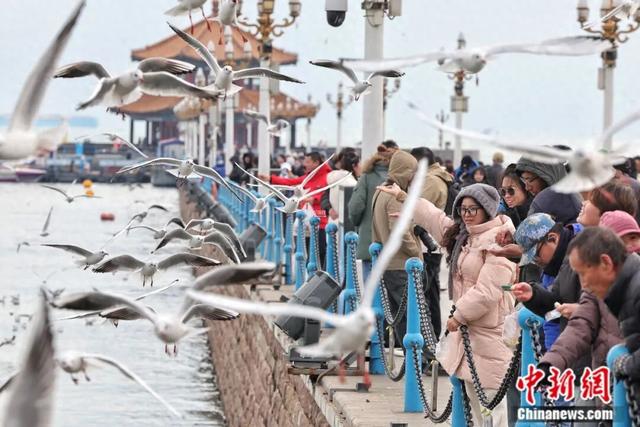
Core Viewpoint - This winter, Shandong is becoming a popular destination for birdwatching, attracting visitors to witness the migration of various bird species, particularly at the Yellow River Delta National Nature Reserve [1][32]. Group 1: Birdwatching Experience - The Yellow River Delta has seen a remarkable influx of over 400,000 migratory birds in November, marking a year-on-year increase of over 30% [8]. - East Dongying has developed four premium birdwatching routes and established a warm service station to enhance visitor experiences [7]. - The interaction between tourists and birds, such as feeding seagulls, has become a memorable part of the travel experience [13][16]. Group 2: Ecological and Cultural Significance - The seagull season in Qingdao has evolved into a cultural tourism IP, integrating local products and experiences into the city’s fabric [16]. - The winter also marks the best viewing season for swans, with large groups migrating to places like Weihai Swan Lake and Rizhao Egret Bay [18][22]. - Shandong's commitment to ecological protection and wetland restoration is evident, with 31 million acres designated for ecological protection and a focus on the recovery of rare species [24].
方圆之间 蔚为大观(文化中国行·华夏博物之旅·传统建筑)
Ren Min Ri Bao· 2025-12-31 23:51
Core Viewpoint - The Fujian Tulou showcases the wisdom of harmonious coexistence between humans and nature through its unique architectural design and construction traditions, reflecting the profound cultural heritage of Chinese civilization [1]. Group 1: Architectural Features - Fujian Tulou is primarily constructed using local materials, featuring rammed earth walls and wooden frameworks, designed in square and circular shapes, with living spaces arranged around a central courtyard [1]. - The oldest recorded Tulou, the Yide Lou, dates back to the Ming Dynasty, emphasizing the traditional communal living and defensive functions of these structures [2]. - Coastal Tulou are built with granite stone bases to enhance weather resistance, while mountainous Tulou utilize river stones for their foundations, adapting to local environmental conditions [3][4]. Group 2: Types of Tulou - Tulou can be categorized into Minnan Tulou and Hakka Tulou based on user demographics and spatial types, with Minnan Tulou featuring independent entrances and courtyards, while Hakka Tulou typically have interconnected layouts [5]. - The shapes of Tulou include square, circular, and special forms, with square Tulou often having multiple stories and circular Tulou ranging from 30 to 95 meters in diameter [6][7]. Group 3: Construction Techniques - The construction process of Tulou involves meticulous steps such as site selection, foundation building, and layering of rammed earth walls, incorporating bamboo or wood for stability [10]. - Innovative design elements, such as the "soft" structural features of wooden frameworks, allow Tulou to withstand seismic activity, demonstrating a blend of traditional craftsmanship and modern engineering principles [10]. Group 4: Cultural Significance - Tulou is celebrated not only for its unique appearance but also for its rich cultural connotations, with decorative arts like gray sculpture, stonework, and wood carving reflecting the aspirations of the inhabitants [11]. - Recent revitalization efforts, supported by local governments and designers, have enhanced the living conditions within Tulou while preserving their historical aesthetics, leading to recognition in various design awards [11]. Group 5: Technological Integration - Advances in technology, such as 3D scanning and digital twin techniques, are being utilized to analyze and preserve the traditional construction methods of Tulou, facilitating the global dissemination of Tulou architectural culture [11]. Group 6: Overall Impact - The Fujian Tulou represents a unique architectural narrative rooted in the land and life, continuously inspiring and resonating with people [12].
福建土楼展现人与自然和谐共生的营造智慧 方圆之间 蔚为大观(文化中国行·华夏博物之旅·传统建筑)
Ren Min Ri Bao· 2025-12-31 22:14
Core Viewpoint - Fujian Tulou, a unique architectural form, showcases the wisdom of construction rooted in local culture and environment, emphasizing communal living and defense mechanisms [1][9][12]. Group 1: Architectural Characteristics - Fujian Tulou is primarily constructed using local materials, featuring rammed earth walls and wooden frameworks, designed in square and circular shapes [1][9]. - The oldest recorded Tulou, Yide Lou, dates back to the Ming Dynasty, highlighting the historical significance of these structures [2]. - Coastal Tulou are built with granite for enhanced weather resistance, while mountainous Tulou utilize river stones, reflecting adaptation to geographical conditions [3][4]. Group 2: Types and Layouts - Tulou can be categorized into Minnan and Hakka styles, with distinct layouts: Minnan Tulou often have independent entrances, while Hakka Tulou feature interconnected corridors [5]. - The floor plans of Tulou include square, circular, and special shapes, with square Tulou typically having three to five stories and circular Tulou ranging from 30 to 95 meters in diameter [6][7]. Group 3: Construction Techniques - The construction process of Tulou involves meticulous steps, including site selection, foundation building, and layering of earth walls, integrating bamboo or wood for stability [9][10]. - Innovative designs, such as the anti-seismic features of Yuchang Lou, demonstrate the adaptability of Tulou to local environmental challenges [10]. Group 4: Cultural Significance - Tulou are celebrated not only for their architectural beauty but also for their cultural richness, incorporating decorative arts like gray sculpture and wood carving that reflect community values and aspirations [9][10]. - Recent renovations, such as the transformation of Changrong Lou, have enhanced living conditions while preserving the original aesthetic, garnering multiple design awards [11]. Group 5: Modern Relevance - With the push for rural revitalization in China, Tulou are gaining renewed attention from local governments and designers, ensuring their cultural heritage is preserved and celebrated [10][12].