人形机器人

Search documents
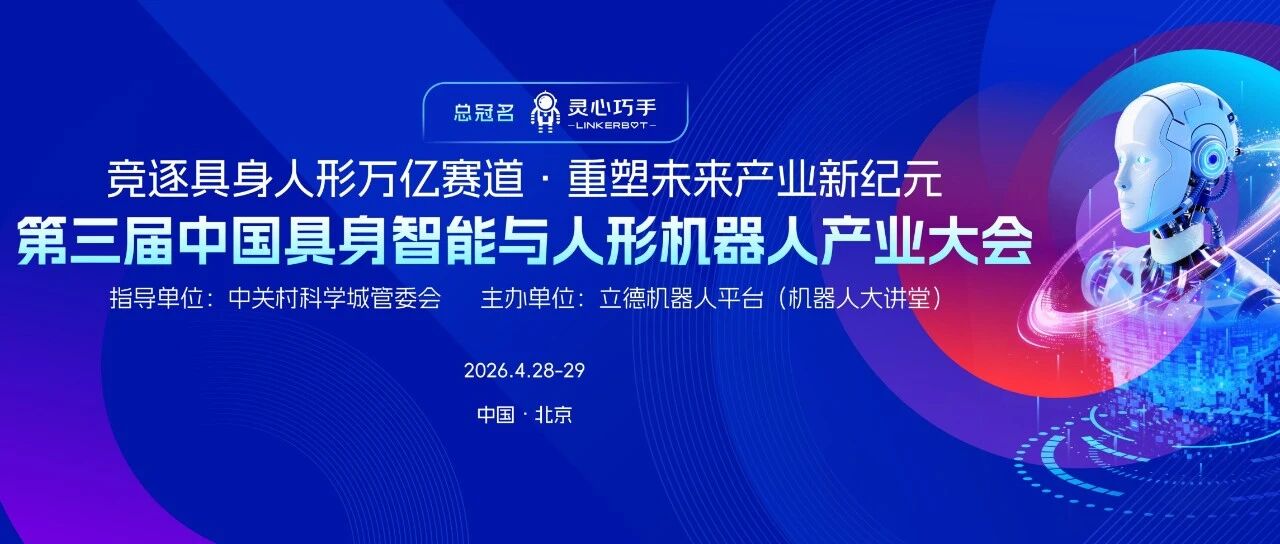
30+头部企业已锁定,尹周平、郝玉成、赵明国等领衔出席,第三届中国具身智能与人形机器人产业大会火热报名中!
机器人大讲堂· 2026-03-27 12:10
Core Insights - The article discusses the upcoming third China Embodied Intelligence and Humanoid Robot Industry Conference scheduled for April 28-29, 2026, highlighting the gathering of industry leaders and experts to explore advancements in embodied intelligence and robotics [1][5]. Group 1: Conference Overview - The conference aims to bring together over 30 pioneering companies in the field of embodied intelligence, including notable names such as Lingxin Qiaoshou, Yinshi Robotics, and Qianxun Intelligent [1][10]. - The event will feature a main forum with industry experts sharing insights on technological breakthroughs, cost control, and practical applications [5][18]. Group 2: Participation and Collaboration - The conference is positioned as a critical opportunity for companies to secure their place in a rapidly growing market, with a call for participation from various stakeholders including manufacturers, suppliers, and research institutions [2][31]. - A talent recruitment fair will be held to connect top graduates and researchers with companies in the embodied intelligence sector, addressing the industry's talent supply challenges [27][29]. Group 3: Event Structure and Activities - The conference will include six high-energy segments focused on showcasing products, facilitating exchanges, and recognizing industry leaders through awards [13][22]. - A report titled "Embodied Intelligence and Humanoid Robot Industry Research Report (2026)" will be released, providing insights into policy developments and technological trends [24].

新需求扩容,天齐锂业呼吁重估碳酸锂定价机制
高工锂电· 2026-03-27 10:57
Core Viewpoint - The lithium industry is facing a significant shift as demand boundaries expand, while the pricing mechanisms that have been in place for years remain outdated [2][8]. Group 1: Demand Side - The lithium demand forecast for the next decade includes not only electric vehicles but also new applications such as AI data center storage, humanoid robots, low-altitude economy, and solid-state batteries [6][11]. - The global AIDC storage battery shipment is expected to grow from 15 GWh in 2025 to 300 GWh by 2030, translating to a demand of approximately 180,000 tons of lithium carbonate equivalent [12][13]. - The long-term demand for lithium is projected to remain on an upward trajectory, with electric vehicles as the main driver, while new variables are being integrated into demand assessments [11][10]. Group 2: Pricing Mechanism - The lithium industry lacks a unified pricing mechanism, leading to discrepancies in price transmission across the supply chain [19][20]. - Different segments of the supply chain, including mines, lithium salt plants, and battery manufacturers, utilize various pricing methods, resulting in a lack of coherent pricing language [21][23]. - Long-term contracts still dominate the market, accounting for 60% to 80% of lithium carbonate sales in China, but discrepancies between spot prices and institutional quotes can lead to significant pressure on intermediate processing segments [25][27]. Group 3: Industry Dynamics - The lithium industry's competitive landscape is evolving, with a focus on resource availability, cost, and capacity, while the ability to define prices and manage volatility is becoming a critical differentiator [29][28]. - The industry is calling for a more unified and diverse pricing system to better reflect real trading conditions and improve value distribution across the supply chain [27][28].


机械行业月报:顺周期机械复苏持续,高油价有望催化新能源行业机遇-20260327
Zhongyuan Securities· 2026-03-27 08:48
Investment Rating - The report maintains an "Outperform" rating for the mechanical industry [1] Core Viewpoints - The cyclical recovery in the mechanical sector continues, with high oil prices expected to catalyze opportunities in the new energy sector [1][5] - In March, the CITIC mechanical sector fell by 13.54%, underperforming the CSI 300 index by 8.59 percentage points, ranking 25th among 30 CITIC primary industries [4][10] - The report suggests a defensive approach in the short term, focusing on stable recovery and high dividend yields from leading cyclical mechanical companies [5] Summary by Sections 1. Mechanical Sector Market Performance - As of March 26, 2026, the CITIC mechanical sector experienced a decline of 13.54%, with all sub-industries showing a downward trend, except for nuclear power and railway transportation equipment, which fell by less than 10% [4][10] - The report highlights that the mechanical sector's valuation is at a high level, with a price-to-earnings ratio of 39.2, placing it in the 76.5th percentile of the past decade [16][19] 2. Engineering Machinery - In January-February 2026, excavator sales increased by 13.1% year-on-year, indicating a sustained recovery in the industry [21][32] - The report emphasizes the importance of equipment renewal cycles and the increasing competitiveness of engineering machinery exports, with major companies expanding their global presence [39] 3. Robotics - The industrial robotics sector continues to recover, with production increasing by 31.1% year-on-year in January-February 2026 [40][43] - The report notes that humanoid robots are entering a phase of mass production, with significant advancements in technology and market potential [48] 4. Shipbuilding - In January-February 2026, new ship orders and prices are showing signs of recovery, with China maintaining a leading position in global shipbuilding metrics [49][51] - The report indicates that the shipbuilding industry is experiencing a resurgence, with a notable increase in new orders compared to previous years [49]




\人形机器人的Optimus时刻\系列(十二):粉末冶金&MIM:近净成形,精铸未来
Huachuang Securities· 2026-03-27 08:27
Investment Rating - The report maintains a "Buy" rating for the MIM industry, highlighting its core advantages in high-end precision manufacturing [5]. Core Insights - The MIM process, with its near-net shaping, high material utilization, and ability to manufacture complex structures, is becoming a key technology in high-end precision manufacturing. The demand for small, precise, and integrated components in humanoid robots aligns well with MIM technology, opening up new market opportunities [7][6]. - The domestic MIM market is expected to grow significantly, reaching approximately 14.14 billion yuan by 2026, with a global market share increase to 31.2% [61][62]. Summary by Sections 1. MIM Process and Technology - The MIM process combines the advantages of plastic injection molding and powder metallurgy, allowing for the production of complex three-dimensional shapes with high material efficiency [17][21]. - MIM technology is particularly suited for high-precision, small-scale components, achieving a density of over 98% and mechanical properties close to forged parts [34][39]. 2. Market Overview - The global MIM market reached approximately $3.776 billion in 2022 and is projected to grow to $7.388 billion by 2029, with a CAGR of 10.7% [52][57]. - In China, the MIM market was valued at about 9.12 billion yuan in 2022, with expectations to grow to 14.14 billion yuan by 2026, indicating a strong domestic demand [61][62]. 3. Application Areas - The primary application of MIM technology is in consumer electronics, accounting for about 40.3% of the market, followed closely by the automotive sector [58][60]. - MIM is increasingly utilized in the production of complex components for humanoid robots, enhancing manufacturing efficiency and reducing costs [5][6]. 4. Key Players and Competitive Landscape - Major players in the MIM industry include Dongmu Co., Haichang New Materials, and Tonglian Precision, each with distinct competitive advantages in manufacturing capabilities and market focus [5][6]. - The competitive landscape is characterized by a mix of established firms and emerging players, with a focus on technological innovation and market expansion [53][54].
上汽集团首个人形机器人投入产线
第一财经· 2026-03-27 05:57
Core Viewpoint - SAIC Group has introduced its first humanoid robot employee, "Nengzi No. 1," which will operate on the Buick Zhijing E7 battery production line, marking a significant step in the application of humanoid robots in mass production [1] Group 1 - The humanoid robot is a collaborative development between SAIC General Motors and Zhiyuan Robotics, showcasing advanced features such as visual perception, dual-arm coordination, and force-controlled grasping [1] - The robot can autonomously perform tasks such as material identification and intelligent path planning for grabbing, eliminating the need for fixed programming and precise material positioning [1]


中石化投资,碳纤维复材“独角兽”,完成第5轮融资
DT新材料· 2026-03-26 16:03
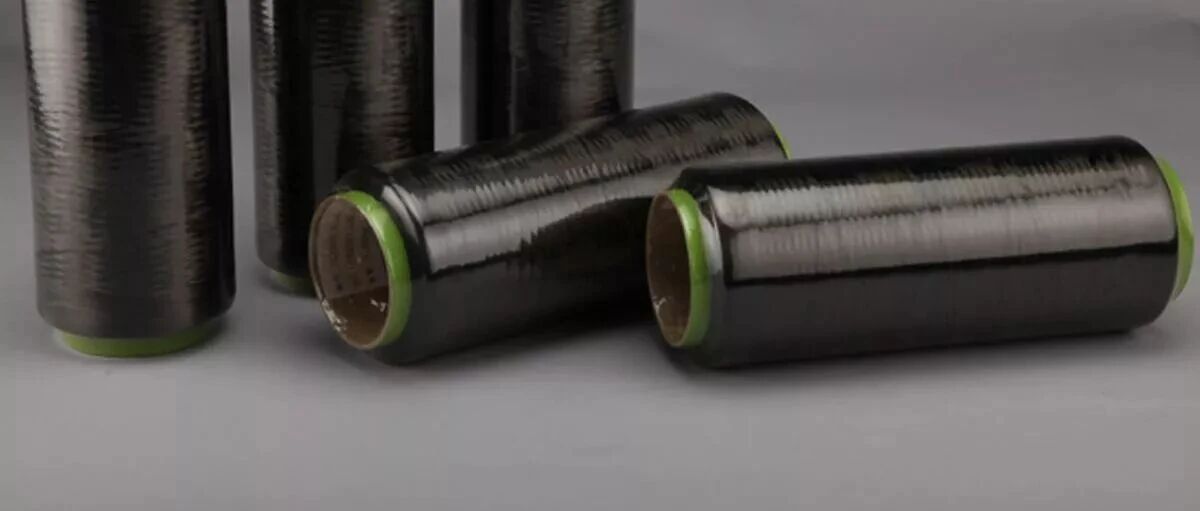
Core Viewpoint - Jiangsu Hengrui Carbon Fiber Technology Co., Ltd. has completed a B+ round of financing to support its research and production expansion in the carbon fiber composite materials sector [1] Group 1: Company Overview - Hengrui Carbon Fiber was founded in 2014 by Gu Yongtao and has developed into a potential unicorn with four subsidiaries, focusing on the research, production, sales, and recycling of carbon fiber composite materials [3] - The company has developed a series of carbon fiber reinforced composite materials (CFRP) and possesses advanced manufacturing processes and equipment for both thermosetting and thermoplastic materials [3] - Hengrui Carbon Fiber has established partnerships with major companies in various sectors, including automotive and aerospace, utilizing its products in applications such as carbon fiber wheels, seats, and components for low-altitude flying vehicles [4] Group 2: Investment and Financing - Since May 2021, Hengrui Carbon Fiber has completed five rounds of financing, with investors including Shenzhen Capital Group, China Post Life, and Sinopec [2] - Sinopec has also invested in other carbon fiber companies, indicating a strategic interest in the carbon fiber sector [2] Group 3: Market Trends and Demand - The demand for high-performance carbon fiber is being driven by emerging sectors such as low-altitude economy, commercial aerospace, humanoid robots, and new energy vehicles [5] - Recent supply shortages in the carbon fiber market highlight the increasing demand and potential for price increases [6] Group 4: Recycling Technology - Hengrui Carbon Fiber has developed a proprietary microwave pyrolysis technology that allows for the recycling of carbon fiber while retaining over 95% of the original material's mechanical properties, significantly reducing carbon emissions [6] - The global carbon fiber recycling industry is transitioning from technology validation to large-scale commercial application, with various methods being explored for effective recycling [6][7] Group 5: Policy and Future Outlook - The recent national economic development plan emphasizes the importance of recycling and the utilization of high-quality recycled materials, which aligns with the goals of companies like Hengrui Carbon Fiber [7] - The carbon fiber sector is viewed as a promising investment opportunity, with significant growth potential in the context of sustainable materials and recycling technologies [8]

金财互联(002530) - 2025年年度报告网上业绩说明会暨投资者关系活动记录表(2026年3月26日)
2026-03-26 14:04
Group 1: Business Strategy and Growth - The company has established 16 standardized processing service points in key manufacturing areas, enhancing its service network and response capabilities [2] - The company aims to be a benchmark in the commercial heat treatment sector, focusing on high-end customer concentration and comprehensive process solutions [2] - The company plans to maintain stable growth in quantity and effective improvement in quality, emphasizing innovation-driven development and market-oriented strategies [4] Group 2: Financial Performance and Projections - The revenue from heat treatment processing services increased by 24.9% in 2025 compared to 2024 [6] - The company has a detailed risk prevention plan in place to address potential external environmental changes [4] - The company will evaluate market conditions and operational status to determine any share repurchase plans [8] Group 3: Acquisitions and Partnerships - The company completed the acquisition of a 51% stake in Wuxi Sanli Robot Technology Co., Ltd. for approximately 63.43 million yuan [3] - Wuxi Sanli's main clients include several prominent companies, and the company plans to enhance its capacity and quality through ongoing technological upgrades [3] - The company is exploring collaborations with leading robot companies to expand its business opportunities [6] Group 4: Market and Investor Relations - The company's stock price is influenced by various factors, including macroeconomic conditions and market sentiment, rather than a direct correlation with future performance [5] - The company is committed to enhancing its operational quality and intrinsic value to build investor confidence [5] - The company is considering a name change to better reflect its current business focus after divesting its financial services [9]

豪恩汽电:公司的机器人域控系统是基于英伟达Jetson Thor芯片平台打造的
Zheng Quan Ri Bao Zhi Sheng· 2026-03-26 13:40
Core Insights - The company, Haon Qidian, has developed a robot domain control system based on the NVIDIA Jetson Thor chip platform, achieving a computing power of 2070 TOPS, which significantly exceeds the current mainstream chip levels for autonomous driving [1] - The system features a compact design tailored for the narrow waist and abdomen space of humanoid robots and includes a custom-developed cooling module [1] - The domain control system supports up to 16 channels of 8-megapixel cameras and accommodates customer customization requests [1]


五洲新春20260325
2026-03-26 13:20
Company and Industry Summary Company Overview - The company is deeply integrated with a core supplier in North America (Hangzhou company), providing semi-finished and finished products for large and small lead screws, with unit prices in the hundreds of yuan. By 2025, thousands of units are expected to be delivered [2][3]. Industry and Product Development - **Capacity Planning**: Current capacity can support 500 robots per week. A planned capital increase project aims to establish production capacities of 70,000 robotic lead screws and 1 million automotive lead screws, with mass production expected to switch to domestic equipment by 2026 [2]. - **Product Matrix Expansion**: The company is extending its product offerings to include linear actuators, dexterous hand components, and specialized bearings for robots, validated by orders from companies like Xiaopeng and ByteDance [2][4]. - **Growth Drivers**: The period from 2026 to 2027 is identified as critical for humanoid robot production. The automotive lead screw market (REPS/EHB) is expected to ramp up in the second half of 2026, with high-end bearings already securing orders worth tens of millions [2][6]. Financial and Profitability Outlook - **Financial Projections**: Traditional business growth is targeted at 10%-15%. The robotics division is projected to incur losses of approximately 20-30 million yuan in 2025, with expectations to reach breakeven around 2025-2026 as industry inflection points approach [2][13]. - **Overall Business Structure**: The company’s revenue is primarily derived from bearing business (50%-60%), automotive thermal management (about one-third), and other automotive parts. Revenue has remained stable at around 3.3 billion yuan, with profits fluctuating around 100 million yuan [5][6]. Competitive Position and Advantages - **Core Competitiveness**: The company holds a central position in the North American supply chain, with minimal impact from Tier 1 supplier dynamics. Its competitive advantages include cost reduction capabilities, extensive customer resources, and a rich product matrix that allows for one-stop solutions [2][8]. - **Market Positioning**: The company is positioned between Tier 1 and Tier 2 suppliers, maintaining flexibility in cooperation with various partners, including domestic and international suppliers [9][10]. Production and Capacity Utilization - **Production Guidance**: The company anticipates that North American clients will begin ramping up production around mid-2026, targeting an initial output of 1,000 units per week. This timeline remains unchanged, with batch orders already in place since 2024 [6][7]. Strategic Initiatives and Future Plans - **Equipment Strategy**: The company plans to utilize high-efficiency domestic equipment for cost reduction and efficiency improvements during the mass production phase. The capital increase project aims to enhance production capacity significantly [7]. - **International Expansion**: The company has a global presence with operations in Poland and Mexico, and plans to expand into Southeast Asia. The recent capital increase project will support the establishment of new production capacities [7][8]. Additional Insights - **High-End Manufacturing**: The company is involved in high-end manufacturing, supplying bearings for gas turbine main shafts, with orders valued at millions. This sector is expected to grow significantly [10]. - **Wind Power Business**: The wind power roller business achieved nearly 90 million yuan in revenue in the first three quarters of 2025, marking an 80% year-on-year increase. The company is well-positioned to benefit from future demand in this sector [11]. - **Robotics Component Supply**: The company has begun supplying components for hand modules and is exploring opportunities to transition from component supplier to module supplier, although this is still in early stages [12][13]. This summary encapsulates the key points from the conference call, highlighting the company's strategic direction, market positioning, and financial outlook within the robotics and manufacturing sectors.

小米集团20260324
2026-03-26 13:20
Summary of Xiaomi Group Conference Call Company Overview - **Company**: Xiaomi Group - **Date**: March 24, 2026 Key Points Industry and Market Dynamics - **Storage Chip Market**: Entering a long-term price increase cycle, with significant adjustments expected by 2027 due to rising costs driven by AI demand and supply constraints. This will heavily impact smartphones, tablets, and PCs [2][3] - **Automotive Business**: Targeting 550,000 vehicle deliveries in 2026, with 60% of locked orders from iPhone users. The penetration rate of payment plans has reached 60%, with higher conversion rates among women and Apple users compared to previous models [2][4] - **IoT Business Expansion**: Plans to double overseas stores from 4,500 to 10,000 by 2026, leveraging a market potential six times larger than the domestic market [2][6] Financial and Investment Strategy - **R&D and Capital Expenditure**: A planned expenditure of 60 billion over the next three years, with approximately 16 billion allocated for R&D in 2026, focusing on AI large models, humanoid robots, and self-developed chip platforms [2][5] - **AI Strategy**: 2026 is positioned as a year of application explosion for AI, with self-developed AI entities integrated into the ecosystem. Current focus is on technology iteration without specific KPIs set [2][5] Competitive Advantages and Risk Management - **Supply Chain Management**: The company has established strong long-term partnerships with global memory suppliers, mitigating supply interruption risks. Inventory levels have been proactively increased to counteract rising memory prices [3][4] - **Product Diversification**: A diverse product portfolio helps to spread risk, with home appliances less affected by memory price increases compared to smartphones and electric vehicles [3][4] Sales and Performance Metrics - **Sales Data Disclosure**: The company has shifted to reporting locked contract orders instead of specific model data, which is seen as a more reliable measure of performance. The initial sales of new models have been strong, with over 30,000 locked orders within three days of launch [4][6] - **Profitability in IoT and Automotive**: The IoT business is expected to see significant growth, particularly in high-end markets, while the automotive sector has already achieved profitability in 2025, with optimistic projections for 2026 despite market pressures [6][7] Challenges and Strategic Responses - **Cost Pressures**: Rising storage chip prices pose challenges, particularly for smartphones and laptops. The company may need to adjust pricing if internal cost absorption is insufficient [3][7] - **Geopolitical Impact**: The recent Middle East situation has minimal direct impact on the company's overall business, although some raw material costs have been affected [7] Future Outlook - **AI and Chip Development**: Continued investment in AI and chip development is planned, with no reduction in chip business funding despite increased R&D spending. The chip business is viewed as a long-term strategic platform [8] - **Market Positioning**: The company aims to maintain its market position while balancing pricing strategies across different product categories, ensuring that strong product innovation can offset cost increases [8]