低价股

Search documents
2元以下股仅24只!数量创10个月新低,低价标的持续锐减,这些方向近乎“清空”
Xin Lang Cai Jing· 2025-09-15 10:10
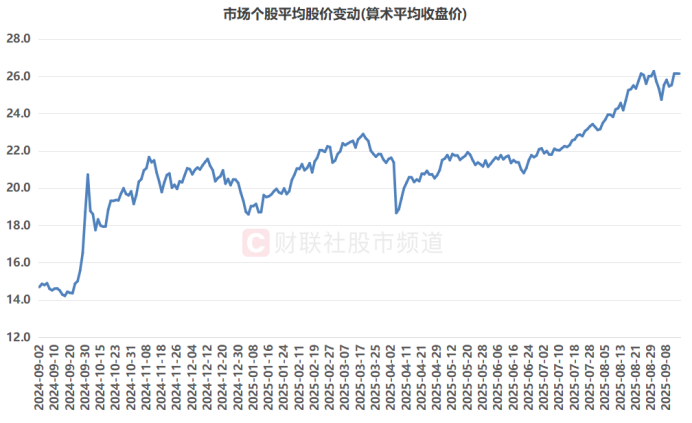
Core Viewpoint - The A-share market has shown an upward trend, with the average stock price reaching 26.13 yuan as of September 15, approaching the previous high of 26.27 yuan recorded on September 1 [1] Group 1: Market Overview - The number of low-priced stocks (below 2 yuan) has decreased significantly, with only 24 stocks remaining, a reduction of nearly 27% compared to the end of last year [3][4] - The number of stocks priced below 5 yuan has also declined to 525, down approximately 30% from the end of last year [1] Group 2: Industry Distribution of Low-Priced Stocks - Among the remaining low-priced stocks, the real estate and steel sectors have the highest proportions, accounting for 21% and 13% respectively [3] - The number of low-priced stocks has decreased across seven sectors, with the steel sector seeing a reduction of three stocks, nearly a 50% drop [4] Group 3: Performance of Specific Stocks - As of September 15, 21 stocks have risen above the 2 yuan mark, with Ji Shi Media, ST Xintong, and Xianfeng Holdings leading at 6.14 yuan, 5.97 yuan, and 3.97 yuan respectively [7] - Conversely, 12 stocks have fallen below 2 yuan, with notable declines in stocks like Zitian Tui, *ST Suwu, and *ST Gaohong, which have dropped to below 1 yuan from previous prices of 21.1 yuan, 9.32 yuan, and 3.02 yuan respectively [7] Group 4: High-Priced Stocks Growth - The number of stocks priced above 50 yuan has increased to 570, a growth of nearly 78.7% compared to the end of last year [10] - The number of stocks priced over 100 yuan has reached 142, marking a growth of approximately 97.2% [10] - The electronics sector has the highest average stock price among 31 primary sectors, with other sectors like beauty care and communications also showing strong average prices [10]

稀缺!破净股仅剩293只!国家队持有+绩优+高股息+低价全名单来了!
私募排排网· 2025-09-13 07:00
Core Viewpoint - The article highlights the significant recovery in the stock market since the "924" rally last year, with an average increase of 83.81% across 5429 stocks, and a notable reduction in the number of stocks trading below their net asset value (from 836 to 293) [2][3]. Group 1: Performance of Underperforming Stocks - Among the 293 underperforming stocks, only 13 have shown positive revenue growth and a net profit increase of over 50% in the first half of the year, indicating that performance-supported underperforming stocks are favored by the market [3][4]. - The average increase for the 293 underperforming stocks this year is 3.52%, while the 13 performance-supported underperforming stocks have an average increase of 16.32% [3][4]. Group 2: Stock Buybacks - A total of 58 underperforming stocks have actively engaged in buyback programs, suggesting that management believes their stock prices are undervalued [5][6]. - The top three companies by buyback amount this year are China State Construction, Baosteel, and Ji'an Medical, with buyback amounts of 0.887 billion, 0.543 billion, and 0.500 billion respectively [5][6]. Group 3: High Dividend Yield Stocks - There are 21 underperforming stocks with a dividend yield of over 5%, enhancing their investment appeal due to potential capital appreciation and stable dividend income [7][8]. - Bailong Oriental has a net asset ratio of 0.87 and a dividend yield of 7.48%, with a net profit increase of 67.53% in the first half of the year [7][8]. Group 4: National Team Holdings - The "national team" holds 71 underperforming stocks, with significant holdings in major banks such as China Construction Bank, Bank of China, and Agricultural Bank of China, indicating a focus on stabilizing these sectors [9][10]. - The national team increased its holdings in only three underperforming stocks in the second quarter, with the highest increase in Runtong Co., Ltd. [9][10]. Group 5: Low-Priced Underperforming Stocks - There are 28 underperforming stocks priced below 3 yuan, many of which have poor performance, suggesting that their real net asset values may not be as high as reported [10][12]. - Huachao City A has a net asset ratio of 0.41 and reported a significant revenue decline of 50.82% in the first half of the year [10][12].
9月12日连板股分析:连板股晋级率超六成 低价股表现活跃
Xin Lang Cai Jing· 2025-09-12 08:08
Group 1 - The core viewpoint of the article highlights that the upgrade rate of consecutive limit-up stocks exceeds 60%, indicating a recovery in the market for such stocks [1] - A total of 66 stocks hit the daily limit, with 18 consecutive limit-up stocks, including 7 stocks with three or more consecutive limit-ups [1] - The upgrade rate for consecutive limit-up stocks is reported at 63.63%, excluding ST and delisted stocks [1] Group 2 - Despite over 3,300 stocks declining in the market, nearly 100 stocks rose by more than 9%, showcasing a clear structural trend within the industry [1] - Low-priced stocks are particularly active, with 26 limit-up stocks priced below 10 yuan, accounting for nearly 40% of the limit-up stocks [1] - The consecutive limit-up trend is showing signs of recovery, with companies like Qingshan Paper, Suning Universal, and Chuzhong Technology accelerating to four consecutive limit-ups [1] Group 3 - The storage chip concept saw a collective surge, with stocks like Zhaoyi Innovation achieving two consecutive limit-ups, and others like Jingzhida and Demingli hitting the limit [1] - The real estate sector is also performing actively, with stocks like Shoukai Co. achieving seven limit-ups in eight days, and Suning Universal reaching four consecutive limit-ups due to its low-price and debt-reduction attributes [1] - Other notable stocks in the real estate sector include Rongsheng Development, Huaxia Happiness, and Xiangjiang Holdings, all of which hit the limit [1]
A股“最惨”板块跌麻了,什么情况?
Zheng Quan Shi Bao Wang· 2025-09-12 03:23
Core Viewpoint - Despite the overall upward trend in the A-share market, many low-priced stocks have declined, with some falling below the 1 yuan face value, indicating market differentiation and the ongoing process of resource optimization [1][2]. Group 1: Market Performance - The A-share market has seen significant growth, with the average stock price reaching 26.15 yuan and the median at 16.28 yuan as of September 11 [1]. - There are currently 28 stocks priced below 2 yuan, with an average decline of 1.48% since August, while major indices like the Shanghai Composite Index and Shenzhen Component Index have risen by 8.45% and 17.89%, respectively [2]. Group 2: Characteristics of Low-Priced Stocks - All 28 stocks priced below 2 yuan are from the main board, with no representation from the ChiNext, Sci-Tech Innovation Board, or Beijing Stock Exchange [3]. - The real estate sector dominates this group, with 7 stocks, followed by construction decoration, steel, and basic chemicals, each with 3 stocks [3]. - The majority of these low-priced stocks are small to mid-cap, with 16 stocks having a market capitalization below 10 billion yuan, and only 1 stock exceeding 50 billion yuan [3]. Group 3: Financial Performance - More than half of the low-priced stocks have reported a decline in revenue for the first half of the year, with 15 stocks showing a year-on-year decrease [3]. - Over 60% of these stocks have also experienced a drop in net profit attributable to shareholders [3]. Group 4: ST Stocks and Risks - A significant portion of the low-priced stocks, 13 out of 28, are ST (Special Treatment) stocks, indicating serious financial issues [4]. - Companies like *ST Gao Hong and *ST Su Wu are facing severe risks, including potential delisting due to fraudulent activities and financial mismanagement [4].
最高24个跌停板,A股“最惨”板块跌麻了,什么情况?
Zheng Quan Shi Bao· 2025-09-11 14:55
Group 1 - The overall A-share market has been rising significantly, yet many low-priced stocks have declined, with some falling below the 1 yuan face value, indicating a "vote with feet" from the market [1][2] - As of September 11, the average stock price in the A-share market was 26.15 yuan, while the median was 16.28 yuan, showing a general upward trend in stock prices [1] - There are currently 28 stocks priced below 2 yuan, with an average decline of -1.48% since August, contrasting sharply with the major indices which have seen increases of 8.45% to 31.16% [2] Group 2 - All 28 stocks priced below 2 yuan are from the main board, with no representation from the ChiNext, Sci-Tech Innovation Board, or Beijing Stock Exchange [3] - The real estate sector is the most represented among these low-priced stocks, with 7 companies, followed by construction decoration, steel, and basic chemicals, each with 3 companies [3] - The majority of these low-priced stocks are small to mid-cap, with 16 stocks having a market capitalization below 10 billion yuan, and only 1 stock exceeding 50 billion yuan [3] Group 3 - More than half of the 28 low-priced stocks have reported a decline in revenue year-on-year for the first half of the year, and over 60% have seen a drop in net profit attributable to shareholders [3][4] - A significant portion of the low-priced stocks are ST (Special Treatment) stocks, with 13 out of 28 classified as such, indicating serious financial issues [4] - Specific companies like *ST Gao Hong and *ST Su Wu are facing severe risks, including potential delisting due to fraudulent activities and financial mismanagement [4]

最高24个跌停板!A股"最惨"板块跌麻了,什么情况?
Zheng Quan Shi Bao· 2025-09-11 13:57
Group 1 - The A-share market has seen an overall upward trend, yet many low-priced stocks have declined, with some falling below the 1 yuan face value, indicating a market "vote with feet" phenomenon [1][2] - As of September 11, the average stock price in the A-share market was 26.15 yuan, and the median was 16.28 yuan, while the number of low-priced stocks has significantly decreased [1] - There are currently 28 stocks priced below 2 yuan, with an average decline of 1.48% since August, contrasting sharply with the Shanghai Composite Index's increase of 8.45% during the same period [2] Group 2 - All 28 stocks priced below 2 yuan are from the main board, with no representation from the ChiNext, Sci-Tech Innovation Board, or Beijing Stock Exchange [3] - The real estate sector is the most represented among these low-priced stocks, with 7 stocks, followed by construction decoration, steel, and basic chemicals, each with 3 stocks [3] - The majority of these low-priced stocks are small to mid-cap, with 16 stocks having a market capitalization below 10 billion yuan, and only 1 stock exceeding 50 billion yuan [3] Group 3 - A significant portion of the low-priced stocks are ST (Special Treatment) stocks, with 13 out of 28 classified as such, indicating serious issues within these companies [4] - For instance, *ST Gao Hong is facing potential major illegal delisting due to fraudulent issuance and false reporting, while *ST Su Wu is dealing with multiple risks including major shareholder fund occupation and potential delisting [4] - Over half of the 28 low-priced stocks have reported a decline in operating revenue, and more than 60% have seen a drop in net profit attributable to shareholders in the first half of the year [3]
龙虎榜复盘 | 消费股集体爆发,低价股持续多日局部发力
Xuan Gu Bao· 2025-09-04 10:59
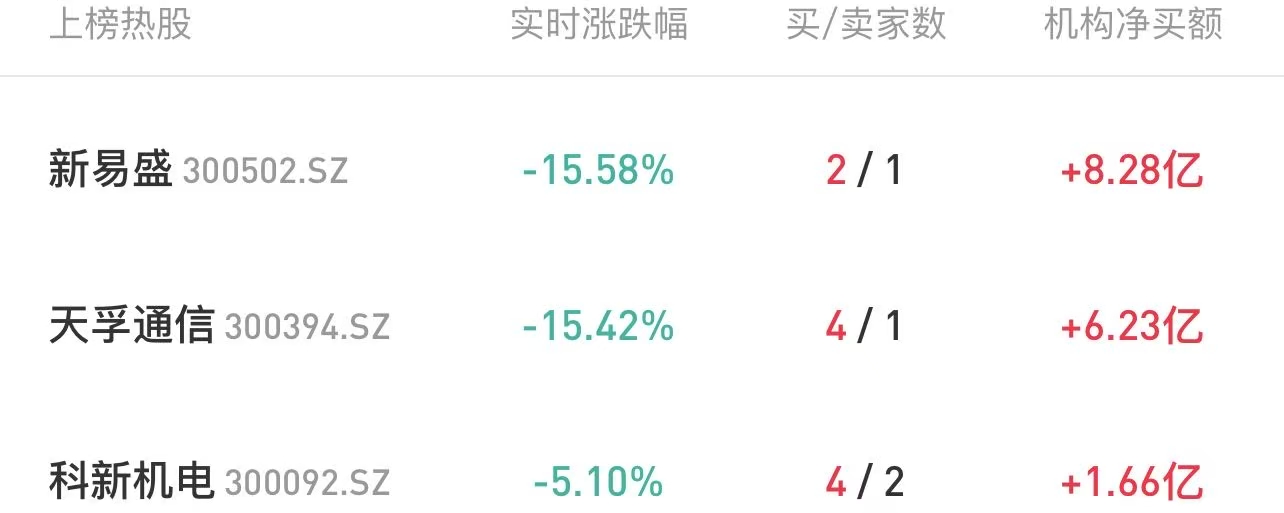
Group 1 - On the day, 36 stocks were listed on the institutional trading leaderboard, with 13 stocks experiencing net buying and 23 stocks facing net selling [1] - The top three stocks with the highest net buying by institutions were: Xinyi Sheng (828 million), Tianfu Communication (623 million), and Kexin Electromechanical (1.66 billion) [1] Group 2 - Notable retail stocks on the leaderboard included Bubugao and Guofang Group [2] - Low-priced stocks on the leaderboard included Taipingyang and Shengli Precision [2]
龙虎榜复盘 | 题材股全线熄火,低价股持续走强
Xuan Gu Bao· 2025-09-03 11:00
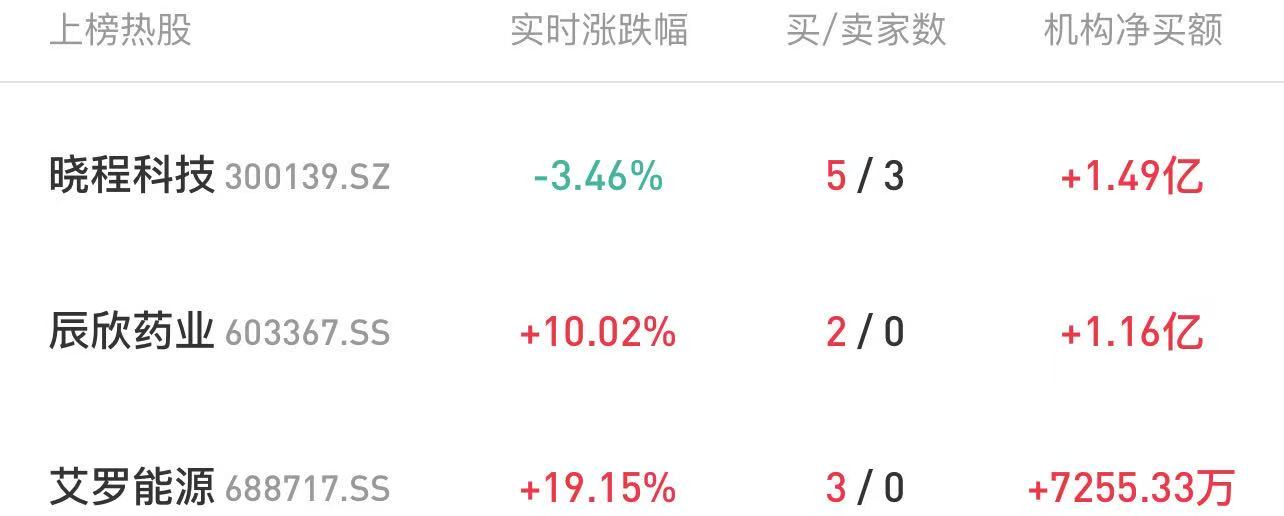
Group 1 - The core point of the news is that 30 stocks were listed on the institutional trading leaderboard, with 13 experiencing net buying and 17 facing net selling [1] - The top three stocks with the highest net buying by institutions were: Xiaocheng Technology (149 million), Chenxin Pharmaceutical (116 million), and Airo Energy (72.55 million) [1] - Xiaocheng Technology saw a decrease of 3.46% in its stock price, while Chenxin Pharmaceutical experienced an increase of 10.02% [2] Group 2 - Airo Energy's net buying by three institutions amounted to 72.55 million, with a focus on its household storage business recovering in the second half of 2023 due to European market dynamics [3] - The company has benefited from early investments in industrial storage products in Europe, particularly with the promotion of dynamic electricity pricing in regions like Germany [3] - The recovery in Airo Energy's business is expected to drive a new growth phase for the company [3]
埋伏14只低价、国资背景股,持仓市值高达16亿!揭秘“另类”牛散淘金术
Mei Ri Jing Ji Xin Wen· 2025-09-02 22:25
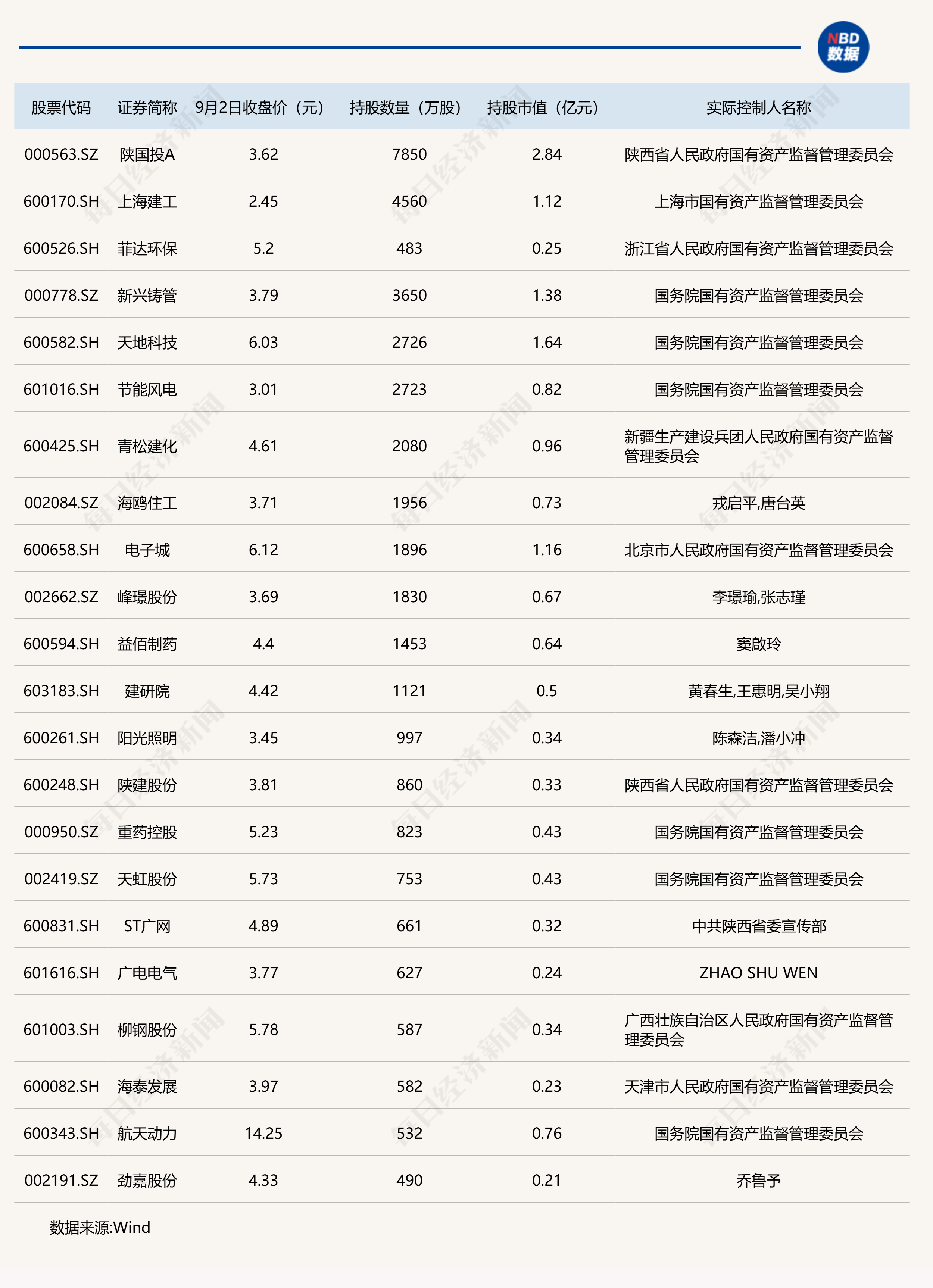
Core Viewpoint - Zhang Sufen, a prominent investor, focuses on undervalued stocks with state-owned backgrounds, diverging from popular investment trends in sectors like chips and innovative drugs [1][2]. Group 1: Investment Philosophy - Zhang Sufen's investment strategy emphasizes a "low price + state-owned background" approach, with 14 out of 22 stocks in her portfolio controlled by state-owned entities, accounting for 63.64% [2]. - The stocks in her portfolio are primarily low-priced, with most trading below 10 yuan, and only one stock, Aerospace Power, exceeding this price [2][6]. Group 2: Recent Investments - In Q2, Zhang Sufen entered the top 10 shareholders of six companies, including Energy Wind Power, Feida Environmental, and Haite Development, all of which have low stock prices [1]. - Feida Environmental's stock price increased from 4.8 yuan to a peak of 5.83 yuan, reflecting a more than 20% rise since Q2, driven by new government policies on carbon emissions [8]. Group 3: Market Timing and Strategy - Zhang Sufen demonstrated patience and strategic flexibility with Aerospace Power, initially buying at around 10 yuan and later averaging down during price dips, leading to a significant price increase to 16.9 yuan [6]. - The investment in Feida Environmental showcases her ability to identify opportunities in overlooked sectors, aligning with government initiatives for green transformation [8].
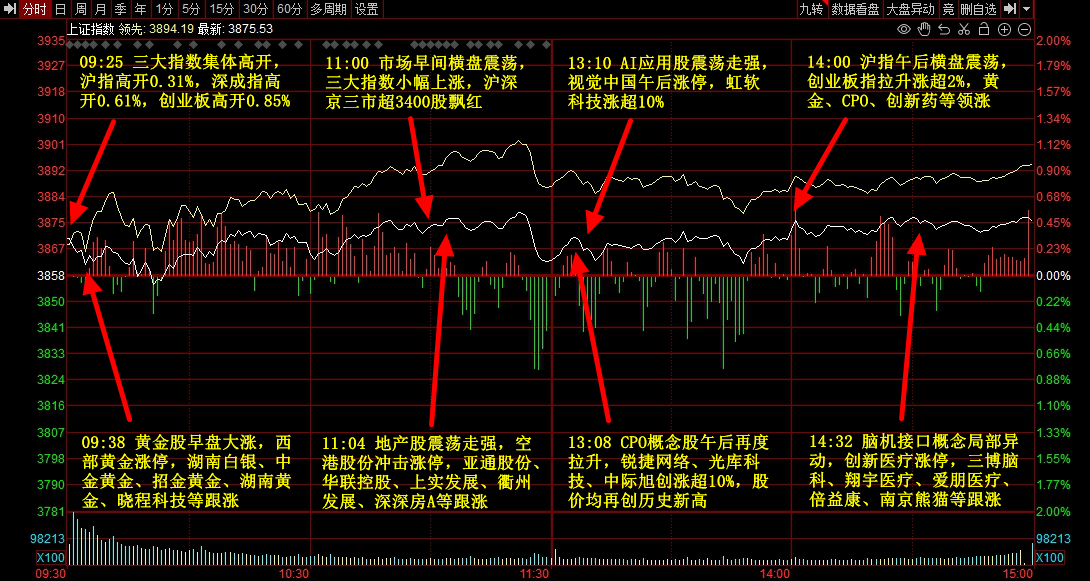
A股五张图:“宅男狂喜”的大模型出圈了
Xuan Gu Bao· 2025-09-01 10:32
Market Overview - The market saw a broad increase with major indices closing higher: Shanghai Composite Index up 0.46%, Shenzhen Component Index up 1.05%, and ChiNext Index up 2.29% [4] - Over 3200 stocks rose while more than 2000 stocks declined, indicating a strong bullish sentiment in the market [4] Gold Sector - The gold sector experienced significant gains with multiple stocks hitting the daily limit, including Western Gold, Hunan Silver, and Huayu Mining [3] CPO Sector - The CPO sector emerged as the strongest technology sub-sector of the day, with stocks like Yuanjie Technology and Tengjing Technology hitting the daily limit [14] - The CPO sector saw an overall increase of 5.89% [14] 3D Printing Sector - The 3D printing sector also showed strong performance, with stocks such as Jialian Technology and Changjiang Technology hitting the daily limit [6] - The sector closed up 2.21% [6] Low-Priced Stocks - Low-priced stocks gained traction with over twenty stocks hitting the daily limit, including Zhaoxin Co. and Feima International [10] - The low-priced stock sector rose by 1.24% overall [10] Alibaba Concept Stocks - Alibaba concept stocks surged following the company's strong Q2 earnings report, which showed AI-related product revenue growing for eight consecutive quarters [20] - Stocks related to Alibaba, such as Liyang Chip and Xuanji Information, saw significant gains, with some hitting the daily limit [21] - The sector closed up 1.31% [22]