
太空AI

Search documents
“空天经济”闪耀两市!资金重注卫星产业ETF(159218)布局产业未来
Sou Hu Cai Jing· 2025-12-12 01:45
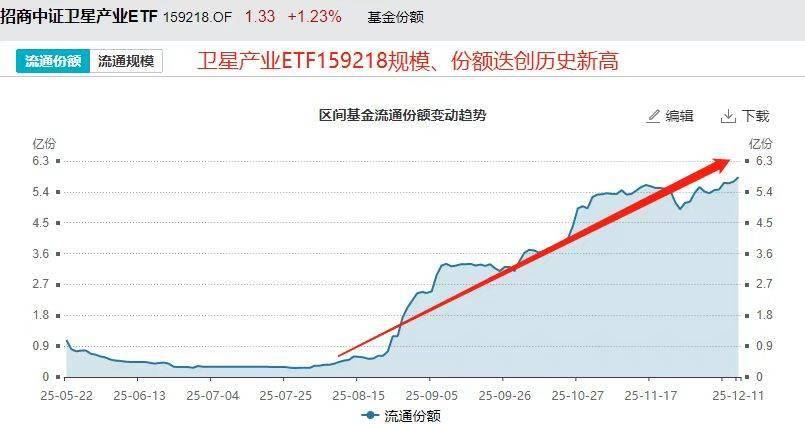
Core Viewpoint - The capital market's enthusiasm for the "space economy" is rising, with the satellite industry ETF (159218) becoming a focal point for investment, reflecting the industry's growth and potential [1][4]. Group 1: ETF Performance - As of December 11, the ETF's scale has reached nearly 800 million yuan, marking a historical high, with a year-to-date share growth of approximately 438.88%, leading among similar ETFs [4]. - The ETF has seen four instances of net inflow in just five trading days, indicating strong interest from institutions and investors in the commercial space sector [4]. Group 2: Industry Catalysts - The excitement in the sector is driven by significant industry catalysts, shifting the narrative from "space networking" to "space computing" [4]. - SpaceX is accelerating its IPO plans, aiming to raise over 30 billion USD with a target valuation of about 1.5 trillion USD, which would reshape the valuation landscape of the space economy [4]. Group 3: Technological Advancements - The "space AI" competition is intensifying, with Starcloud successfully operating an AI model in orbit, showcasing a significant leap in satellite capabilities [5]. - Domestic advancements in launch and manufacturing capabilities are also notable, with the Long March 12A rocket set for its maiden flight, representing a breakthrough in reusable rocket technology [5][7]. Group 4: Supply Chain and Manufacturing - The domestic supply chain is enhancing its capabilities, particularly in satellite energy systems, where a significant portion of satellites globally utilize high-efficiency solar cells, supported by local technological advancements [7]. - The combination of capital investment and technological breakthroughs forms a solid foundation for the current investment boom in the satellite industry [7].

马斯克暗示启动史上最大IPO,目标估值达1.5万亿美元
Sou Hu Cai Jing· 2025-12-11 13:57
Core Viewpoint - SpaceX, founded by Elon Musk, is showing signs of potentially going public, a significant shift from its previous stance against an IPO due to concerns over short-term profit pressures conflicting with its long-term goals of establishing a human presence on Mars [3][4]. Group 1: Shift in IPO Stance - SpaceX has historically resisted going public, fearing that quarterly profit demands would hinder its ambitious Mars colonization plans [3]. - Recent increases in capital expenditures have led to a reconsideration of this stance, as Musk's ambitions now require more funding than private markets can provide [3][4]. - The company is exploring the possibility of an IPO to support its extensive projects, including the integration of AI in space operations [3][4]. Group 2: Financial Health and Growth Projections - SpaceX's financial situation is robust, primarily due to the explosive growth of its Starlink business, with projected revenues of $15 billion in 2025 and $22 billion to $24 billion in 2026 [4]. - Musk has confirmed that SpaceX has maintained positive cash flow for years and conducts regular stock buybacks to provide liquidity to employees and investors [4]. - The company is reportedly preparing for a new round of internal share sales, potentially valuing it at over $500 billion, with estimates suggesting a future valuation of up to $1.5 trillion [5][6]. Group 3: Market Position and Achievements - SpaceX has established itself as a leader in the commercial space sector, achieving significant milestones such as the first successful crewed mission to the International Space Station by a private company [6]. - The company is not solely valued based on current revenue, as its market position and growth potential in the commercial space industry contribute significantly to its high valuation [6]. - SpaceX's Starlink project has become a major revenue driver, with over 9,440 satellites launched and more than 8,100 currently in orbit, making it the largest satellite constellation globally [7].
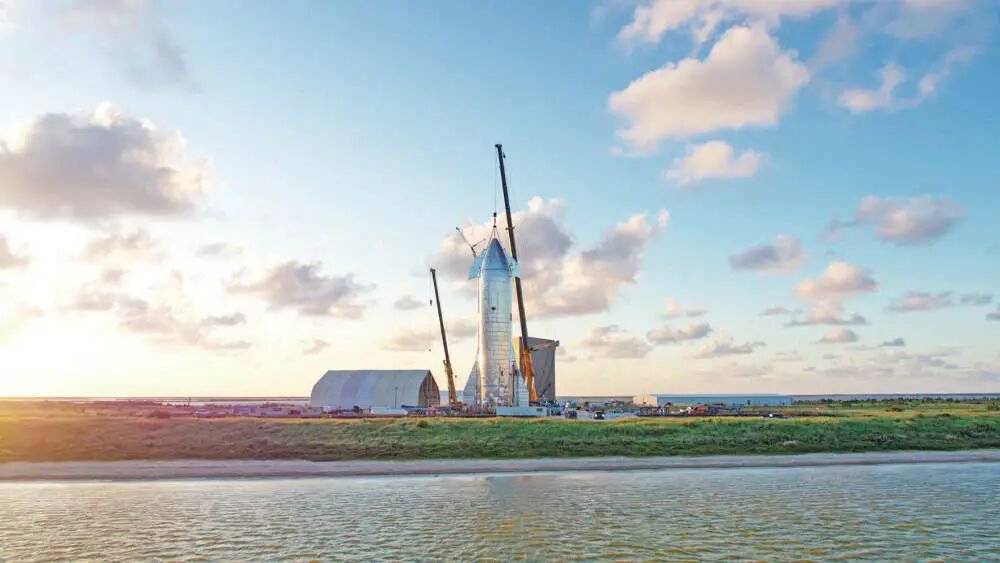
马斯克松口!暗示SpaceX计划上市,太空AI需要钱袋子
2 1 Shi Ji Jing Ji Bao Dao· 2025-12-11 13:35
Core Viewpoint - SpaceX, founded by Elon Musk, is showing signs of potentially moving towards an IPO, a significant shift from its previous stance against going public due to concerns over short-term profit pressures conflicting with its long-term goals of establishing a human presence on Mars [1][2]. Group 1: Company Position on IPO - Historically, SpaceX has resisted going public, fearing that quarterly profit demands would hinder its ambitious Mars colonization plans [2]. - Musk previously warned employees against the idea of an IPO, describing it as a "painful invitation" that could distract from the company's mission [2]. - The company's increasing capital expenditures and ambitious projects, such as integrating AI with space operations, are driving the reconsideration of its IPO strategy [2]. Group 2: Financial Health and Growth Projections - SpaceX's financial health is robust, primarily due to explosive growth in its Starlink business, with projected revenues of $15 billion in 2025 and $22 billion to $24 billion in 2026, providing a solid foundation for an IPO [3]. - Musk confirmed that SpaceX has maintained positive cash flow for years and conducts regular stock buybacks to provide liquidity to employees and investors [3]. - Recent discussions indicate that SpaceX is preparing for a new round of internal stock sales, potentially valuing the company at over $500 billion [3][4]. Group 3: Valuation and Market Position - The estimated share price for the upcoming stock sale is around $300, which would elevate the company's valuation to approximately $560 billion, a significant increase from $212 per share in July [4]. - There are rumors that SpaceX's valuation could reach as high as $1.5 trillion if an IPO occurs, potentially rivaling Tesla's market cap and challenging the record set by Saudi Aramco [4]. - SpaceX has established itself as a leader in the commercial space sector, achieving significant milestones such as the first successful crewed mission to the International Space Station by a private company [5]. Group 4: Strategic Acquisitions and Market Leadership - SpaceX is actively expanding its space infrastructure through acquisitions, such as the $17 billion purchase of wireless spectrum licenses from EchoStar to enhance its Starlink network [6]. - The Starlink project, initiated in 2015, has become a crucial revenue driver, with SpaceX leading the global low Earth orbit satellite internet market, having launched over 9,440 Starlink satellites [6].
马斯克暗示启动史上最大IPO,目标估值达1.5万亿美元
21世纪经济报道· 2025-12-11 13:30
Core Viewpoint - SpaceX, founded by Elon Musk, is showing signs of potentially going public, a significant shift from its previous stance against an IPO due to concerns about short-term profit pressures conflicting with its long-term goals of establishing a human presence on Mars [4][5]. Group 1: Shift in IPO Stance - SpaceX has historically resisted going public, fearing that quarterly profit demands would hinder its ambitious Mars colonization plans [4]. - Recent increases in capital expenditures have led to a reconsideration of this stance, as Musk's ambitions now require more funding than private markets can provide [4][5]. - The company is exploring the possibility of an IPO, with financial health bolstered by the explosive growth of its Starlink business, projected to generate $15 billion in revenue by 2025 and $22-24 billion by 2026 [5]. Group 2: Valuation and Market Position - SpaceX is reportedly preparing for a new round of internal share sales, potentially valuing the company at over $500 billion, surpassing OpenAI [7]. - The estimated share price for this round could be around $300, significantly up from $212 in July, with discussions indicating a possible valuation of $800 billion and an IPO target valuation of $1.5 trillion by 2026 [7]. - Despite lower revenue projections compared to Tesla, SpaceX's high valuation is driven by its market position and growth potential in the commercial space sector [9]. Group 3: Business Achievements and Infrastructure - SpaceX has established itself as a leader in the commercial space industry, achieving significant milestones such as the first private company to send astronauts to the International Space Station [8]. - The company is also expanding its space infrastructure through acquisitions, such as the $17 billion purchase of wireless spectrum licenses from EchoStar to enhance its Starlink satellite network [9]. - Starlink has become a crucial revenue driver, providing high-speed internet through a vast network of low Earth orbit satellites, with over 8,100 satellites currently in orbit [10].

登上《时代》!马斯克、黄仁勋被评为人工智能架构师
Sou Hu Cai Jing· 2025-12-11 09:53
【CNMO科技消息】12月11日,CNMO注意到,《时代》杂志的封面上,埃隆·马斯克、黄仁勋、萨姆· 奥特曼、李飞飞等行业巨头人物被誉为"人工智能架构师"(THE ARCHITECTS OF AI)。 有意思的是,2023年《时代》杂志发布的首届全球百大AI人物中,埃隆·马斯克、黄仁勋和萨姆·奥特曼 均榜上有名。 萨姆·奥特曼 特斯拉和SpaceX的CEO埃隆·马斯克在AI领域的角色是多维的。近期,他提出了"太空AI"的设想:每年 发射1百万吨级的AI卫星,在月球上建造卫星工厂。 埃隆·马斯克 据CNMO了解,作为英伟达的创始人,黄仁勋被业内认为是这场AI浪潮的"军火商"。英伟达提供的高性 能GPU几乎是所有大型AI模型训练的基石。TrendForce报告显示,2025年全球AI芯片市场规模预计突破 1200亿美元,其中英伟达将占据78%的份额,这个数字比2023年的71%提升了7个百分点。 黄仁勋 OpenAI的CEO萨姆·奥特曼因推出ChatGPT而成为全球焦点。近日,他在采访中表示,ChatGPT目前拥 有超过8亿的周活跃用户。作为一项仅诞生三年的技术,其被世界接纳的速度史无前例。 ...


全球首个太空AI诞生,H100在轨炼出,马斯克爆赞
3 6 Ke· 2025-12-11 03:46
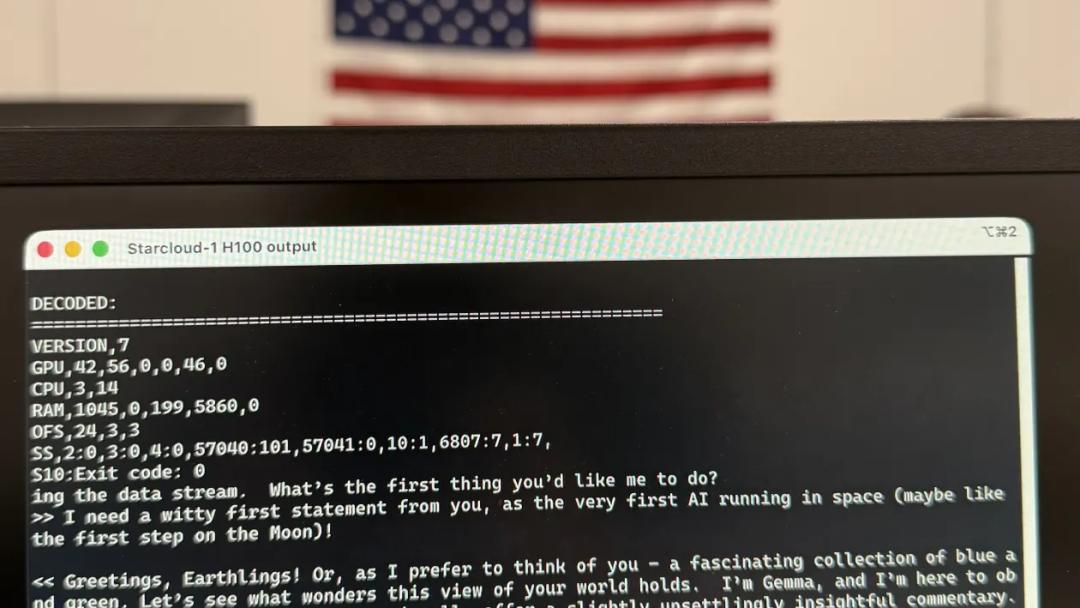
Core Insights - The first AI model trained in space using NVIDIA's H100 GPU has been successfully developed, marking a significant milestone in technology [1][3][9] - Google's Gemma model has also successfully operated in space, sending its first greeting message to Earth [1][11] Group 1: Space AI Development - The Starcloud-1 satellite, equipped with an H100 GPU, achieved a computational power 100 times stronger than any previous GPU sent to space [9] - The AI model trained in space is based on Karpathy's nanoGPT and utilizes Shakespearean texts for its training, allowing it to converse in a Renaissance language style [12][4] - The satellite has demonstrated real-time intelligence analysis capabilities, such as identifying wildfire signals and providing situational updates [16] Group 2: Industry Implications - Starcloud aims to establish space as a viable location for data centers, addressing the increasing pressure on Earth's data infrastructure [17][19] - The company plans to leverage solar energy to significantly reduce operational costs, projecting costs to be one-tenth of terrestrial data centers [20] - Starcloud's long-term vision includes creating a 5GW orbital data center with extensive solar panels and cooling systems [20][22] Group 3: Competitive Landscape - The space computing race is intensifying, with major players like Google, SpaceX, and Blue Origin entering the field [25][26] - Google's Project Suncatcher aims to deploy solar-powered GPU satellites, with plans for early testing by 2027 [26] - Musk's Starlink V3 satellites are expected to form a backbone for orbital computing infrastructure, potentially exceeding the average U.S. electricity consumption within two years [30]

马斯克的下一个目标:太空AI卫星?
美股IPO· 2025-12-02 08:02
Core Concept - Elon Musk has hinted at a new initiative called "Galaxy Mind," aimed at integrating the core capabilities of SpaceX, Tesla, and xAI to deploy solar-powered AI satellites in deep space, thereby overcoming Earth's energy limitations and backing up human knowledge [1][2]. Group 1: Vision and Integration - The vision represents not only a bold technological exploration but also a potential new business model that combines Tesla's energy technology, SpaceX's launch capabilities, and xAI's advanced models into a new space AI solution, potentially opening up significant growth opportunities driven by synergies [2]. - Musk emphasizes that future large-scale AI operations will rely on solar energy from space, stating that to harness a significant portion of solar energy, one must turn to solar-powered AI satellites in deep space, which he sees as the convergence point of the three companies' expertise [3]. Group 2: Company Roles - SpaceX will provide mature rocket launch and spacecraft manufacturing capabilities, responsible for deploying AI satellites into deep space [4]. - Tesla will leverage its expertise in solar and battery technology to provide efficient and sustainable energy solutions for the satellites [5]. - xAI will be tasked with developing cutting-edge AI models capable of large-scale operation on the satellites [6]. Group 3: Business Entity and Trademark - "Galaxy Mind" is not just a technical concept but may evolve into a future business entity, with goals including backing up human knowledge in space as a hedge against the risk of Earth's civilization collapse [9]. - Trademarks for "Galaxy Mind" and "Galactica" have been filed, with indications that "Galactica" could become the official name of the initiative [9]. Group 4: Synergy and Market Potential - Musk's latest move continues his strategy of maximizing synergies within his portfolio, building on the solid foundations of each company [11]. - Tesla's energy division has achieved leadership in efficient solar panels and storage systems, while SpaceX has transformed commercial space and satellite deployment through its Starlink network, and xAI is developing large language models with the potential for AGI [11]. - From an investor's perspective, this integration plan aims to reorganize mature technologies to explore new markets, combining SpaceX's physical transport capabilities, Tesla's energy capabilities, and xAI's intelligent computing to address Earth's energy constraints and create new physical space for AI development [11].


马斯克的下一个目标:太空AI卫星?
Hua Er Jie Jian Wen· 2025-12-02 02:23
Core Insights - Elon Musk's ambitious goal is to integrate AI into deep space through solar-powered satellites, leveraging the technologies of SpaceX, Tesla, and xAI [1][3] - The concept of "Galaxy Mind" aims to create a platform for AI computation beyond Earth's orbit, utilizing solar energy [1][5] - This vision represents a potential new business model that combines Tesla's energy technology, SpaceX's launch capabilities, and xAI's advanced models [1][6] Group 1: Integration of Technologies - Musk emphasizes the need for solar energy in large-scale AI operations, suggesting that deep space is essential for harnessing solar power effectively [3][6] - The collaboration among SpaceX, Tesla, and xAI is crucial, with each company playing a specific role: SpaceX for satellite deployment, Tesla for energy solutions, and xAI for AI model development [3][7] Group 2: Emergence of New Entities - "Galaxy Mind" is not just a technical concept but may evolve into a commercial entity aimed at preserving human knowledge in space as a safeguard against potential civilization collapse [5][6] - Trademark applications for "Galaxy Mind" and "Galactica" indicate the formalization of this initiative, with "Galactica" potentially becoming the official company name [5][6] Group 3: Business Logic and Market Potential - Musk's strategy focuses on maximizing synergies within his portfolio, building on the existing strengths of each company [6][7] - The integration plan aims to restructure mature technologies to explore new markets, addressing Earth's energy limitations and creating new opportunities for AI development [7]

国内计算技术权威专家:“太空AI”,中国多个团队取得关键突破
Huan Qiu Wang· 2025-11-30 23:51
Core Insights - The successful launch of a satellite equipped with NVIDIA's H100 chip marks a significant milestone in space-based AI, enabling advanced Earth observation and data processing capabilities [1] - China is rapidly advancing in the space AI sector, with multiple teams achieving key breakthroughs in satellite technology and AI model deployment [3][4] Group 1: Space AI Development - The integration of high-performance AI satellites can eliminate data transmission bottlenecks, allowing for real-time decision-making in critical applications like disaster monitoring [2] - The advantages of space-based AI include ultra-low latency, high bandwidth efficiency, global coverage, enhanced security, and the ability to address ground data center limitations [2] Group 2: China's Progress in Space AI - China has launched several AI-equipped satellites, including the "Luo Jia 3 01" satellite, which achieved B2C application services with an 8-minute Earth-satellite connection [3] - The "Three-body Computing Constellation" was launched in May 2023, marking the beginning of a networked space computing system [3] Group 3: Technological Innovations - Chinese research teams have developed a 100 TOPS onboard computing capability, laying the groundwork for autonomous hardware in space AI applications [4] - The "One Star, Multiple Cards" plan aims to validate a new space computing architecture in 2024, enhancing the capabilities of large AI models in orbit [5] Group 4: Competitive Landscape - China's approach focuses on developing a modular and systematic architecture for space computing, contrasting with the U.S. reliance on NVIDIA's H100 chip ecosystem [6] - The race for space AI capabilities is not merely a technological competition but also involves establishing standards for future space information infrastructure [6]
国内计算技术权威专家接受《环球时报》专访:“太空AI”,中国多个团队取得关键突破
Huan Qiu Shi Bao· 2025-11-30 22:48
Core Insights - The successful launch of a satellite equipped with NVIDIA's H100 chip marks the beginning of a new era for high-performance AI in space, enabling advanced Earth observation and data processing capabilities [1] - China is rapidly advancing in the field of space AI, with multiple teams achieving significant breakthroughs and deploying AI models in orbit [3][4] Group 1: Space AI Development - The integration of high-performance AI satellites can eliminate data transmission bottlenecks, allowing for real-time decision-making in critical applications such as disaster monitoring [2] - China's "Eastern Eye" satellite constellation has successfully implemented B2C applications, achieving an 8-minute Earth-satellite connection [3] - The "Three-body Computing Constellation" has been launched, marking the beginning of a networked space computing system [3] Group 2: Technological Innovations - China has achieved a 100 TOPS onboard computing capability, laying a foundation for autonomous hardware in space AI applications [4] - The "One Star Multiple Cards" plan aims to validate a new space computing architecture in orbit next year, focusing on lightweight models for space environments [5][6] - The proposed architecture emphasizes modular design and system integration, aiming for higher computing density and task flexibility [6] Group 3: Competitive Landscape - The race in space AI is not merely a technological competition but also involves establishing standards for the next generation of space information infrastructure [6] - China is positioning itself as a leader in space AI through systematic innovation, aiming to "leapfrog" competitors by mastering real-time perception and decision-making capabilities in space [6]