存算一体

Search documents
AI算力集群迈进“万卡”时代 超节点为什么火了?
Di Yi Cai Jing· 2025-07-30 10:24
Core Insights - The recent WAIC showcased the rising trend of supernodes, with multiple companies, including Huawei and Shanghai Yidian, presenting their supernode solutions, indicating a growing interest in high-performance computing [1][2][4] Group 1: Supernode Technology - Supernodes are designed to address the challenges of large-scale computing clusters by integrating computing resources to enhance efficiency and support models with trillions of parameters [1][2] - The technology allows for improved performance even when individual chip manufacturing processes are limited, marking a significant trend in the industry [1][5] - Supernodes can be developed through two main approaches: scale-out (horizontal expansion) and scale-up (vertical expansion), optimizing communication bandwidth and latency within the nodes [3][4] Group 2: Market Dynamics - The share of domestic AI chips in AI servers is increasing, with projections indicating a drop in reliance on foreign chips from 63% to 49% this year [6] - Companies like Nvidia are still focusing on the Chinese market, indicating the competitive landscape remains intense [6] - Domestic manufacturers are exploring alternative strategies to compete with established players like Nvidia, including optimizing for specific applications such as AI inference [6][8] Group 3: Innovation in Chip Design - Some domestic chip manufacturers are adopting sparse computing techniques, which require less stringent manufacturing processes, allowing for broader applicability in various scenarios [7] - Companies are focusing on edge computing and AI inference, aiming to reduce costs and improve efficiency in specific applications [8] - The introduction of new chips, such as the Homa M50, highlights the industry's shift towards innovative solutions that leverage emerging technologies like in-memory computing [8]

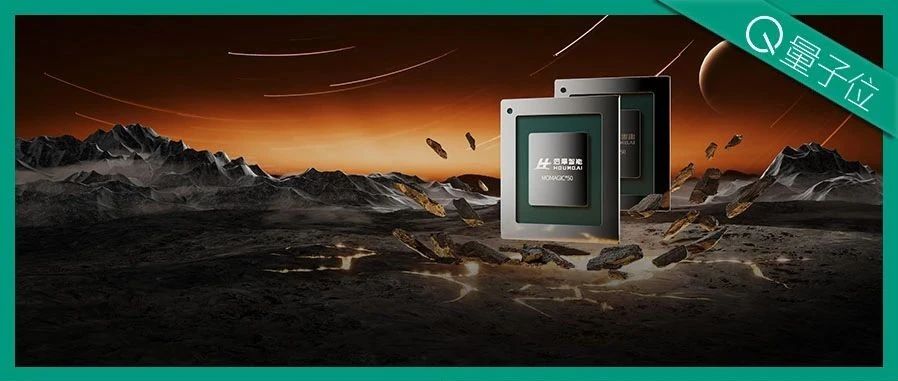
最高能效比!他又死磕“存算一体”2年,拿出全新端边大模型AI芯片
量子位· 2025-07-28 06:42
Core Viewpoint - The article highlights the launch of the M50 AI chip by Houmo Intelligent, which boasts the highest energy efficiency in the industry for integrated storage and computing, marking a significant advancement in AI technology [3][4][8]. Group 1: Product Launch and Specifications - The M50 chip features 160 TOPS@INT8 physical computing power, 100 TFLOPS@bFP16 floating-point computing power, and a bandwidth of 153.6 GB/s, with a typical power consumption of only 10W [4][8]. - The M50 is built on the second-generation integrated storage and computing technology developed by Houmo Intelligent, which allows for significant improvements in energy efficiency [8][9]. Group 2: Technological Innovation - The integrated storage and computing technology merges computation and storage, eliminating the need for data transfer between memory and processing units, thus overcoming the "power wall" and "storage wall" limitations of traditional architectures [11][12]. - The M50 utilizes SRAM-CIM technology, which involves deep structural changes to SRAM arrays, enabling parallel loading and computation, thereby doubling efficiency [12][15]. Group 3: Software and Ecosystem - Accompanying the M50 is the new compiler toolchain, Houmo Avenue®, which simplifies the optimization process for developers, allowing for automatic search of the best strategies [24]. - The company has developed a complete product matrix that includes various hardware solutions for both terminal and edge computing, enhancing the accessibility of AI capabilities across different applications [28][36]. Group 4: Market Positioning and Future Outlook - Houmo Intelligent's focus on integrated storage and computing is seen as a necessary differentiation strategy in a competitive landscape dominated by giants like NVIDIA and Huawei [37][40]. - The company aims to address the increasing demand for computing power and bandwidth in the era of large models, with a vision of making AI capabilities ubiquitous in everyday devices [41][42].
Jinqiu Spotlight | 锦秋基金被投光本位研发全球首颗存算一体光芯片
锦秋集· 2025-07-22 15:04
Core Viewpoint - The article discusses the strategic investment by Jinqiu Capital in "Guangbenwei Technology," a company specializing in optical computing chips, highlighting its innovative technology and market potential in the AI sector [2][20]. Company Overview - Guangbenwei Technology was founded by two young entrepreneurs who returned to China to establish the company after gaining experience abroad. The company has developed the world's first optical computing chip that meets commercial standards for computing density and precision [4][7]. - The founders, Xiong Yingjiang and Cheng Tangsheng, have extensive backgrounds in AI and optical computing, which they leveraged to create a unique product that integrates optical technology with computing capabilities [4][6]. Technology and Innovation - Guangbenwei Technology has achieved significant milestones, including the successful development of a 128x128 matrix optical computing chip, which is the first of its kind to integrate storage and computing functions [10][12]. - The company utilizes a unique technology route that combines silicon photonics with phase change materials (PCM), allowing for a significant reduction in energy consumption and an increase in computing power [13][14]. - The optical chips developed by Guangbenwei can potentially offer over 1000 times the computing power of traditional electronic chips while consuming less energy, addressing the growing demand for computational power in AI applications [8][14]. Market Demand and Applications - The demand for computing power is expected to surge, with global data centers projected to consume approximately 415 terawatt-hours of electricity in 2024, potentially doubling by 2030 [7]. - Guangbenwei Technology targets two main customer segments: large internet companies with advanced computing capabilities and government-led intelligent computing centers, each with distinct needs for energy efficiency and economic viability [16][17]. Funding and Growth - Guangbenwei Technology has successfully completed multiple funding rounds, including a strategic round led by Jinqiu Capital, which reflects investor confidence in the company's technology and market potential [2][20]. - The company is actively collaborating with leading internet firms, GPU manufacturers, and research institutions to validate its technology and expand its market presence [19].
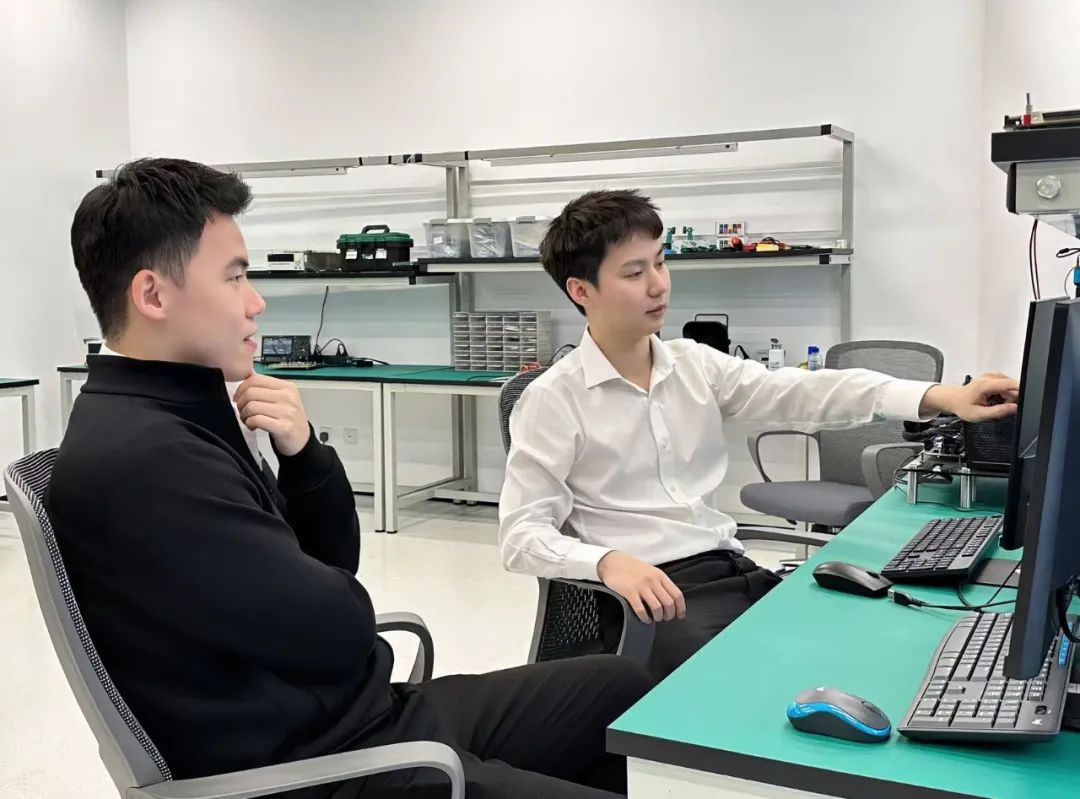
两位95后创立光计算芯片公司,研发全球首颗存算一体光芯片
3 6 Ke· 2025-07-22 02:28
Core Insights - The article discusses the establishment and progress of a company called "Guangbenwei," which has developed the world's first optical computing chip that meets commercial standards in terms of computing density and precision [1][2] - The founders, Xiong Yingjiang and Cheng Tangsheng, have extensive backgrounds in AI and optical computing, and they identified a significant opportunity in the optical computing sector due to the increasing demand for computing power driven by AI advancements [2][3] Company Overview - Guangbenwei was founded by two young entrepreneurs who previously had experience in the U.S. and academia, focusing on the development of optical computing chips that integrate silicon photonics and phase change materials [1][3] - The company has achieved significant milestones, including the successful tape-out of a 128x128 matrix optical computing chip, making it the only company to achieve such integration on a single die [1][7] Market Context - The demand for computing power is expected to surge, with global data centers projected to consume approximately 415 terawatt-hours of electricity in 2024, potentially doubling by 2030 [2] - Optical chips are believed to have the potential to outperform traditional electronic chips by over 1000 times in terms of computing power while consuming less energy [3] Technological Advancements - Guangbenwei's optical computing chips utilize a unique architecture that allows for a programmable structure with over 16,000 adjustable nodes, making it adaptable to various model parameters [7][9] - The integration of storage and computing functions within the chip significantly alleviates storage pressure and enhances performance [9] Commercial Strategy - The company targets two main customer segments: large internet companies with advanced computing capabilities and government-led intelligent computing centers, each with distinct needs [10][11] - Guangbenwei is developing a hybrid optical-electrical computing card that is compatible with existing standards, aiming to provide high energy efficiency and algorithm flexibility [10] Future Prospects - The company has established partnerships with leading internet firms, GPU manufacturers, and intelligent computing centers for application validation and is working on advanced packaging techniques [13] - Guangbenwei has secured multiple rounds of financing to support its growth and product development, indicating strong investor confidence in its potential [13][14]
存算一体瓶颈,中国团队实现突破
半导体芯闻· 2025-07-02 10:21
Core Viewpoint - The rapid development of artificial intelligence (AI) presents new challenges for chip computing power, particularly the "memory wall" issue, which arises from the limitations of the von Neumann architecture widely used in processors [1][3]. Group 1: Memory Wall Problem - The von Neumann architecture simplifies hardware design by storing data and instructions in the same memory, but it limits CPU execution capabilities due to sequential instruction processing [3]. - The performance of storage has not kept pace with CPU advancements, leading to significant delays as CPUs wait for memory read/write operations, thus degrading overall system performance [3][4]. Group 2: Processing-In-Memory (PIM) Technology - PIM, or Compute-in-Memory, is an emerging non-von Neumann computing paradigm aimed at addressing the "memory wall" problem by executing computations within memory, reducing data transfer time and energy costs [5][6]. - The development of PIM technology has evolved through various stages since the 1990s, with significant contributions from both academic institutions and companies like Samsung, SK Hynix, and Micron [6][8]. Group 3: Current PIM Technologies - Mainstream PIM technologies include digital PIM (SRAM/DRAM), analog PIM (RRAM, PCM), and hybrid PIM, each with distinct advantages and challenges [8]. - Companies and research institutions have been actively developing PIM prototypes since 2017, with notable advancements in traditional storage technologies [8][9]. Group 4: Sorting Challenges in AI - Sorting is a critical and time-consuming operation in AI systems, affecting applications in natural language processing, information retrieval, and intelligent decision-making [10][11]. - The complexity of sorting operations, particularly in dynamic environments, poses significant challenges for traditional computing architectures, leading to high time and power consumption [10][11]. Group 5: Breakthrough in Sorting Hardware Architecture - A team from Peking University has achieved a breakthrough in efficient sorting hardware architecture based on PIM technology, addressing the inefficiencies of traditional architectures in handling complex nonlinear sorting tasks [13][14]. - The new architecture reportedly enhances sorting speed by over 15 times and improves area efficiency by more than 32 times, with power consumption reduced to one-tenth of traditional CPU or GPU processors [15][17]. Group 6: Implications and Future Applications - This breakthrough is expected to support a wide range of AI applications, including intelligent driving, smart cities, and edge AI devices, providing a robust foundation for next-generation AI technologies [16][17]. - The successful implementation of this sorting architecture signifies a shift from application-specific solutions to broader, general-purpose computing capabilities within PIM systems [15][16].
【私募调研记录】纽富斯投资调研佰维存储
Zheng Quan Zhi Xing· 2025-07-01 00:08
Group 1 - The core viewpoint of the article highlights the extensive product layout of Baiwei Storage in the AI era, covering various fields such as mobile phones, PCs, and smart wearable devices [1] - Baiwei Storage offers a range of products including UFS, LPDDR5/5X, DDR5 overclocked memory bars, and PCIe 5.0 SSDs [1] - The company has established partnerships with well-known enterprises like Google and Meta in the smart wearable sector, projecting revenue of 106 million yuan from AI glasses in 2024, with an expected growth of over 500% in 2025 [1] - Baiwei Storage's advanced wafer-level packaging project is expected to commence production in the second half of 2025, covering various advanced packaging forms [1] - In the smart automotive sector, the company has launched automotive-grade eMMC, LPDDR, and NOR Flash products, which are already in mass production with leading domestic car manufacturers [1] - The company is actively promoting the integration of storage and computing, developing various storage-computing integration technology solutions [1] - The first main control chip, SP1800 eMMC 5.1, has already entered mass production, with plans to advance UFS main control chips in key areas [1] - Baiwei Storage emphasizes the future focus of the storage industry on deep applications in cloud, edge, and endpoint, highlighting the importance of localized delivery capabilities and the integration of storage with advanced packaging [1]
双轮驱动,共谱数字金融新篇章|2025中国国际金融展·华为媒体沟通会成功举办
Cai Fu Zai Xian· 2025-06-24 03:10
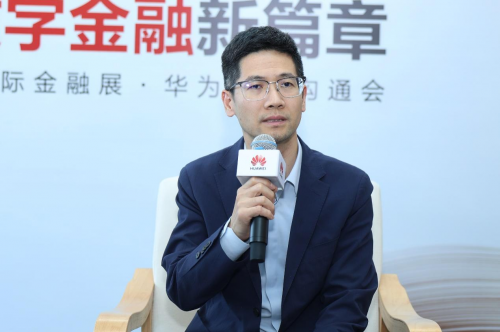
Core Viewpoint - Huawei emphasizes the transition from integrated storage and computing architecture to separated storage and computing architecture in the financial database sector, highlighting the advantages of flexibility, availability, and reduced operational costs [1][4][6]. Group 1: Technical Trends and Practices - The media communication event during the 2025 China International Financial Expo focused on the technical trends and practical experiences in financial industry database architecture [1]. - Huawei's president of flash storage, Xie Liming, pointed out that while integrated storage and computing architecture was quickly adopted initially, it has shown low resource utilization, complex operations, and frequent failures as scale increases [4]. - The separated storage and computing architecture offers three main advantages: flexible resource expansion, significantly improved availability due to its layered structure, and substantial savings in operational costs [4][6]. Group 2: Industry Insights and Customer Needs - Jiangnan Rural Commercial Bank's database director, Wang Hao, shared that the separated storage architecture enhances business continuity by isolating hardware failures and reducing physical server switch time from one hour to minutes [8]. - Different types of financial institutions have varying needs; large institutions prioritize stability in migrating existing business, while smaller institutions prefer agile, lightweight deployment solutions [10]. - Huawei has introduced multi-form database solutions, including virtualization platforms and physical machine options, to cater to the diverse needs of financial institutions [10]. Group 3: Future Directions and Innovations - The discussion highlighted the dual prospects of AI in relation to databases: AI can enhance operational efficiency through intelligent maintenance, while databases need to adapt to new paradigms like natural language interaction and knowledge graphs to support AI [12]. - Xie Liming called for the exploration of "Chinese standards" in the industry, advocating for high availability and forward-looking architectures, such as multi-active solutions with zero recovery point objectives [12]. - The evolution of financial database technology is seen as a pathway from integrated to separated architectures, aiming to improve system utilization, availability, and ease of maintenance, while also exploring the integration of AI in the future [12].
易华录: 北京易华录信息技术股份有限公司公开发行公司债券2025年跟踪评级报告
Zheng Quan Zhi Xing· 2025-06-20 11:30
Core Viewpoint - Beijing Yihualu Information Technology Co., Ltd. maintains a stable long-term credit rating of AA, with its bond "22 Hualu 01" rated AA+ and a stable outlook, reflecting the company's ongoing challenges and strategic shifts in its business operations [1][3][5]. Company Overview - The company primarily generates revenue from digital systems and data operation services, gradually shifting focus from its original data lake business to smart transportation and data element integration [3][11]. - As of March 2025, the company had a total contract amount that showed steady growth, providing a foundation for revenue [3][17]. Financial Performance - In 2024, the company experienced a significant revenue decline of 39.24%, with total revenue dropping to 465 million yuan, largely due to the contraction of its data lake business and adjustments in revenue recognition for certain projects [11][14]. - The company reported a total profit loss of 2.85 billion yuan in 2024, with total assets and equity decreasing to 11.47 billion yuan and 1.24 billion yuan, respectively [11][14]. - As of March 2025, the company continued to face cash flow challenges, with negative operating cash flow and EBITDA, indicating a lack of financial security against its debt obligations [11][12]. Debt and Financing - The company has a high proportion of restricted assets, with 60.92% of total assets being restricted as of the end of 2024, primarily used as collateral for loans [11][12]. - The total debt increased to 7.11 billion yuan by the end of 2024, with a debt-to-asset ratio of 88.35%, indicating a heavy debt burden [11][12]. - The company has received significant financial support from its controlling shareholder, China Hualu Group, which provided over 3.79 billion yuan in funding in 2024 [5][8]. Industry Context - The smart transportation sector is characterized by intense competition and low entry barriers, with major players being large telecommunications operators [15][16]. - The market for smart transportation projects is expected to contract in 2024 due to tight local government finances, with a projected 22.11% decrease in the traffic control market size [15][16]. - The industry is undergoing a transition towards data assetization, with government initiatives promoting the development of data resources and their integration into economic activities [15][16].

得一微定义“AI存力芯片”,让每比特数据创造更多智能
半导体行业观察· 2025-05-30 01:55
Core Viewpoint - The article discusses the transformative shift in computing paradigms from CPU-centric to memory-centric systems, emphasizing the emergence of "AI memory chips" as a key innovation in enhancing system efficiency and intelligence [1][3]. Group 1: Technological Transition - The transition from storage to "memory power" represents a significant upgrade in technology, redefining the boundaries of advanced memory capabilities [2]. - The company, DeYi Microelectronics, has introduced the concept of "AI memory chips," which aims to implement AI intelligence in memory units, providing valuable computational offloading and data insights for AI systems [1][3]. Group 2: Company Developments - DeYi Microelectronics is one of the few domestic companies with complete independent research and development capabilities for storage control chips, marking a high point in its development history [3]. - The company has successfully integrated its storage control chip products with leading smartphone manufacturers and has made significant breakthroughs in industrial and automotive storage markets, particularly achieving double-digit growth in automotive products [3]. Group 3: AI Integration and Challenges - The rise of AI has shifted the role of storage, where core data now includes model parameters and neural network weights, with GPUs taking precedence over CPUs in storage systems [3][4]. - Current challenges in AI systems include bandwidth bottlenecks and the limitations of existing memory technologies like HBM, necessitating a reevaluation of product strategies [4]. Group 4: AI-MemoryX Innovation - The AI-MemoryX graphics memory expansion card developed by DeYi Microelectronics significantly increases single-machine memory capacity from traditional levels to the terabyte range, enabling the training of large models with fewer GPUs [6]. - This technology not only serves as an expansion card but also as a comprehensive solution for fine-tuning large models, providing extensive technical support for AI applications [6]. Group 5: Future Strategy - The company plans to follow a three-step strategy: leveraging existing chips and software for rapid value creation, embedding software innovations into chips, and promoting the application and ecosystem of AI memory chips [7]. - DeYi Microelectronics aims to redefine the computing paradigm with its AI memory chips, transitioning from passive support of computing power to actively driving it [9].

汤姆猫(300459) - 2025年5月14日投资者关系活动记录表
2025-05-14 12:48
Group 1: Sales Performance - The Tom Cat AI emotional companion robot launched in late December 2024 has seen rapid sales growth, with online sales increasing by 100% month-on-month for two consecutive months since March 2025, and a high approval rate of 98.5% [3] - On May 13, 2025, the company achieved a single live-stream sales record of over 1.8 million yuan on Douyin, with 390,000 cumulative viewers, ranking first in both toy model and toy categories on the platform [10] - The product has been introduced to over 30 offline sales channels, receiving positive feedback from distributors and plans to expand into more well-known retail chains [3] Group 2: Business Growth Drivers - The company plans to launch multiple new IP products in 2025, including "Jin Jie Cat Enlightenment Garden," "Tom Cat Town," and "Tom Cat Adventures 2," which are expected to optimize the gaming business's profitability [4] - The AI robot product line is being expanded with new portable models, aiming to capture a larger share of the AI consumer market [10] - The establishment of Aurion11 Limited will explore programmatic advertising services, leveraging machine learning and big data to enhance advertising monetization for mobile app clients [11] Group 3: Product Development and Innovation - The company has conducted over 480 updates and optimizations on the first-generation Tom Cat AI emotional companion robot since its launch, focusing on software, underlying models, and content [14] - Plans include launching different IP character robots to cater to diverse user preferences and expanding product applications to various scenarios, including outdoor and family environments [14] - The collaboration with Guangyu Xincheng aims to develop high-performance, low-power AI edge model software and hardware applications, enhancing the product's capabilities [12] Group 4: Market Strategy and Pricing - The initial sales data indicates a high acceptance rate for the AI robot, with over 90% of sales from the 1999 yuan lifetime free version, showcasing a competitive advantage in high-priced products [13] - The company aims to maintain a balance between high quality and competitive pricing, planning to introduce lower-priced portable models to attract a broader consumer base [13] - Continuous optimization of the supply chain and cost control will ensure reasonable ROI while adhering to the principle of "technology for all" [13]