
并购基金

Search documents
最高容亏100%,3000亿基金,这个省会城市放大招
母基金研究中心· 2025-06-16 09:09
Core Viewpoint - The Wuhan Municipal Government has released an action plan aimed at promoting high-quality development of technology finance and establishing a national technology finance center by 2027, with a target of exceeding 3 trillion yuan in equity investment fund scale [1]. Group 1: Key Measures in the Action Plan - The plan encourages government investment funds to collaborate with listed companies and key enterprises in the industry chain to establish merger and acquisition funds, with a maximum government investment ratio of 1:1 [2][11]. - It proposes practical measures across all stages of fund management, including increasing the contribution ratio of sub-funds to over 50% and extending the maximum duration of funds to 15 years [2]. - The plan allows government investment funds to invest up to 20% of the new investment amount in seed and angel funds, enhancing the role of government investment funds [2][4]. Group 2: Tolerance for Losses - The action plan introduces a groundbreaking tolerance for losses, allowing seed funds and angel funds to incur losses of up to 80% and 60% respectively, with single projects allowed to incur losses of up to 100% [4][7]. - This tolerance mechanism is seen as a significant breakthrough in the national context, as it allows for a higher overall loss tolerance at the fund level compared to individual project levels [4][6]. - The plan reflects a broader trend where local state-owned assets are increasingly accepting full loss tolerances, indicating a shift towards a more risk-tolerant investment environment [6][8]. Group 3: Fund Evaluation and Management - The action plan emphasizes the need for a scientific evaluation system for funds, stating that individual fund or project profits and losses should not be the sole basis for assessment [5][10]. - It aims to create a favorable environment for innovation and risk tolerance, encouraging the establishment of a comprehensive evaluation system that aligns with the characteristics of the venture capital industry [9][10]. - The plan also highlights the importance of a flexible and market-oriented approach in the management of mother funds, with low return requirements and fewer restrictions on fund management teams [18][19]. Group 4: M&A Fund Development - The action plan outlines a strategic focus on the establishment of merger and acquisition funds, which is expected to stimulate activity in the primary market following the recent regulatory changes [12][15]. - The introduction of the new merger and acquisition regulations is anticipated to facilitate private equity fund participation in significant transactions, enhancing the overall market dynamics [13][16]. - The plan positions Wuhan as a hub for mother fund development, with multiple funds established to support the growth of equity investment in the region [17][18].


甘肃:严控新设基金,不以招商引资为目的设立政府投资基金
Sou Hu Cai Jing· 2025-06-10 08:51
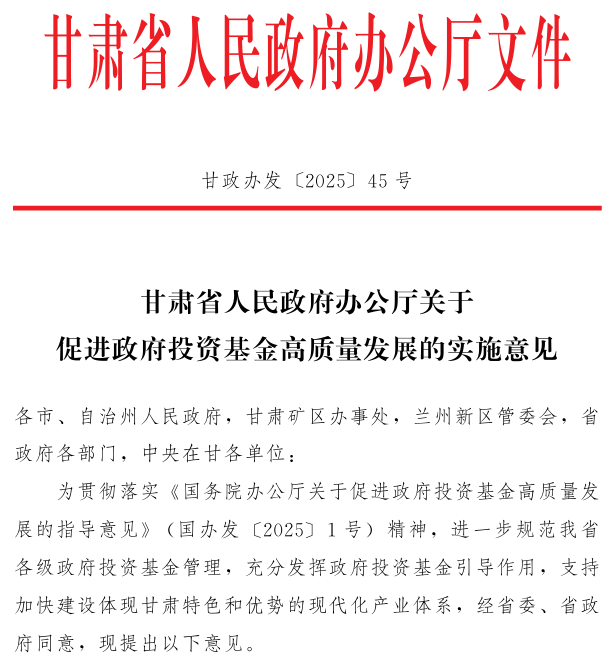
Core Viewpoint - The Gansu Provincial Government has issued implementation opinions to promote the high-quality development of government investment funds, emphasizing the need for careful evaluation and approval processes for fund establishment, as well as the importance of avoiding redundant investments and ensuring effective fund management [1][4][5]. Group 1 - The government investment funds should have a reasonable duration and act as long-term and patient capital to adjust across cycles [4]. - Funds established by the government must undergo thorough evaluation and adhere to approval procedures, with provincial or municipal funds requiring local government approval [4][5]. - New government investment funds at the county level should be strictly controlled, with proposals needing approval from the municipal government if the county has sufficient financial resources [4]. Group 2 - All levels of government investment funds must prevent redundant investments and disorderly competition to avoid overcapacity and low-level repeated construction [4]. - New funds established by municipalities or counties must be reported to the provincial finance department for record-keeping [4]. - The same government should not establish multiple funds in the same industry or field, but funds can support the same project in a market-oriented manner [4]. Group 3 - Funds lacking industrial foundation or resource endowment should enhance effectiveness through optimized investment directions and market-oriented exits [5]. - Fiscal departments at all levels are responsible for the unified management of government investment funds, with strict controls on new fund establishments [5]. - It is prohibited for governments to finance through illegal debt, and there should be no new hidden local government debts [5]. Group 4 - A mechanism for error tolerance centered on compliance responsibility exemptions is encouraged to enhance the investment enthusiasm of fund managers [5]. - Regulatory responsibilities should be performed in accordance with laws and regulations, without administrative interference in daily fund management and investment decisions [5].
500亿,又一险资巨头出手了
投中网· 2025-06-10 04:03
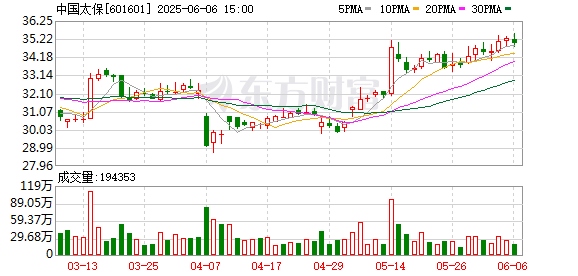
Core Viewpoint - The article highlights the increasing enthusiasm of insurance capital entering the capital market, exemplified by China Pacific Insurance's establishment of two large-scale funds totaling 500 billion yuan, indicating a significant trend in the insurance sector's investment strategies [3][4][12]. Fund Establishment - China Pacific Insurance has launched two funds: the Taibao Zhanxin M&A Fund with a target size of 300 billion yuan and the Taibao Zhiyuan No. 1 Private Securities Investment Fund with a target size of 200 billion yuan [4][7]. - The Taibao Zhanxin M&A Fund aims to focus on the reform of state-owned enterprises and the construction of a modern industrial system in Shanghai, emphasizing mergers and acquisitions as a key strategy [8][9]. - The Taibao Zhiyuan No. 1 Fund is designed to invest in the secondary market, responding to national calls for expanding insurance institutions' participation in private securities investment funds [10]. Market Trends - Since 2022, various policies have been introduced to encourage insurance capital to enter the market, making insurance funds a significant source of long-term capital, especially in the primary market [4][12]. - The insurance sector's participation in M&A funds has surged, with a reported increase of over 60% year-on-year in 2024 [9]. Financial Performance - In 2024, China Pacific Insurance reported a revenue of 404.09 billion yuan, a year-on-year increase of 24.74%, and a net profit of 46.44 billion yuan, up 66.39% [13]. - The group's total investment income reached 120.39 billion yuan, reflecting a substantial year-on-year growth of 130.5%, highlighting the importance of investment as a growth driver [13]. Policy Support - Recent regulatory changes have facilitated insurance capital's entry into equity investments, with significant policy shifts allowing higher investment limits in venture capital funds [14]. - By the end of 2024, the scale of insurance capital participating in equity investments is expected to reach 1.92 trillion yuan, with indirect equity investments through funds and products amounting to 950 billion yuan [14]. Investment Challenges - Despite the growing interest, insurance capital has stringent requirements for fund management scale, past performance, and investment focus, making it challenging for many funds to secure investment [15]. - The article suggests that as policies continue to loosen, more insurance funds are likely to enter the primary market, providing additional capital to the sector [15].


一周快讯丨浦口区高质量发展母基金招GP;盐城首支S基金诞生;300亿并购基金来了
FOFWEEKLY· 2025-06-08 04:12
Core Viewpoint - The article highlights the establishment and recruitment of various mother funds across multiple cities in China, focusing on sectors such as robotics, new energy, integrated circuits, new materials, artificial intelligence, and low-altitude economy [1][4][10]. Fund Establishment - Several cities including Shenzhen, Nanjing, and Tianjin have announced the establishment or registration of funds, primarily targeting sectors like biopharmaceuticals, smart healthcare, high-end medical devices, and integrated circuits [1]. - The China Pacific Insurance Company has launched a new merger and acquisition private equity fund with a target size of 30 billion yuan and an initial size of 10 billion yuan [2]. Specific Fund Initiatives - The Jintan District Industry Innovation Development Mother Fund is seeking general partners (GPs) with a total scale of 10 billion yuan, focusing on five new industries including new energy and new medical technology [3]. - The Pukou District High-Quality Development Mother Fund is also recruiting GPs, emphasizing investment in strategic emerging industries such as integrated circuits and artificial intelligence [4]. - The Shanghai State-owned Assets Fund has selected 17 sub-funds, with a total investment amount of 4.15 billion yuan, focusing on integrated circuits and biomedicine [6]. Investment Strategies - The Hangzhou High-tech Zone plans to establish an industry investment fund and an intellectual property fund, focusing on smart IoT, biomedicine, and green energy [9]. - The Yangzhou Biopharmaceutical Industry Fund has been set up with a total scale of 1.5 billion yuan, targeting innovative drug development and high-end medical devices [10]. - The Nanjing Biomedical Valley is seeking fund managers for a specialized fund focusing on medical engineering and biomedicine, with a maximum scale of 300 million yuan [12]. New Fund Launches - The first S fund in Yancheng has been established to support technology innovation and modern industrial system construction [13][14]. - The Shenzhen Artificial Intelligence Terminal Industry Fund has been set up with a total investment of 1.44 billion yuan, focusing on equity investment and asset management [19]. - The first QFLP fund in Fangchenggang has been registered, targeting strategic emerging industries such as healthcare and advanced manufacturing [20]. Collaborative Efforts - The Qianhai Dinghui Deep Hong Kong Co-investment Fund has been established to focus on artificial intelligence and biotechnology, promoting deep collaboration between Shenzhen and Hong Kong [21]. - The Tianjin Chip Fire Integrated Circuit Venture Capital Fund has been officially registered, aiming to support the development of the integrated circuit industry [22]. Regulatory Developments - The Guangdong Provincial Government has issued a management method for government investment funds, emphasizing performance evaluation and management fees [23].

一周产业基金|险资发布300亿元并购基金;全国首批首只央企创投母基金落地
Mei Ri Jing Ji Xin Wen· 2025-06-06 10:35
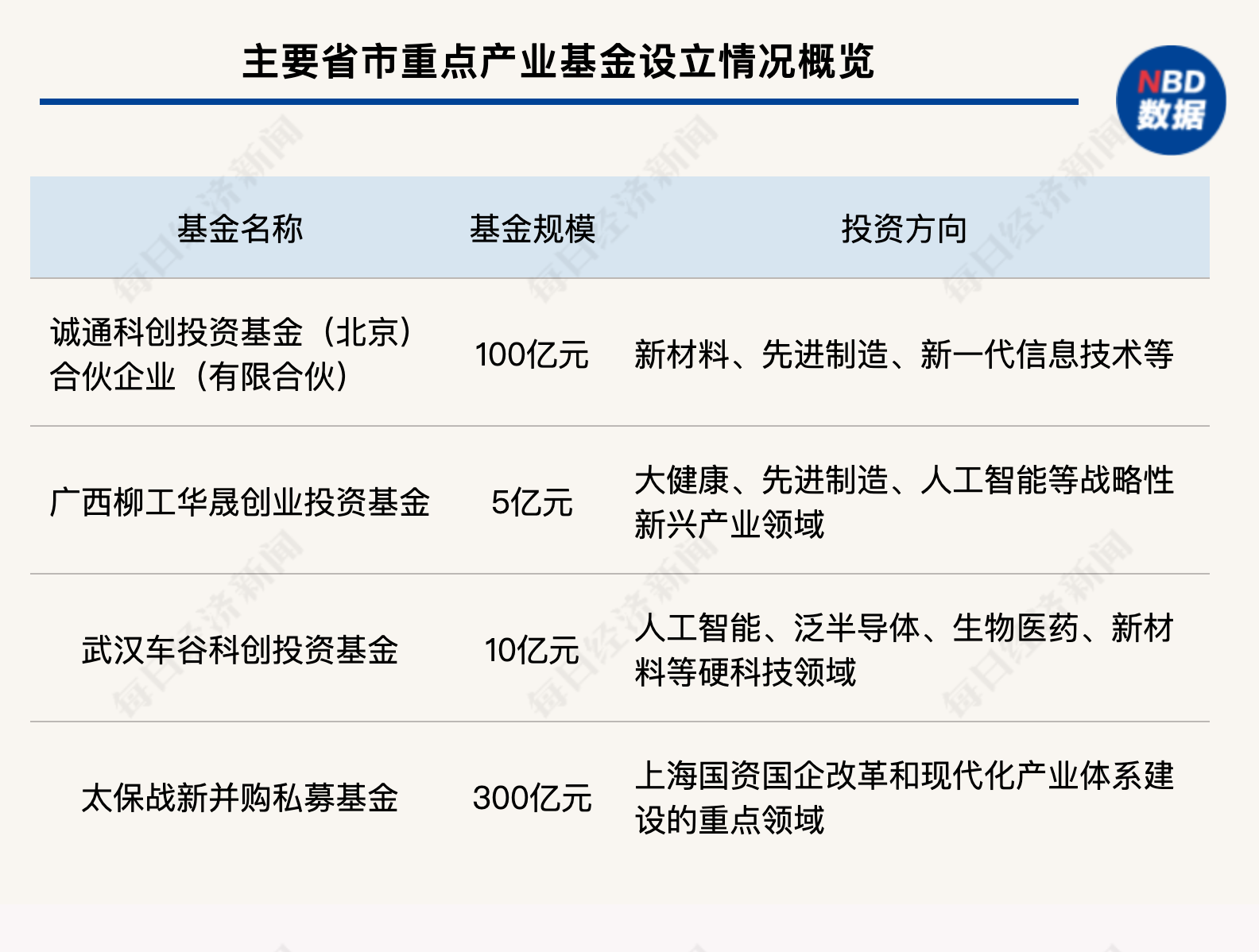
Group 1 - The first central enterprise venture capital mother fund, "Chengtong Science and Technology Investment Fund (Beijing) Partnership (Limited Partnership)," has been established with an initial scale of 100 billion yuan and a planned total scale of 300 billion yuan, focusing on new materials, advanced manufacturing, and new generation information technology [2][10] - Shanghai's three leading industry mother funds have selected 17 sub-funds from 79 applicants, with a total investment amount of 41.5 billion yuan and a total fund scale of 241.5 billion yuan, achieving a leverage ratio of 5.82 times [3] - China Pacific Insurance has launched a new merger and acquisition fund with a total scale of 500 billion yuan, including a target scale of 300 billion yuan for the "Taibao New Merger and Acquisition Private Fund," focusing on Shanghai's state-owned enterprise reform and modernization of the industrial system [4] Group 2 - The first Qualified Foreign Limited Partner (QFLP) fund in Fangchenggang, Guangxi, has been established with a total scale of 500 million yuan and an initial scale of 100 million yuan, targeting strategic emerging industries such as health and advanced manufacturing [6] - The first S fund in Yancheng has been successfully established, focusing on technology and healthcare sectors, supporting quality enterprises in their growth phases through a "project + sub-fund" investment approach [7] - The Wuhan Chegu Science and Technology Investment Fund has completed registration with a total scale of 10 billion yuan, focusing on hard technology fields such as artificial intelligence and biomedicine, with a long-term investment horizon of 12 years [8]
PE必死,并购难存,产业整合基金才是王道!
Sou Hu Cai Jing· 2025-06-06 08:22
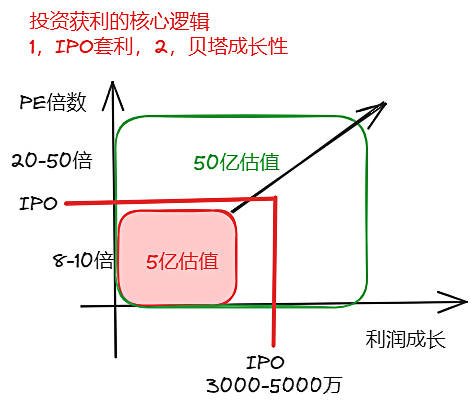
Group 1: Investment Logic of PE Funds - Traditional pre-IPO investment logic involves selecting suitable industries and companies, entering at reasonable prices, and waiting for growth and exit to gain returns [1] - The core sources of returns in traditional PE investments are growth potential and listing arbitrage, primarily driven by earnings growth and PE multiple expansion [1][3] - The success of some PE funds in the past was due to accurate industry and company selection, as well as a deep understanding of listing requirements [3] Group 2: Challenges in the PE Industry - Despite the past success, overall returns for PE funds remain unclear, with few funds publicly disclosing complete earnings [4] - The traditional PE model is increasingly challenged by a slowdown in China's economic growth, leading to a decline in the scarcity of listed companies and lower PE multiples [5] - The investment judgment capabilities of traditional PE personnel are often inadequate, making it difficult to identify viable investment opportunities [5][6] Group 3: Fundraising Issues - A portion of limited partners (LPs) have recognized the lack of profitability in PE investments, leading to reduced funding and increased caution among new investors [7] - The core issue for traditional PE investors is their reliance on investment capabilities, which have diminished as the market has evolved [7][8] Group 4: M&A Market and PE Funds - Traditional PE institutions have attempted to enter the M&A market but have faced challenges due to insufficient investment capabilities [9] - Some PE firms have tried to control listed companies for acquisitions, but many have failed due to a lack of operational expertise [9][10] Group 5: Future of PE Funds - The future of PE funds may involve a shift towards industry integration and stable asset management, focusing on effective asset consolidation rather than growth [19][21] - The investment landscape is expected to evolve, with a focus on high-tech and innovative sectors, while traditional PE funds may decline in relevance [21][23]
中国太保发布战新并购基金,上海国资并购基金矩阵加速落地
2 1 Shi Ji Jing Ji Bao Dao· 2025-06-06 07:29
Group 1 - Institutional investors are accelerating proactive layouts through merger funds under the backdrop of policy guidance and restructuring exit paths [2][4] - China Pacific Insurance officially launched a merger fund with a total scale of 50 billion yuan, focusing on key areas of state-owned enterprise reform and modern industrial system construction in Shanghai [2][5] - The establishment of the merger fund matrix in Shanghai is a key layout in the construction of state-owned capital merger funds, aiming to enhance core functions and promote high-quality mergers in emerging industries [5][6] Group 2 - The Shanghai State-owned Assets Supervision and Administration Commission is promoting the establishment of multiple merger funds related to market value management and key industries [3][4] - The newly formed merger fund matrix involves state-owned enterprises, financial institutions, and platform companies, focusing on various sectors including integrated circuits, biomedicine, and high-end equipment [5][6] - The Shanghai biomedicine merger fund has completed its first closing, with investments from leading enterprises and financial institutions, indicating strong market interest in mergers and acquisitions in this sector [5][6] Group 3 - The current environment is seen as a strategic window for promoting technology mergers, with Shanghai's advantages making it a key platform for industrial collaboration and innovation [7][8] - Insurance capital is becoming an important force in the merger market, characterized by long cycles and strong capital stability, facilitating collaboration with leading enterprises [7][8] - The trend of viewing mergers as a primary exit strategy is gaining consensus among investment institutions, reflecting a shift in focus towards the feasibility of mergers as a means of achieving returns [9]
刚刚,300亿战新并购母基金落地上海
母基金研究中心· 2025-06-03 14:44
Core Viewpoint - China Pacific Insurance has launched a total of 500 billion yuan in two funds aimed at promoting mergers and acquisitions, particularly focusing on the reform of state-owned enterprises and the development of key industries in Shanghai [1][3]. Fund Details - The Taibao Zhanxin M&A Private Fund has a target size of 300 billion yuan, with an initial phase of 100 billion yuan, focusing on key areas of Shanghai's state-owned enterprise reform and modern industrial system construction [3][4]. - Half of the fund's size will be allocated as a mother fund to invest in sub-funds, which is expected to inject patient capital into the mother fund industry [3][4]. Policy Context - The recent release of the CSRC's "Major Asset Restructuring Management Measures" has sparked a wave of discussions around mergers and acquisitions in the primary market, encouraging private investment funds to participate in listed company mergers [4][5]. - The revised measures introduce a "reverse linkage" arrangement for private equity funds, significantly reducing lock-up periods for investments, which is a major benefit for private equity funds engaging in mergers [4][5]. Long-term Capital Dynamics - Long-term capital has been a critical issue for the development of venture capital in China, with the penetration rate of such funds only around 2%-3% [5][6]. - Recent policy changes have positively impacted the entry of long-term capital into the primary market, with the National Financial Regulatory Administration increasing the investment concentration ratio for insurance funds in venture capital funds [6][7]. Investment Trends - Insurance capital has increasingly become a significant player in private equity investments, with over 50 insurance companies participating in funding private equity funds since 2023 [6][7]. - The focus of insurance private equity investments is primarily on sectors closely related to insurance, such as elderly care and health, as well as key areas supported by national strategies like new infrastructure and renewable energy [6][7]. Shanghai's Investment Landscape - Shanghai is actively promoting venture capital and private equity, with significant fund launches and government support for mergers and acquisitions [9][10]. - The city has established a robust ecosystem for mother funds, with over 40 mother funds and a leading position in the country regarding the scale of assets under management [10][11].

地方国资掀起并购基金热潮
21世纪经济报道· 2025-05-11 08:50
Core Viewpoint - The domestic M&A market in China is experiencing significant growth, driven by both state-owned enterprises and private equity firms, with local governments increasingly establishing M&A funds to enhance regional competitiveness and attract investments [1][3][9]. Group 1: Recent Developments in M&A - Anta has fully acquired the German brand Jack Wolfskin, and Tongcheng Travel has acquired Wanda's hotel management business, indicating a trend of active M&A transactions among major companies [1]. - Local governments are setting up substantial M&A funds, such as Zhejiang's planned 10 billion yuan fund and Shenzhen's 20 billion yuan fund, to support regional economic development [3][9]. - The Shanghai state-owned capital M&A fund matrix has been launched with a total scale exceeding 500 billion yuan, focusing on various strategic sectors [3]. Group 2: Factors Driving M&A Activity - Key factors driving the increase in M&A include slowing GDP growth, the transition of family businesses to modern management, and the need for industry leaders to consolidate for value creation [5][6]. - The current M&A wave is policy-driven, with recent regulations encouraging companies to enhance their core businesses rather than engage in speculative acquisitions [6][7]. Group 3: Role of Local Governments - Local governments are becoming crucial partners in M&A, seeking to attract businesses to their regions through M&A funds, which can facilitate the relocation of company headquarters and enhance local industry capabilities [7][9]. - M&A funds are seen as a means for local governments to achieve better control over investments and drive technological upgrades in traditional industries [10][12]. Group 4: Challenges in the M&A Market - The Chinese M&A market faces challenges compared to mature markets like the U.S., particularly in the areas of leverage tools and exit mechanisms for funds [11]. - There is a need for M&A funds to align with listed companies to create better exit strategies, as the IPO process for acquired companies remains uncertain [11][12].

并购市场升温:地方国资纷纷入局,机遇与挑战并存
Sou Hu Cai Jing· 2025-05-09 07:53
Group 1 - The domestic M&A market is experiencing a surge, with significant transactions such as Anta's acquisition of Jack Wolfskin and Tongcheng Travel's purchase of Wanda Hotel Management [1][2] - Local state-owned enterprises are increasingly establishing M&A funds, with Zhejiang planning a 10 billion yuan fund and Shanghai's state-owned M&A fund matrix exceeding 50 billion yuan [1][6] - The current M&A wave is driven by policy support aimed at optimizing industrial structure, with local governments using M&A funds as a new model for attracting investment [2][4] Group 2 - The Chinese M&A environment is maturing, with private equity firms becoming active participants, particularly as macroeconomic growth slows [3][4] - Key factors driving M&A include slowing GDP growth, the transition of family businesses to modern management, and the need for industry leaders to consolidate [3][4] - The current M&A focus is on restructuring and extending industrial chains, contrasting with previous waves that prioritized market value enhancement [4][5] Group 3 - Local governments view M&A funds as a means to attract businesses and facilitate technology upgrades in traditional industries [6][7] - M&A funds can help listed companies enhance their core businesses and integrate resources within the industry chain [7][8] - Challenges remain in the Chinese M&A market, particularly regarding the lack of leverage tools and exit mechanisms compared to the US market [8][9] Group 4 - Local state-owned capital is participating in both M&A mother funds and direct investment funds, with a preference for mother funds due to their advantages in risk diversification and long-term planning [9]